Hand-eye Coordination Adding with Busy Bugs Worksheets for 5-Year-Olds
5 filtered results
-
From - To
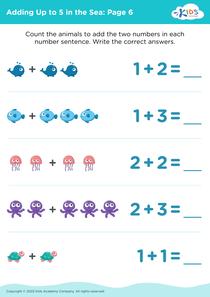
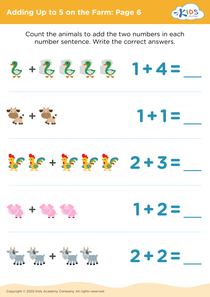
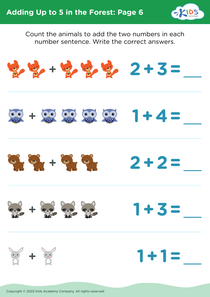
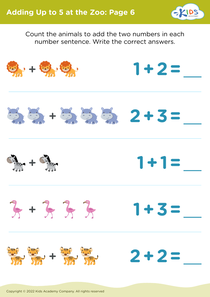
Unlock your child's potential with our "Hand-eye Coordination Adding with Busy Bugs Worksheets for 5-Year-Olds." These engaging math activities are designed to help kindergarteners practice basic addition while honing their hand-eye coordination skills. Each worksheet features colorful, playful bug illustrations that capture young learners' attention and make learning fun. Perfect for at-home practice or classroom enrichment, our worksheets not only support math proficiency but also fine motor development. Ideal for developing focus, dexterity, and counting abilities, these Busy Bugs worksheets provide a comprehensive, enjoyable educational experience for budding mathematicians. Explore today!
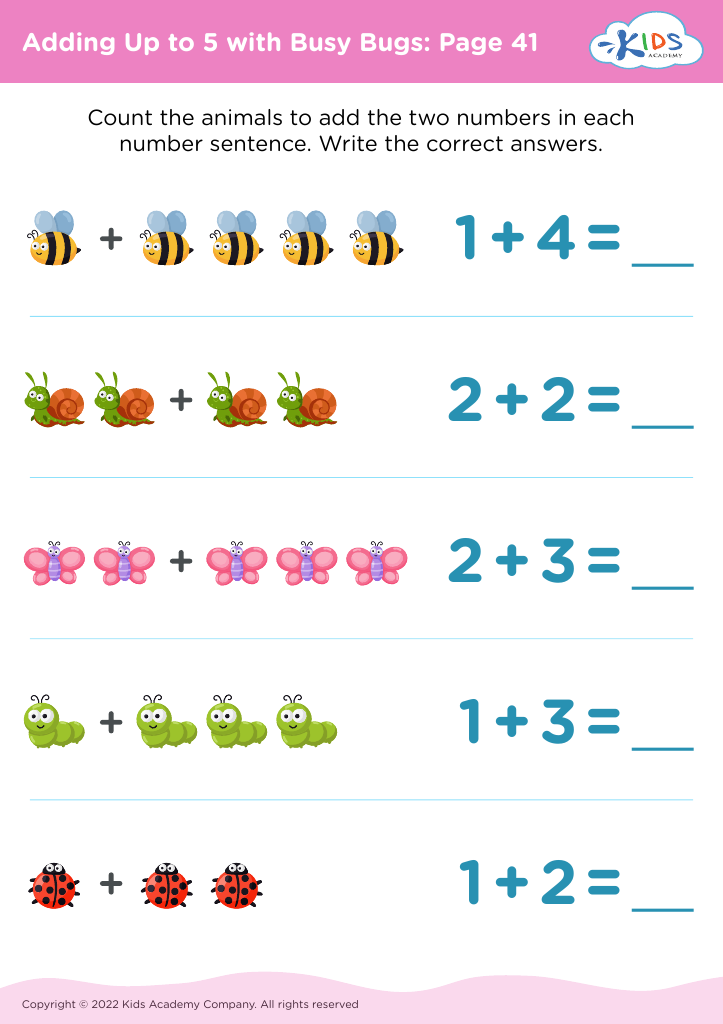
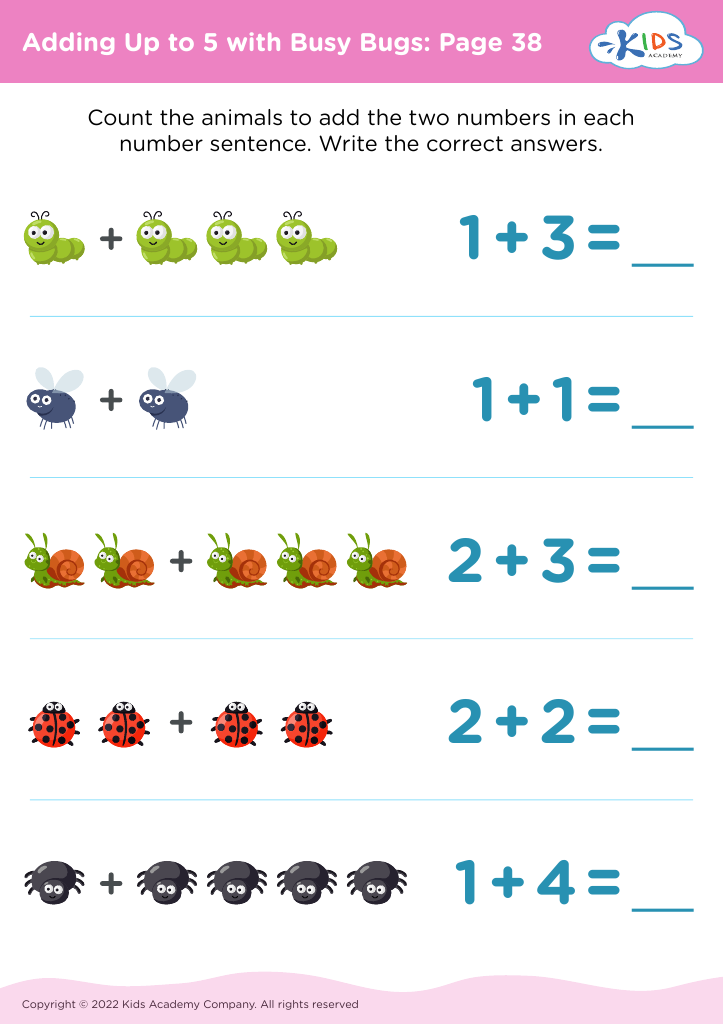
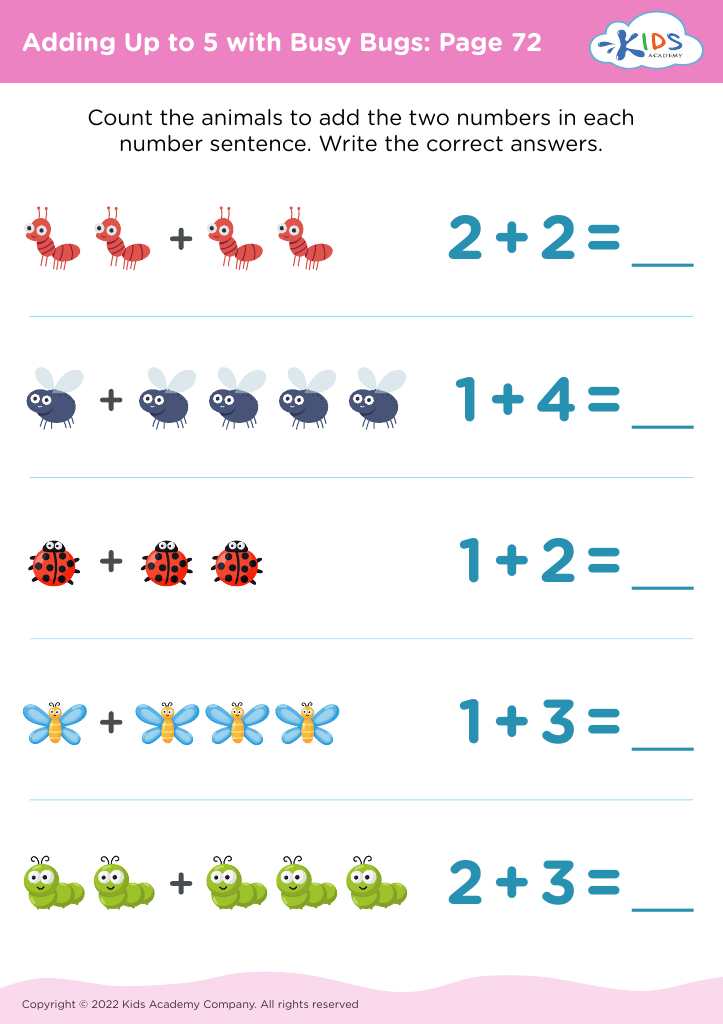
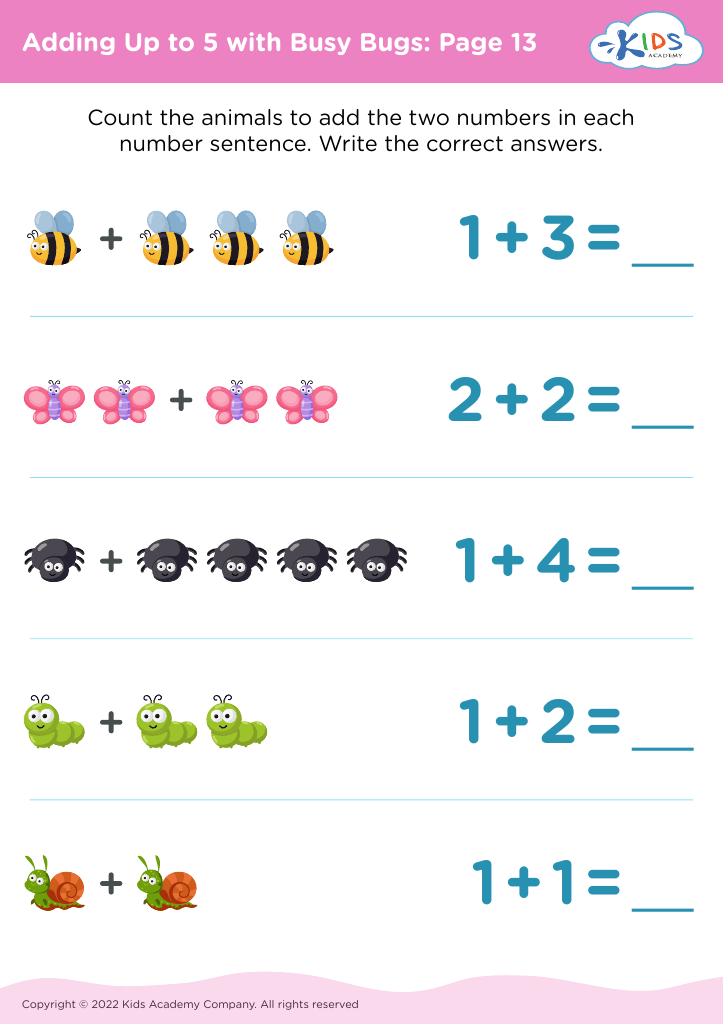
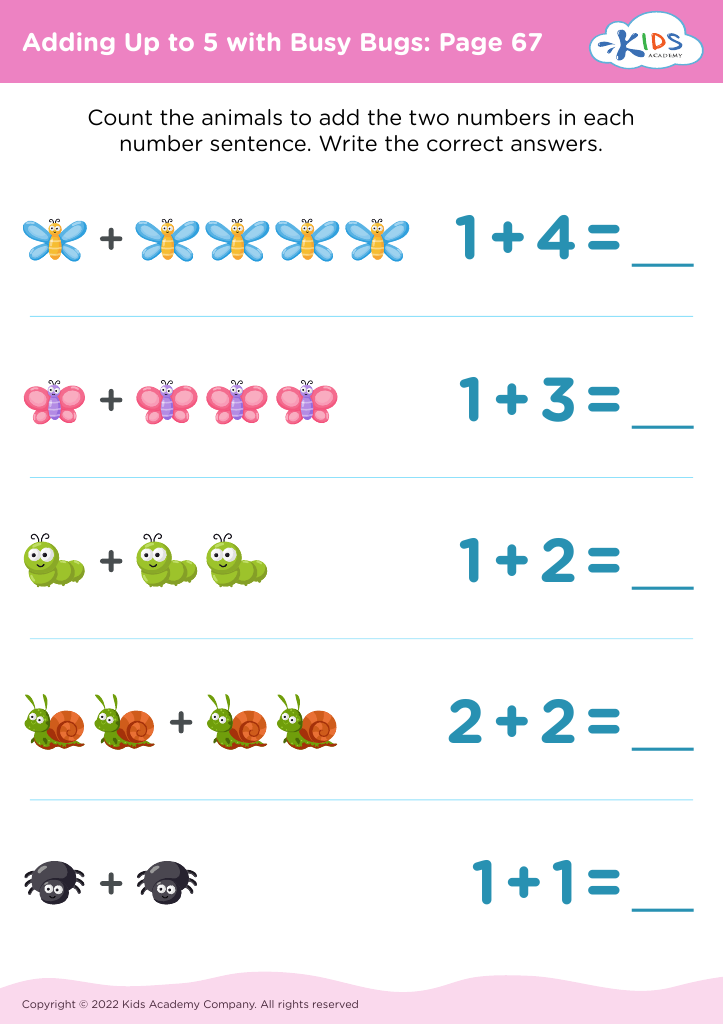



Hand-eye coordination is a crucial developmental skill for 5-year-olds, forming the foundation for many everyday tasks and academic activities. Hands-on learning experiences such as "Hand-eye Coordination Adding with Busy Bugs" harness children's natural curiosity and playfulness, making skill-building fun and effective. For parents and teachers, this activity is more than just an engaging game; it is a valuable educational tool.
First, improving hand-eye coordination at an early age supports fine motor skills, which are essential for writing, drawing, and even using utensils. Fine motor development can directly influence a child's ability to complete school tasks, contributing to their overall academic success.
Second, the incorporation of adding within the activity promotes early math skills. Young children learn counting and simple arithmetic in a context that is interactive and enjoyable, fostering a positive attitude toward mathematics from a young age.
Third, engaging with busy bug activities encourages children to focus and pay attention to details, enhancing their cognitive processing abilities. Parents and teachers can use this dual-purpose approach to reinforce both essential physical skills and foundational academic knowledge, creating a balanced and comprehensive early learning environment. Thus, integrating such activities is beneficial for holistic child development, making them an excellent choice for early grade education.