Understanding quantity Adding with Busy Bugs Worksheets for 5-Year-Olds
7 filtered results
-
From - To
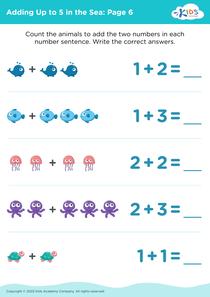
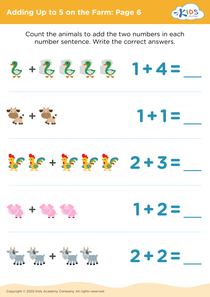
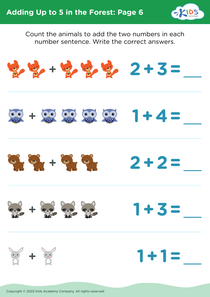
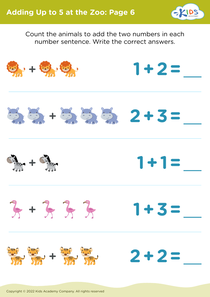
Welcome to our "Understanding Quantity: Adding with Busy Bugs Worksheets" designed for 5-year-olds! These engaging worksheets help young learners develop foundational math skills by introducing the concept of quantity through fun, relatable activities featuring adorable busy bugs. Children will practice comparing quantities, counting bugs, and performing simple addition, all while building confidence in their math abilities. Each worksheet is designed to be visually appealing and interactive, making learning enjoyable and effective. With a focus on hands-on experience, little ones will explore basic addition concepts in a delightful, supportive environment. Start your child's math journey today with our Busy Bugs!
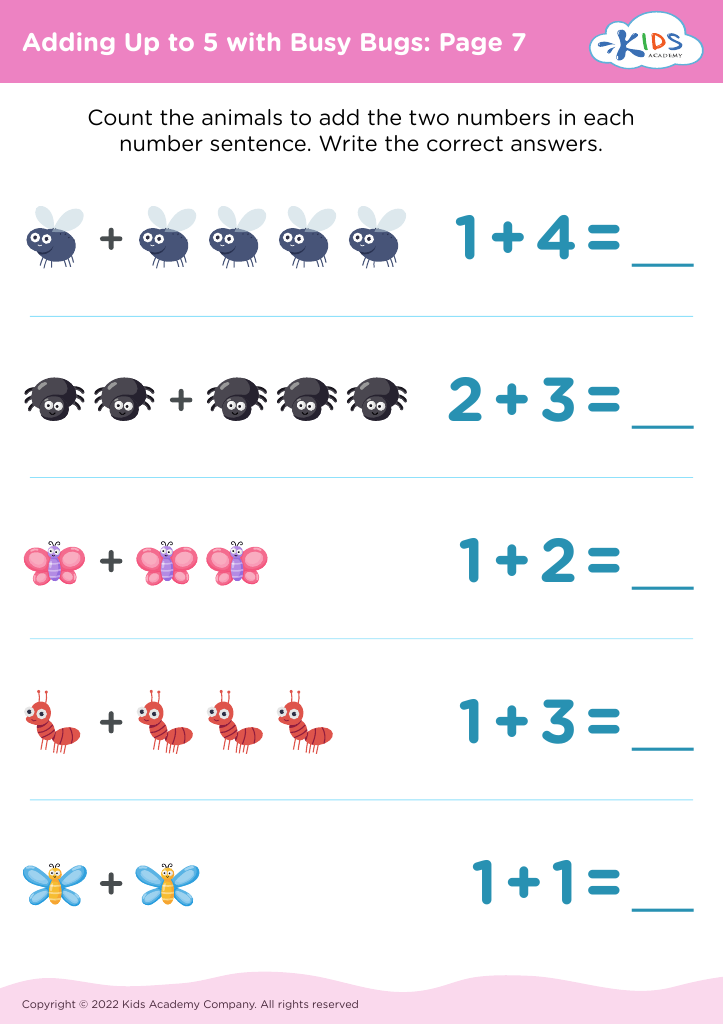
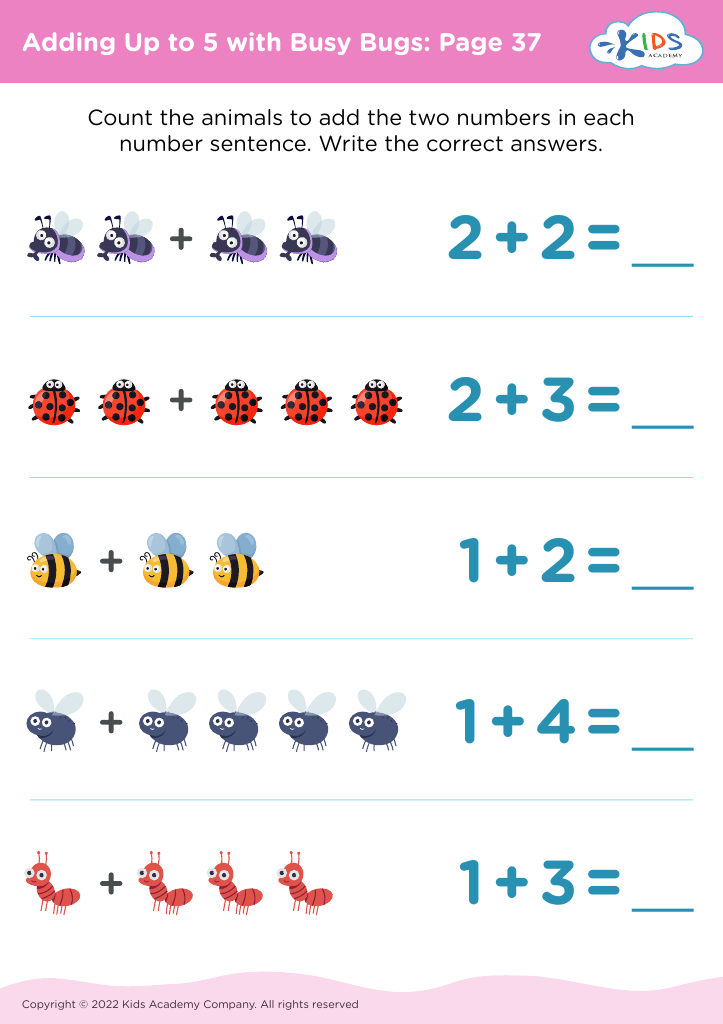
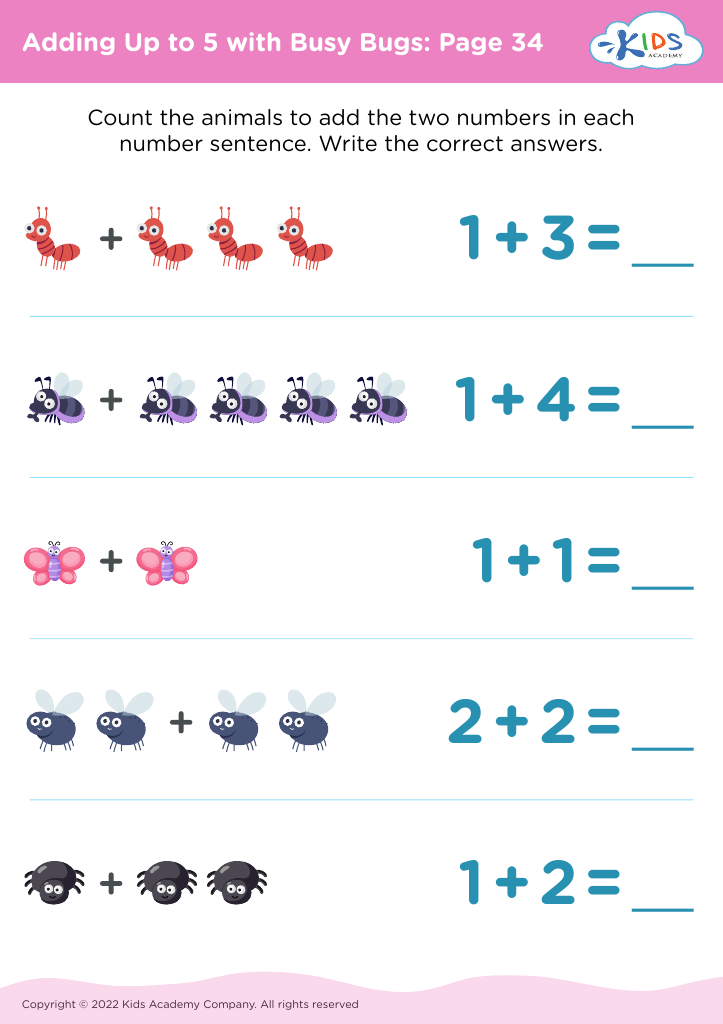
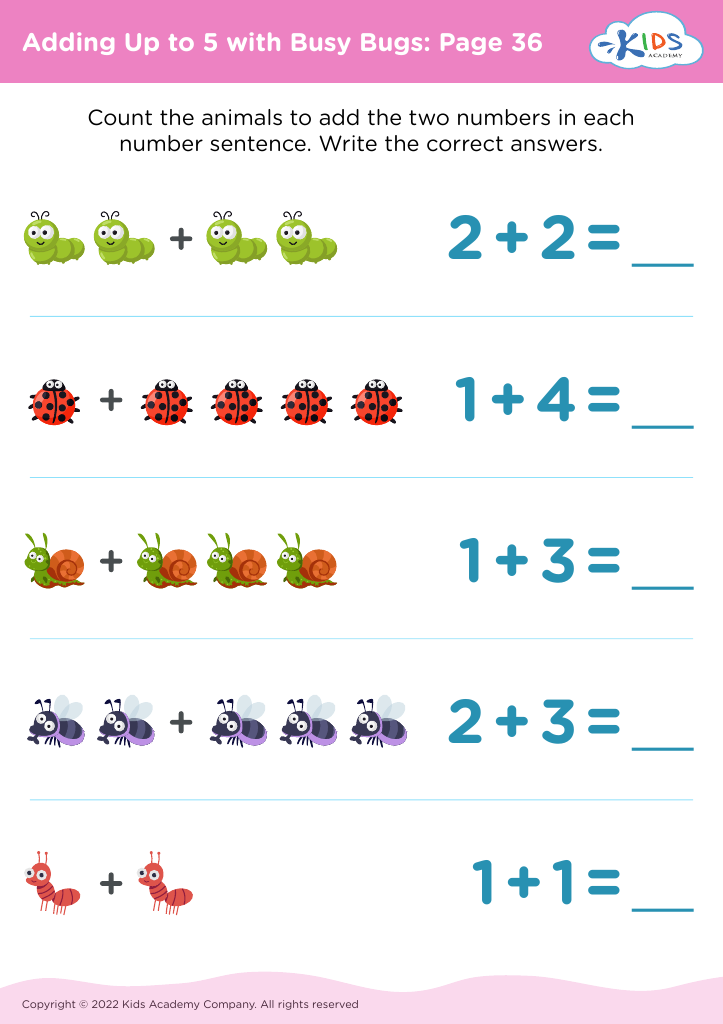
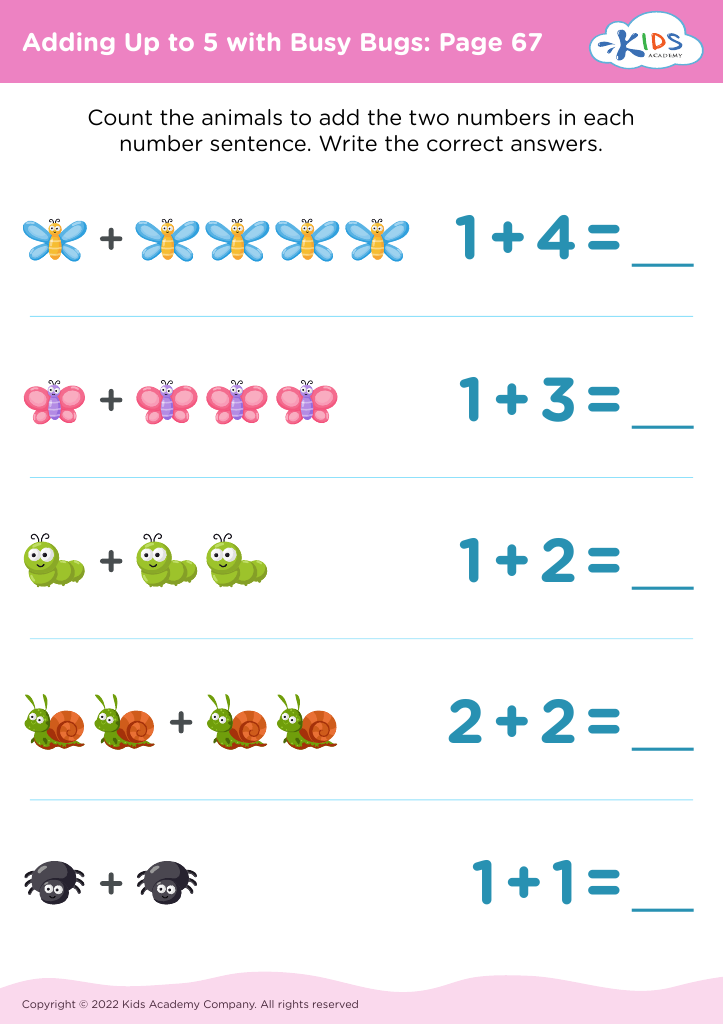
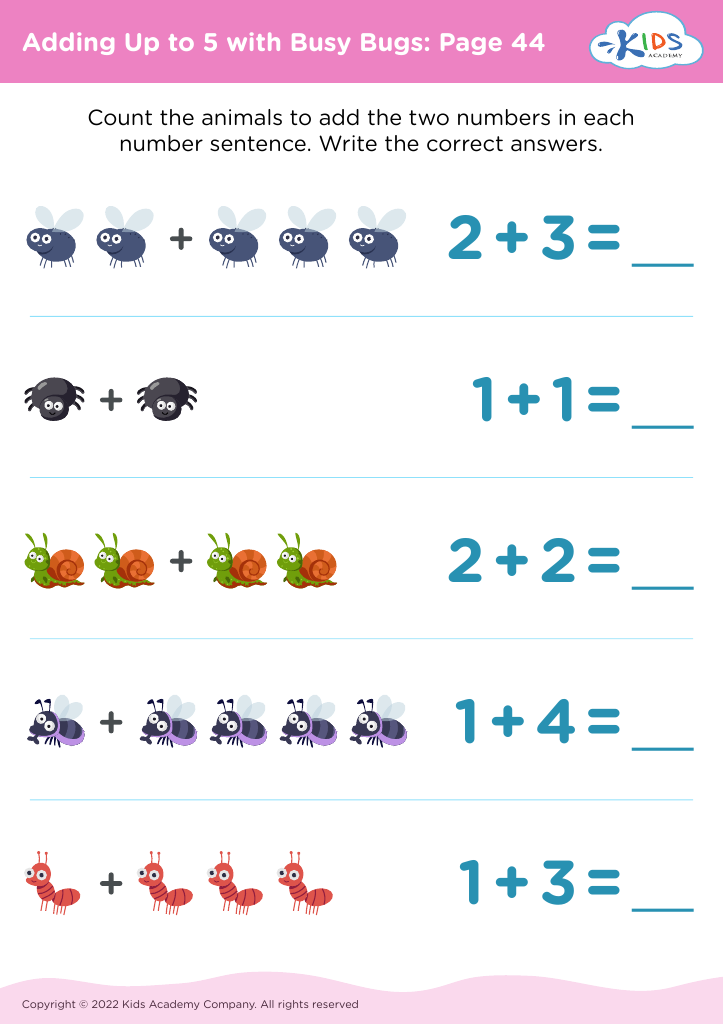
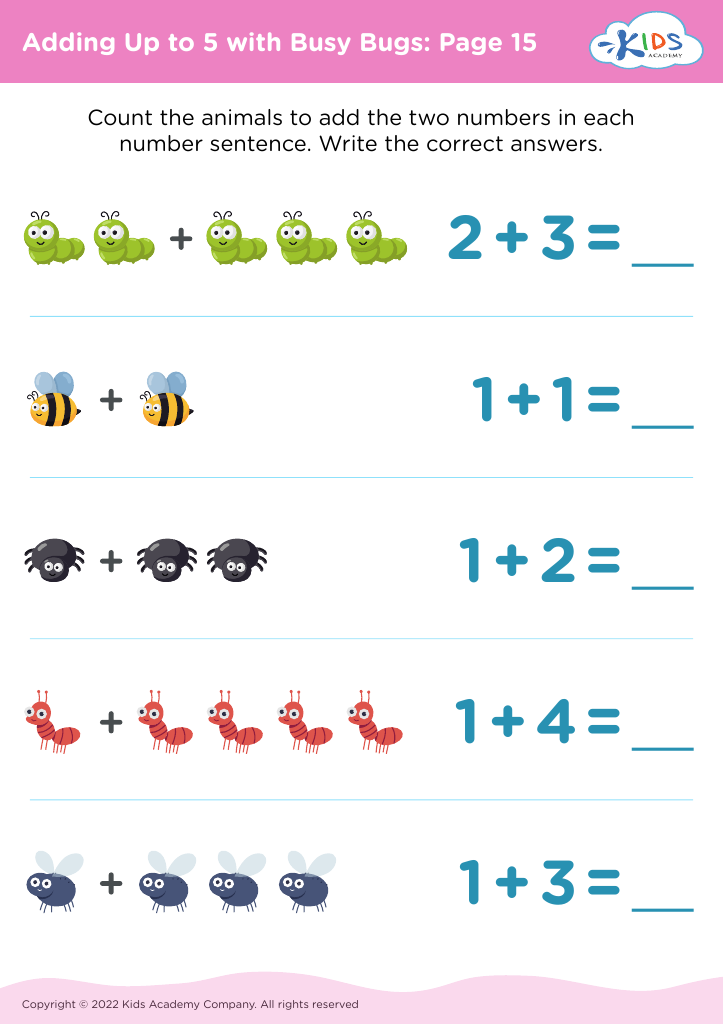



Understanding quantity and basic addition is foundational for young learners, particularly for 5-year-olds, as it lays the groundwork for future mathematical concepts. Programs like “Busy Bugs” engage children in a playful and interactive manner, making learning fun and effective.
When parents and teachers invest in such learning tools, they help children develop essential skills, including number recognition, counting, and the ability to solve simple addition problems. Through activities, children visualize quantities and grasp the concept of ‘more’ or ‘less,’ which enhances their understanding of numbers in a tangible way.
Moreover, incorporating these activities promotes critical thinking and problem-solving skills. Children learn to connect mathematics to real-world scenarios, enhancing their cognitive development. This engagement not only helps math become less intimidating but also fosters a positive attitude towards learning.
By nurturing these early math skills, parents and teachers set the stage for a lifelong appreciation of mathematics, encouraging children to explore and ask questions. Programs like “Busy Bugs” also offer opportunities for social interaction, collaboration, and communication, further enriching the educational experience. Ultimately, such tools empower young learners, making them confident and enthusiastic about their educational journey.