Animal identification Addition & Subtraction Worksheets for 5-Year-Olds
27 filtered results
-
From - To
Our "Animal Identification Addition & Subtraction Worksheets for 5-Year-Olds" offer a fun, engaging way for young learners to develop early math skills. Combining adorable animal illustrations with basic arithmetic problems, these worksheets are designed to reinforce number recognition, addition, and subtraction. They also boost early cognitive skills through animal identification activities that captivate children's attention and enhance their learning experience. Ideal for both classroom and home use, these worksheets help children practice math while enjoying the charm of their favorite animals, laying a solid foundation for future learning in a playful and educational manner.
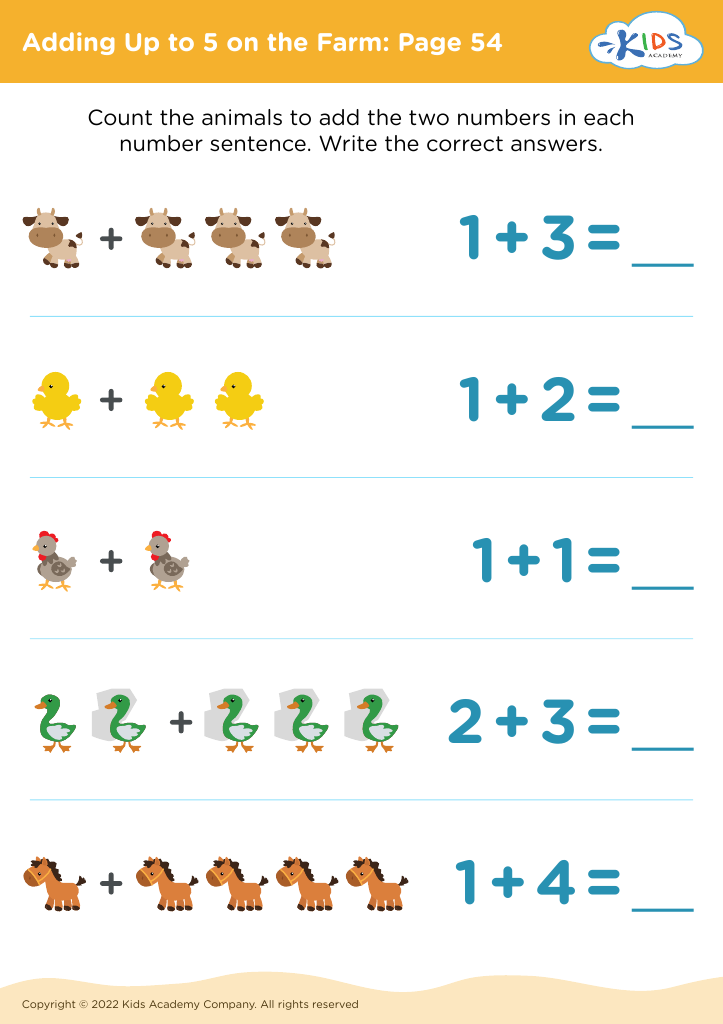
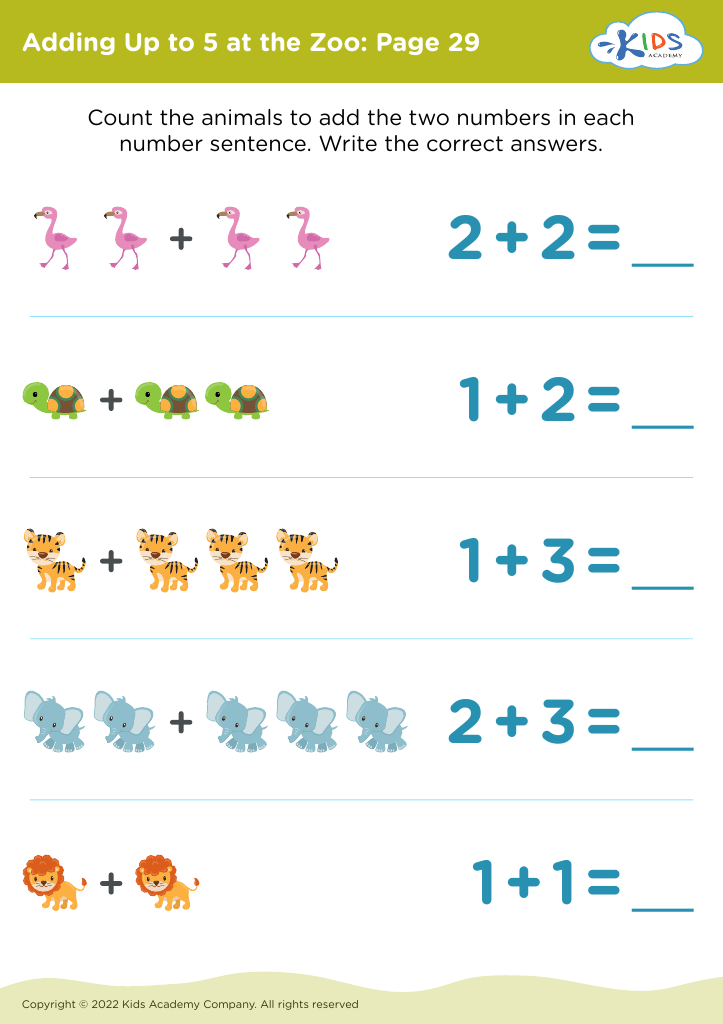
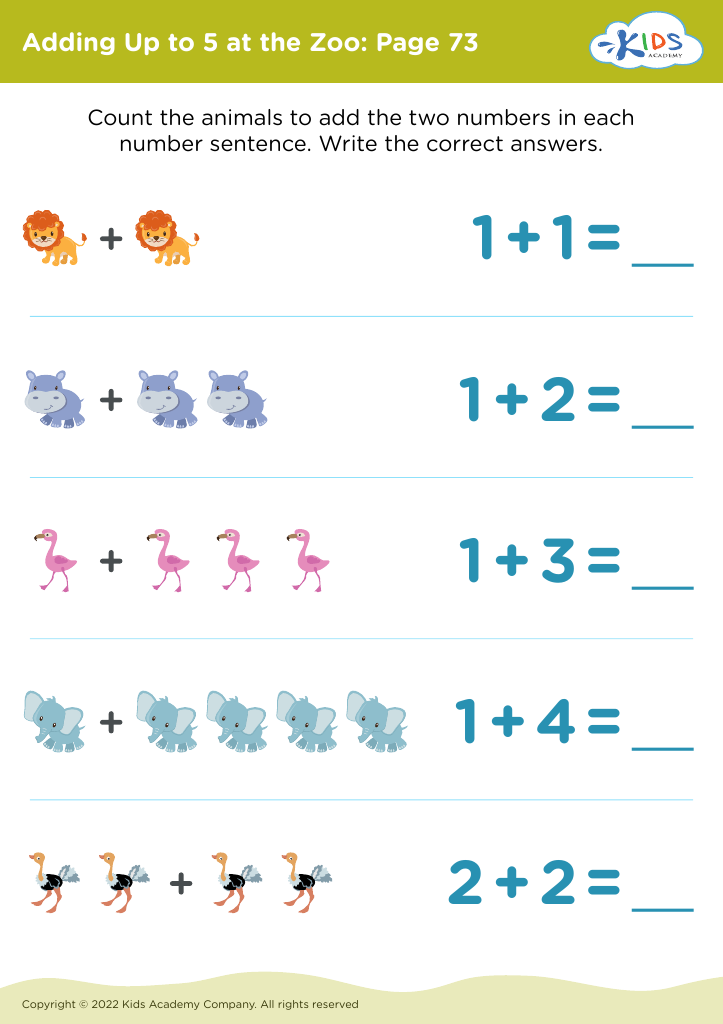
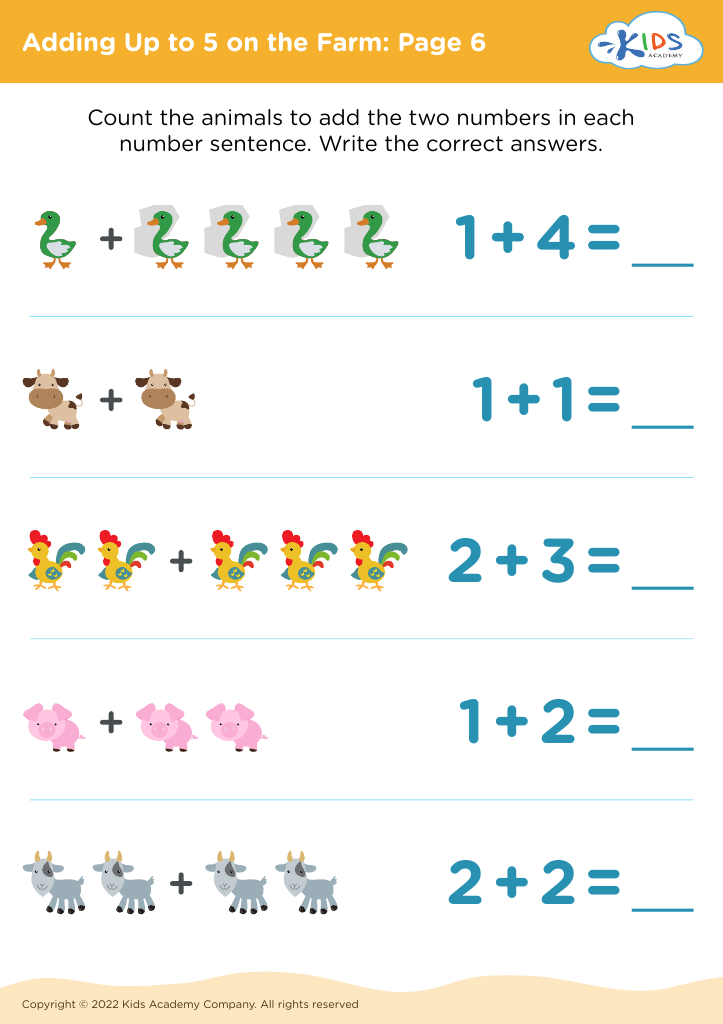
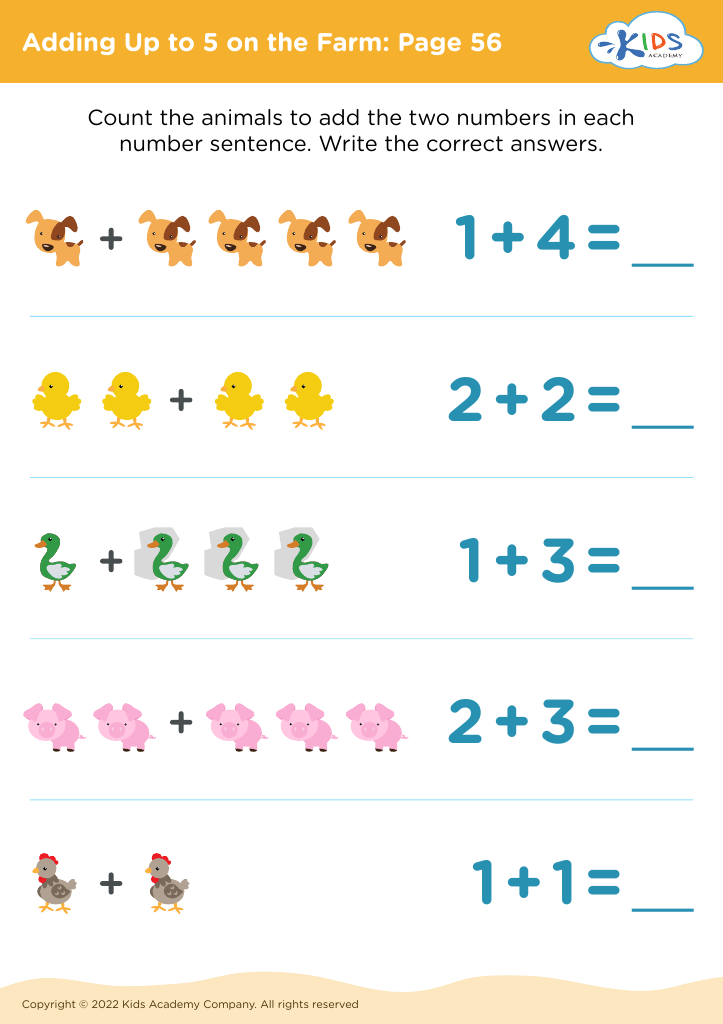
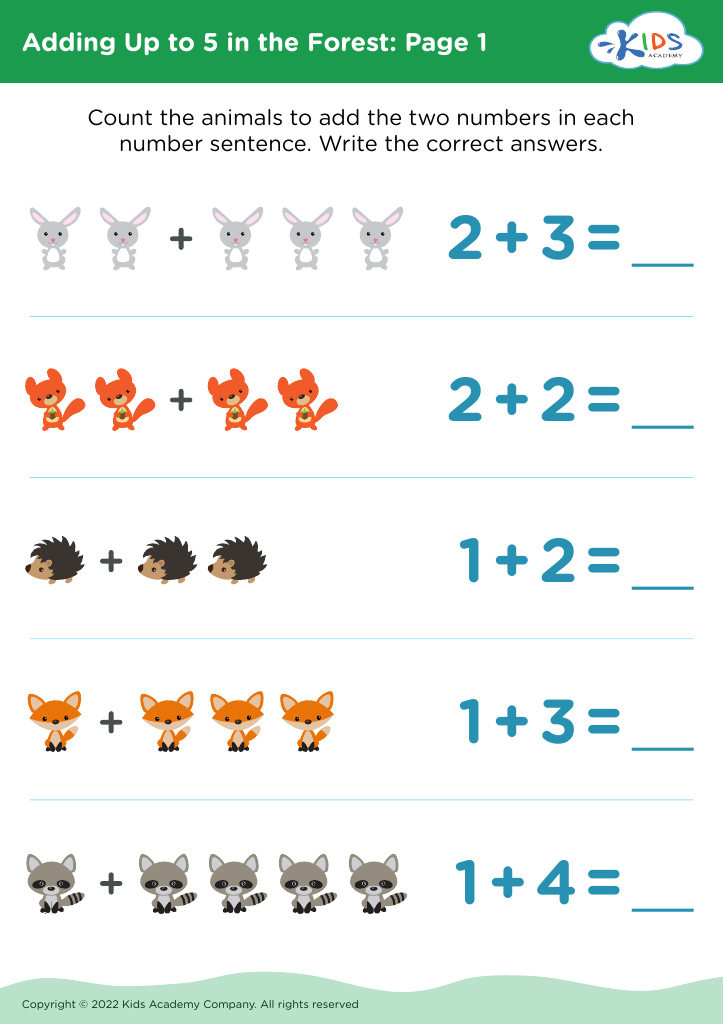
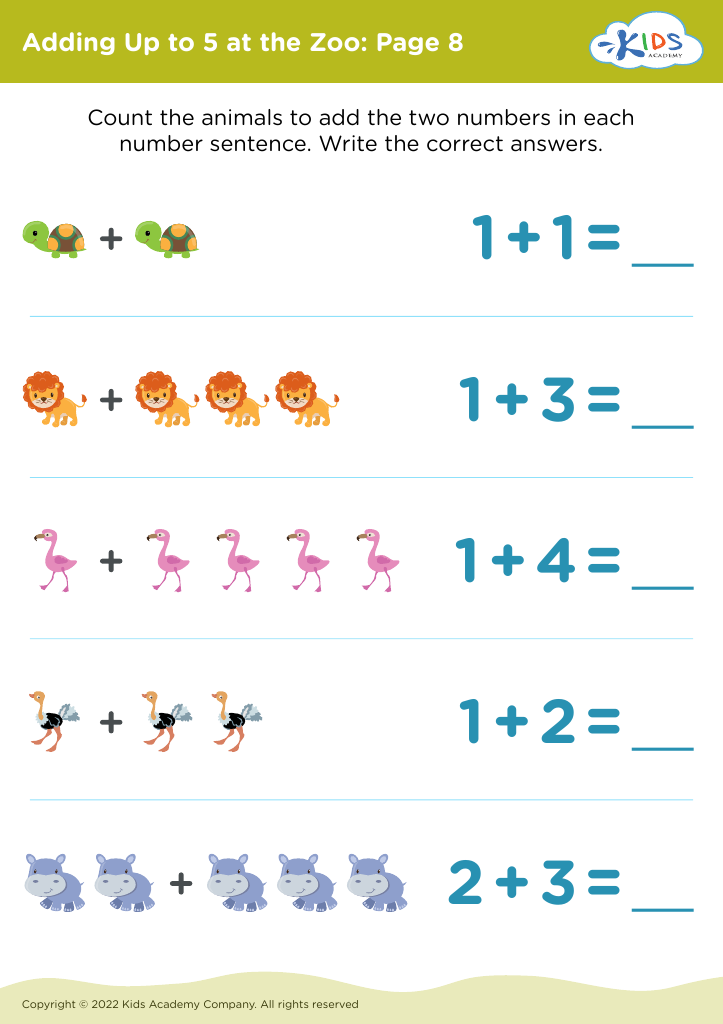
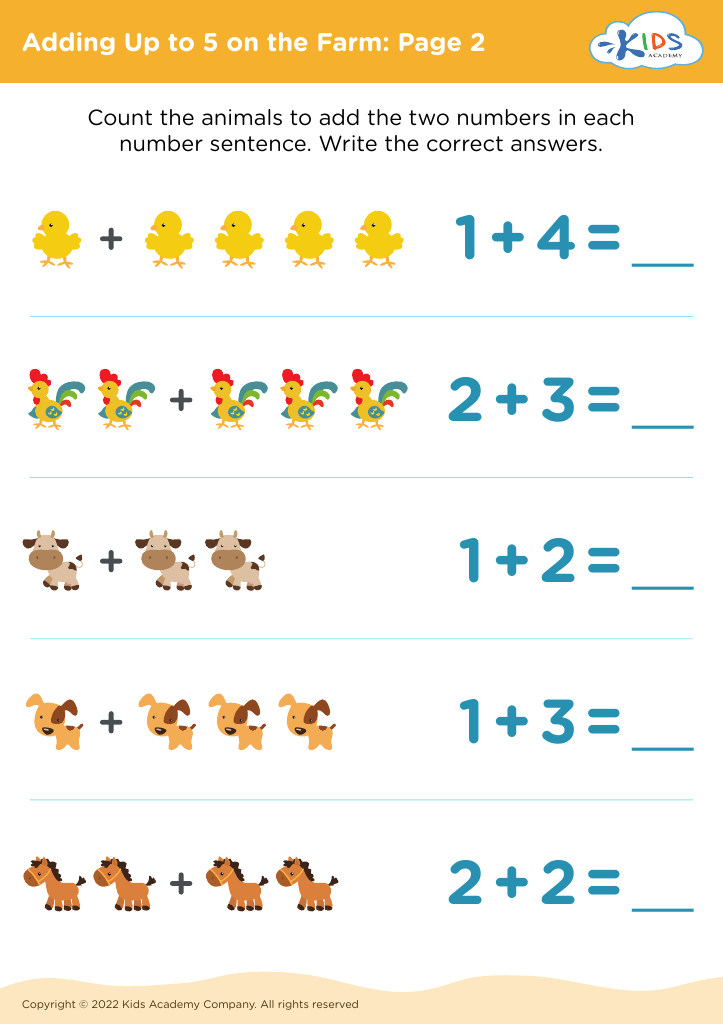
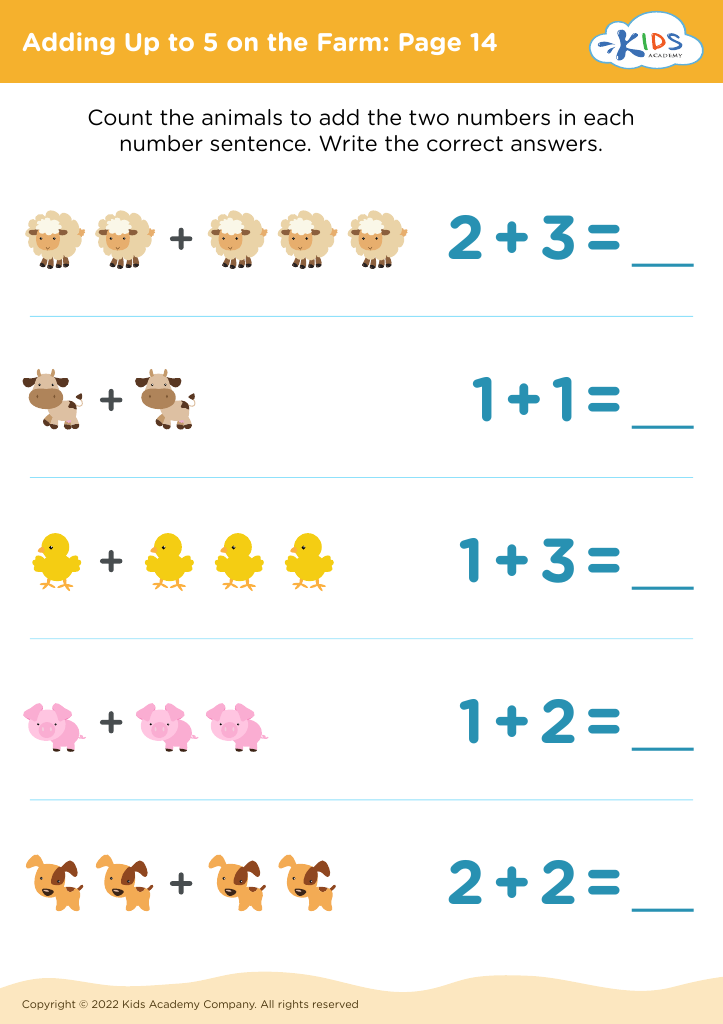
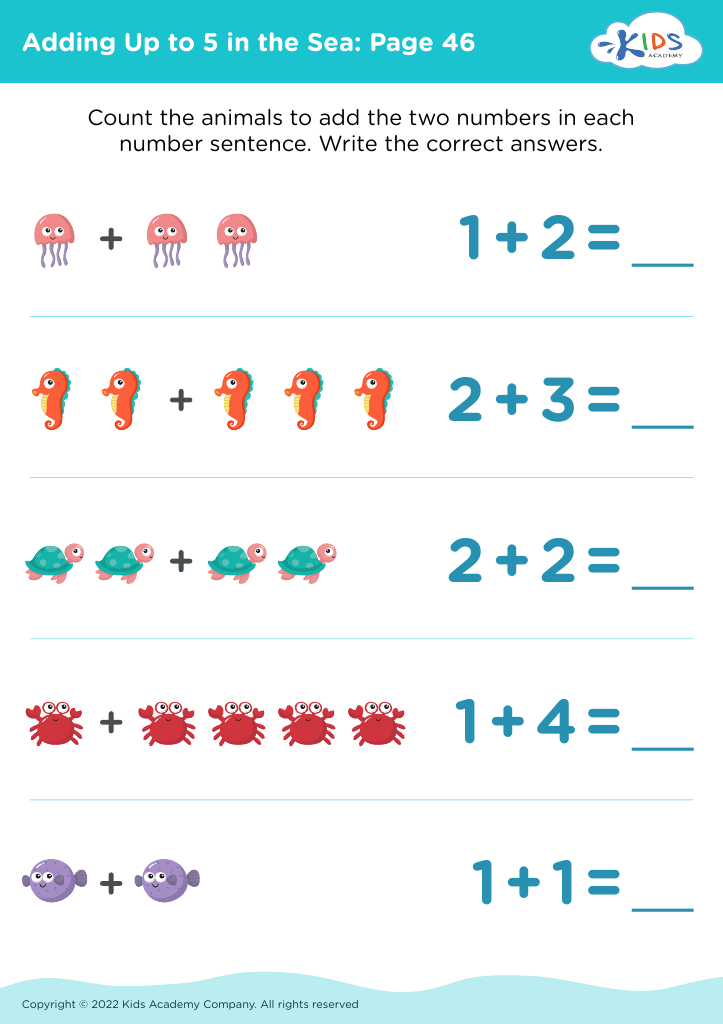
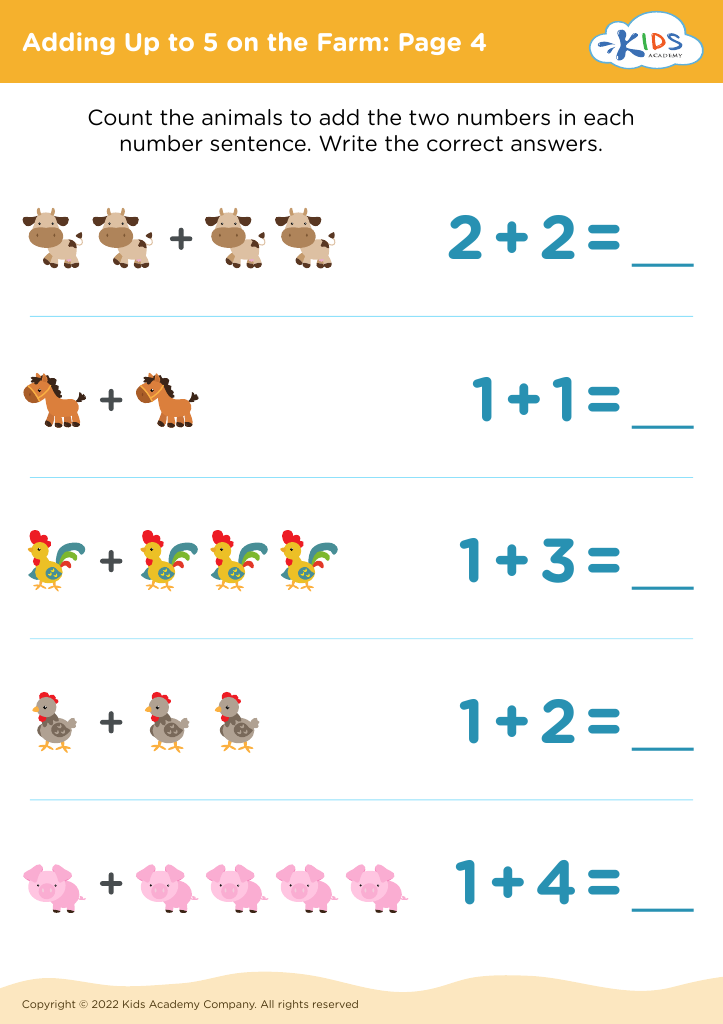
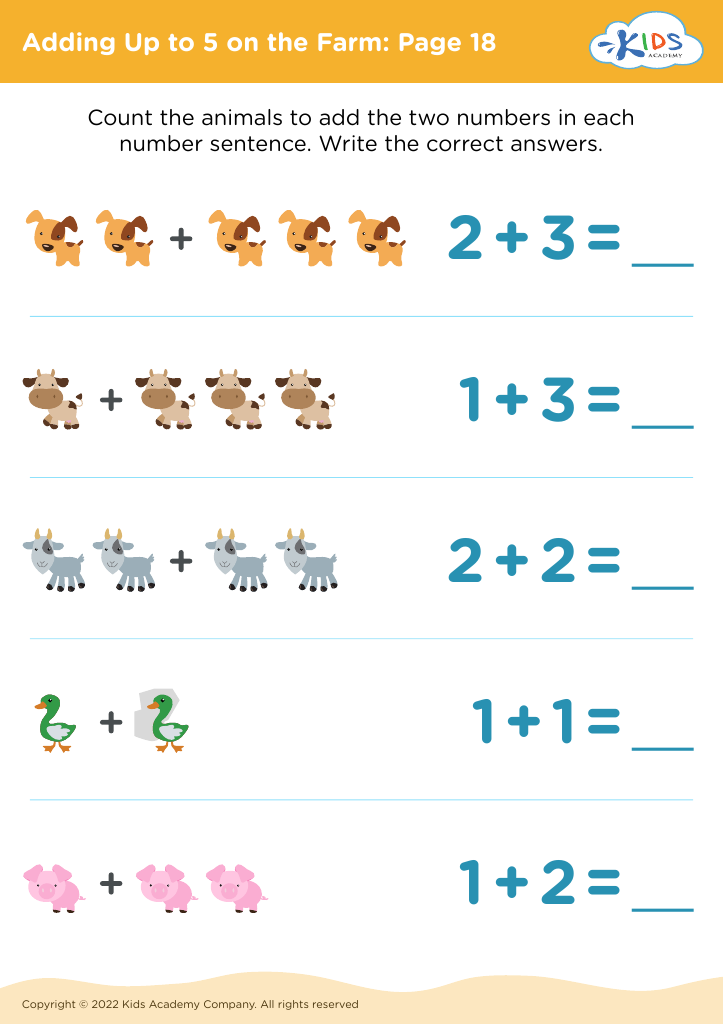
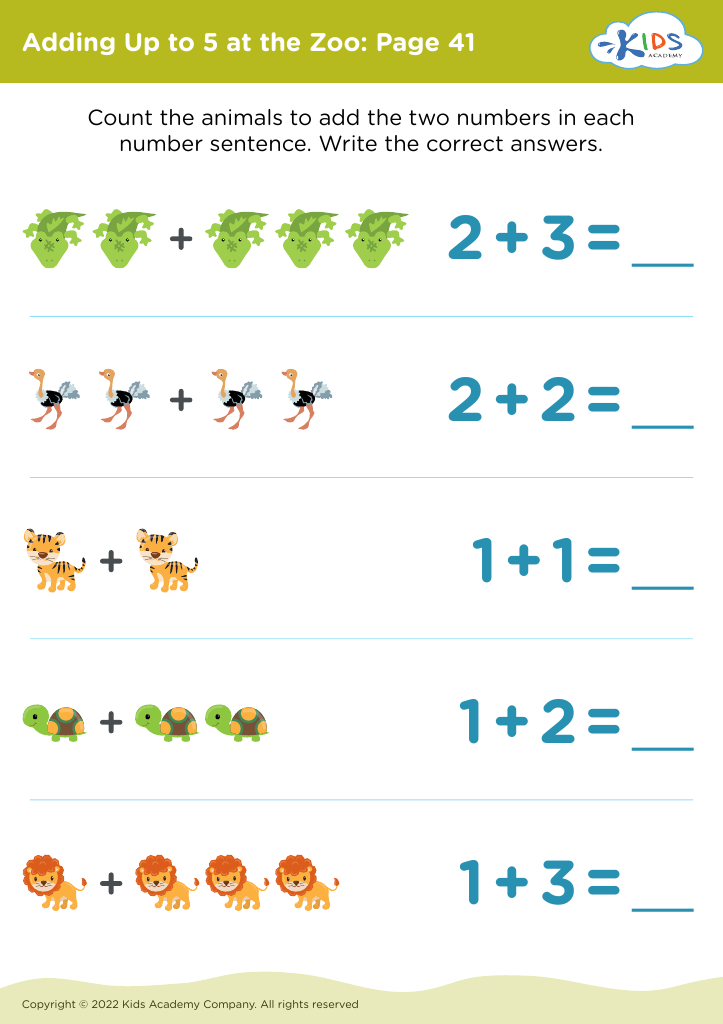
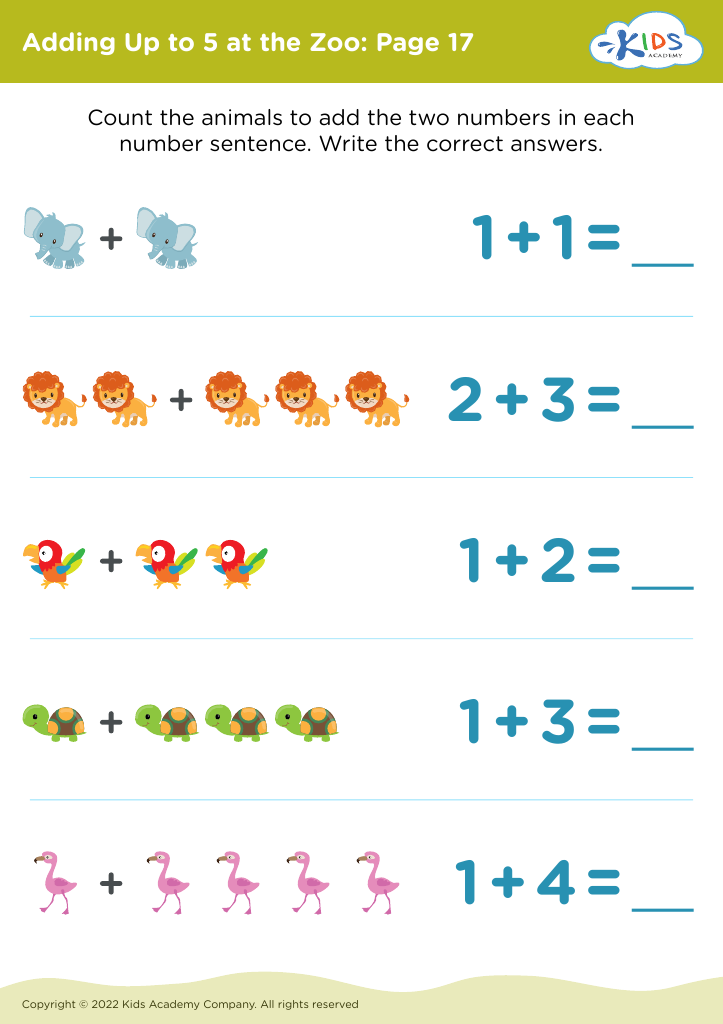
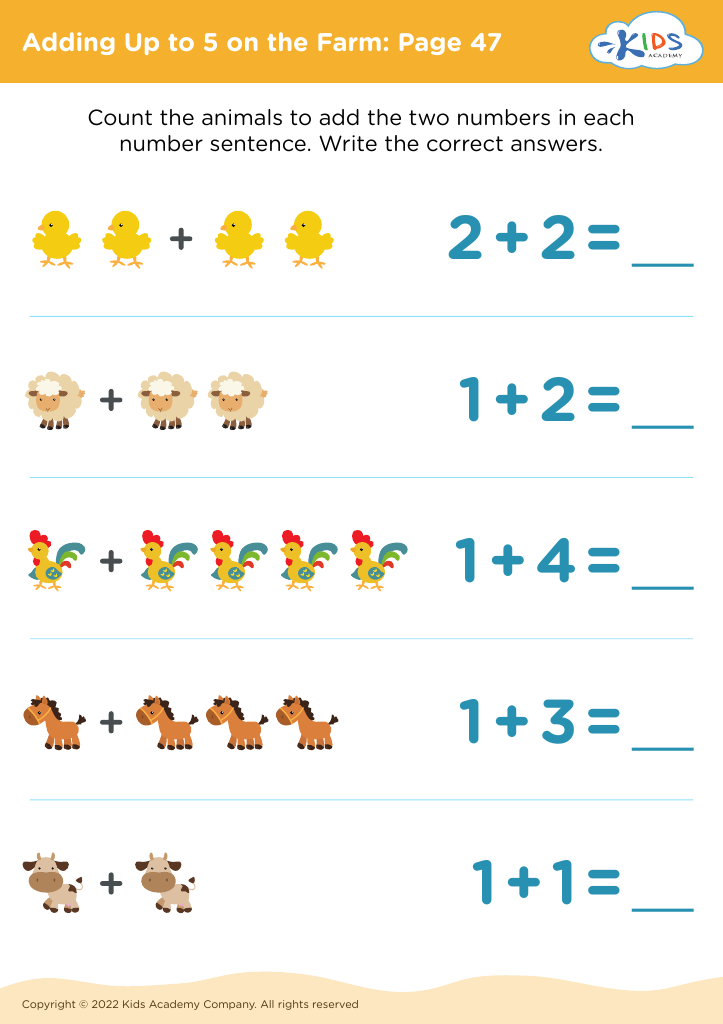
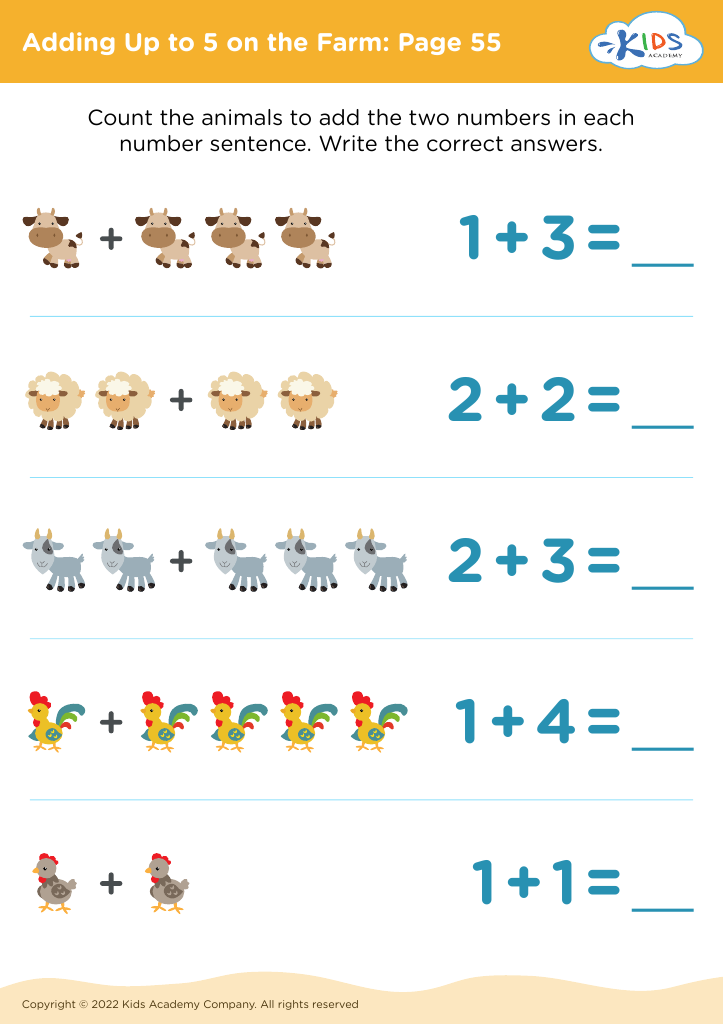
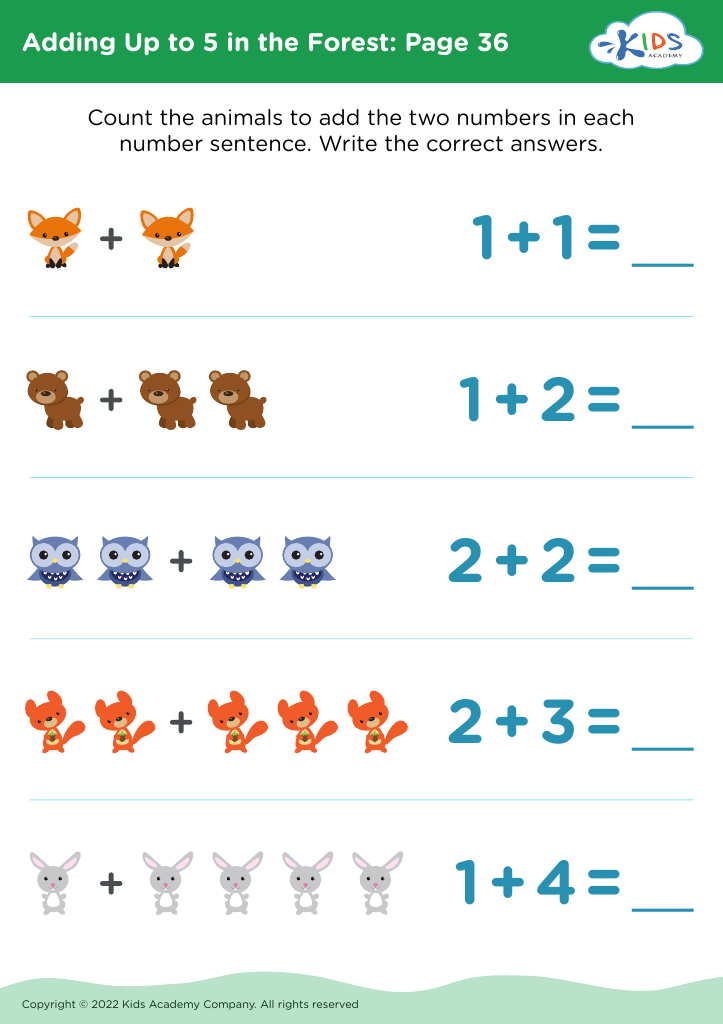
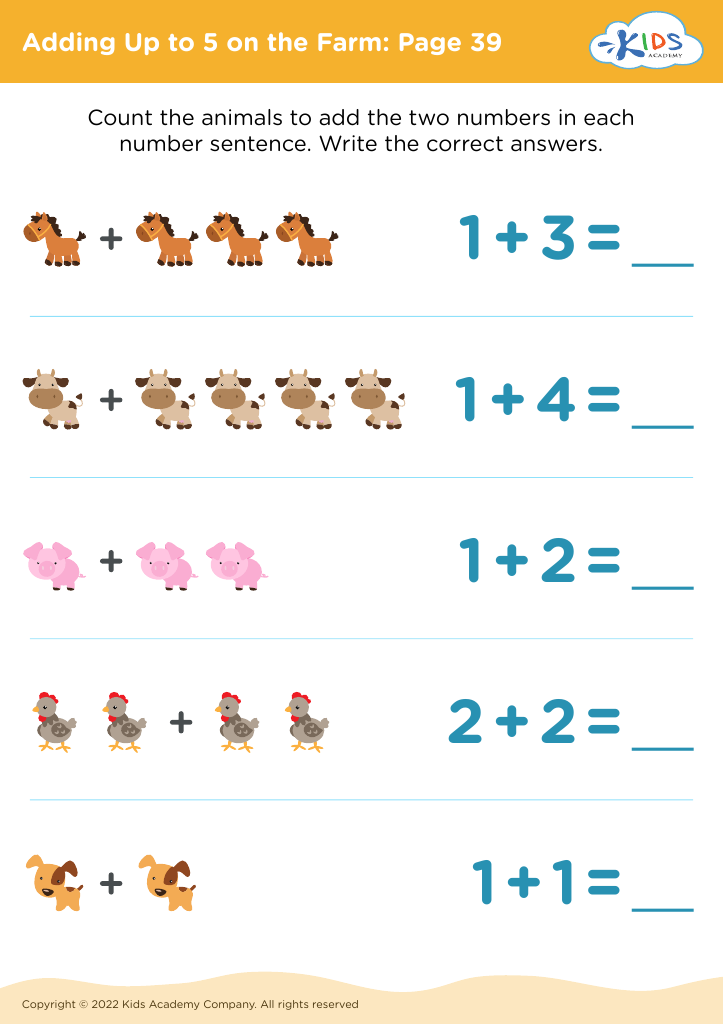
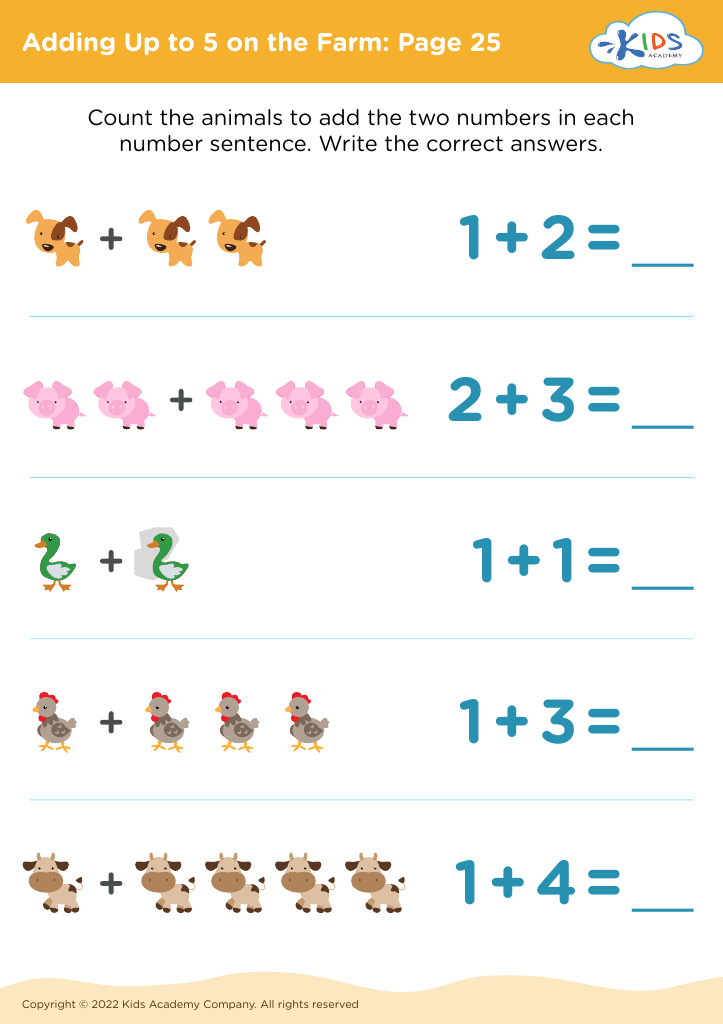
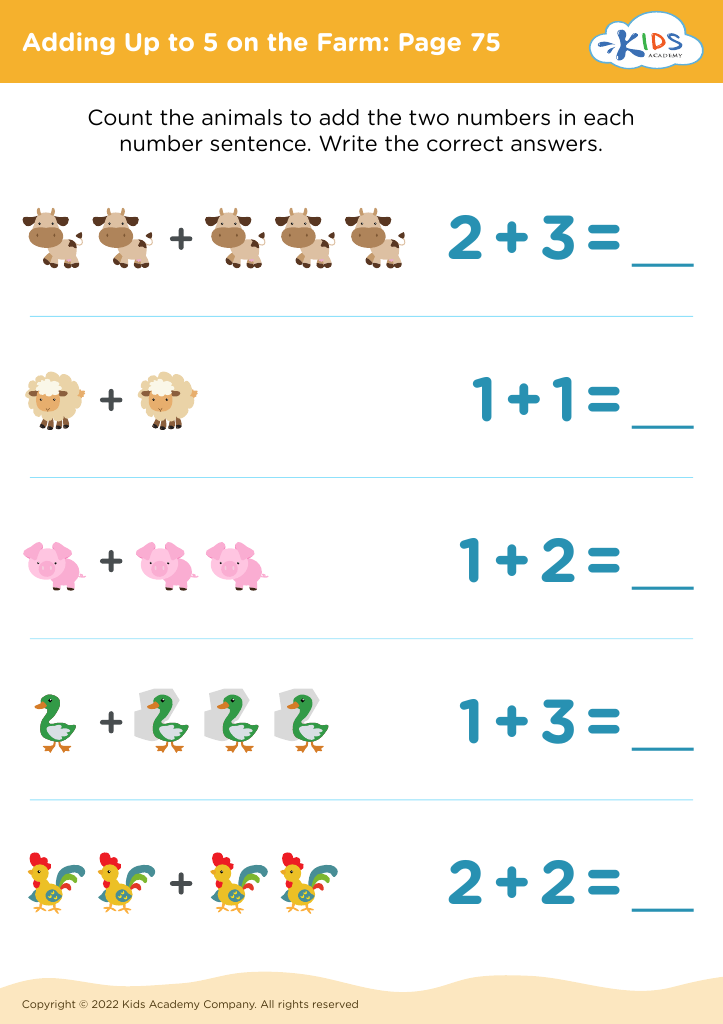
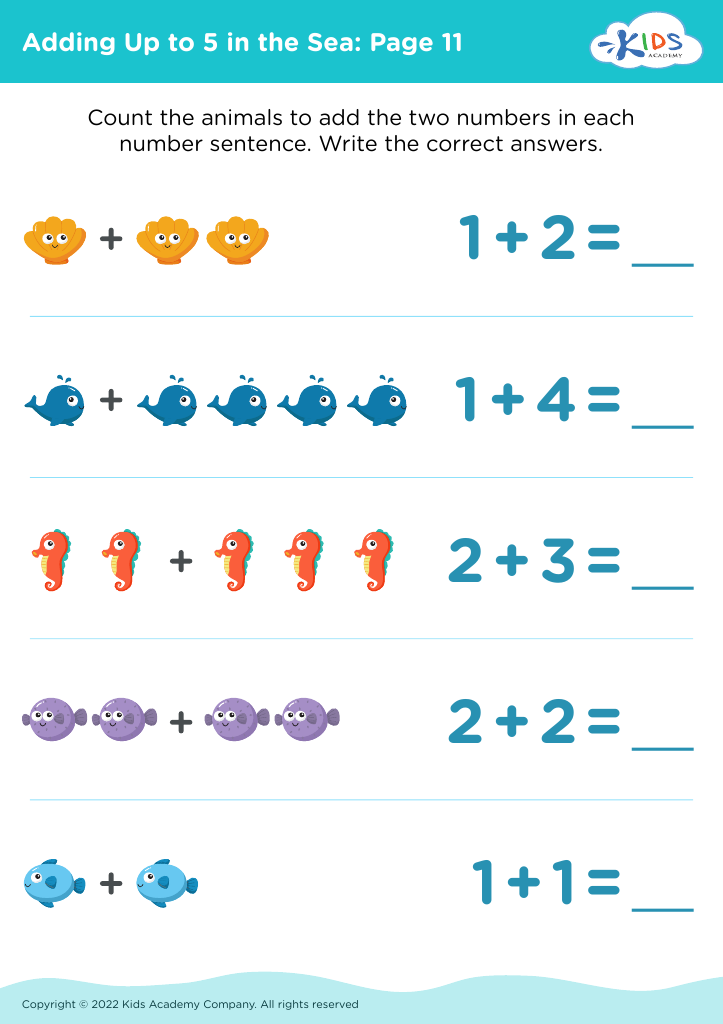
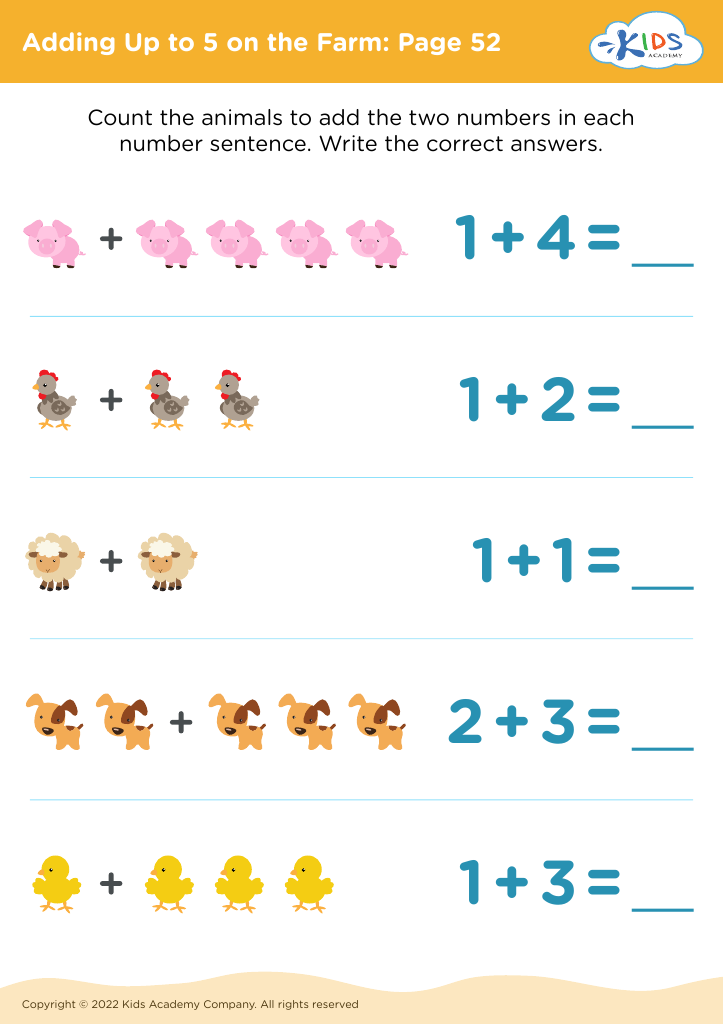
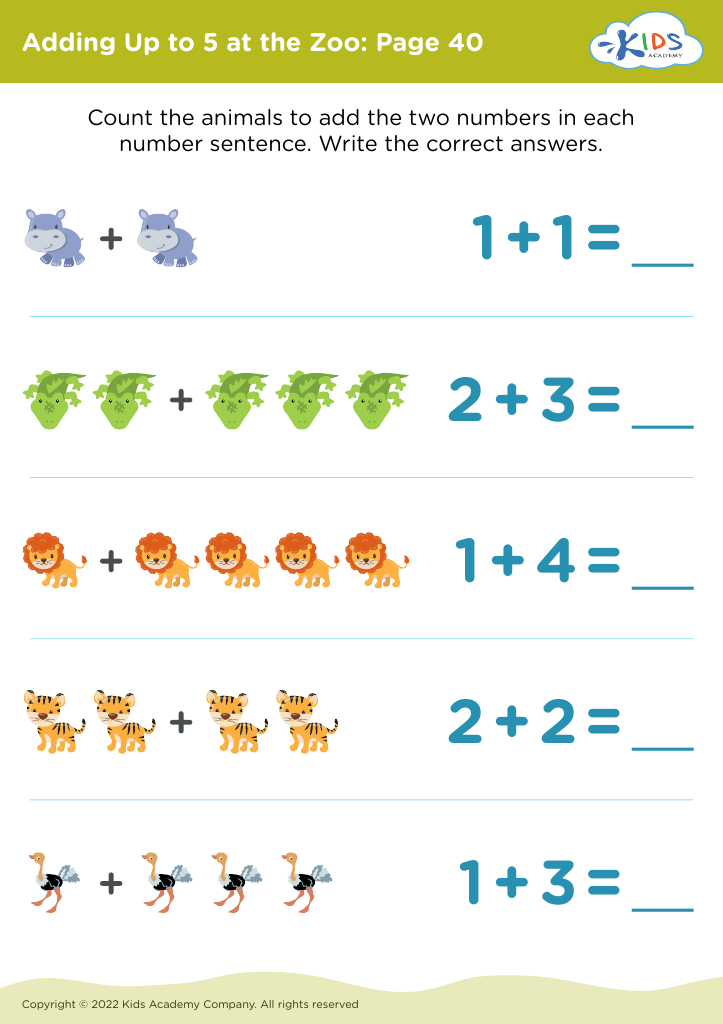
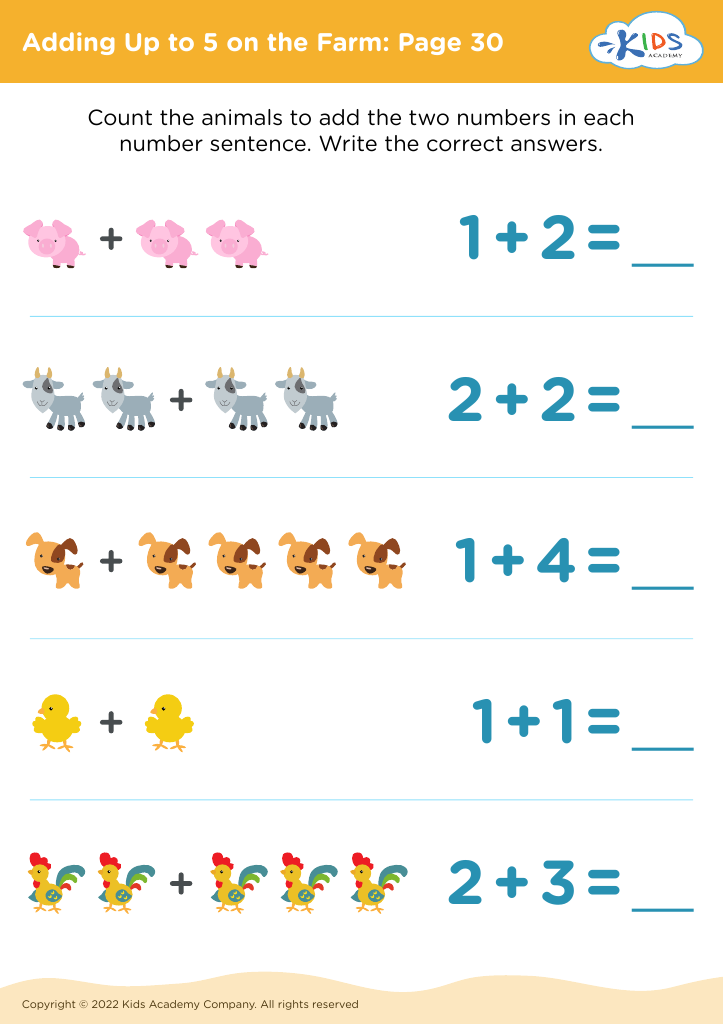








Parents and teachers should greatly value animal identification, alongside basic addition and subtraction activities for 5-year-olds, as they collectively foster cognitive, social, and emotional growth. Identifying animals sparks curiosity about the natural world, enhancing observational skills and promoting language development. Children learn to name animals and describe their characteristics, which enriches their vocabulary and improves communication skills.
Combining this with addition and subtraction exercises offers a multifunctional approach to learning. Early math skills are crucial for academic success; these activities develop numeric understanding, problem-solving abilities, and logical thinking. By using animals in math problems, learning becomes more engaging and relatable. For instance, counting the number of legs on multiple animals can transform a dull math concept into a fun, interactive task.
Moreover, such activities encourage focused attention and persistence. Children learn to follow instructions, complete tasks, and develop fine motor skills through hands-on exploration. Socially, shared activities with peers promote teamwork and cooperation, providing opportunities to improve emotional regulation.
Integrating animal identification with basic math lays a strong, enjoyable foundation for future learning. This symbiotic approach ensures children are not only academically prepared but also intellectually curious and emotionally perceptive, preparing them well for comprehensive, lifelong learning.








