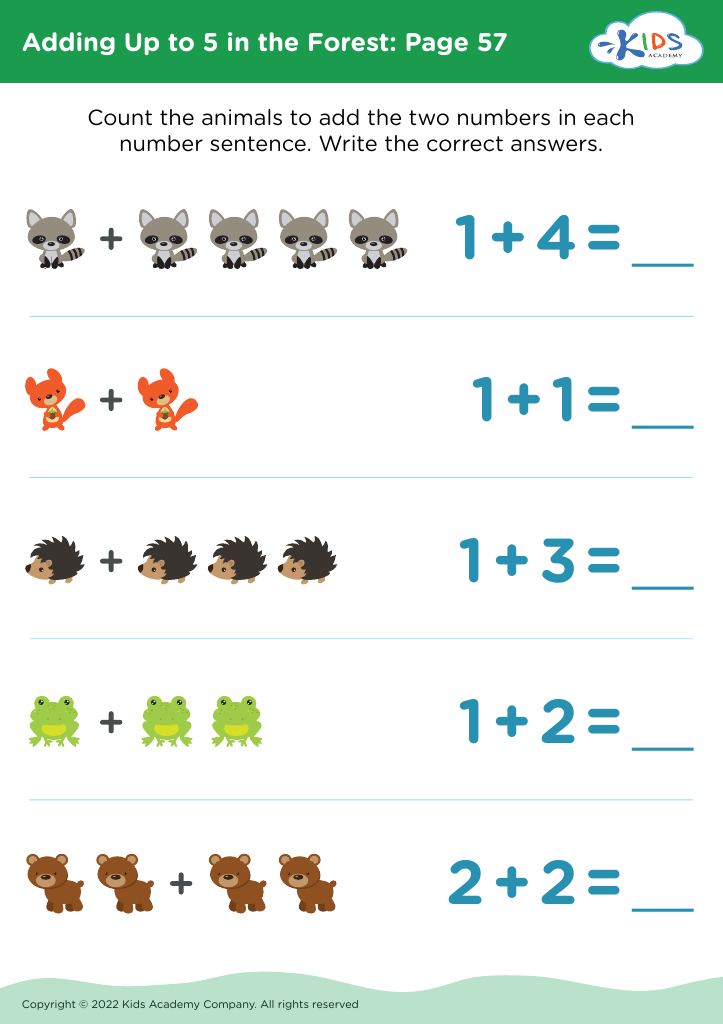








Animal recognition addition and subtraction for 5-year-olds serves as an engaging and effective way to introduce early math concepts while fostering a love for learning. First, incorporating animals into math helps to capture young children's attention, making complex ideas more relatable and enjoyable. Children are naturally drawn to animals, and using them in math lessons facilitates understanding by allowing learners to visualize and conceptualize math problems in a fun context.
Furthermore, this approach supports the development of crucial cognitive skills. Through activities like counting animals, grouping them, or determining how many are left after some "leave," children practice addition and subtraction in a hands-on way. This method promotes critical thinking and problem-solving skills that are foundational for later academic success.
Additionally, linking math to familiar experiences—like animals they encounter in books or at zoos—helps scaffold their learning, enabling them to grasp abstract concepts through tangible examples. Importantly, these activities also foster social skills, as children often work in pairs or groups, enhancing communication and collaboration. By emphasizing animal recognition in math, parents and teachers not only enrich a child's educational journey but also lay a solid foundation for future learning across various subjects.








