Filters

107 filtered results

Clear all filters
Favorites
With answer key
Interactive

107 filtered results

Difficulty Level

Grade


Check out this FREE Trial Lesson on Addition & Subtraction for age 5!

P

Favorites
With answer key
Interactive
  • 5
  • Cognitive Development
  • Addition & Subtraction
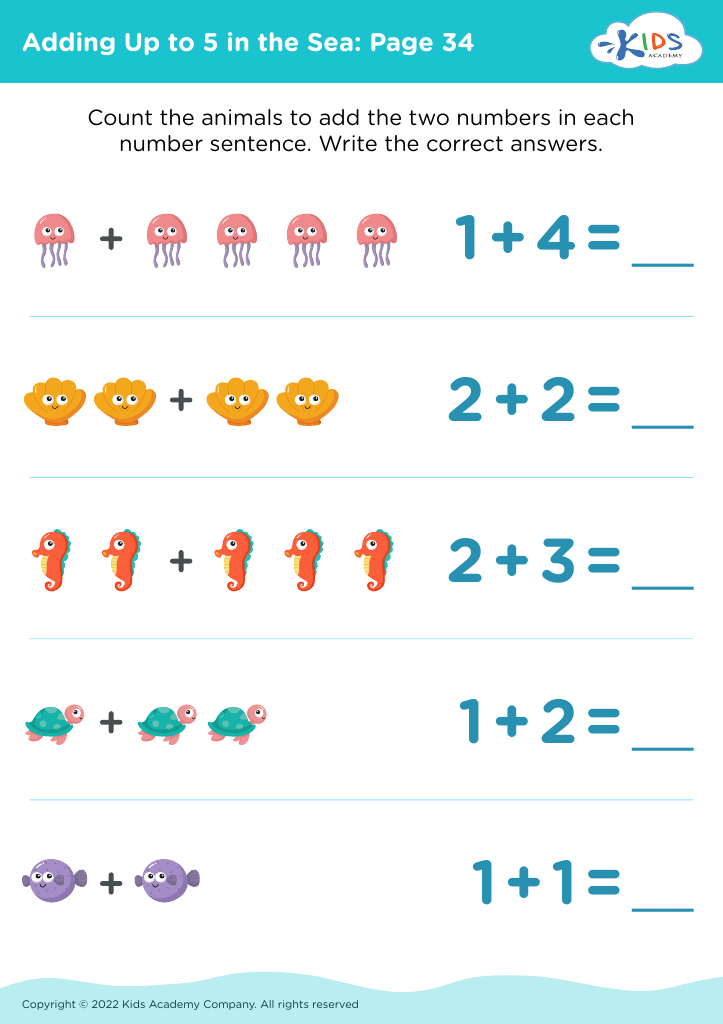
Adding Up to 5 in the Sea: Page 34
Worksheet
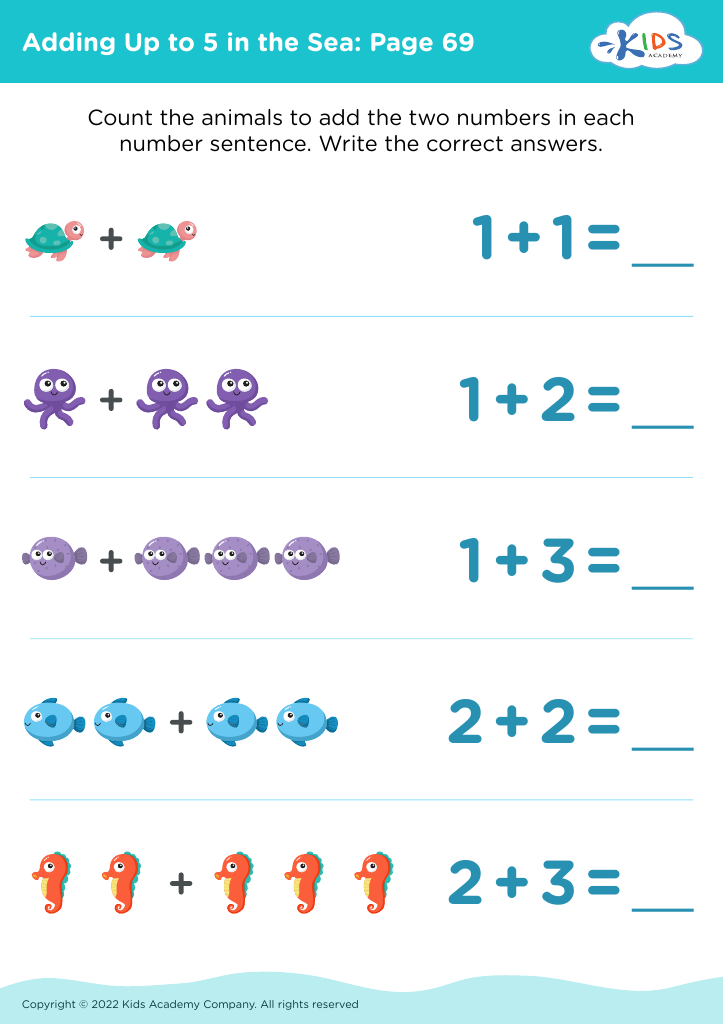
Adding Up to 5 in the Sea: Page 69
Worksheet
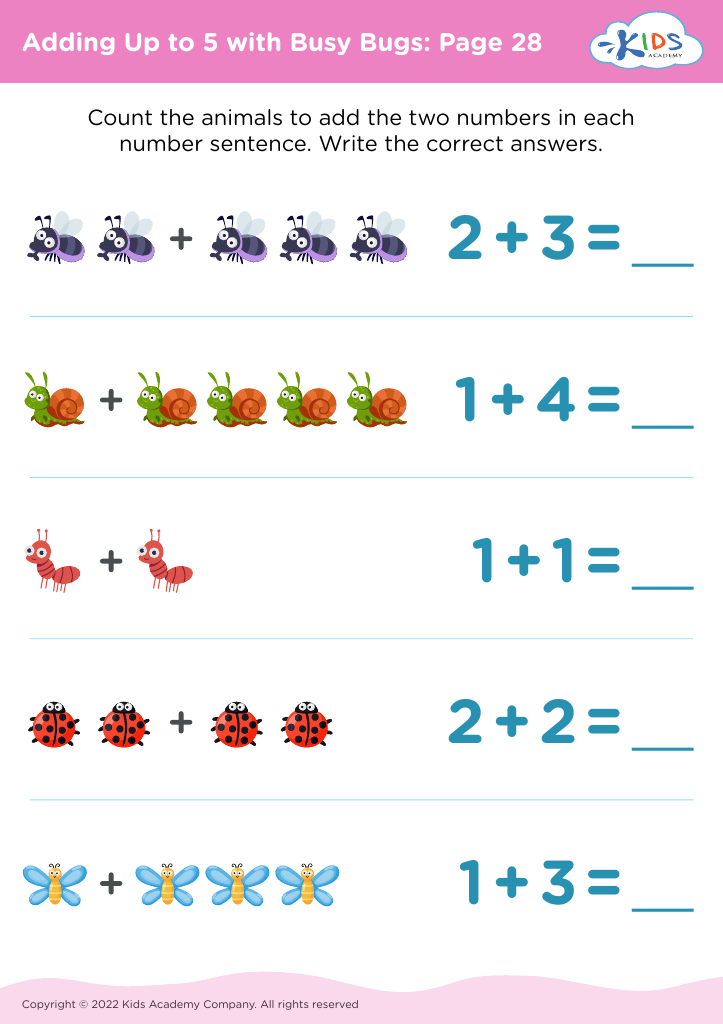
Adding Up to 5 with Busy Bugs: Page 28
Worksheet
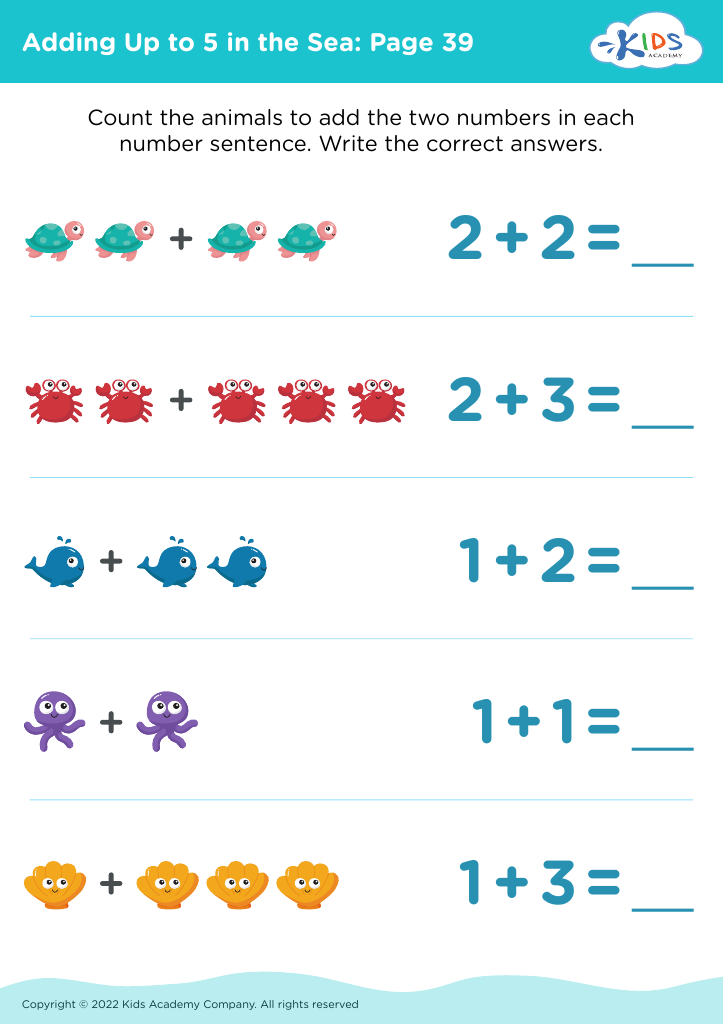
Adding Up to 5 in the Sea: Page 39
Worksheet
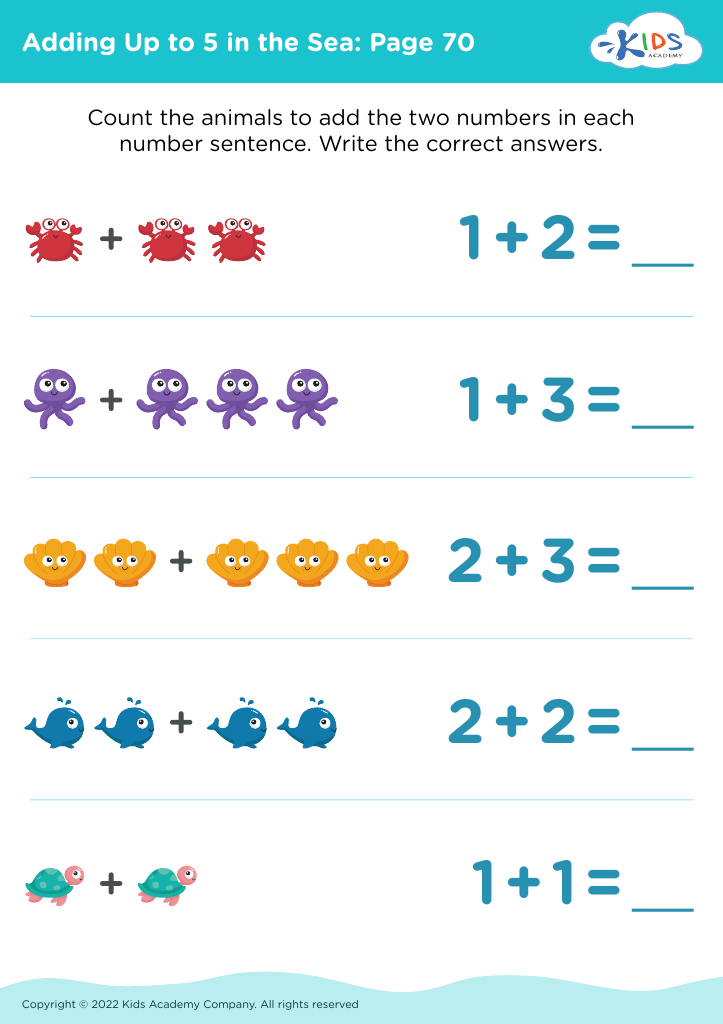
Adding Up to 5 in the Sea: Page 70
Worksheet
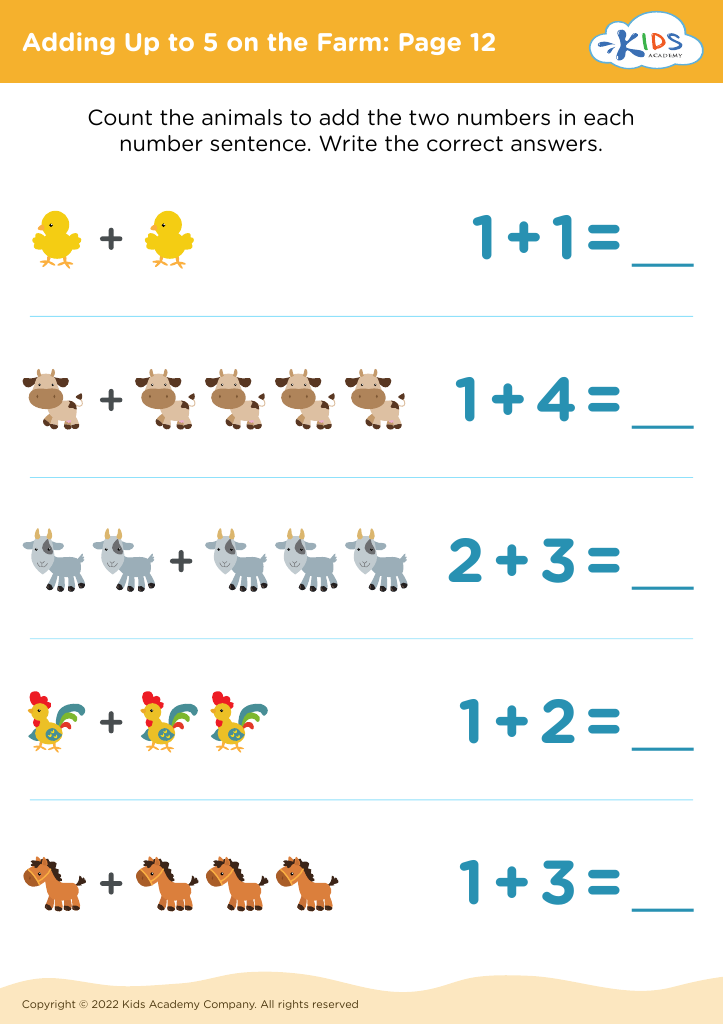
Adding Up to 5 on the Farm: Page 12
Worksheet
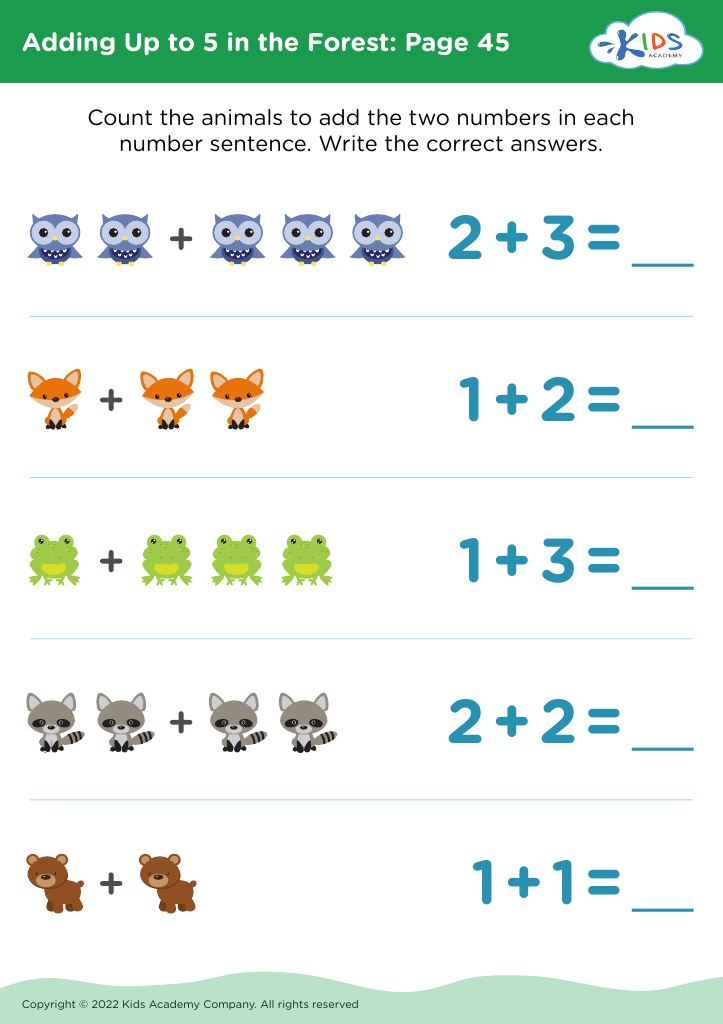
Adding Up to 5 in the Forest: Page 45
Worksheet
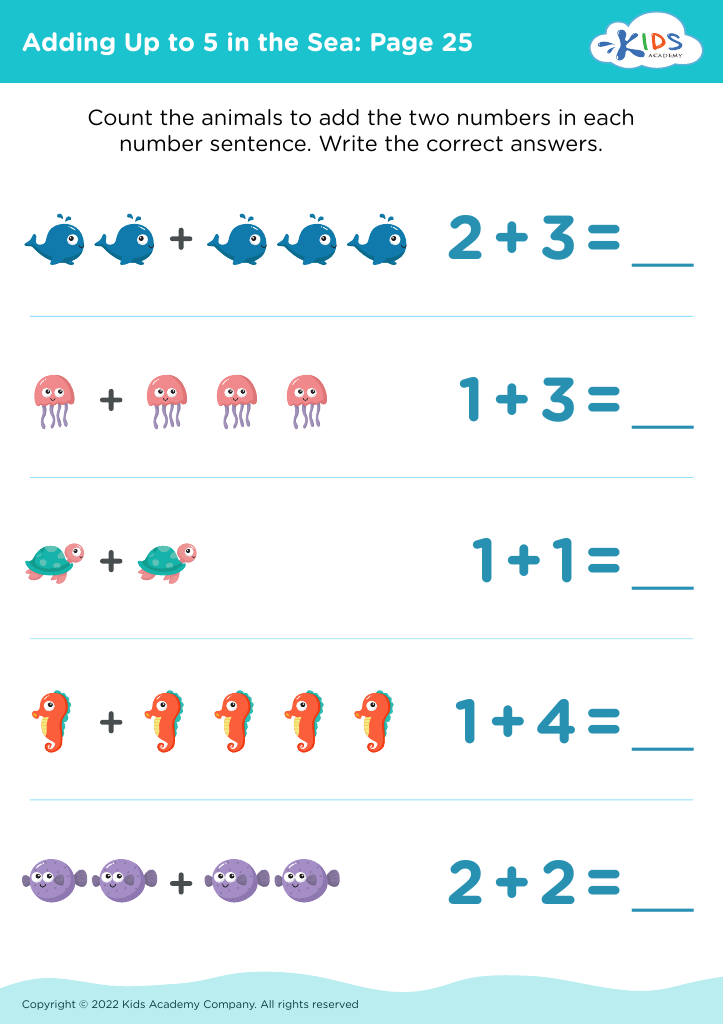
Adding Up to 5 in the Sea: Page 25
Worksheet
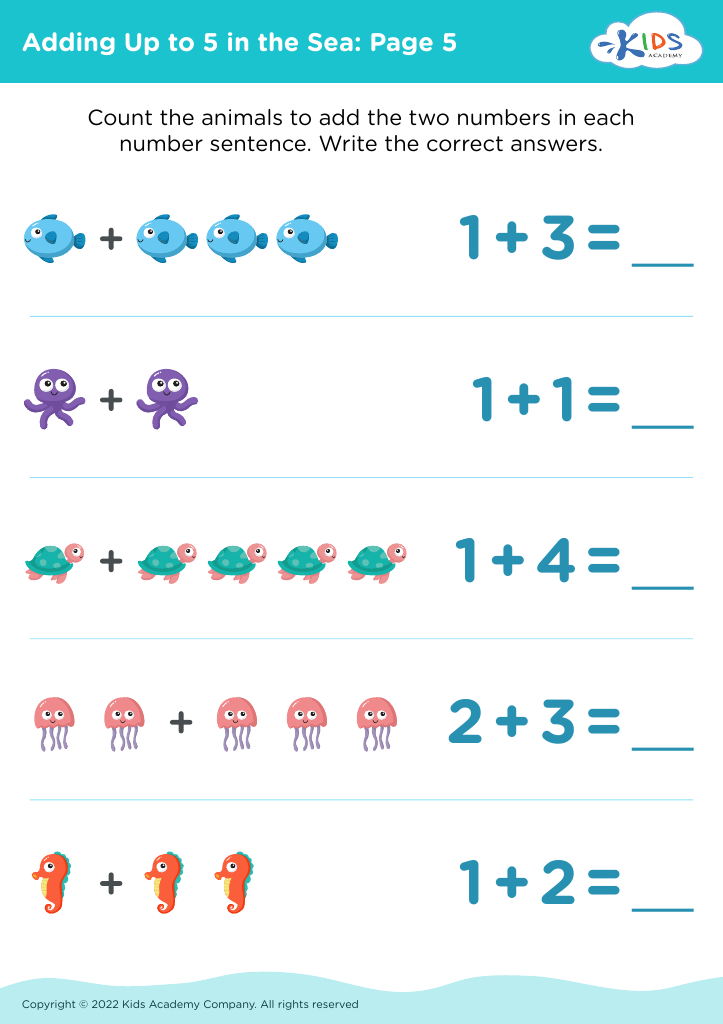
Adding Up to 5 in the Sea: Page 5

Adding Up to 5 in the Sea: Page 5

Adding Up to 5 in the Sea: Page 5
Worksheet
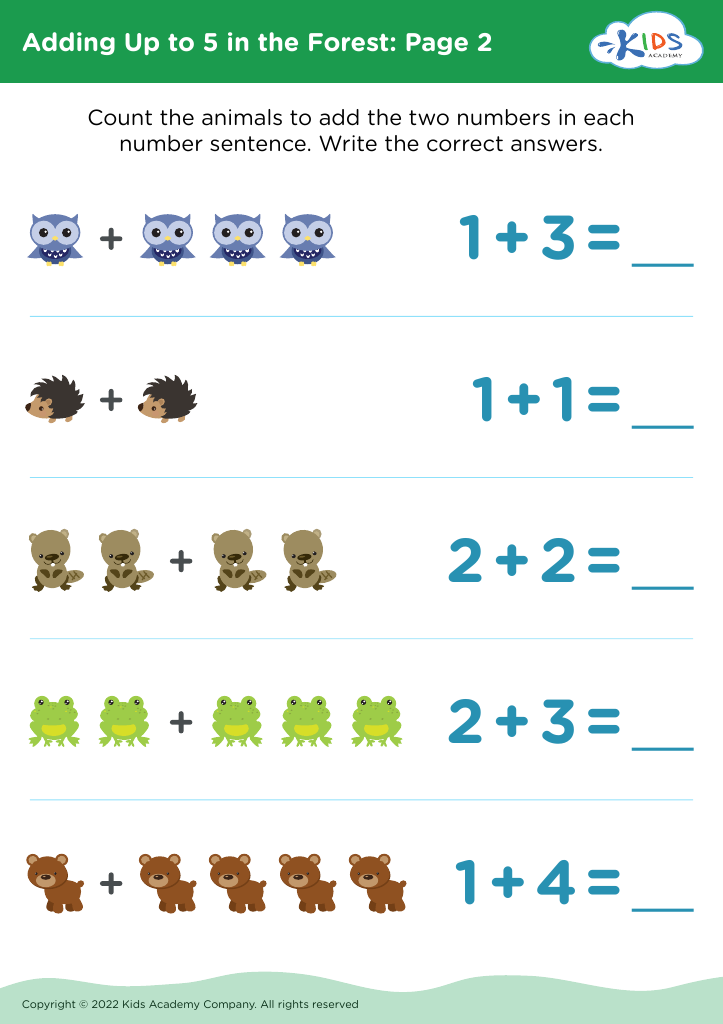
Adding Up to 5 in the Forest: Page 2
Worksheet
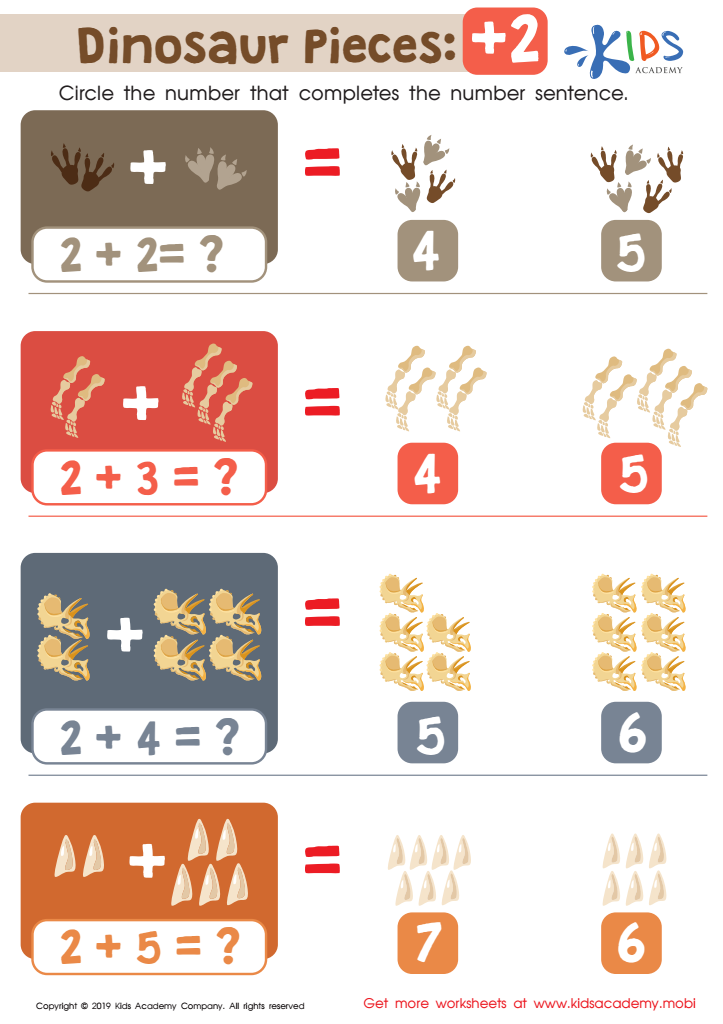
Dinosaur Pieces: +2 Worksheet

Dinosaur Pieces: +2 Worksheet

Kids love dinosaurs! See if your kids can solve these three equations featuring the mysterious creatures. Download the PDF and have them circle the number that completes each equation. Dinosaurs are extinct, not seen for thousands of years, but they can still help kids work on their math skills!
Dinosaur Pieces: +2 Worksheet
Worksheet
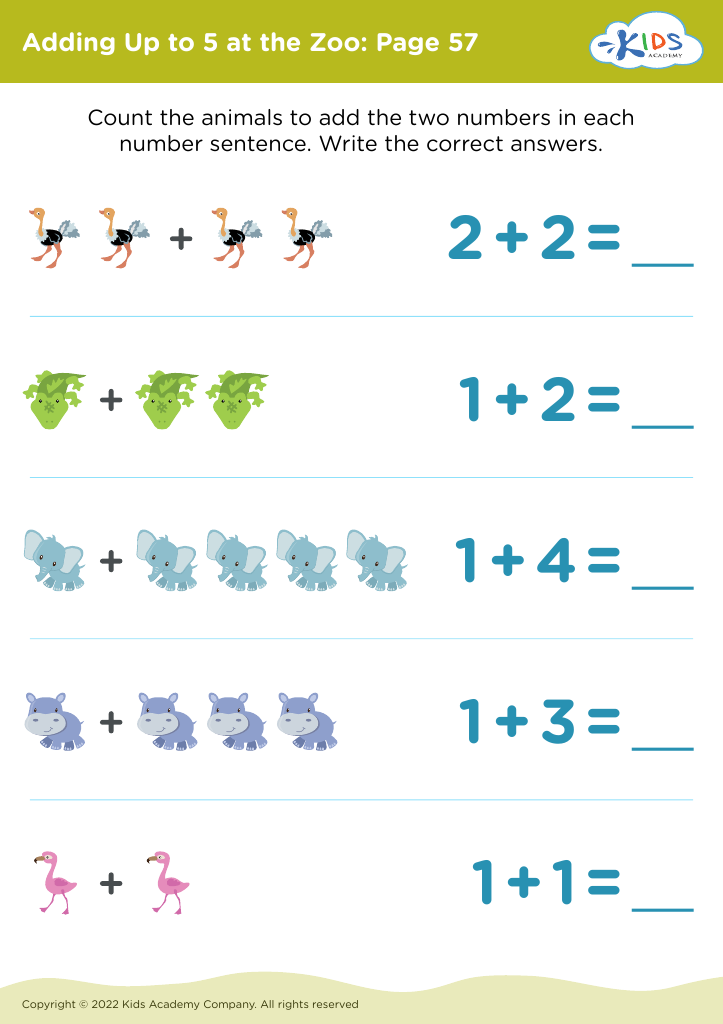
Adding Up to 5 at the Zoo: Page 57
Worksheet
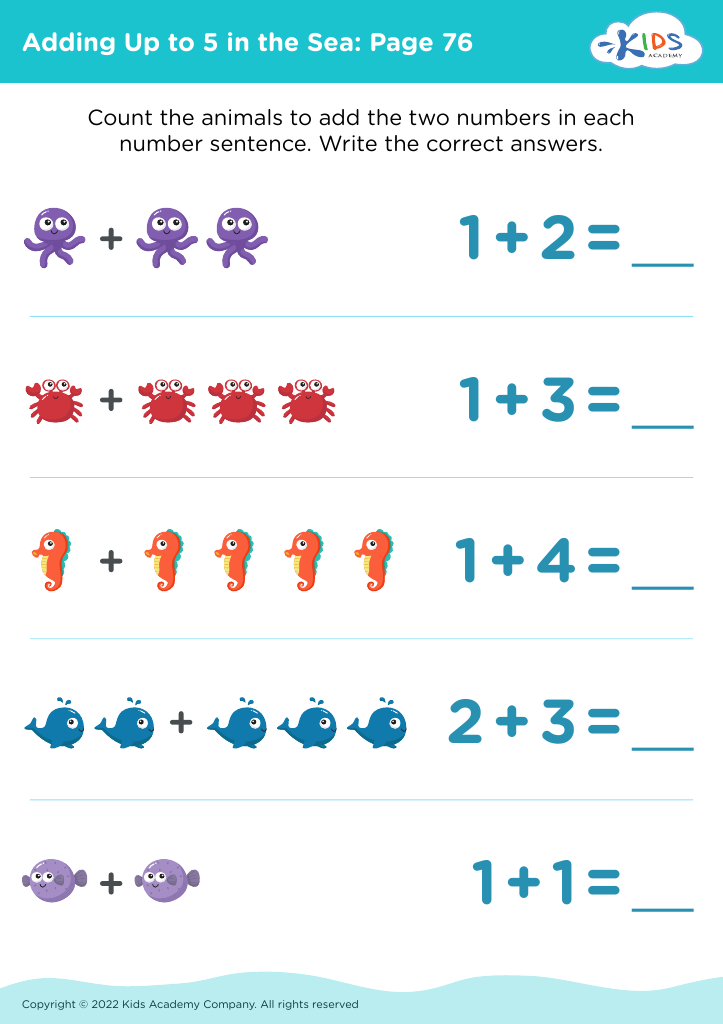
Adding Up to 5 in the Sea: Page 76
Worksheet
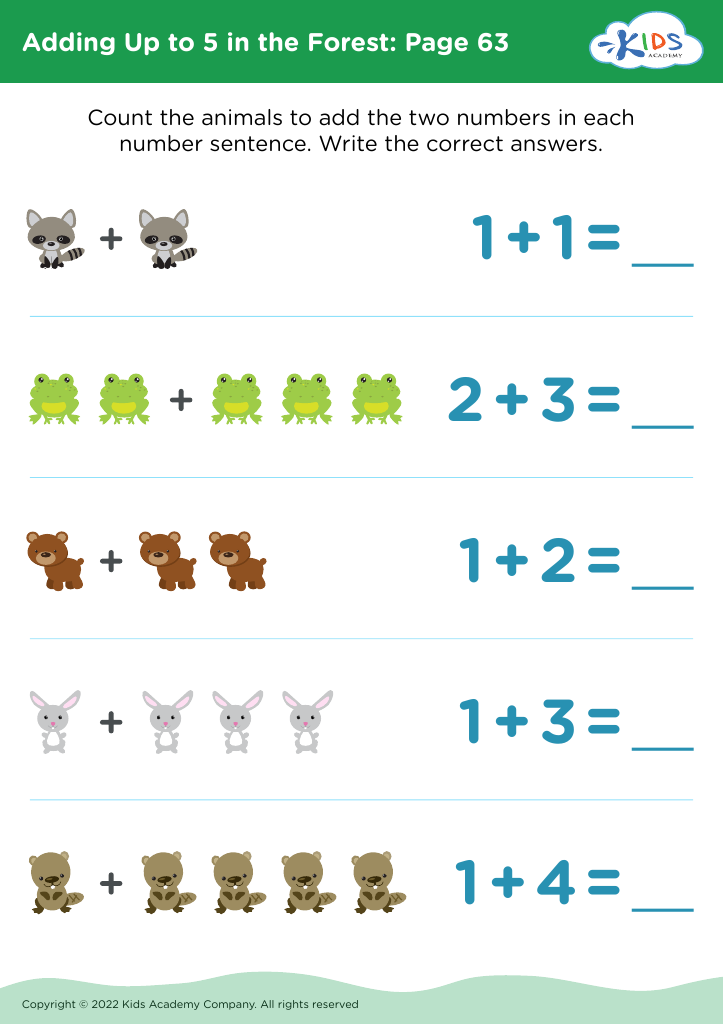
Adding Up to 5 in the Forest: Page 63
Worksheet
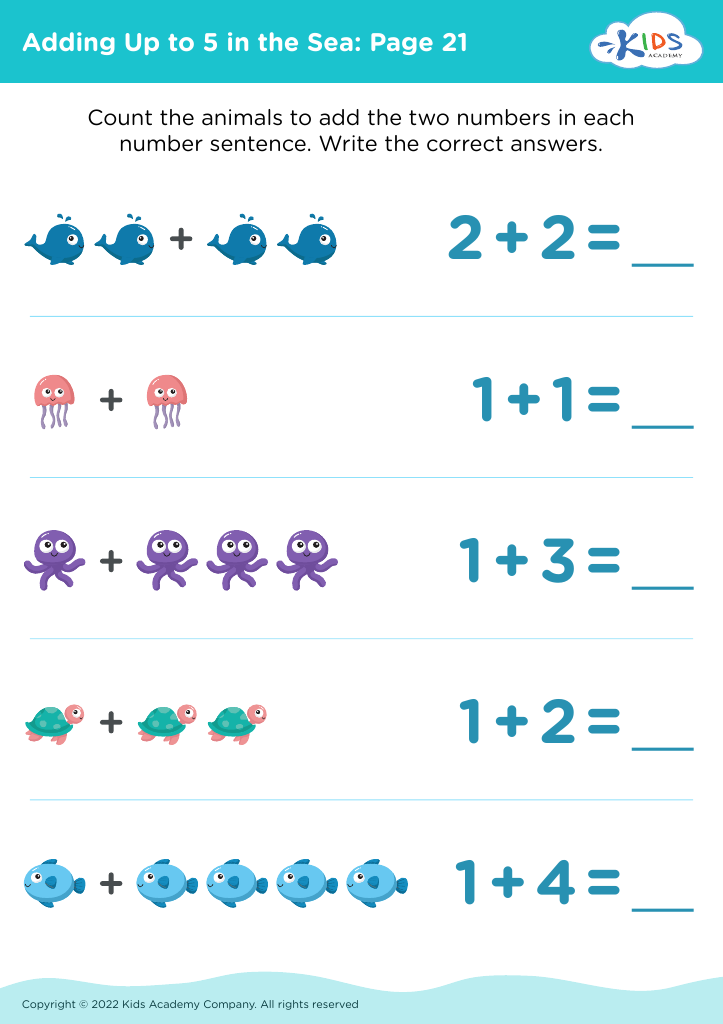
Adding Up to 5 in the Sea: Page 21
Worksheet
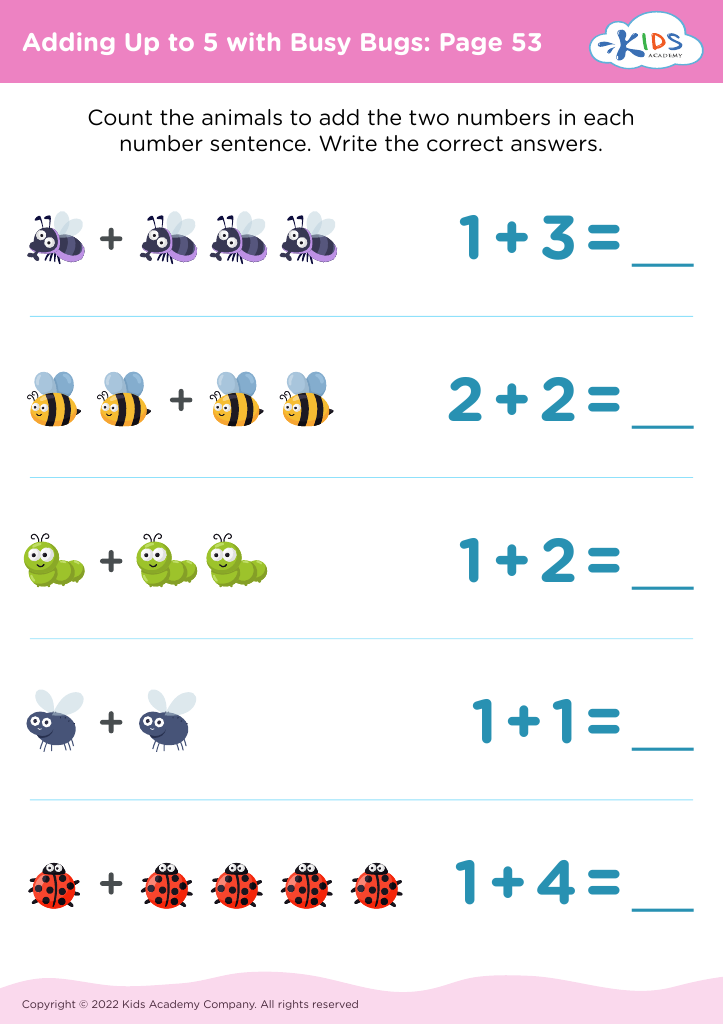
Adding Up to 5 with Busy Bugs: Page 53
Worksheet
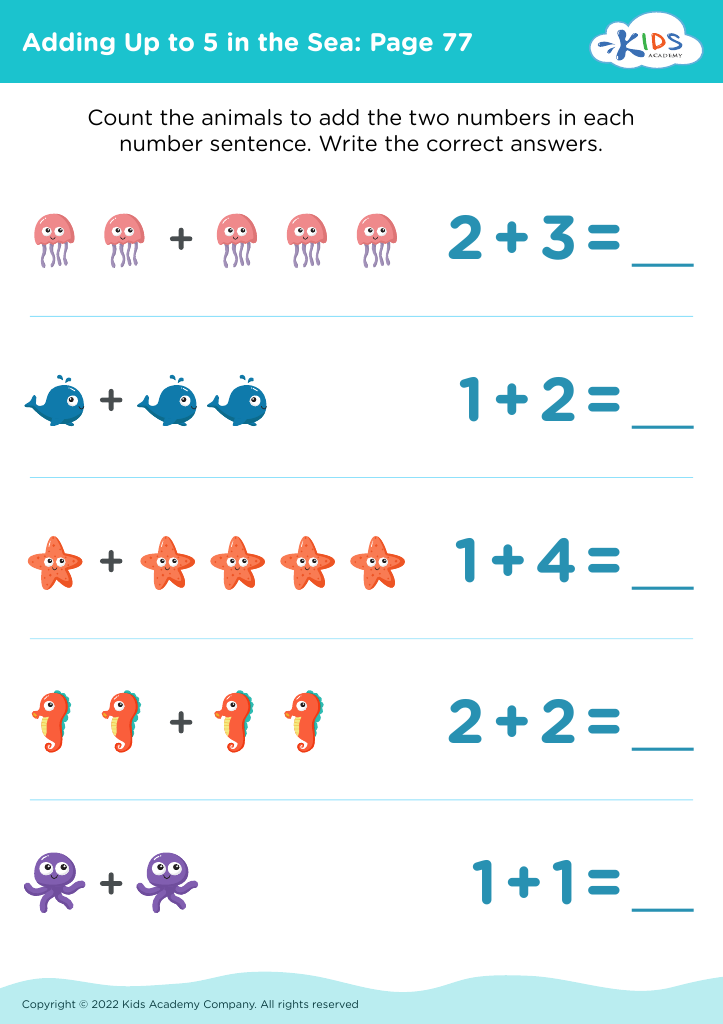
Adding Up to 5 in the Sea: Page 77
Worksheet
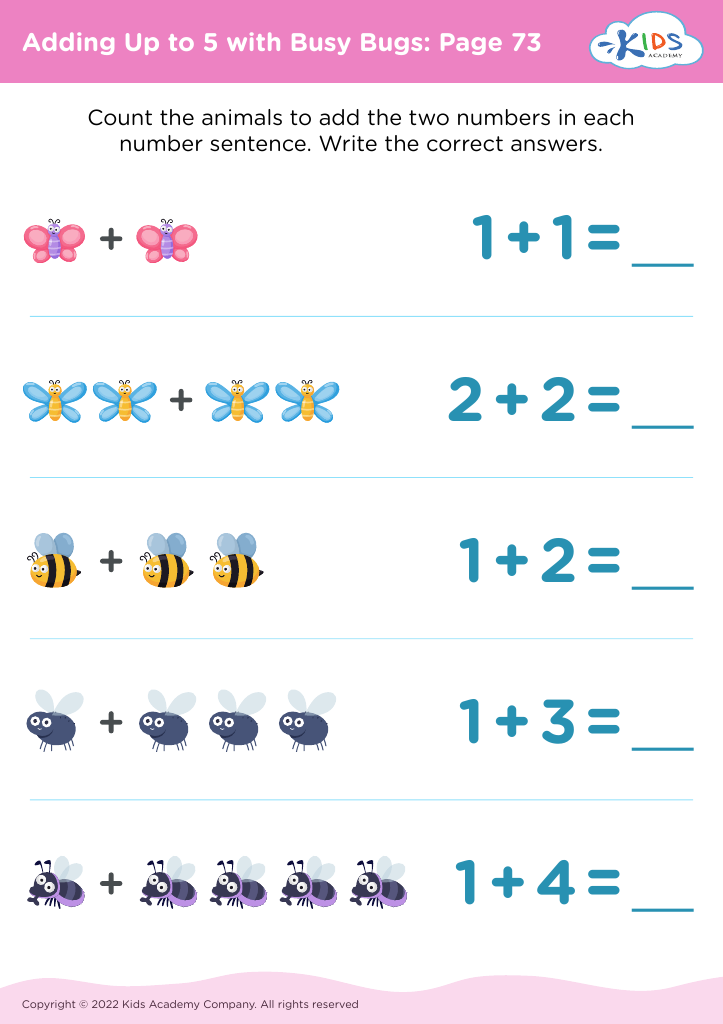
Adding Up to 5 with Busy Bugs: Page 73
Worksheet
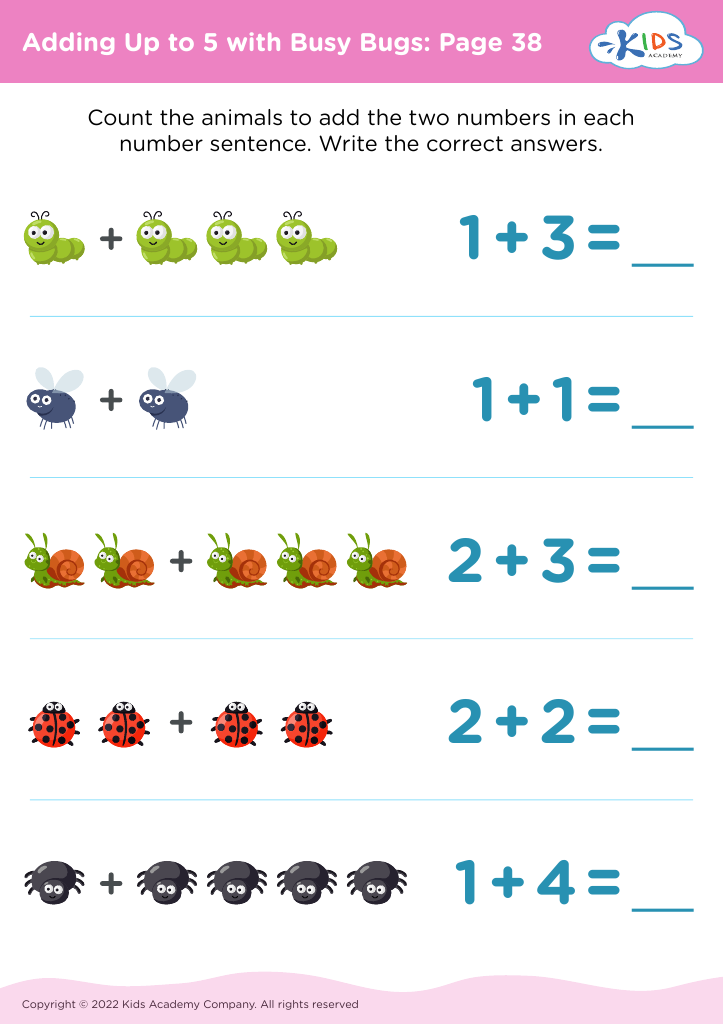
Adding Up to 5 with Busy Bugs: Page 38
Worksheet
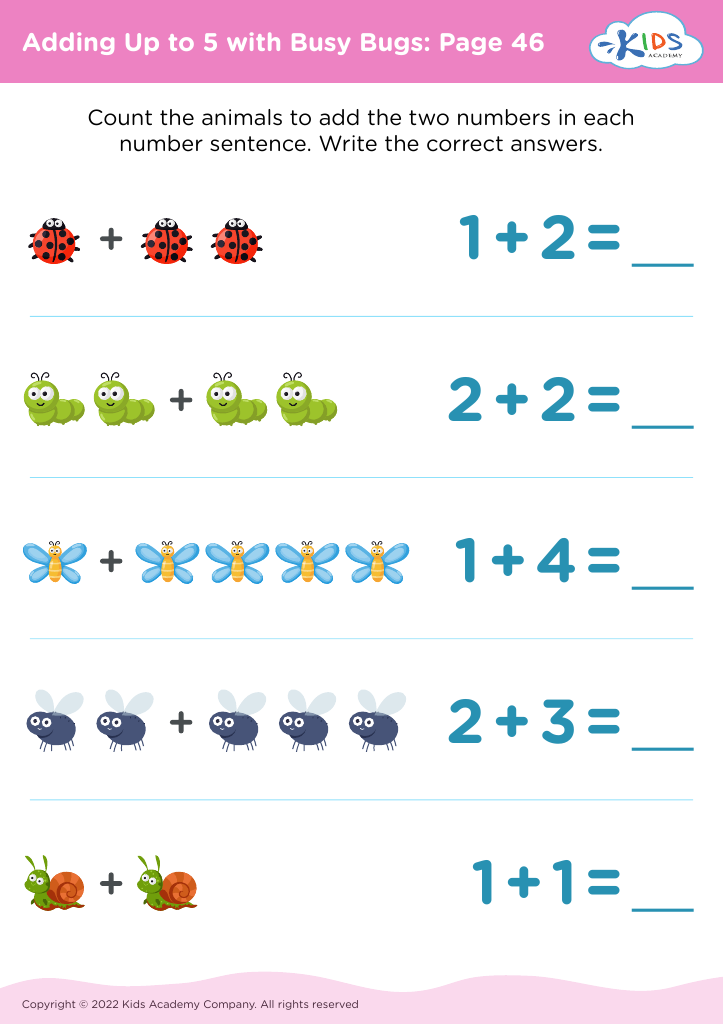
Adding Up to 5 with Busy Bugs: Page 46
Worksheet
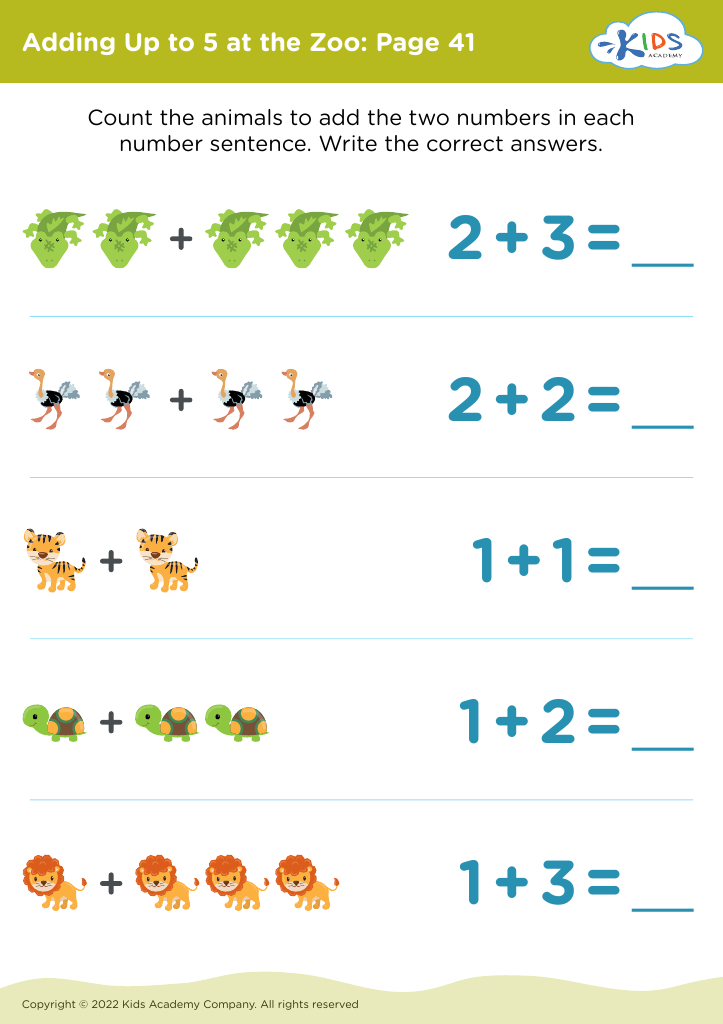
Adding Up to 5 at the Zoo: Page 41
Worksheet
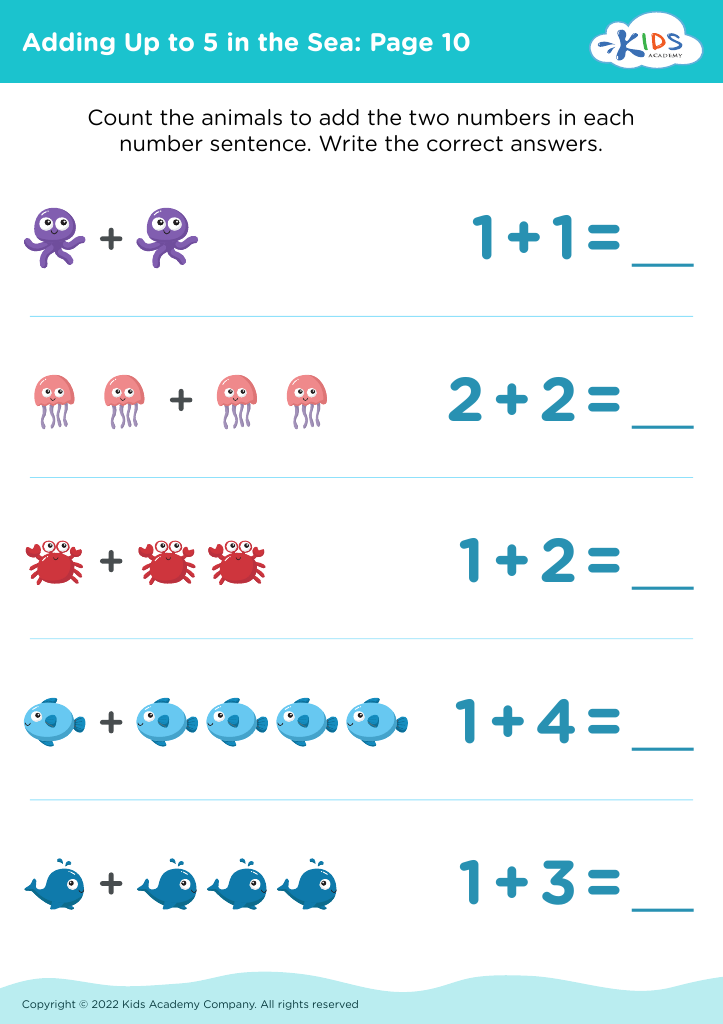
Adding Up to 5 in the Sea: Page 10
Worksheet
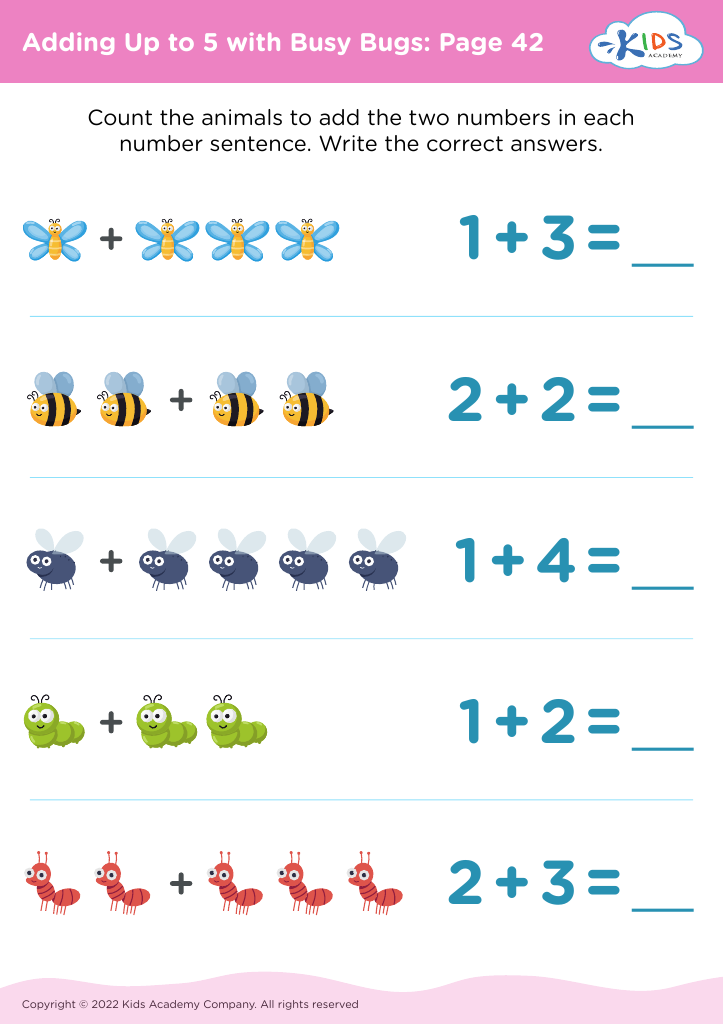
Adding Up to 5 with Busy Bugs: Page 42
Worksheet
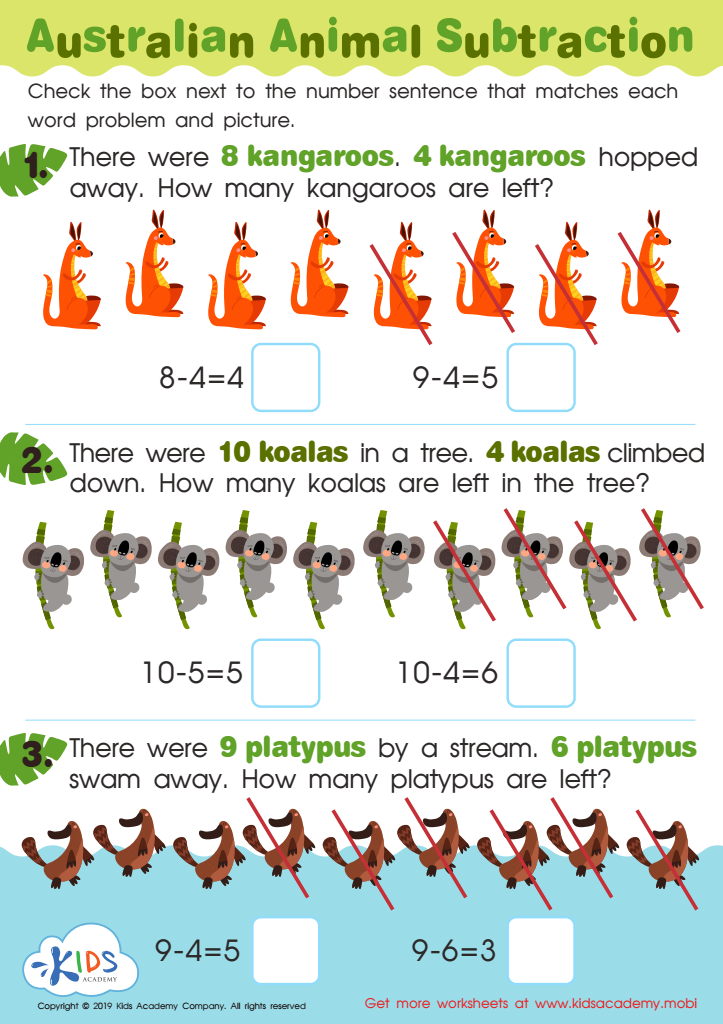
Australian Animal Subtraction Worksheet


Australian Animal Subtraction Worksheet

Test your child's wildlife knowledge. Ask them to name animals indigenous to Australia or other countries. Show them the animals in this worksheet and have them match each word problem and picture with the correct number sentence.
Australian Animal Subtraction Worksheet

Worksheet


Cognitive development in early childhood plays a crucial role in shaping a child's understanding of the world, particularly in essential skills like addition and subtraction. For 5-year-olds, grasping these basic concepts lays a vital foundation for future mathematical learning and problem-solving abilities. When parents and teachers actively engage in their child's cognitive development in this area, they foster critical thinking, logical reasoning, and analytical skills, which are crucial for all subject areas.

Additionally, arithmetic skills are not just about numbers; they enhance a child's ability to make connections between various concepts. For example, learning how to add and subtract builds their capacity to understand patterns and relationships. Engaging in playful activities that involve counting, measuring, and simple math games can turn learning into an enjoyable experience, increasing motivation and confidence.

Furthermore, strong early math skills are linked to academic success later on. Research indicates that children who grasp these concepts early are better equipped to tackle more complex mathematical operations in subsequent years. Ultimately, by prioritizing cognitive development in addition and subtraction, parents and teachers equip children not just for academic mastery, but also for lifelong learning and effective problem-solving in everyday life.