Numeracy development Addition & Subtraction Worksheets for 5-Year-Olds
3 filtered results
-
From - To
Explore our engaging Addition and Subtraction Worksheets designed specifically for 5-year-olds to enhance their numeracy development! Our printable resources help young learners master foundational math skills through fun, interactive exercises tailored to their skill level. These worksheets include colorful visuals and relatable scenarios to make learning enjoyable. Aimed at boosting confidence, our activities cover essential concepts of adding and subtracting with numbers up to 10. Parents and educators can use these worksheets to support early math learning at home or in school. Ignite your child’s passion for numbers and prepare them for future mathematical success with our carefully crafted materials!
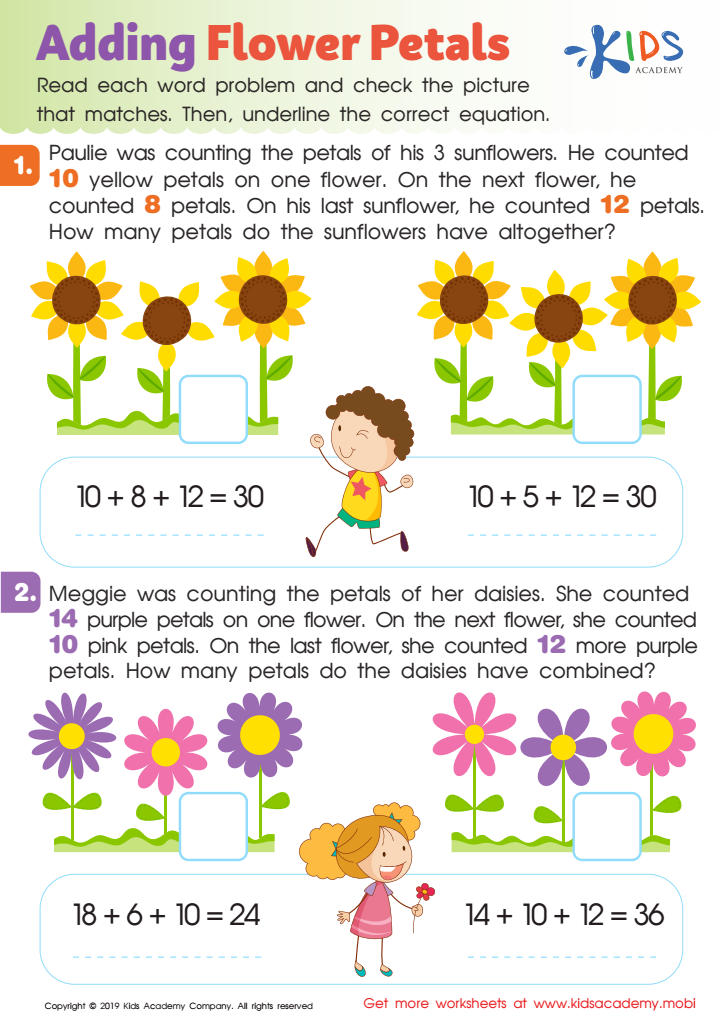
Adding Flower Petals Worksheet
 Assign to My Students
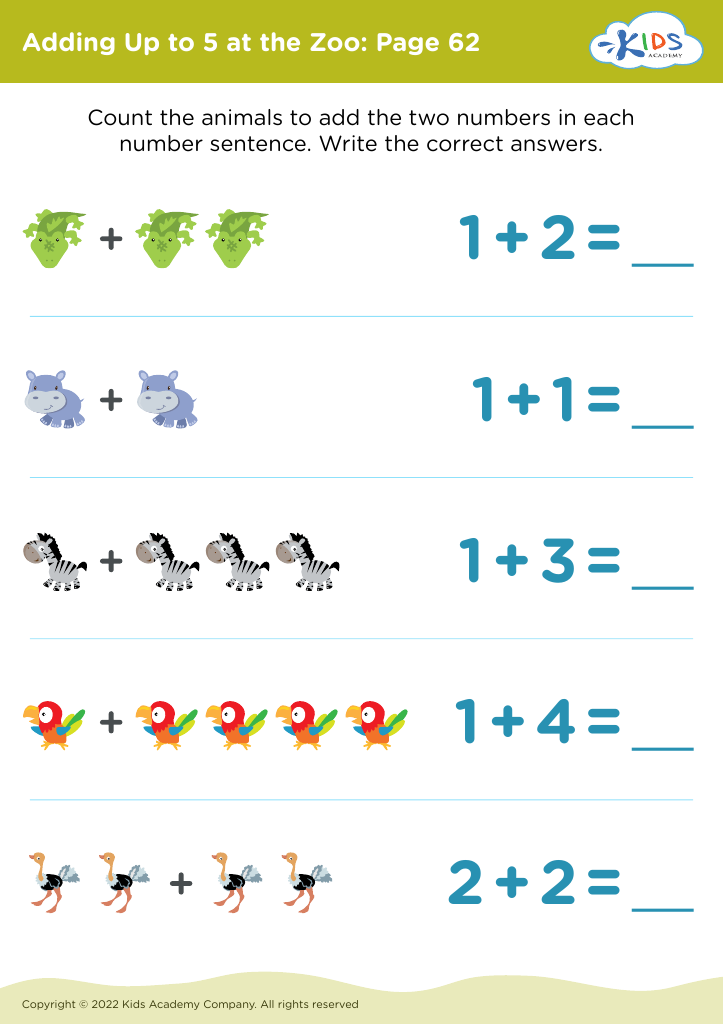
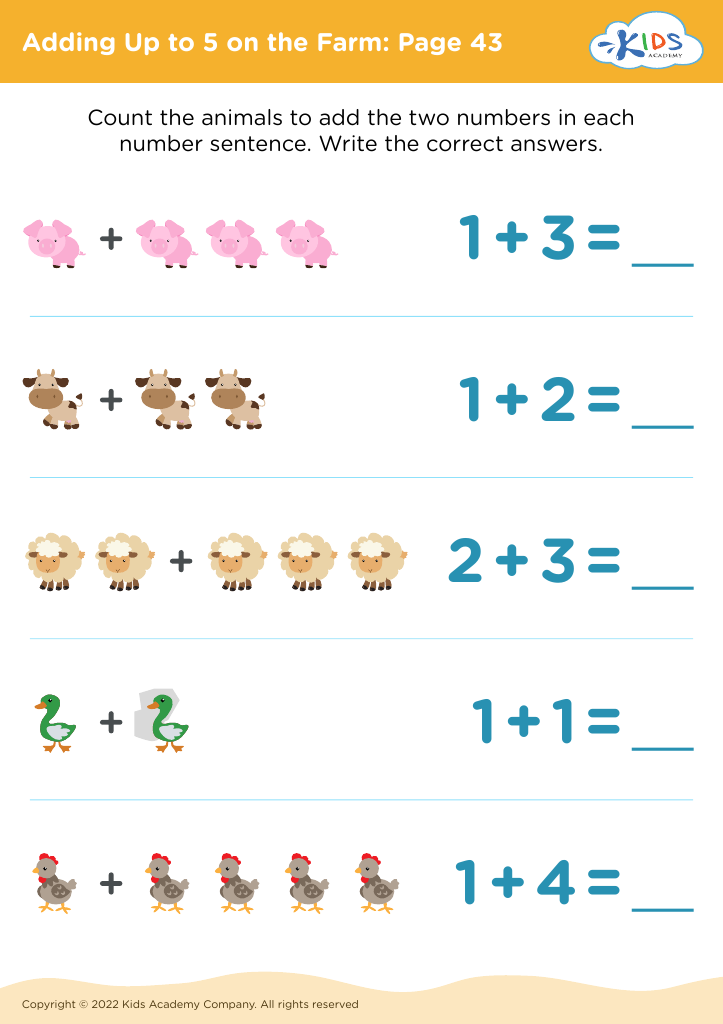








Numeracy development, particularly in addition and subtraction, is crucial for 5-year-olds as it lays the foundation for their future mathematical understanding and overall academic success. At this age, children are naturally curious and eager to learn; introducing basic concepts of addition and subtraction cultivates a positive attitude toward math.
Understanding these fundamental operations helps children develop vital skills such as problem-solving, logical thinking, and spatial reasoning. These skills are essential not just for math but for everyday situations, such as measuring ingredients for a recipe or handling money during shopping trips.
Moreover, early numeracy correlates with later academic achievement. Research shows that children who grasp basic math concepts early on tend to excel in mathematics and other subjects in later years. Therefore, encouraging activities that promote addition and subtraction, like counting objects or engaging in educational games, helps strengthen these skills in a fun way.
Finally, when parents and teachers focus on numeracy development, they collaborate in creating a supportive learning environment. This unified approach ensures that children feel confident and capable, fostering a love for learning that extends beyond addition and subtraction, ultimately enriching their overall educational journey.








