Understanding patterns Addition & Subtraction Worksheets for 5-Year-Olds
4 filtered results
-
From - To
Explore our "Understanding Patterns in Addition & Subtraction Worksheets" designed specifically for 5-year-olds! These engaging worksheets offer a fun way for young learners to grasp basic math concepts through the recognition of patterns. Children will enhance their addition and subtraction skills by solving problems that highlight numerical sequences and relationships. Our age-appropriate activities encourage critical thinking and improve mathematical abilities, all while keeping learning enjoyable. Perfect for parents and teachers, these printable resources are ideal for home or classroom use. Help your child build a strong foundation in math with compelling and interactive pattern-based lessons today!
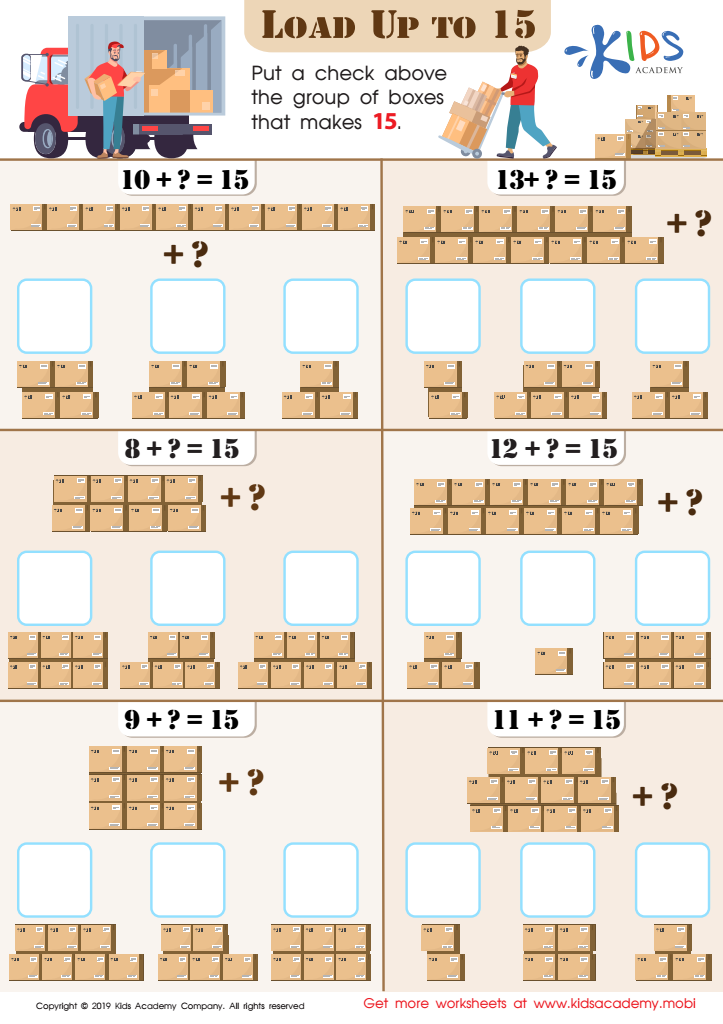
Load up to 15 Worksheet
 Assign to My Students
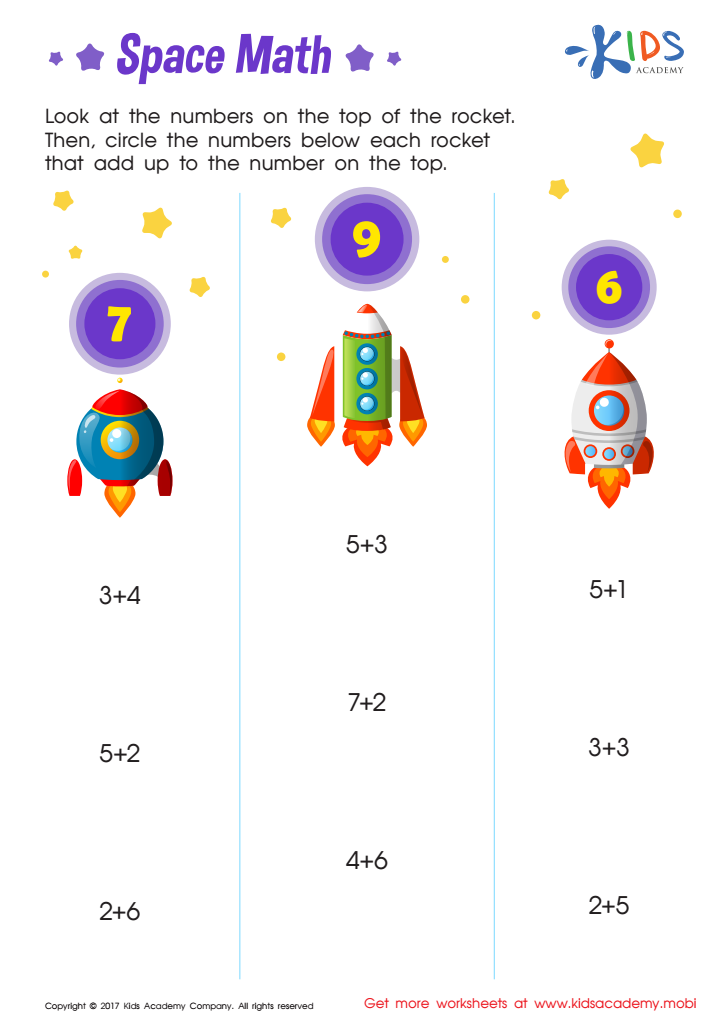
Addition: Space Math Worksheet
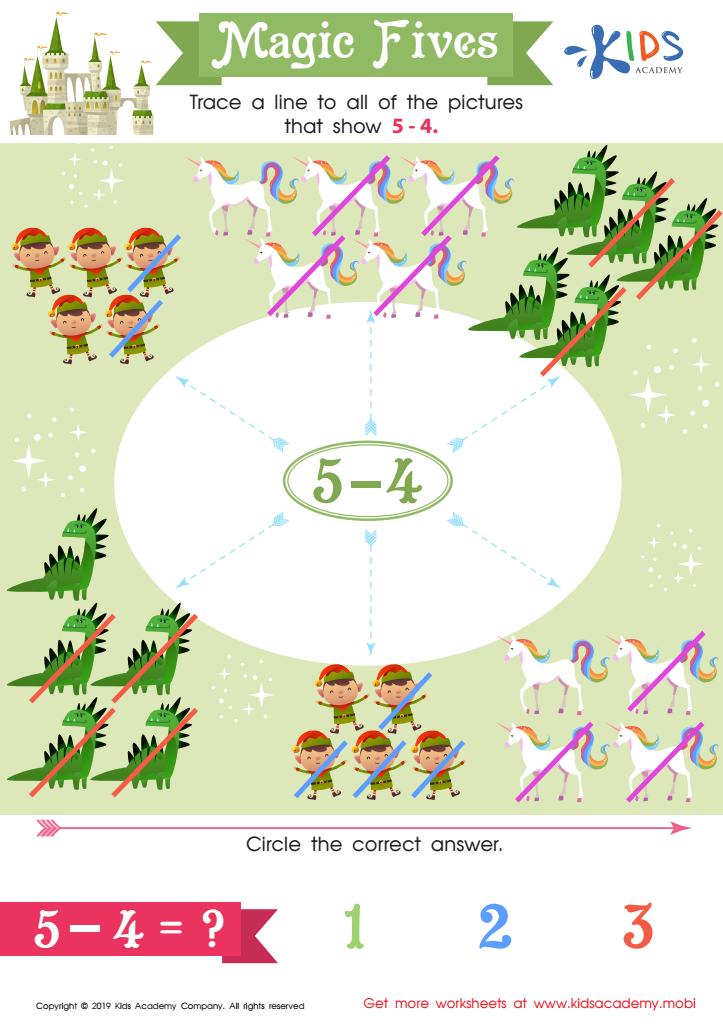
Magic Fives Worksheet
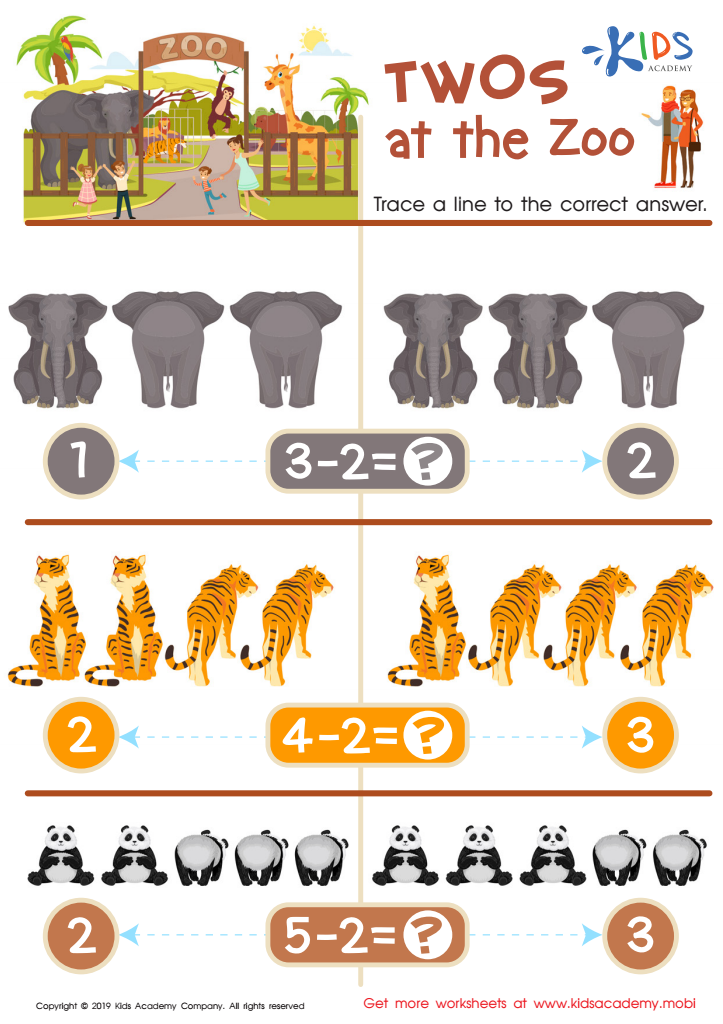
Twos at the Zoo Worksheet








Understanding patterns in addition and subtraction is crucial for 5-year-olds as it lays the foundation for their mathematical skills and critical thinking. At this age, children begin to recognize numbers and explore basic operations. By focusing on patterns, both parents and teachers help them develop a deeper understanding of how numbers work together, making operations less intimidating and more intuitive. Patterns, such as sequences and relationships between numbers, help children predict outcomes, enhancing their cognitive development.
Furthermore, recognizing patterns in addition and subtraction fosters problem-solving skills. Children learn to identify similarities and differences, which aids in efficient calculation strategies, helping them to add or subtract more quickly and accurately. This early exposure to patterns reinforces their number sense and strengthens their ability to reason mathematically.
Additionally, understanding patterns can lead to increased engagement and enthusiasm for learning. When children see connections and relationships in numbers, they become more curious and motivated to explore further. For parents and teachers, promoting these skills not only aids in academic growth but also boosts children's confidence and joy in learning, setting a positive trajectory for their future in mathematics and beyond. Thus, nurturing pattern recognition within early math learning is essential.








