Understanding Quantities Addition & Subtraction Worksheets for 5-Year-Olds - Page 2
40 filtered results
-
From - To
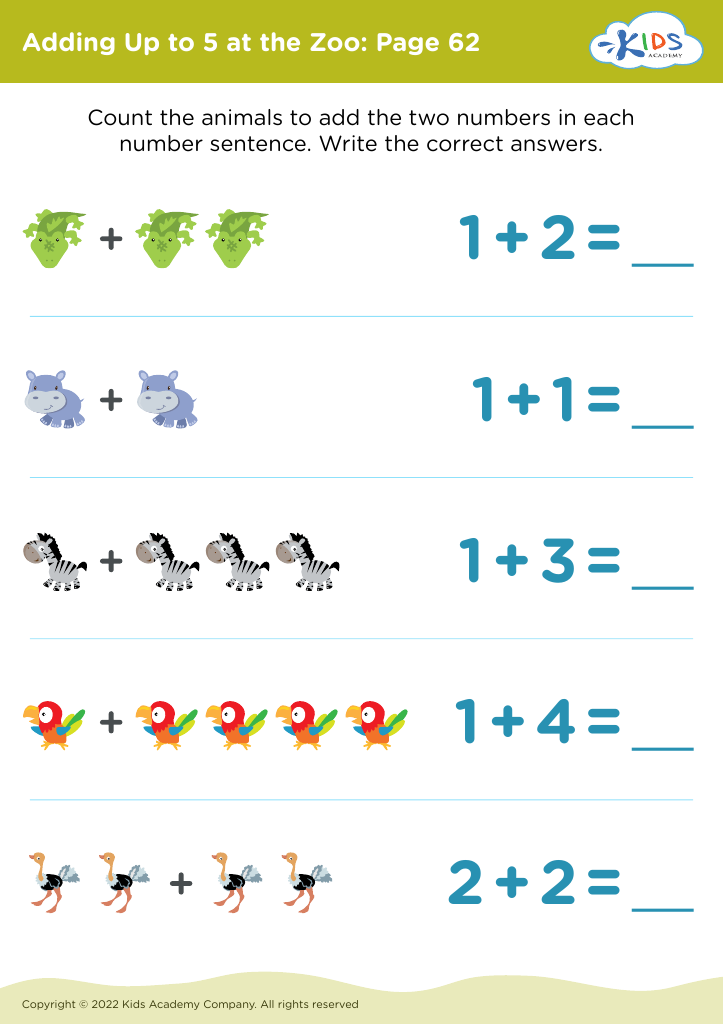
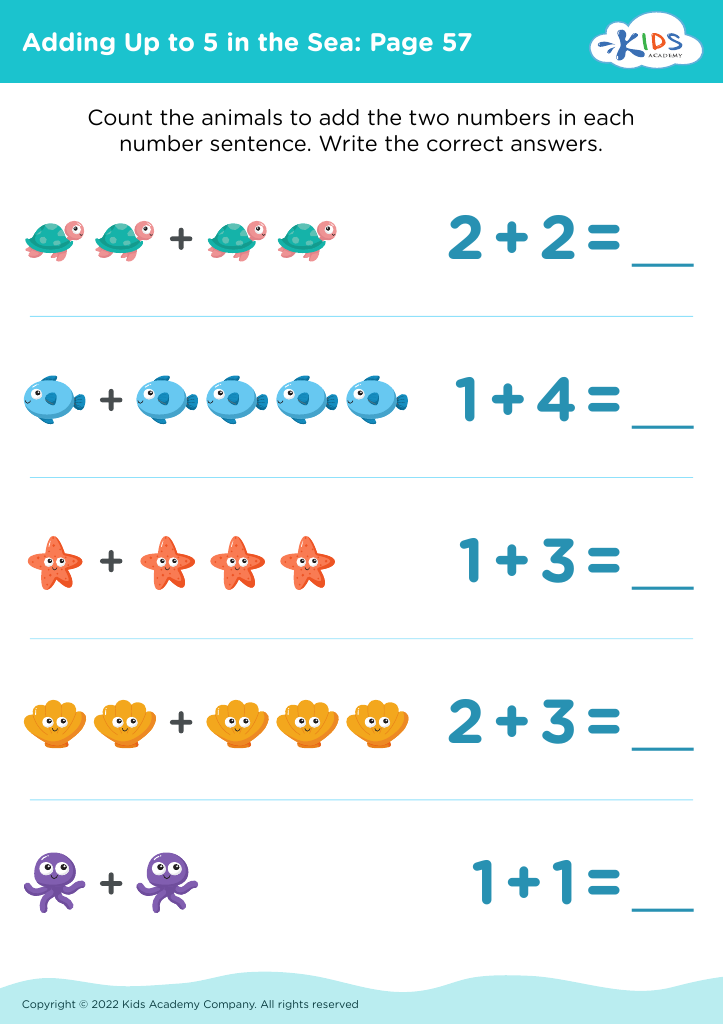
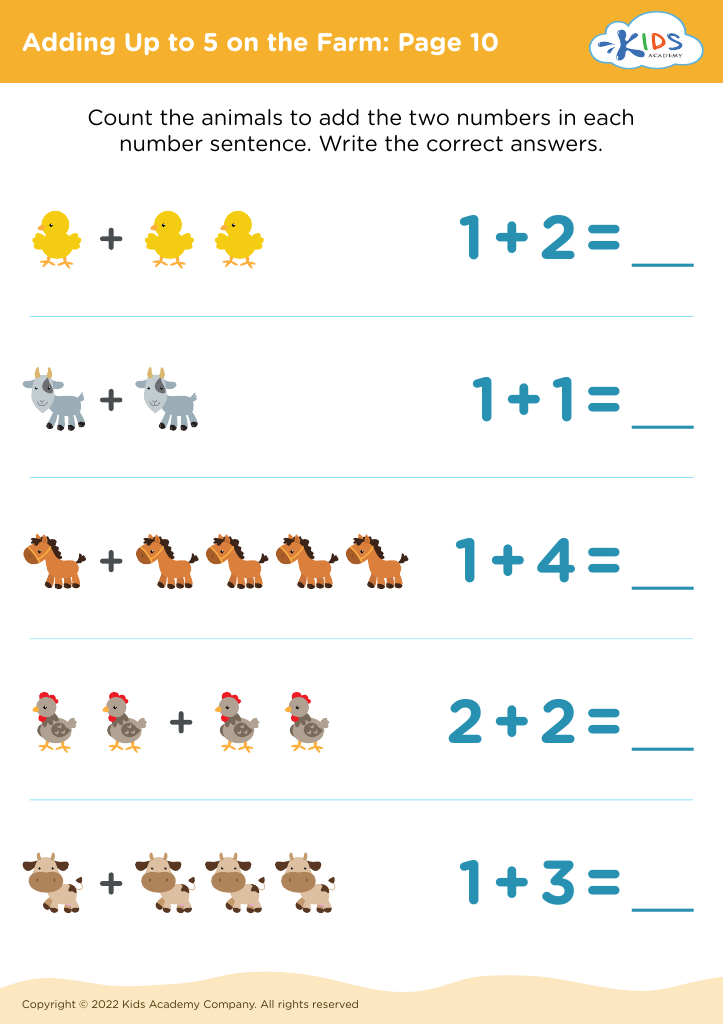
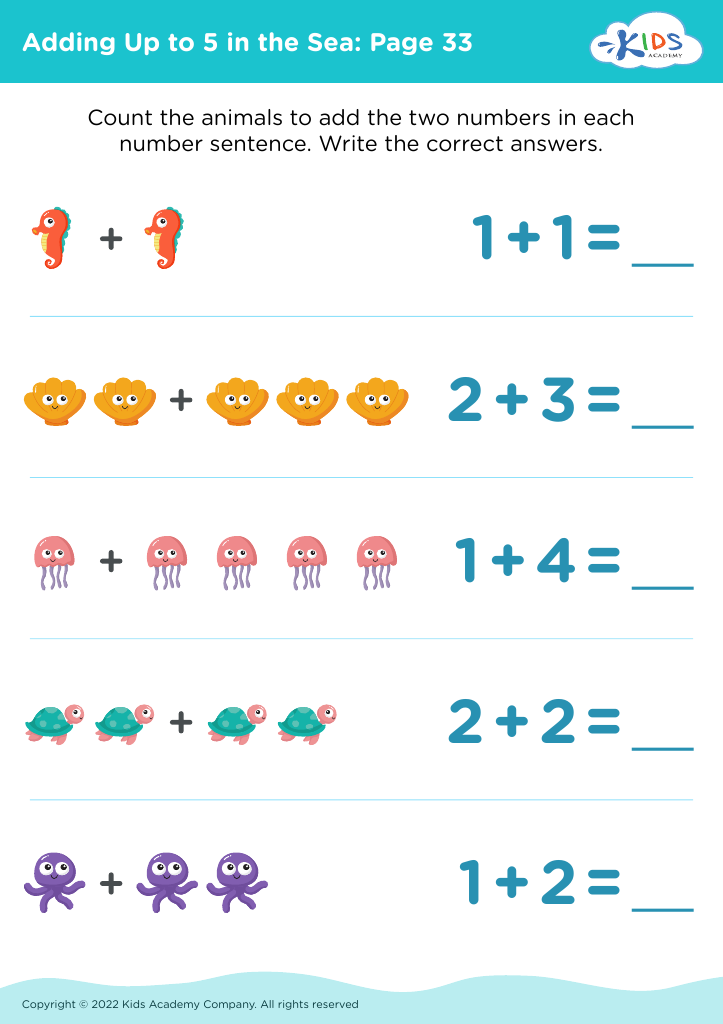
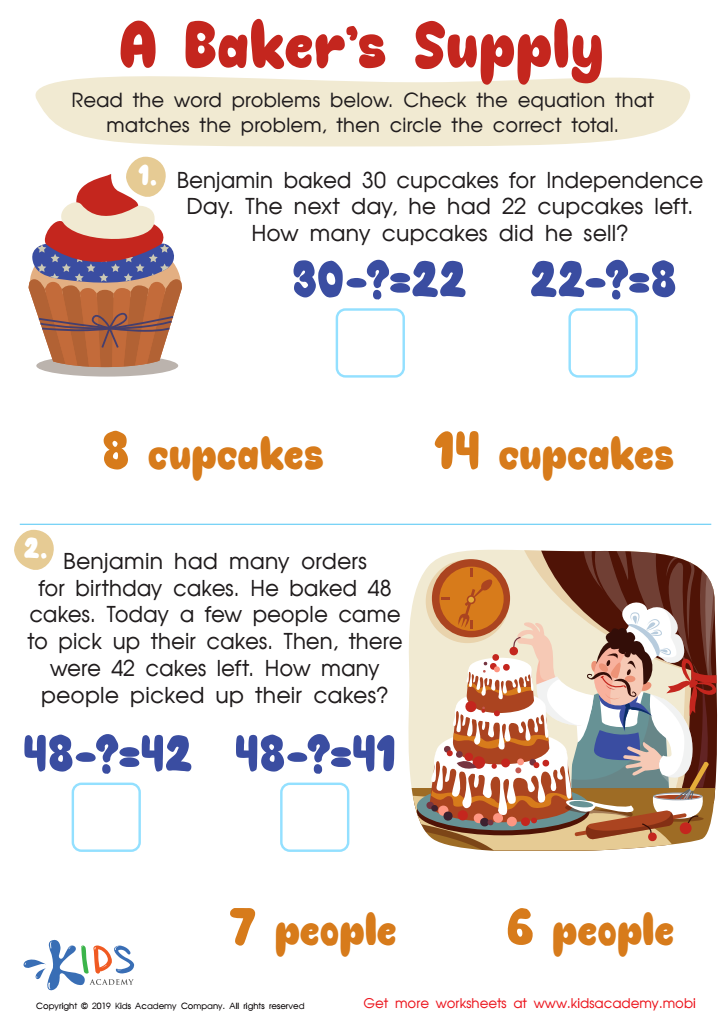
A Baker's Supply Worksheet
 Assign to My Students
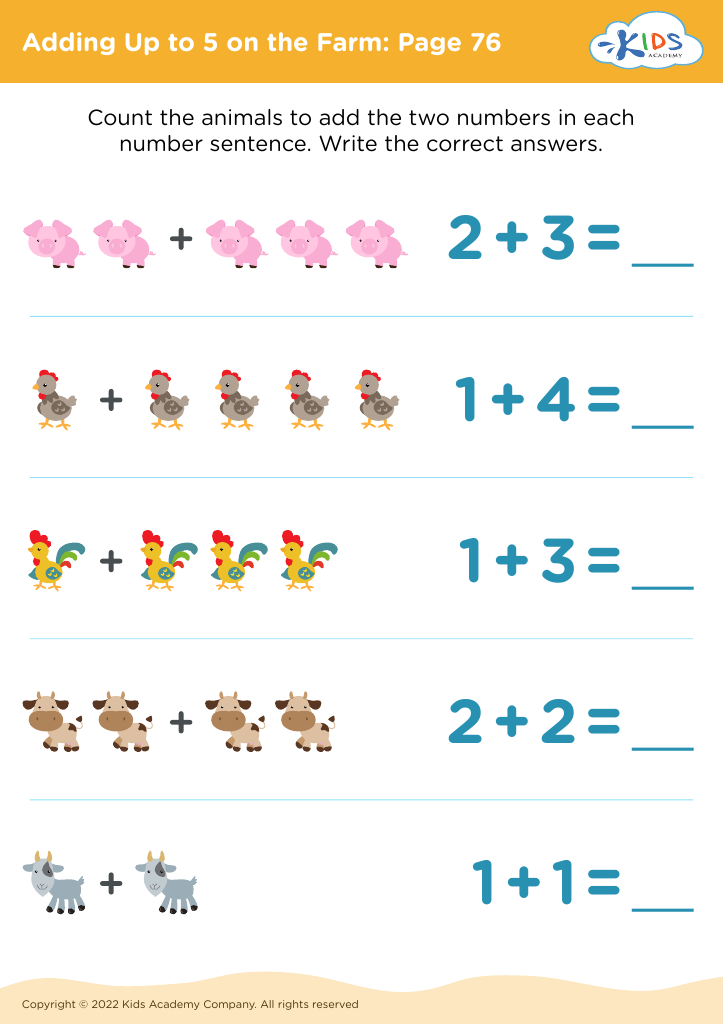
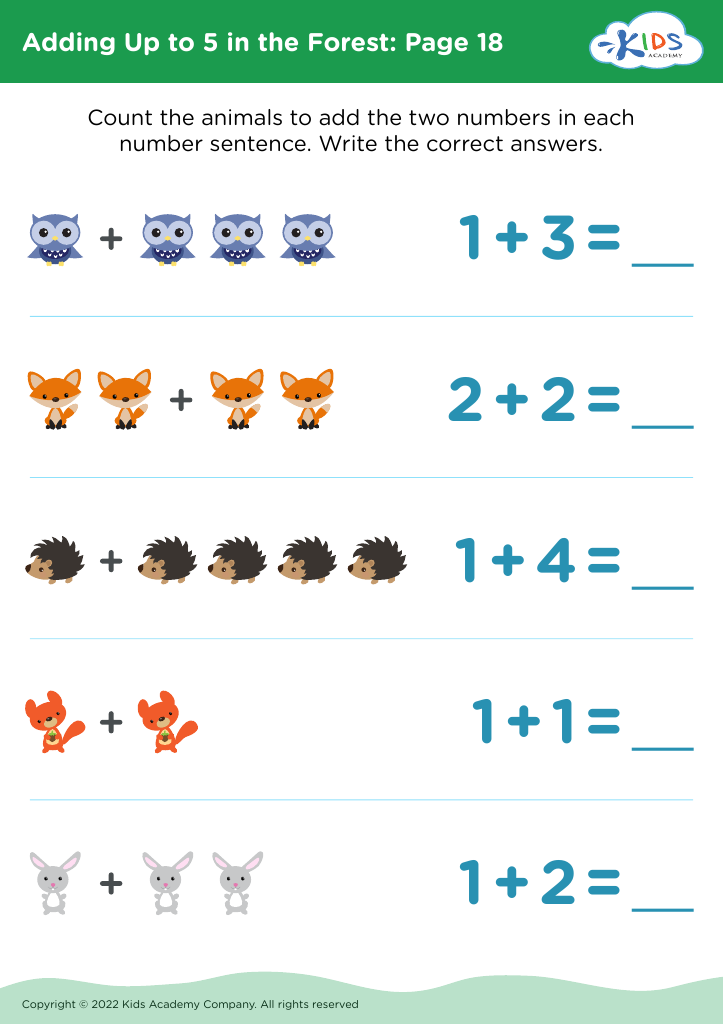
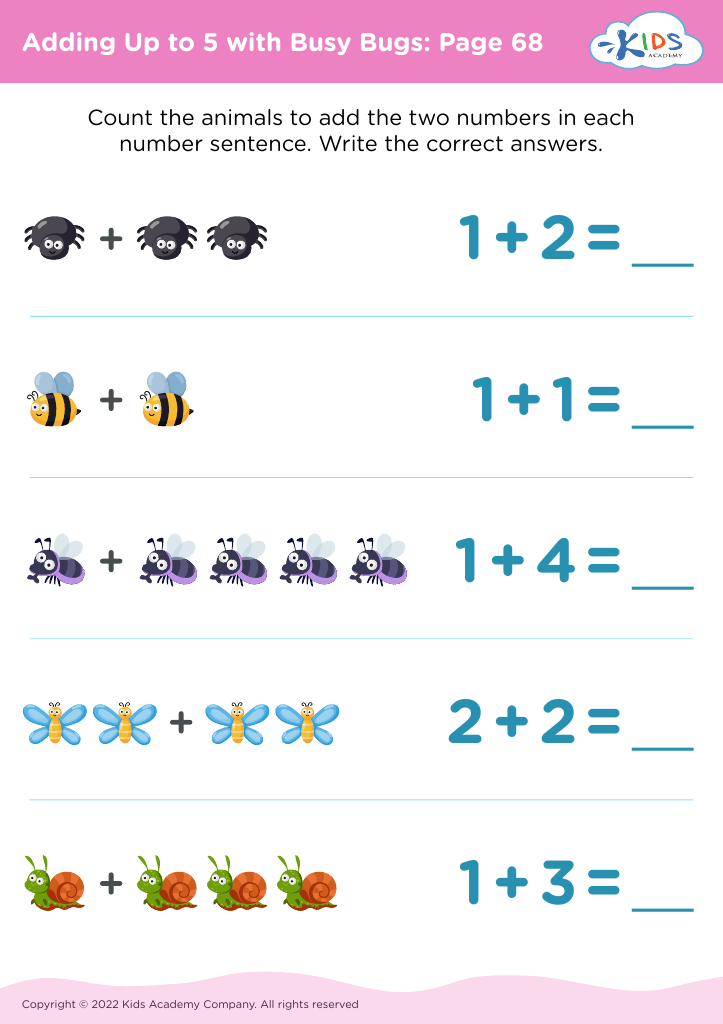
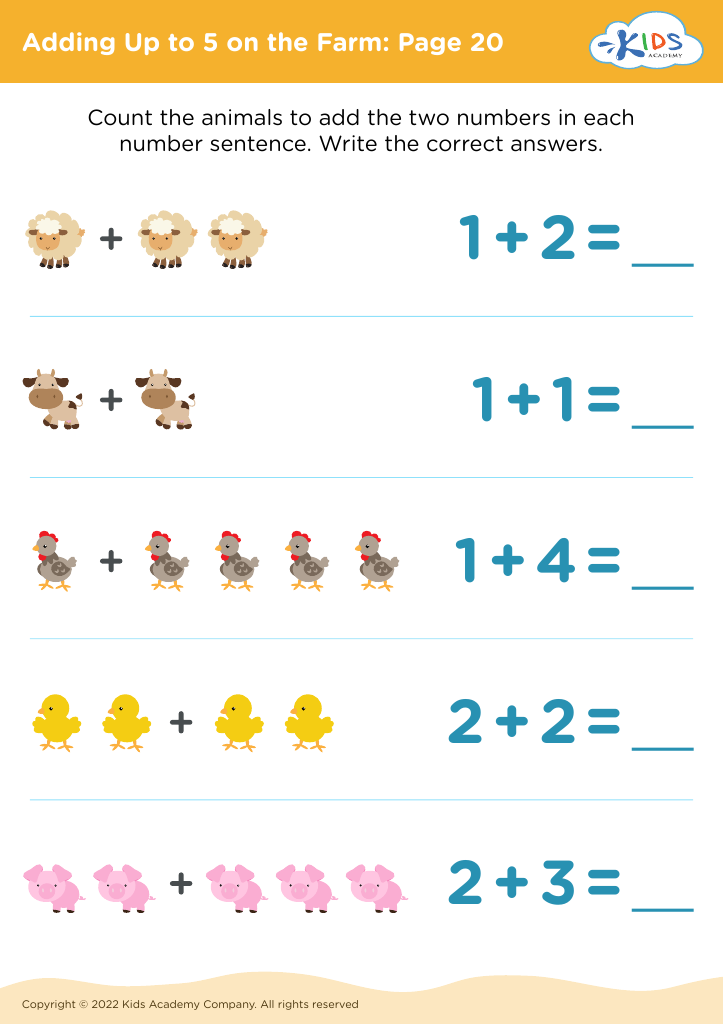
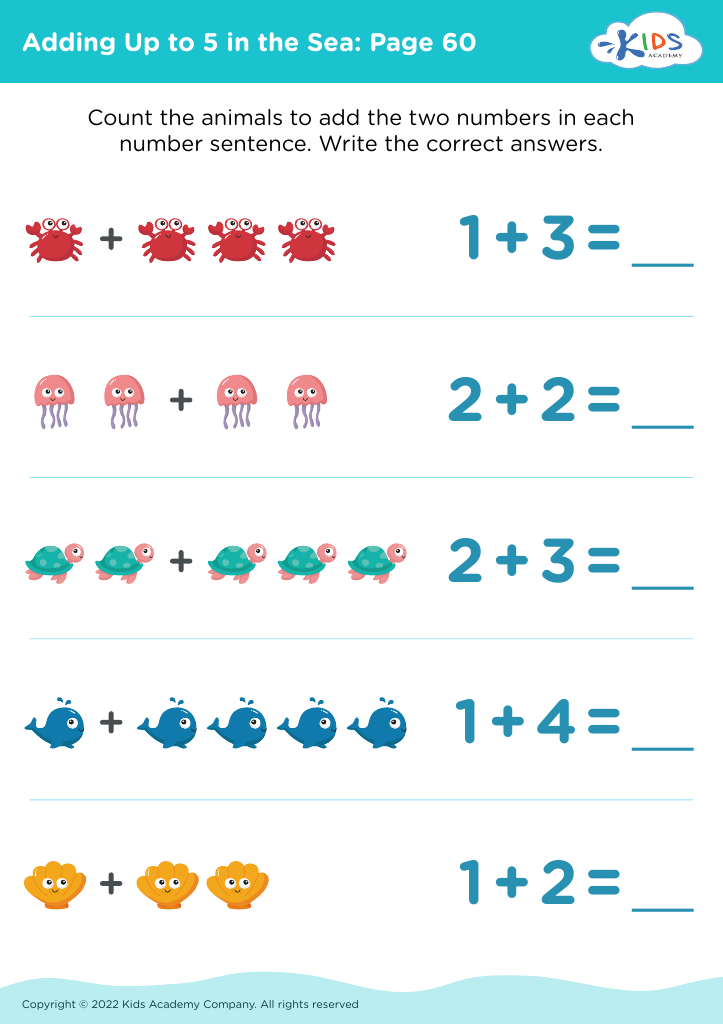
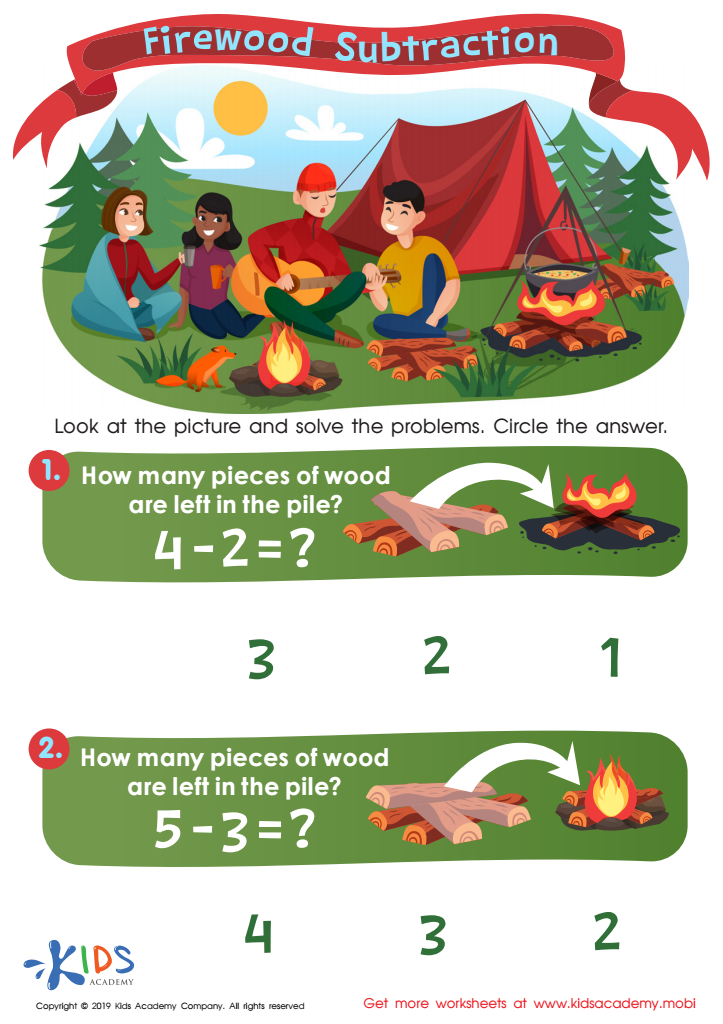
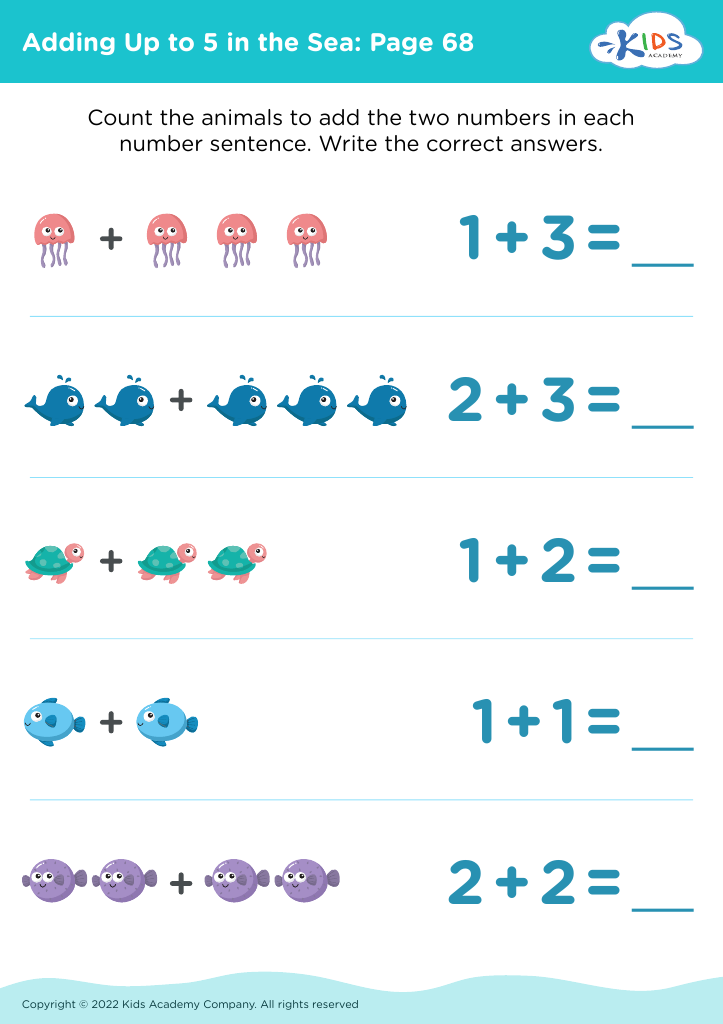
Firewood Subtraction Worksheet
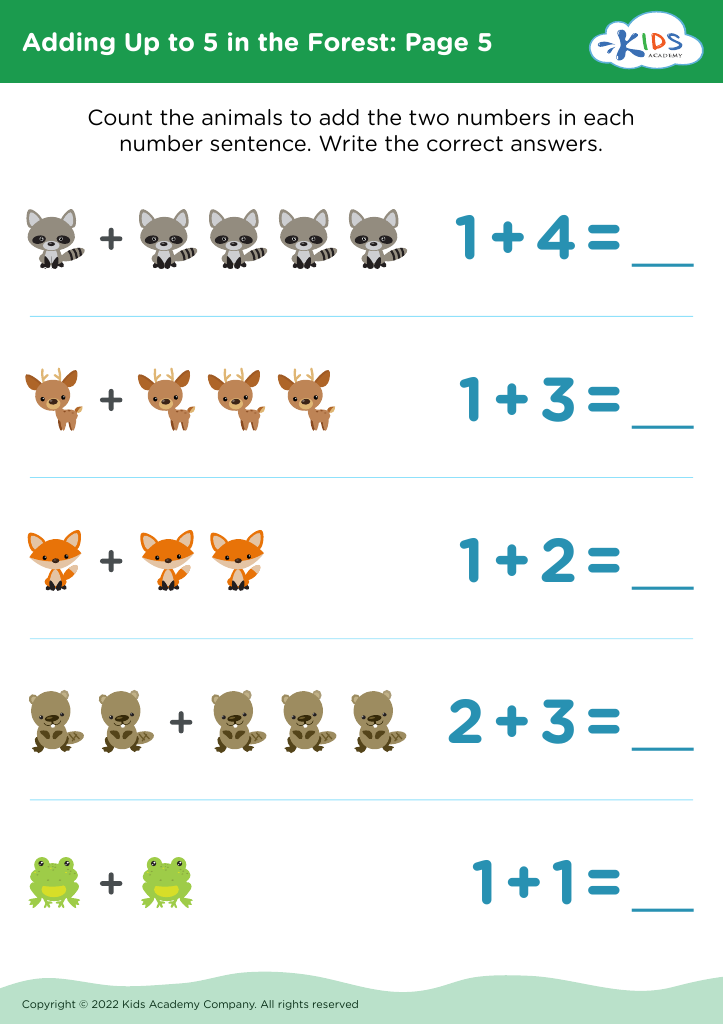
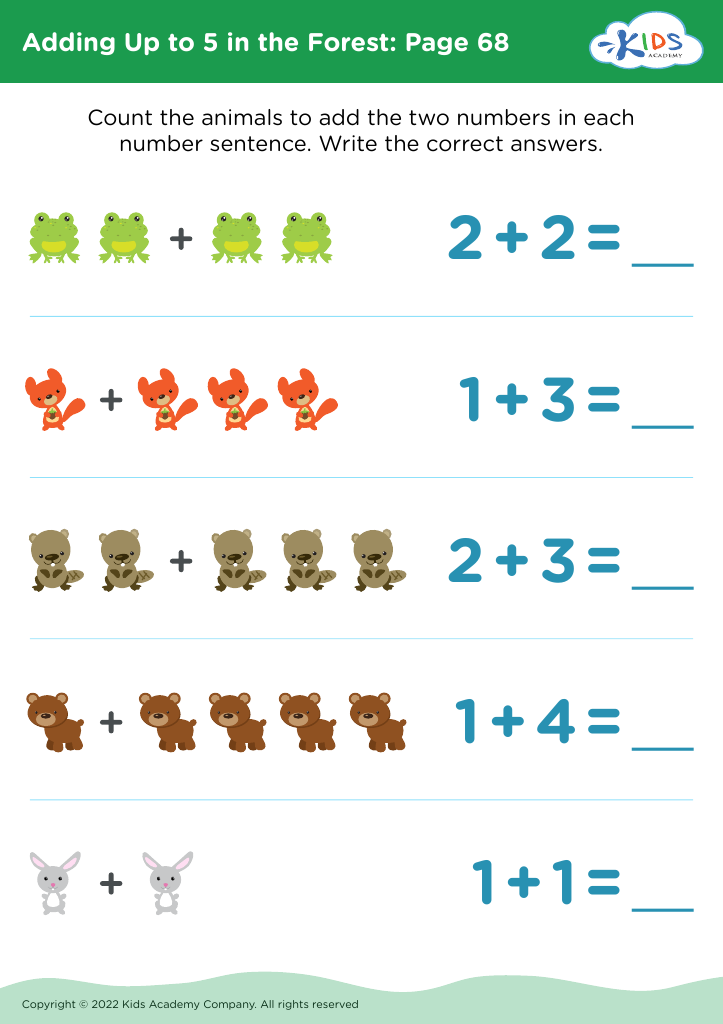
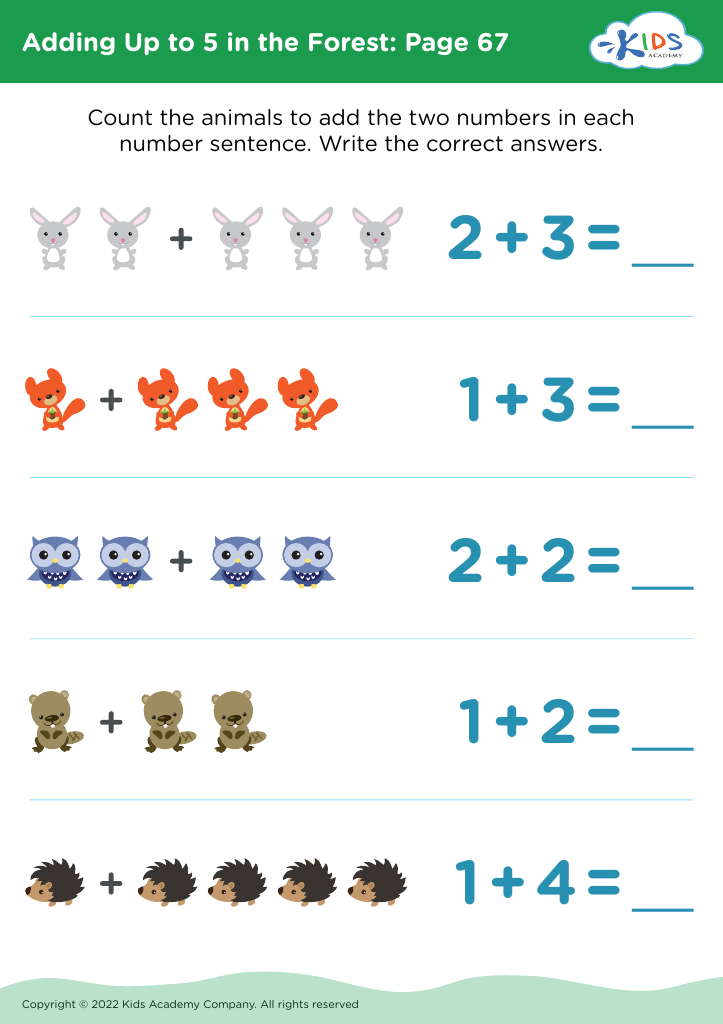
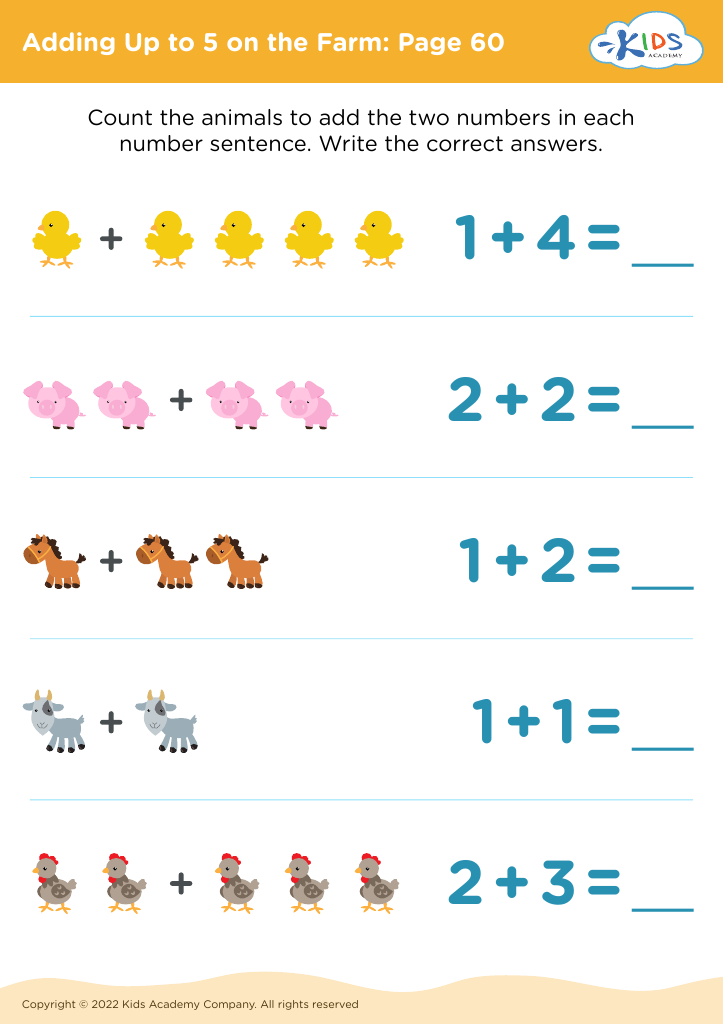






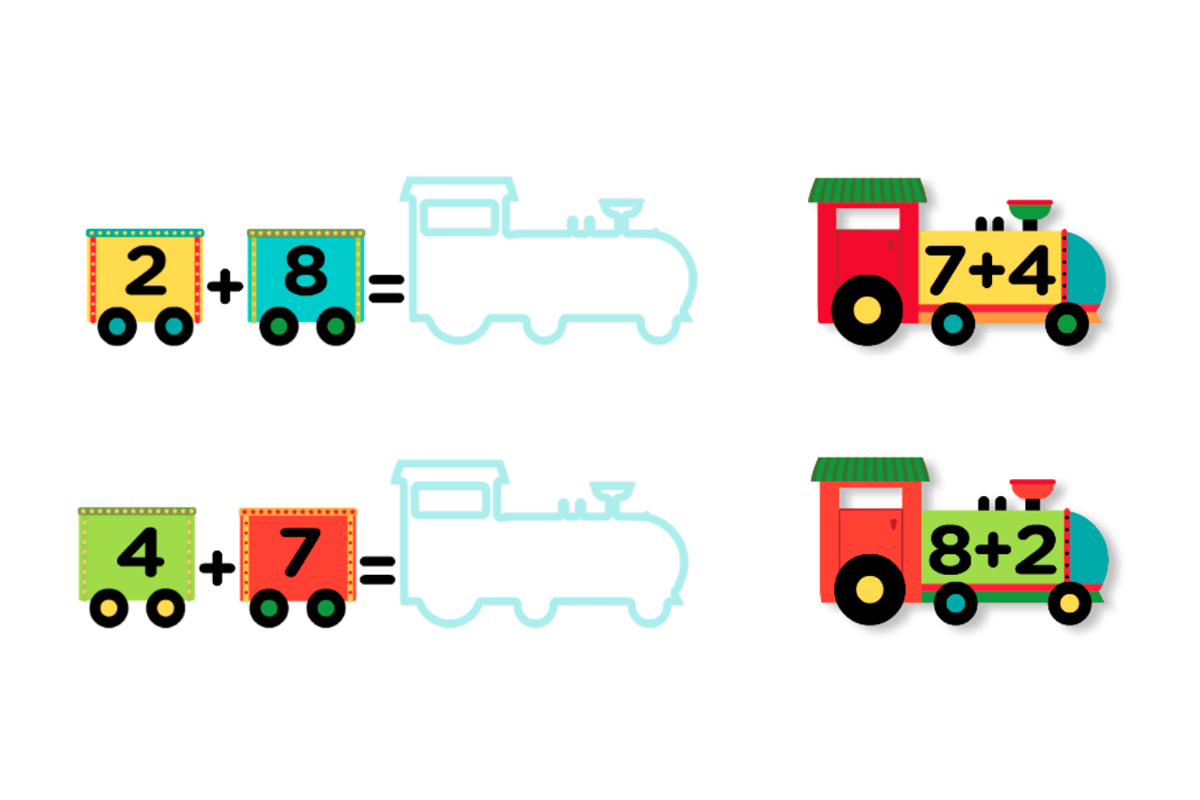

Understanding quantities, addition, and subtraction at the age of 5 forms the foundation for a child's future mathematical learning. This critical early exposure influences cognitive development, problem-solving skills, and academic confidence.
Firstly, comprehending quantities allows young children to visualize and grasp "how many" certain objects are, fostering a deeper understanding of numbers and their practical applications. Playing with blocks or counting everyday items turns abstract concepts into more tangible knowledge.
Adding and subtracting simple numbers helps children recognize patterns and relationships between numbers. This recognition is essential when more complex math problems arise in later grades. Whether it's sharing out candies or merging toy collections, everyday scenarios often involve basic arithmetic; mastering these concepts enables children to navigate real-world situations more effectively.
Cognitively, working with numbers enhances working memory and attention to detail, crucial skills across all areas of learning. It also builds the logical sequencing necessary for reading and writing.
Socially, ease with math boosts a child's confidence and willingness to participate in classroom activities, setting the stage for a positive educational outlook. A solid grounding in mathematical basics encourages perseverance and resilience, traits valuable beyond academics.
Hence, fostering these skills early nurtures a lifelong appreciation and competence in mathematics and critical thinking.








