Visual comprehension Addition & Subtraction Worksheets for 5-Year-Olds
7 filtered results
-
From - To
Explore our engaging Visual Comprehension Addition & Subtraction Worksheets designed specifically for 5-year-olds! These worksheets allow young learners to enhance their math skills through visual aids and fun illustrations. By connecting images with numbers, children develop a deeper understanding of addition and subtraction concepts. With a variety of activities that promote critical thinking and problem-solving, your child will build confidence and mastery in math. Ideal for parents and teachers, our worksheets provide a playful learning experience that makes math enjoyable. Download and print today to introduce your child to the world of math with creativity and visual engagement!
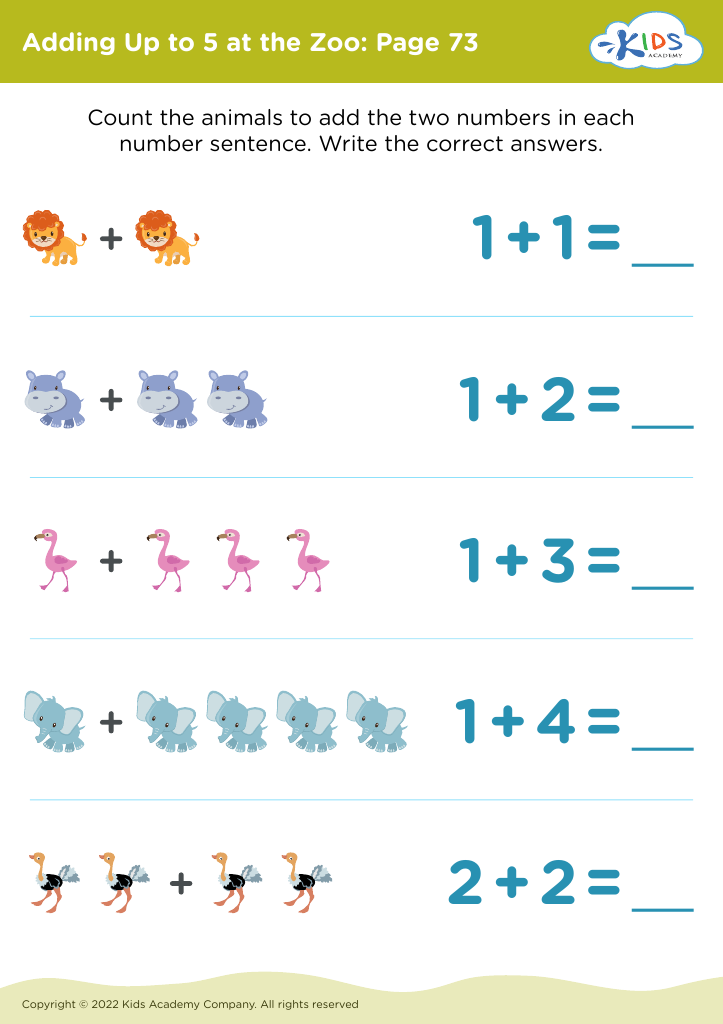
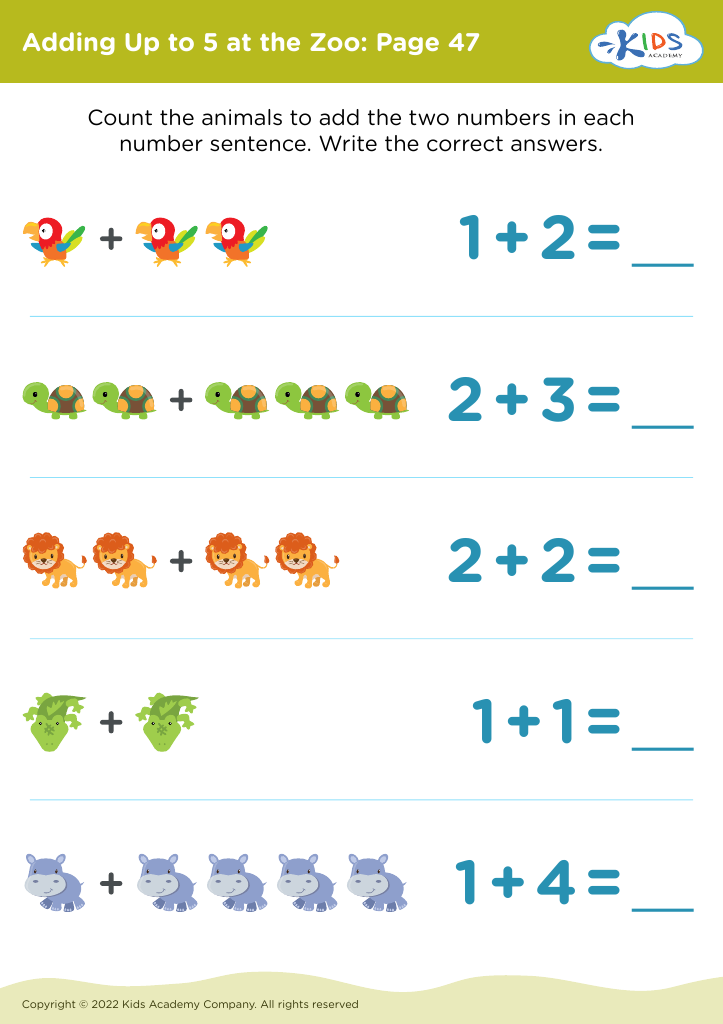
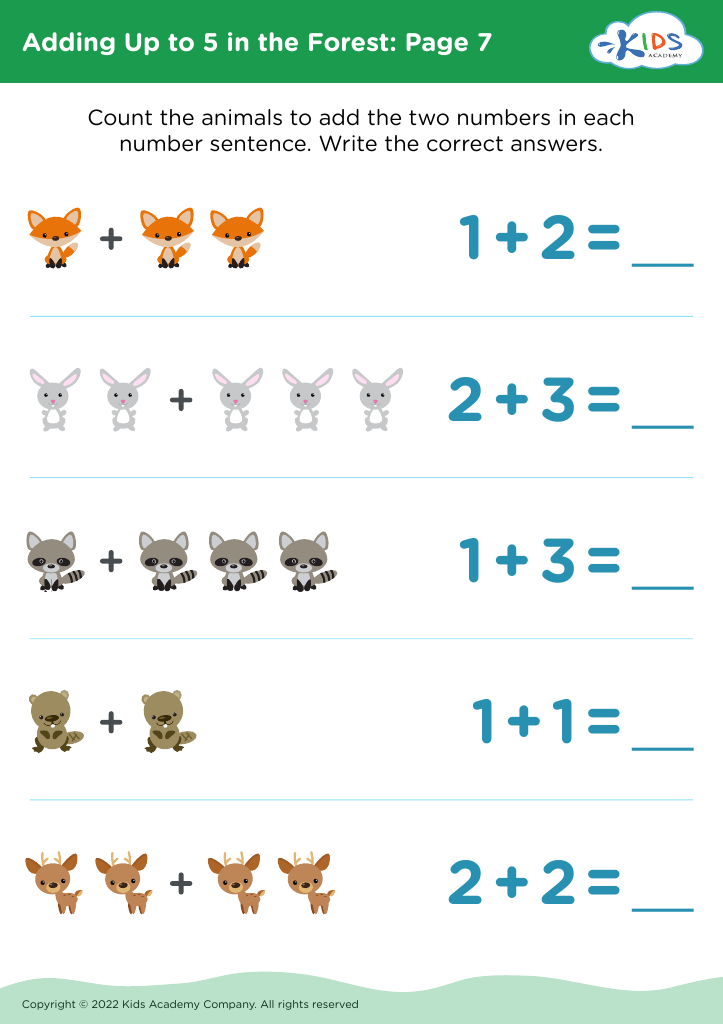
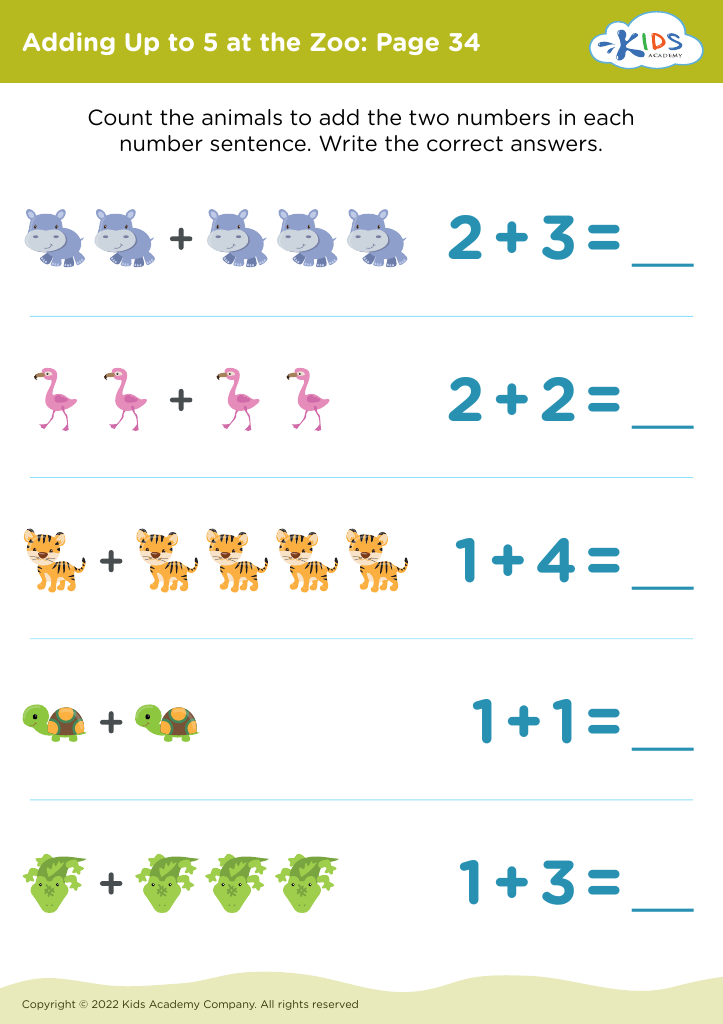
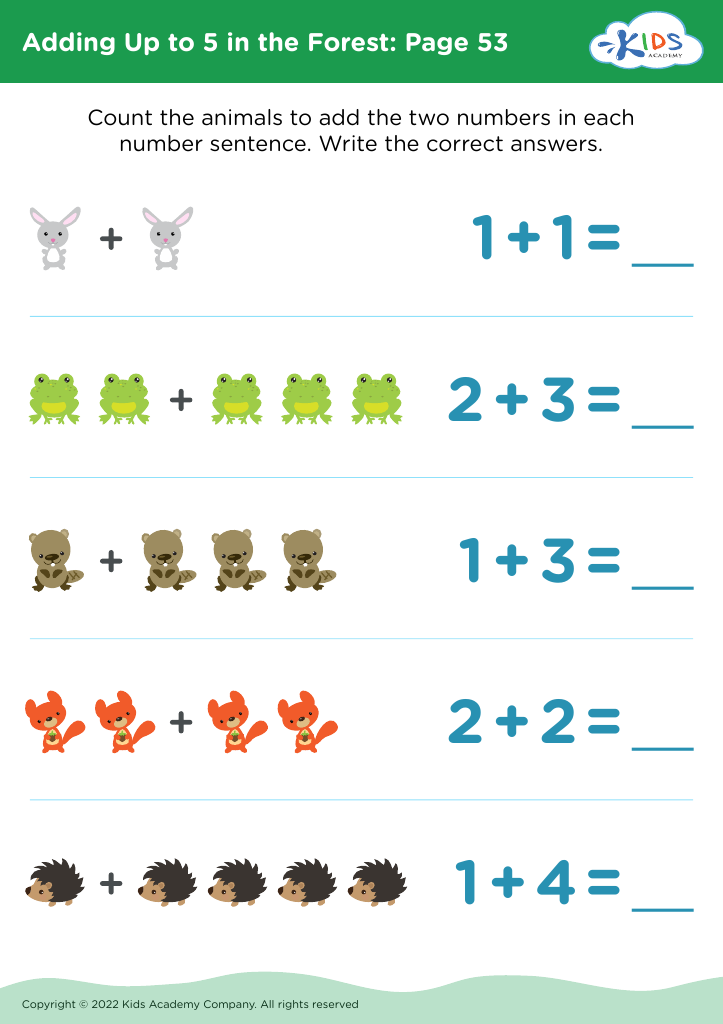
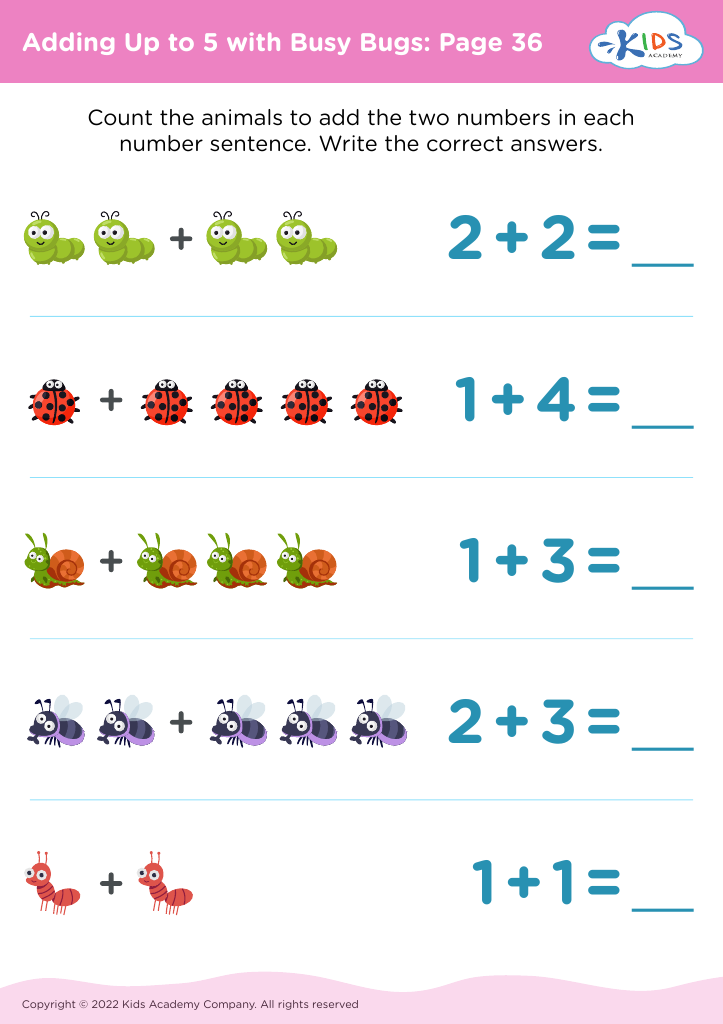
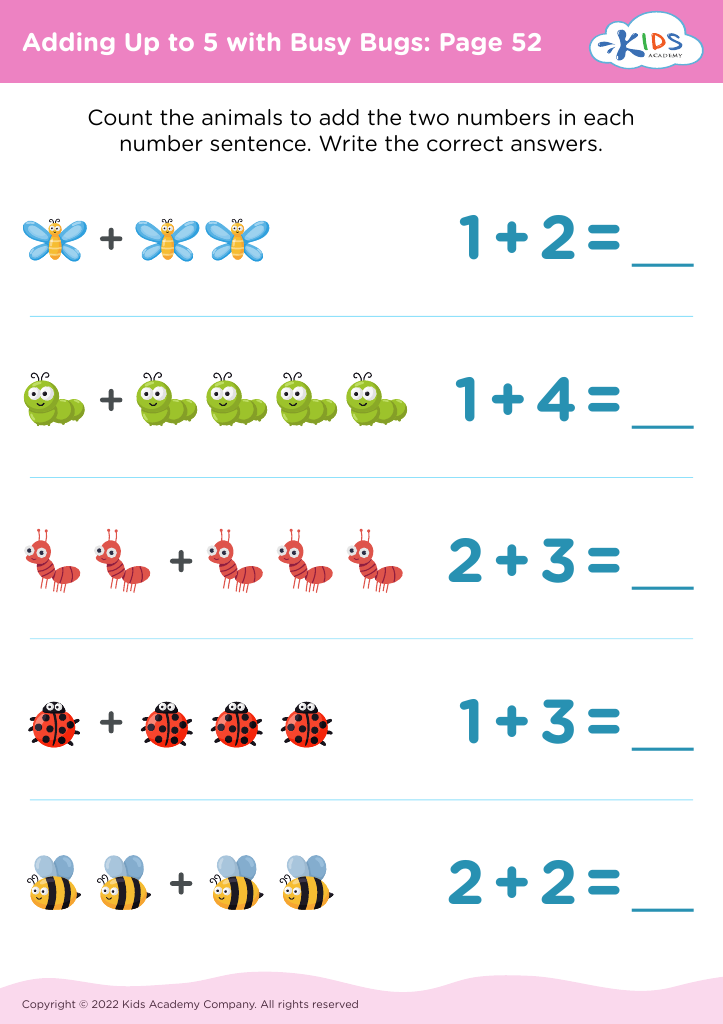








Visual comprehension of addition and subtraction is crucial for 5-year-olds as it lays the foundation for their mathematical understanding and cognitive development. At this age, children are still developing their ability to understand abstract concepts, and visual tools help bridge that gap by making learning tangible and engaging. By using images, counters, or blocks, children can physically manipulate objects, enhancing their counting skills and illustrating mathematical processes.
Incorporating visual comprehension promotes active learning, allowing children to grasp the idea of quantity and relationships between numbers more intuitively. This approach caters to various learning styles, making mathematics accessible and enjoyable for all children. Furthermore, visual aids can help reduce anxiety around math, fostering a positive attitude towards the subject from a young age.
For parents and teachers, focusing on visual comprehension not only supports academic growth but also encourages critical thinking and problem-solving skills. These competencies are vital not only in mathematics but also in everyday life. By nurturing these skills early on, we equip children with the tools to succeed academically and develop confidence in their abilities. Ultimately, visual comprehension is key to laying a strong mathematical foundation that will benefit children throughout their education.








