Filters

94 filtered results

Clear all filters
Favorites
With answer key
Interactive

94 filtered results

Difficulty Level

Grade


Check out this FREE Trial Lesson on Addition for age 5!

D

Favorites
With answer key
Interactive
  • 5
  • Animal recognition
  • Addition
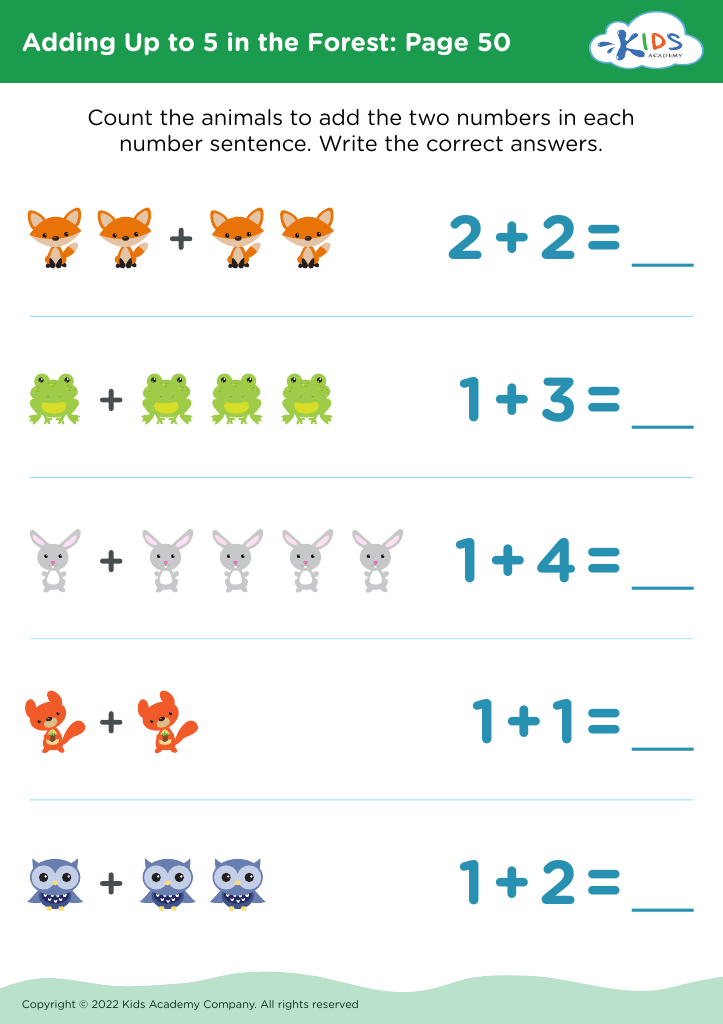
Adding Up to 5 in the Forest: Page 50
Worksheet
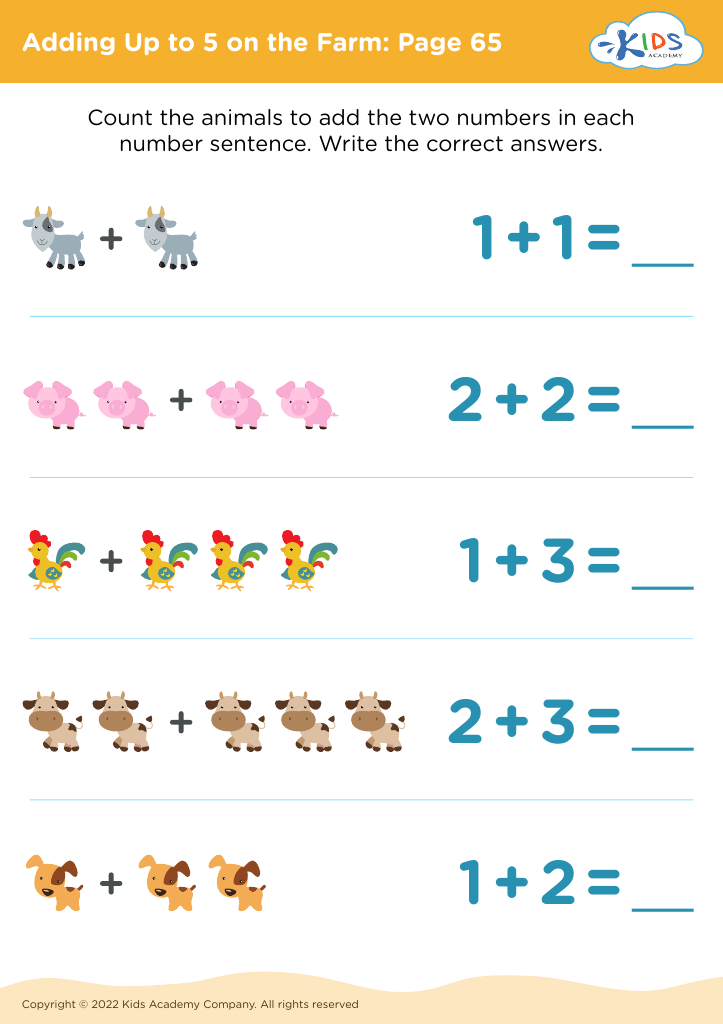
Adding Up to 5 on the Farm: Page 65
Worksheet
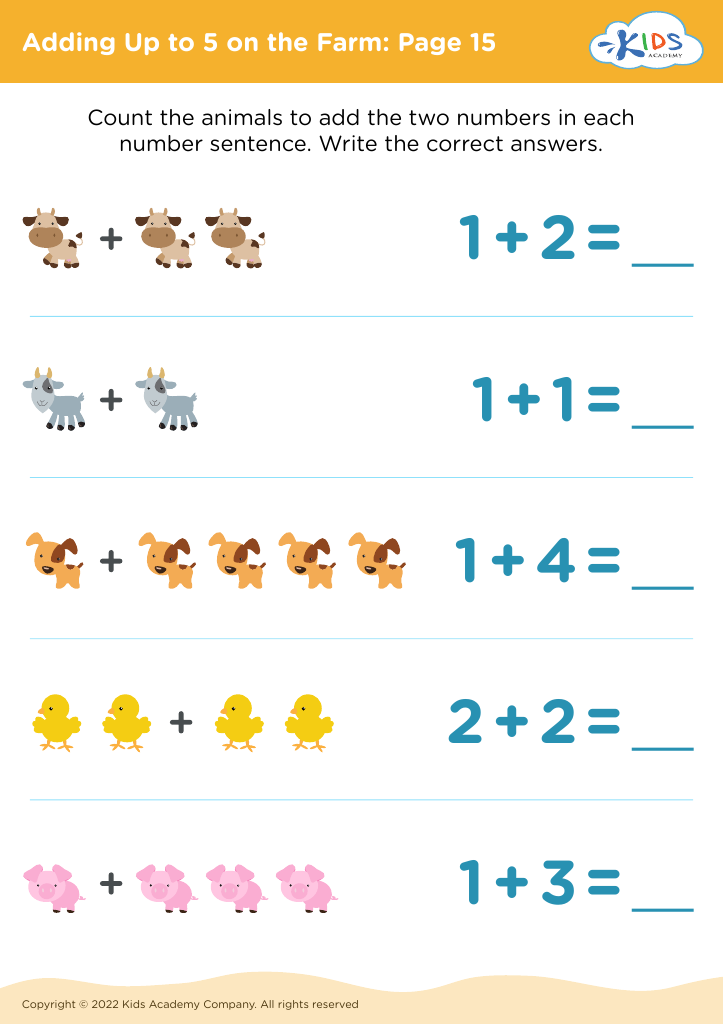
Adding Up to 5 on the Farm: Page 15
Worksheet
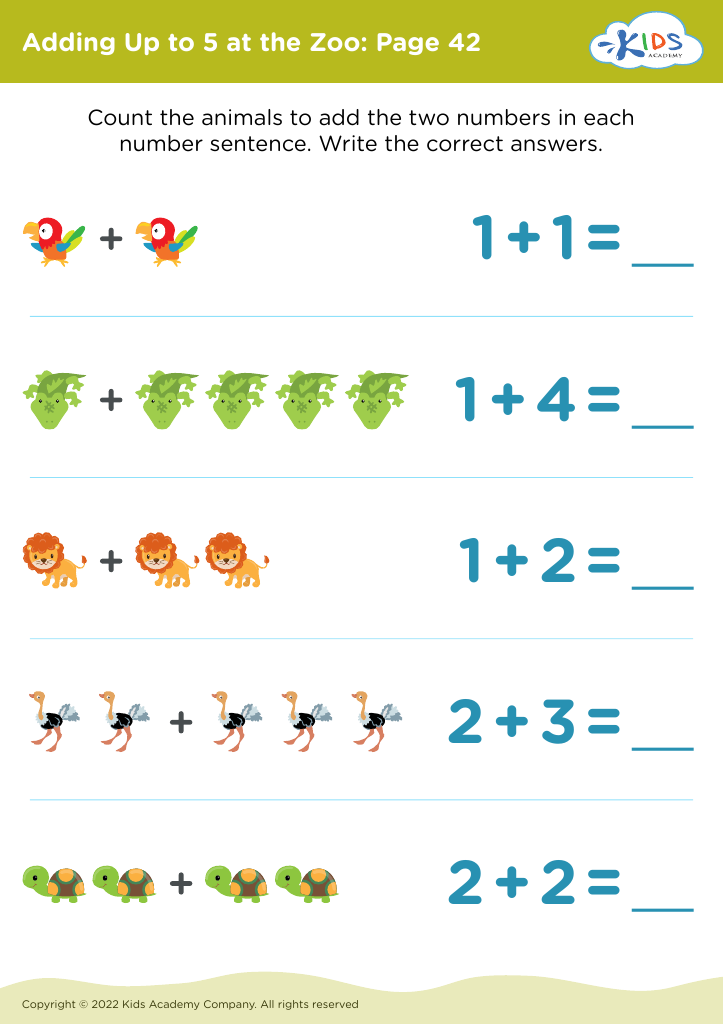
Adding Up to 5 at the Zoo: Page 42
Worksheet
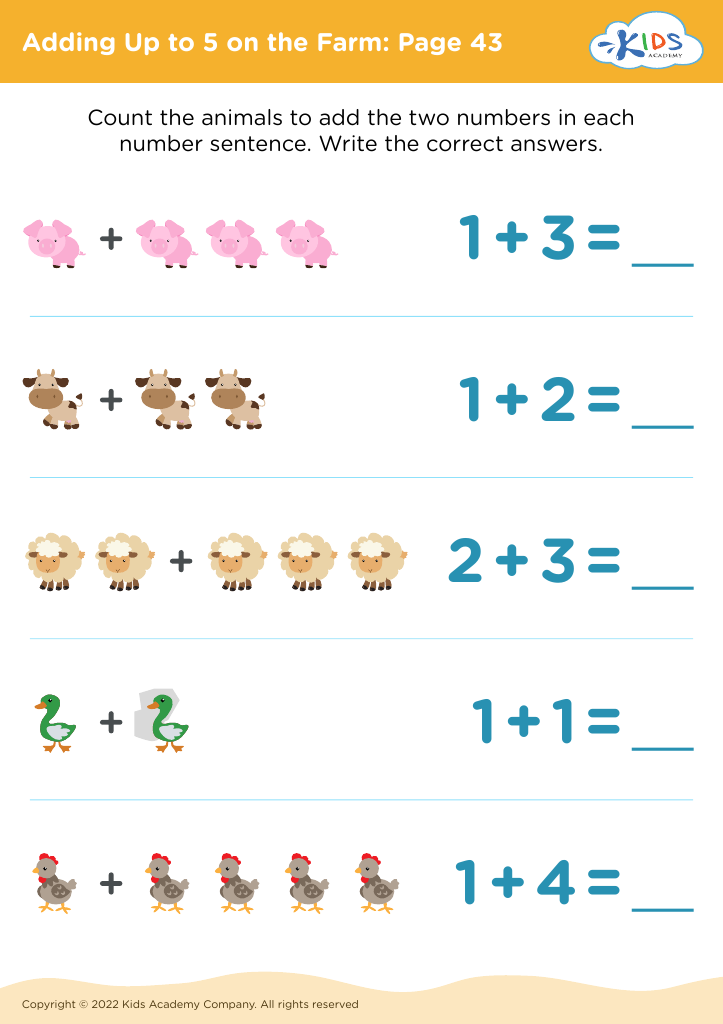
Adding Up to 5 on the Farm: Page 43
Worksheet
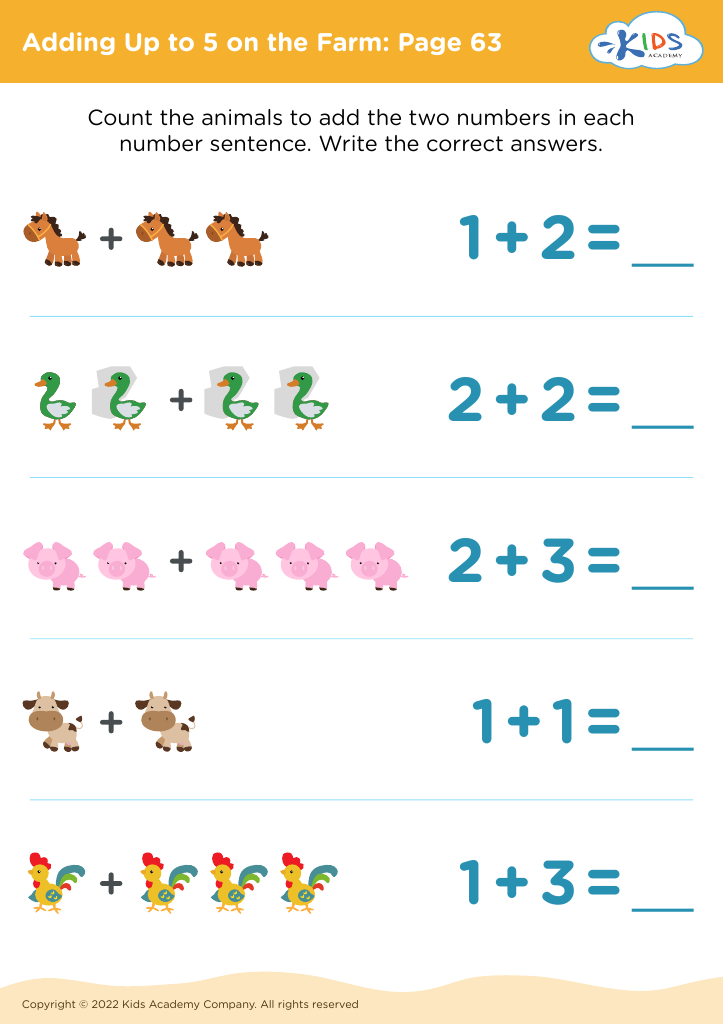
Adding Up to 5 on the Farm: Page 63
Worksheet
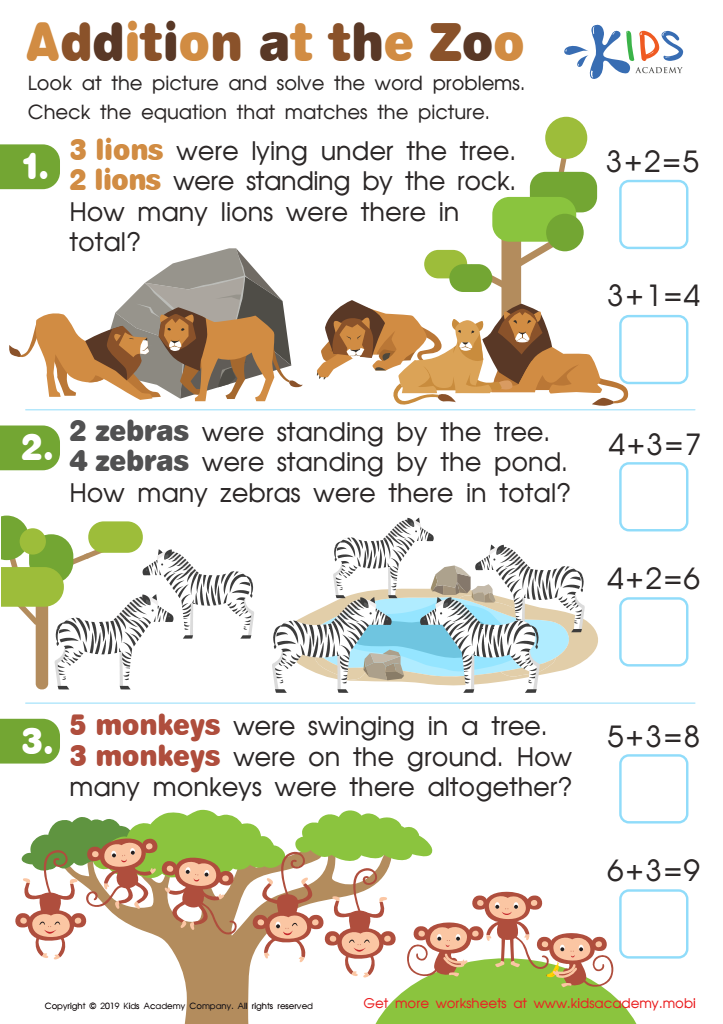
Addition at the Zoo Worksheet

Addition at the Zoo Worksheet

Visit the zoo with your kids and point out all the different animals. Ask them to name their favorites and identify animals on a worksheet. Challenge them to solve word problems related to the pictures. Ask them for the equation that fits the picture and check the answer.
Addition at the Zoo Worksheet
Worksheet
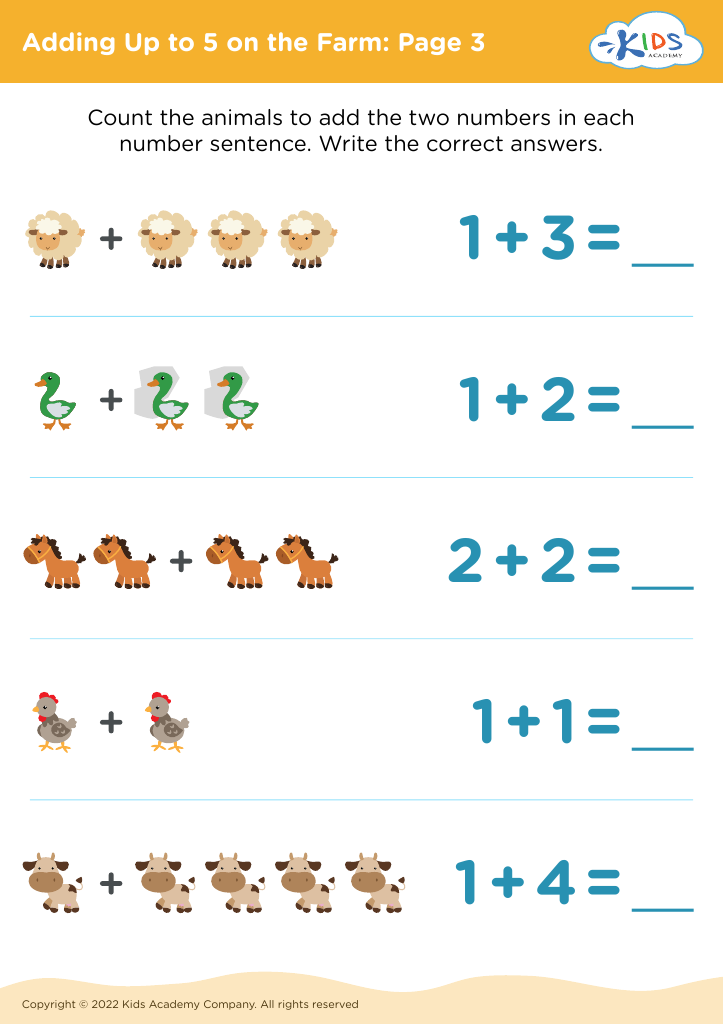
Adding Up to 5 on the Farm: Page 3
Worksheet
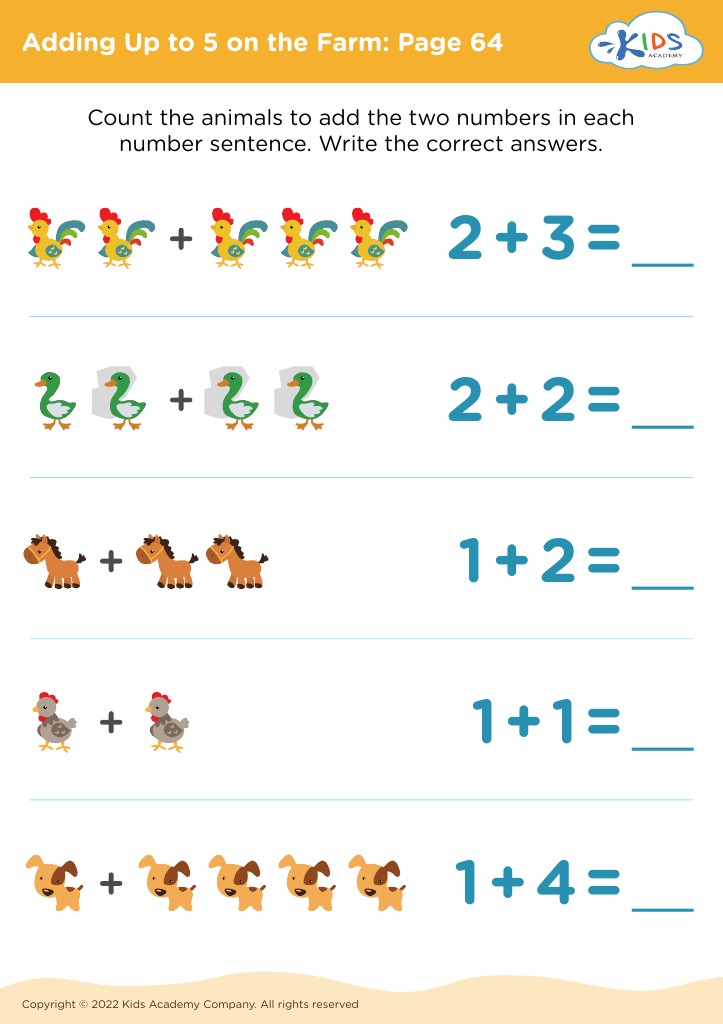
Adding Up to 5 on the Farm: Page 64
Worksheet
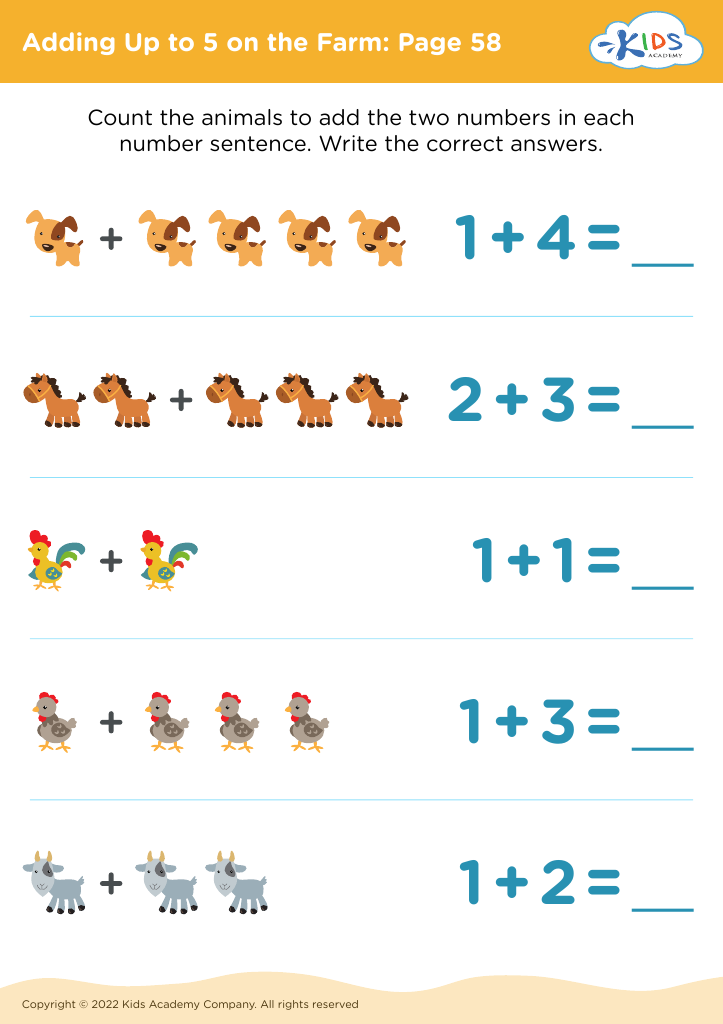
Adding Up to 5 on the Farm: Page 58
Worksheet
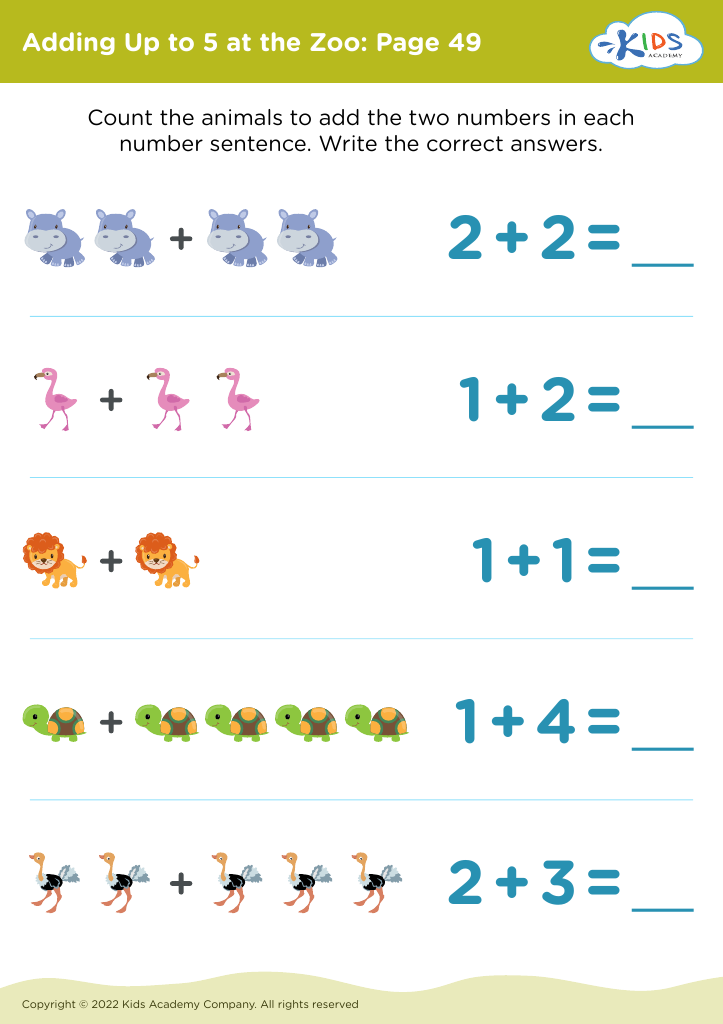
Adding Up to 5 at the Zoo: Page 49
Worksheet
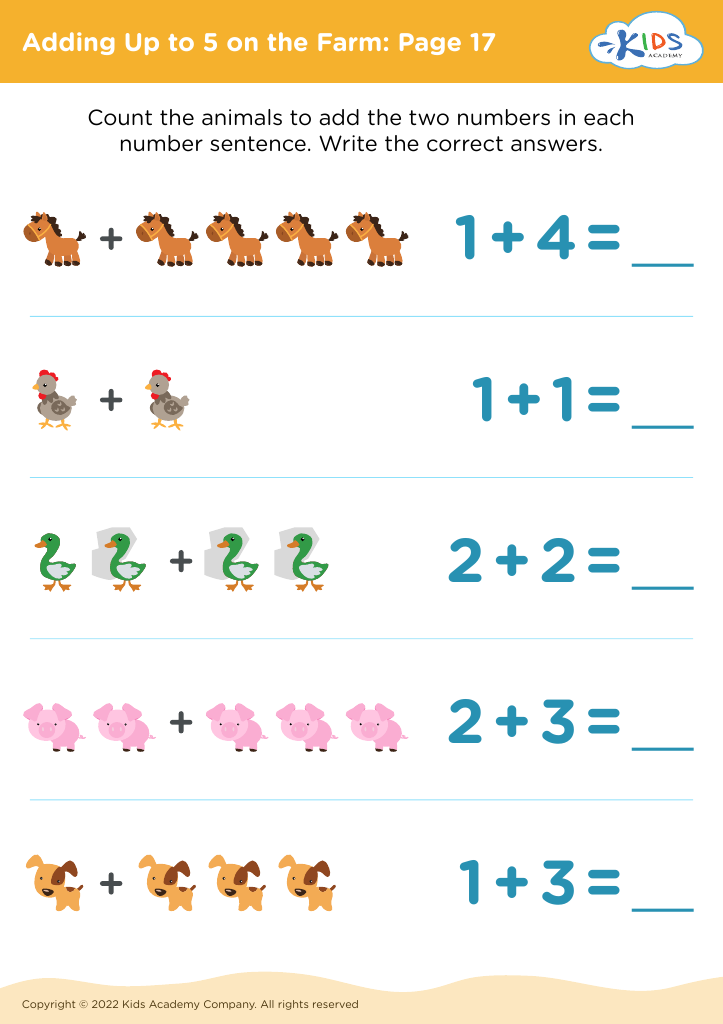
Adding Up to 5 on the Farm: Page 17
Worksheet
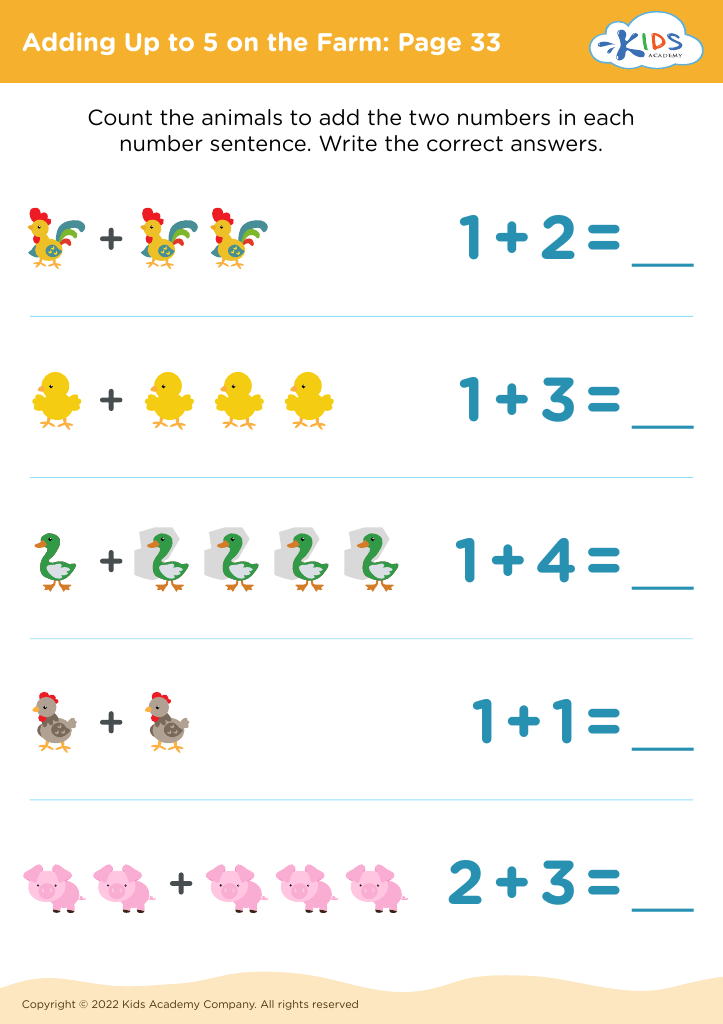
Adding Up to 5 on the Farm: Page 33
Worksheet
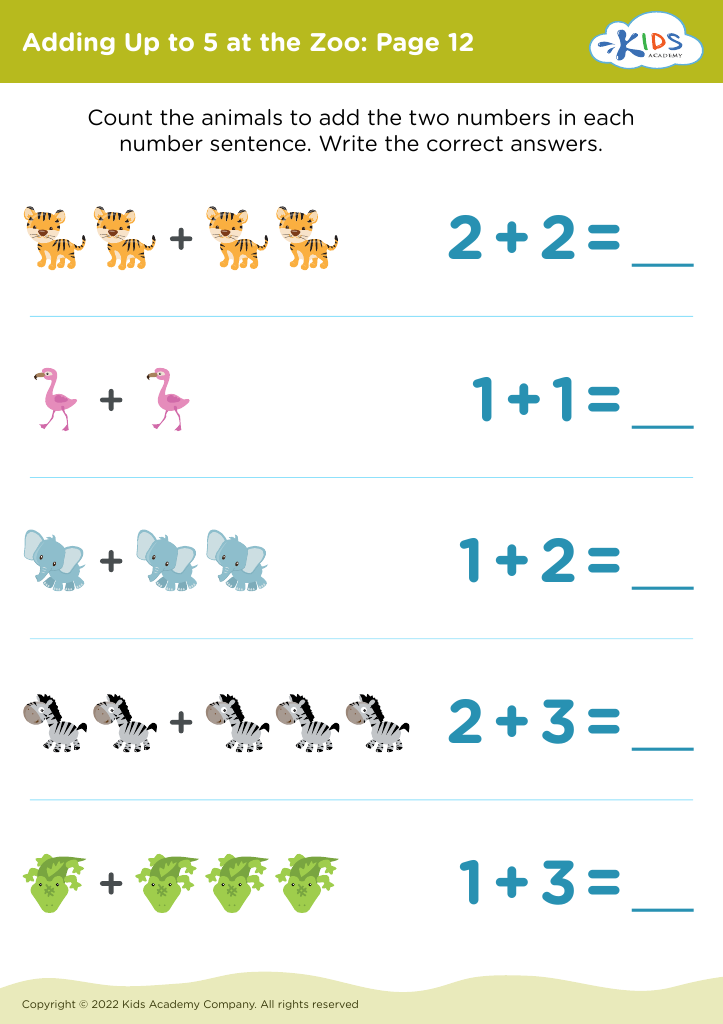
Adding Up to 5 at the Zoo: Page 12
Worksheet
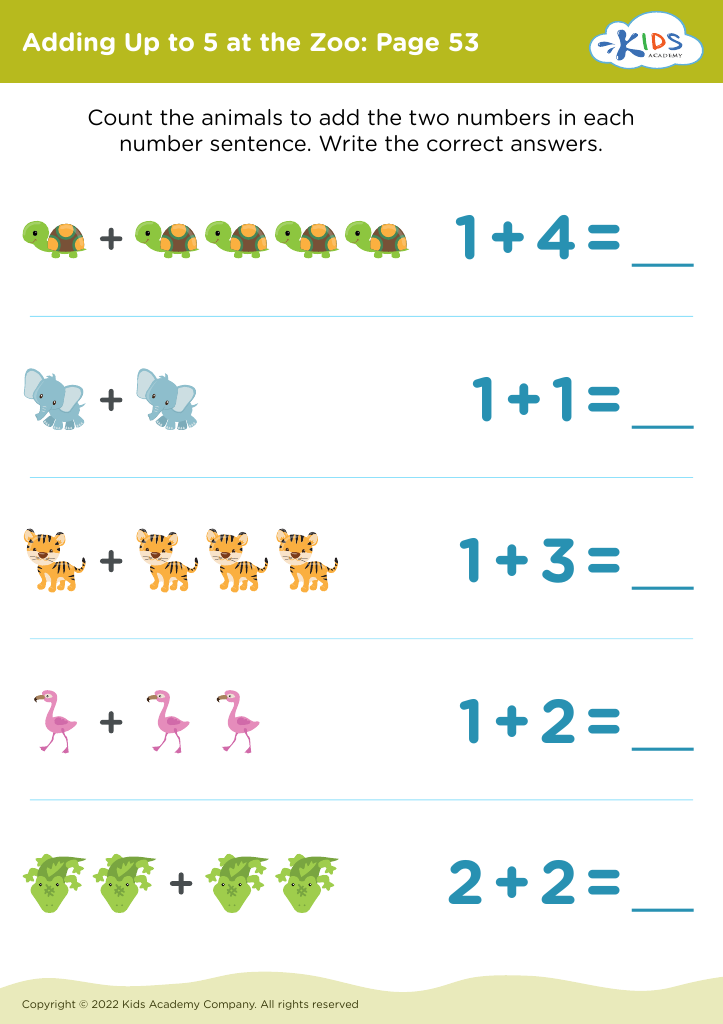
Adding Up to 5 at the Zoo: Page 53
Worksheet
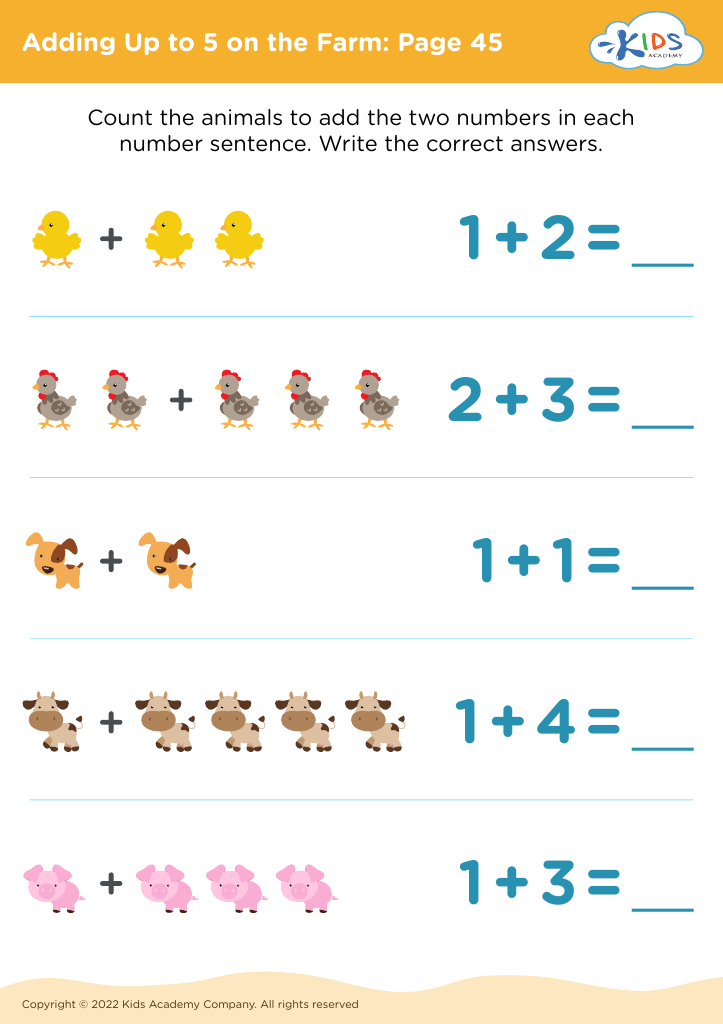
Adding Up to 5 on the Farm: Page 45
Worksheet
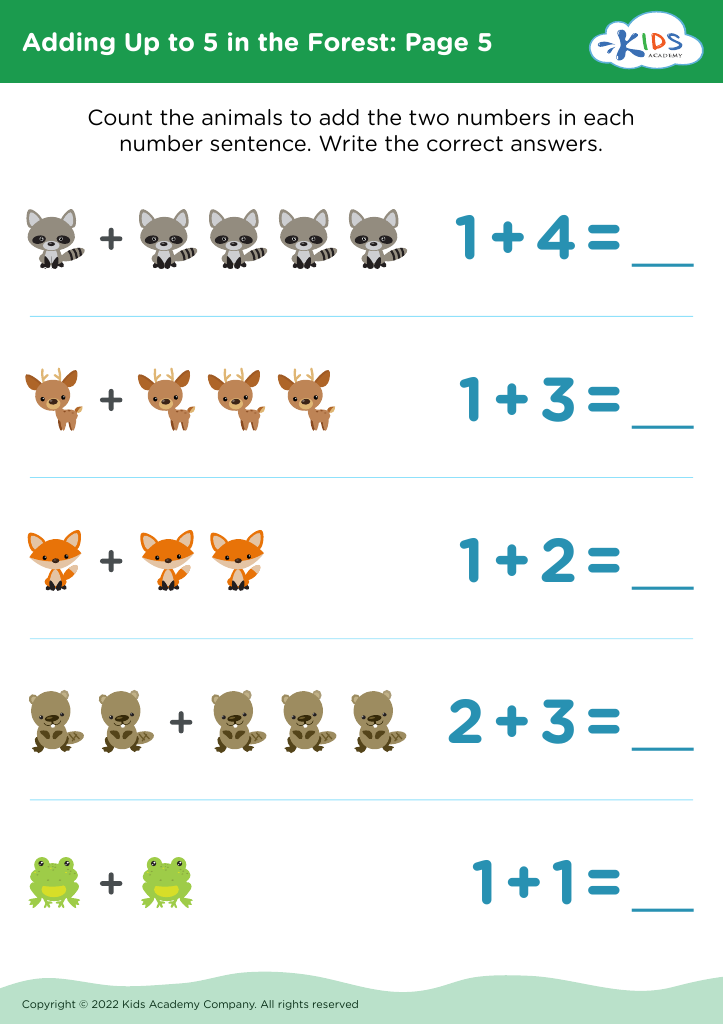
Adding Up to 5 in the Forest: Page 5
Worksheet
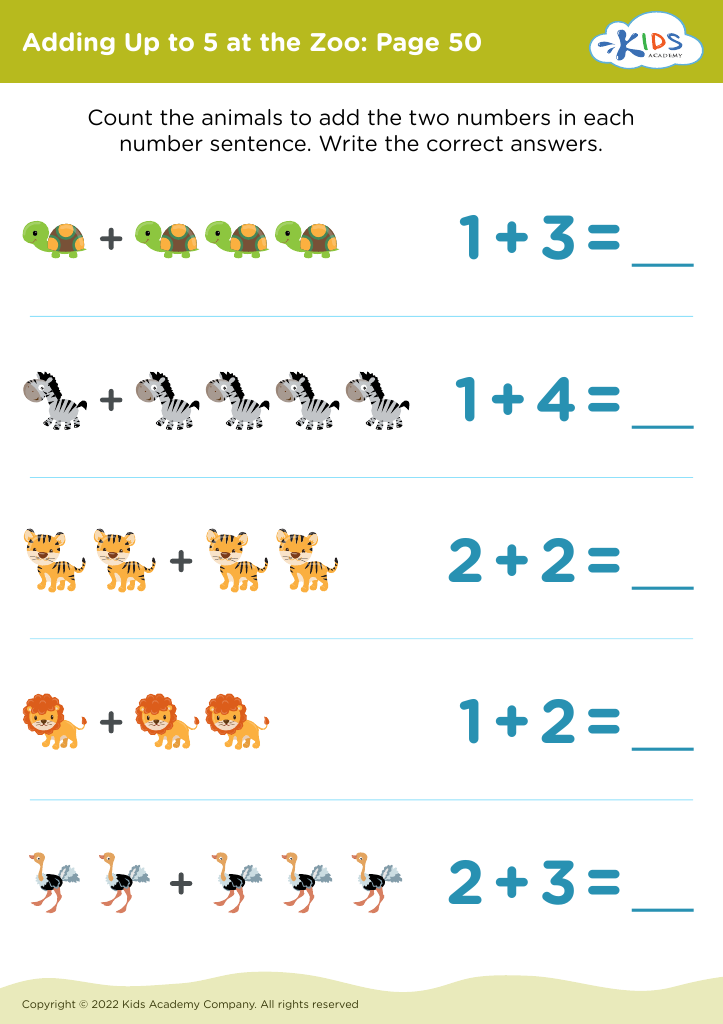
Adding Up to 5 at the Zoo: Page 50
Worksheet
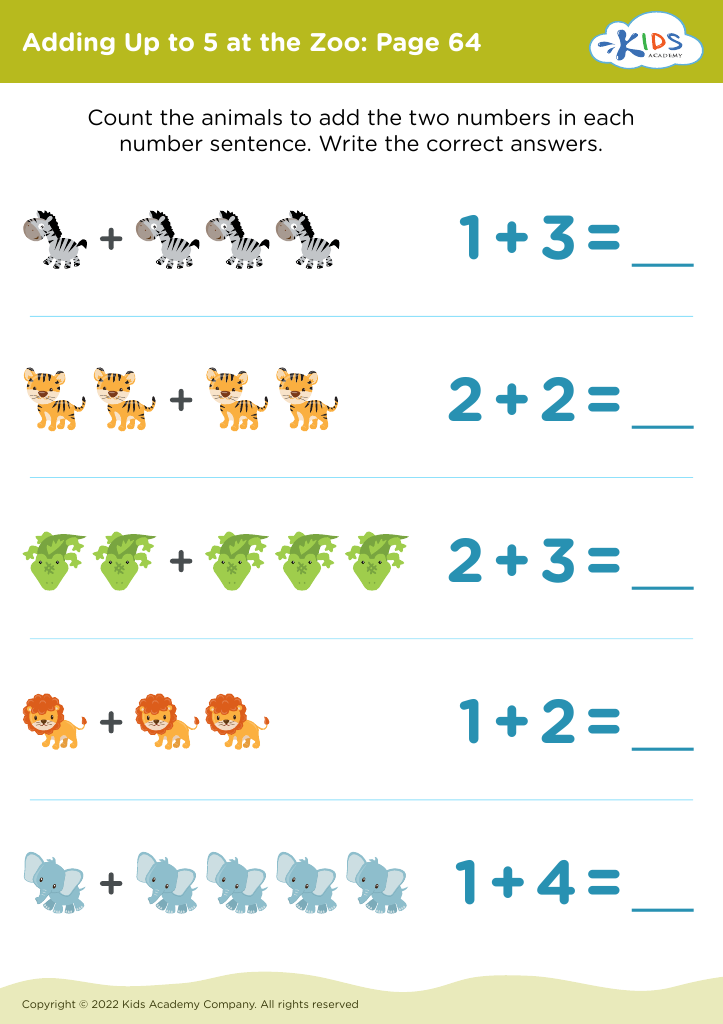
Adding Up to 5 at the Zoo: Page 64
Worksheet
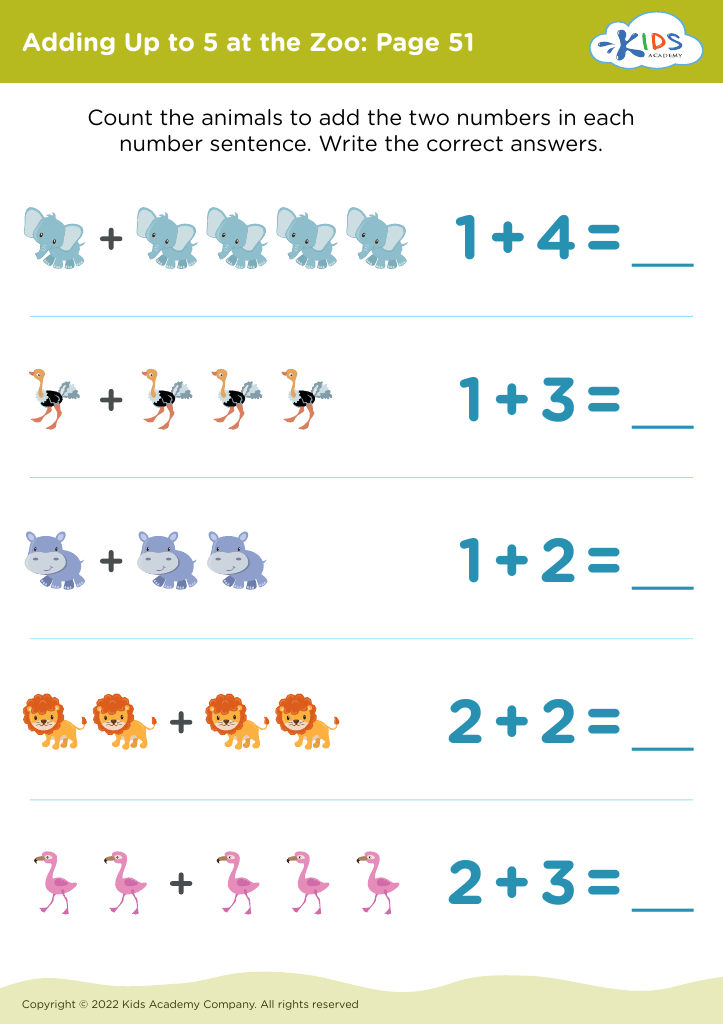
Adding Up to 5 at the Zoo: Page 51
Worksheet
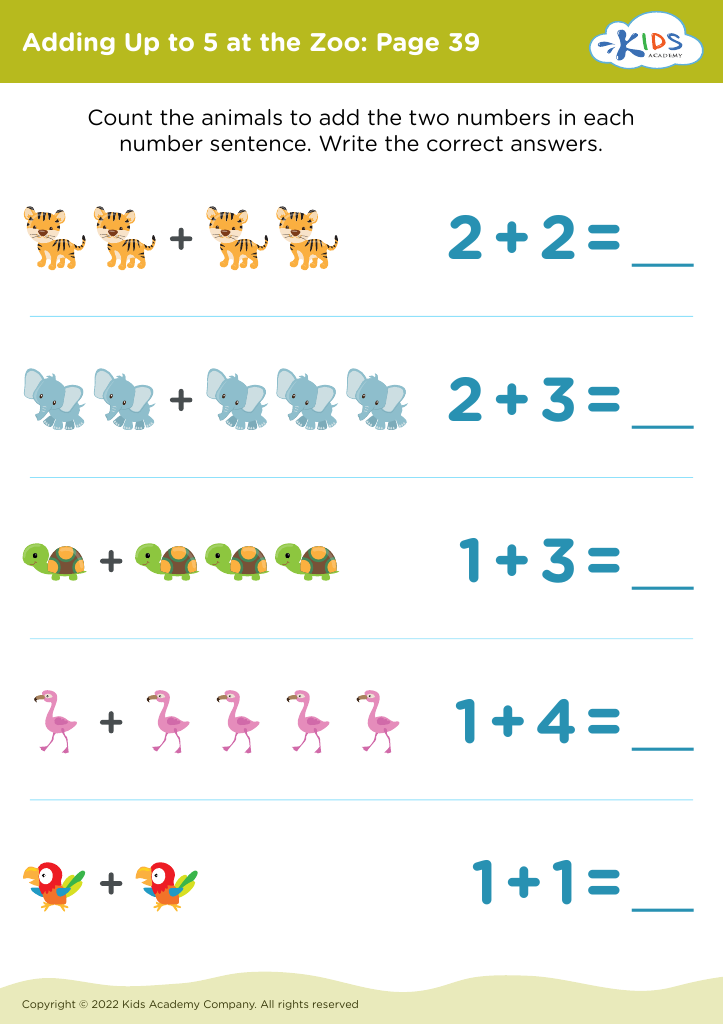
Adding Up to 5 at the Zoo: Page 39
Worksheet
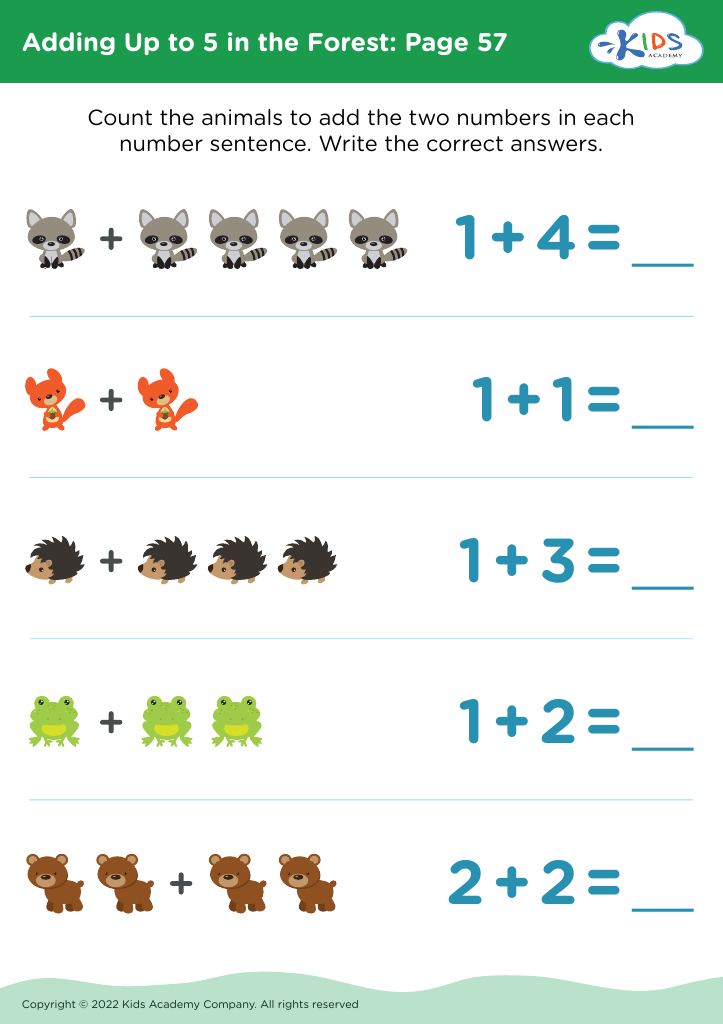
Adding Up to 5 in the Forest: Page 57
Worksheet


... 3 4

Animal recognition addition is a valuable learning tool for 5-year-olds that combines two important concepts: mathematics and animal awareness. Parents and teachers should care about this method for several reasons. First, it captures children's interest by using familiar and often beloved subjects—animals. Engaging children through topics they are passionate about can enhance their motivation to learn and makes mathematics feel less intimidating.

Moreover, integrating animals into addition exercises allows for a multisensory learning experience. Children can use visual aids, such as pictures or toys, helping them to better grasp abstract mathematical concepts. This hands-on approach supports different learning styles and fosters a deeper understanding, as kids are often more likely to remember what they actively engage with.

Additionally, animal recognition addition promotes not only math skills but also cognitive development, as it encourages critical thinking when sorting, categorizing, and counting animals. This dual focus on animals and numeracy enhances language development as children learn to describe animals and their characteristics.

Ultimately, using animal-themed activities in math fosters a holistic educational environment, where learning is fun, interactive, and connected to the natural world around them. By caring about such methods, parents and teachers can help build a solid foundation for children's lifelong learning.