Check out this FREE Trial Lesson on Addition for age 5!

Match Exactly the Same

Favorites
With answer key
Interactive
  • 5
  • Basic Addition Skills
  • Addition
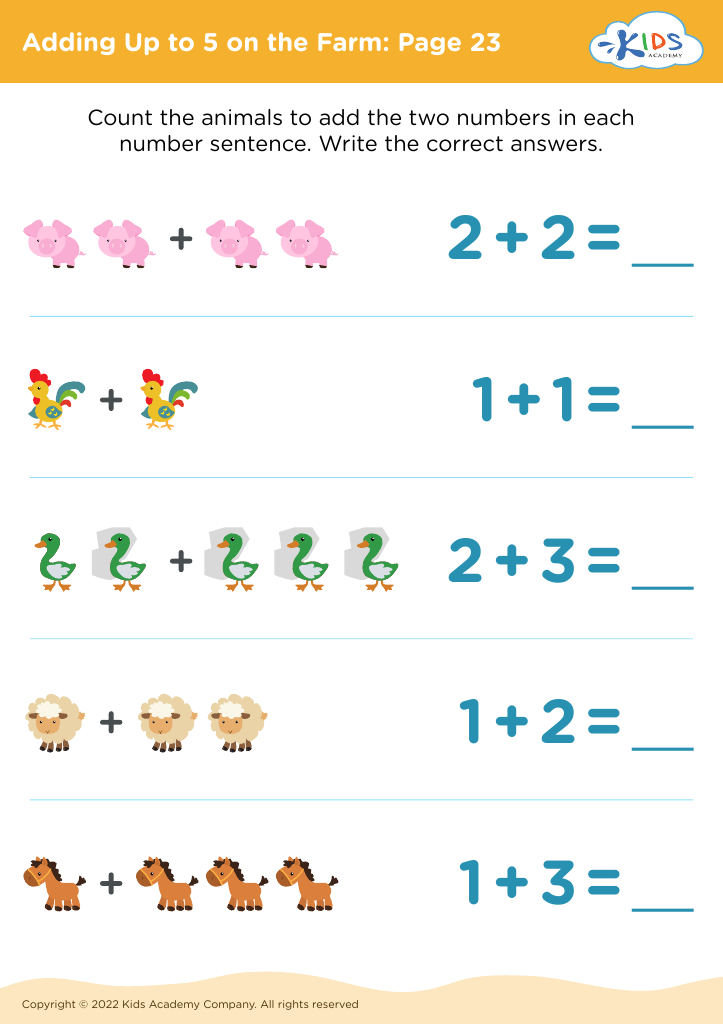
Adding Up to 5 on the Farm: Page 23
Worksheet
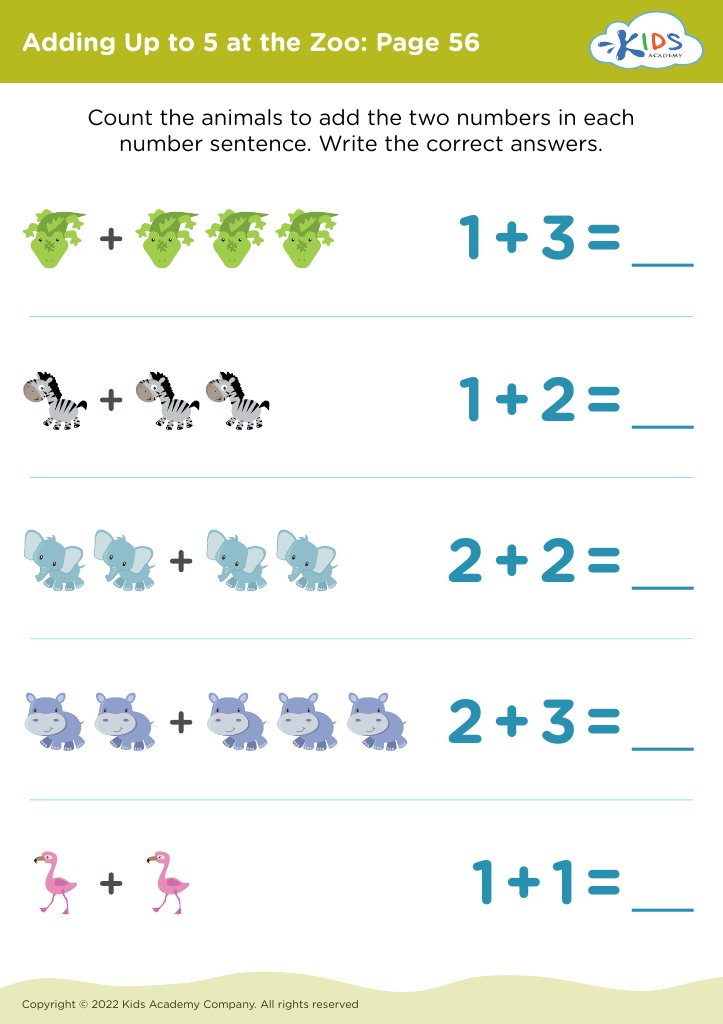
Adding Up to 5 at the Zoo: Page 56
Worksheet
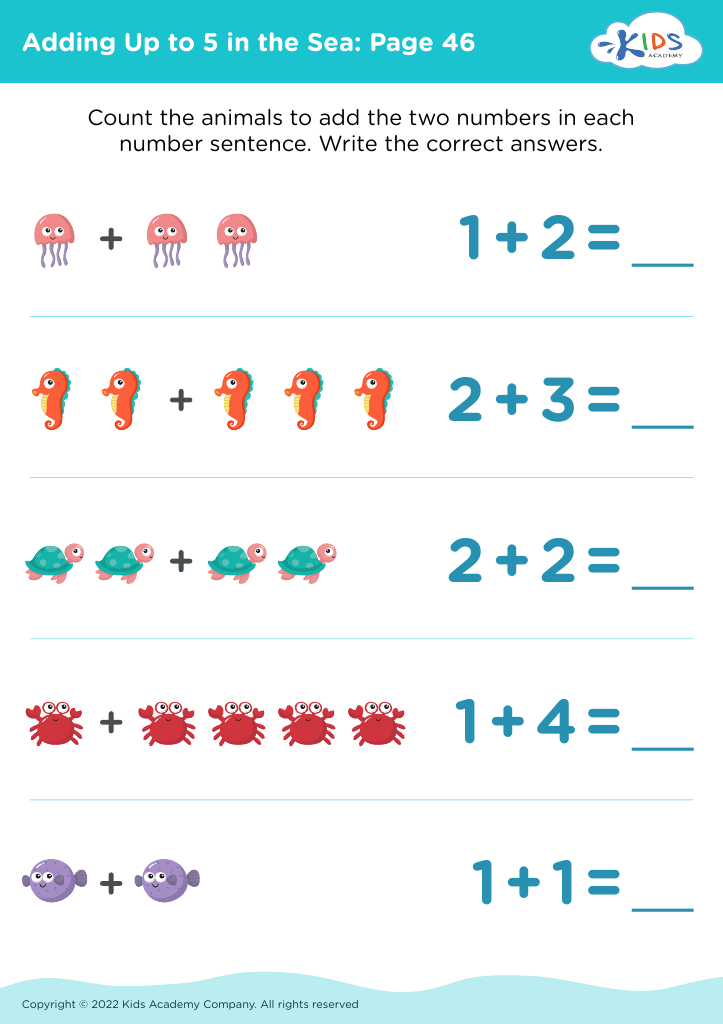
Adding Up to 5 in the Sea: Page 46
Worksheet
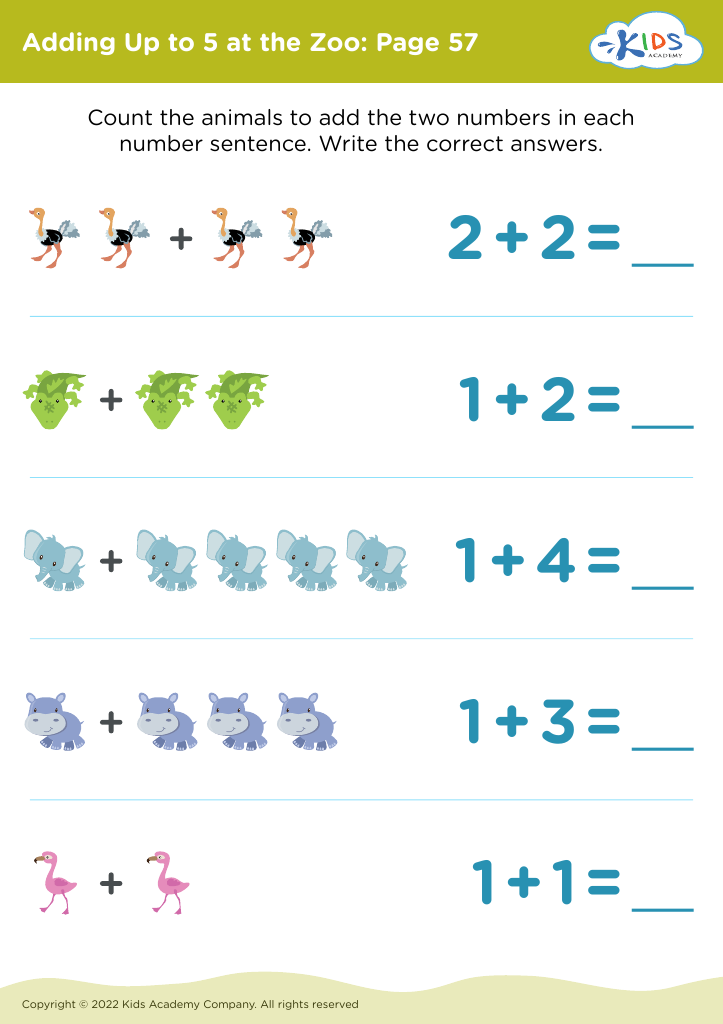
Adding Up to 5 at the Zoo: Page 57
Worksheet
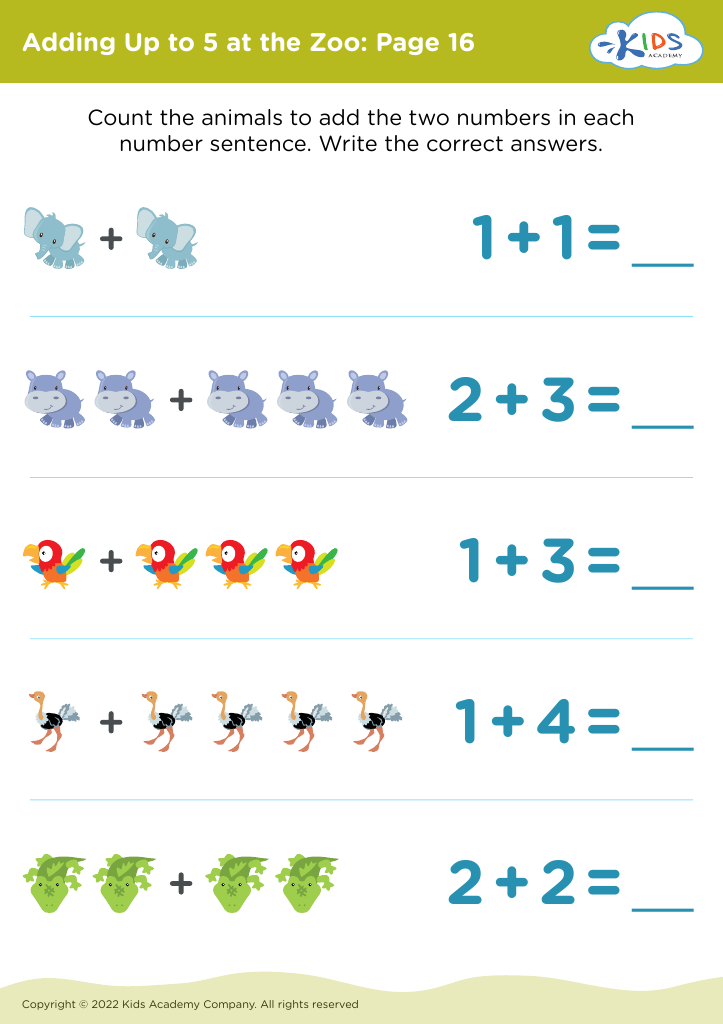
Adding Up to 5 at the Zoo: Page 16
Worksheet
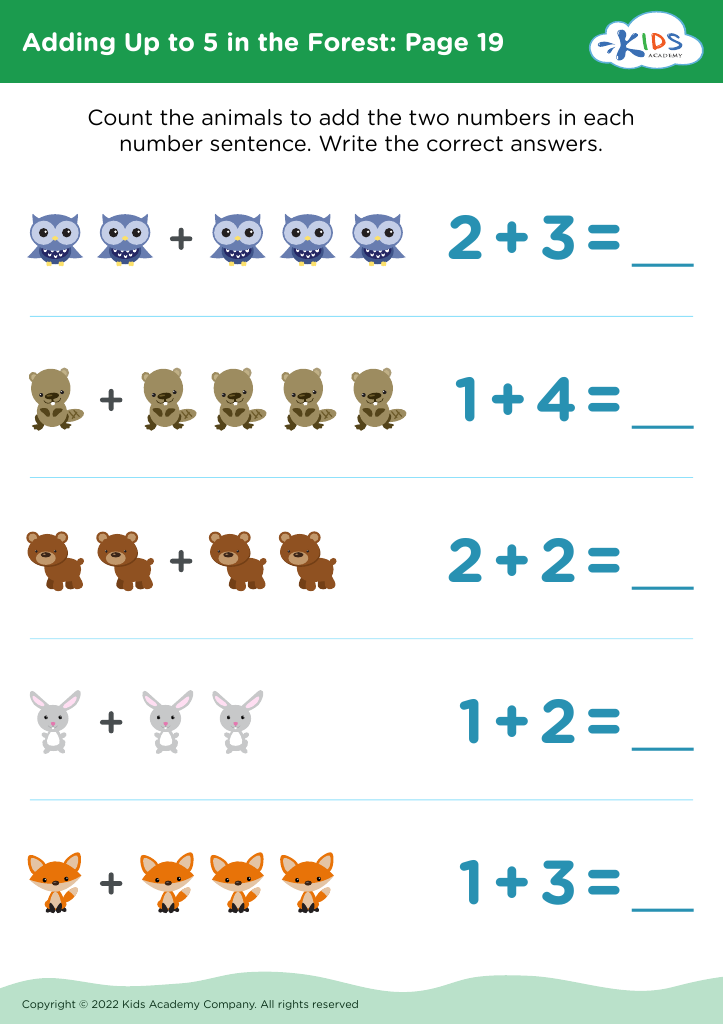
Adding Up to 5 in the Forest: Page 19
Worksheet
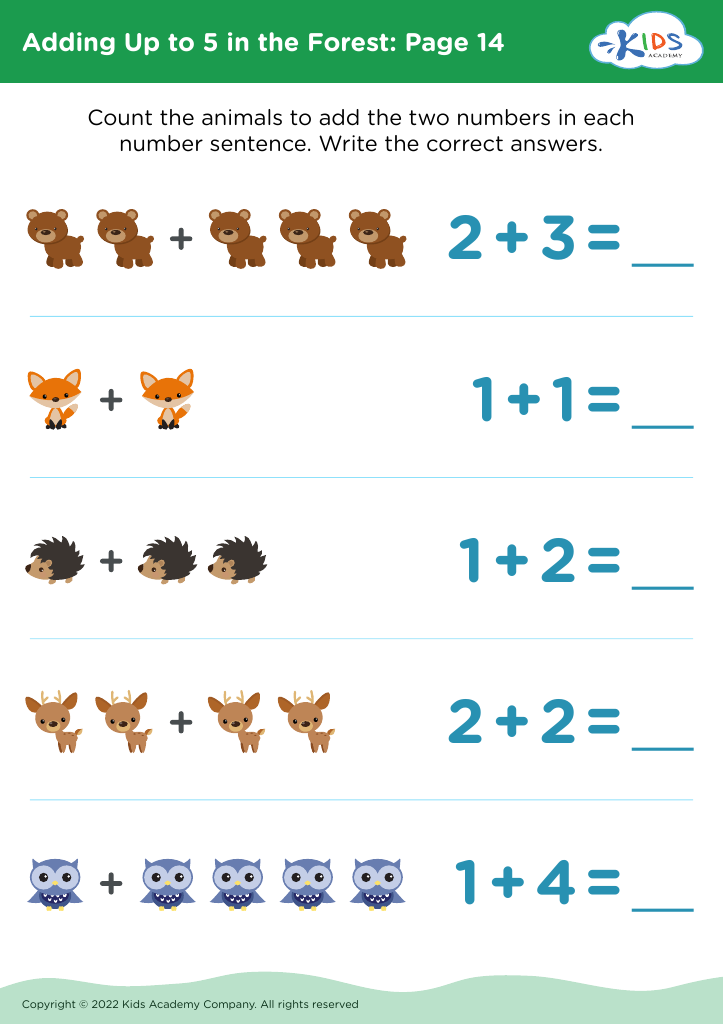
Adding Up to 5 in the Forest: Page 14
Worksheet
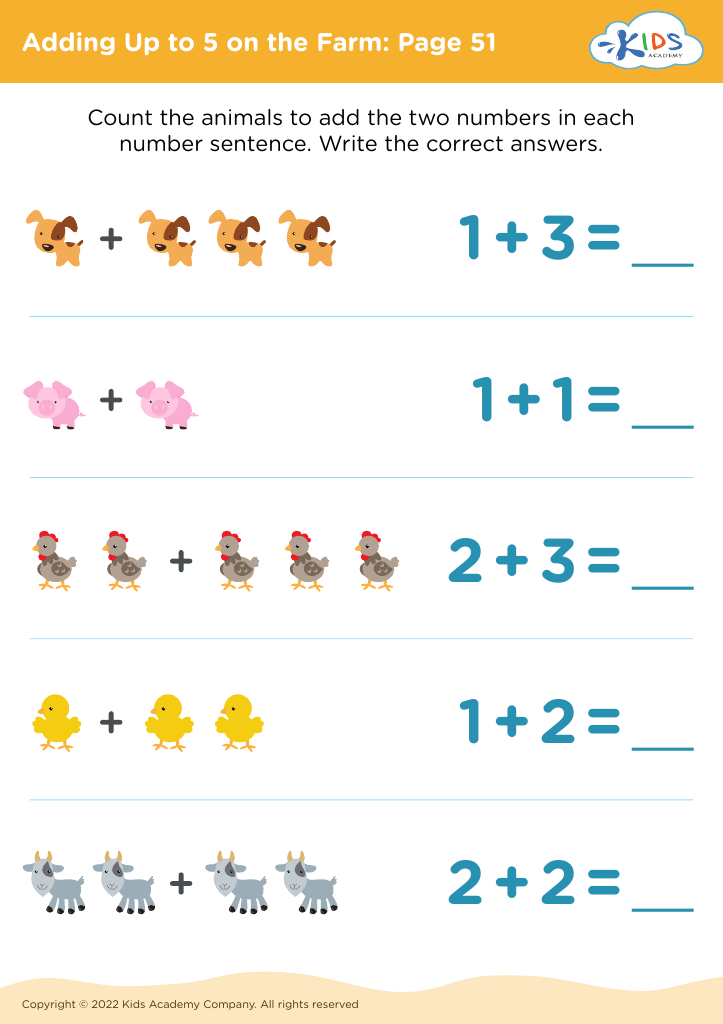
Adding Up to 5 on the Farm: Page 51
Worksheet
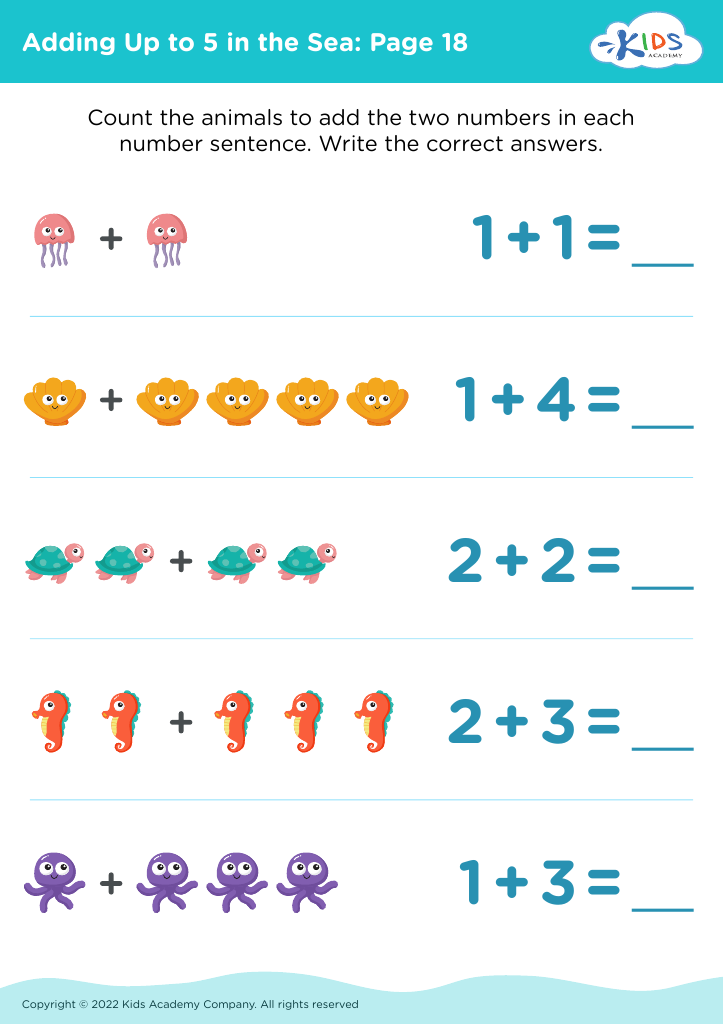
Adding Up to 5 in the Sea: Page 18
Worksheet
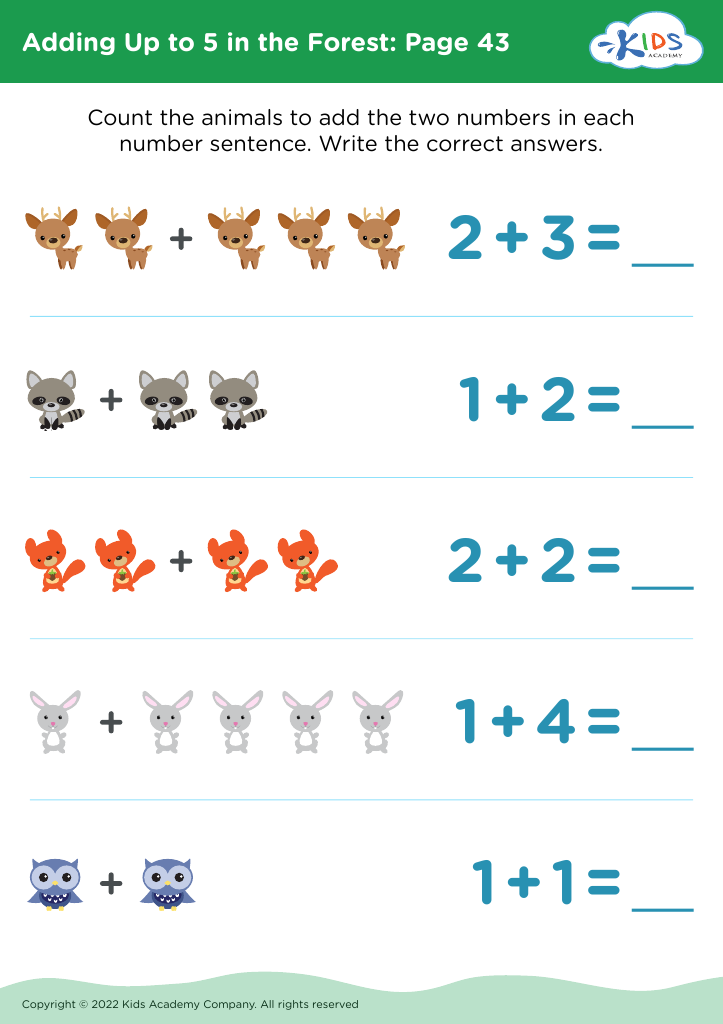
Adding Up to 5 in the Forest: Page 43
Worksheet
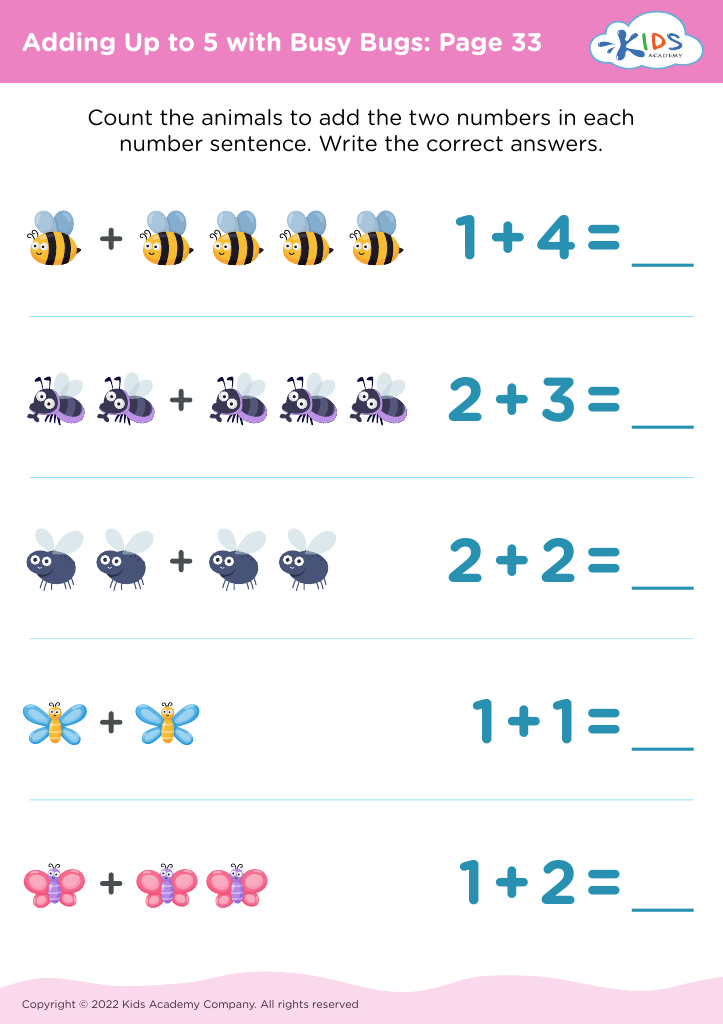
Adding Up to 5 with Busy Bugs: Page 33
Worksheet
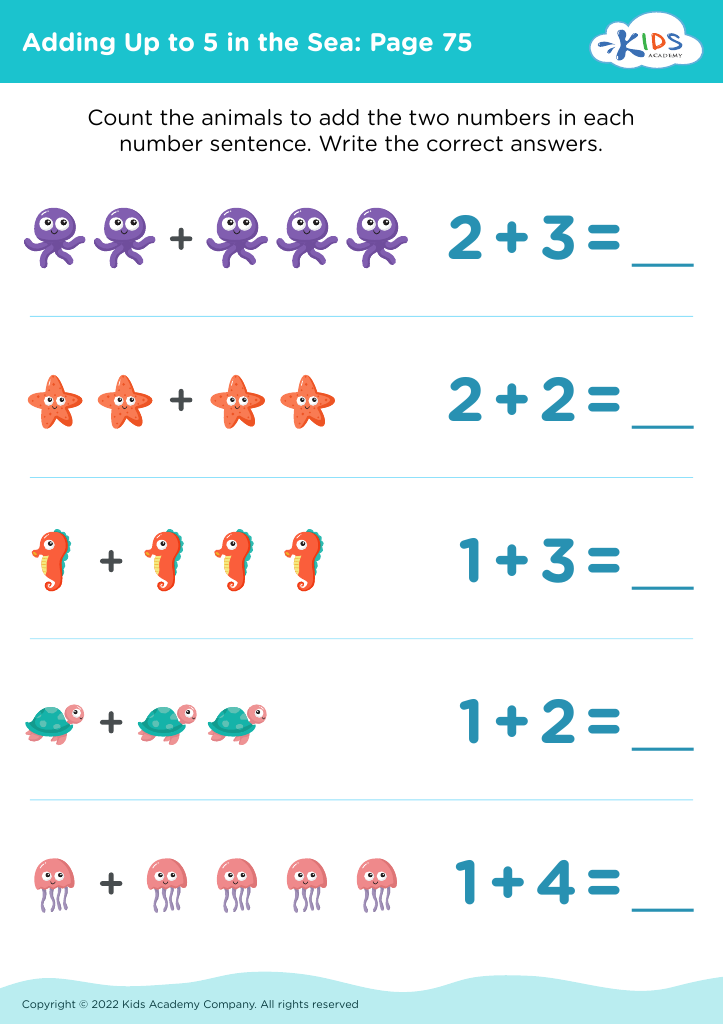
Adding Up to 5 in the Sea: Page 75
Worksheet
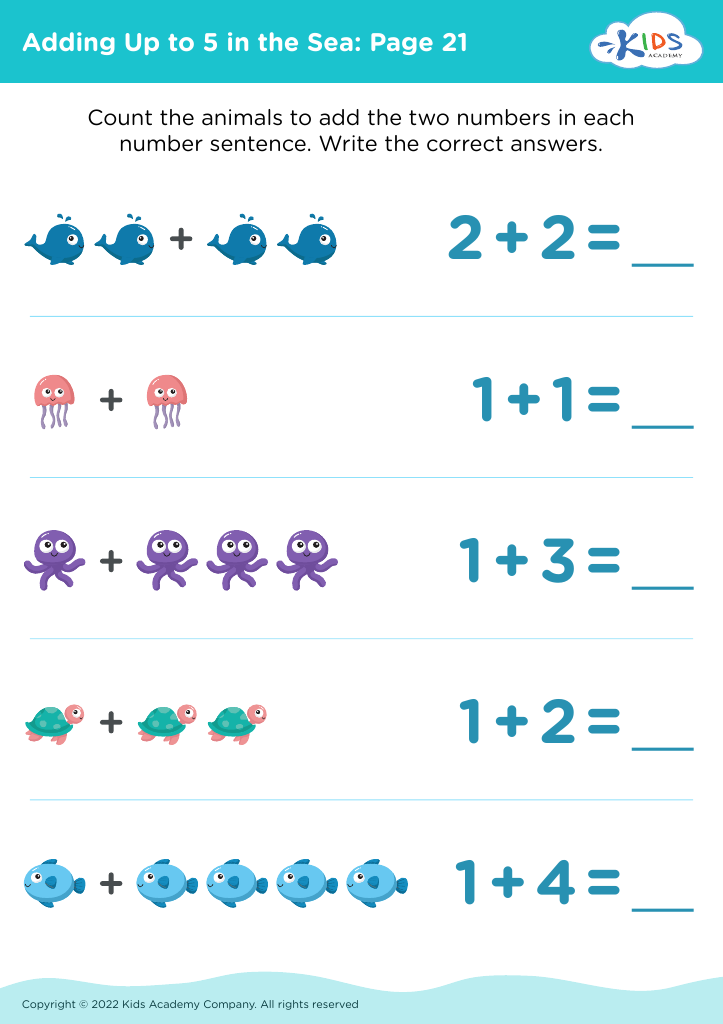
Adding Up to 5 in the Sea: Page 21
Worksheet
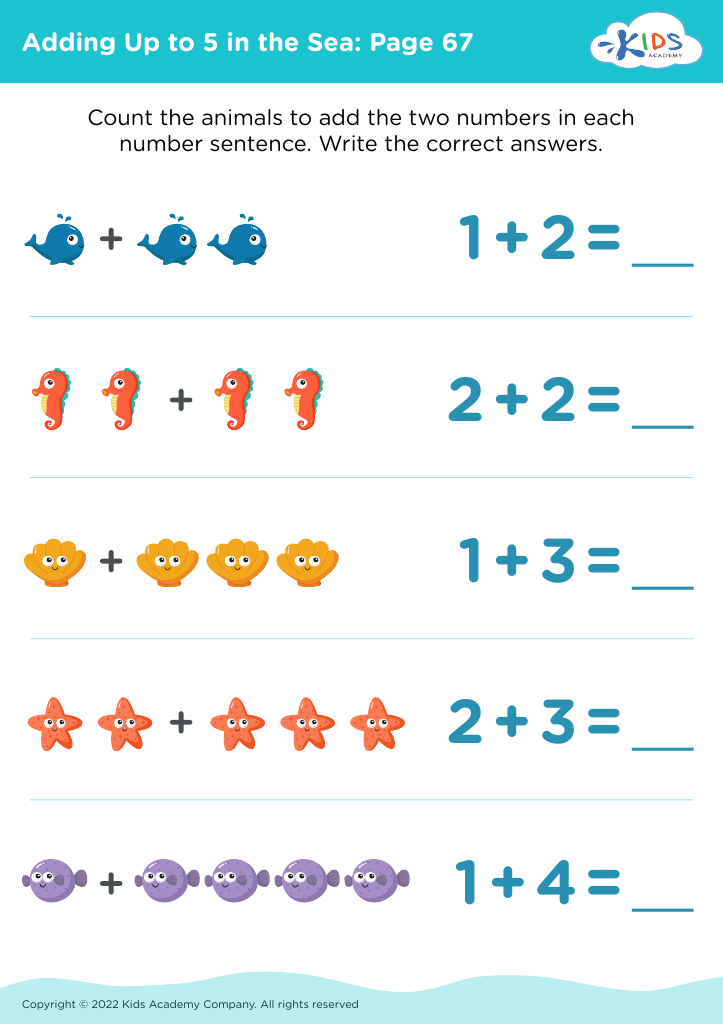
Adding Up to 5 in the Sea: Page 67
Worksheet
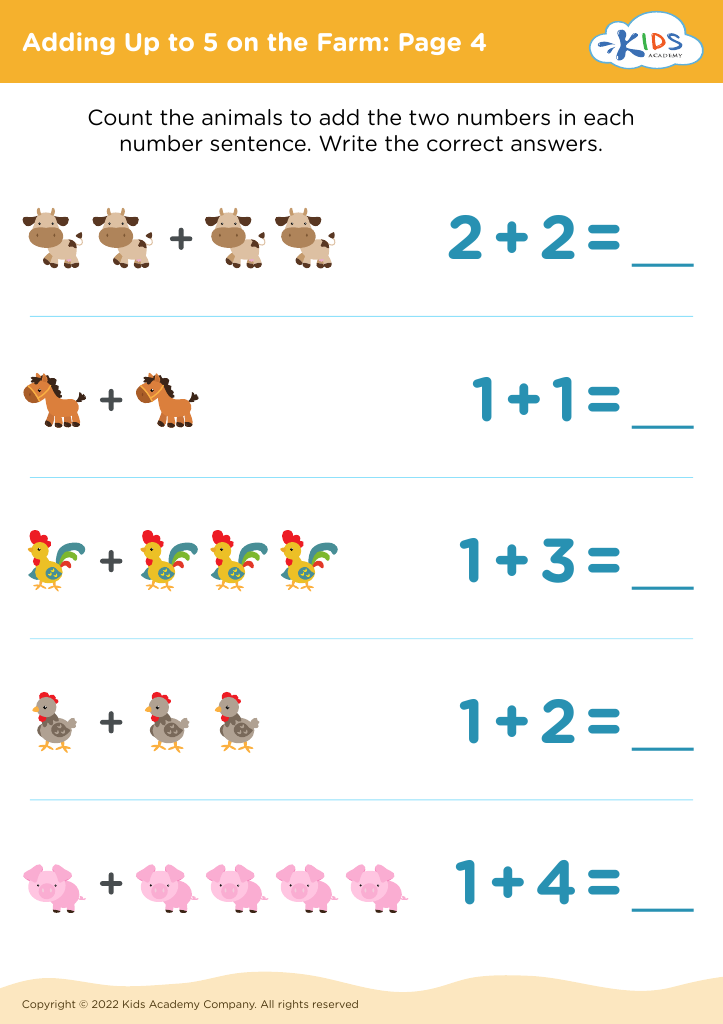
Adding Up to 5 on the Farm: Page 4
Worksheet
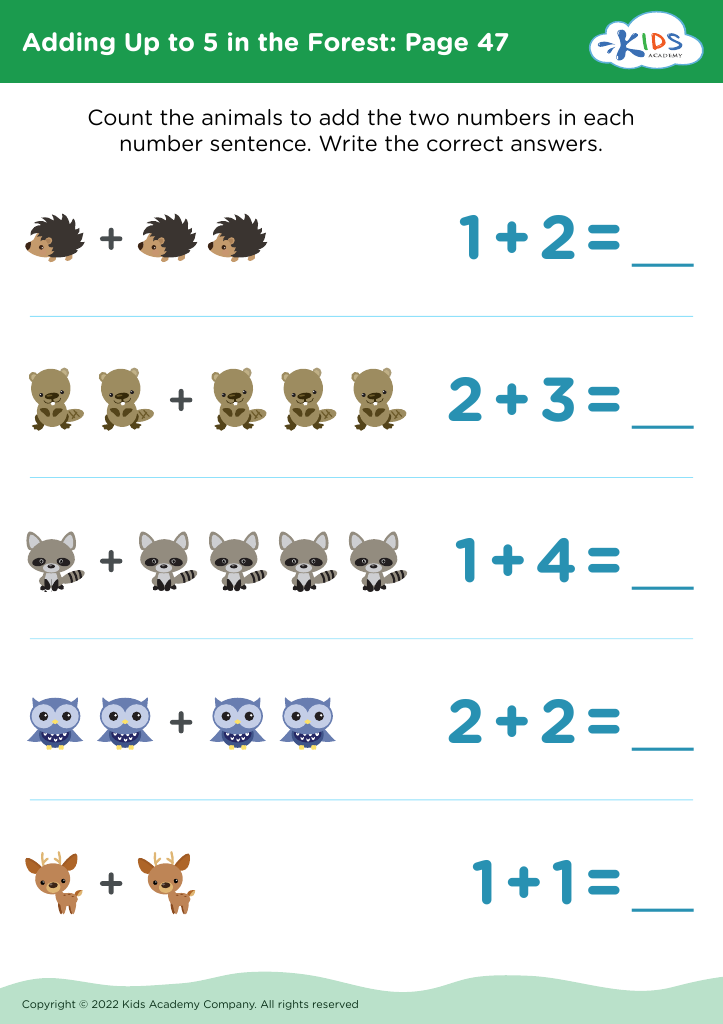
Adding Up to 5 in the Forest: Page 47
Worksheet
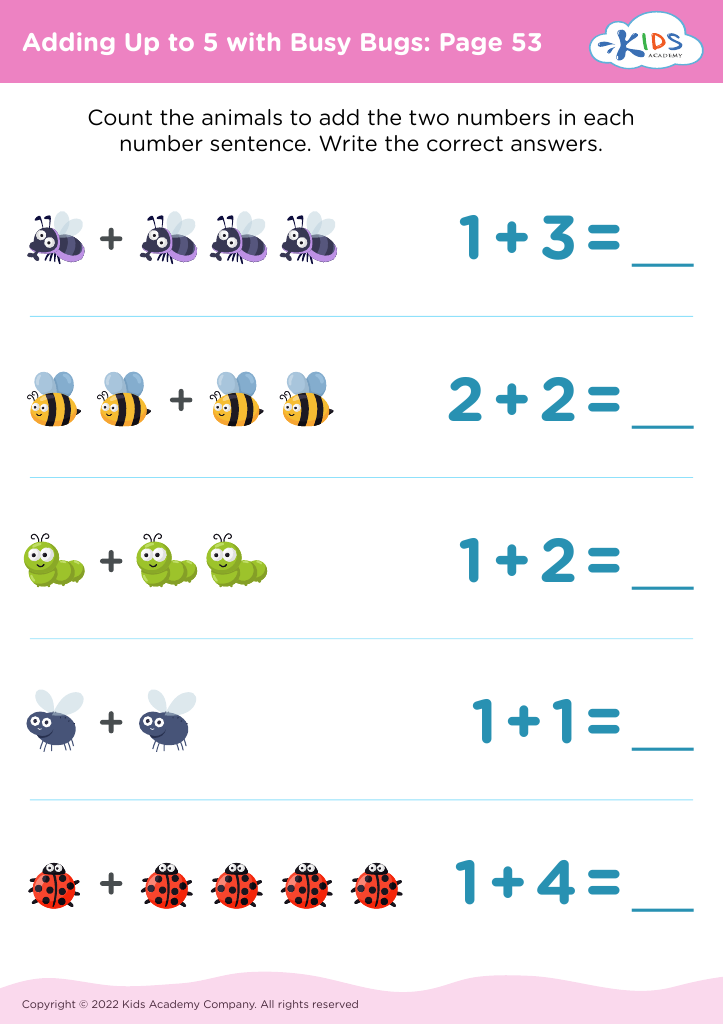
Adding Up to 5 with Busy Bugs: Page 53
Worksheet
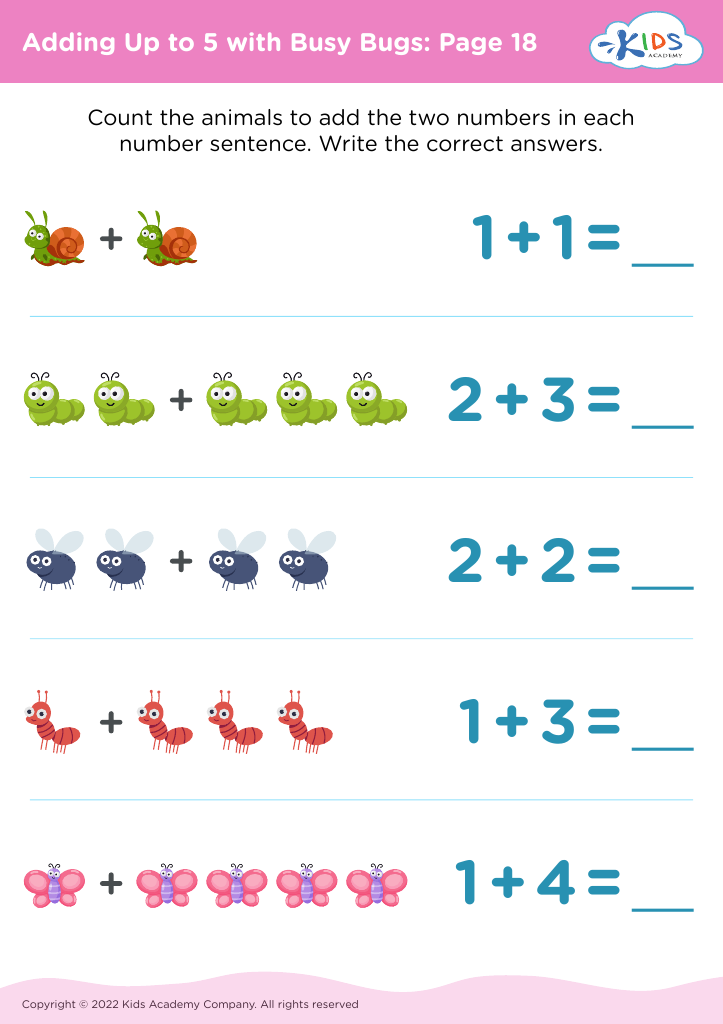
Adding Up to 5 with Busy Bugs: Page 18
Worksheet
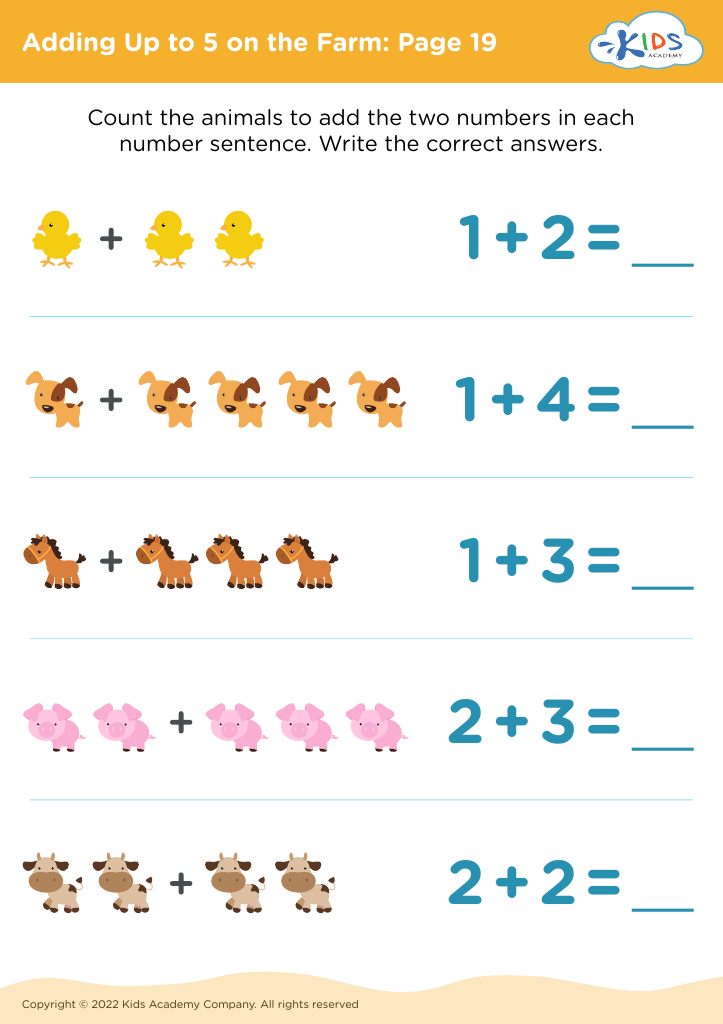
Adding Up to 5 on the Farm: Page 19
Worksheet
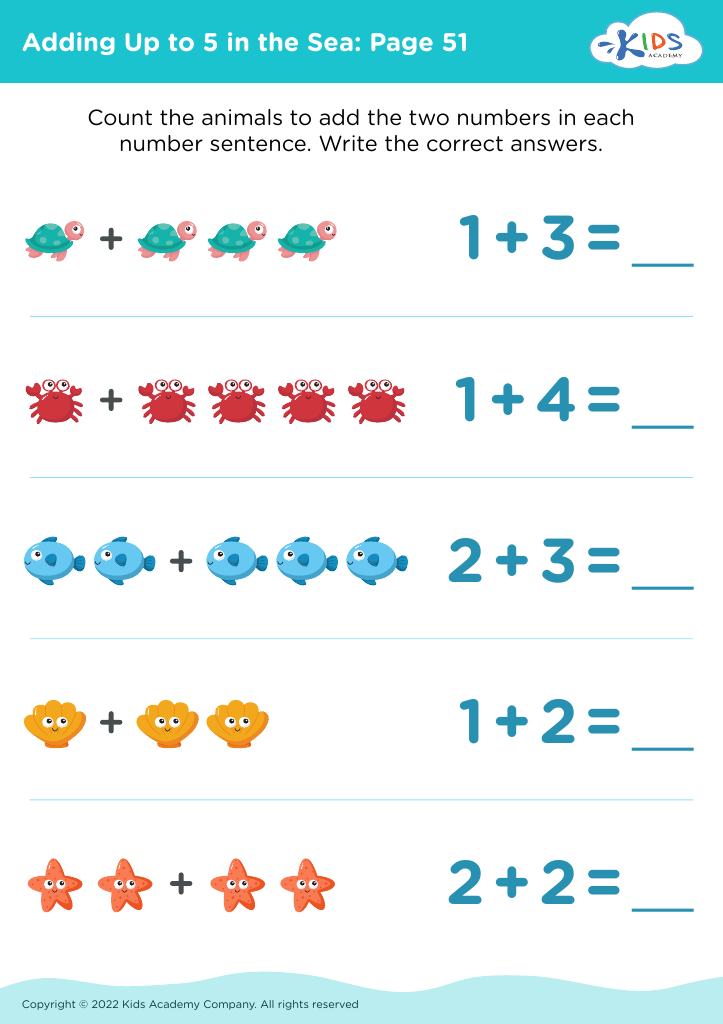
Adding Up to 5 in the Sea: Page 51
Worksheet
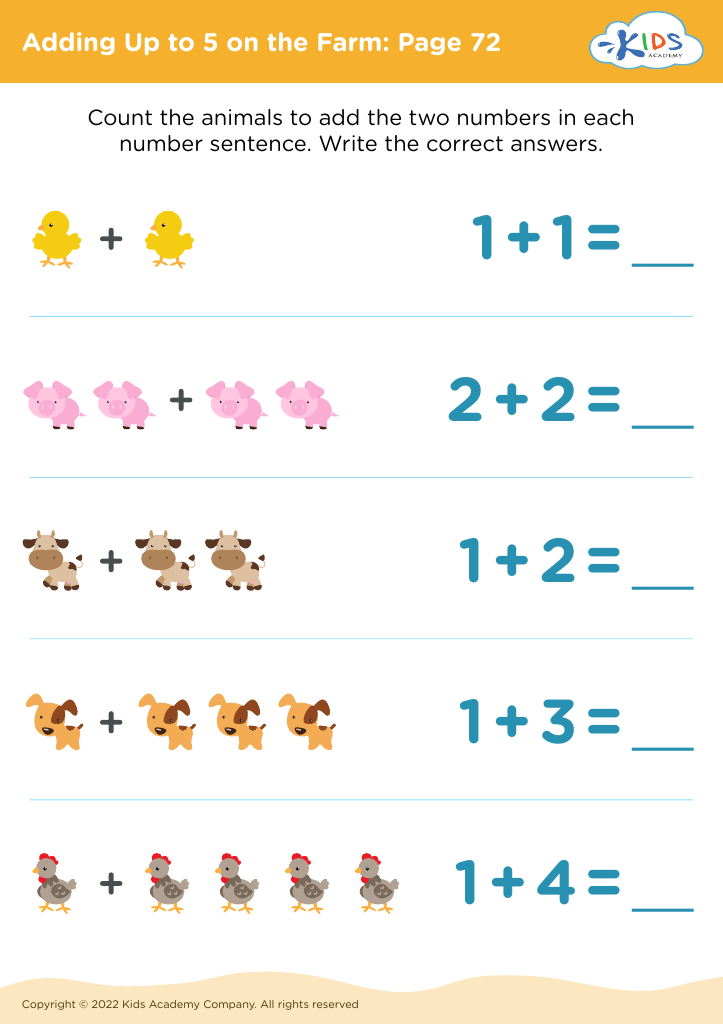
Adding Up to 5 on the Farm: Page 72
Worksheet
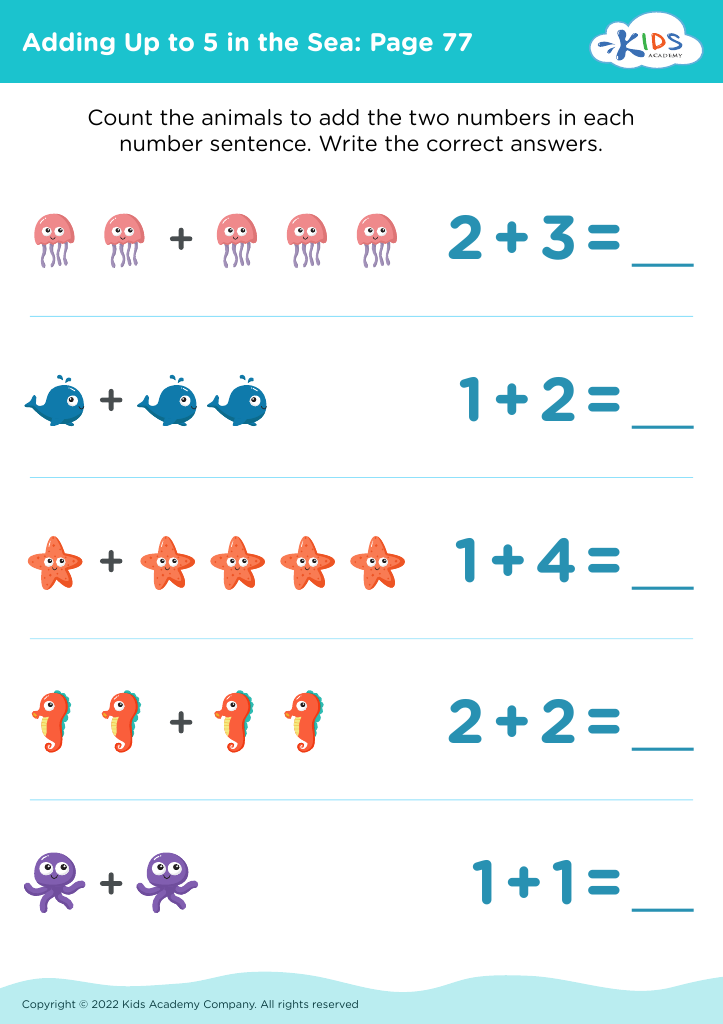
Adding Up to 5 in the Sea: Page 77
Worksheet
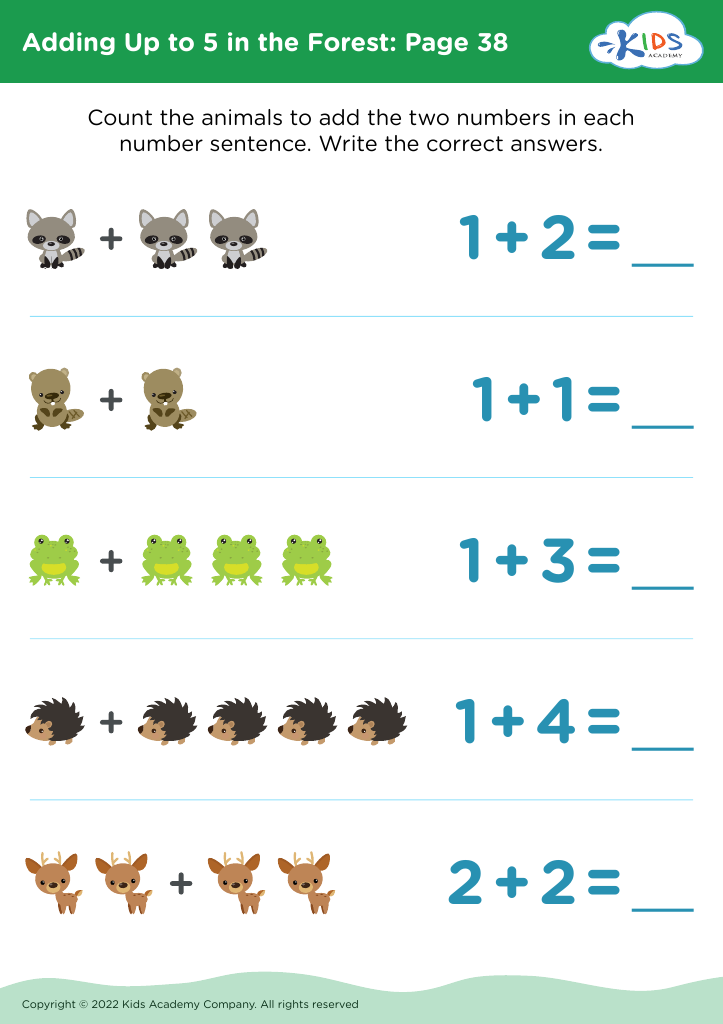
Adding Up to 5 in the Forest: Page 38
Worksheet
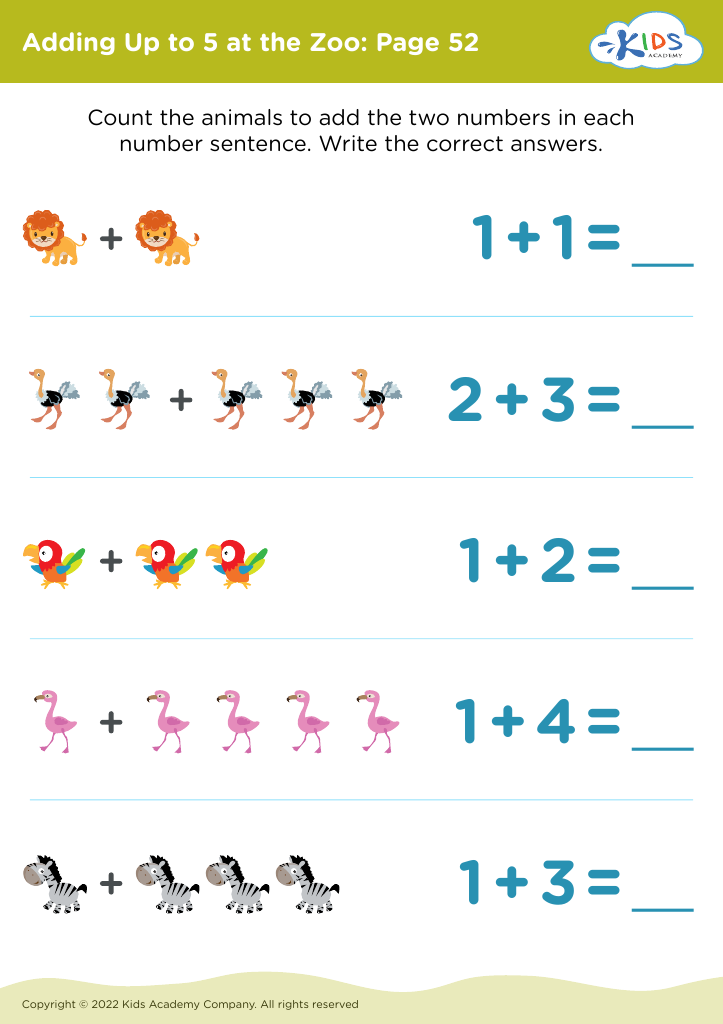
Adding Up to 5 at the Zoo: Page 52
Worksheet


Parents and teachers should prioritize fostering basic addition skills in 5-year-olds because foundational math proficiency has significant implications for a child's overall academic journey and cognitive development. At this formative age, children's minds are exceptionally adaptable, making it the perfect period for grasping fundamental mathematical concepts like addition. Easy addition practices, such as 1+1 or 2+3, not only pave the way for more complex math skills later on but also nurture logic and reasoning capabilities across other disciplines.

Early mastery of addition boosts confidence in young learners, enabling a positive attitude towards learning and problem-solving that transcends math. These skills promote a sense of accomplishment and reinforce persistence, key attributes that are valuable in all areas of life. Additionally, fundamental numeracy skills are vital in everyday contexts, from understanding time to measuring ingredients in a recipe.

Moreover, curriculum frameworks often build upon early arithmetic skills; thus, proficiency in addition sets the stage for understanding multifaceted topics like subtraction, multiplication, and beyond. Structured and supportive environments beget lifelong learners—by making initial math learning engaging and successful, parents and teachers cultivate a strong academic foundation and encourage inquisitive, adaptable young minds.