Check out this FREE Trial Lesson on Addition for age 5!

P

Favorites
With answer key
Interactive
  • 5
  • Basic Addition Skills
  • Addition
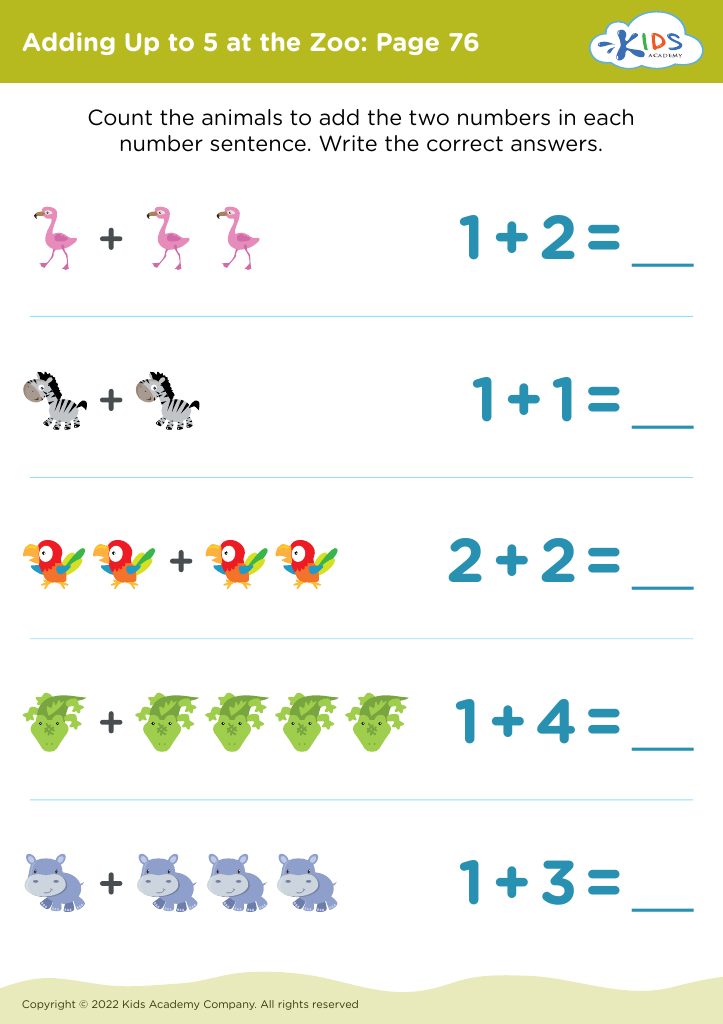
Adding Up to 5 at the Zoo: Page 76
Worksheet
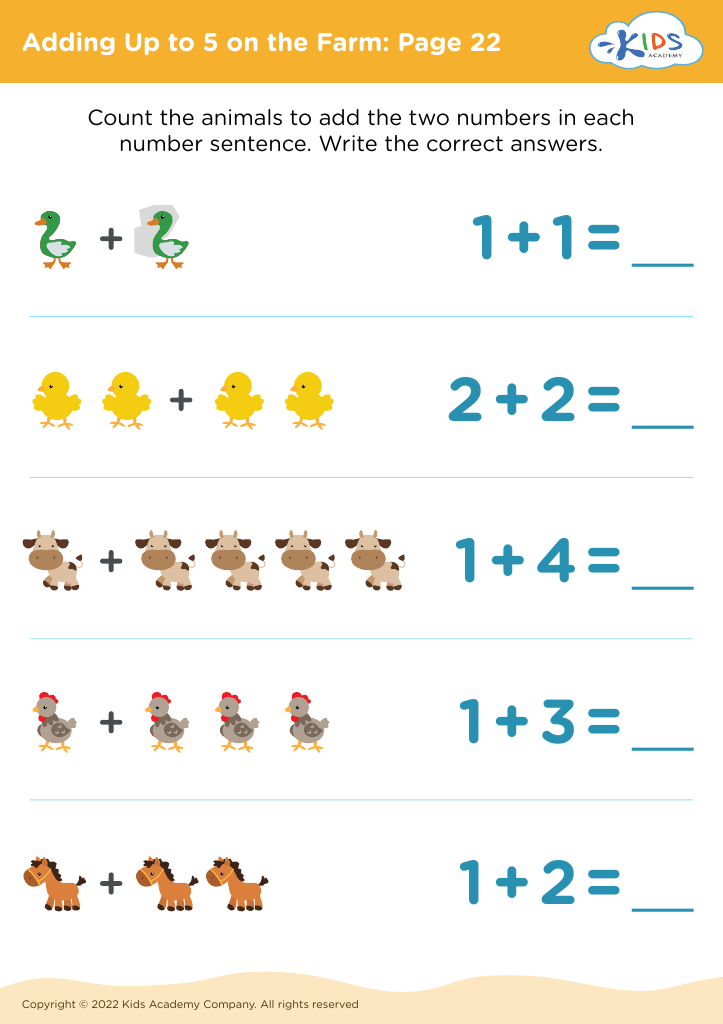
Adding Up to 5 on the Farm: Page 22
Worksheet
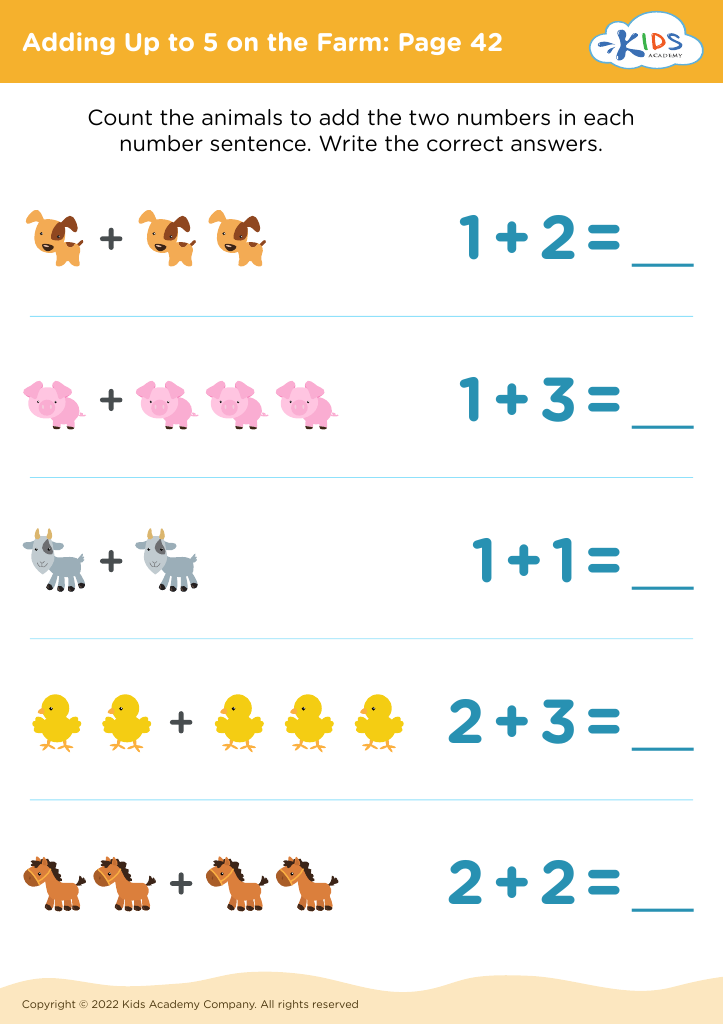
Adding Up to 5 on the Farm: Page 42
Worksheet
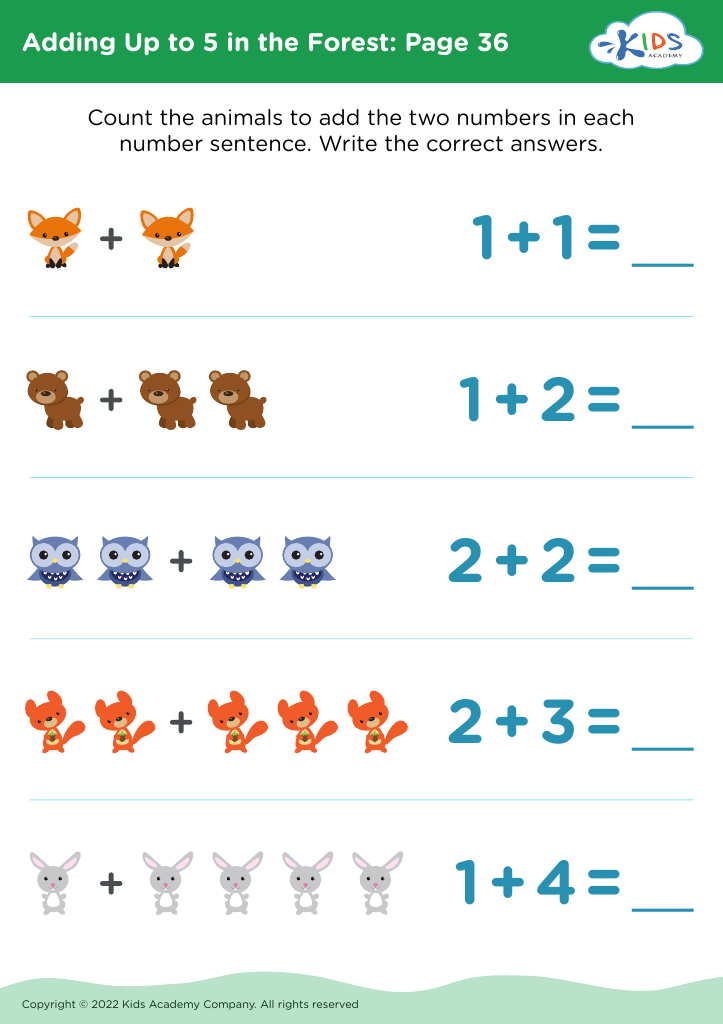
Adding Up to 5 in the Forest: Page 36
Worksheet
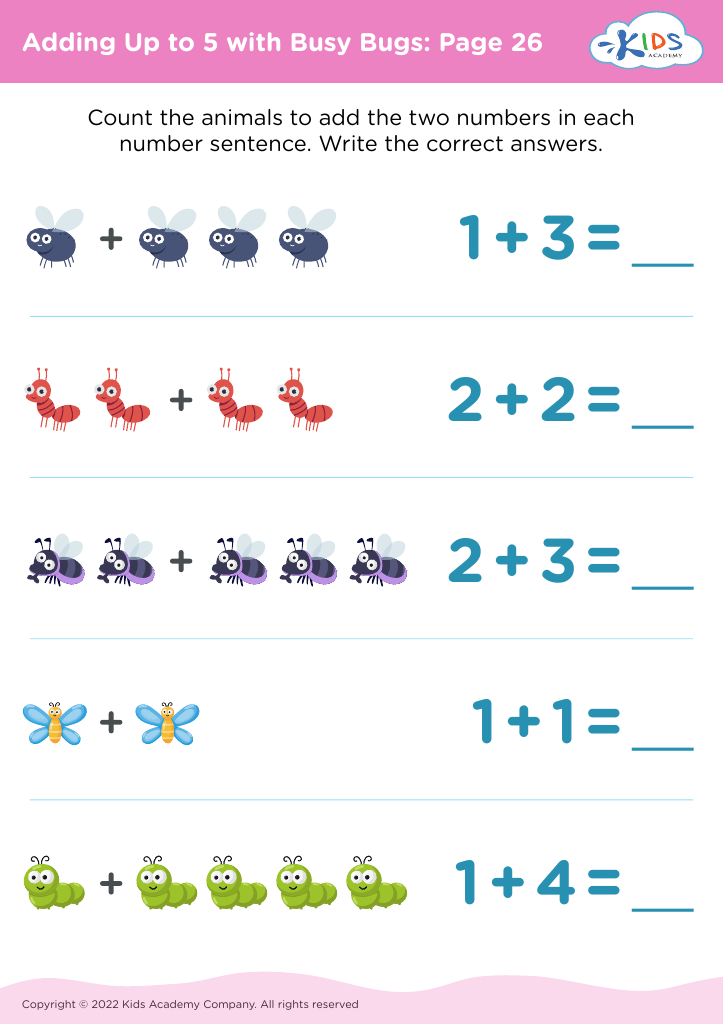
Adding Up to 5 with Busy Bugs: Page 26
Worksheet
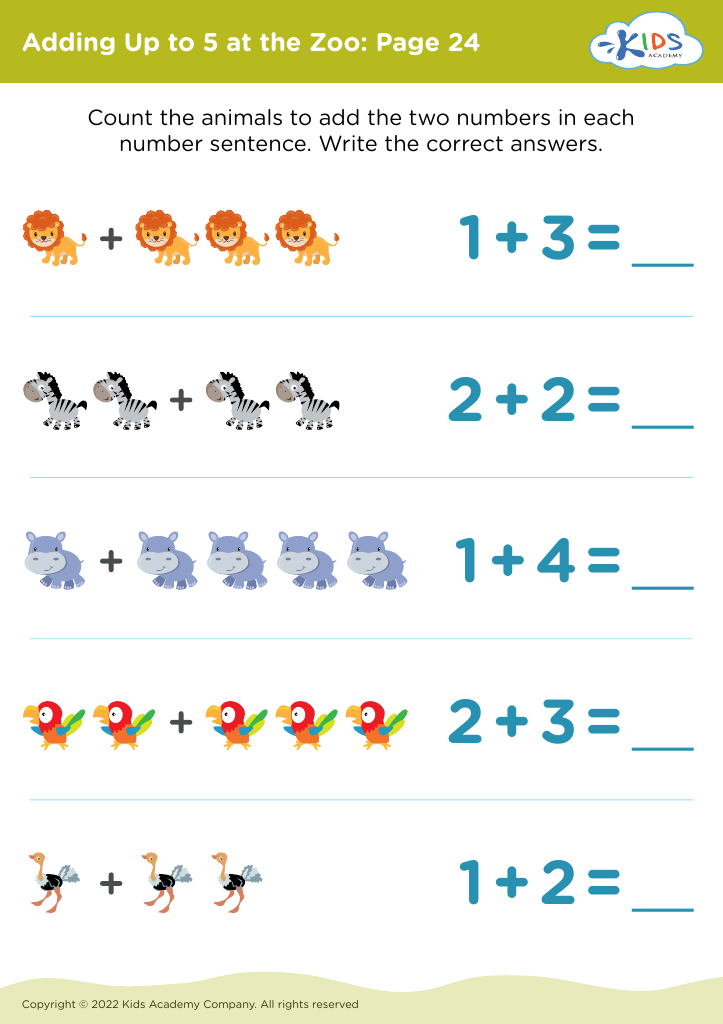
Adding Up to 5 at the Zoo: Page 24
Worksheet
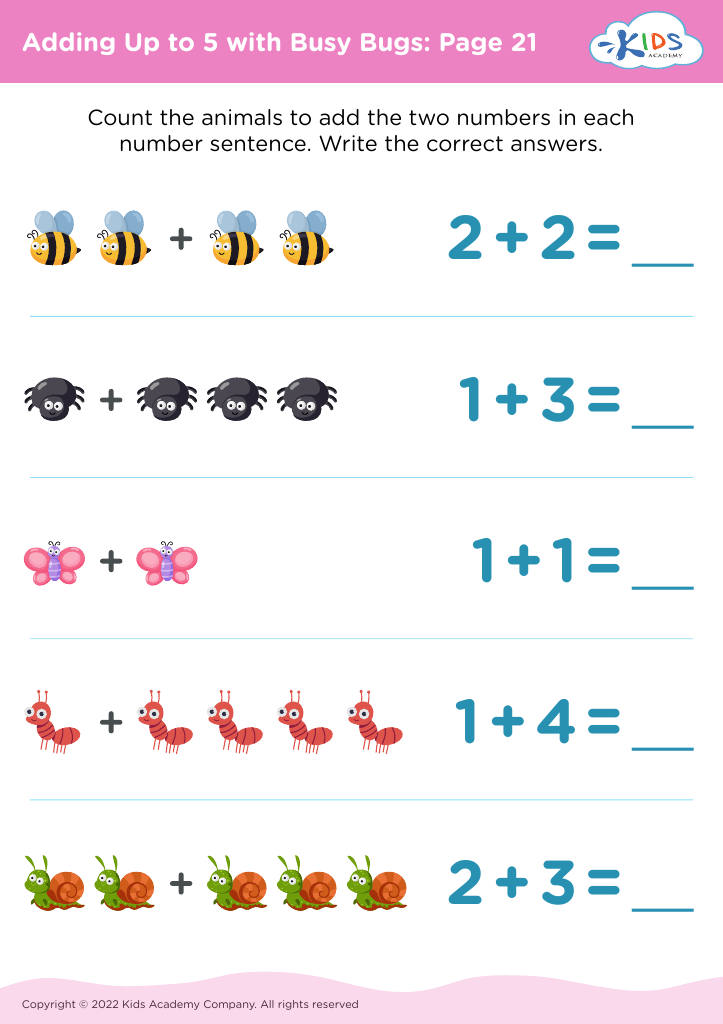
Adding Up to 5 with Busy Bugs: Page 21
Worksheet
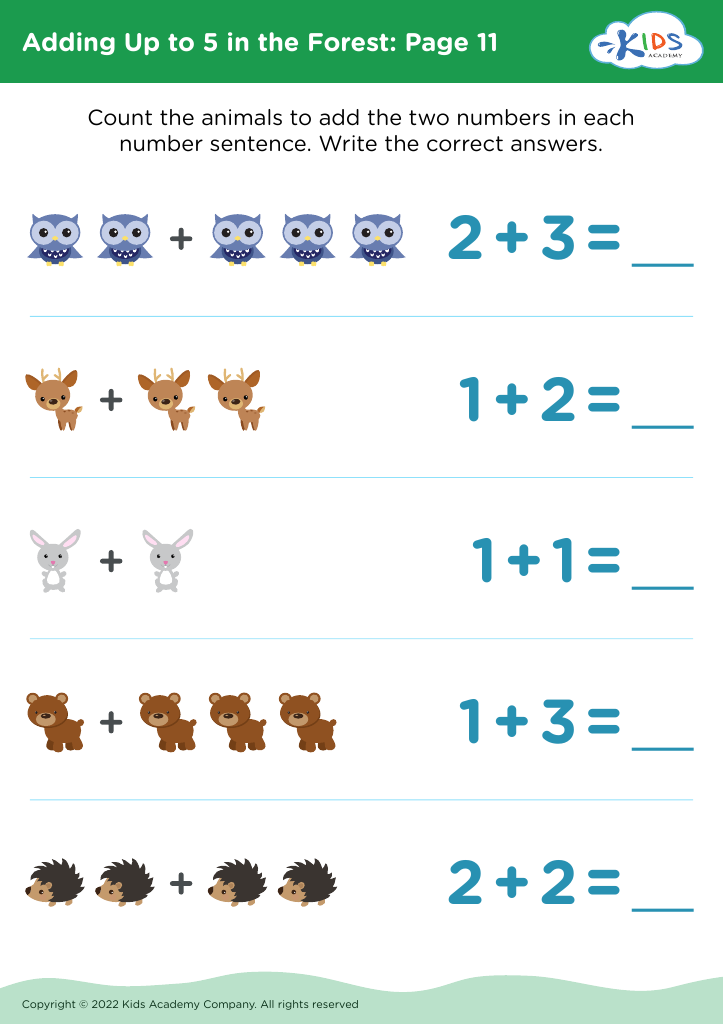
Adding Up to 5 in the Forest: Page 11
Worksheet
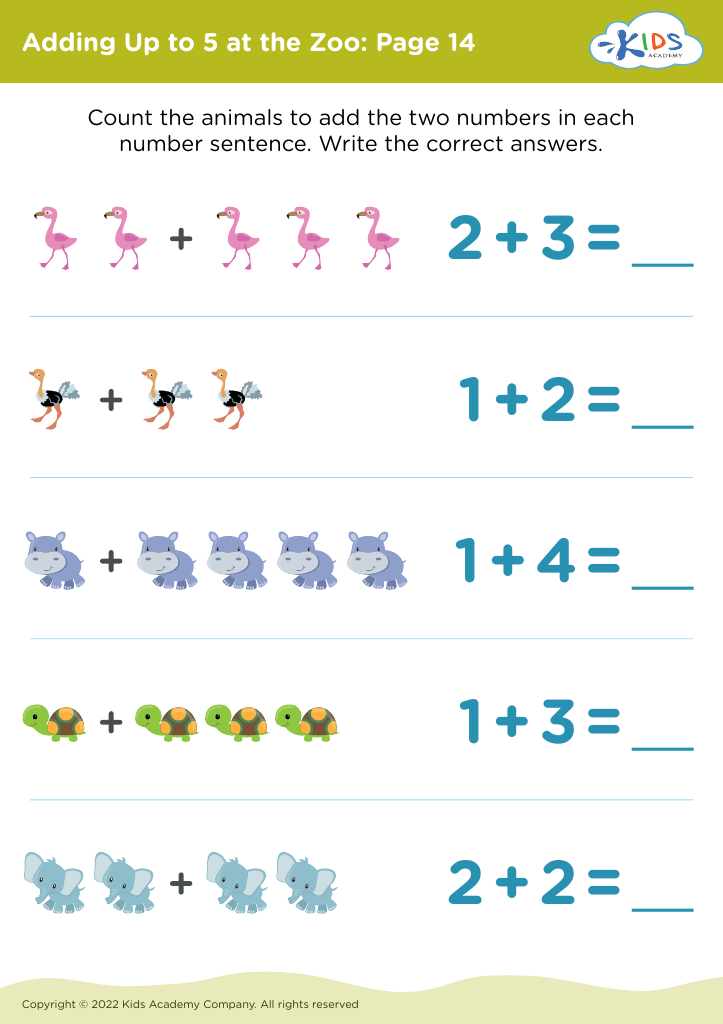
Adding Up to 5 at the Zoo: Page 14
Worksheet
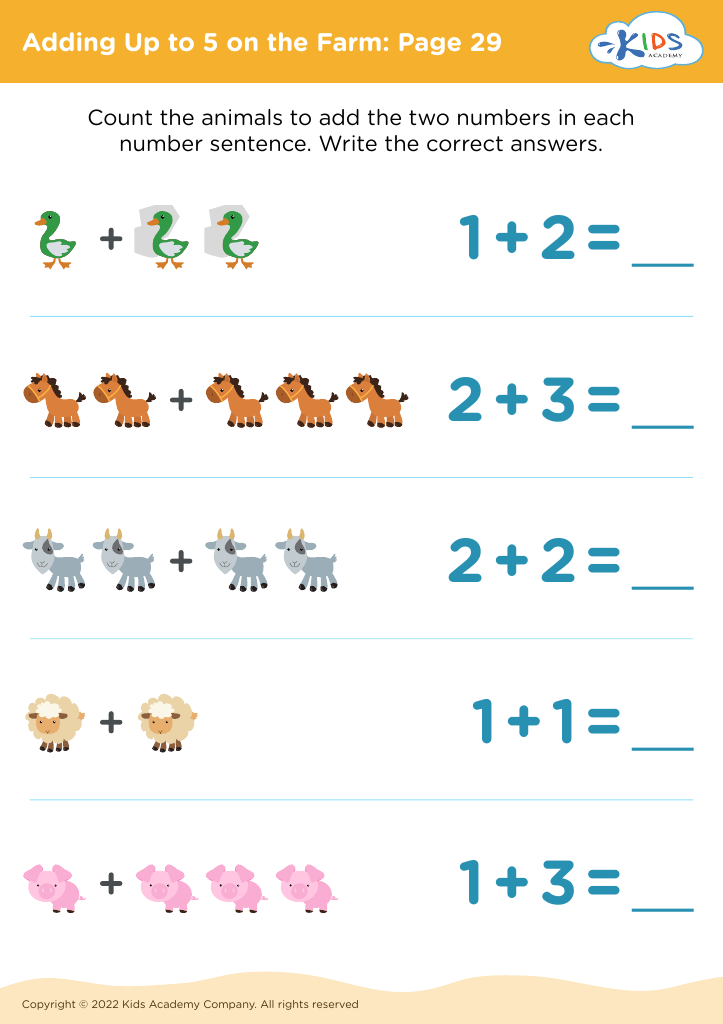
Adding Up to 5 on the Farm: Page 29
Worksheet
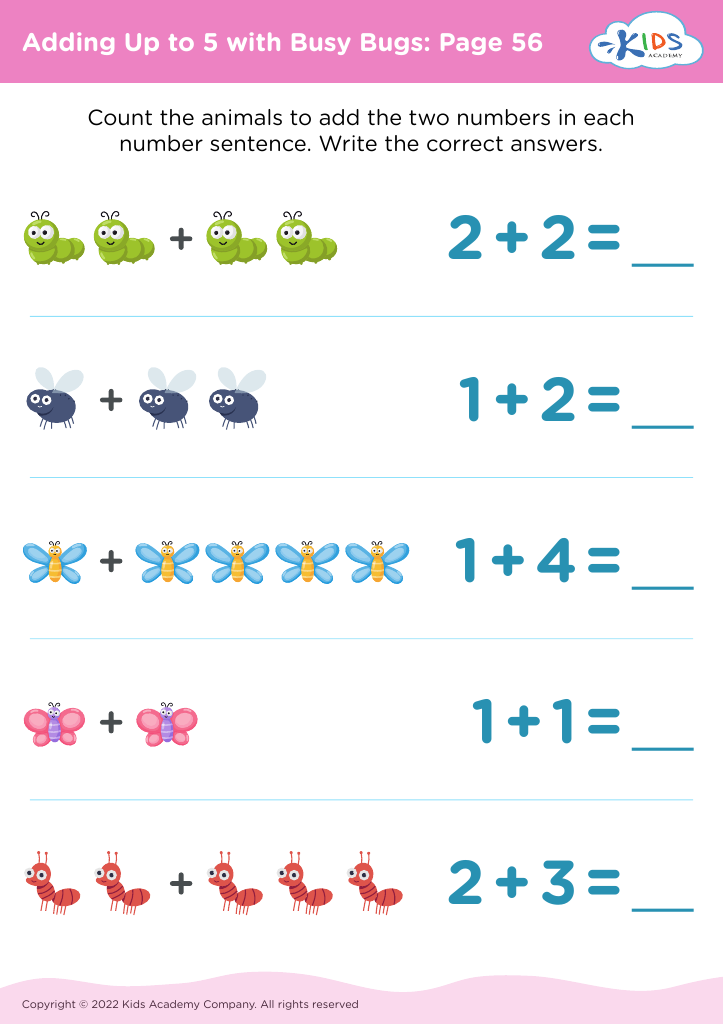
Adding Up to 5 with Busy Bugs: Page 56
Worksheet
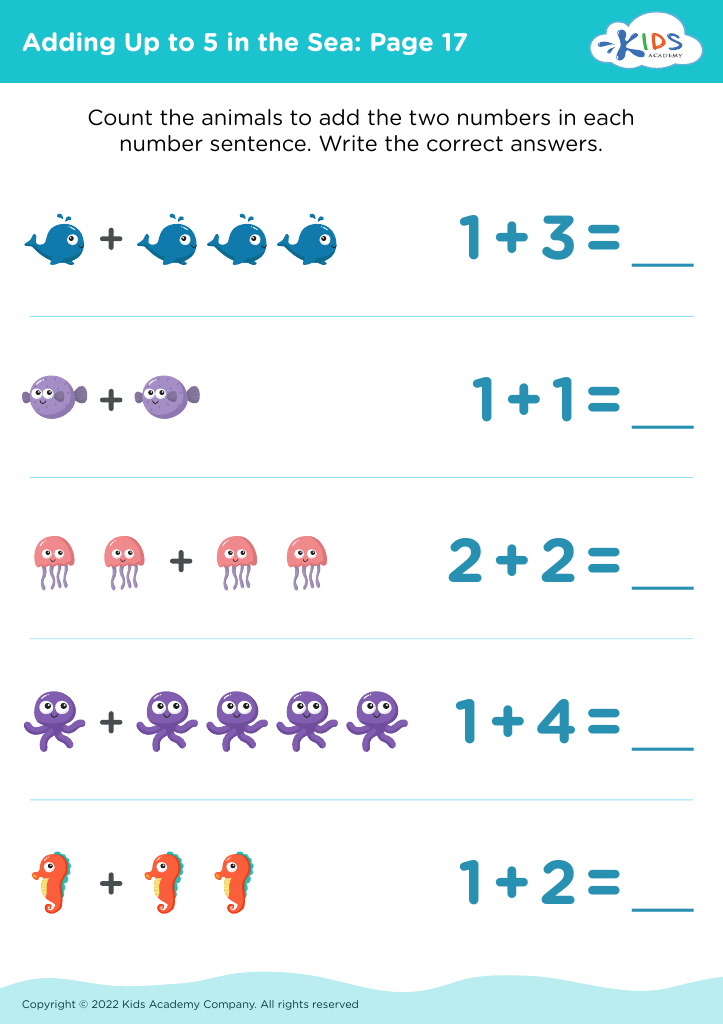
Adding Up to 5 in the Sea: Page 17
Worksheet
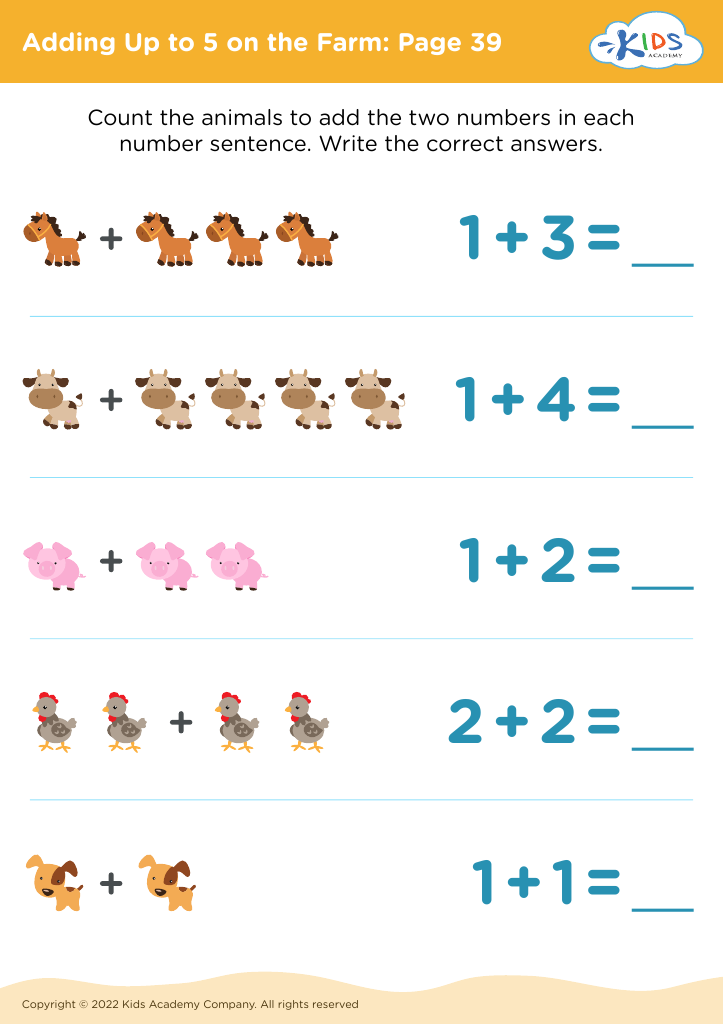
Adding Up to 5 on the Farm: Page 39
Worksheet
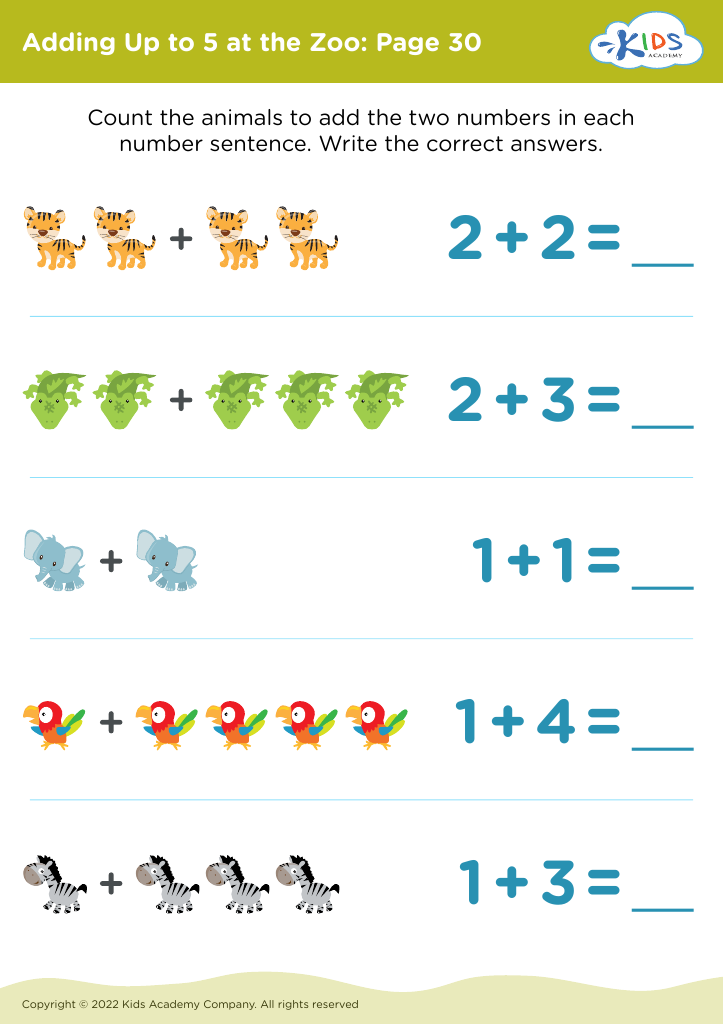
Adding Up to 5 at the Zoo: Page 30
Worksheet
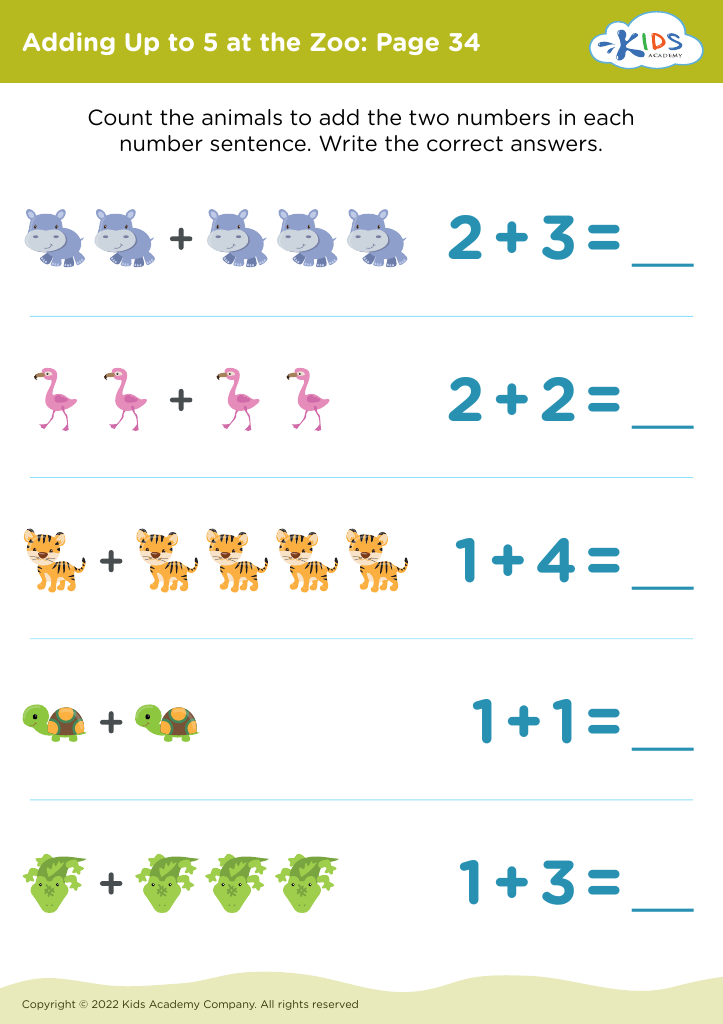
Adding Up to 5 at the Zoo: Page 34
Worksheet
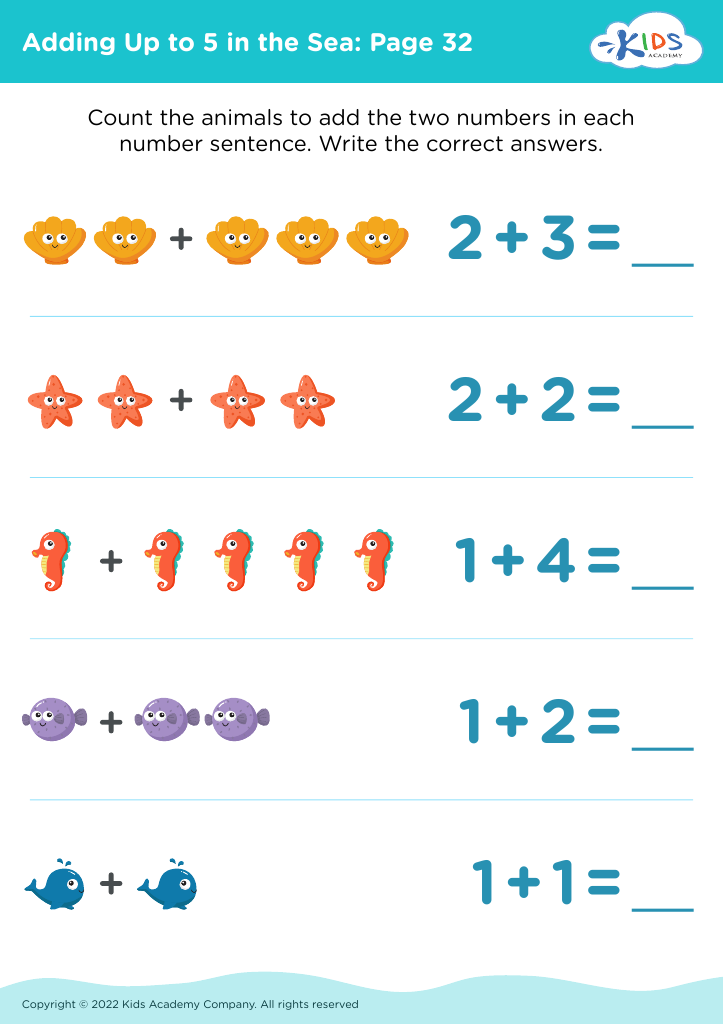
Adding Up to 5 in the Sea: Page 32
Worksheet
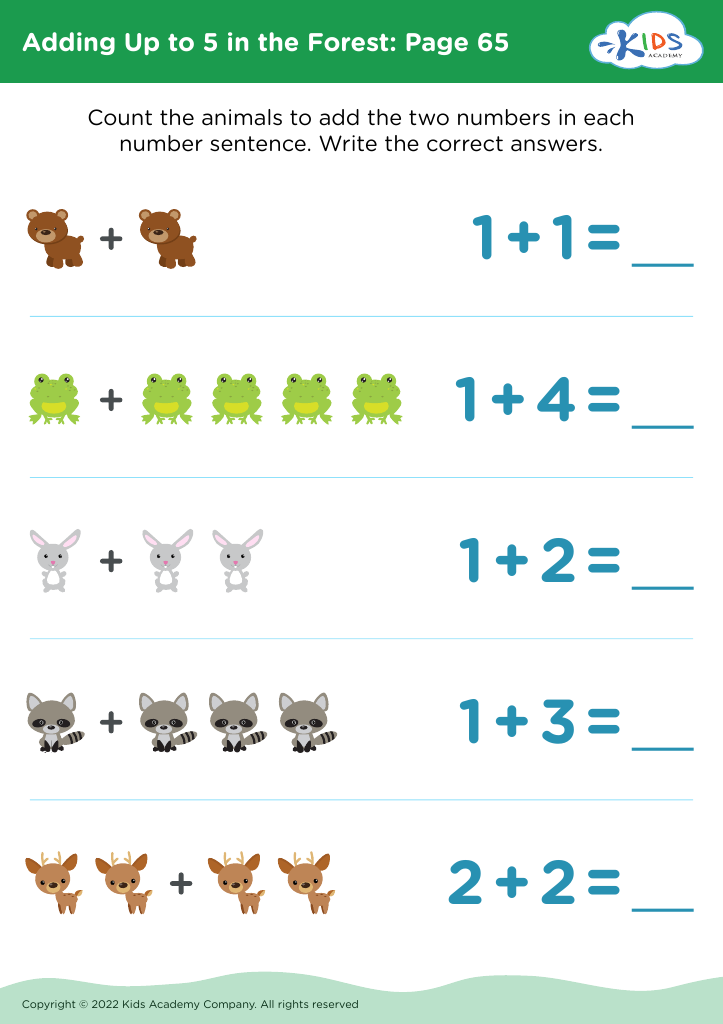
Adding Up to 5 in the Forest: Page 65
Worksheet
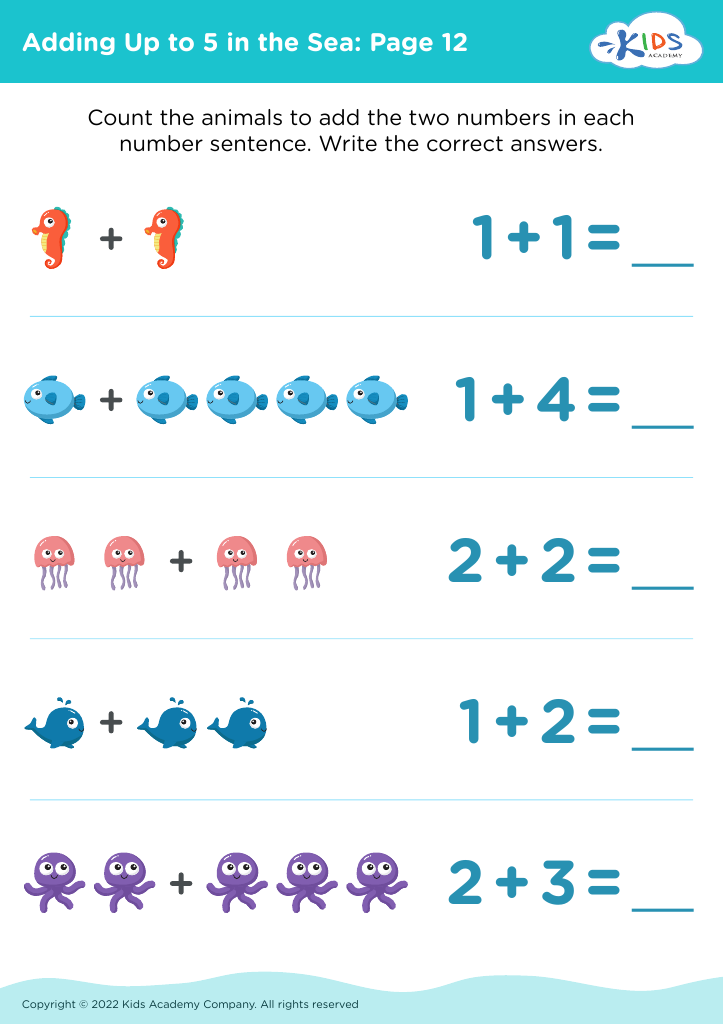
Adding Up to 5 in the Sea: Page 12
Worksheet
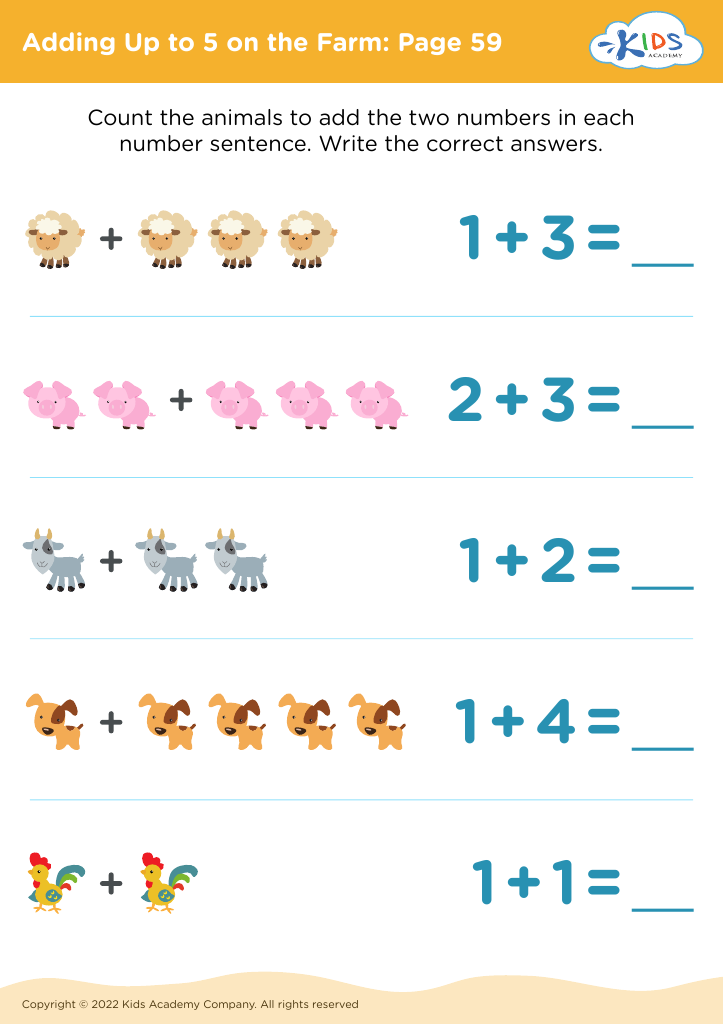
Adding Up to 5 on the Farm: Page 59
Worksheet
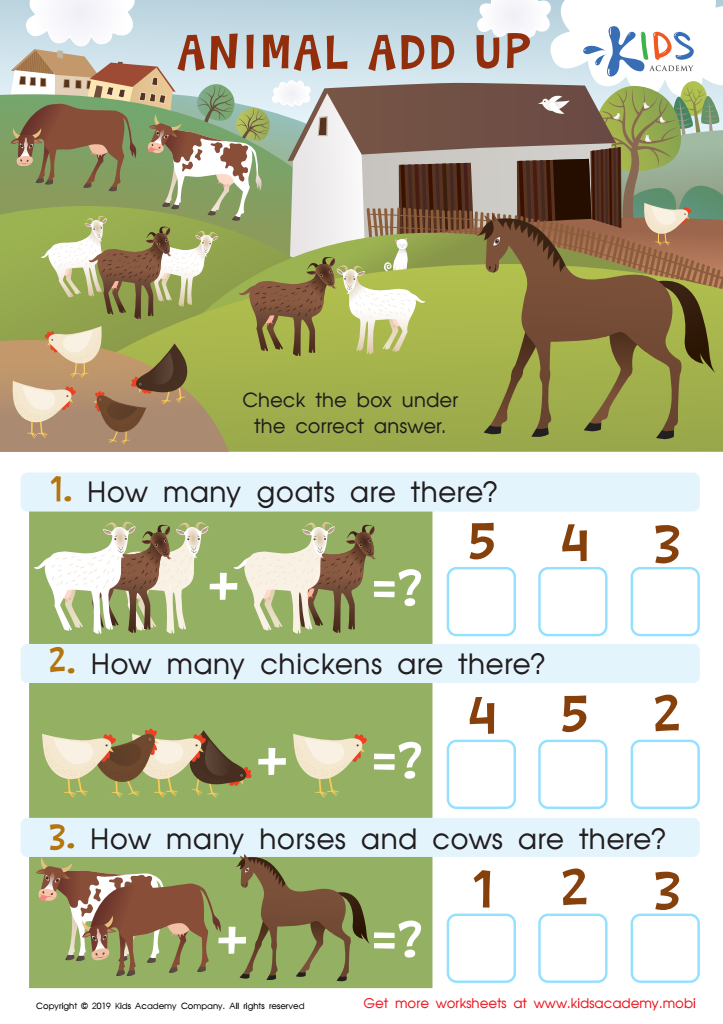
Animal Add Up Worksheet

Animal Add Up Worksheet

Animals are fun to observe and interact with. They can be seen at the zoo, parks, farms and in homes with pets. This worksheet helps kids identify animals, and build addition skills. Look at the picture with them and help name each animal. After that, add the animals up and check the box for the correct answer. 80 words.
Animal Add Up Worksheet
Worksheet
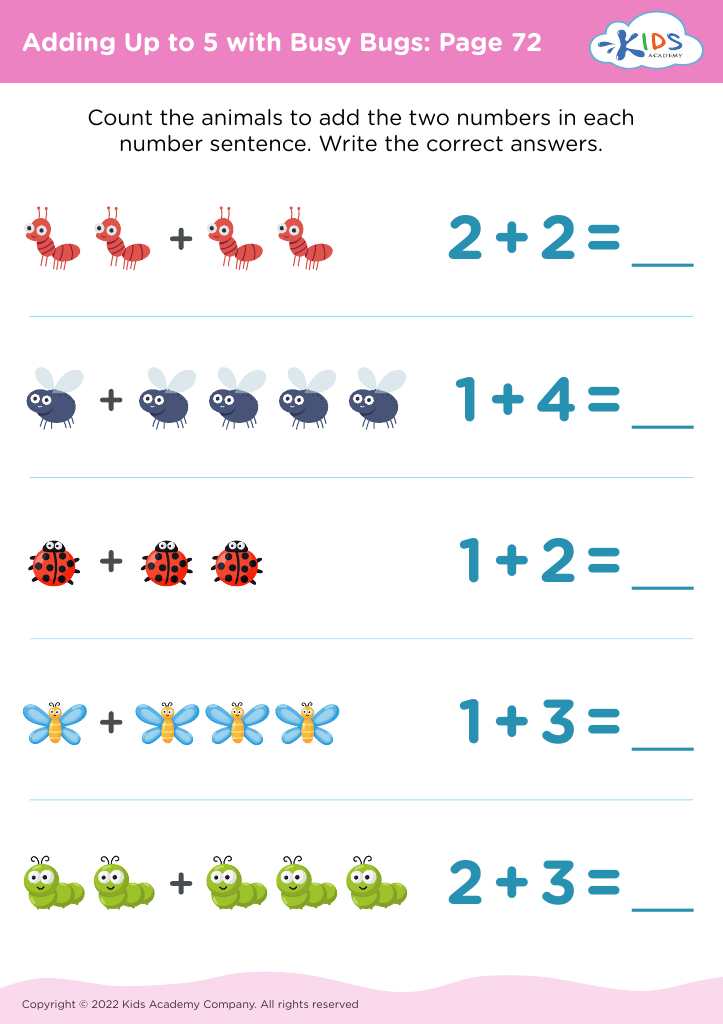
Adding Up to 5 with Busy Bugs: Page 72
Worksheet
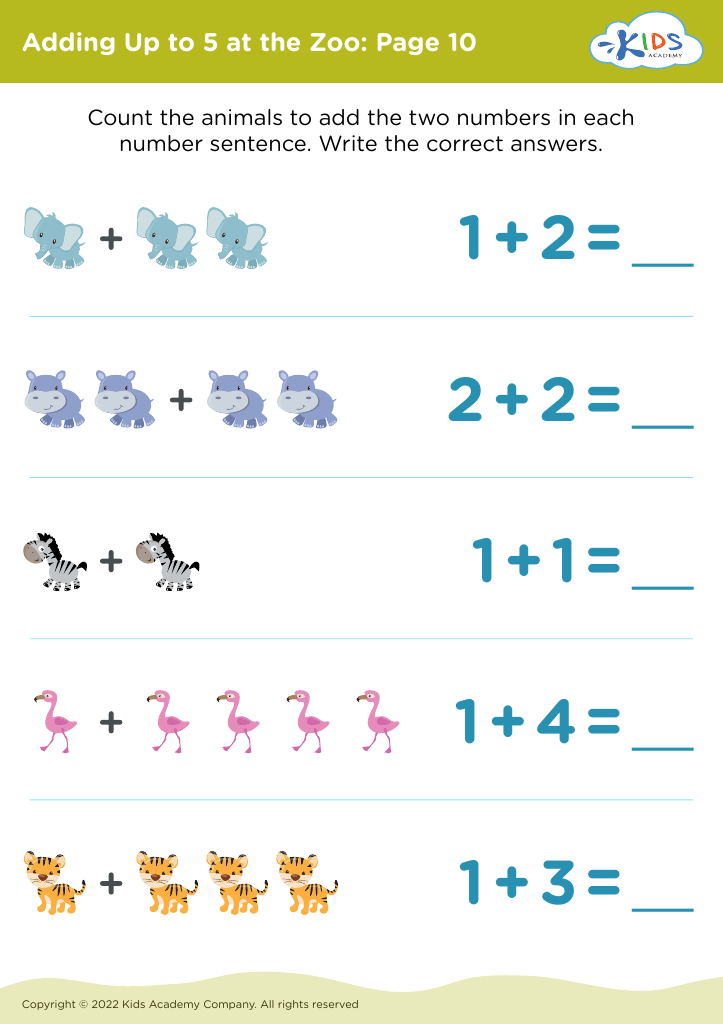
Adding Up to 5 at the Zoo: Page 10
Worksheet
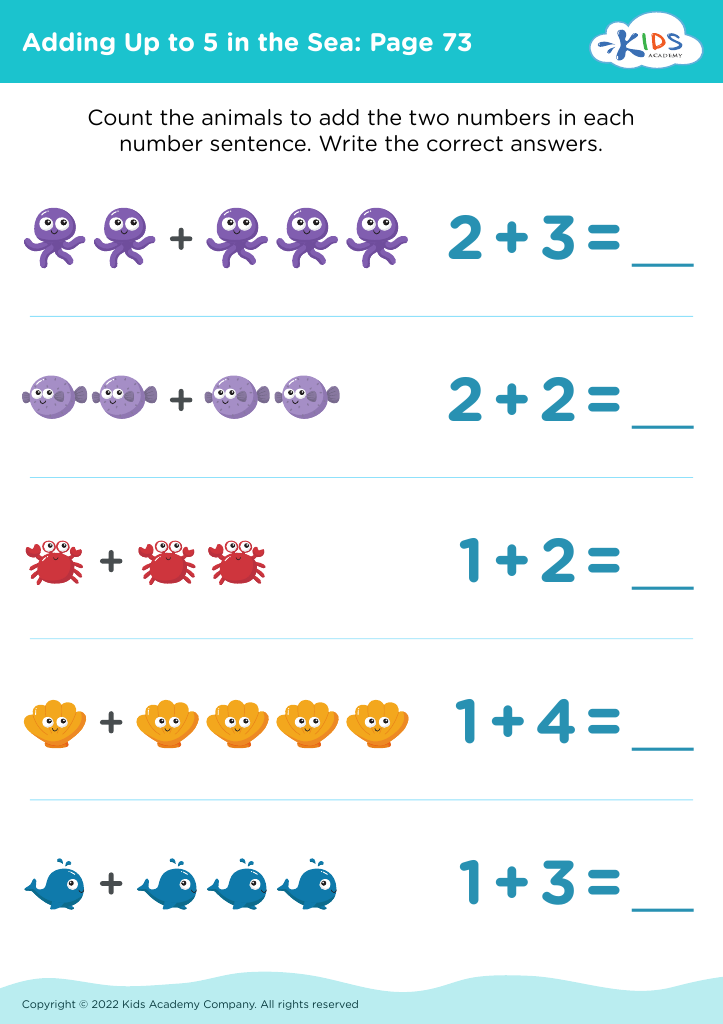
Adding Up to 5 in the Sea: Page 73
Worksheet
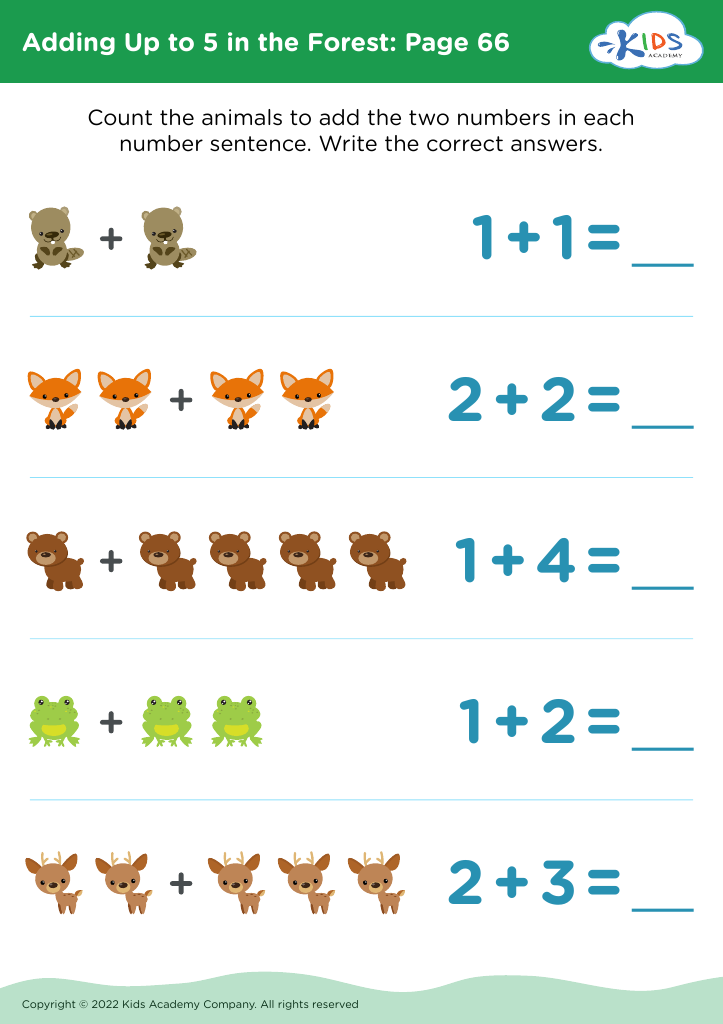
Adding Up to 5 in the Forest: Page 66
Worksheet


Parents and teachers should prioritize fostering basic addition skills in 5-year-olds because foundational math proficiency has significant implications for a child's overall academic journey and cognitive development. At this formative age, children's minds are exceptionally adaptable, making it the perfect period for grasping fundamental mathematical concepts like addition. Easy addition practices, such as 1+1 or 2+3, not only pave the way for more complex math skills later on but also nurture logic and reasoning capabilities across other disciplines.

Early mastery of addition boosts confidence in young learners, enabling a positive attitude towards learning and problem-solving that transcends math. These skills promote a sense of accomplishment and reinforce persistence, key attributes that are valuable in all areas of life. Additionally, fundamental numeracy skills are vital in everyday contexts, from understanding time to measuring ingredients in a recipe.

Moreover, curriculum frameworks often build upon early arithmetic skills; thus, proficiency in addition sets the stage for understanding multifaceted topics like subtraction, multiplication, and beyond. Structured and supportive environments beget lifelong learners—by making initial math learning engaging and successful, parents and teachers cultivate a strong academic foundation and encourage inquisitive, adaptable young minds.