Basic arithmetic comprehension Addition Worksheets for 5-Year-Olds
3 filtered results
-
From - To
Discover our engaging Basic Arithmetic Comprehension Addition Worksheets designed specifically for 5-year-olds! These worksheets provide a fun and interactive way for young learners to grasp fundamental addition concepts. With vibrant illustrations and age-appropriate exercises, children will develop their counting and problem-solving skills while boosting their confidence in math. Perfect for classroom or home use, these printable activities will reinforce foundational arithmetic skills, making learning enjoyable. Encourage your child's love for numbers and ensure they are well-prepared for future math challenges. Start their mathematical journey today with our carefully crafted addition worksheets!
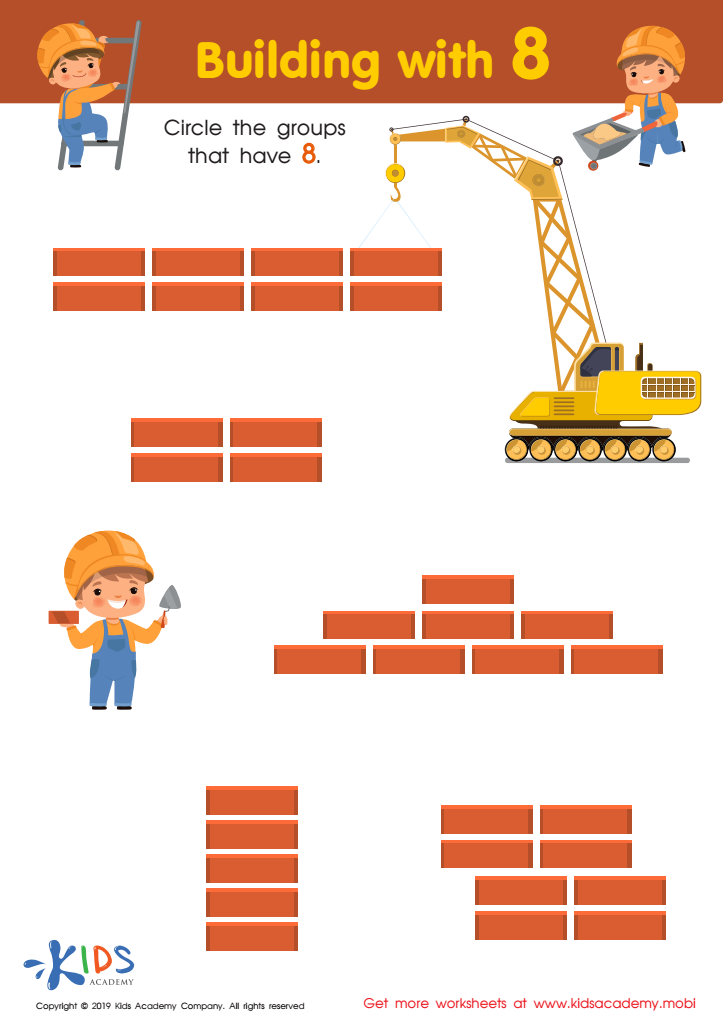
Building with 8 Worksheet
 Assign to My Students
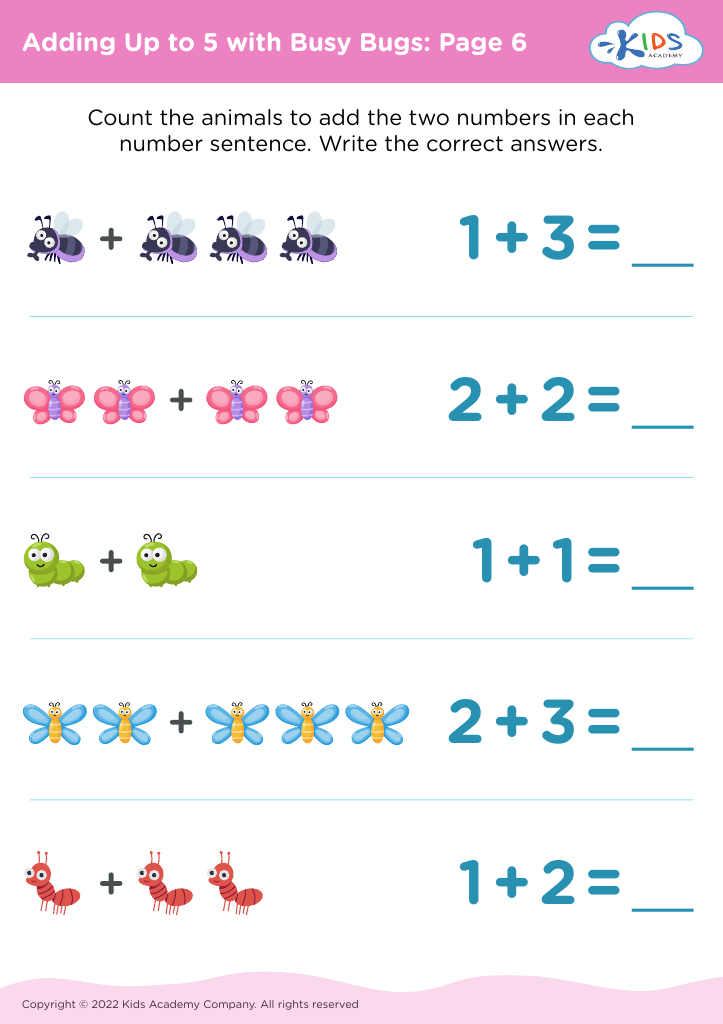
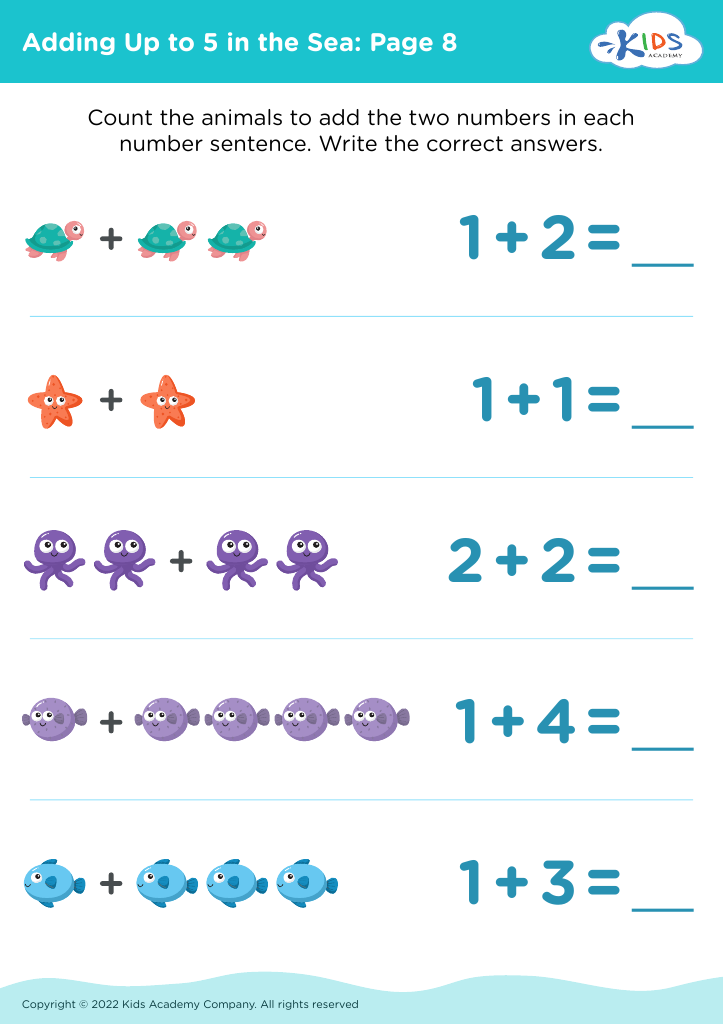








Understanding basic arithmetic comprehension, particularly addition, is crucial for 5-year-olds as it lays the foundation for all future mathematical learning. At this age, children are naturally curious and eager to explore numbers, which makes it an ideal time to introduce concepts like addition. By fostering a solid understanding of these basic skills, parents and teachers can help young learners develop critical thinking and problem-solving abilities that are vital in everyday situations.
Caring about arithmetic comprehension also enhances a child's confidence and self-esteem. Mastering addition not only builds competence in mathematics but also instills a sense of achievement. This can create a positive attitude towards learning, motivating them to tackle more complex concepts as they progress. Moreover, early exposure to mathematical concepts promotes cognitive development, improving memory and fostering logical reasoning skills.
Additionally, foundational math skills are interconnected with literacy and social skills. Engaging with addition through everyday activities, like counting toys or sharing snacks, can create a rich, practical learning environment. When parents and teachers show interest in basic arithmetic, it reiterates the importance of education, encouraging children to navigate their world with enthusiasm and readiness to learn. Ultimately, caring about basic arithmetic comprehension provides vital skills that will serve children throughout their lives.








