Basic Math Skills Addition Worksheets for 5-Year-Olds - Page 2
27 filtered results
-
From - To
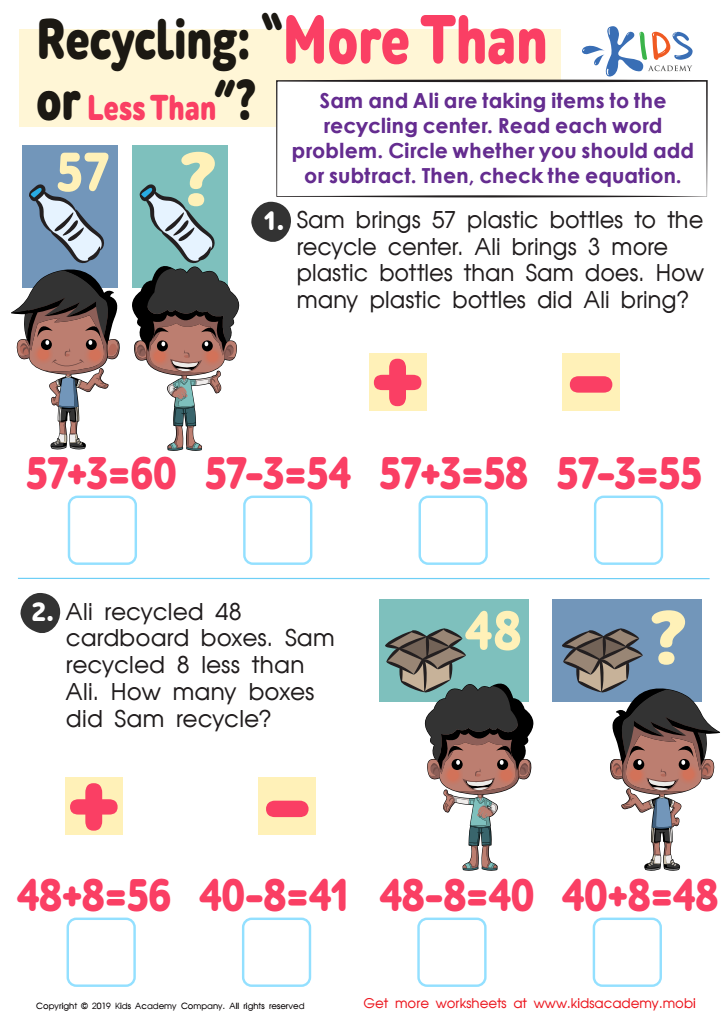
Recycling - More or Less Worksheet
 Assign to My Students
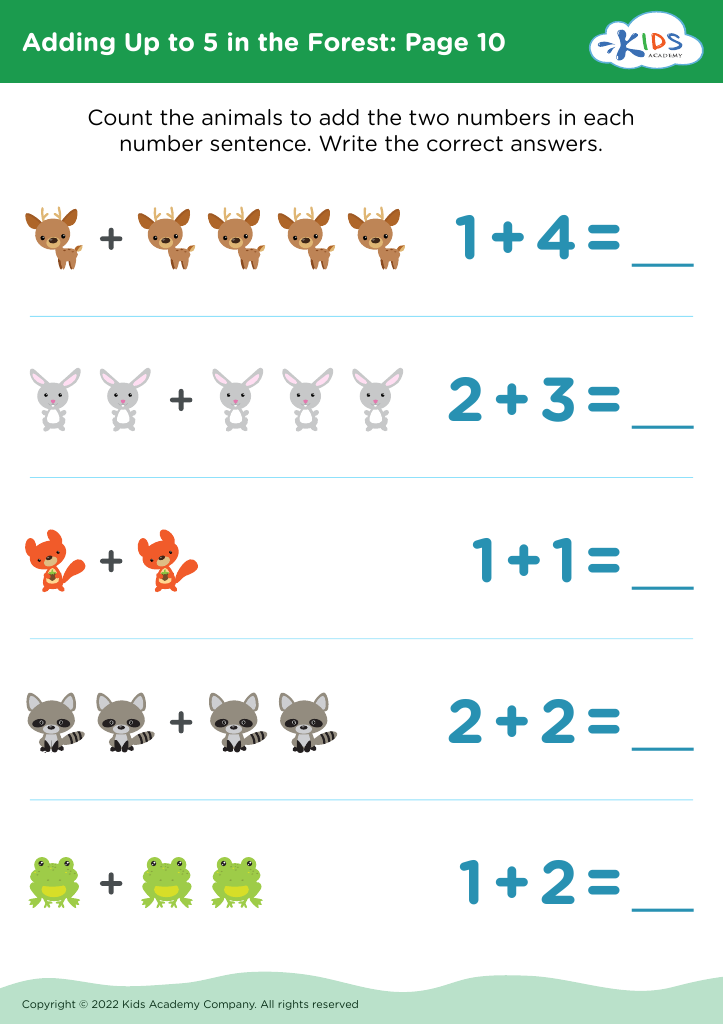
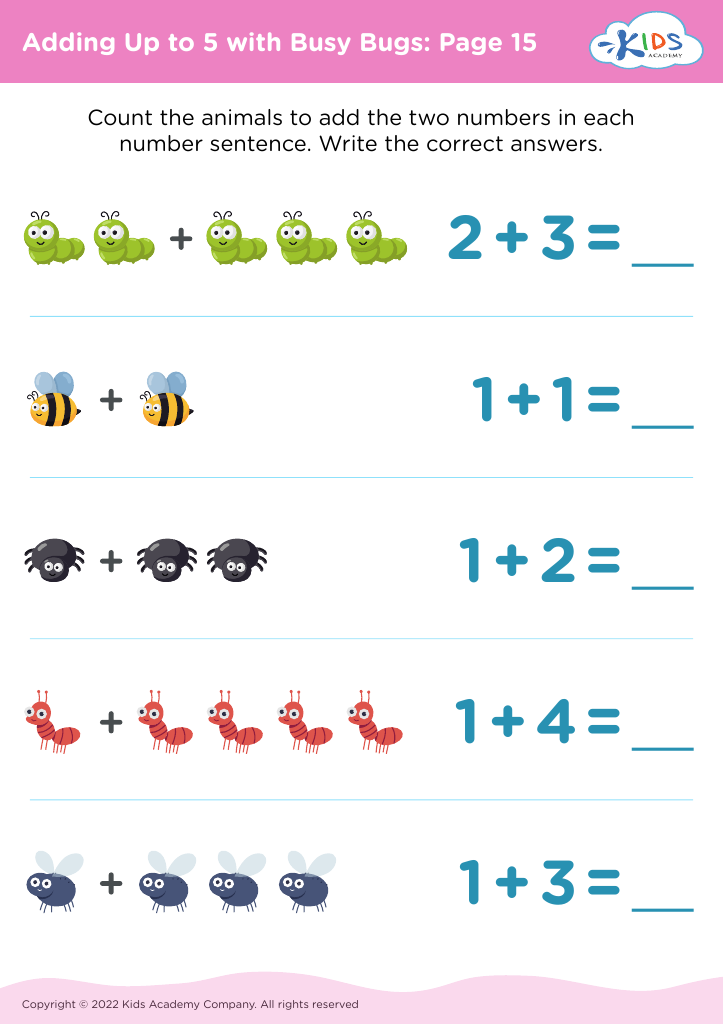








Basic math skills, particularly addition, are crucial for 5-year-olds as they lay the foundation for future learning. At this age, children are naturally curious and absorb information rapidly. By introducing basic addition concepts, such as counting and combining small groups of items, we help develop their critical thinking and problem-solving abilities.
Parents and teachers should care about these skills for several reasons. First, strong basic math skills build confidence and a positive attitude towards learning. Children who grasp the fundamentals are more likely to pursue advanced math topics in later years. Additionally, math is not just about numbers; it enhances cognitive abilities like logical reasoning, which are applicable in various aspects of life.
Secondly, early exposure to math aids in social and emotional development. Cooperative games involving addition encourage teamwork and communication skills among peers. Moreover, integrating math into everyday activities (like grocery shopping or cooking) makes learning relevant and enjoyable.
Finally, ensuring that children grasp basic math skills fosters readiness for the increasingly demanding academic environment they will face in school. By prioritizing addition and foundational math skills, parents and teachers alike contribute to a well-rounded, successful educational experience for young learners.








