Filters

101 filtered results

Clear all filters
Favorites
With answer key
Interactive

101 filtered results

Difficulty Level

Grade


Check out this FREE Trial Lesson on Addition for age 5!

X

Favorites
With answer key
Interactive
  • 5
  • Cognitive Development
  • Addition
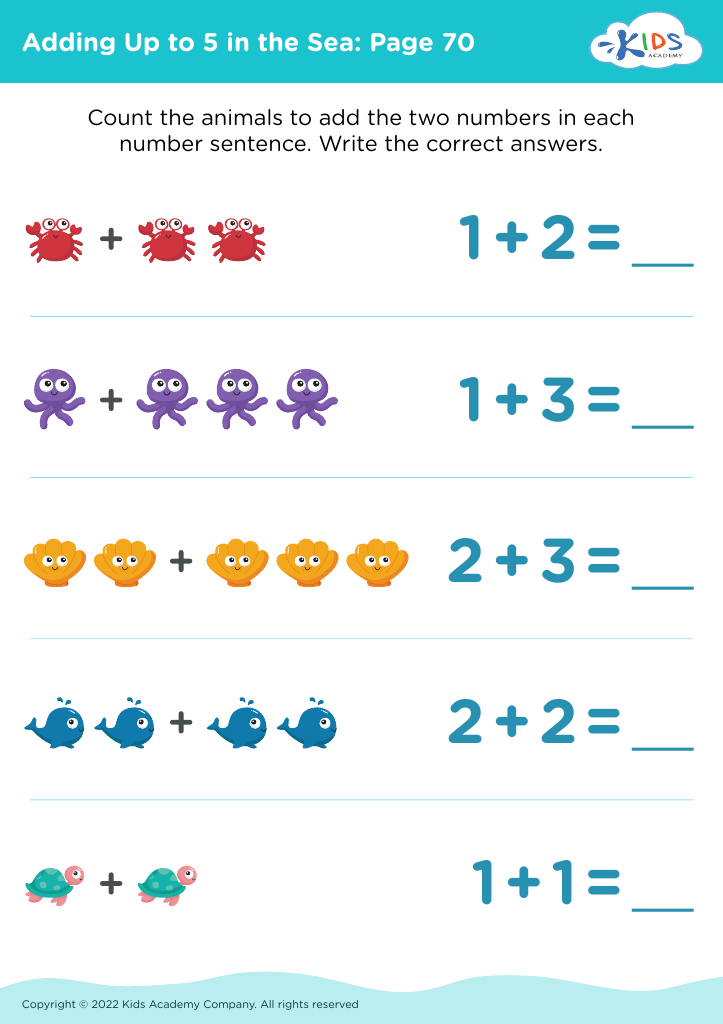
Adding Up to 5 in the Sea: Page 70
Worksheet
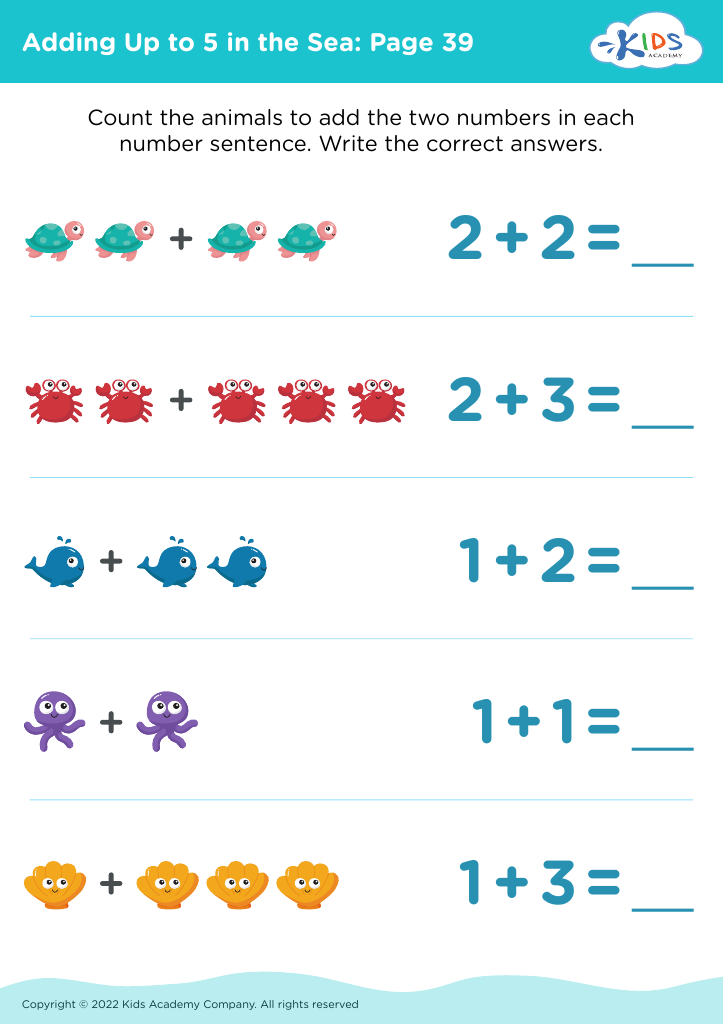
Adding Up to 5 in the Sea: Page 39
Worksheet
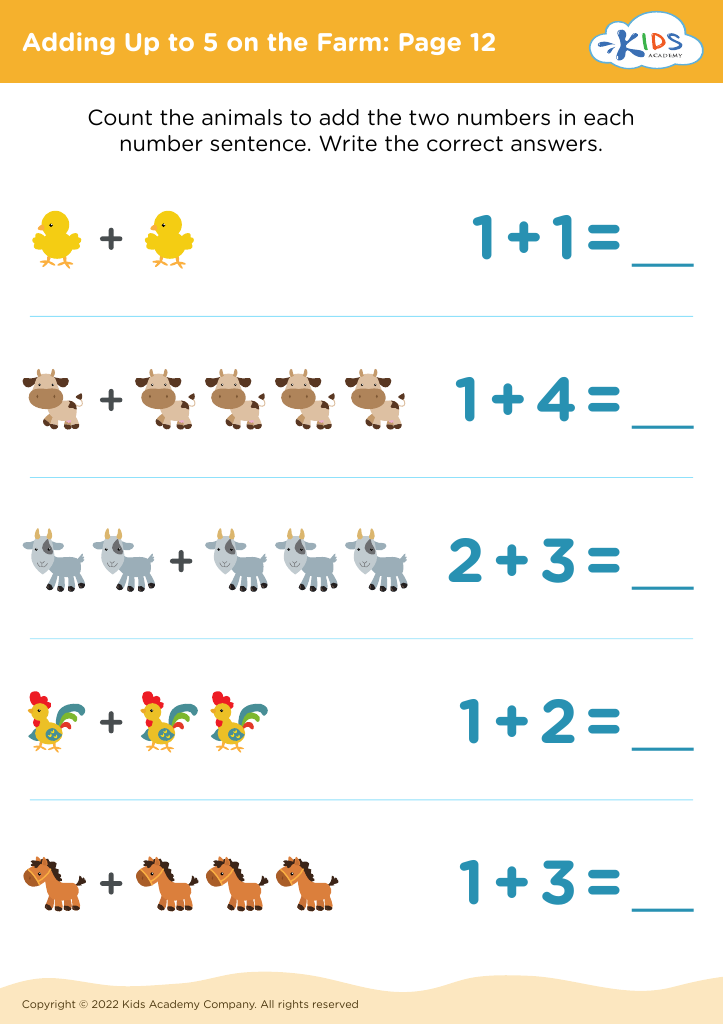
Adding Up to 5 on the Farm: Page 12
Worksheet
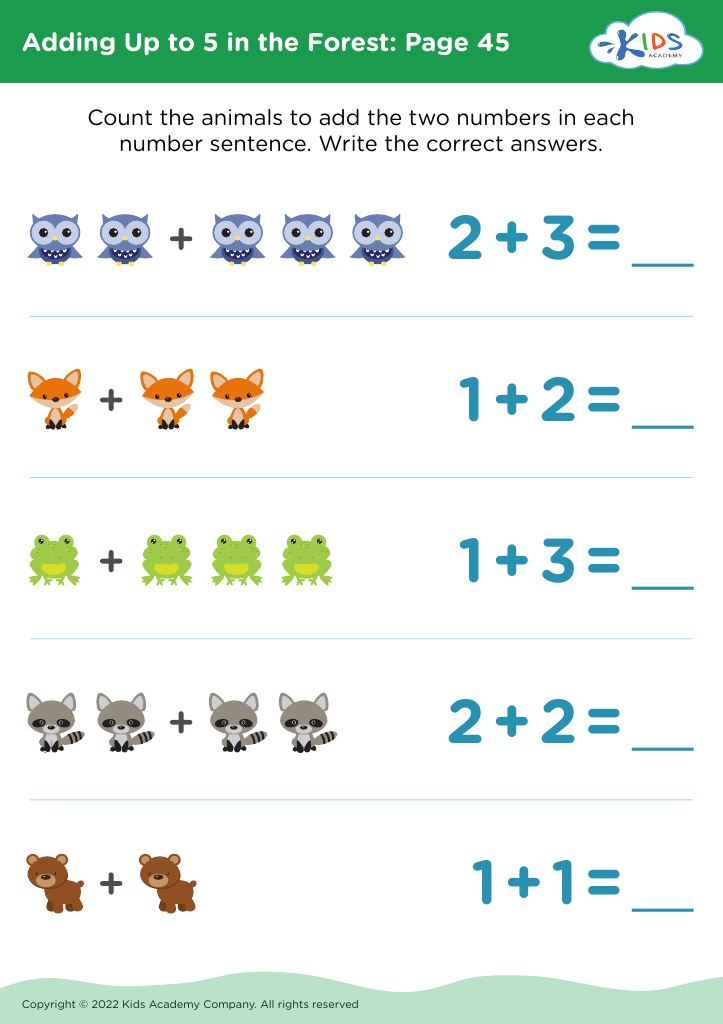
Adding Up to 5 in the Forest: Page 45
Worksheet
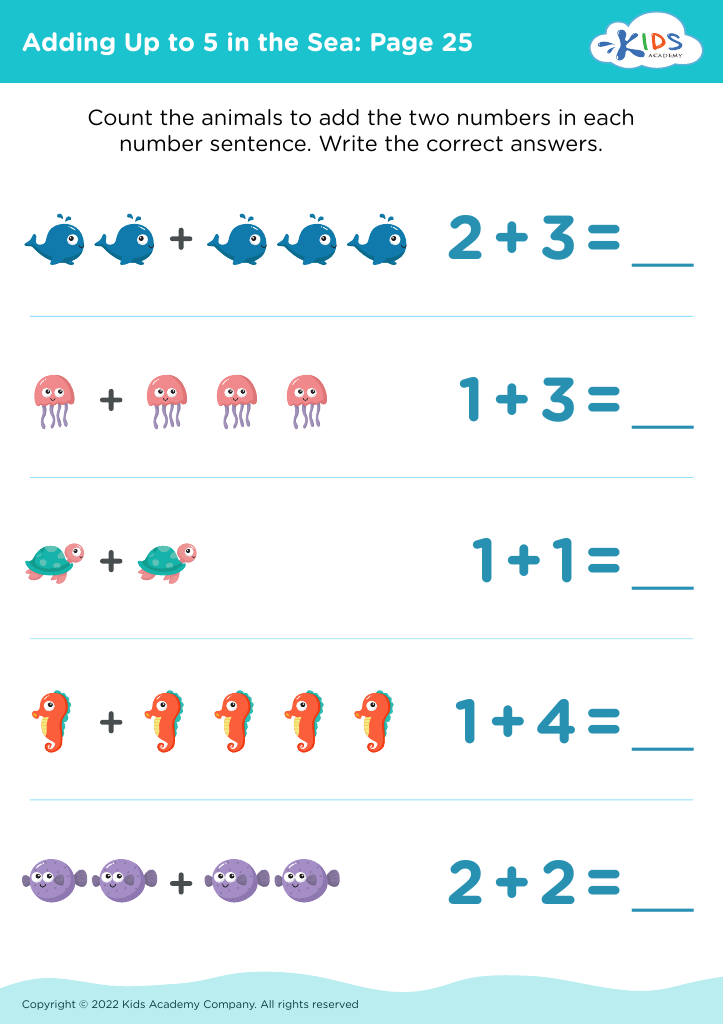
Adding Up to 5 in the Sea: Page 25
Worksheet
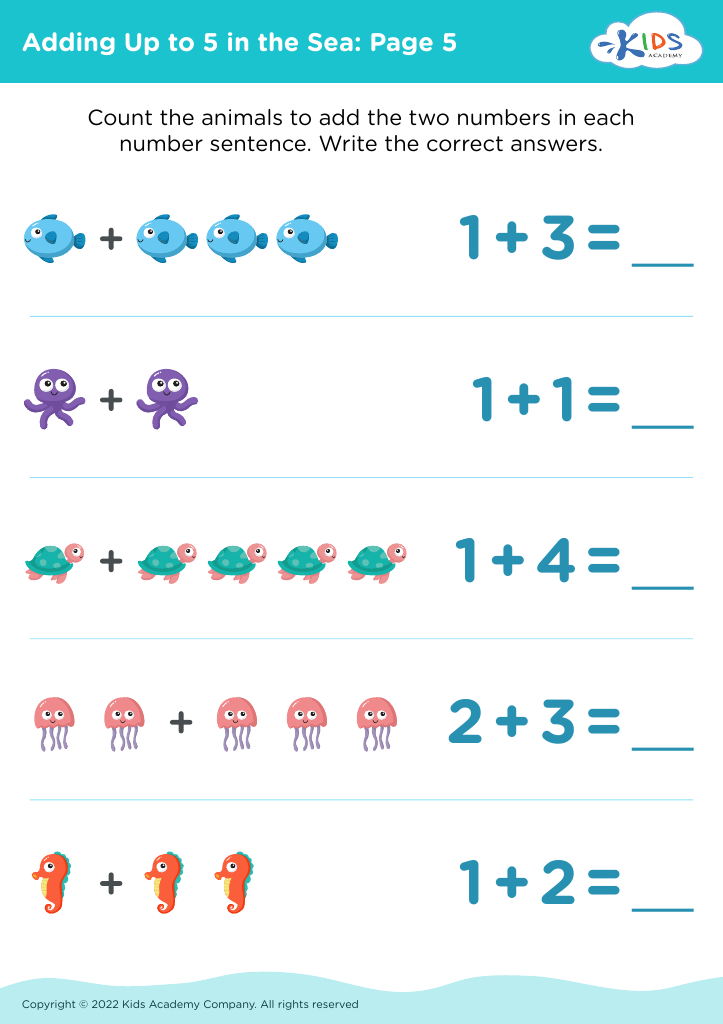
Adding Up to 5 in the Sea: Page 5

Adding Up to 5 in the Sea: Page 5

Adding Up to 5 in the Sea: Page 5
Worksheet
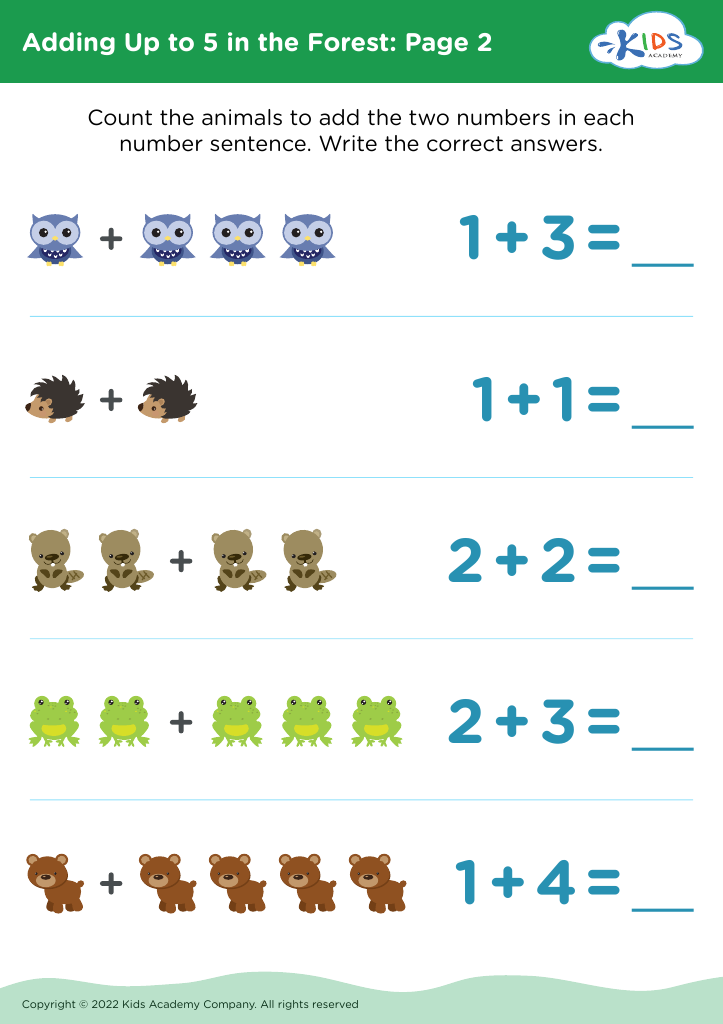
Adding Up to 5 in the Forest: Page 2
Worksheet
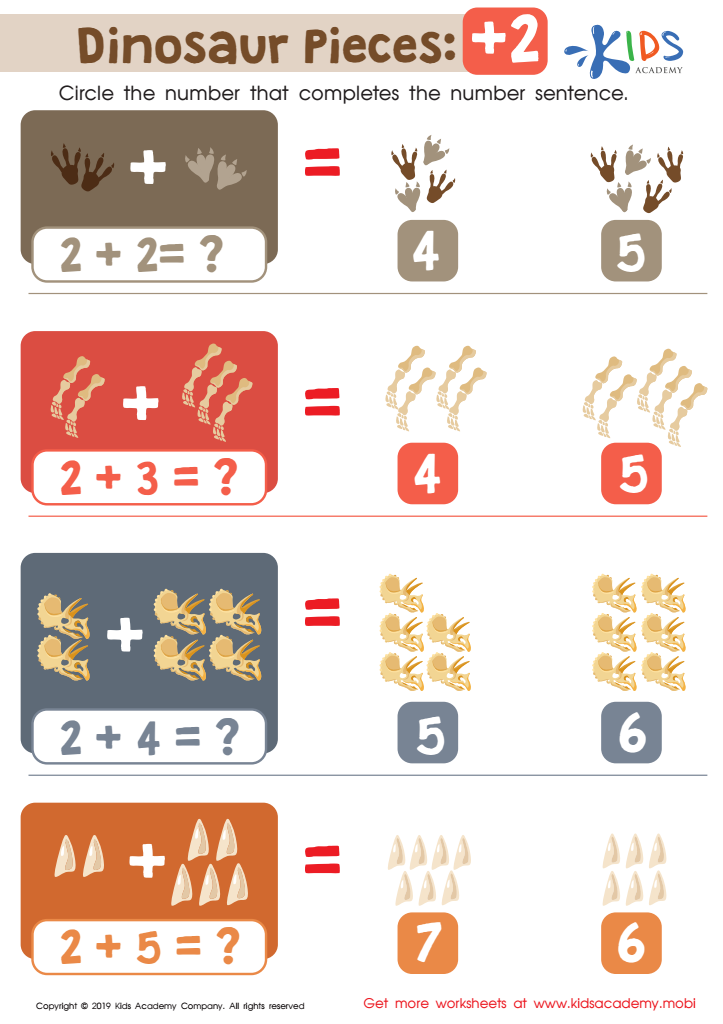
Dinosaur Pieces: +2 Worksheet

Dinosaur Pieces: +2 Worksheet

Kids love dinosaurs! See if your kids can solve these three equations featuring the mysterious creatures. Download the PDF and have them circle the number that completes each equation. Dinosaurs are extinct, not seen for thousands of years, but they can still help kids work on their math skills!
Dinosaur Pieces: +2 Worksheet
Worksheet
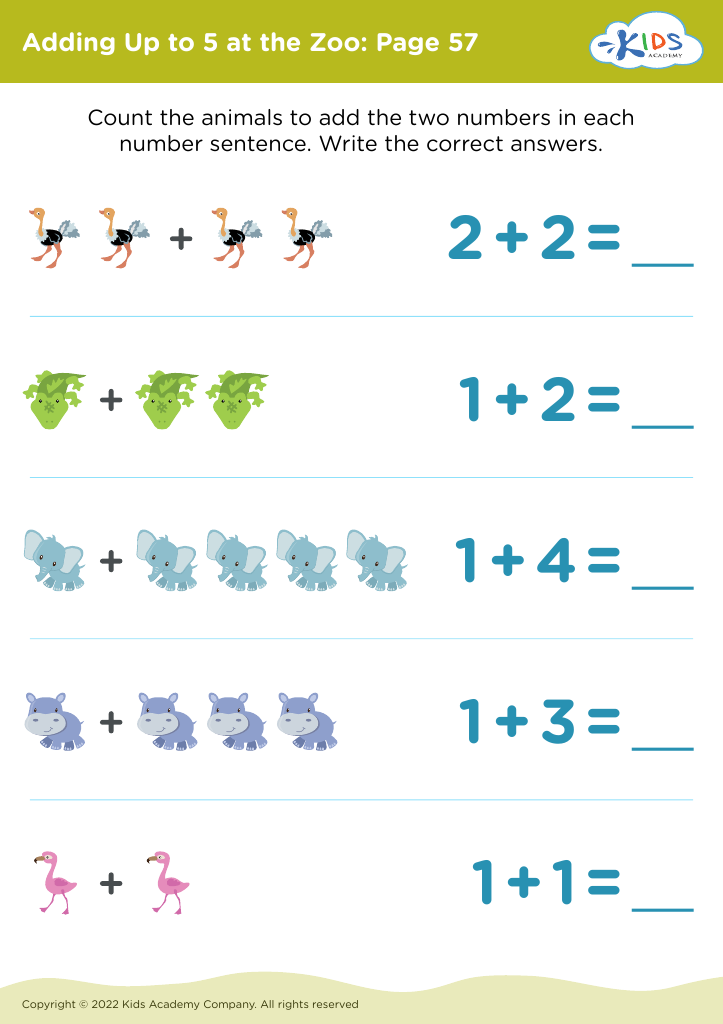
Adding Up to 5 at the Zoo: Page 57
Worksheet
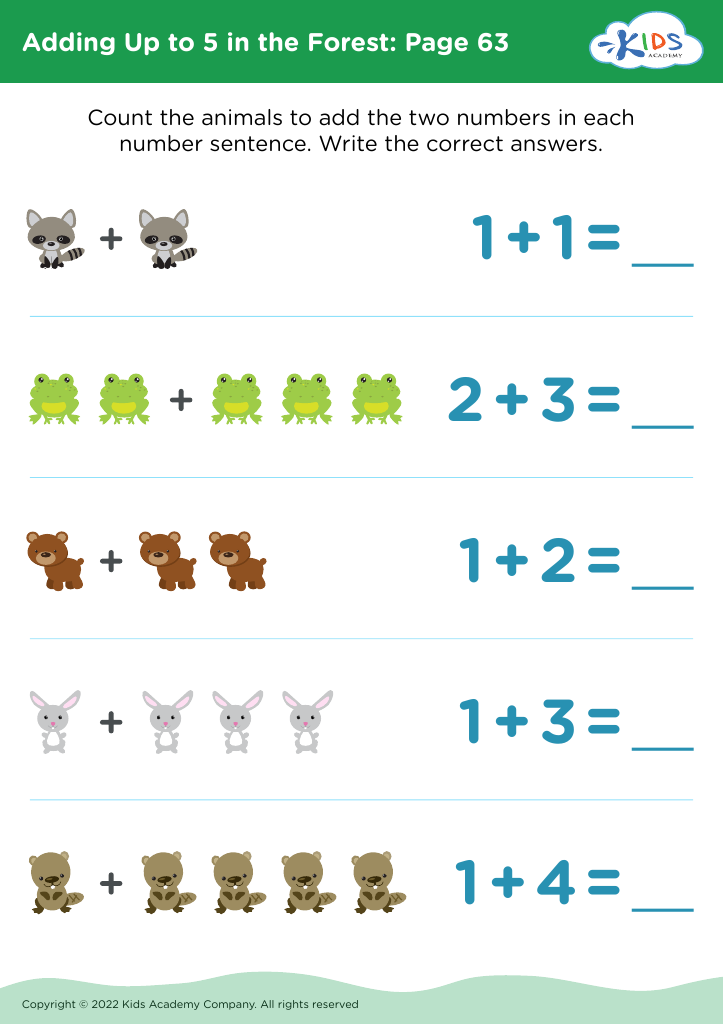
Adding Up to 5 in the Forest: Page 63
Worksheet
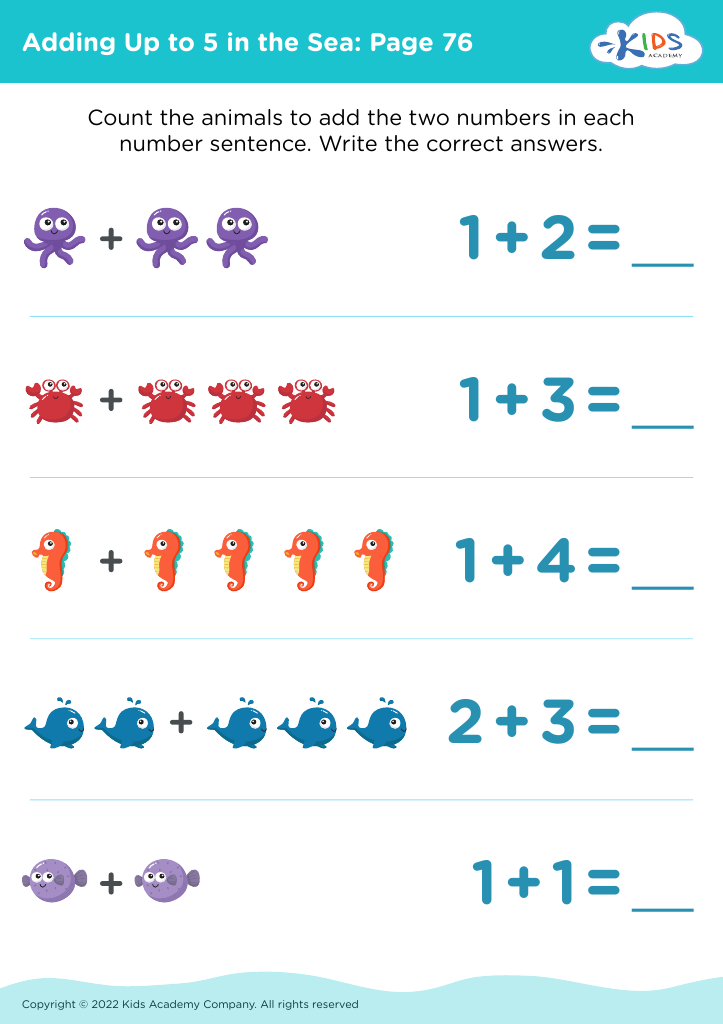
Adding Up to 5 in the Sea: Page 76
Worksheet
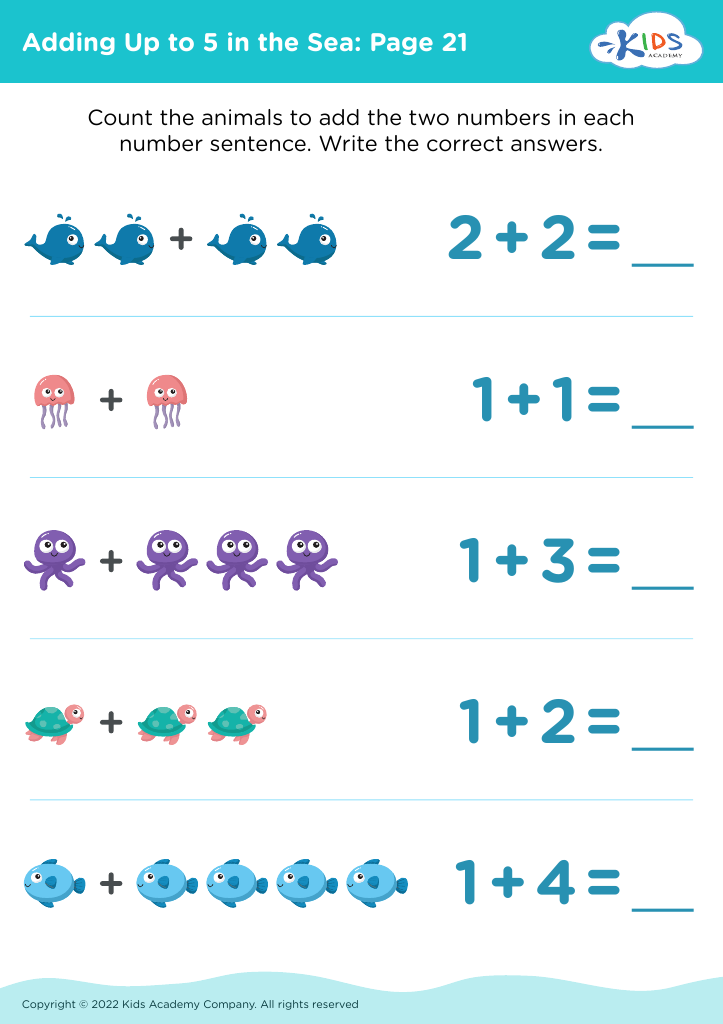
Adding Up to 5 in the Sea: Page 21
Worksheet
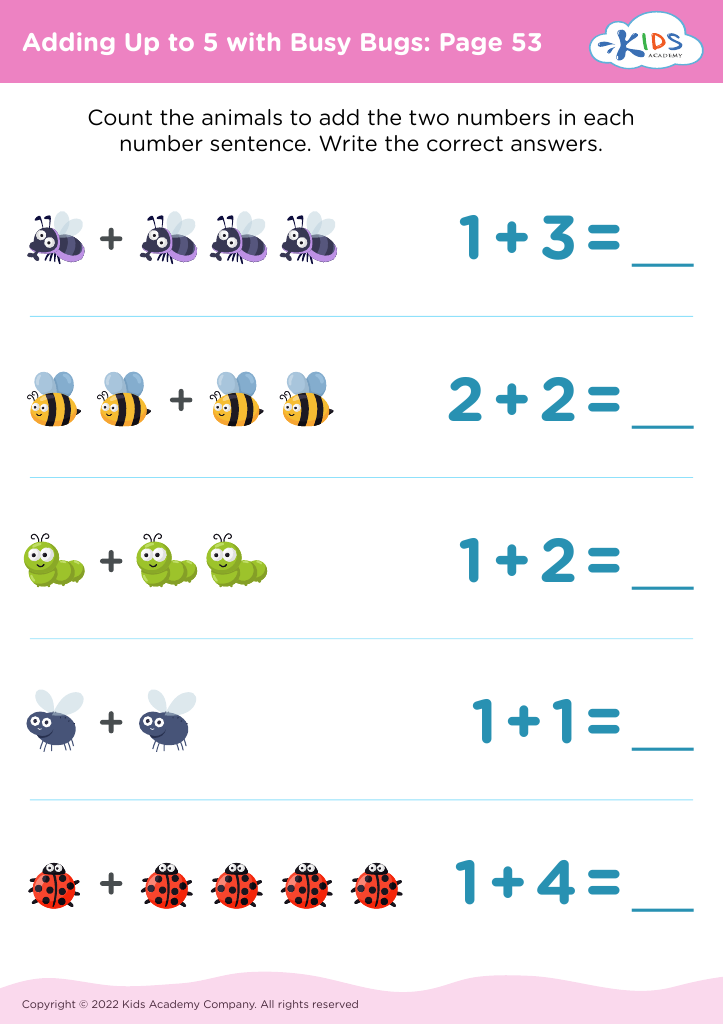
Adding Up to 5 with Busy Bugs: Page 53
Worksheet
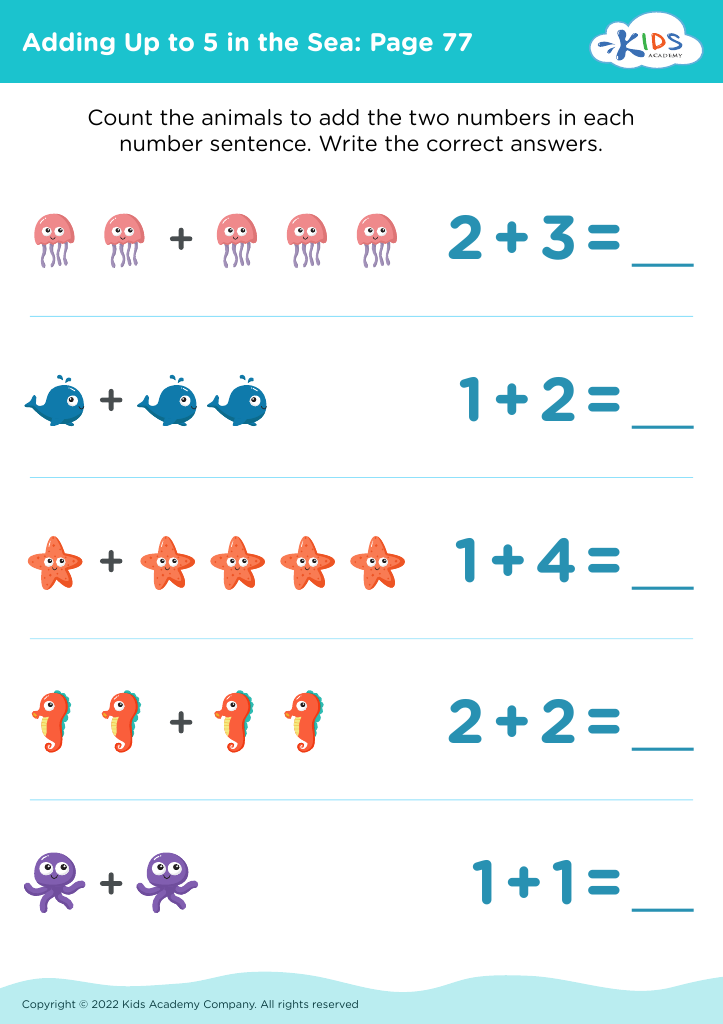
Adding Up to 5 in the Sea: Page 77
Worksheet
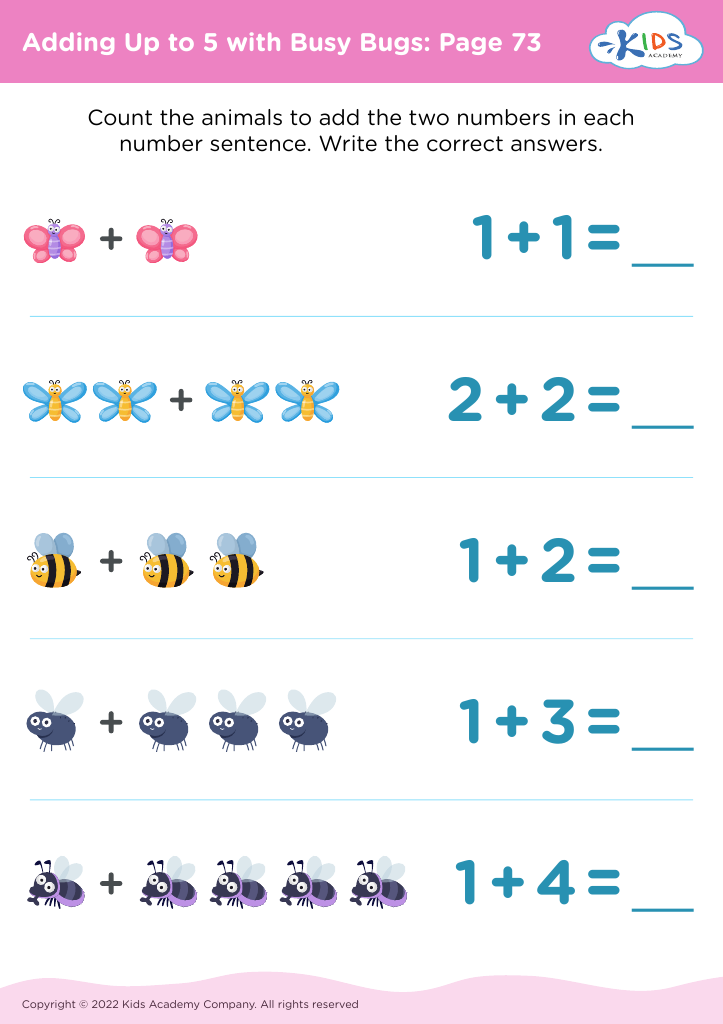
Adding Up to 5 with Busy Bugs: Page 73
Worksheet
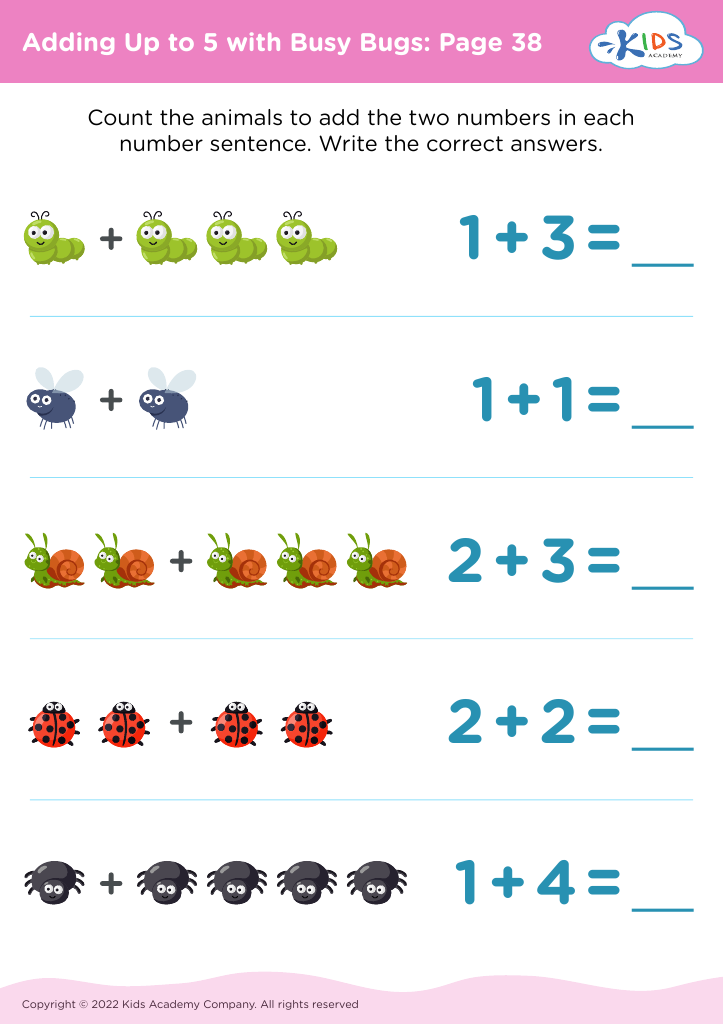
Adding Up to 5 with Busy Bugs: Page 38
Worksheet
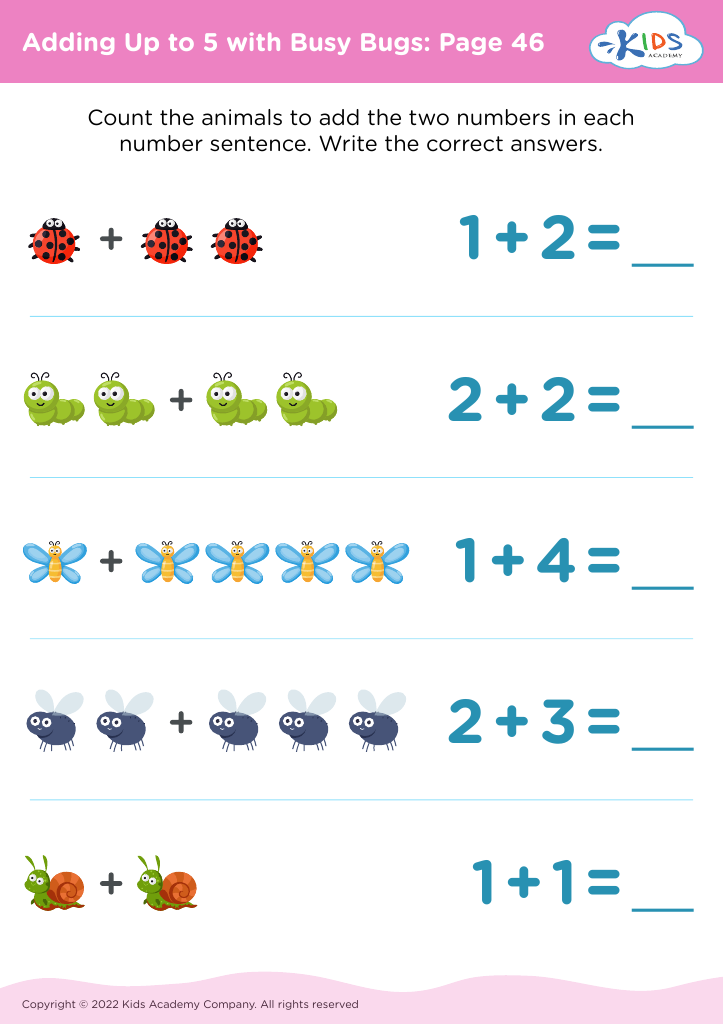
Adding Up to 5 with Busy Bugs: Page 46
Worksheet
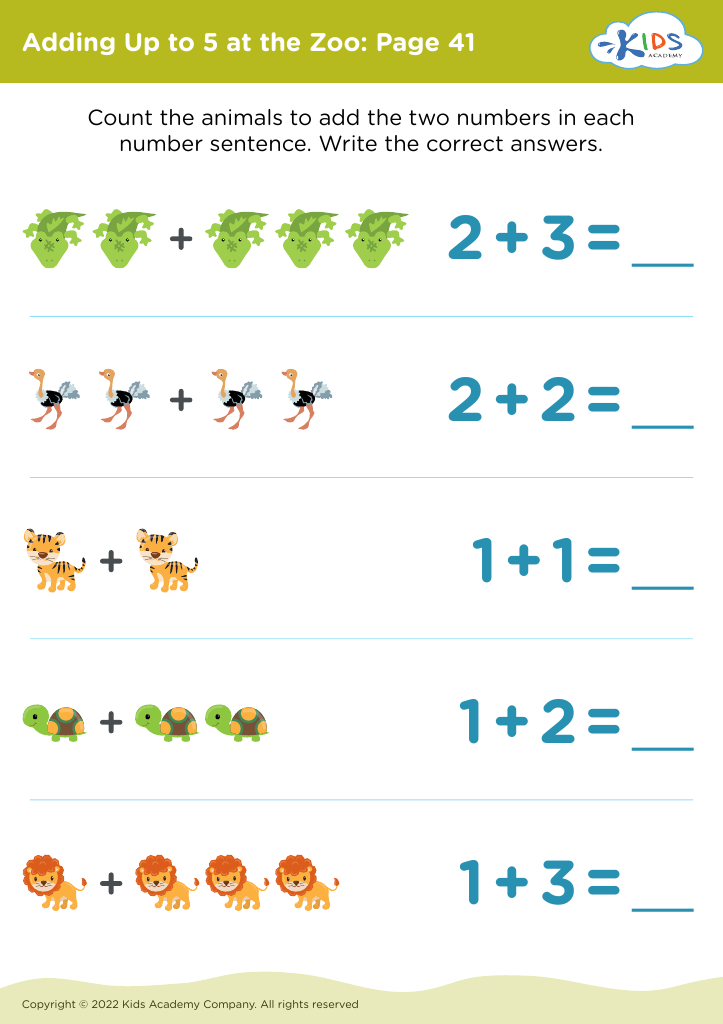
Adding Up to 5 at the Zoo: Page 41
Worksheet
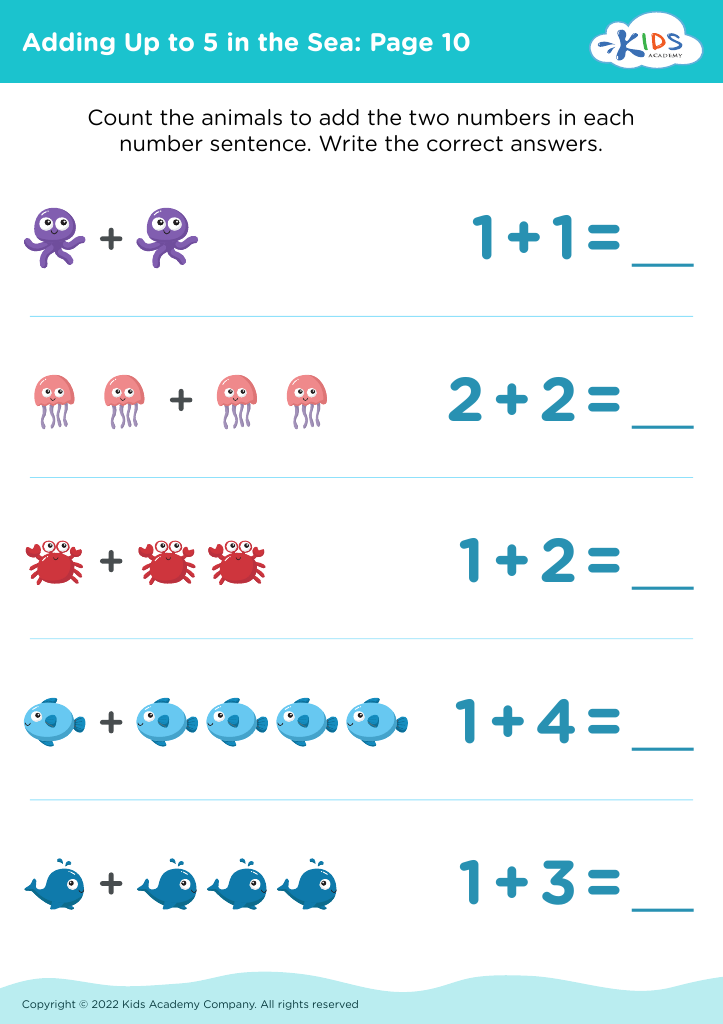
Adding Up to 5 in the Sea: Page 10
Worksheet
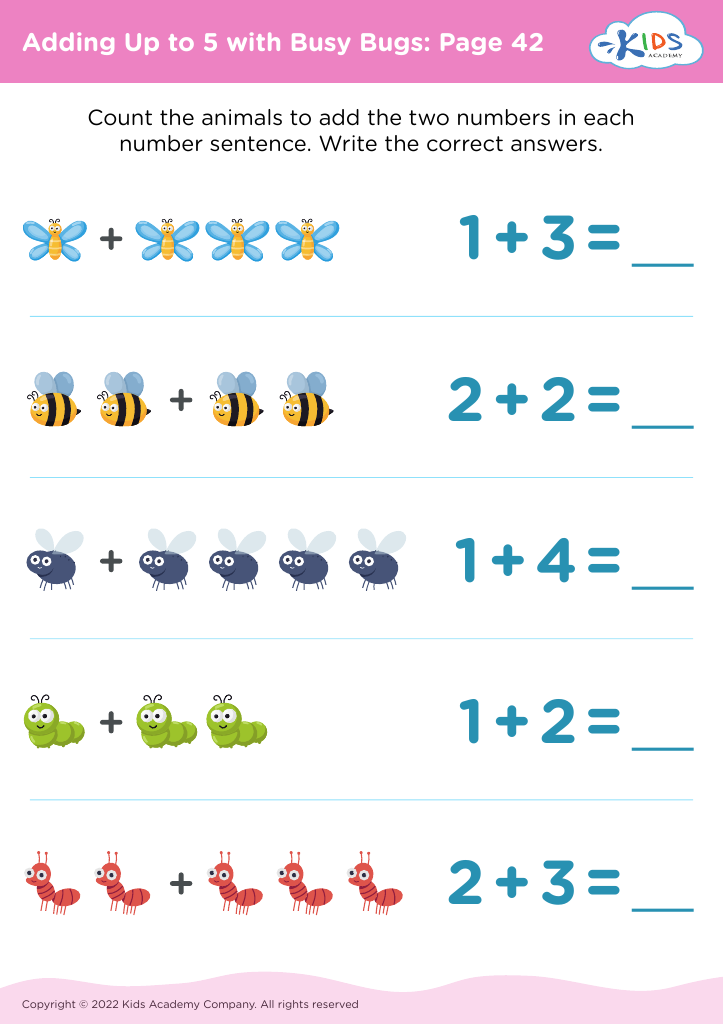
Adding Up to 5 with Busy Bugs: Page 42
Worksheet
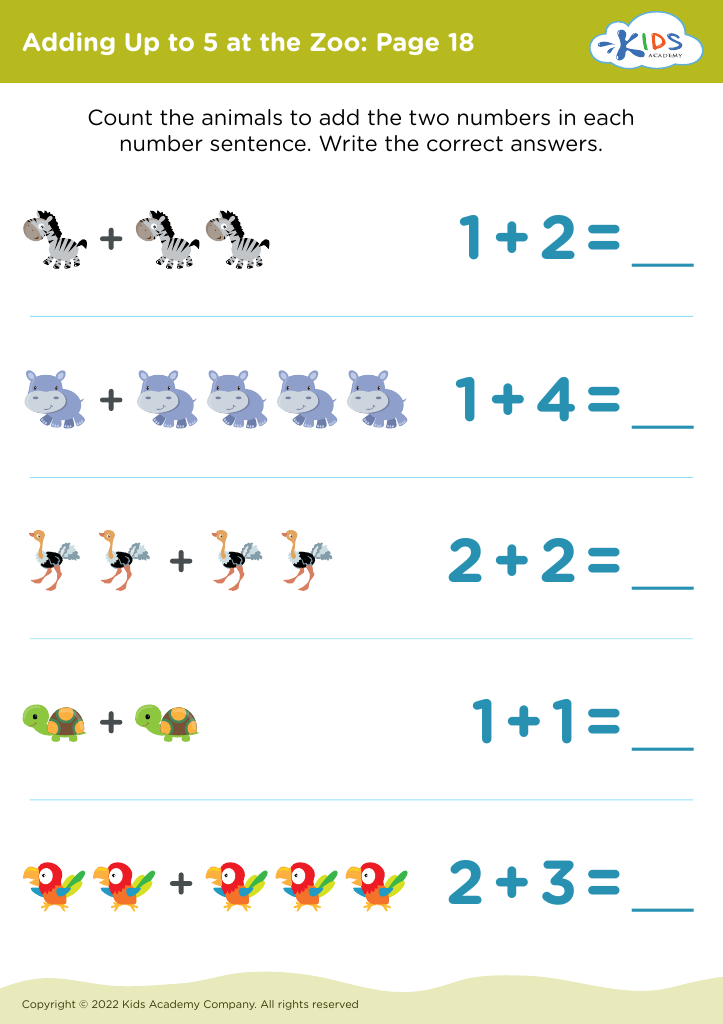
Adding Up to 5 at the Zoo: Page 18
Worksheet
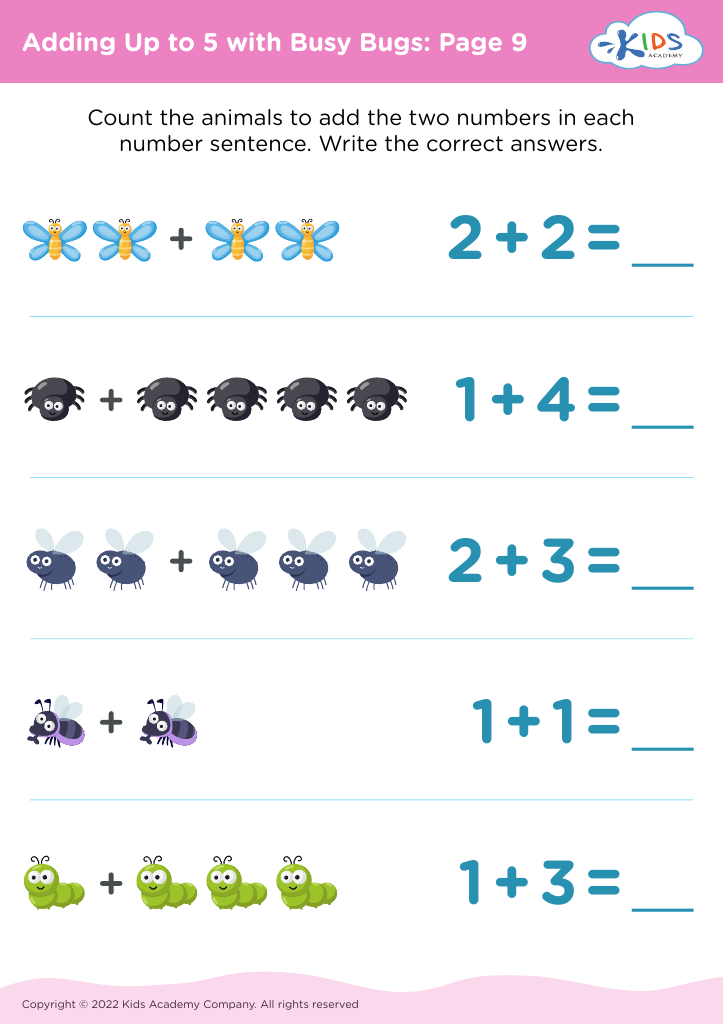
Adding Up to 5 with Busy Bugs: Page 9
Worksheet
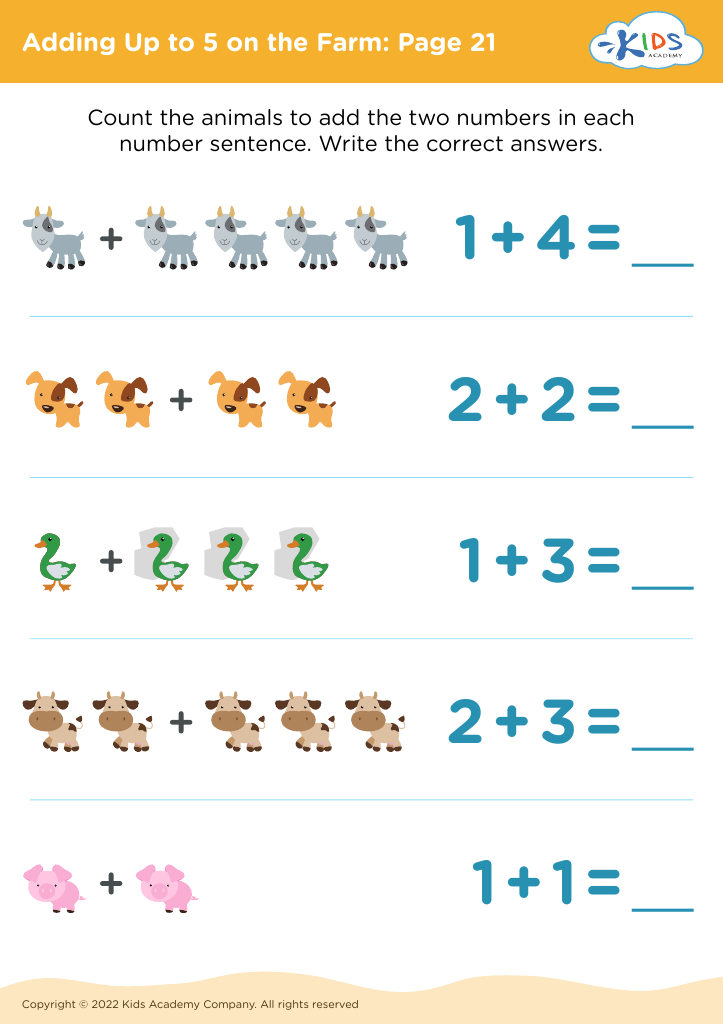
Adding Up to 5 on the Farm: Page 21
Worksheet
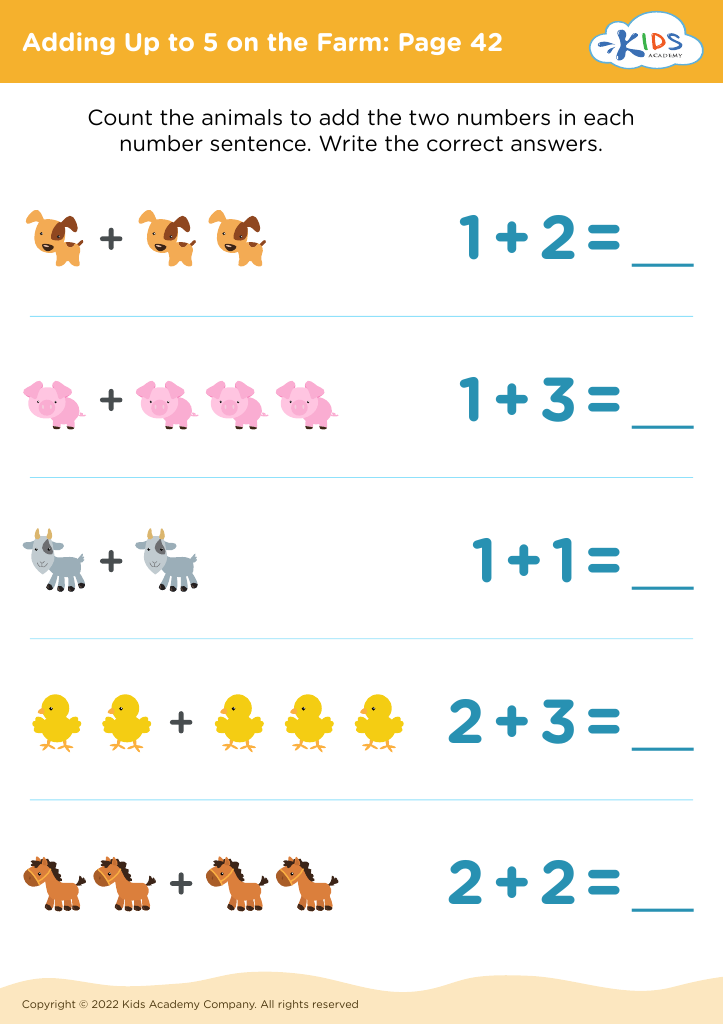
Adding Up to 5 on the Farm: Page 42
Worksheet


Cognitive development is crucial in early childhood, especially for 5-year-olds who are beginning to grasp fundamental mathematical concepts. Understanding and supporting cognitive development in addition during this stage is vital for several reasons.

Firstly, mastering addition lays the groundwork for all future math skills. Children who develop a strong understanding of numbers and basic operations tend to excel in later mathematics, positively impacting their academic trajectories. Learning addition also enhances critical thinking and problem-solving skills, which are essential not only in math but in everyday life.

Secondly, cognitive development goes beyond academics. Engaging with addition helps children recognize patterns, establish relationships between numbers, and develop reasoning skills. This fosters a growth mindset, encouraging children to tackle challenges with confidence and resilience.

Furthermore, collaborative learning through games and activities nurtures social skills, communication, and teamwork, essential components of holistic development. Parents and teachers play a pivotal role by creating rich learning environments, providing appropriate resources, and encouraging exploration and curiosity.

In conclusion, supporting cognitive development in addition not only prepares children for educational success but also contributes to their social and emotional growth, making it a key focus for both parents and educators.