Filters

240 filtered results

Clear all filters
Favorites
With answer key
Interactive

240 filtered results

Difficulty Level

Grade


Check out this FREE Trial Lesson on Addition for age 5!

Z

Favorites
With answer key
Interactive
  • 5
  • Counting practice
  • Addition
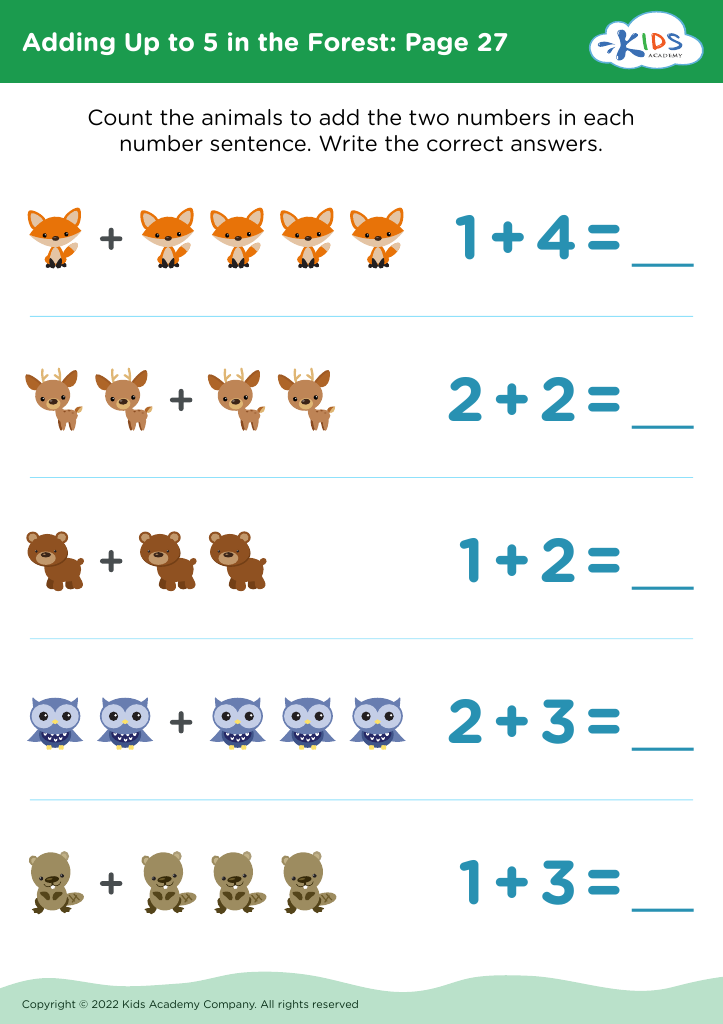
Adding Up to 5 in the Forest: Page 27
Worksheet
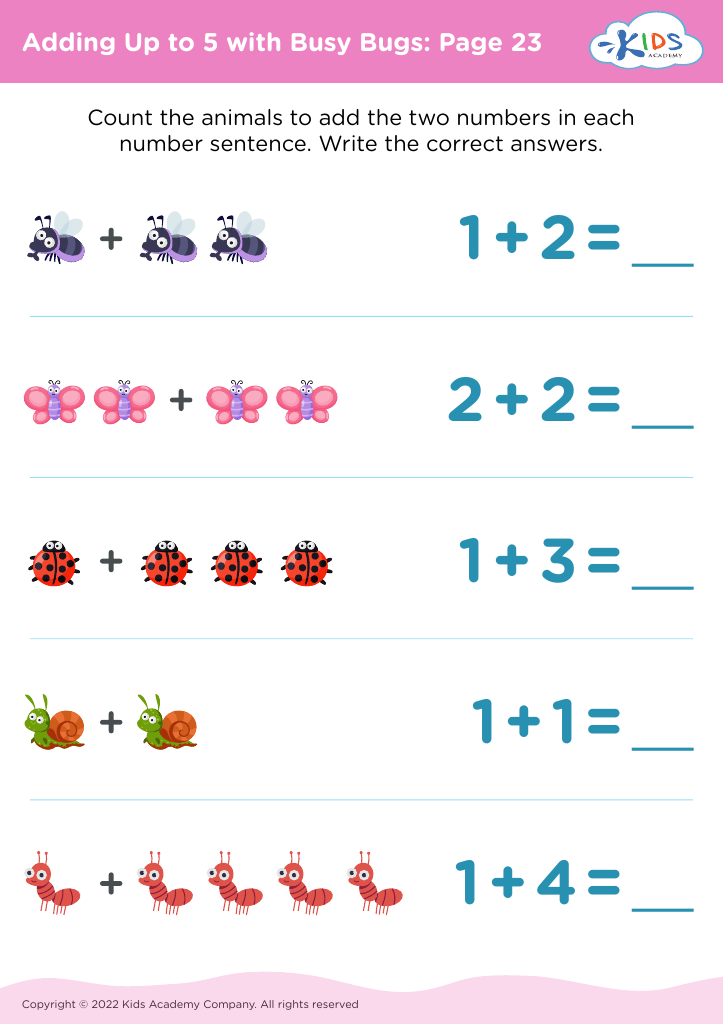
Adding Up to 5 with Busy Bugs: Page 23
Worksheet
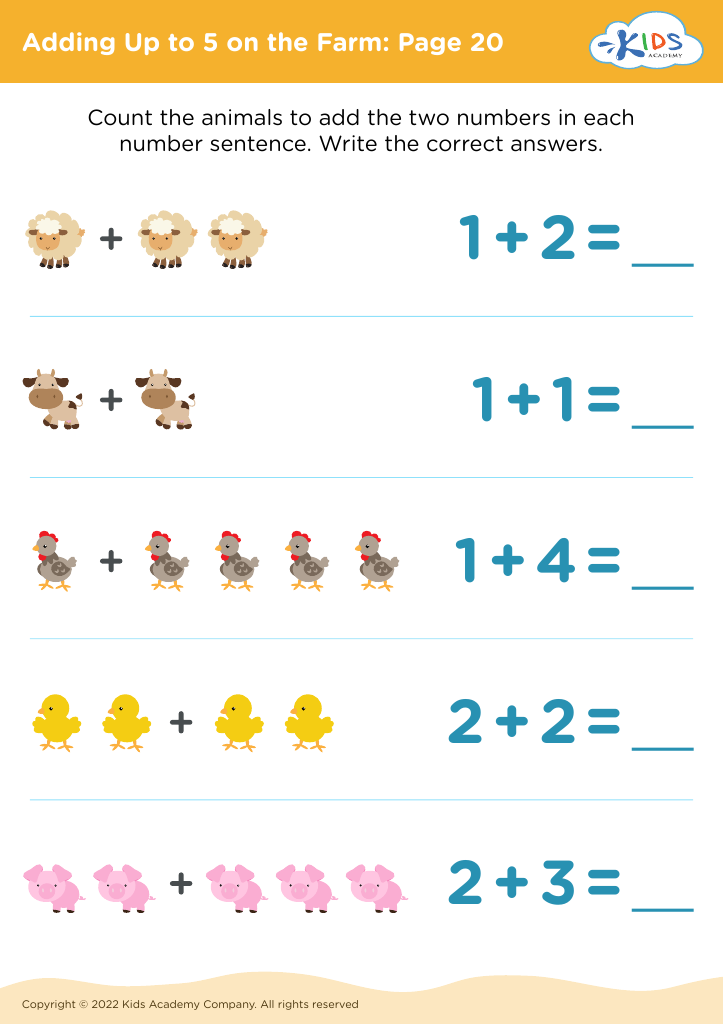
Adding Up to 5 on the Farm: Page 20
Worksheet
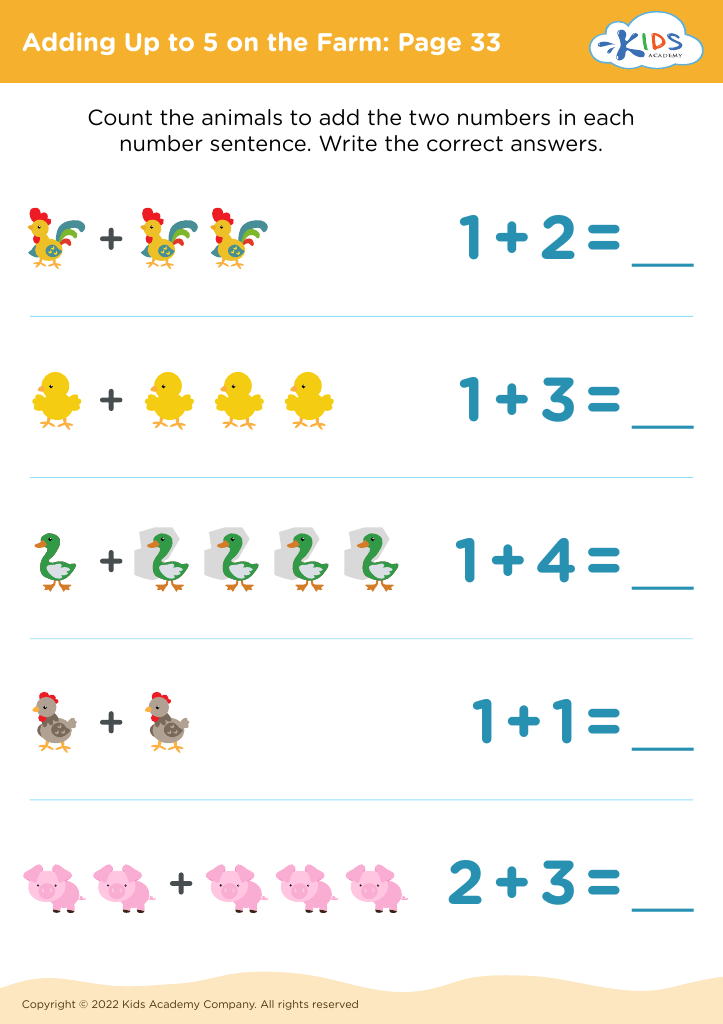
Adding Up to 5 on the Farm: Page 33
Worksheet
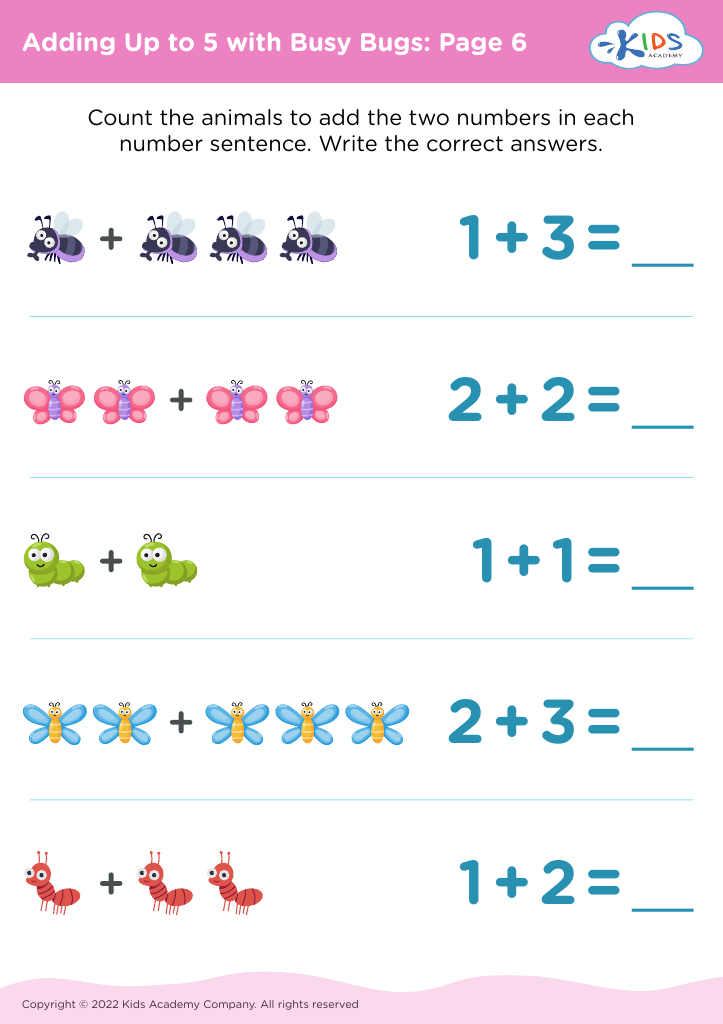
Adding Up to 5 with Busy Bugs: Page 6
Worksheet
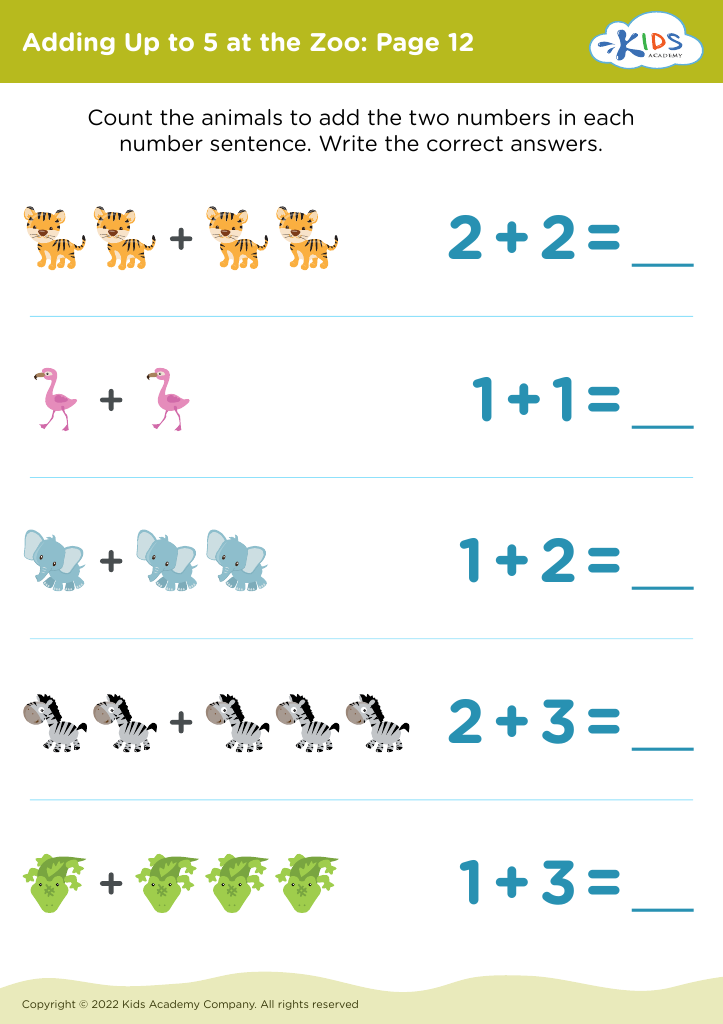
Adding Up to 5 at the Zoo: Page 12
Worksheet
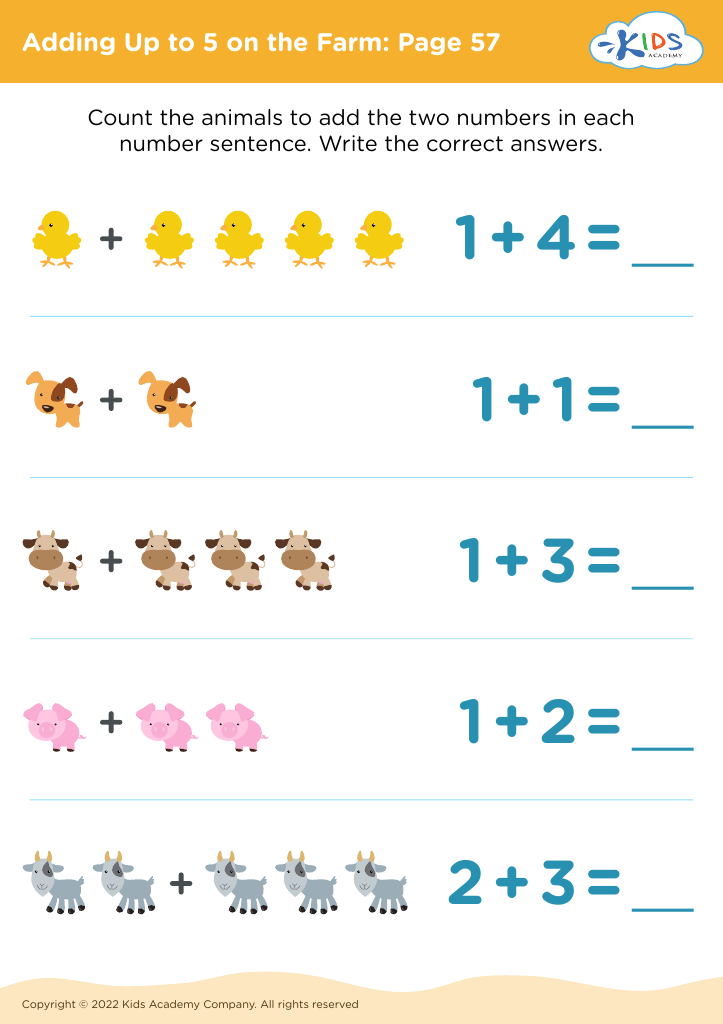
Adding Up to 5 on the Farm: Page 57
Worksheet
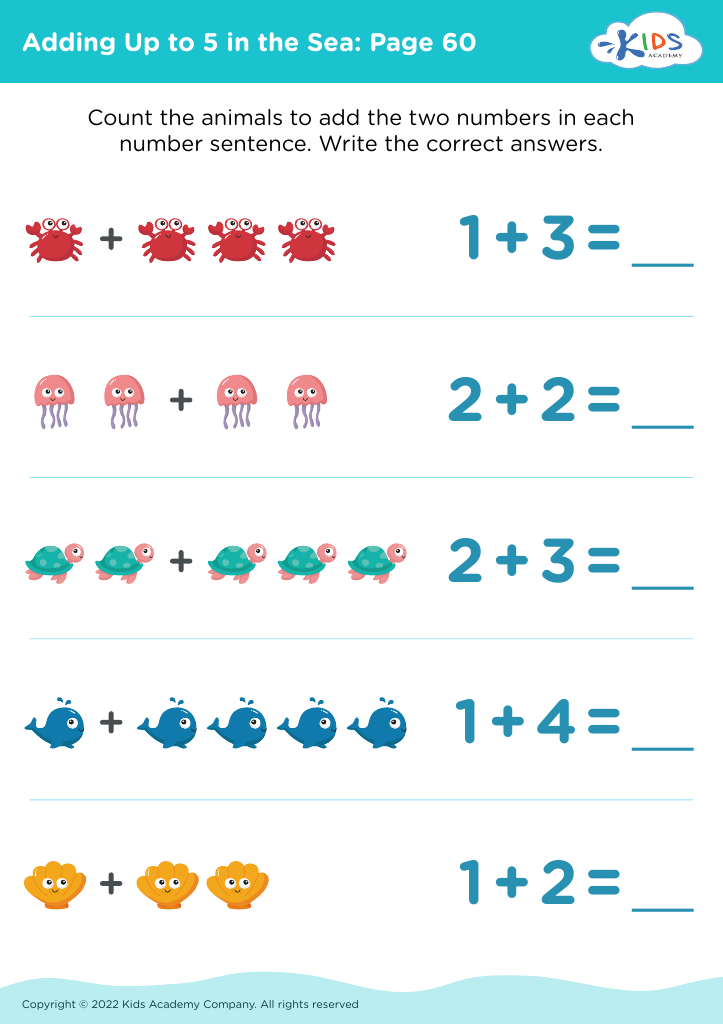
Adding Up to 5 in the Sea: Page 60
Worksheet
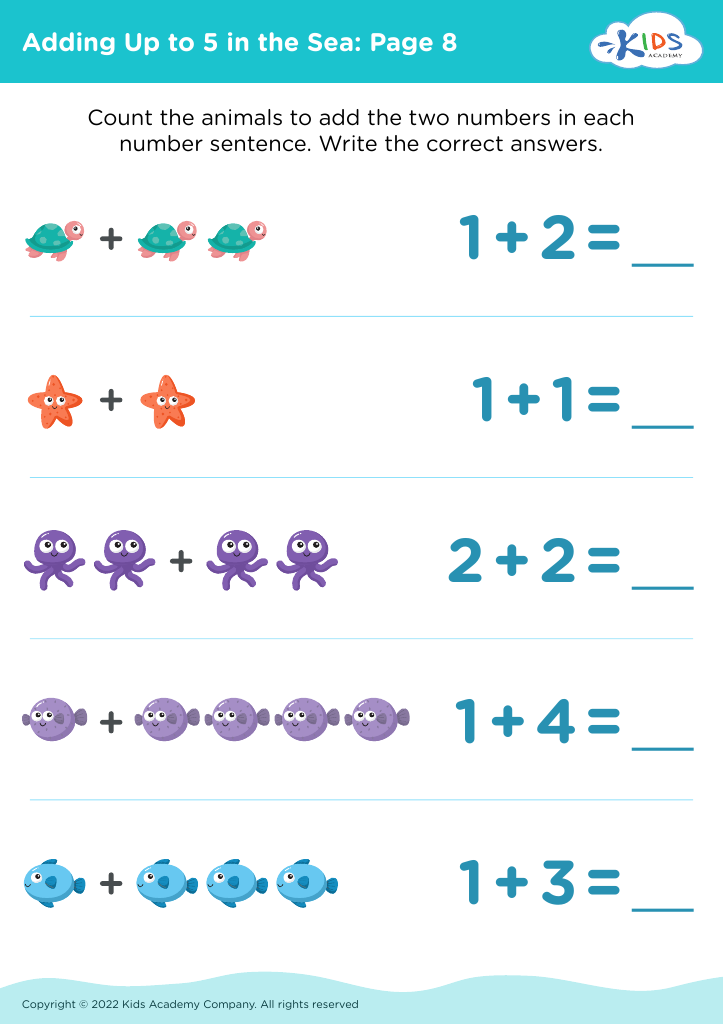
Adding Up to 5 in the Sea: Page 8

Adding Up to 5 in the Sea: Page 8

Adding Up to 5 in the Sea: Page 8
Worksheet
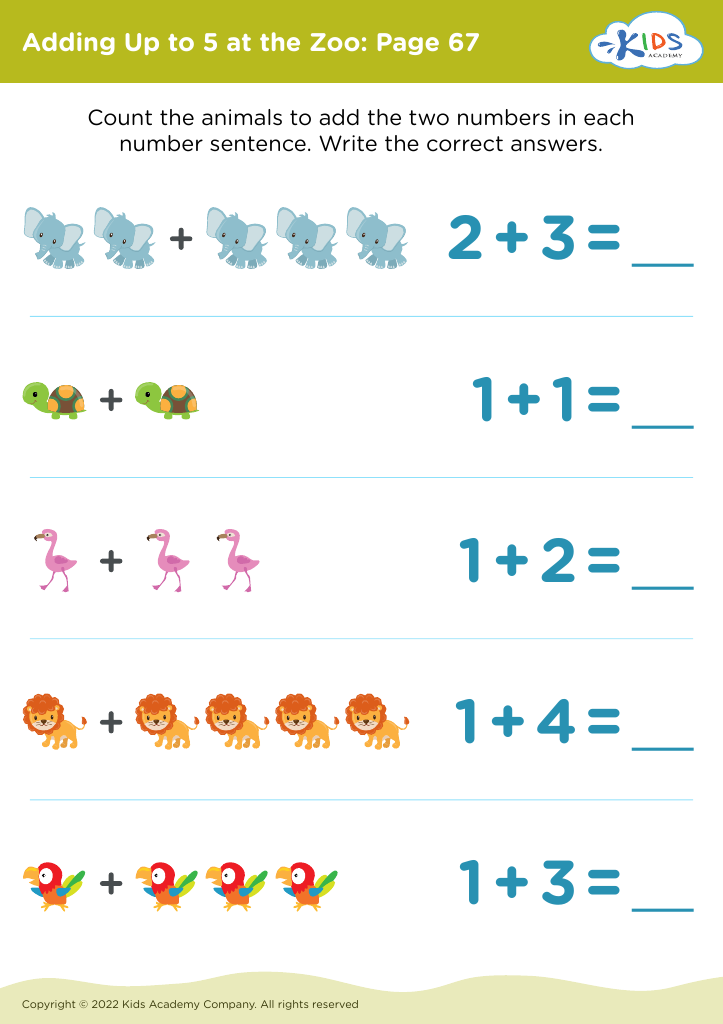
Adding Up to 5 at the Zoo: Page 67
Worksheet
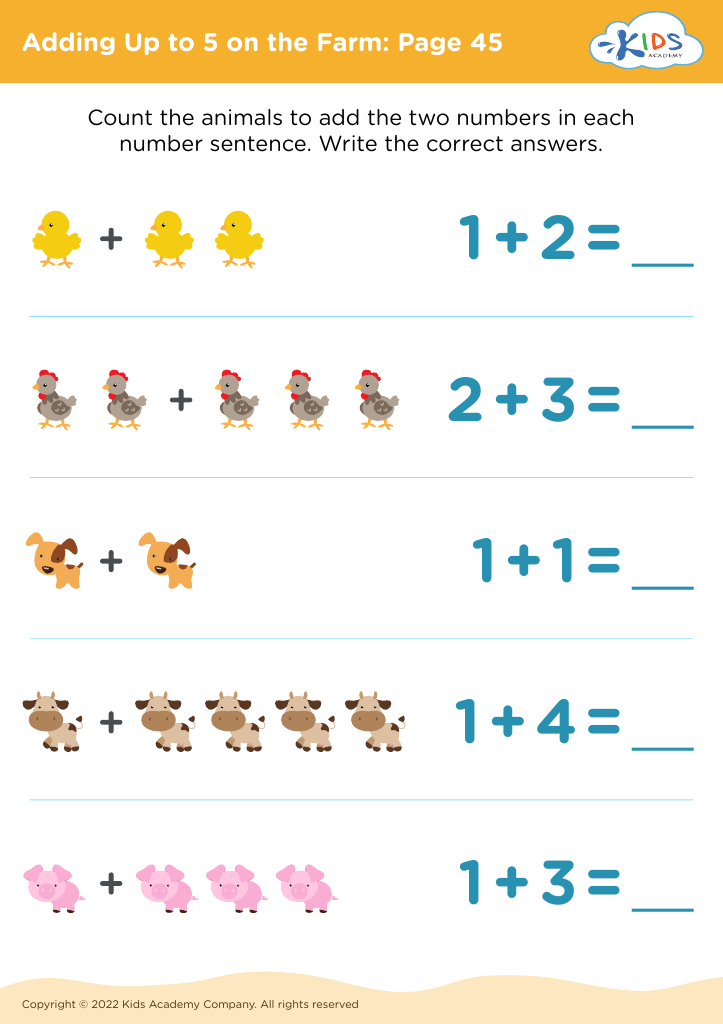
Adding Up to 5 on the Farm: Page 45
Worksheet
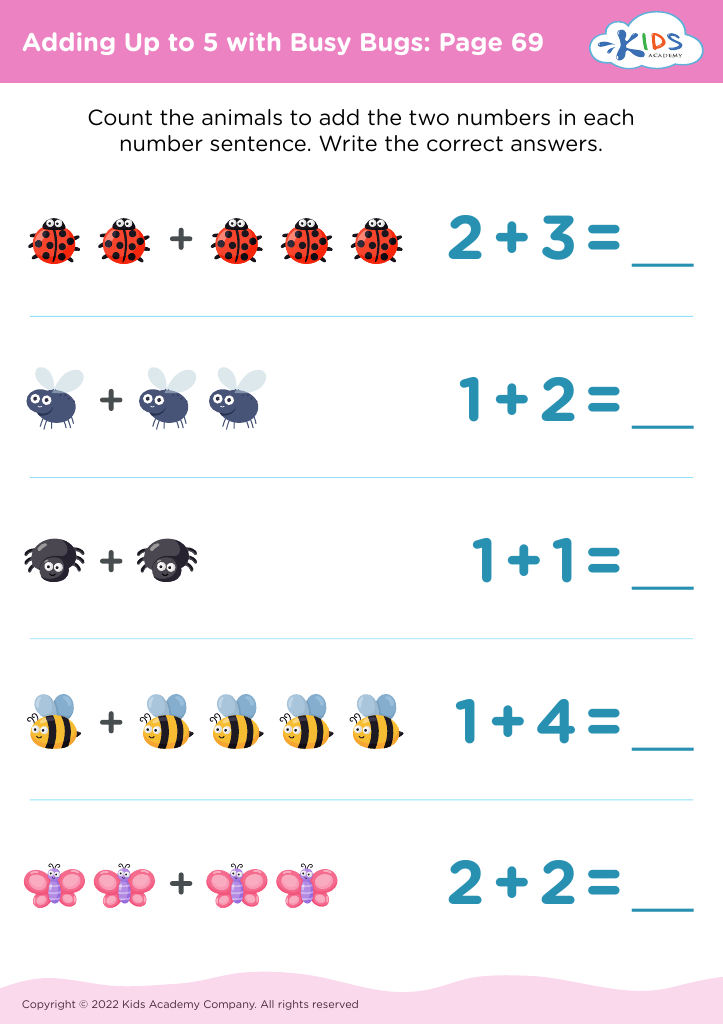
Adding Up to 5 with Busy Bugs: Page 69
Worksheet
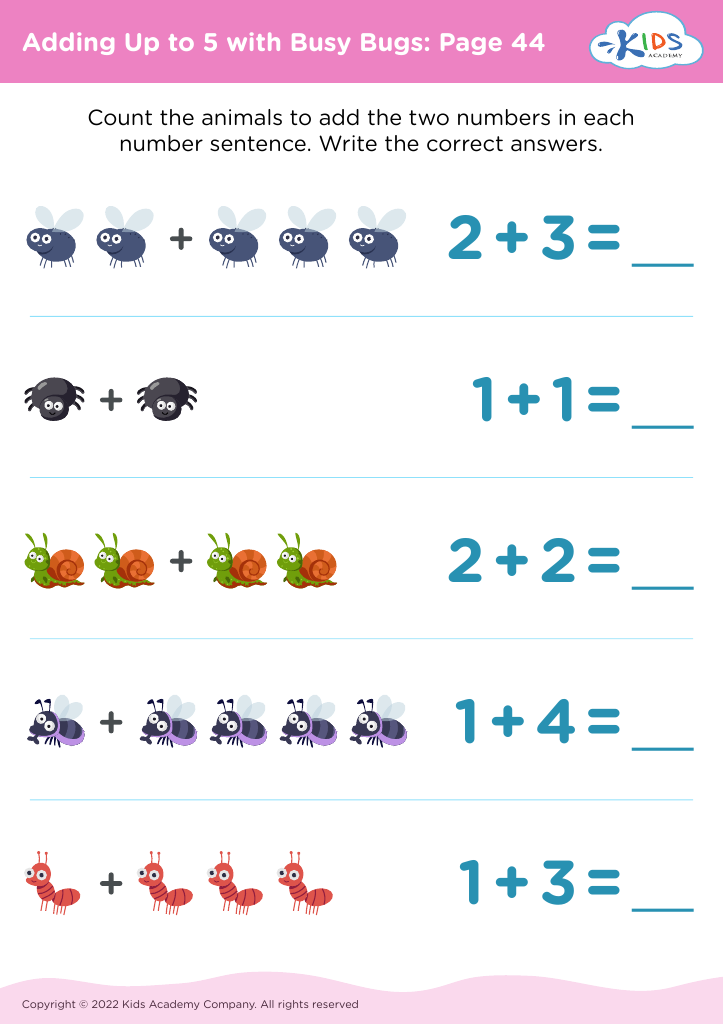
Adding Up to 5 with Busy Bugs: Page 44
Worksheet
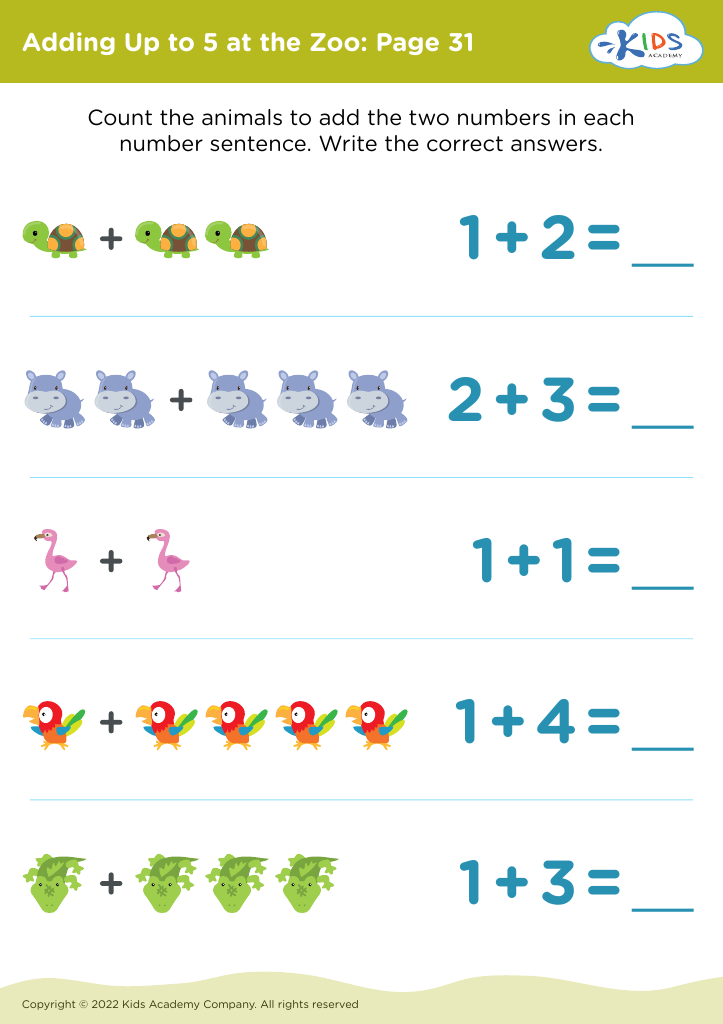
Adding Up to 5 at the Zoo: Page 31
Worksheet
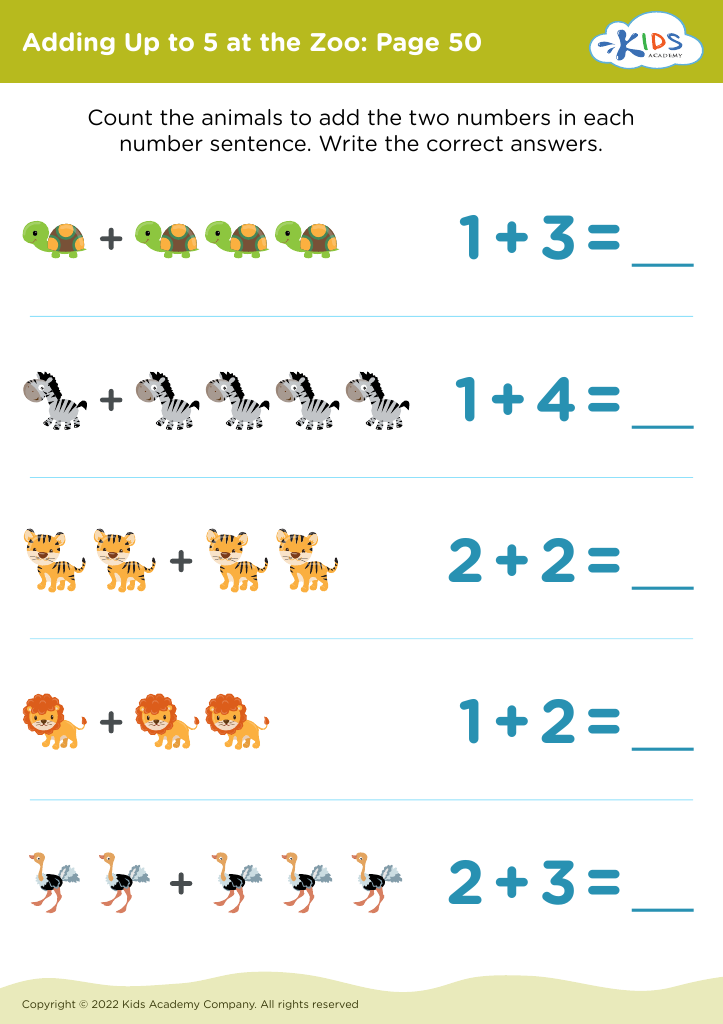
Adding Up to 5 at the Zoo: Page 50
Worksheet
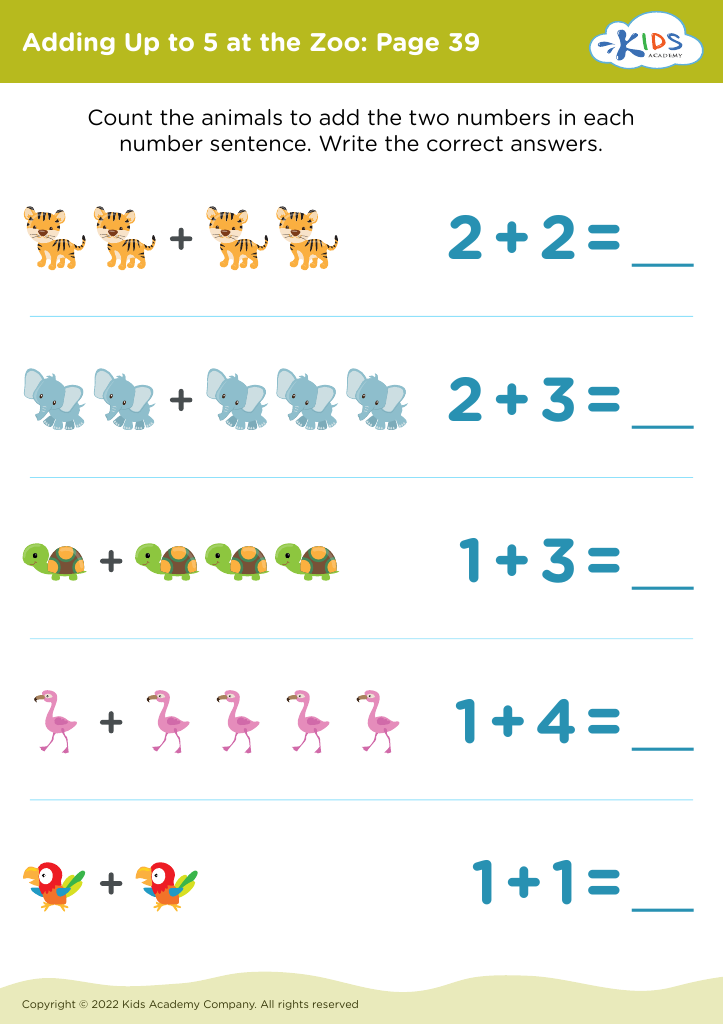
Adding Up to 5 at the Zoo: Page 39
Worksheet
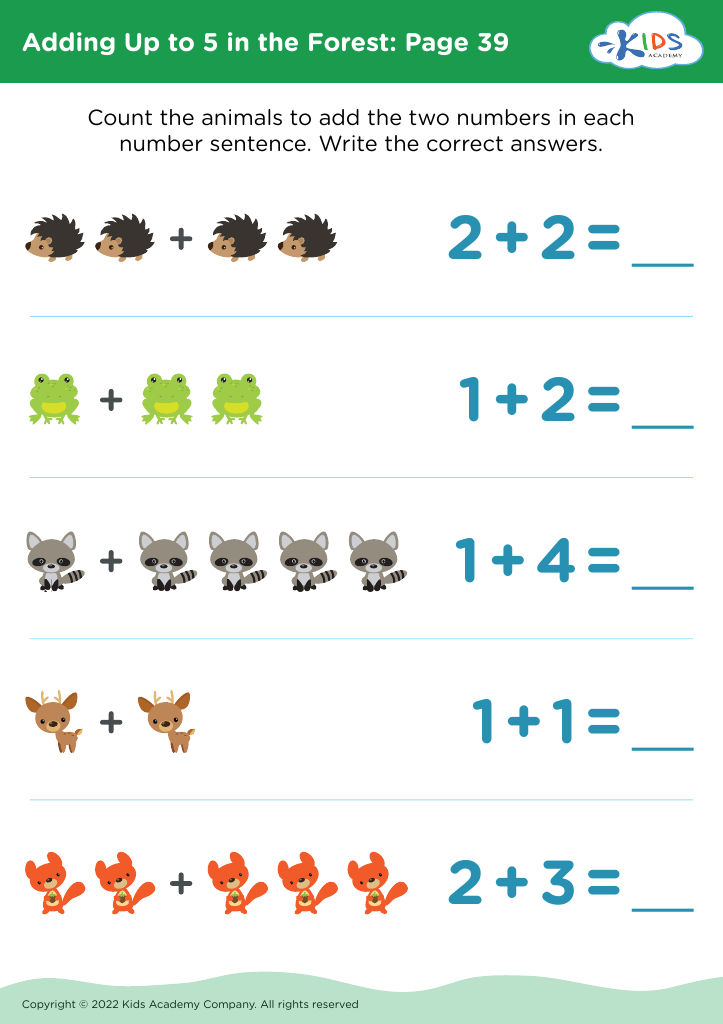
Adding Up to 5 in the Forest: Page 39
Worksheet
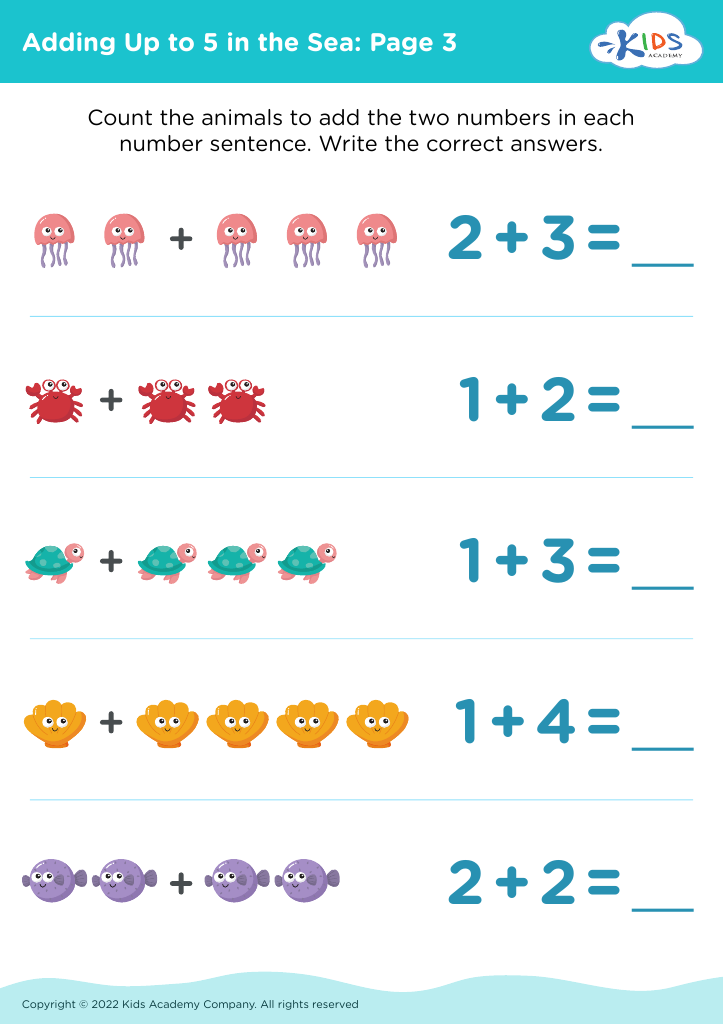
Adding Up to 5 in the Sea: Page 3

Adding Up to 5 in the Sea: Page 3

Adding Up to 5 in the Sea: Page 3
Worksheet
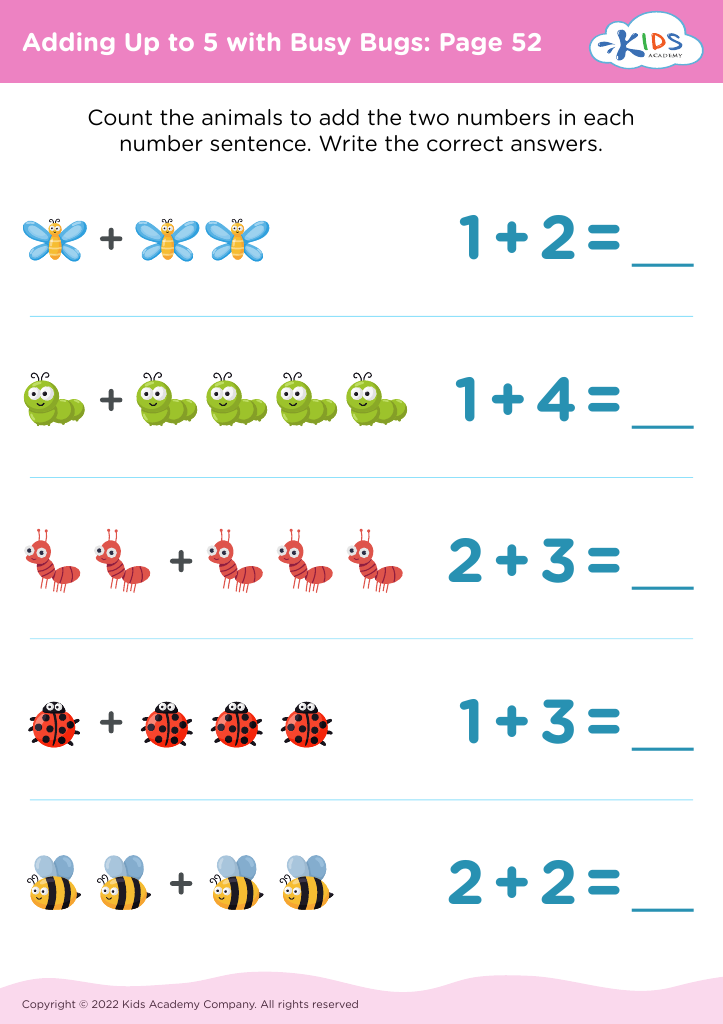
Adding Up to 5 with Busy Bugs: Page 52
Worksheet
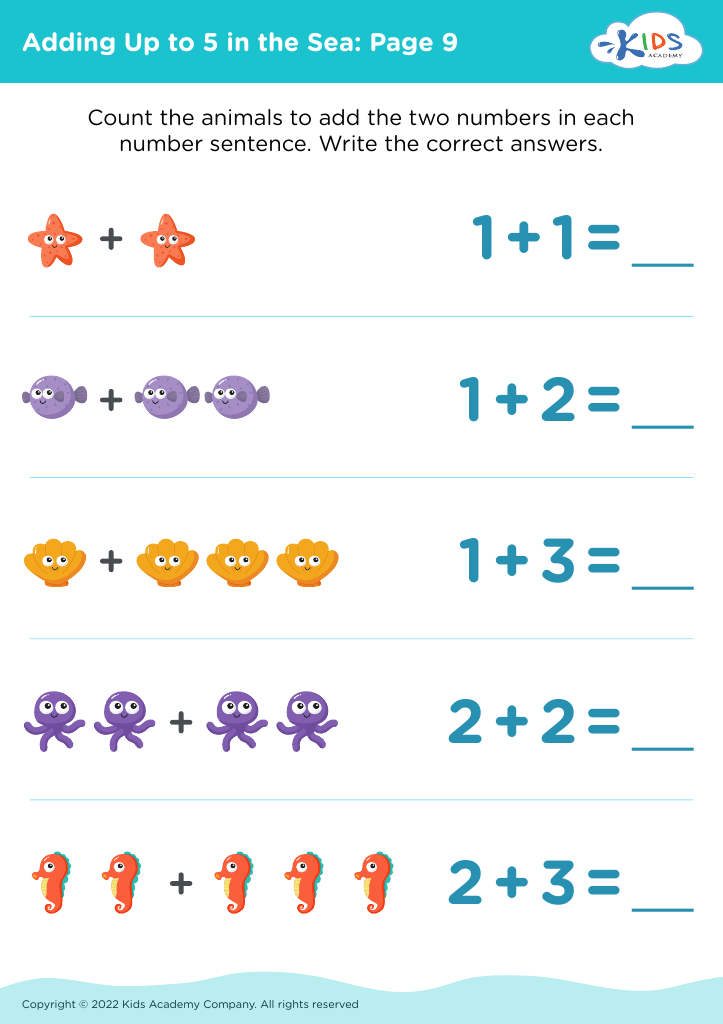
Adding Up to 5 in the Sea: Page 9

Adding Up to 5 in the Sea: Page 9

Adding Up to 5 in the Sea: Page 9
Worksheet
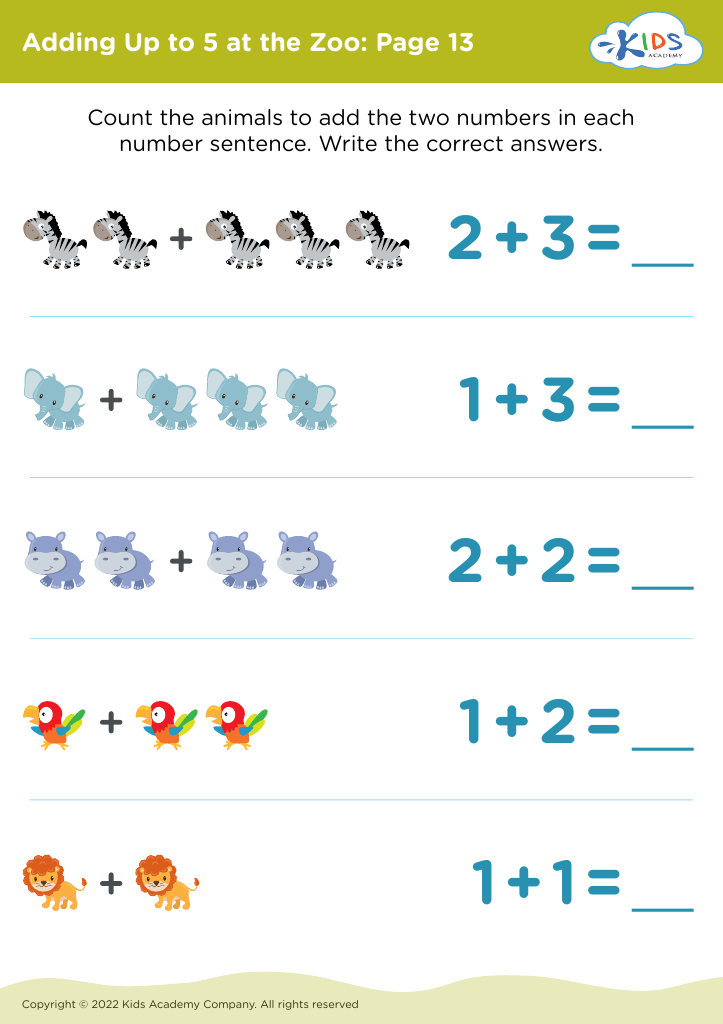
Adding Up to 5 at the Zoo: Page 13
Worksheet
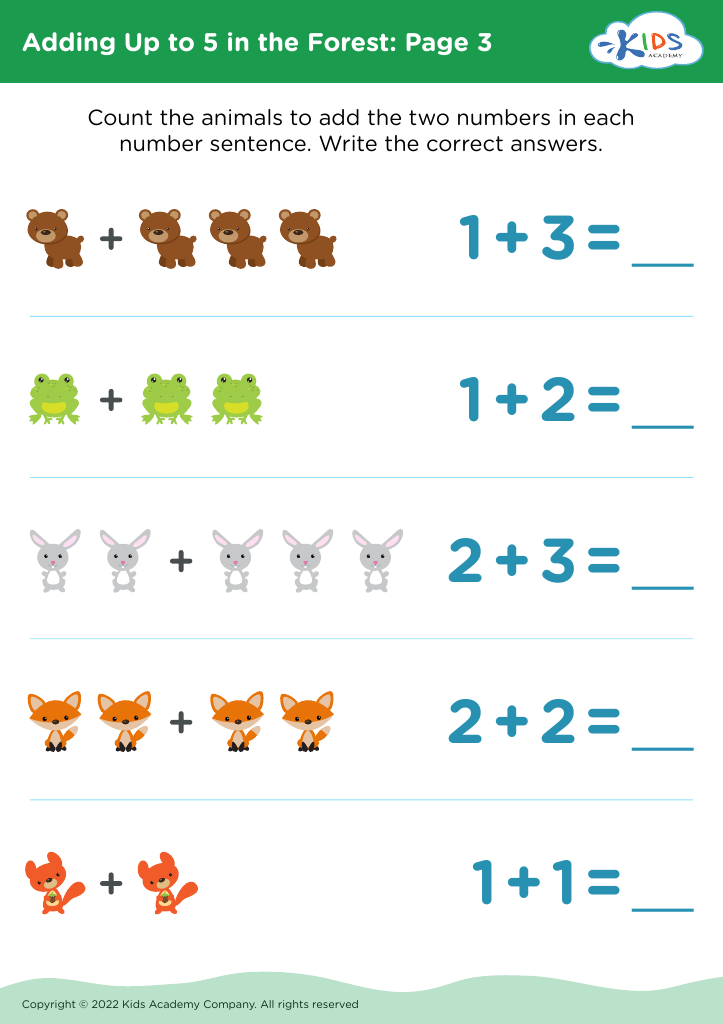
Adding Up to 5 in the Forest: Page 3
Worksheet
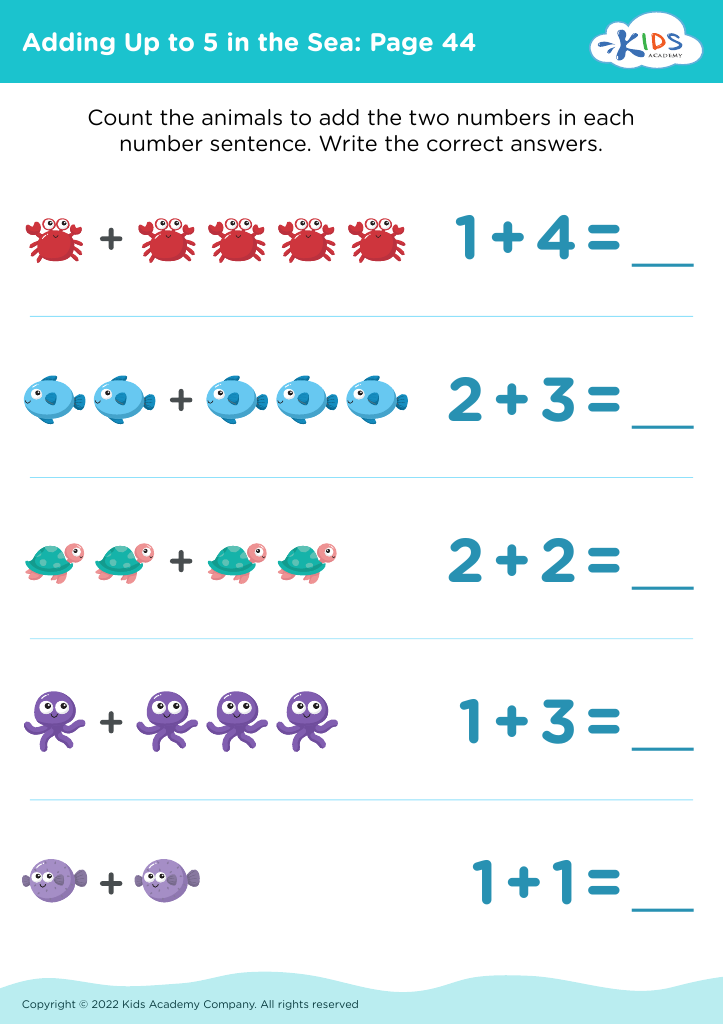
Adding Up to 5 in the Sea: Page 44
Worksheet
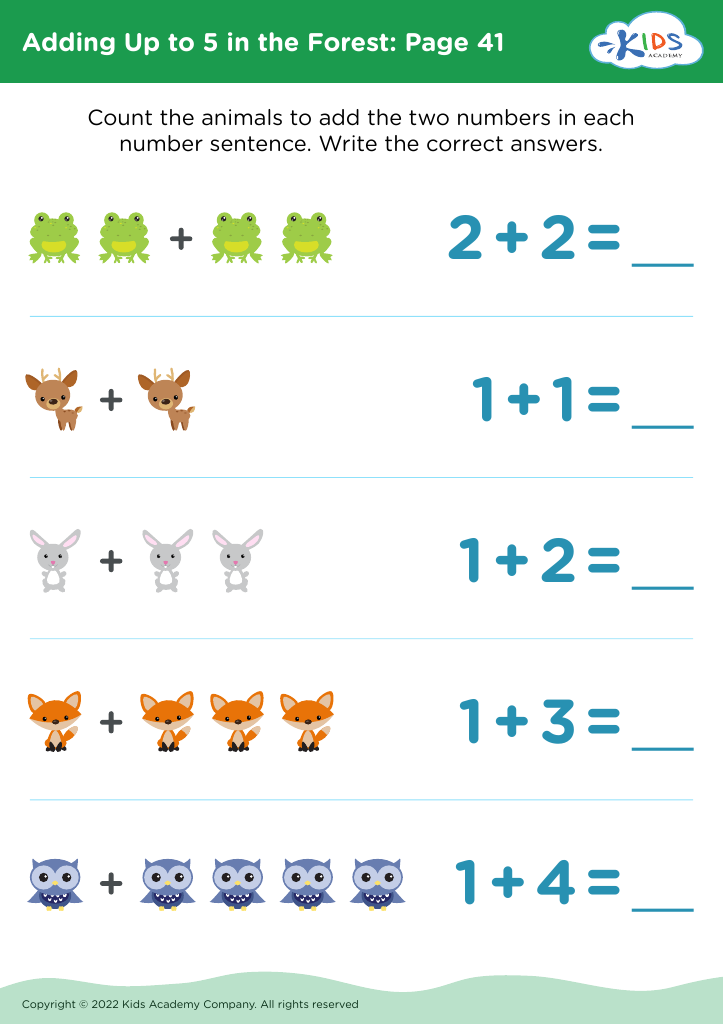
Adding Up to 5 in the Forest: Page 41
Worksheet


... 9 10

Counting practice and addition skills are foundational elements of early mathematics education for 5-year-olds. At this stage, children are developing critical thinking and problem-solving abilities, and building a strong number sense is essential. Engaging in counting and basic addition helps children understand the relationship between numbers and sets, enhances their ability to express and process quantitative information, and lays the groundwork for more complex arithmetic concepts they will encounter later.

Parents and teachers should care about these skills because they promote cognitive development and boost confidence in young learners. Mastery of counting and basic addition can lead to improved academic performance in mathematics and related subjects. Furthermore, these skills encourage logical reasoning and analytical thinking, which are applicable across various disciplines and real-life situations.

Moreover, incorporating counting and addition into daily activities makes learning enjoyable. Playful approaches to math, such as using games, songs, or hands-on activities, can make the learning experience engaging. By nurturing a positive attitude toward mathematics from an early age, parents and teachers can help cultivate lifelong learners who embrace challenges with enthusiasm. Ultimately, investing time in counting practice and addition equips children with essential tools for their educational journey and beyond.