Filters

380 filtered results

Clear all filters
Favorites
With answer key
Interactive

380 filtered results

Difficulty Level

Grade


Check out this FREE Trial Lesson on Addition for age 5!

Making 12

Favorites
With answer key
Interactive
  • 5
  • Number Recognition
  • Addition
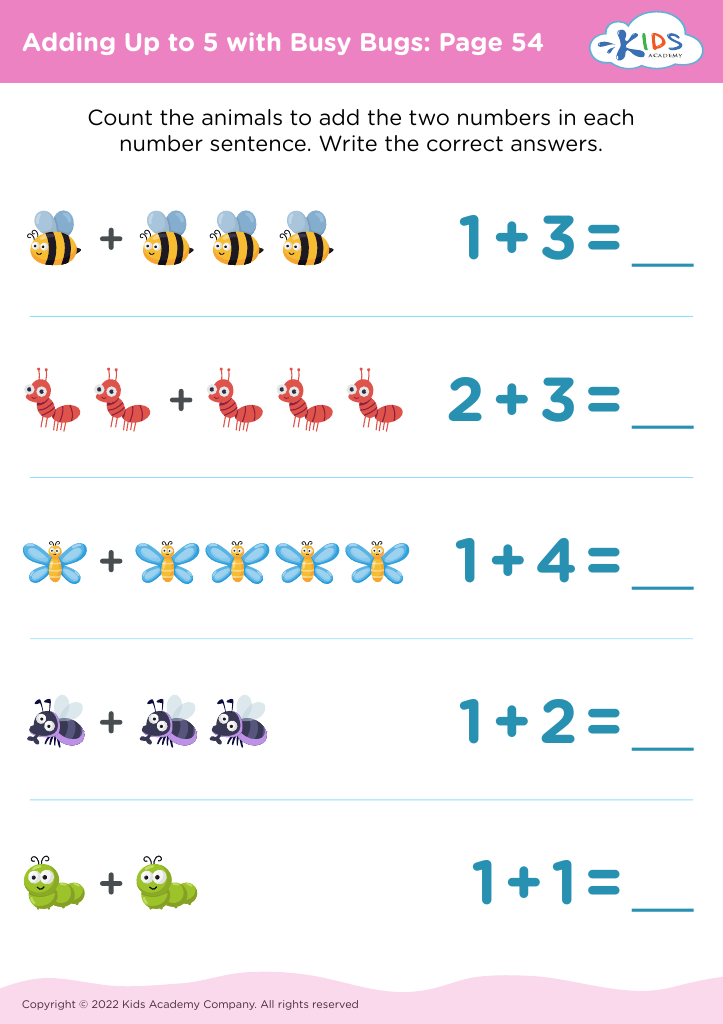
Adding Up to 5 with Busy Bugs: Page 54
Worksheet
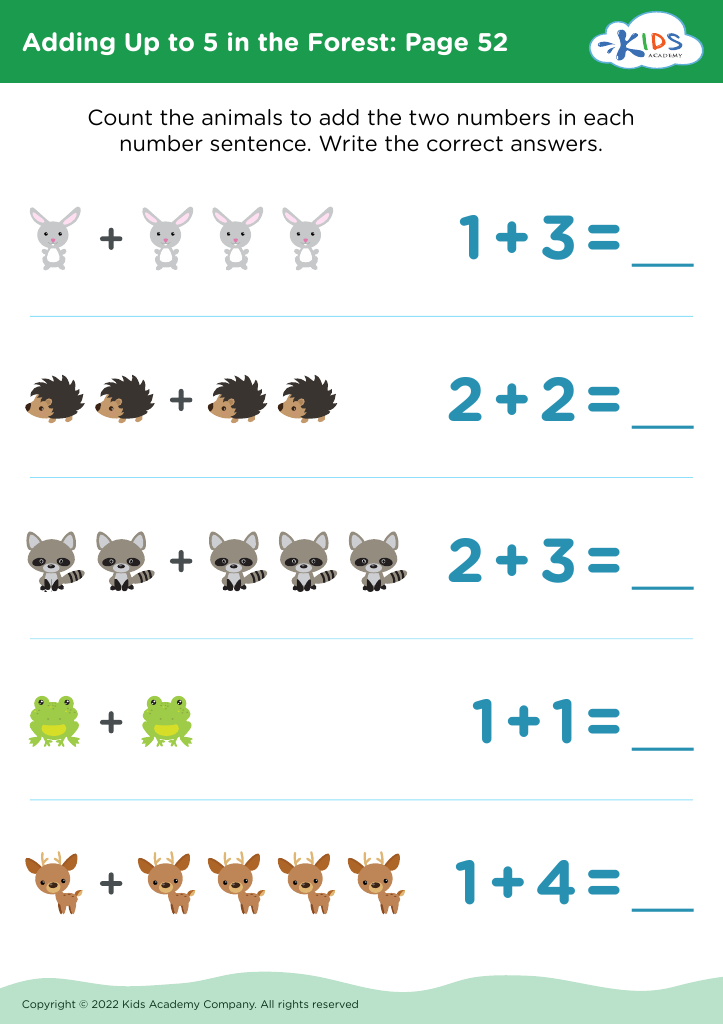
Adding Up to 5 in the Forest: Page 52
Worksheet
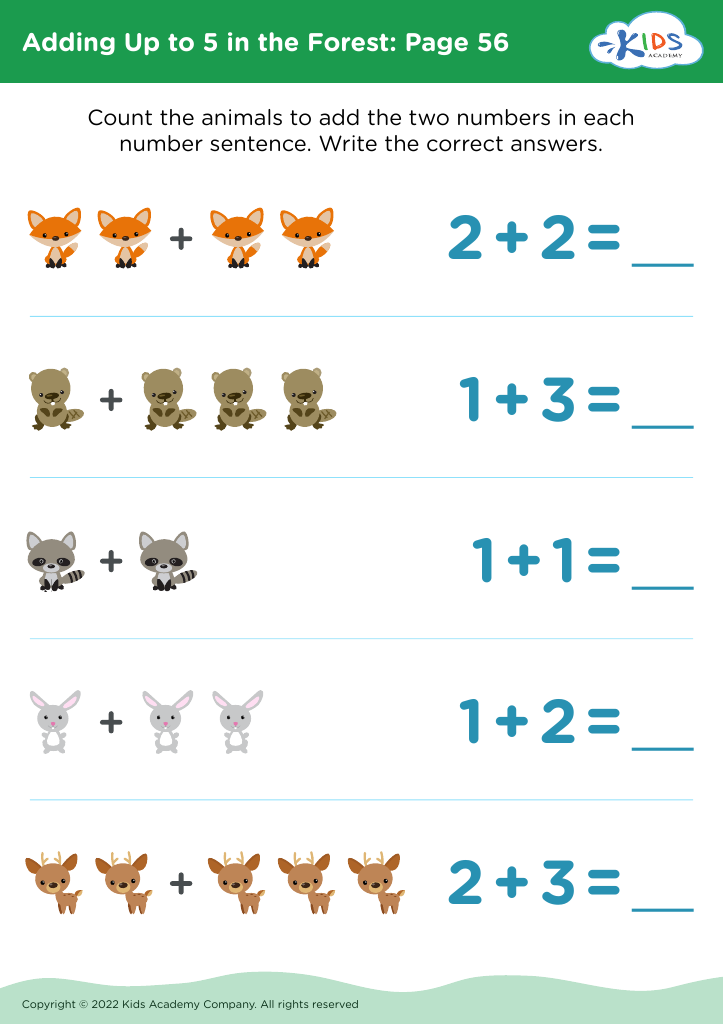
Adding Up to 5 in the Forest: Page 56
Worksheet
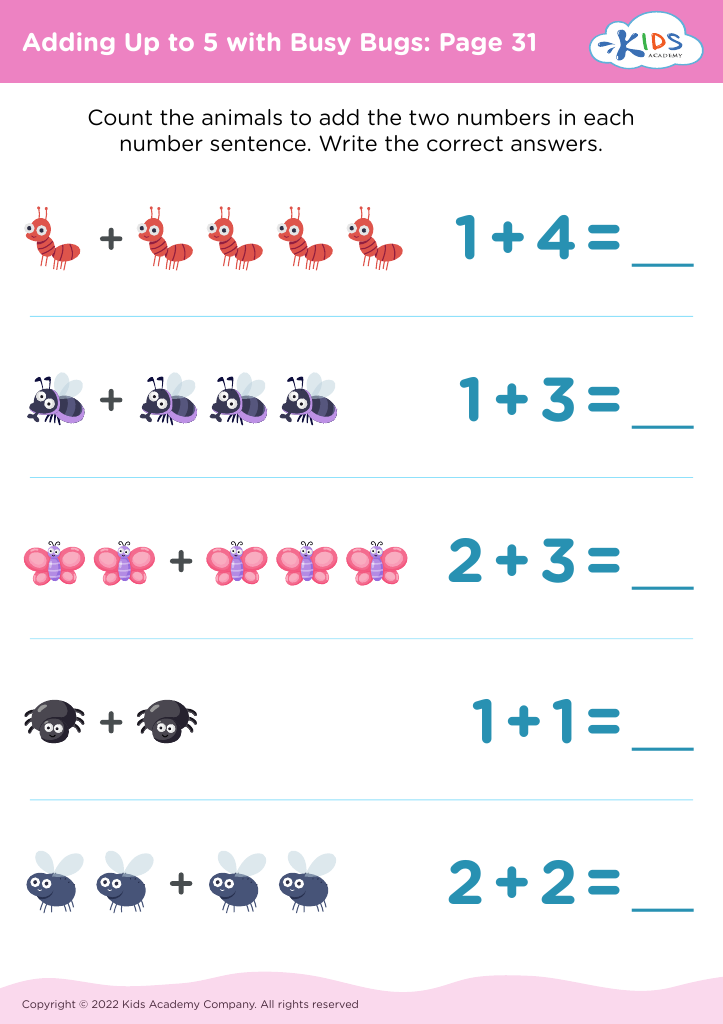
Adding Up to 5 with Busy Bugs: Page 31
Worksheet
Build up to 12 Worksheet

Build up to 12 Worksheet

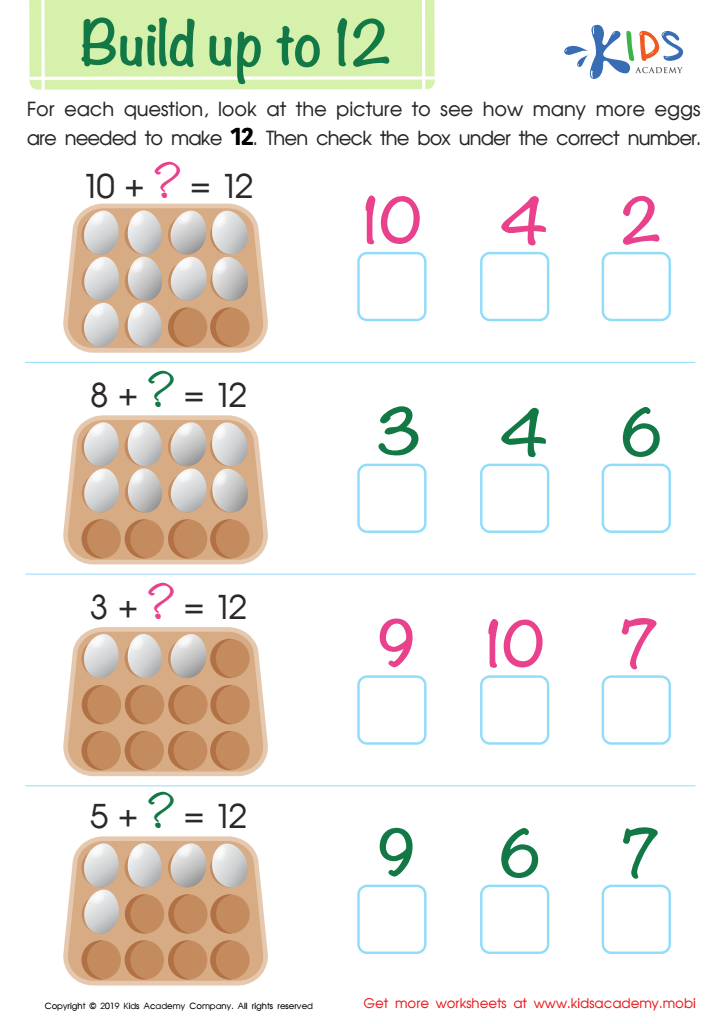
Love eggs? Kids can identify them in the picture in this worksheet. We need to add numbers to make 12. Look at the picture and see how many eggs are needed. Check the correct number box. Breakfast or baking, eggs are essential!
Build up to 12 Worksheet
Worksheet
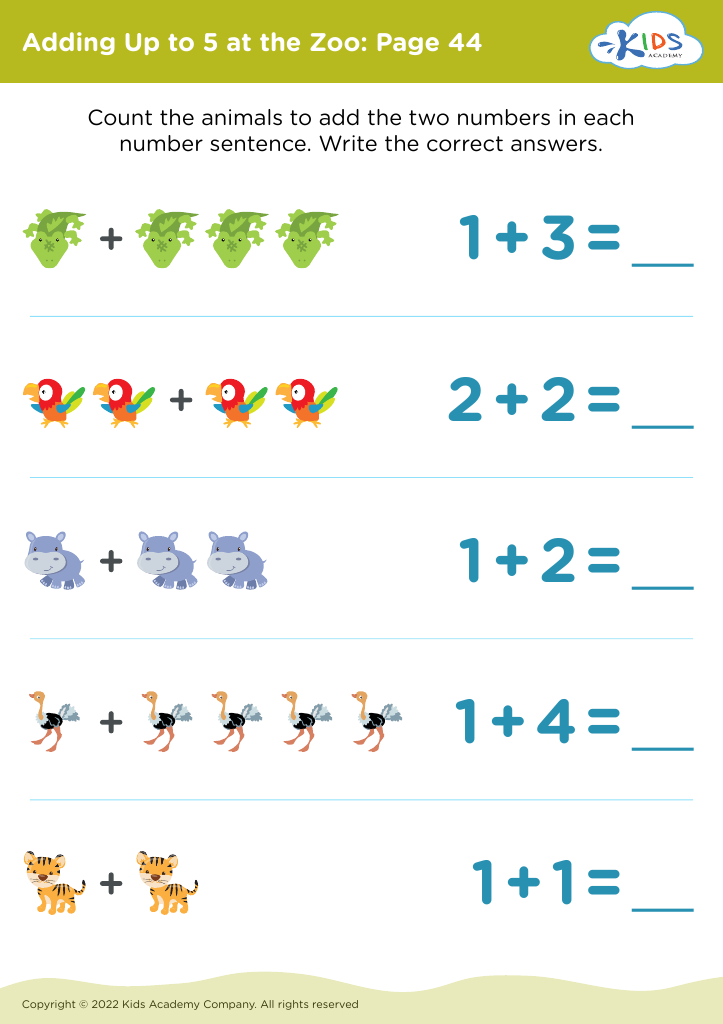
Adding Up to 5 at the Zoo: Page 44
Worksheet
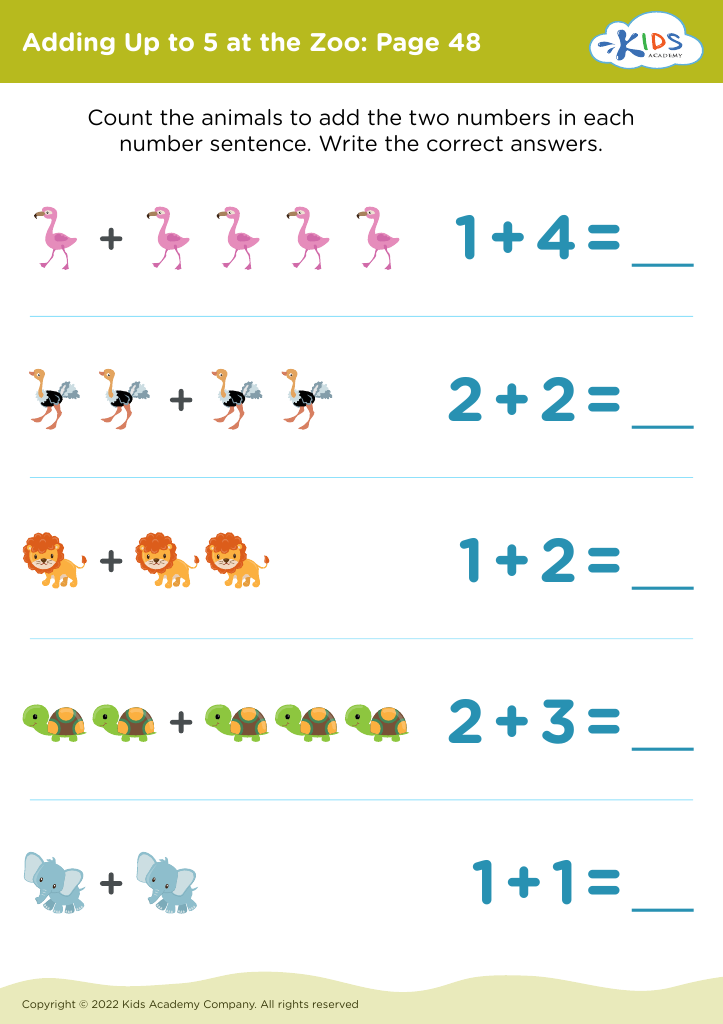
Adding Up to 5 at the Zoo: Page 48
Worksheet
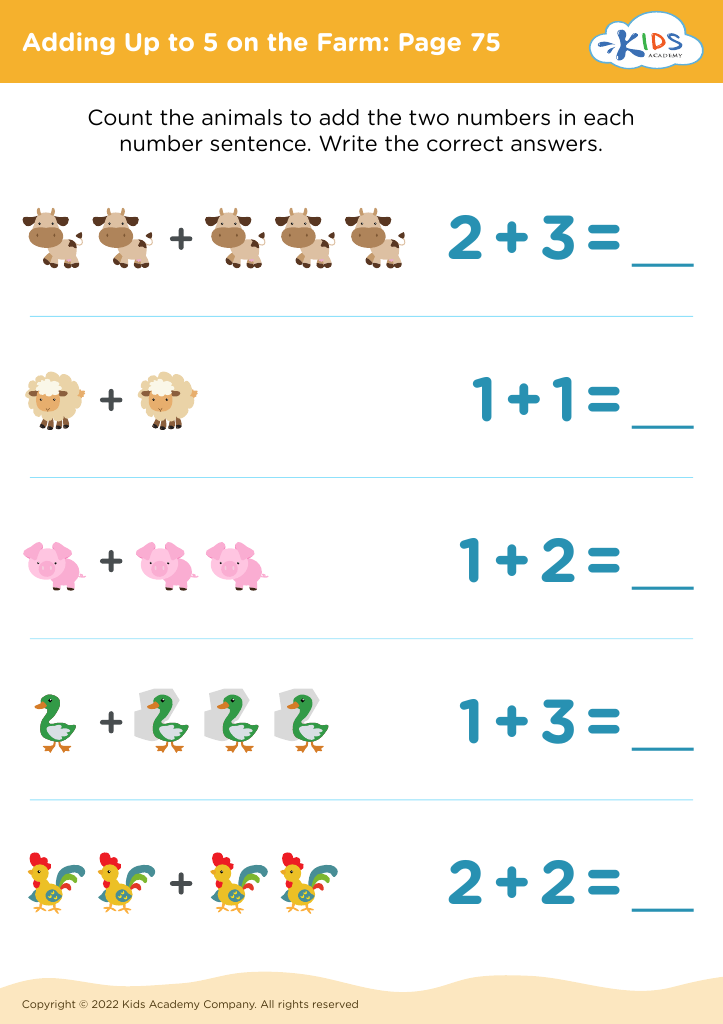
Adding Up to 5 on the Farm: Page 75
Worksheet
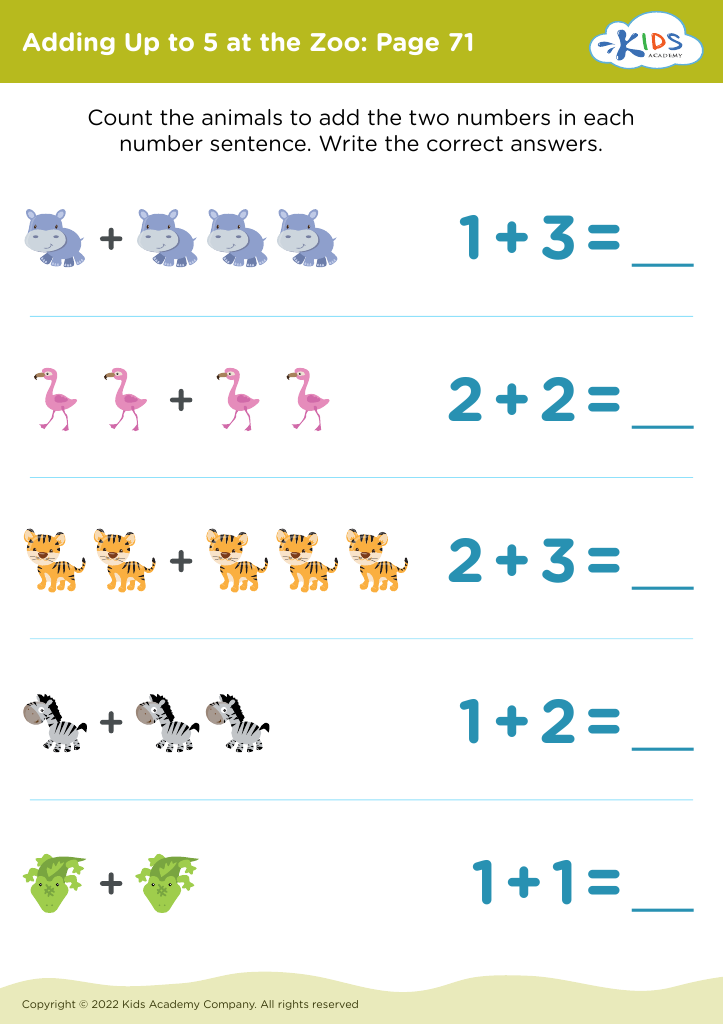
Adding Up to 5 at the Zoo: Page 71
Worksheet
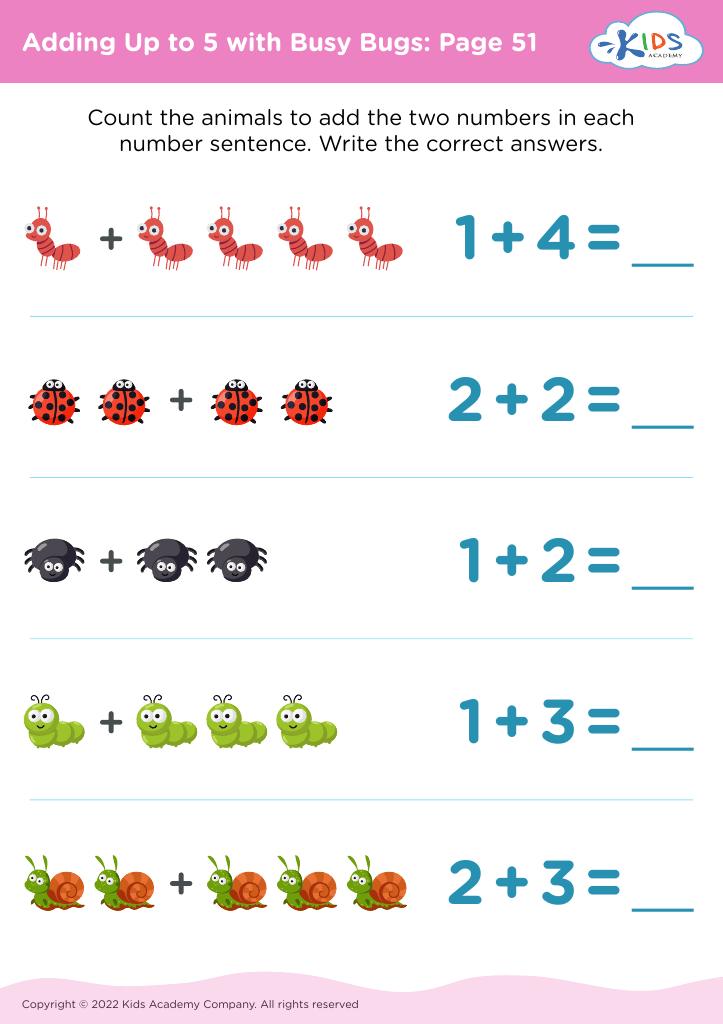
Adding Up to 5 with Busy Bugs: Page 51
Worksheet
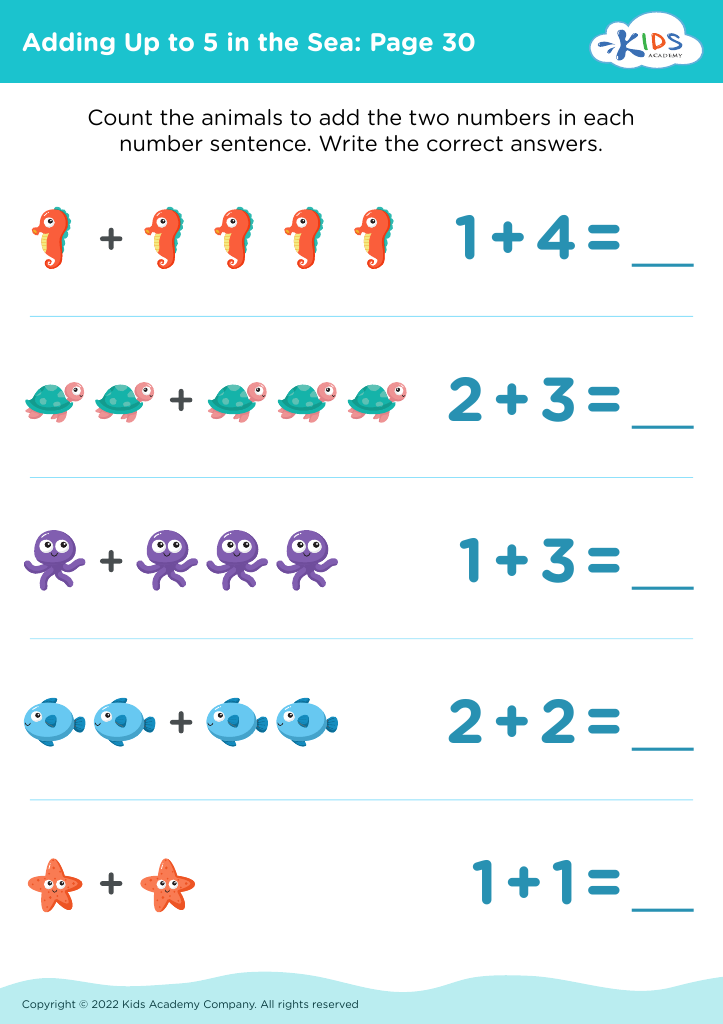
Adding Up to 5 in the Sea: Page 30
Worksheet
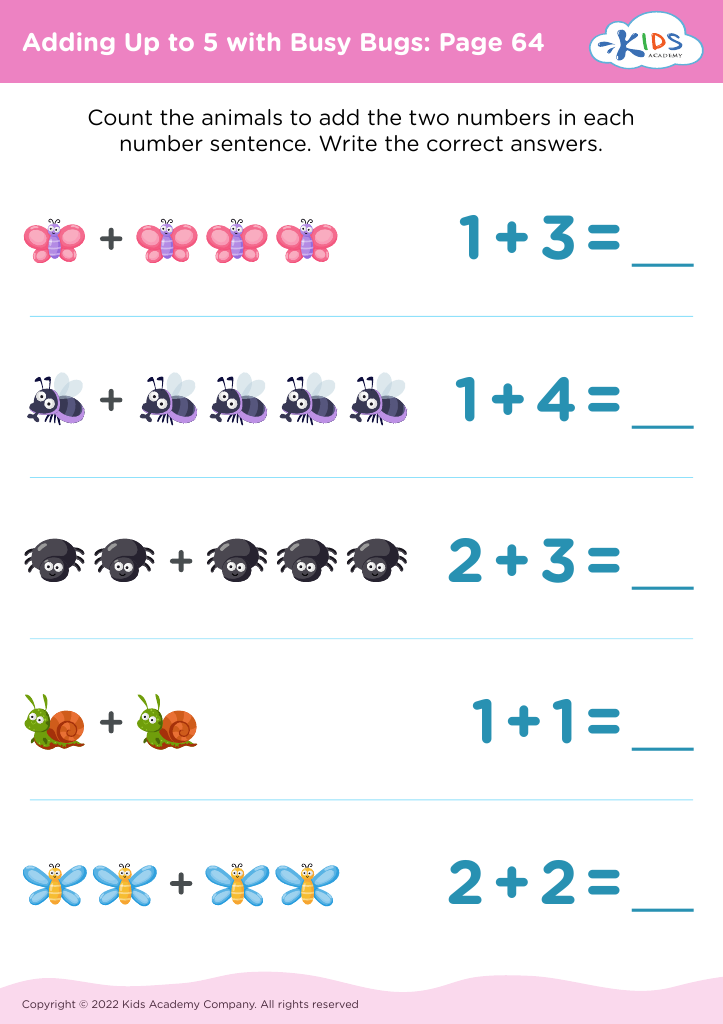
Adding Up to 5 with Busy Bugs: Page 64
Worksheet
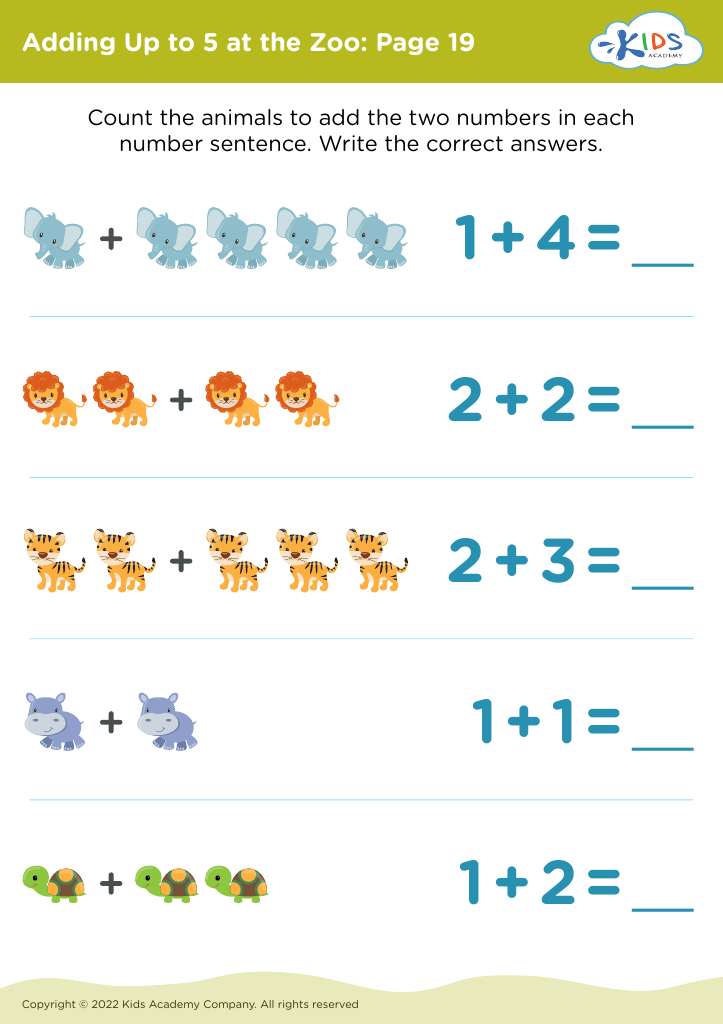
Adding Up to 5 at the Zoo: Page 19
Worksheet
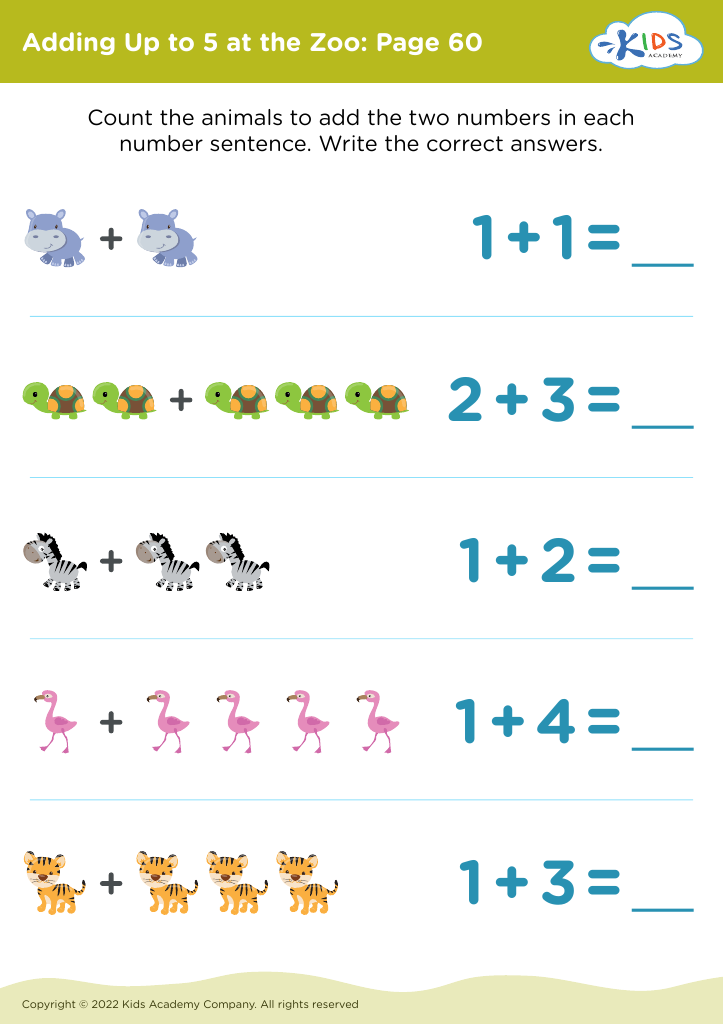
Adding Up to 5 at the Zoo: Page 60
Worksheet
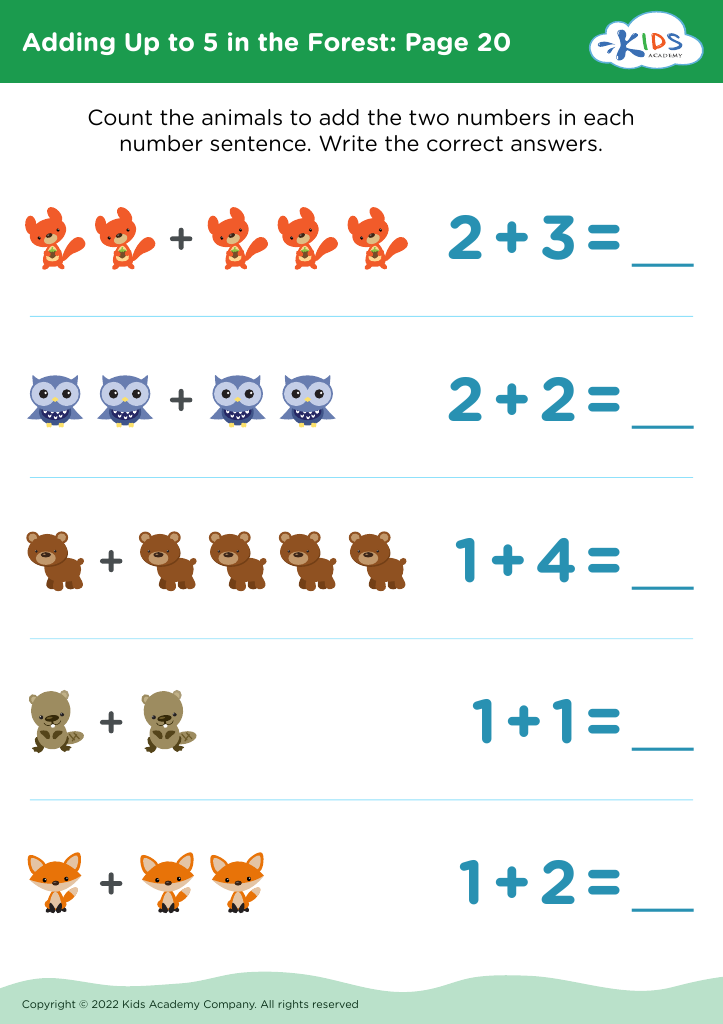
Adding Up to 5 in the Forest: Page 20
Worksheet
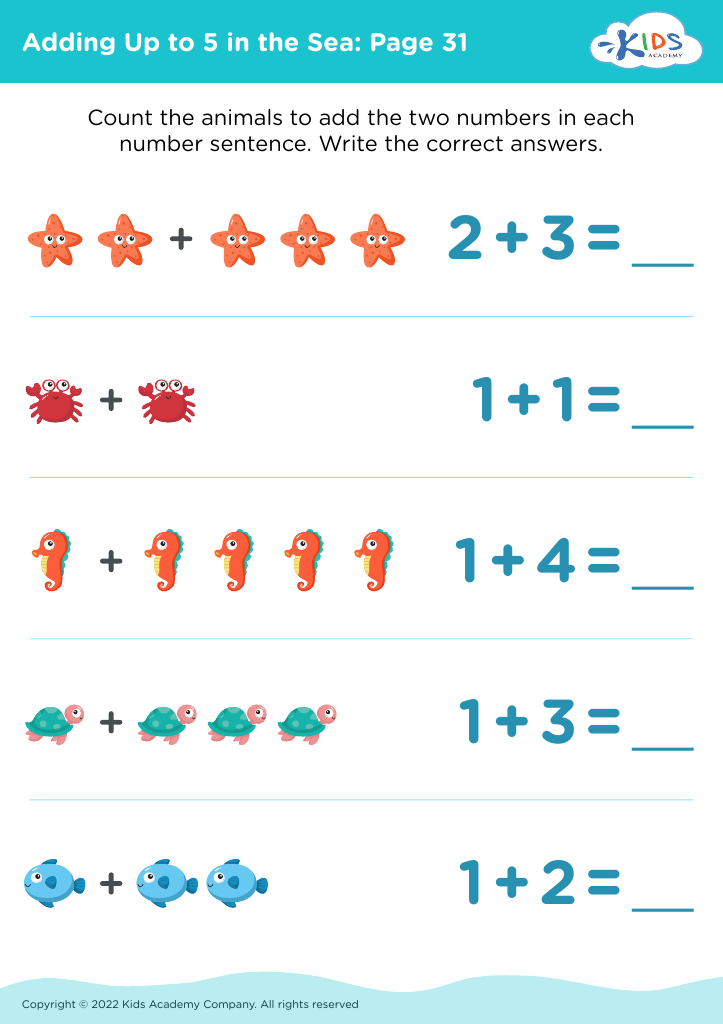
Adding Up to 5 in the Sea: Page 31
Worksheet
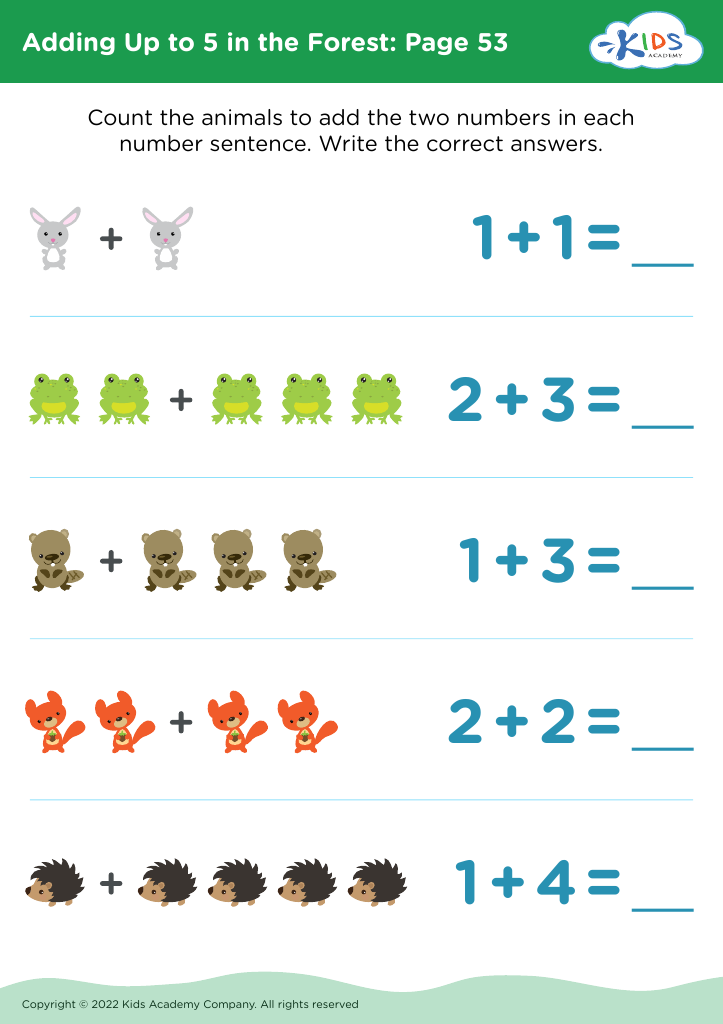
Adding Up to 5 in the Forest: Page 53
Worksheet
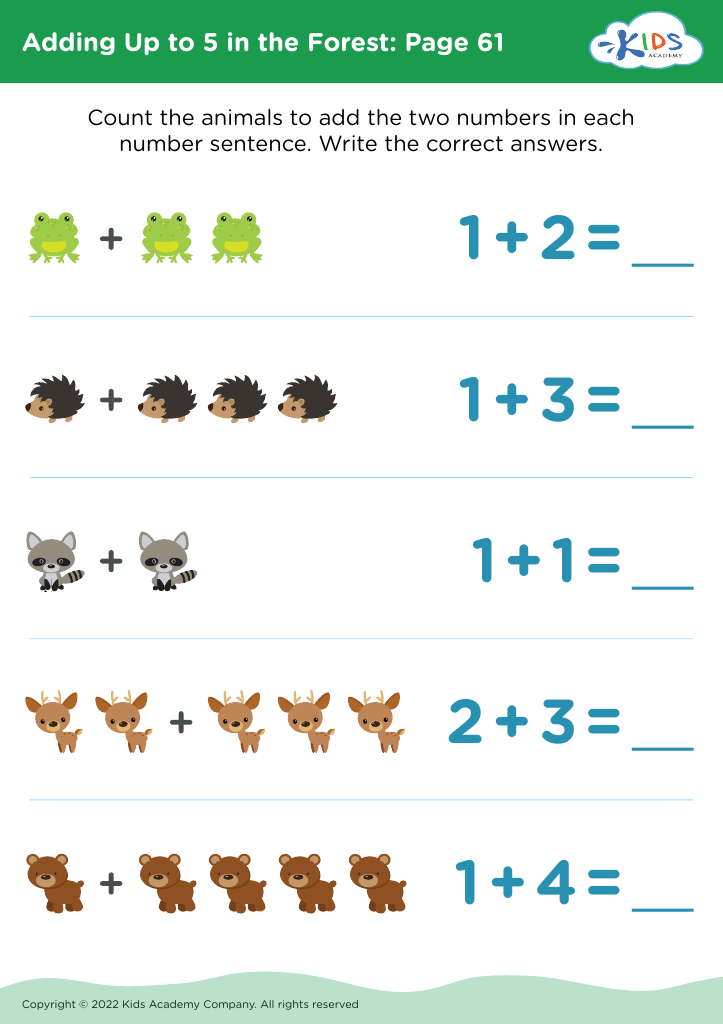
Adding Up to 5 in the Forest: Page 61
Worksheet
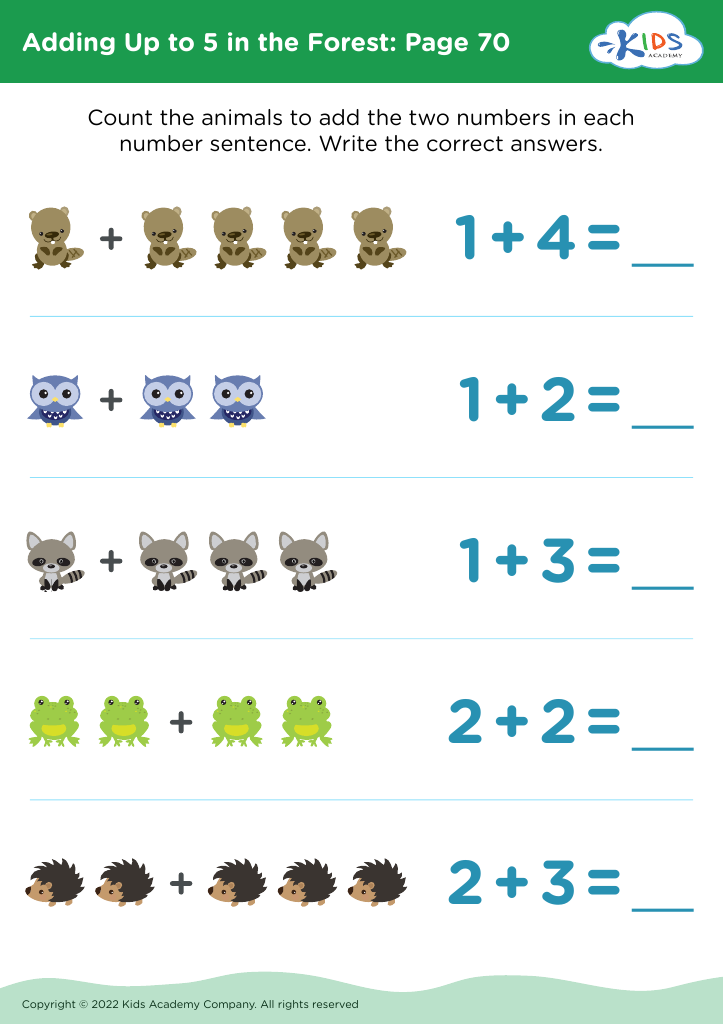
Adding Up to 5 in the Forest: Page 70
Worksheet
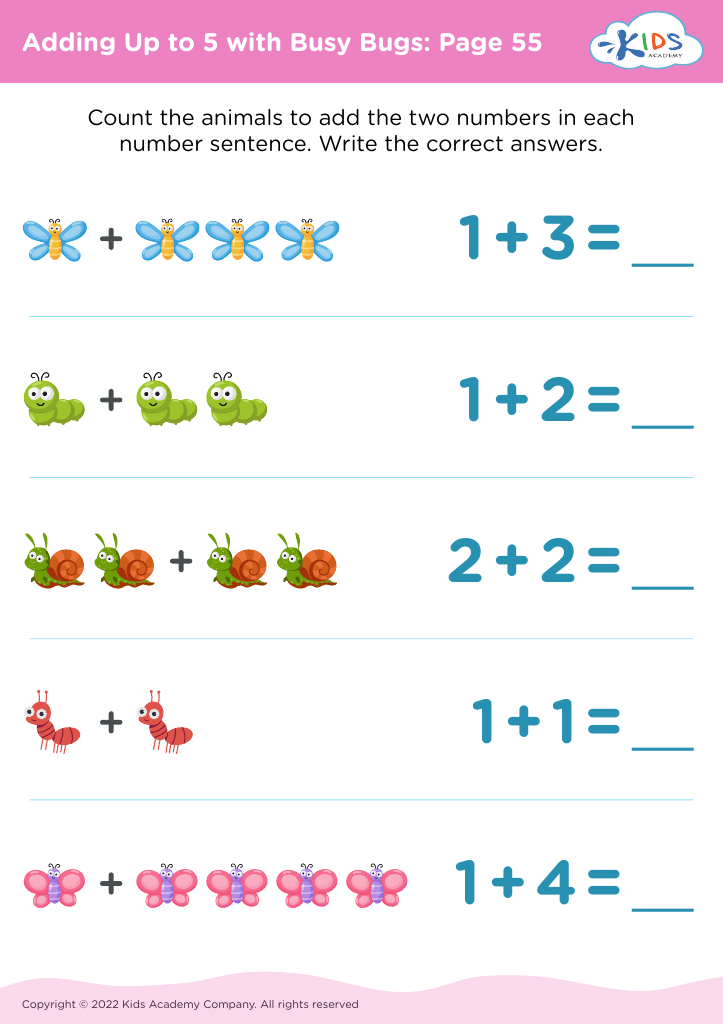
Adding Up to 5 with Busy Bugs: Page 55
Worksheet
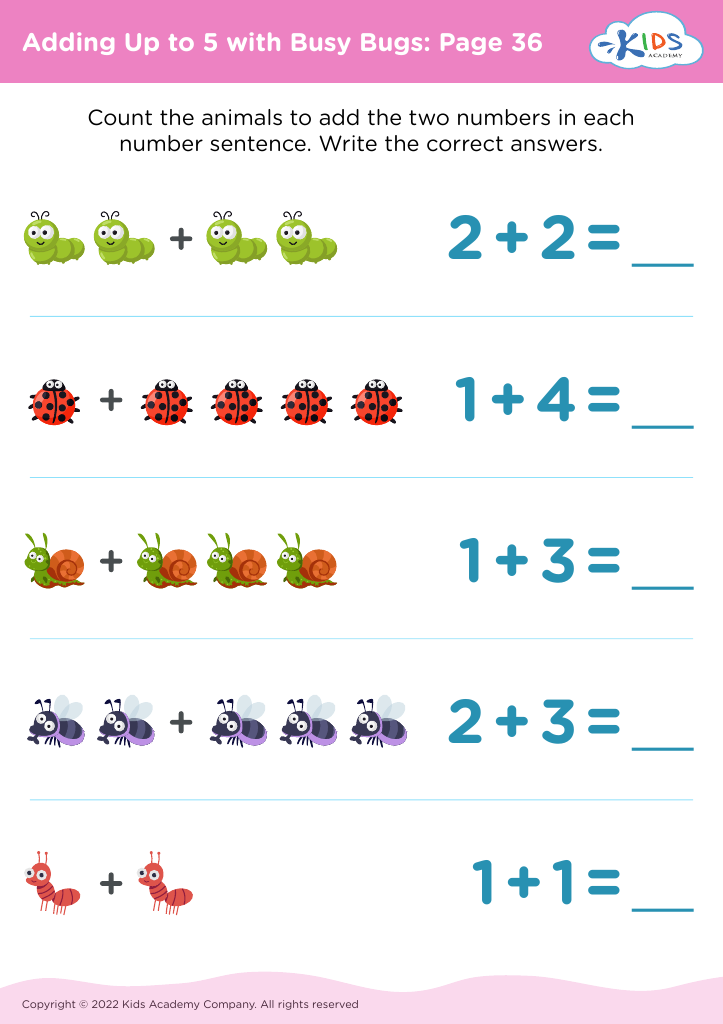
Adding Up to 5 with Busy Bugs: Page 36
Worksheet
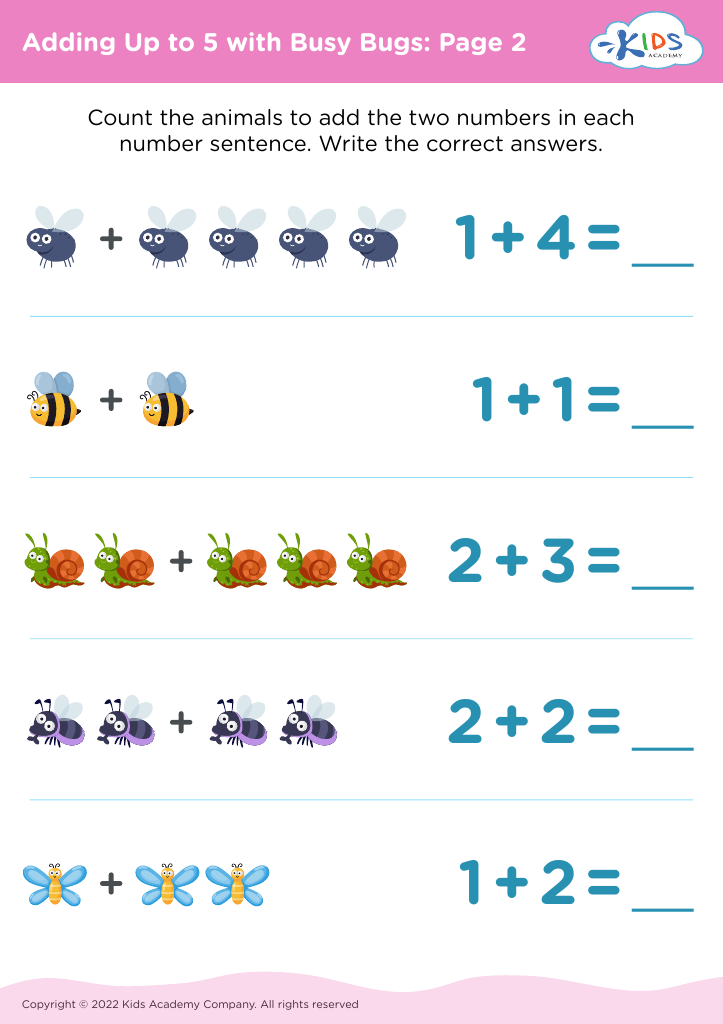
Adding Up to 5 with Busy Bugs: Page 2
Worksheet
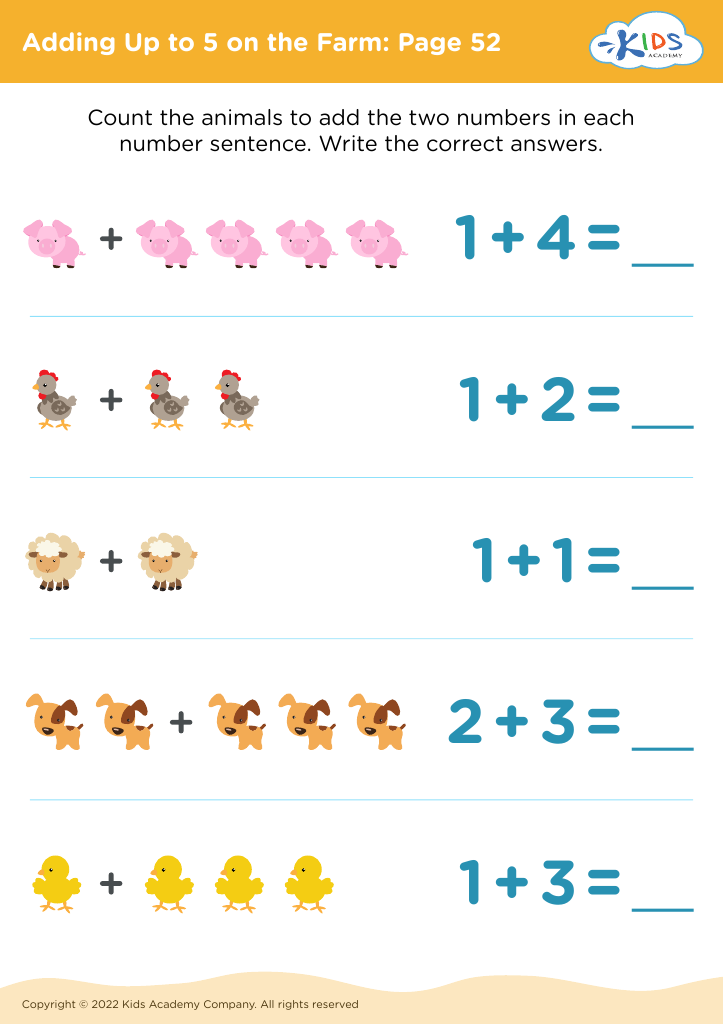
Adding Up to 5 on the Farm: Page 52
Worksheet
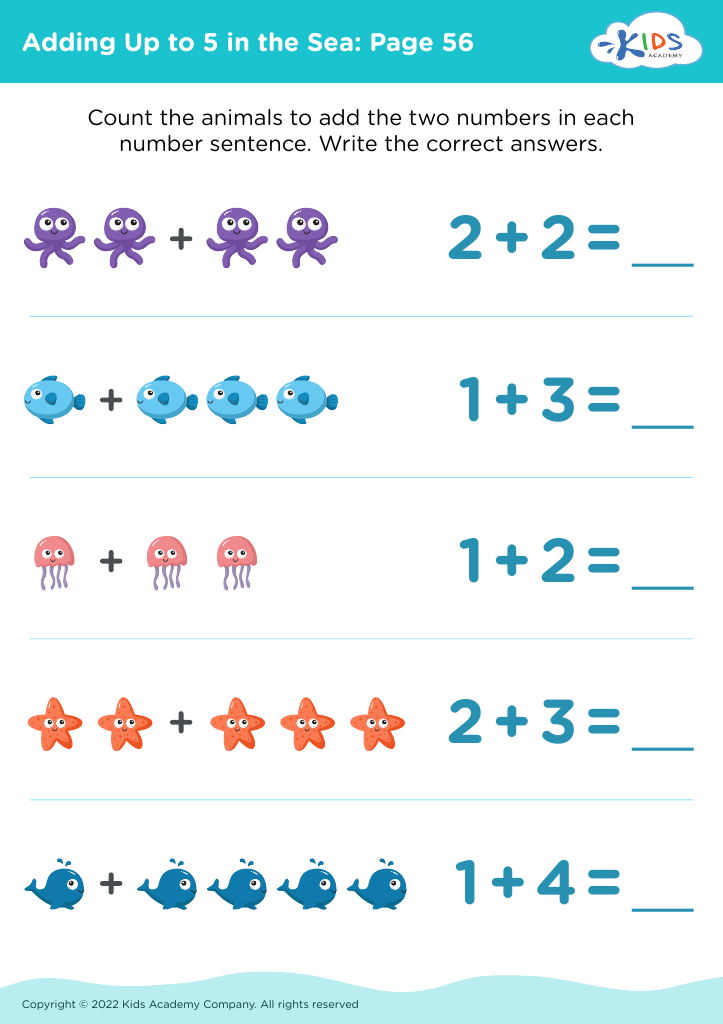
Adding Up to 5 in the Sea: Page 56
Worksheet


Number recognition and addition skills are foundational to early mathematics education for 5-year-olds, making them essential for parents and teachers to prioritize. Understanding numbers allows children to comprehend quantities, establish a sense of value, and engage in basic mathematical operations. Developing number recognition nurtures cognitive abilities and spatial awareness while laying the groundwork for more complex math concepts in future grades.

Additionally, learning basic addition fosters problem-solving abilities and logical reasoning, skills that extend beyond math and benefit overall academic achievement. When children are confident in their ability to recognize numbers and perform additions, it promotes a positive attitude toward learning and encourages them to explore mathematical concepts with enthusiasm.

Moreover, early exposure to these skills enhances concentration and memory, inviting children to engage with games and activities that reinforce learning in a fun, interactive manner. It also sets the stage for meaningful parent-teacher communication, allowing caregivers to support learning at home. By prioritizing number recognition and addition, parents and teachers empower children to navigate their educational journeys confidently, promoting lifelong learning and critical thinking skills essential for success in an increasingly math-oriented world.