Problem Solving Addition Worksheets for 5-Year-Olds
12 filtered results
-
From - To
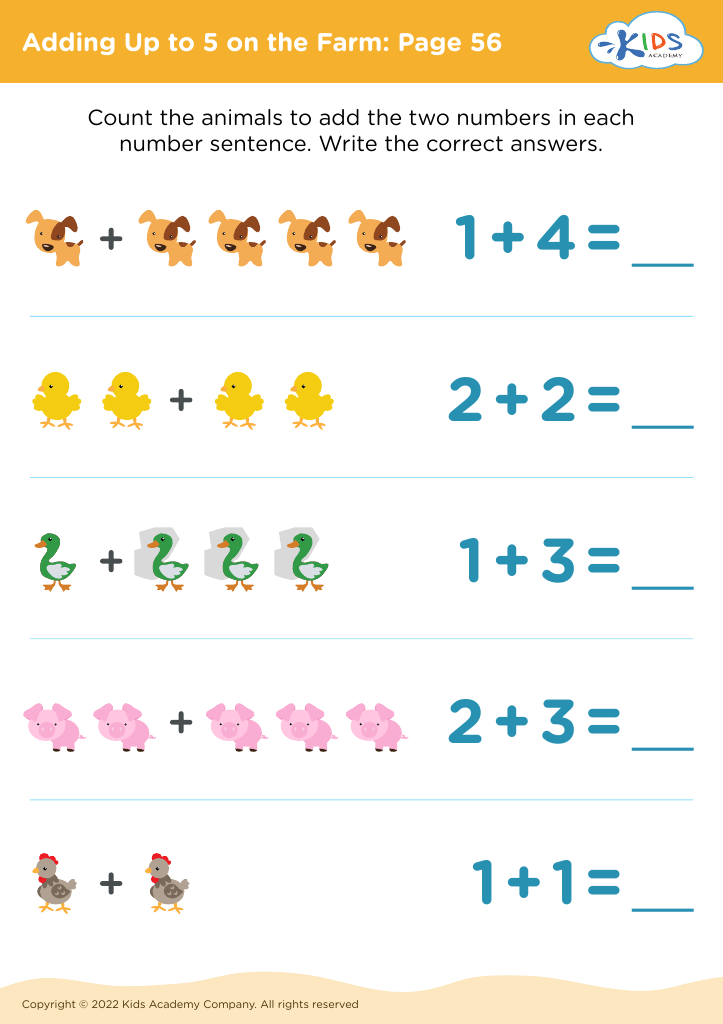
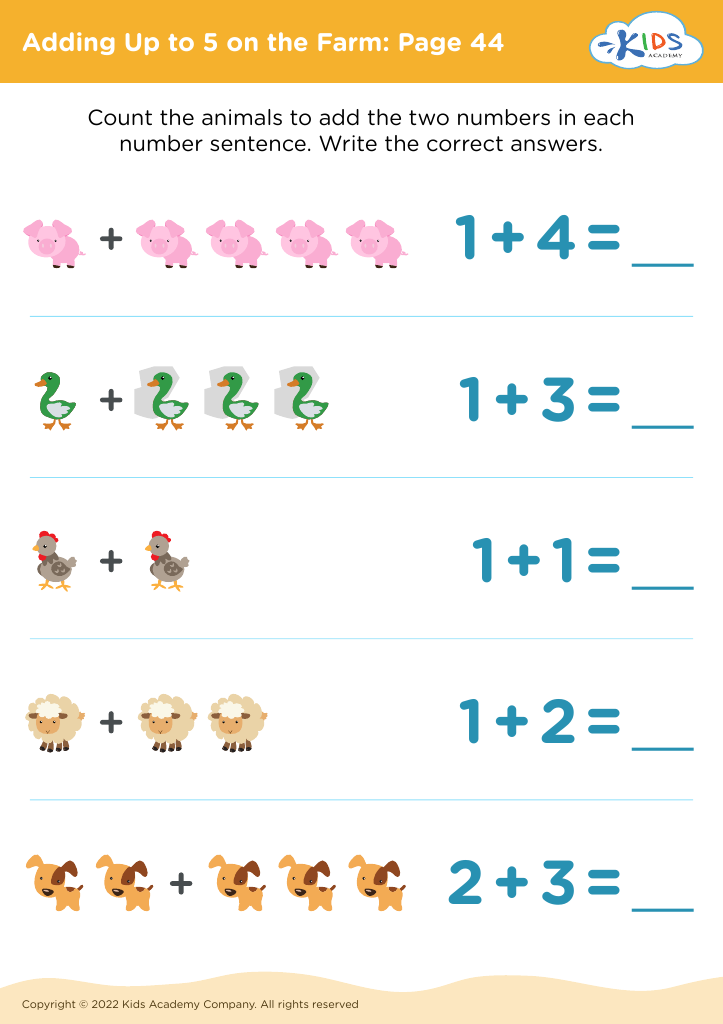
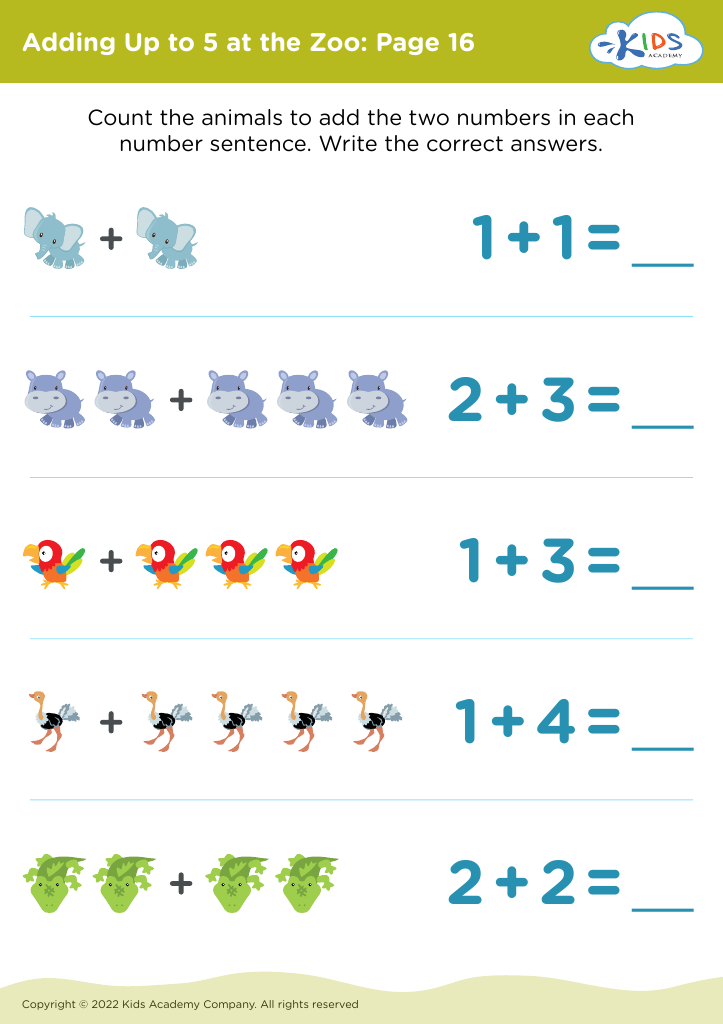
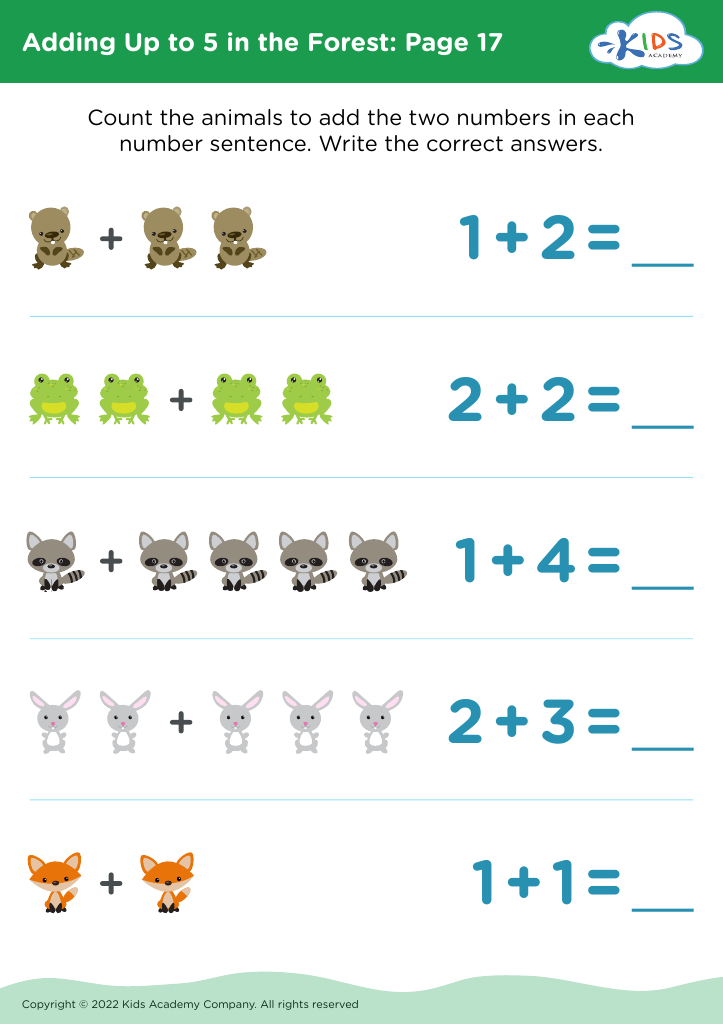
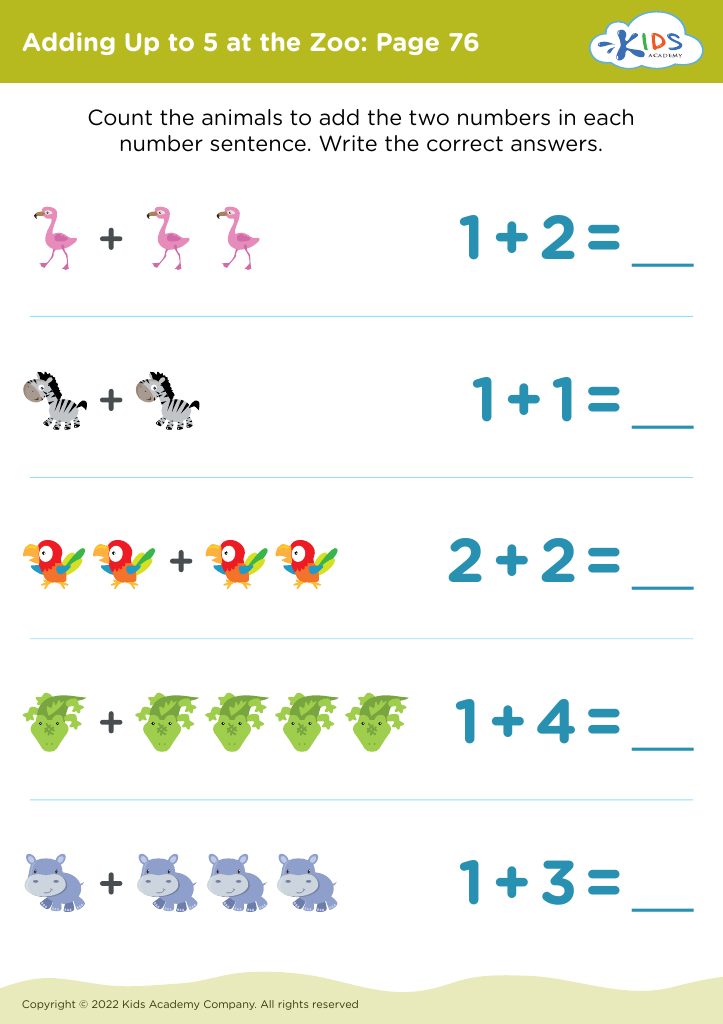
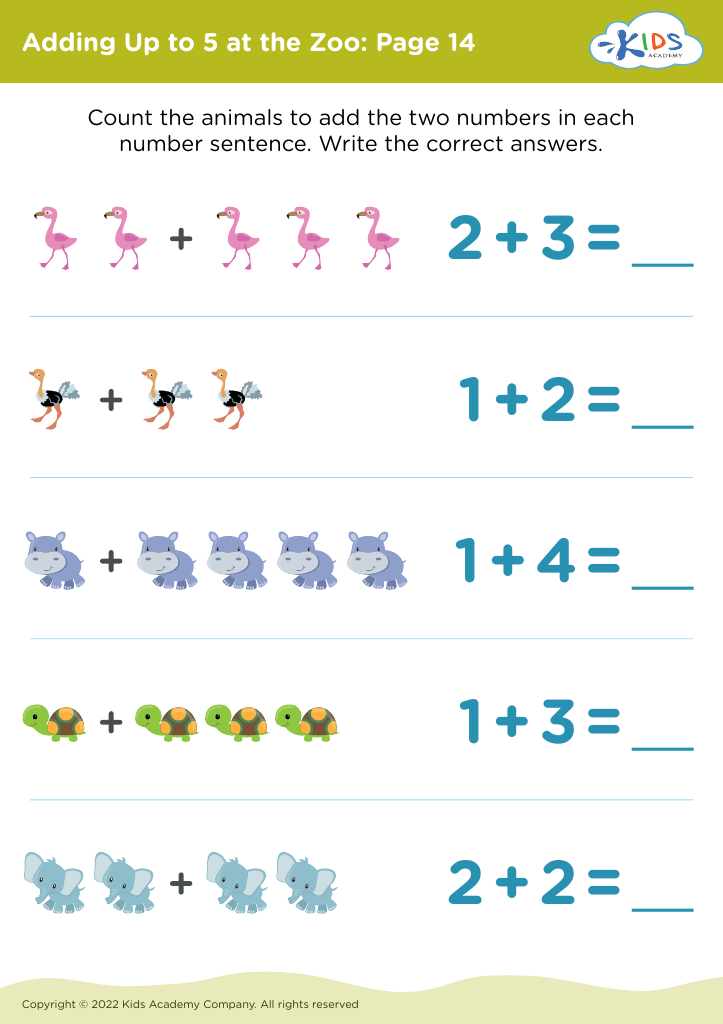
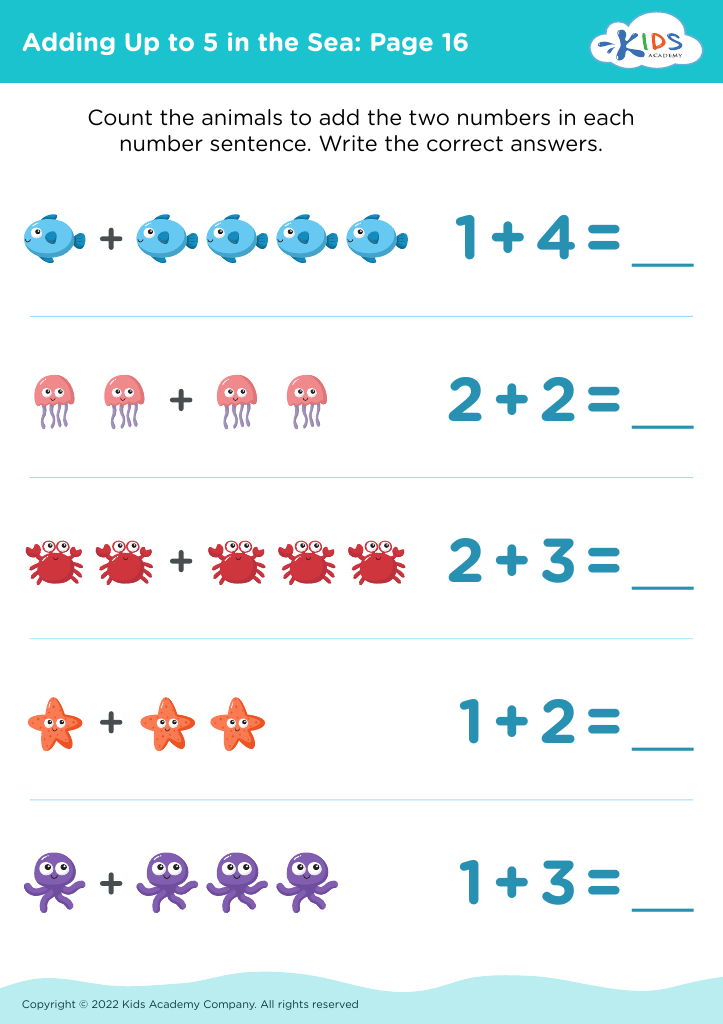
Help your 5-year-old excel in math with our Problem Solving Addition Worksheets! Expertly designed to foster critical thinking and number skills, these engaging activities challenge young learners to apply addition concepts to solve problems creatively. With fun and relatable scenarios, your child will enjoy practicing math while developing essential problem-solving abilities. Perfect for at-home learning or classroom use, these worksheets provide clear instructions and delightful illustrations to keep kids motivated. Unlock your child's potential and make learning addition a joyful adventure with our thoughtfully crafted resources. Transform addition practice into a fun and enriching experience today!
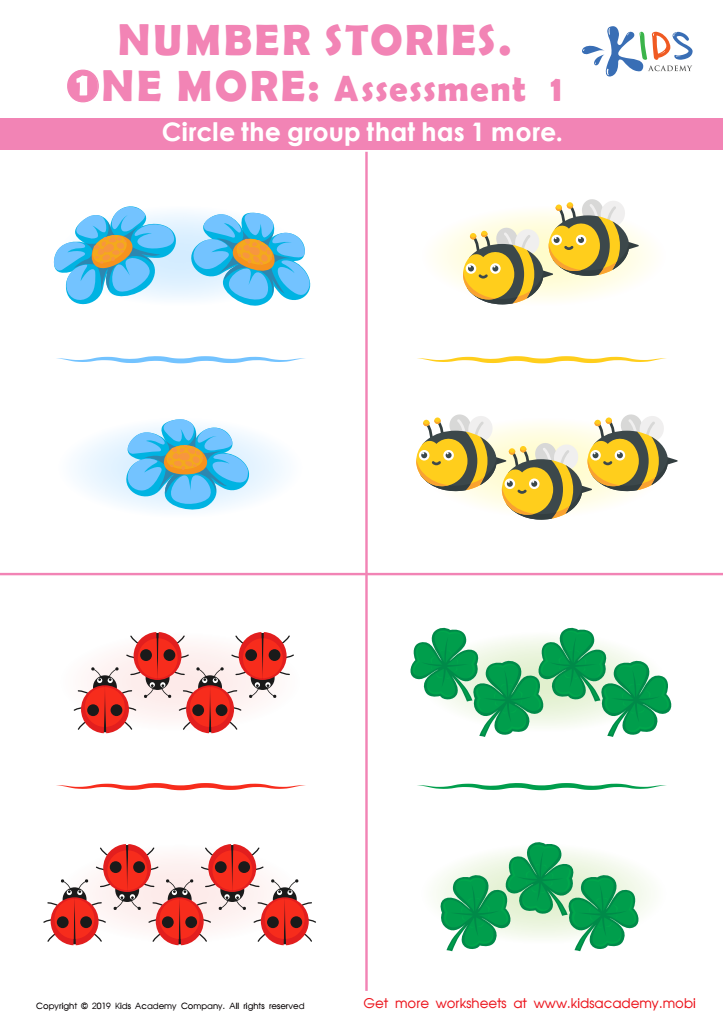
Number Stories One More – Assessment 1 Worksheet
 Assign to My Students
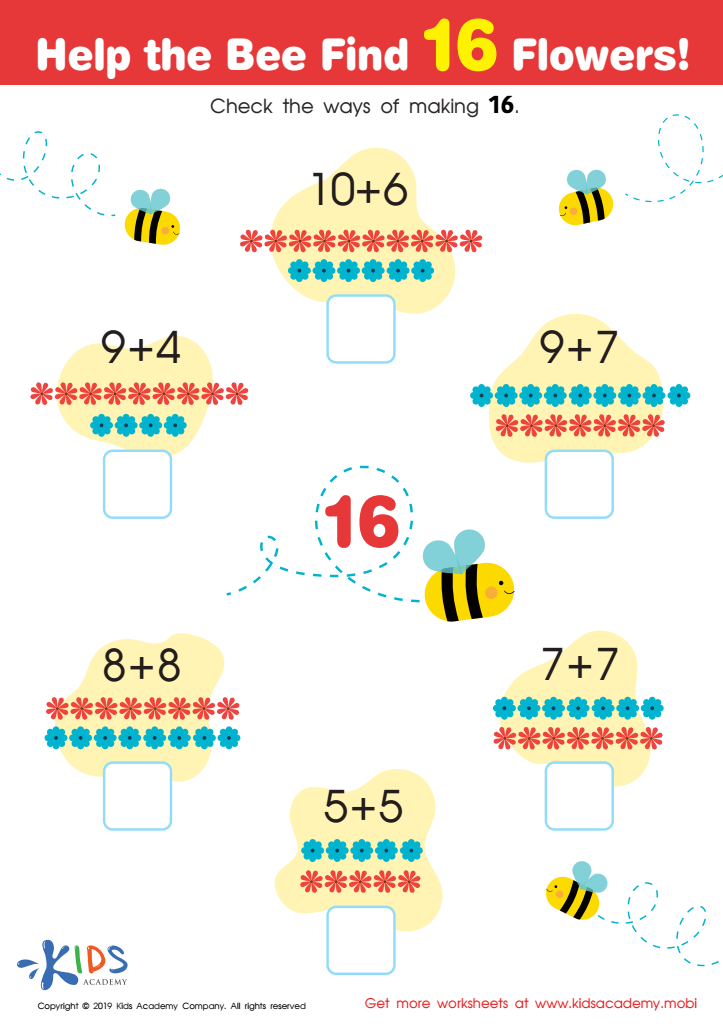
Help the Bee Find 16 Flowers Worksheet







.jpg)
Problem-solving addition for 5-year-olds is a cornerstone in early childhood education, laying the foundational stone for essential cognitive and academic skills. Engaging young children in addition tasks develops their numerical understanding and enhances their ability to think logically, improve concentration, and foster persistence in overcoming challenges. It provides a structured environment where children begin to grasp the concept of quantity and the relationship between numbers, which are pivotal for more advanced mathematical concepts they'll encounter later.
Parents and teachers should care about integrating problem-solving addition because it's not just about learning math—it's about critical thinking and decision-making. When children tackle addition problems, they learn to explore different approaches and solutions. This cognitive flexibility translates into better problem-solving skills in everyday life situations, helping them to adapt and succeed in various scenarios.
Moreover, nurturing a child's ability to solve addition problems at an early age builds their confidence in their intellectual abilities, promoting a positive attitude towards learning. This early encouragement can set a lifelong appreciation for education and resilience when faced with difficult tasks. Thus, parents and teachers can significantly contribute to a child's overall development and future academic success by prioritizing problem-solving addition in early education.








