Understanding number values Addition Worksheets for 5-Year-Olds
3 filtered results
-
From - To
Welcome to our "Understanding Number Values Addition Worksheets" designed specifically for 5-year-olds! These engaging resources help young learners grasp number values and fundamental addition concepts. Each worksheet offers colorful illustrations and interactive exercises, making math fun and accessible. Children will learn to identify numbers, count objects, and solve simple addition problems using various techniques. Our worksheets provide a solid foundation for future math skills while fostering a love of learning. Perfect for home or classroom use, these activities encourage independent thinking and promote confidence in young mathematicians. Download our worksheets today and watch your child's mathematical abilities flourish!
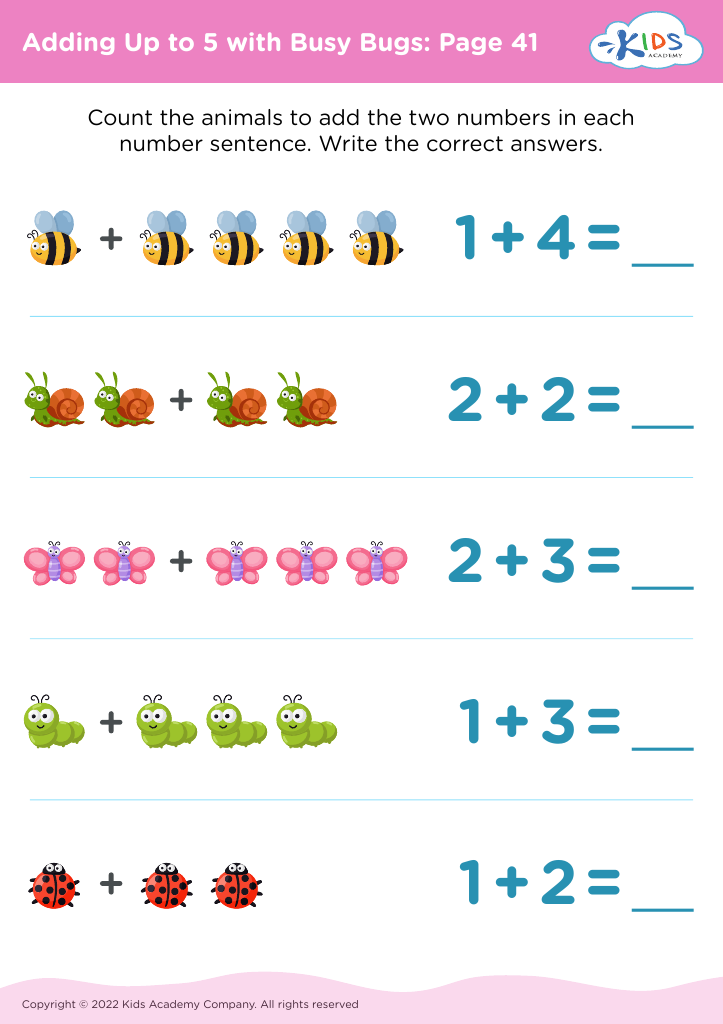
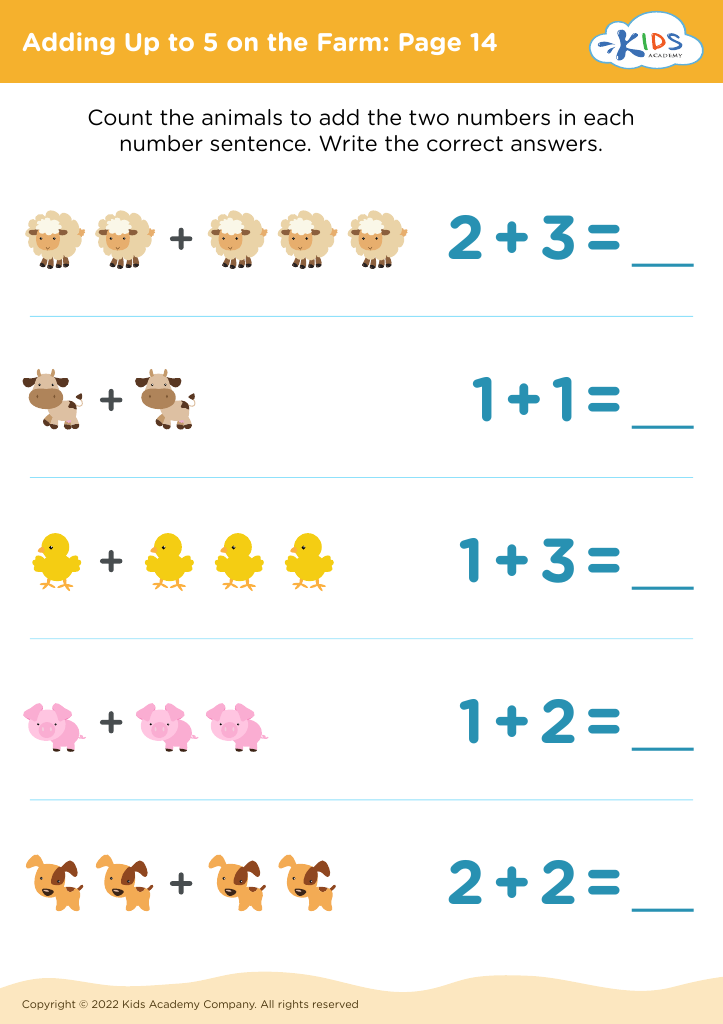
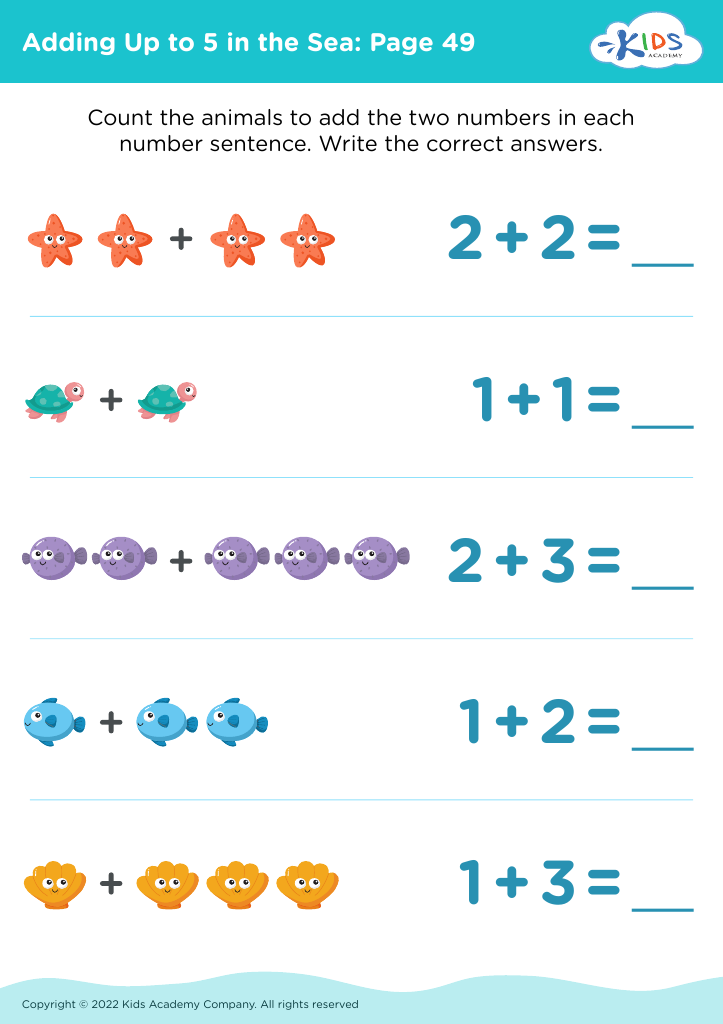








Understanding number values and addition is crucial for 5-year-olds as it forms the foundation of their mathematical skills. At this early age, children are like sponges, eagerly absorbing concepts that will influence their future learning. When parents and teachers prioritize number values and addition, they equip children with essential skills for problem-solving, critical thinking, and logical reasoning.
Number values introduce children to basic counting and the concept of quantity, improving their ability to recognize patterns and relationships between numbers. Addition, on the other hand, fosters a sense of achievement and boosts confidence as children learn to combine quantities. These skills go beyond math, as they enhance cognitive development, improve memory, and refine focus and attention.
Additionally, mastering number values and addition enhances children's communication skills; they learn to articulate their thinking and compare quantities effectively. This foundational knowledge encourages a positive attitude toward math, reducing anxiety and fostering lifelong learning.
By engaging in fun activities like games, songs, and stories related to number values and addition, parents and teachers can the love for math early on, creating a strong foundation for academic success and future problem-solving in daily life situations. Prioritizing these concepts can significantly impact their overall development.








