Understanding numbers Addition Worksheets for 5-Year-Olds
3 filtered results
-
From - To
Welcome to our "Understanding Numbers Addition Worksheets" for 5-year-olds! Designed to make math fun and engaging, these worksheets help young learners grasp foundational addition concepts. Through colorful visuals and interactive exercises, children will explore number relationships and practice adding with ease. Our materials support skill-building in a playful manner, allowing kids to connect with math while enhancing their problem-solving abilities. Perfect for home or classroom use, these worksheets foster confidence and encourage a love for learning. Join us in laying the groundwork for a strong mathematical foundation as your little one embarks on their journey to becoming a math whiz!
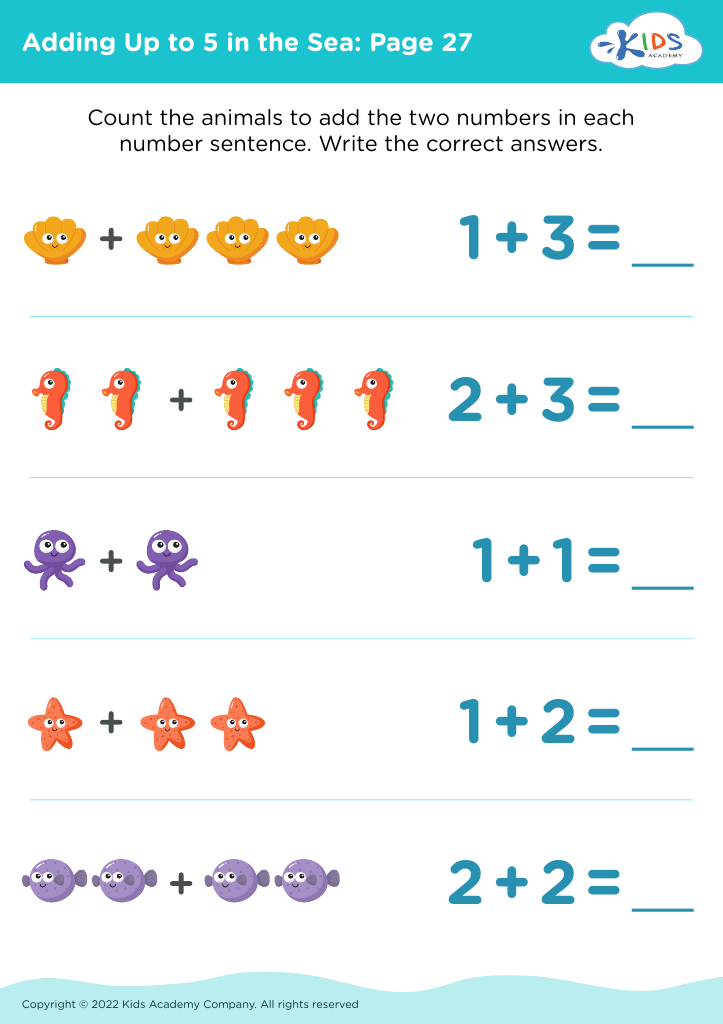
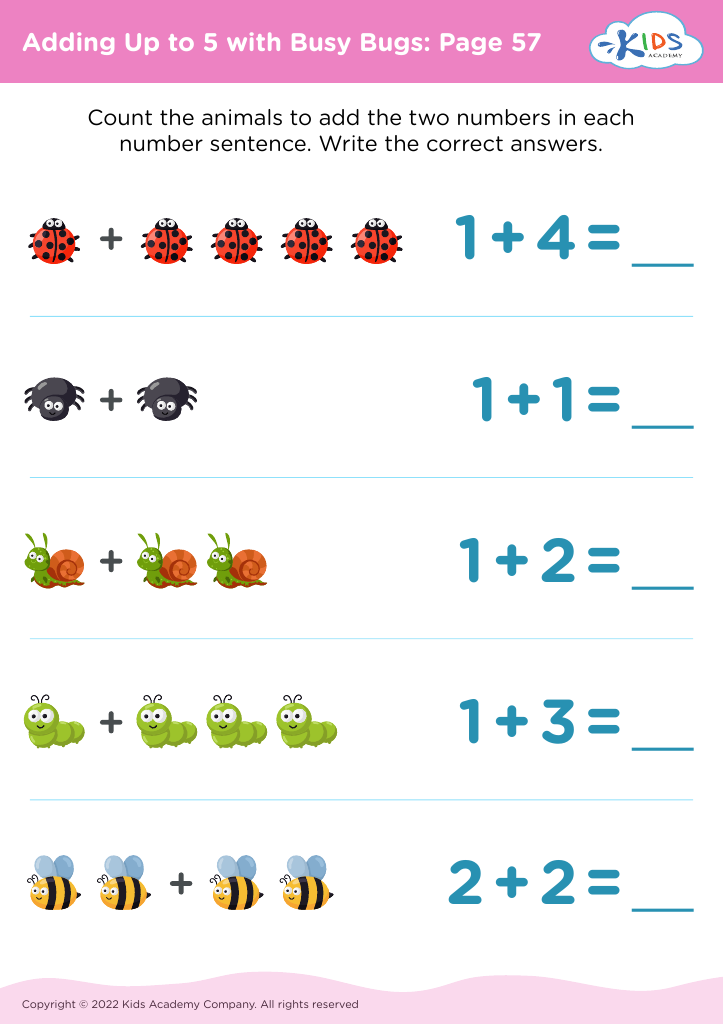
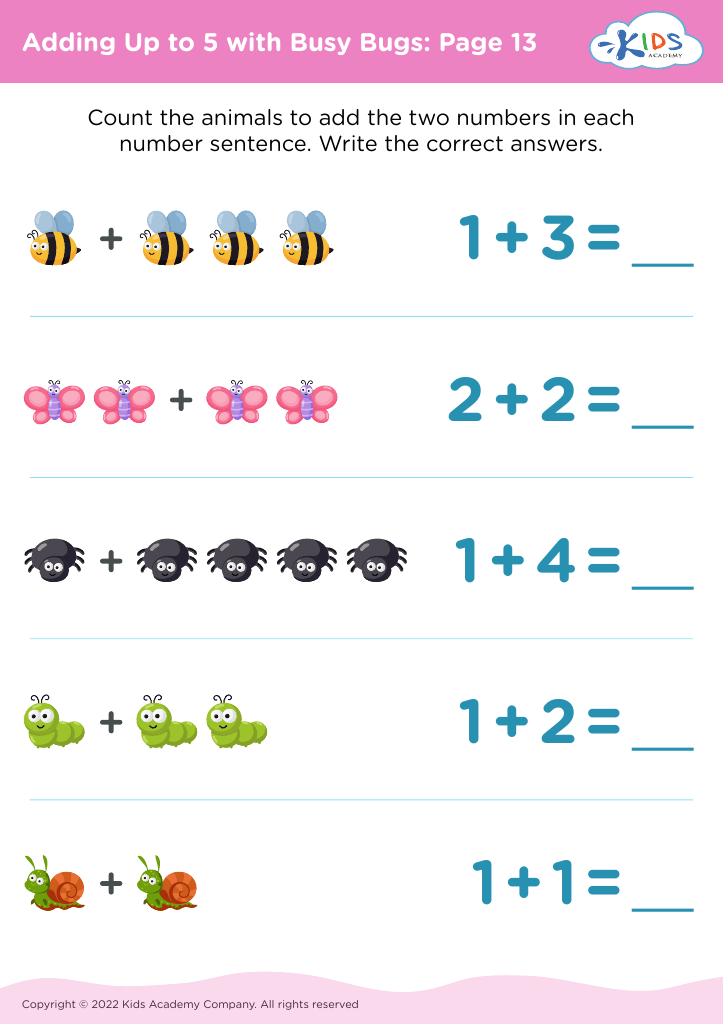








Understanding numbers and addition is a foundational skill for 5-year-olds that impacts their future educational success. At this age, children's brains are rapidly developing, and engaging them with mathematical concepts can enhance their cognitive and problem-solving skills. Recognizing numbers and grasping the basics of addition fosters critical thinking and builds a solid mathematical foundation that will benefit them in more complex math later in their education.
Furthermore, learning these concepts helps improve children's fine motor skills through activities like counting objects or using manipulatives, making the process both educational and enjoyable. It also promotes social skills when kids work together in pairs or groups, encouraging communication and teamwork.
By involving parents and teachers in the process, children can receive consistent support and encouragement, reinforcing their learning at school and at home. Ultimately, early understanding of numbers and addition fosters confidence in young learners, setting them up for success in academics, encouraging a positive attitude towards math, and preparing them with skills necessary for everyday life, such as budgeting and problem-solving. This foundational knowledge creates lifelong learners and critical thinkers, ensuring they thrive in future educational pursuits.








