Understanding numeracy Addition Worksheets for 5-Year-Olds
4 filtered results
-
From - To
Explore our engaging "Understanding Numeracy Addition Worksheets for 5-Year-Olds," designed to make learning addition fun and interactive! These worksheets focus on foundational math skills, helping young learners grasp the concept of addition through colorful visuals and relatable examples. With a variety of activities, children will practice basic addition, enhancing their number recognition and counting abilities. Our carefully crafted worksheets cater to different learning styles, ensuring that each child gains confidence in their numeracy skills. Ideal for parents and educators, our resources provide a structured yet enjoyable way for 5-year-olds to embark on their mathematical journey. Start building their math foundation today!
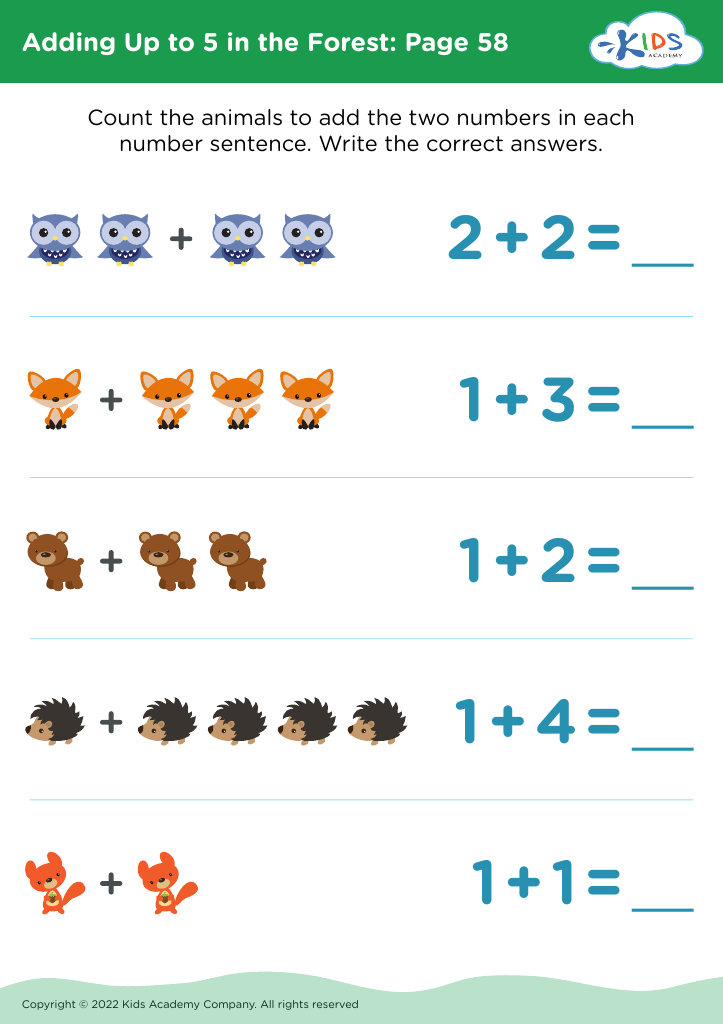
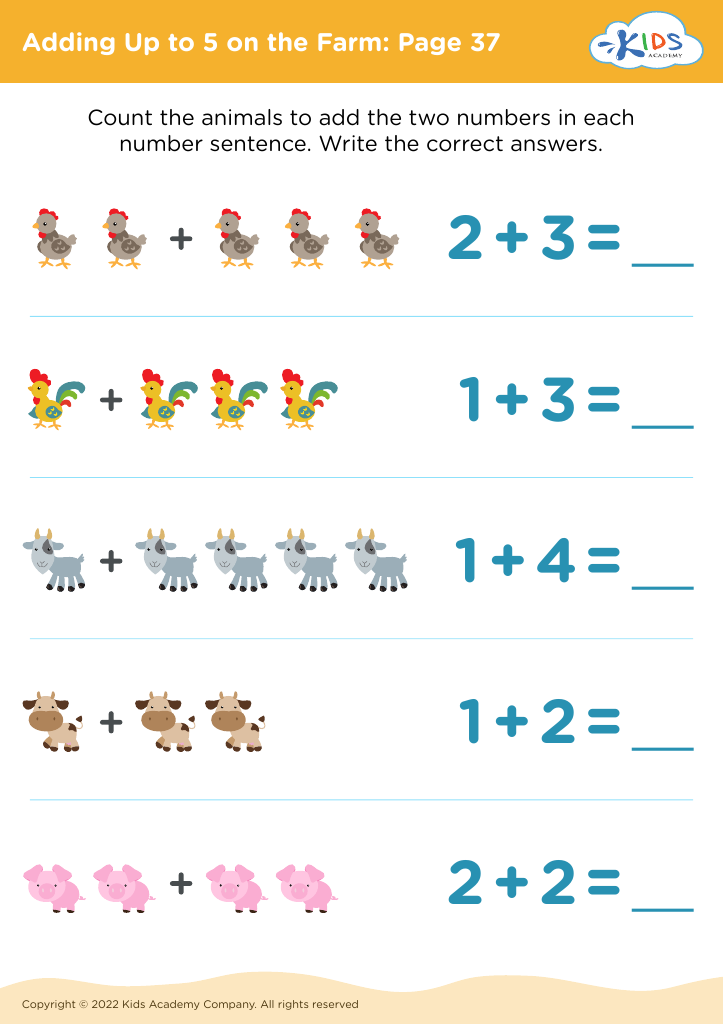
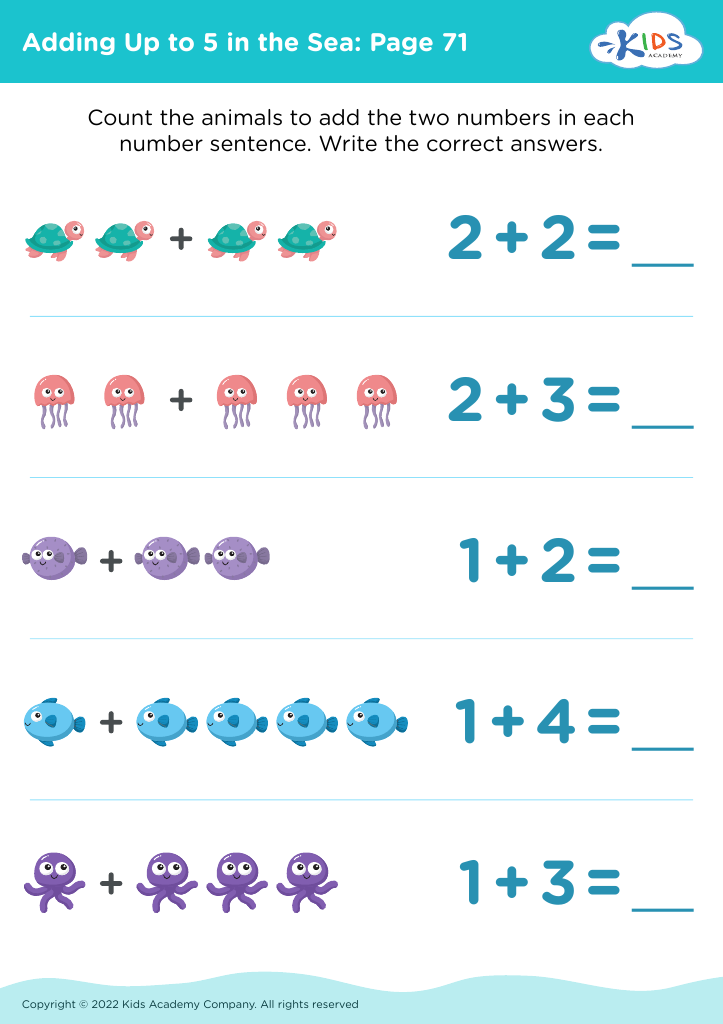
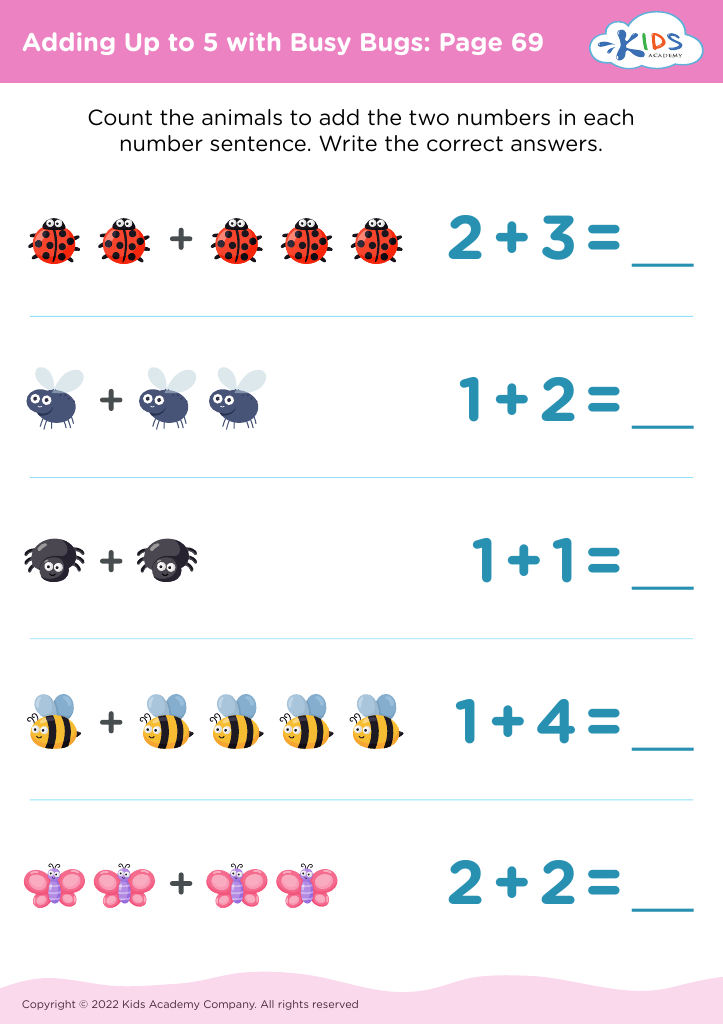








Understanding numeracy, particularly addition, is pivotal in a 5-year-old's educational journey. At this age, children are beginning to develop foundational math skills that will influence their cognitive growth and critical thinking abilities. Adding numbers introduces them to the world of mathematical concepts, such as quantity, number sense, and problem-solving. Early addition helps lay the groundwork for future mathematical learning, making it crucial for parents and teachers to prioritize this skill.
Moreover, mastering addition fosters confidence in young learners. As they grasp the concept of combining quantities, children start to experience success, which is essential for their self-esteem and willingness to engage with more complex math later on. It also provides opportunities for hands-on learning through play, utilizing everyday situations—like counting fruits at snack time—making the process relatable and enjoyable.
Additionally, numeracy skills extend beyond academics. They help children develop logic, pattern recognition, and even language skills as they learn to articulate their understanding of numbers. Therefore, nurturing a solid grasp of addition during early childhood paves the way for holistic development, ultimately equipping children for long-term academic success and real-world problem-solving. Teachers and parents should work collaboratively to foster this important capability in young learners.








