Understanding numerical values Addition Worksheets for 5-Year-Olds
4 filtered results
-
From - To
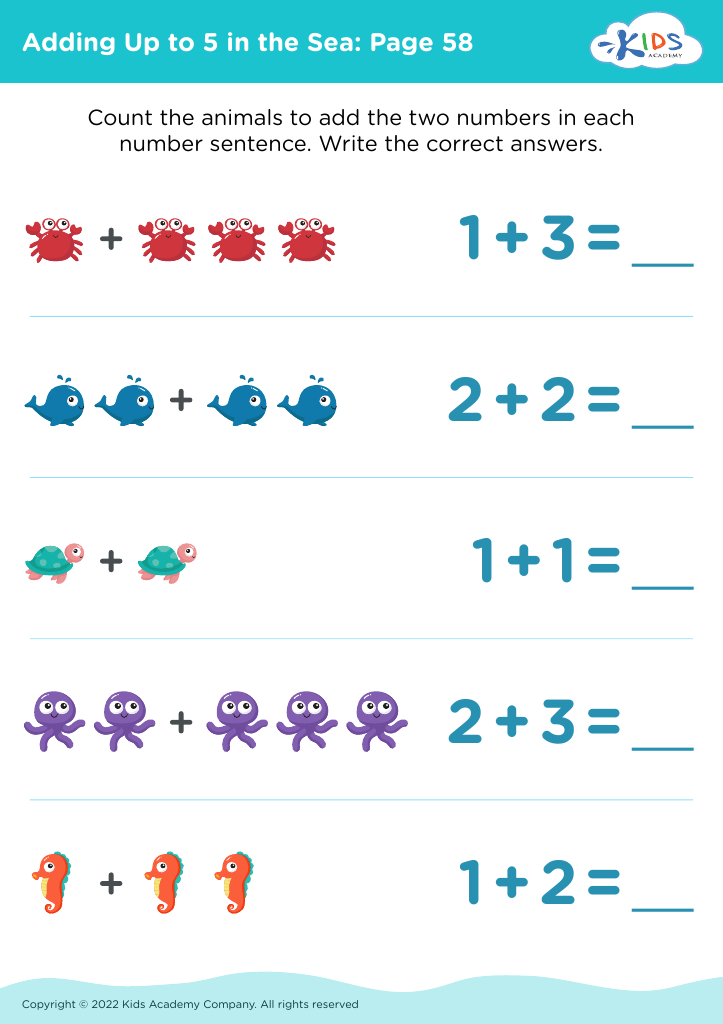
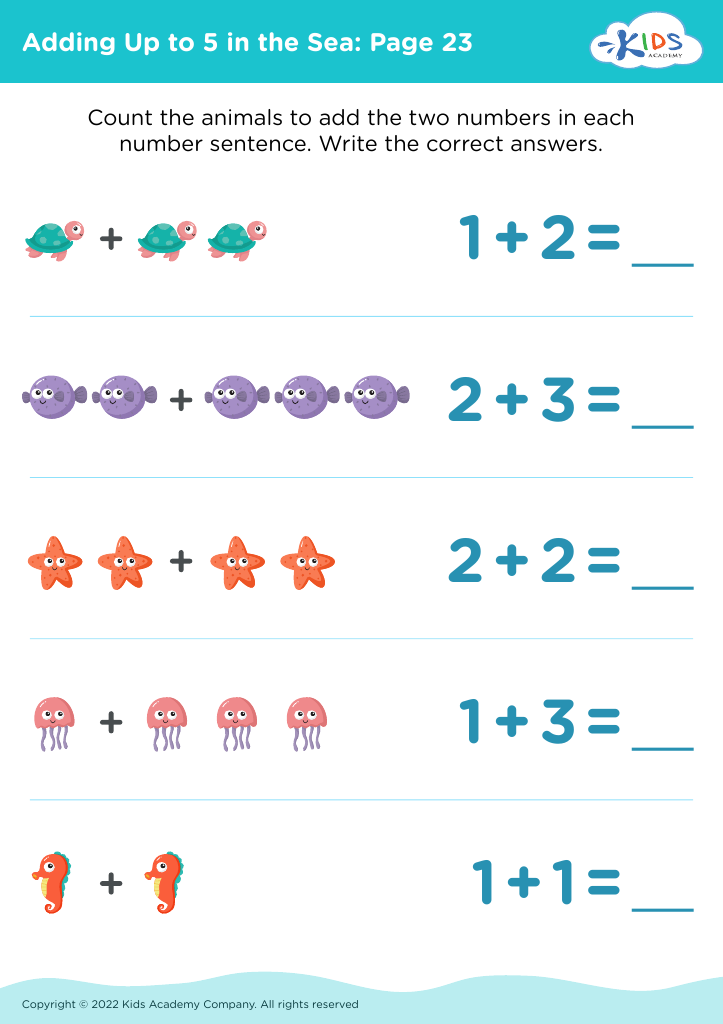
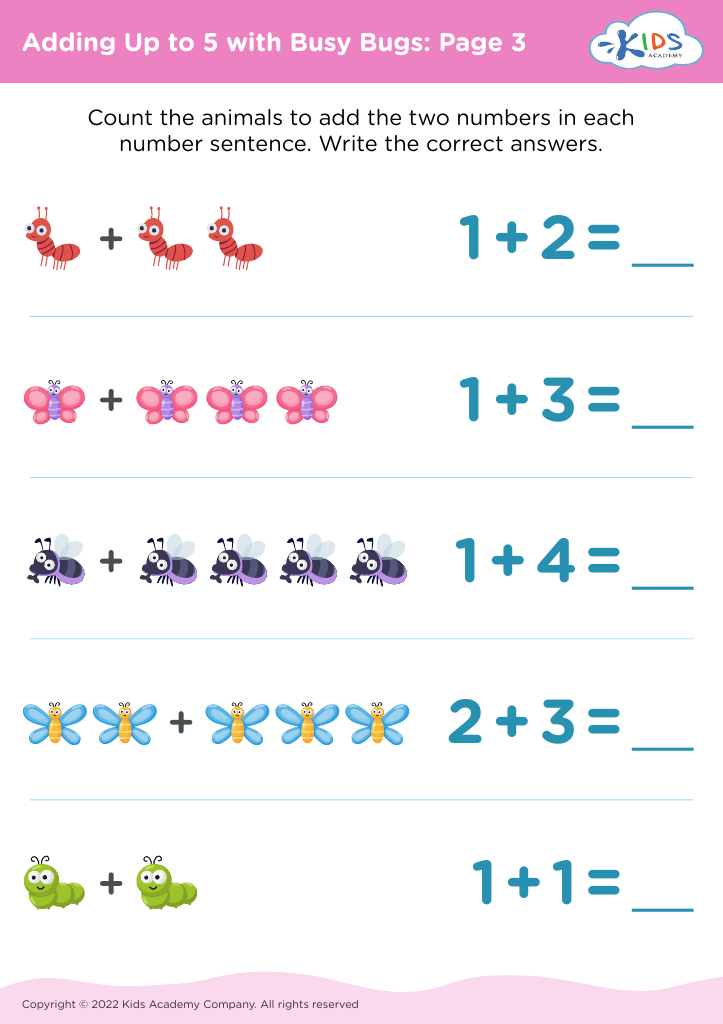
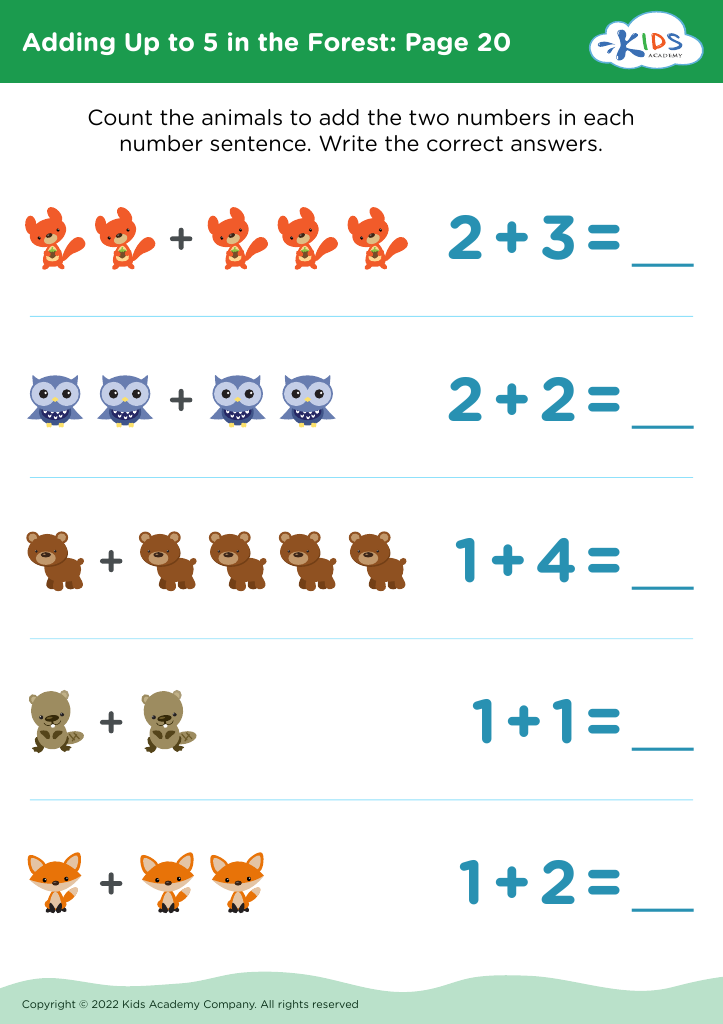
Welcome to our "Understanding Numerical Values Addition Worksheets for 5-Year-Olds"! This resource is designed to help young learners grasp the foundational concepts of numbers and addition. Our engaging worksheets provide interactive exercises that promote counting skills and foster a strong number sense. With colorful illustrations and varied activities, children will enjoy exploring numerical values as they practice simple addition. Ideal for reinforcing classroom learning or supporting home education, these worksheets offer a fun and effective way to develop mathematical confidence in early learners. Encourage your child's love for math while building essential skills with our thoughtfully designed activities!




.jpg)



Understanding numerical values and addition is a foundational skill for 5-year-olds that lays the groundwork for future learning in mathematics and problem-solving. At this age, children's cognitive development is crucial; they are beginning to explore mathematical concepts, and early exposure to these skills fosters a positive attitude towards math learning.
Parents and teachers should care about this process because it enhances children's overall cognitive growth and promotes critical thinking skills. Mastering numerical values and addition boosts children's confidence, making them more willing to engage in more complex mathematical tasks later on.
Additionally, these skills are not just about numbers—they are intertwined with daily life experiences. Whether it's counting snacks, measuring ingredients in a recipe, or making change, understanding numerical values helps children grasp real-world applications of math. This knowledge also supports language development, as discussing numbers and operations expands their vocabulary.
Ultimately, early mastery of these concepts helps reduce math anxiety in later grades. By nurturing a strong mathematical foundation and encouraging a love for numbers, parents and teachers can ensure that children develop essential skills that will benefit them throughout their education and beyond.








