Check out this FREE Trial Lesson on Addition for age 5!

Sorting Objects into 3 Categories

Favorites
With answer key
Interactive
  • 5
  • Understanding Quantities
  • Addition
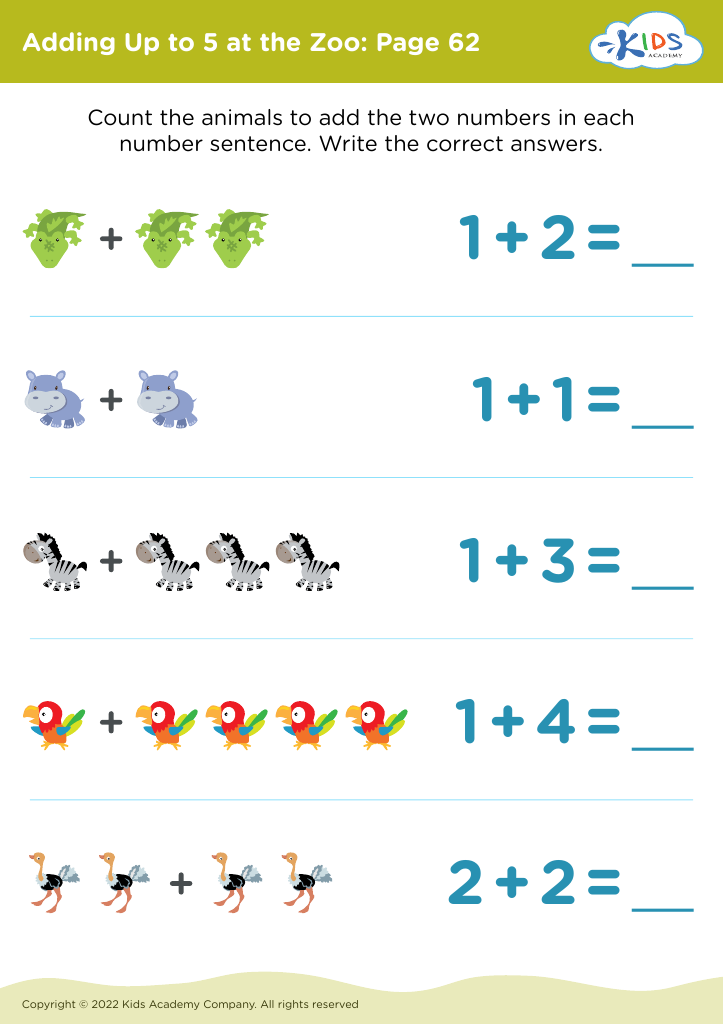
Adding Up to 5 at the Zoo: Page 62
Worksheet
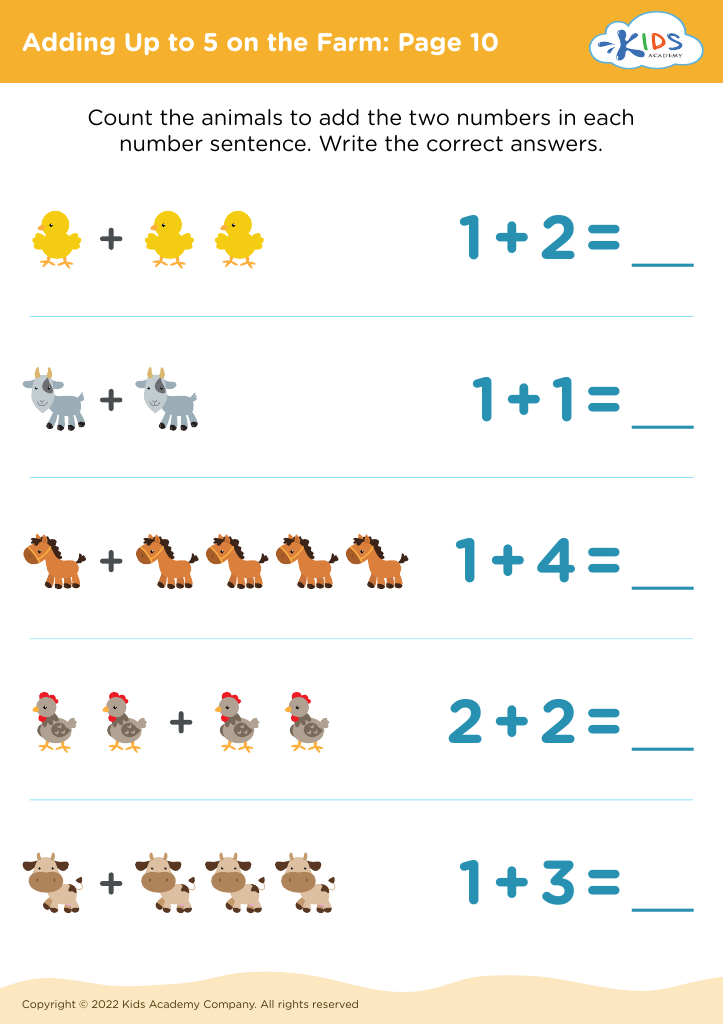
Adding Up to 5 on the Farm: Page 10
Worksheet
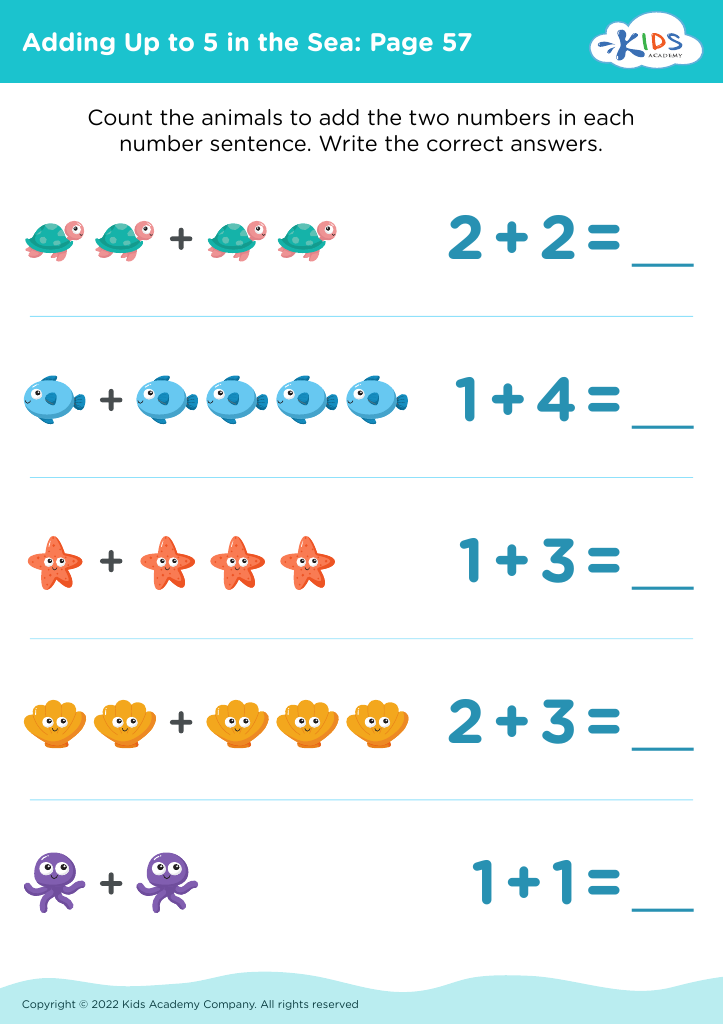
Adding Up to 5 in the Sea: Page 57
Worksheet
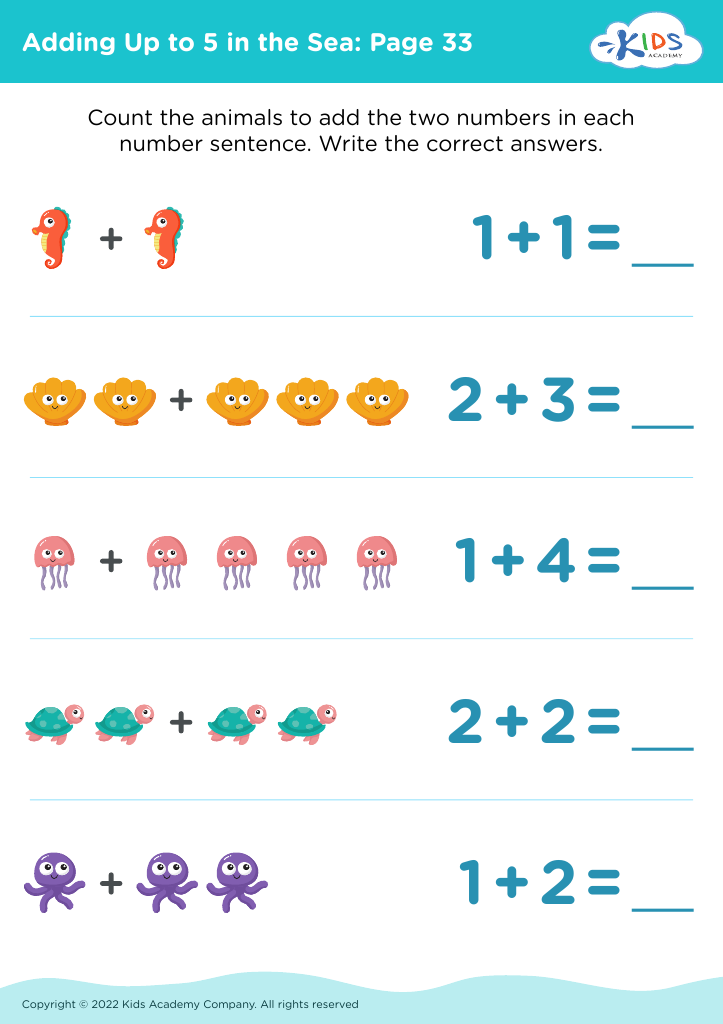
Adding Up to 5 in the Sea: Page 33
Worksheet
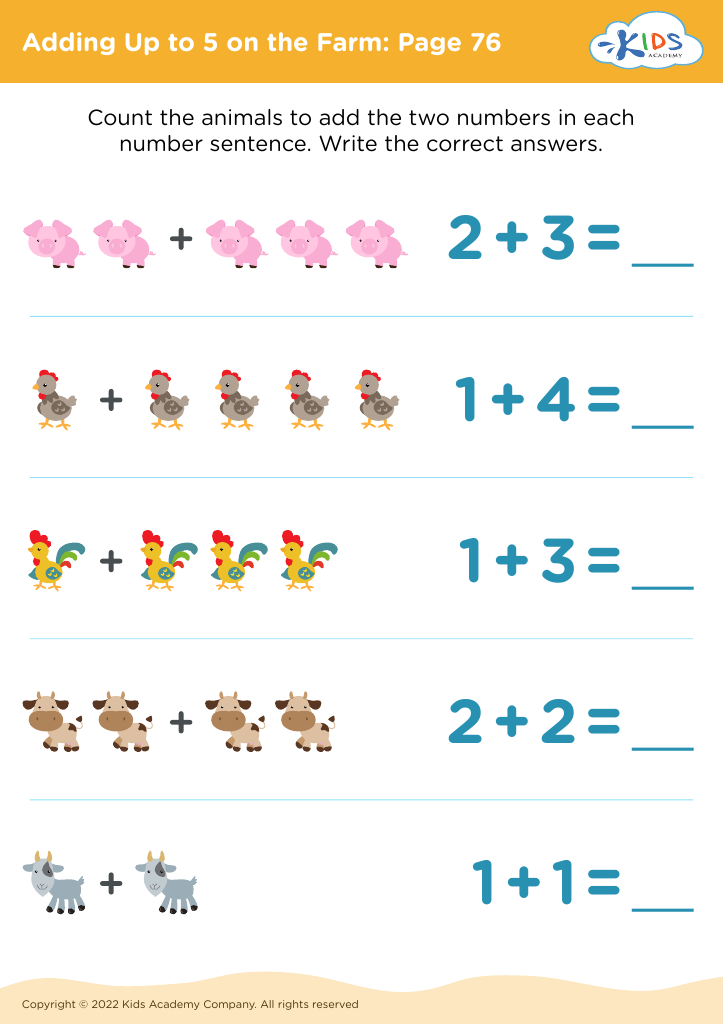
Adding Up to 5 on the Farm: Page 76
Worksheet
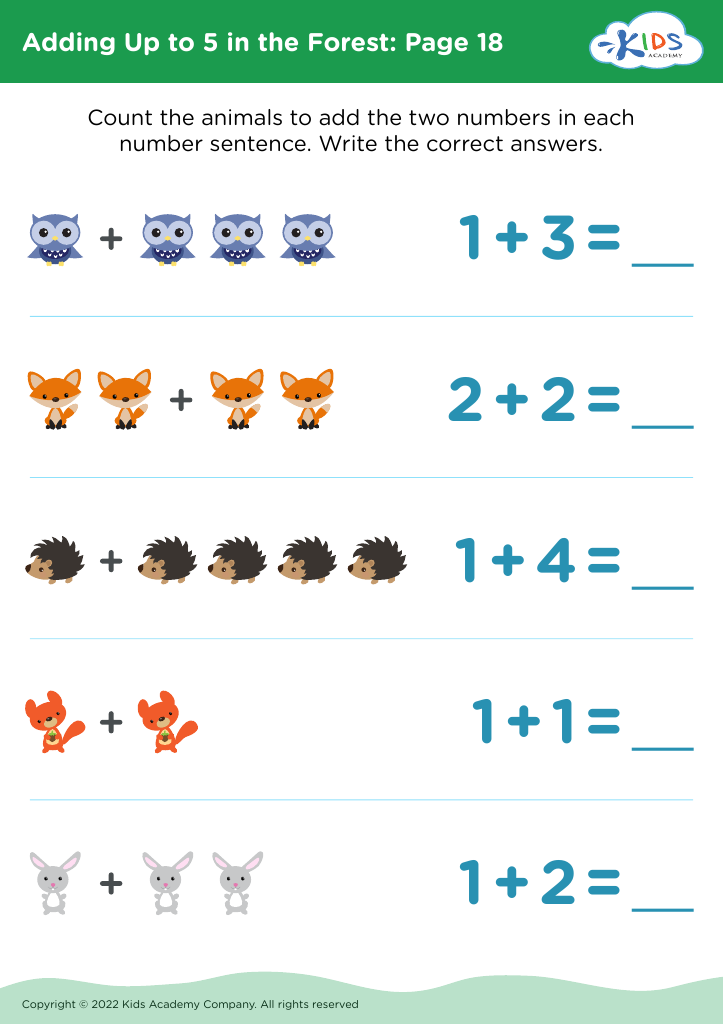
Adding Up to 5 in the Forest: Page 18
Worksheet
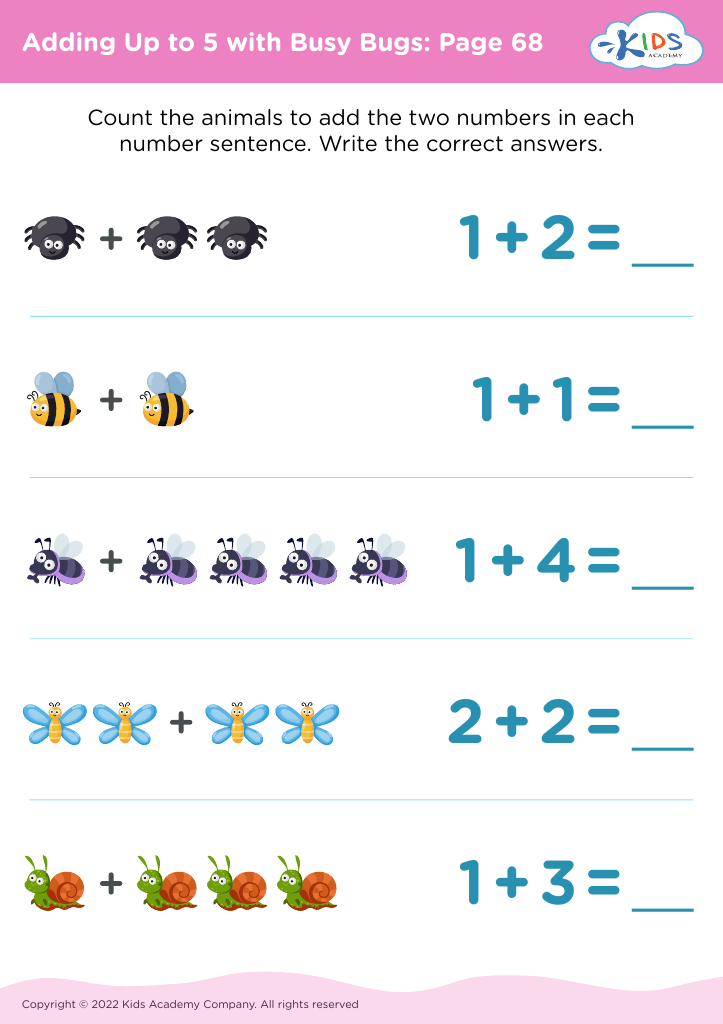
Adding Up to 5 with Busy Bugs: Page 68
Worksheet
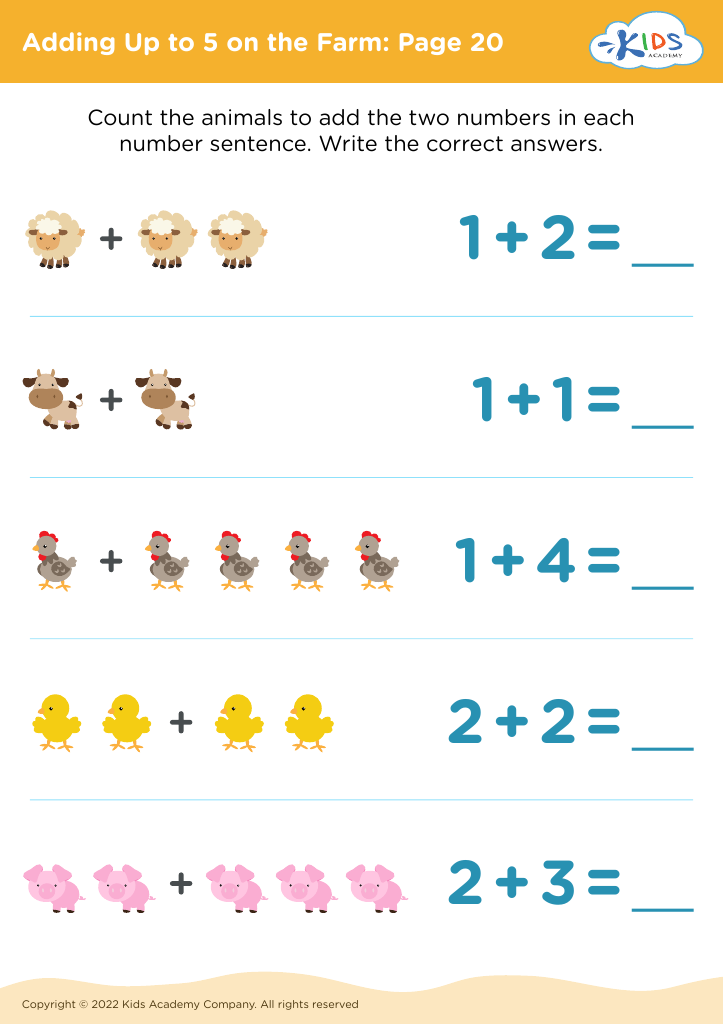
Adding Up to 5 on the Farm: Page 20
Worksheet
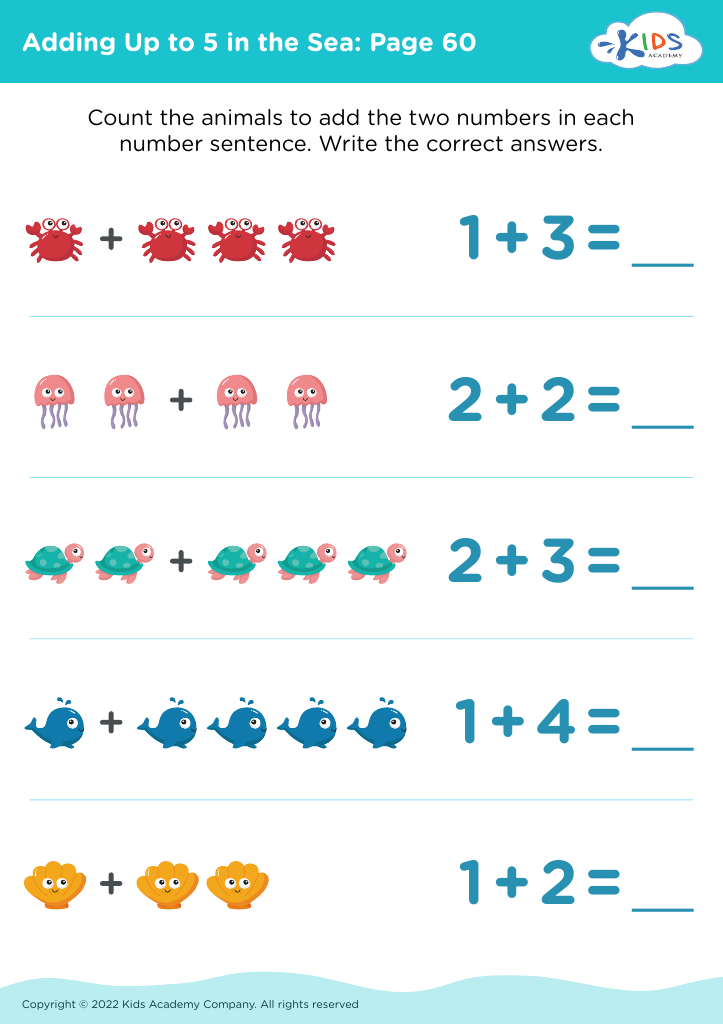
Adding Up to 5 in the Sea: Page 60
Worksheet
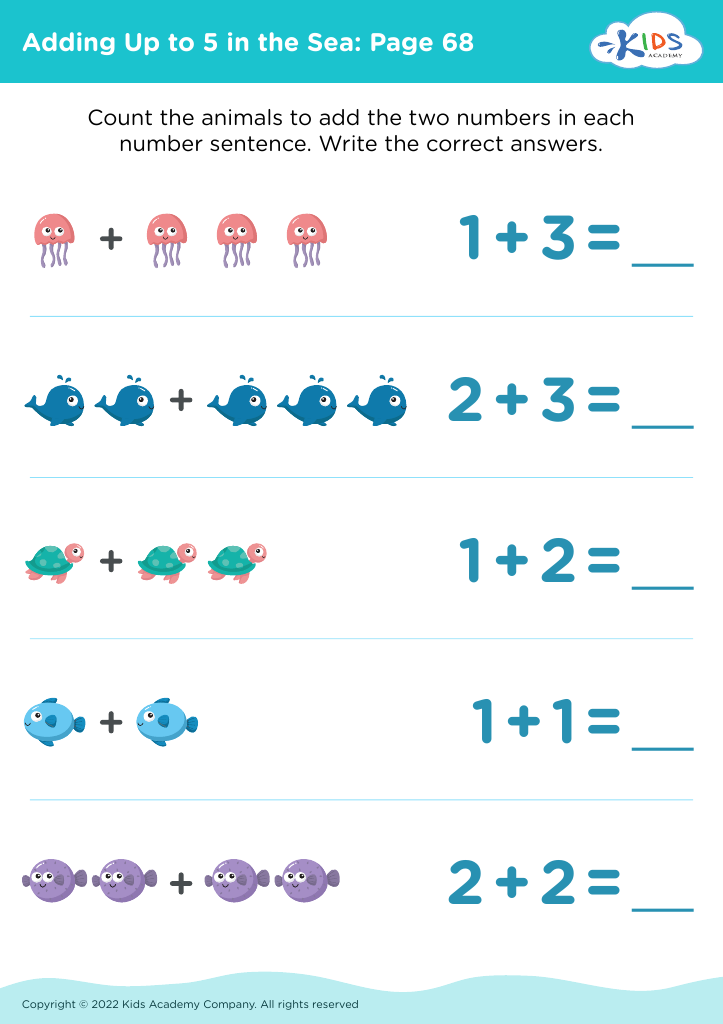
Adding Up to 5 in the Sea: Page 68
Worksheet
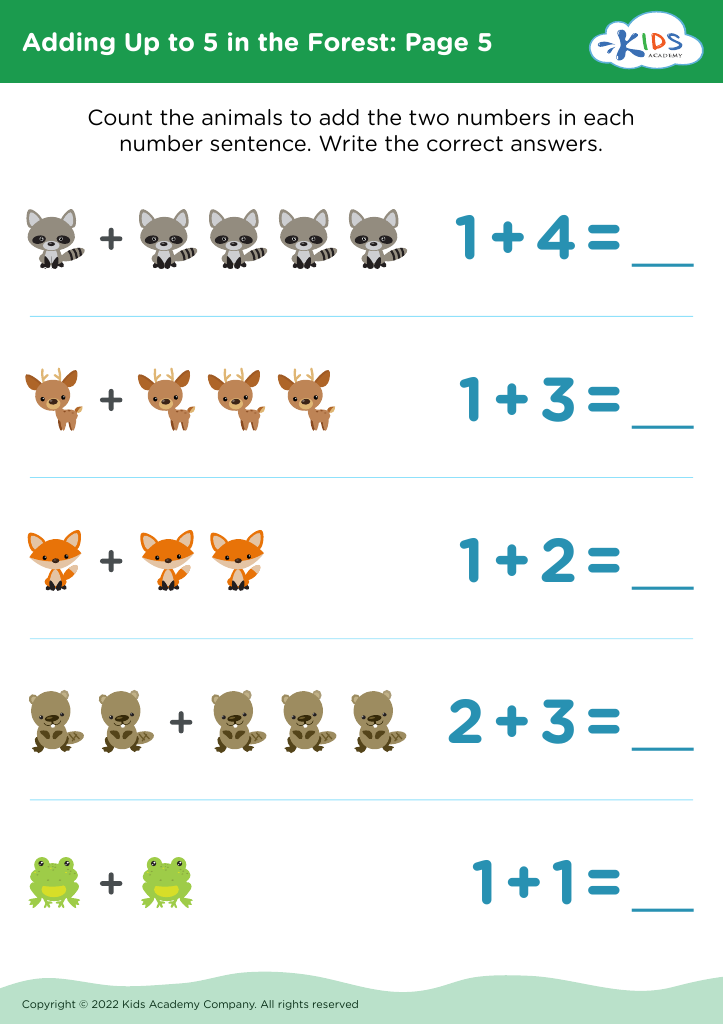
Adding Up to 5 in the Forest: Page 5
Worksheet
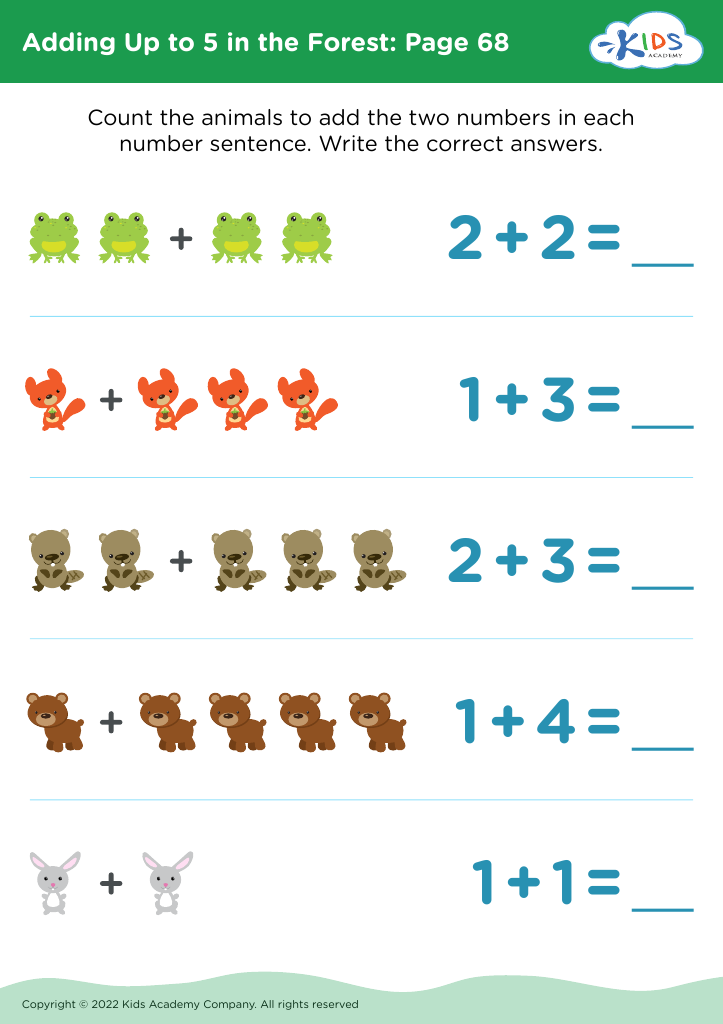
Adding Up to 5 in the Forest: Page 68
Worksheet
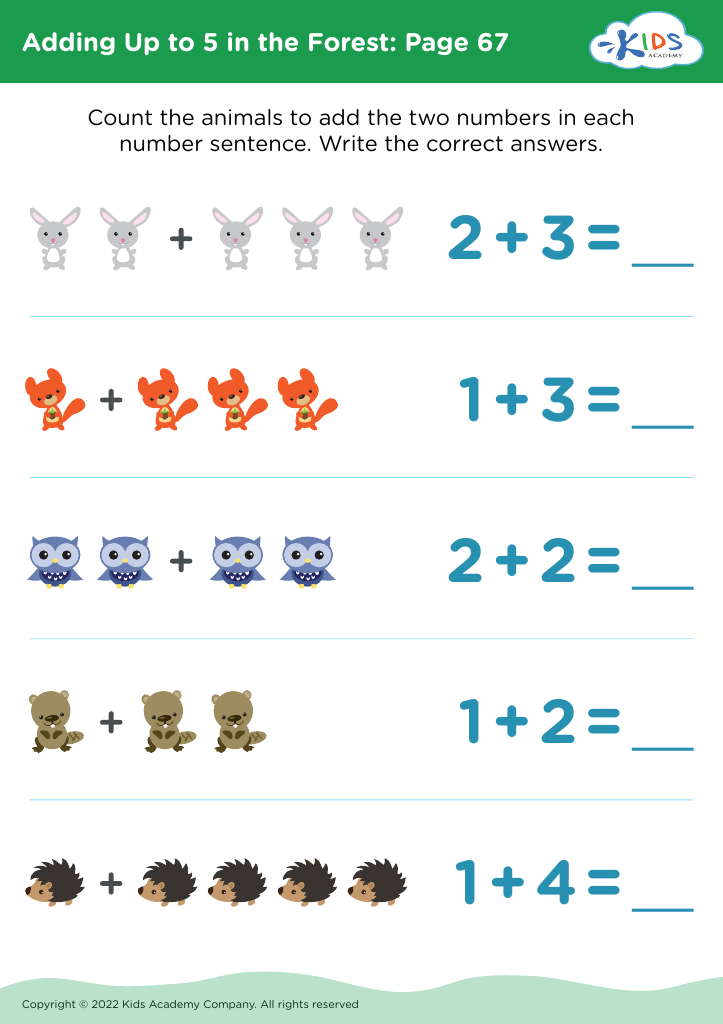
Adding Up to 5 in the Forest: Page 67
Worksheet
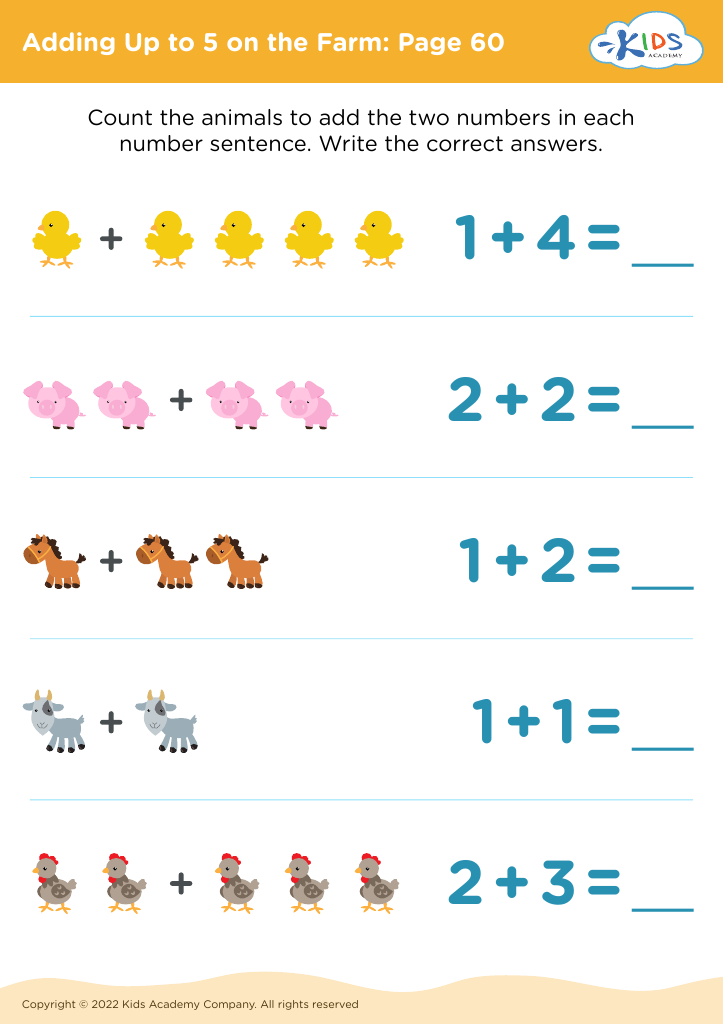
Adding Up to 5 on the Farm: Page 60
Worksheet


Understanding quantities and addition is crucial for 5-year-olds as it lays the foundation for their future math skills and overall cognitive development. At this age, children are developing their number sense, which involves recognizing numbers and understanding their relationships to one another. By engaging them in activities related to quantities and addition, parents and teachers promote critical thinking, problem-solving, and logical reasoning.

Early math skills are linked to later academic success, making it essential for adults to prioritize this area of learning. Simple activities, such as counting objects, comparing quantities, or using fingers for basic addition, can be enjoyable and promote engagement, helping children develop a positive attitude toward math.

Furthermore, understanding quantities aids in everyday scenarios, from sharing snacks to measuring ingredients in cooking with caregivers. This practical application reinforces the relevance of math in everyday life and boosts confidence.

Finally, fostering mathematical understanding at a young age encourages curiosity and a love for learning. When parents and teachers actively support understanding of quantities and addition, they contribute significantly to a likely brighter academic future for their children. This foundational competency not only builds essential skills but also empowers children to tackle more complex concepts as they progress in their education.