Visual-motor skills Addition Worksheets for 5-Year-Olds
3 filtered results
-
From - To
Enhance your child's learning experience with our Visual-Motor Skills Addition Worksheets for 5-Year-Olds! Designed to improve coordination and concentration, these engaging worksheets combine essential math skills with fun visual tasks. Your little learner will practice addition through colorful illustrations and hands-on activities that guide them in connecting numbers and objects. By incorporating visual-motor exercises, our worksheets nurture fine motor development while making math enjoyable. Perfect for classrooms or home learning, these resources lay a solid foundation for future math success. Dive into a world of creativity and learning, where math becomes an exciting adventure for your child!
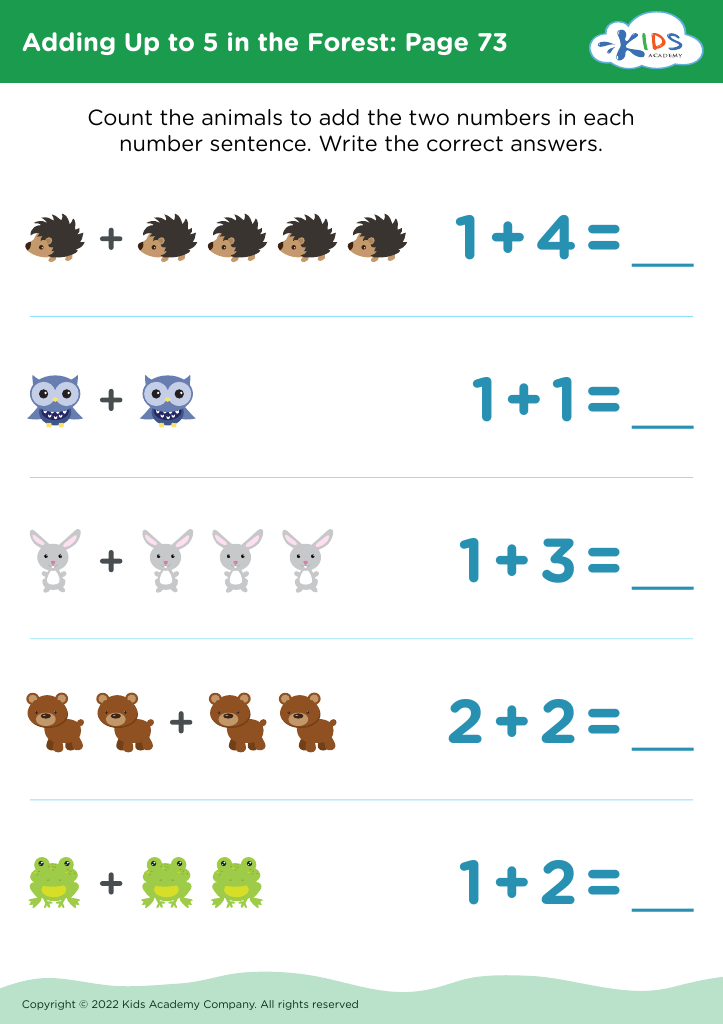
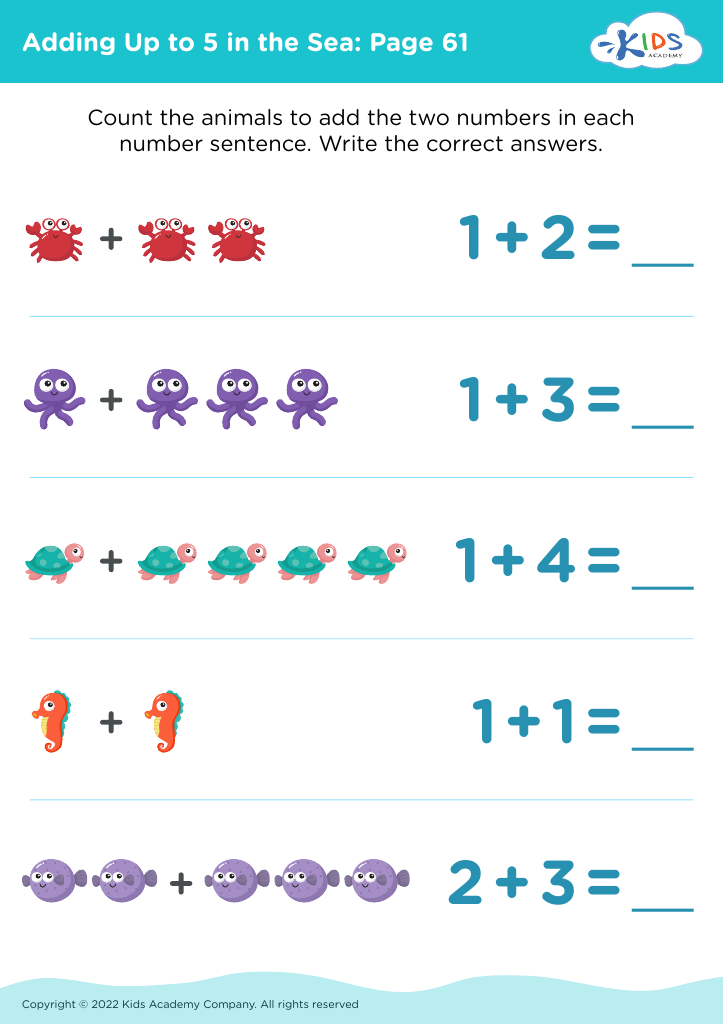
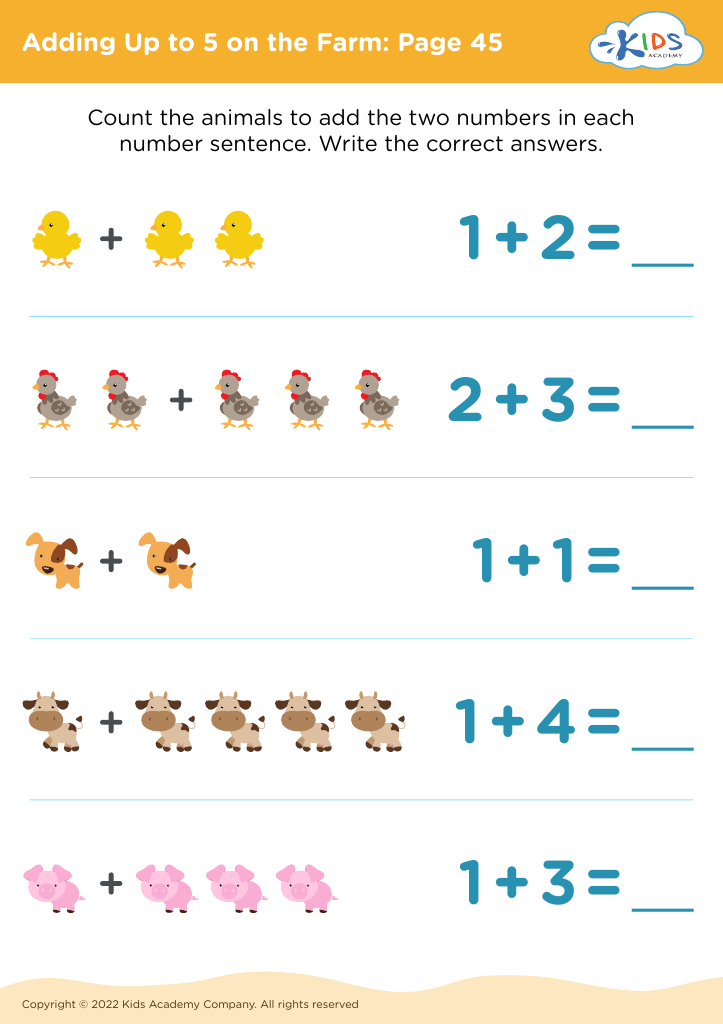








Visual-motor skills are crucial for five-year-olds as they form the foundation for various developmental tasks and academic success. These skills, which involve coordinating visual input with motor output, underpin activities such as writing, drawing, and tying shoelaces. Parents and teachers should care about enhancing these skills because they significantly impact a child’s learning and day-to-day activities.
At this age, children are becoming more independent and engaging in activities that require fine motor control, like using scissors or manipulating small objects. Strong visual-motor skills assist with hand-eye coordination, essential for sports and physical play, fostering confidence and fostering social interactions with peers.
Moreover, mastery of visual-motor tasks like copying shapes or guiding a pencil provides a crucial foundation for literacy and numeracy skills, ultimately impacting academic success. When children struggle with these tasks, it can lead to frustration, decreased motivation, and social challenges.
By prioritizing the development of visual-motor skills through engaging activities like puzzles or drawing, parents and teachers can effectively support children’s growth, enhancing their overall learning experience and setting them on a positive path for future learning endeavors.








