Money recognition Coins Worksheets for 5-Year-Olds
5 filtered results
-
From - To
Engage your 5-year-old in fun and educational activities with our Money Recognition Coins Worksheets. Designed to introduce young learners to the basics of money, these printable worksheets help kids recognize and understand different coins through hands-on exercises. They will learn to identify pennies, nickels, dimes, and quarters while enhancing their counting and value comparison skills. Perfect for kindergarten students, these worksheets are an excellent resource for both classroom and homeschooling, laying a strong foundation for future financial literacy. Visit Kids Academy to download and start your child’s money education journey today!
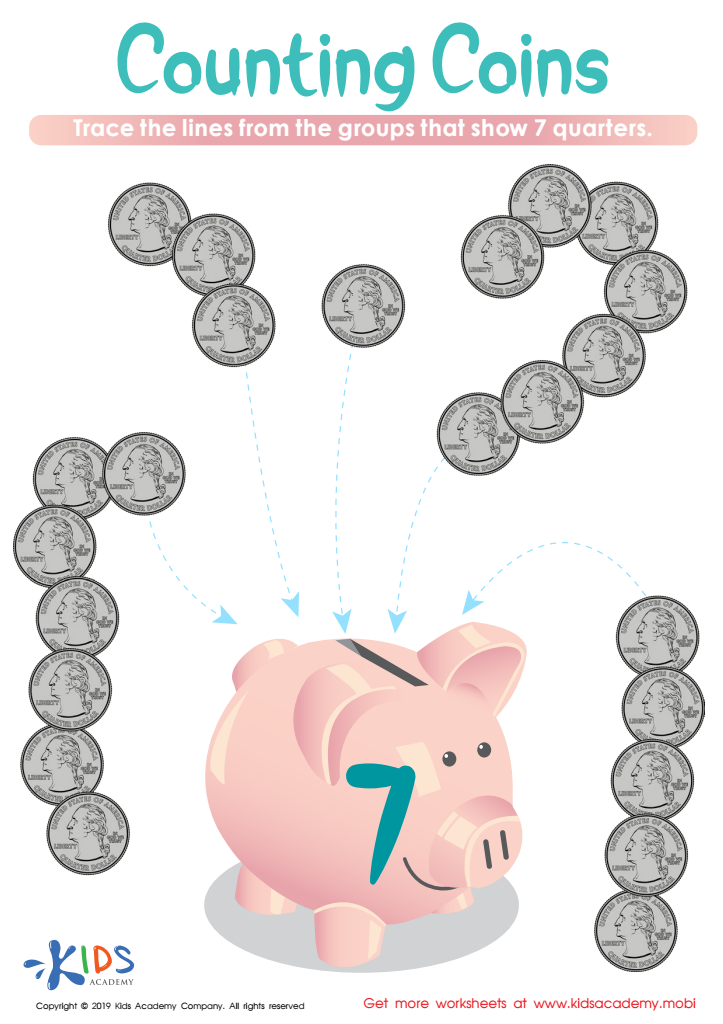
Counting Coins Worksheet
 Assign to My Students
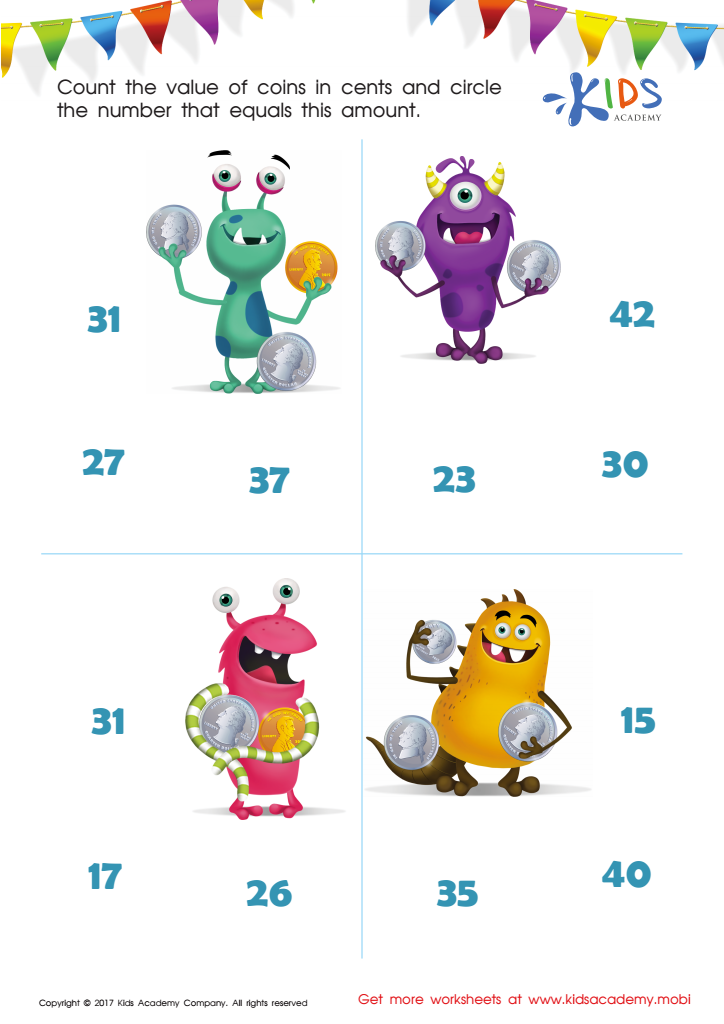
How Many Coins Money Worksheet
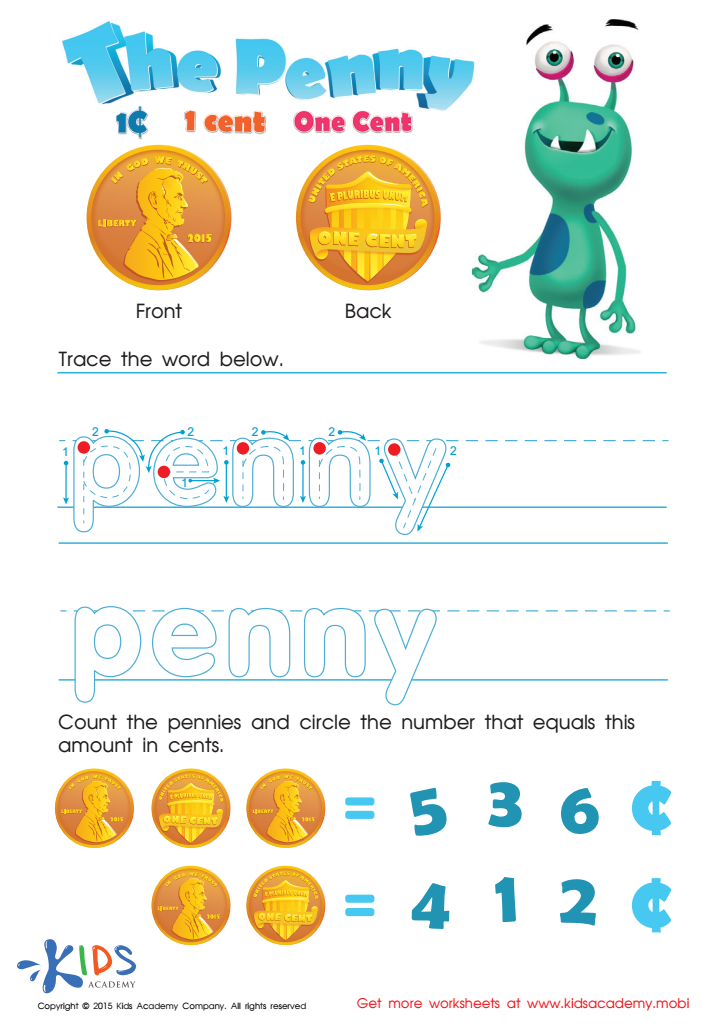
One Cent or the Penny Money Worksheet
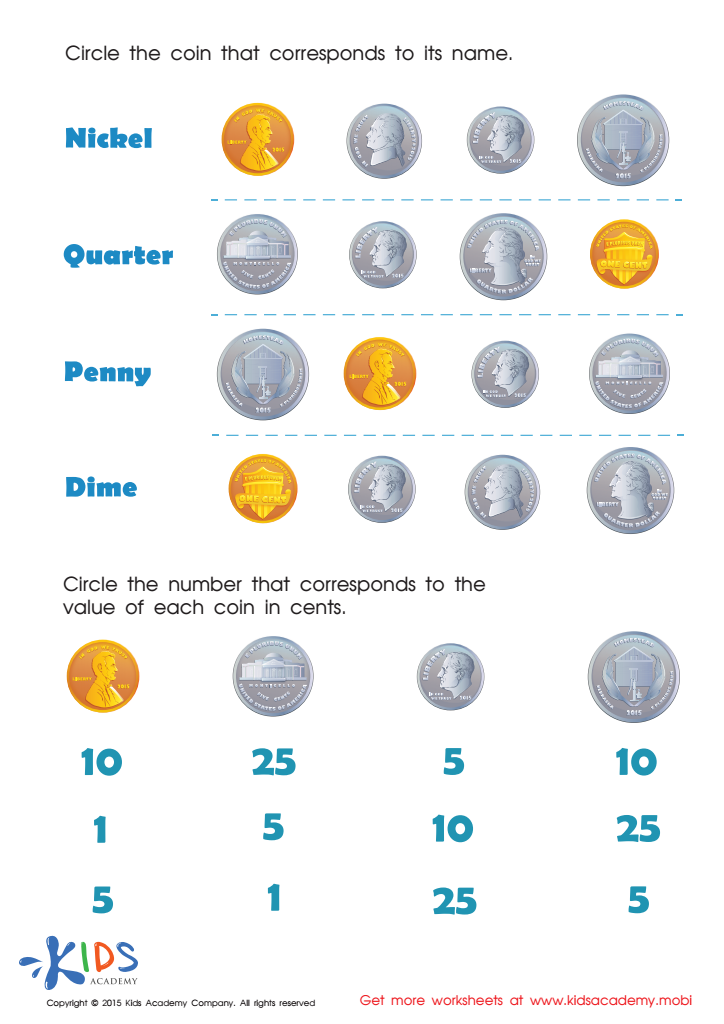
Coin Names and Values Money Worksheet
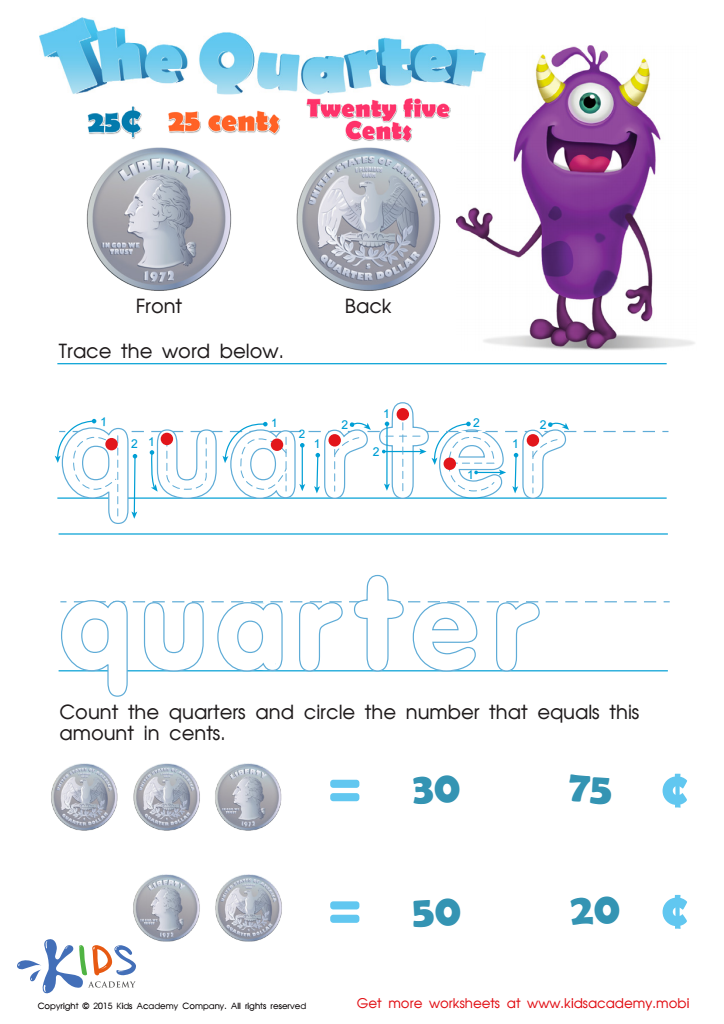
Twenty Five Cents or the Quarter Money Worksheet








Teaching money recognition with coins to 5-year-olds equips them with essential life skills that are foundational for financial literacy. Understanding the value of different coins is not just about knowing how money works, but also about developing critical cognitive skills. Early exposure to coins helps young children enhance their counting abilities, improve their memory, and grasp basic mathematical concepts such as addition and subtraction.
For parents, teaching about money can turn everyday activities, like shopping or playing, into valuable learning opportunities. Kids can begin to understand that money is earned and spent, fostering a sense of responsibility and delayed gratification. This helps to build healthy financial habits early on, likely benefiting their financial decisions as they grow older.
From a teacher’s perspective, integrating money recognition into the curriculum enriches the educational experience. It provides practical applications for abstract numbers and introduces economic concepts in a tangible way. Activities involving recognizing, sorting, and using coins can be interactive and engaging, making learning enjoyable for young minds.
Overall, understanding and recognizing coins at an early age sets the groundwork for good financial practices, supports academic growth in math, and can make learning both fun and practical. Therefore, parents and teachers have ample reason to care about cultivating this skill in 5-year-old children.








