Basic Math Skills Geometry Worksheets for 5-Year-Olds
5 filtered results
-
From - To
Introduce your 5-year-old to the wonders of shapes and spatial awareness with our "Basic Math Skills Geometry Worksheets". These expertly designed worksheets from Kids Academy help young learners identify, compare, and analyze different geometric shapes in a fun and engaging way. Children will develop essential skills like shape recognition, pattern differentiation, and basic geometric principles. Perfect for at-home learning or classroom activities, these printable worksheets provide hands-on practice to boost your child's confidence and proficiency in math. Turn learning into an enjoyable adventure as your child lays the foundation for future geometry success!
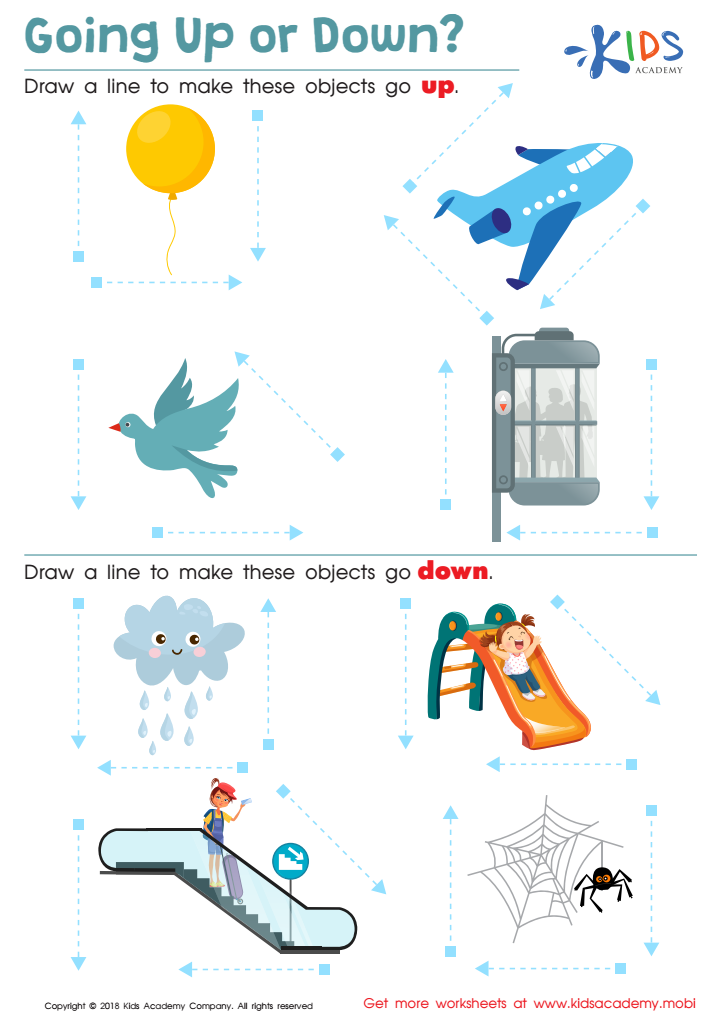
Going up or Down? Worksheet
 Assign to My Students











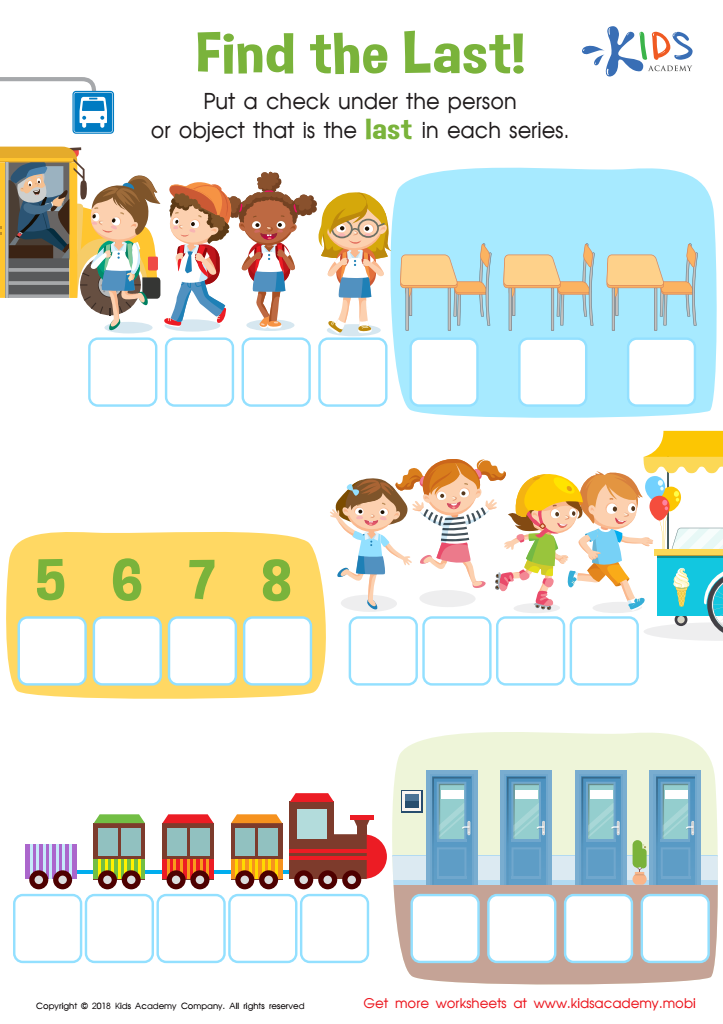
Find the Last! Worksheet
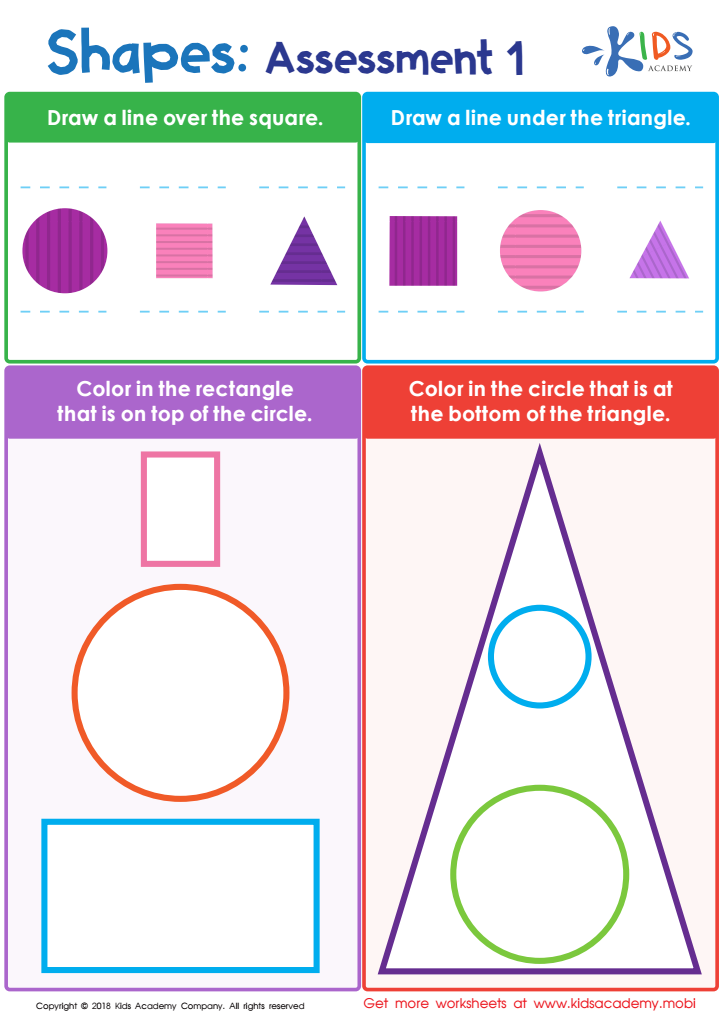
Shapes: Assessment 1 Worksheet
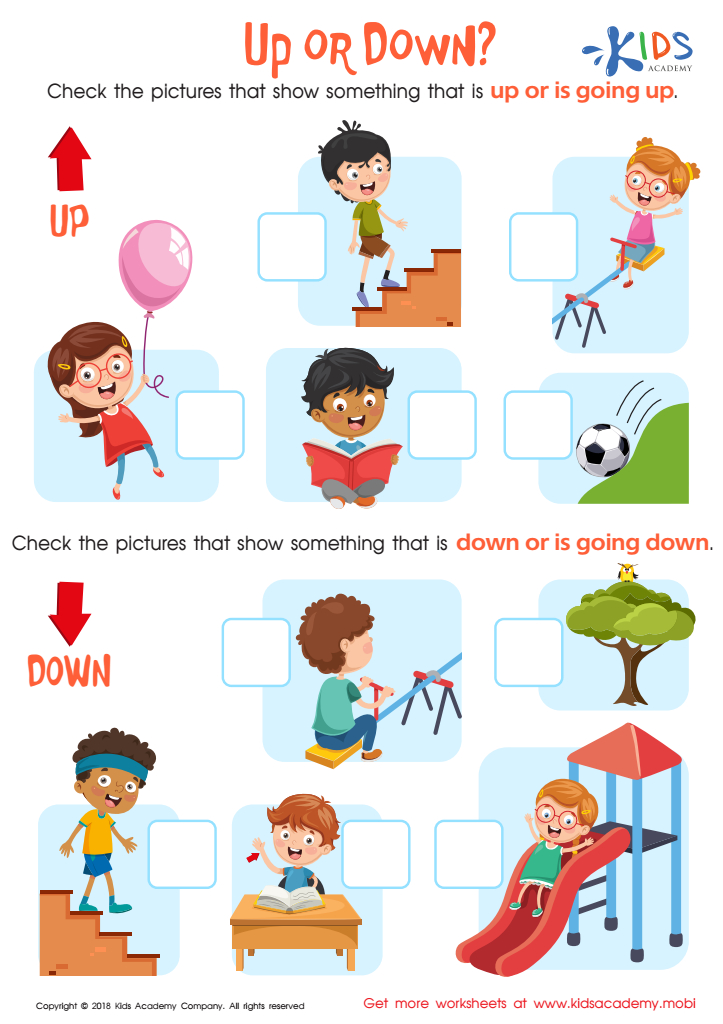
Up or Down Worksheet
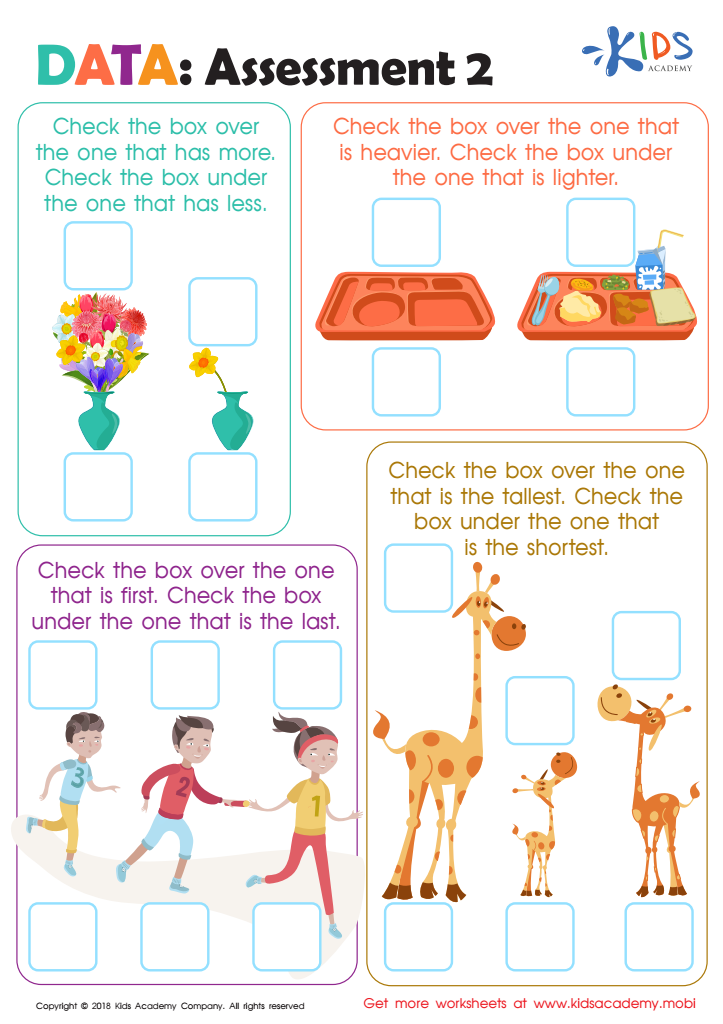
Data: Assessment 2 Worksheet








Basic math skills, particularly geometry, for 5-year-olds are crucial for laying the foundational building blocks necessary for future academic success. For young children, exposure to geometry isn't about complex shapes and theories, but rather simple recognition of shapes, spatial relationships, and patterns. Recognizing circles, squares, triangles, and understanding concepts like "inside," "outside," and "between" helps kids comprehend their world.
Introducing geometry at an early age sharpens a child's problem-solving skills. Engaging with basic geometric concepts promotes logical thinking, which is integral not just in math, but across all subjects. Early geometry skills also aid in developing fine motor skills. When children draw shapes or formulate simple constructions with building blocks, they are improving their hand-eye coordination and pre-writing skills.
Moreover, spatial awareness is vital for everyday tasks – from navigating a room to understanding object placements. If children grasp these fundamental concepts early, they are better positioned to embrace more complicated mathematical ideas later on. This cognitive development helps them in their subsequent school years, providing a smoother transition into more advanced math topics.
Given the integral role math and spatial abilities play in daily life and education, fostering these skills in 5-year-olds ensures a strong intellectual foundation, setting them up for future educational success and critical thinking. Teachers and parents, therefore, play a pivotal role in making early geometry engaging and accessible.








