Color Identification Geometry Worksheets for 5-Year-Olds
4 filtered results
-
From - To
Discover our "Color Identification Geometry Worksheets for 5-Year-Olds" at Kids Academy. These engaging, printer-friendly worksheets help young learners grasp essential concepts by blending fun activities with educational content. Designed to improve both geometry understanding and color recognition skills, they offer a perfect mix of interactive shapes and vibrant coloring tasks. With clear instructions and age-appropriate exercises, children will enjoy mastering their abilities in identifying colors, shapes, and patterns. Ideal for use at home or in a classroom setting, these worksheets create a delightful way for kids to build foundational skills essential for their academic journey.
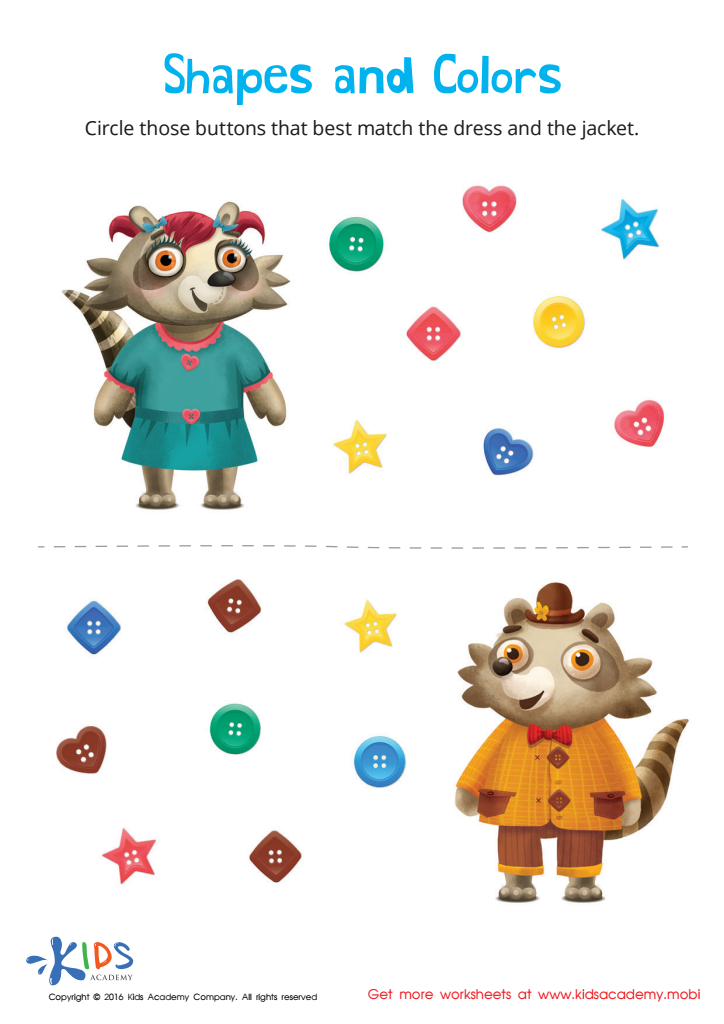
Matching: Shapes and Colors Worksheet











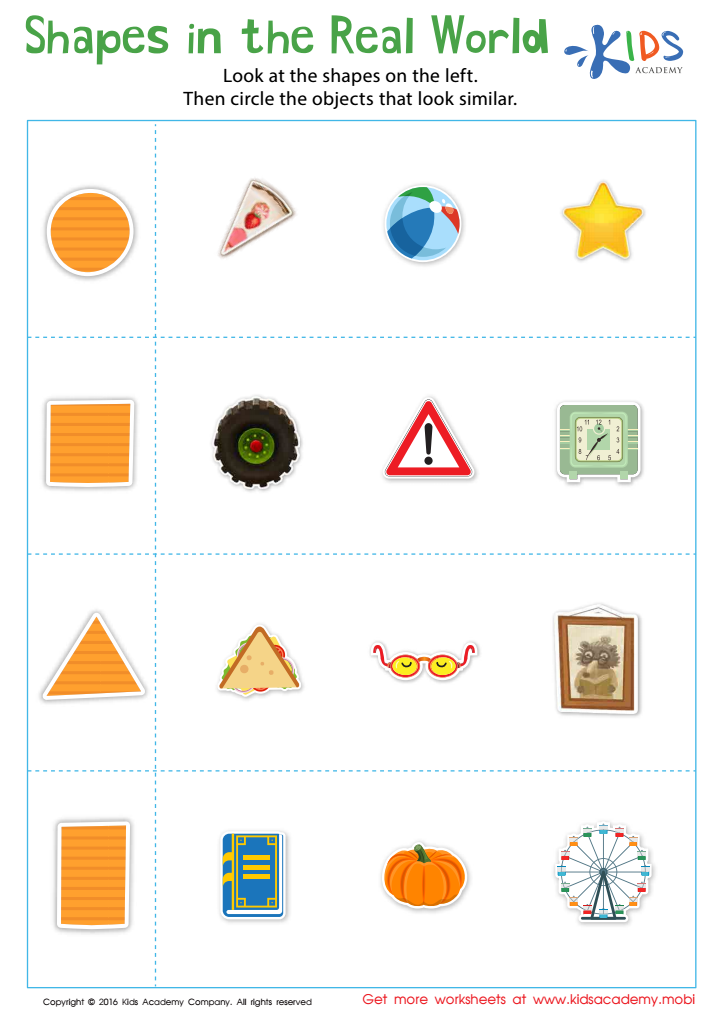
Shapes in the Real World Worksheet
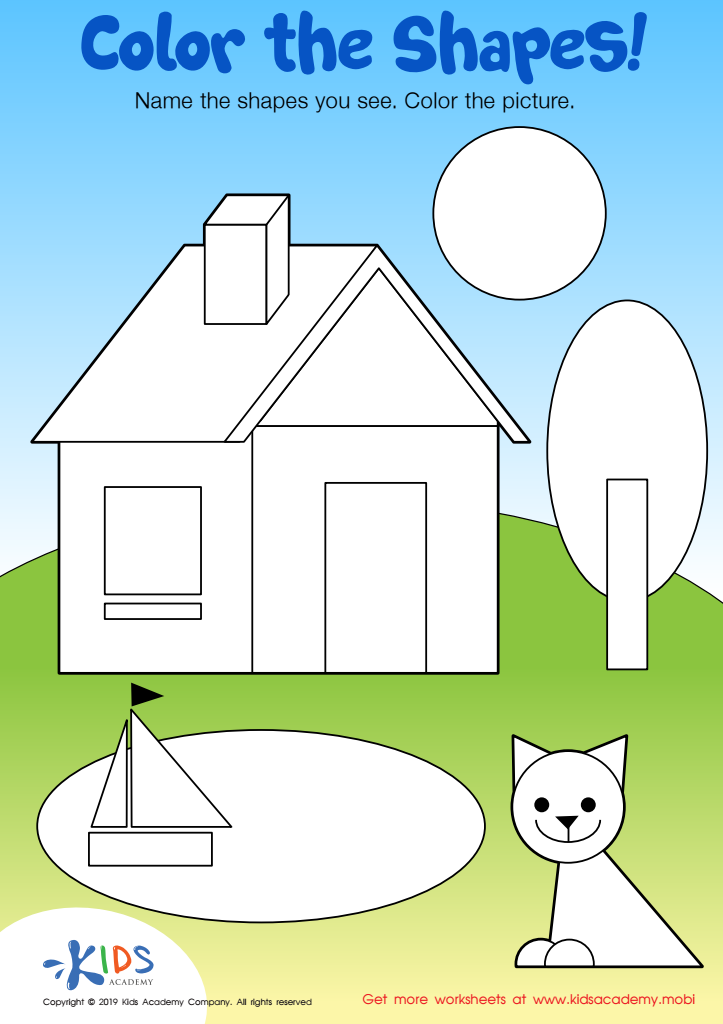
Color the Shapes Worksheet
 Assign to My Students
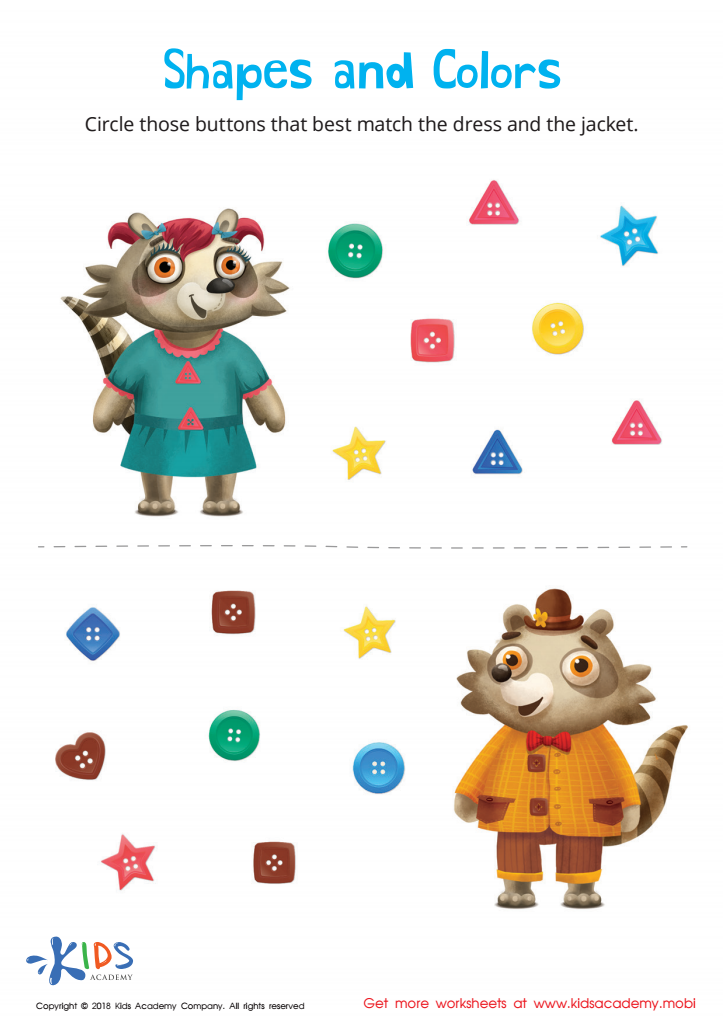
Shapes and Colors Worksheet








Color identification and geometry play crucial roles in the early cognitive and perceptual development of 5-year-olds. Understanding colors helps young children categorize and make sense of their environment, laying a foundation for more complex learning tasks. It boosts their language skills as they learn the names of different colors and use them to describe objects accurately, enhancing their communication abilities.
Geometry, on the other hand, introduces basic shapes such as circles, squares, and triangles. This fundamental understanding aids children in recognizing patterns, spatial relationships, and forms, which are essential in problem-solving and reasoning—a key aspect of mathematics and science learning. Awareness of shapes and their properties stimulates fine motor skills required for writing as children draw and manipulate these shapes.
Combining color identification with geometric concepts can make learning interactive and enjoyable, capturing the interest and enthusiasm of young learners. Activities integrating both topics can enhance attention spans and encourage creativity and curiosity, which are significant developmental milestones. Therefore, parents and teachers fostering these skills can establish a well-rounded educational foundation, promoting visual discrimination, categorization, spatial awareness, and improved cognitive and motor skills. Prioritizing these skills prepares children for more formal education and practical everyday tasks.








