Differentiating shapes Geometry Worksheets for 5-Year-Olds
3 filtered results
-
From - To
Explore our engaging Differentiating Shapes Geometry Worksheets, specially designed for 5-year-olds! These interactive activities help young learners recognize, compare, and classify basic shapes like circles, squares, triangles, and rectangles. Each worksheet features vibrant images and playful instructions that make learning fun and effective. Perfect for enhancing cognitive skills, these worksheets encourage critical thinking as kids identify similarities and differences among various shapes. Ideal for both classroom and home use, our easy-to-follow worksheets support the development of foundational math skills while keeping children captivated. Let your little ones embark on a colorful geometric adventure that fosters their love for learning!
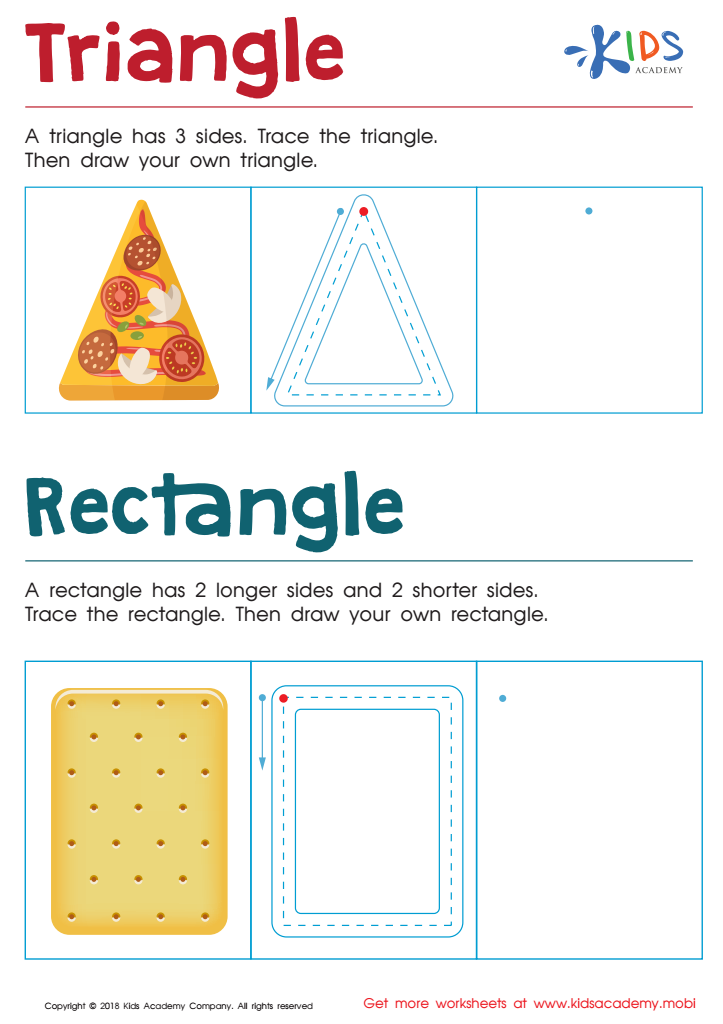
Triangle Rectangle Worksheet
 Assign to My Students











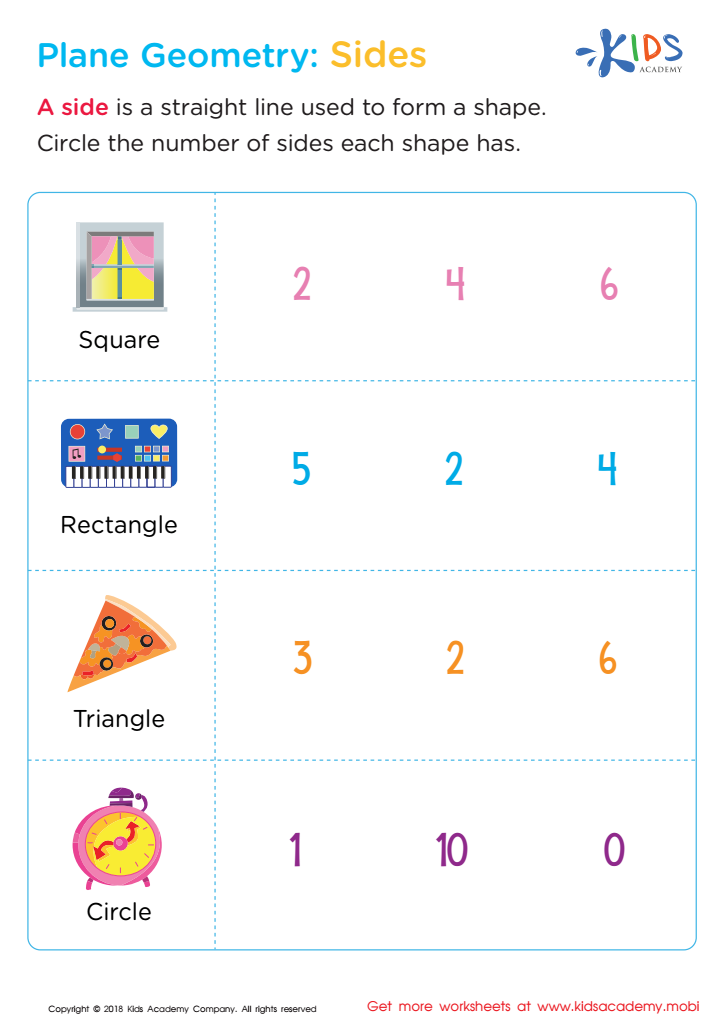
Plane Geometry: Sides Worksheet
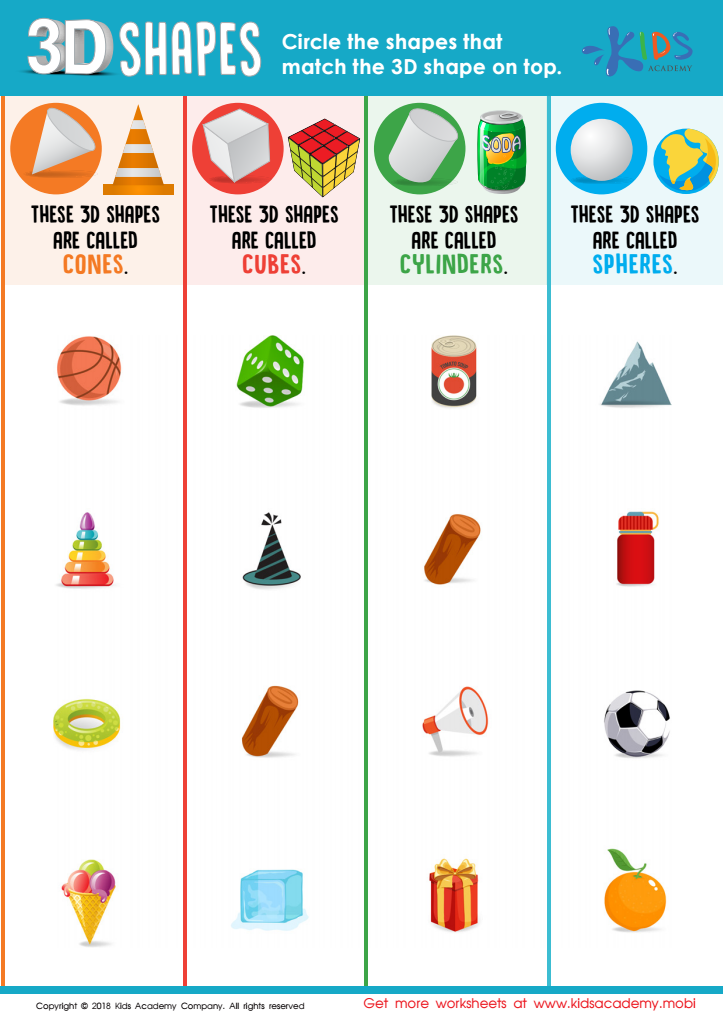
3D Shapes Worksheet








Differentiating shapes in geometry for 5-year-olds is crucial for several reasons. At this age, children begin to develop foundational mathematical skills, and understanding shapes lays the groundwork for more complex concepts in the future. Recognizing and categorizing shapes fosters critical thinking and problem-solving skills, allowing children to analyze their environment effectively.
Moreover, differentiating shapes highlights the diversity of the world around them. By engaging with various shapes, children learn to identify patterns, similarities, and differences, enhancing their observational skills. This not only supports cognitive development but also instills a sense of curiosity as they explore their surroundings.
Additionally, teaching geometry through differentiated shapes can develop language skills. When children learn to articulate the characteristics of shapes—such as sides, angles, and sizes—they expand their vocabulary and communication abilities.
Parents and teachers should prioritize shaping experiences, whether through interactive activities, art projects, or play, to foster a positive attitude towards math. This early enthusiasm promotes a lifelong love for learning and equips children with essential skills that are applicable across various subjects. Ultimately, understanding shapes forms a critical piece of the educational puzzle, enabling a well-rounded approach to early childhood development.








