Addition Practice Math Worksheets for 5-Year-Olds - Page 5
102 filtered results
-
From - To
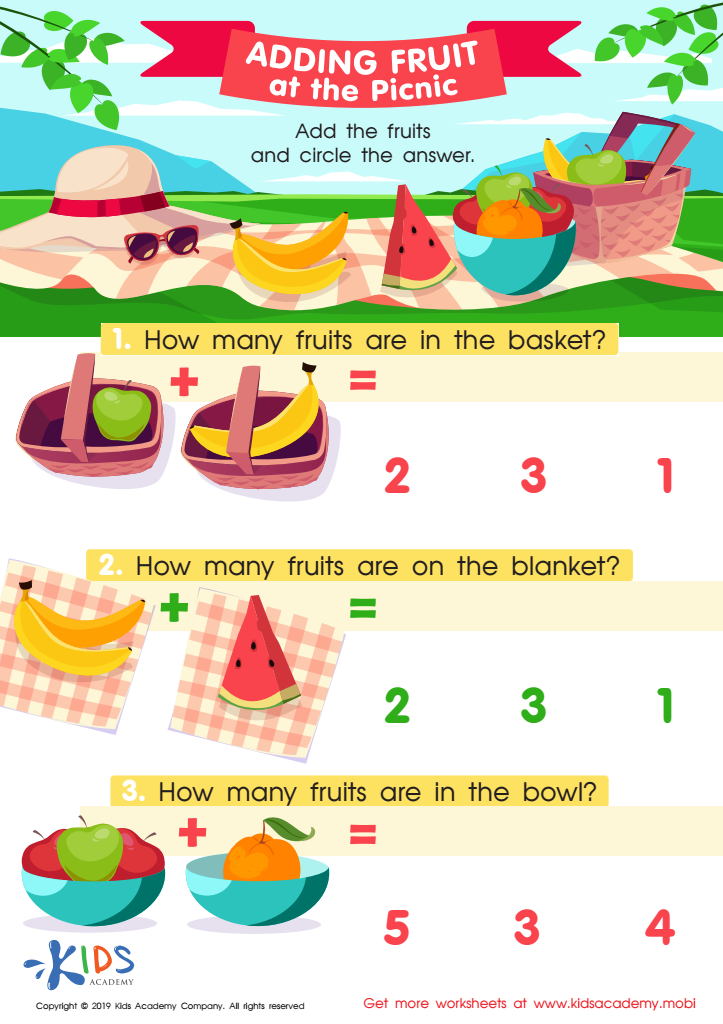
Adding Fruit at the Picnic Worksheet
 Assign to My Students
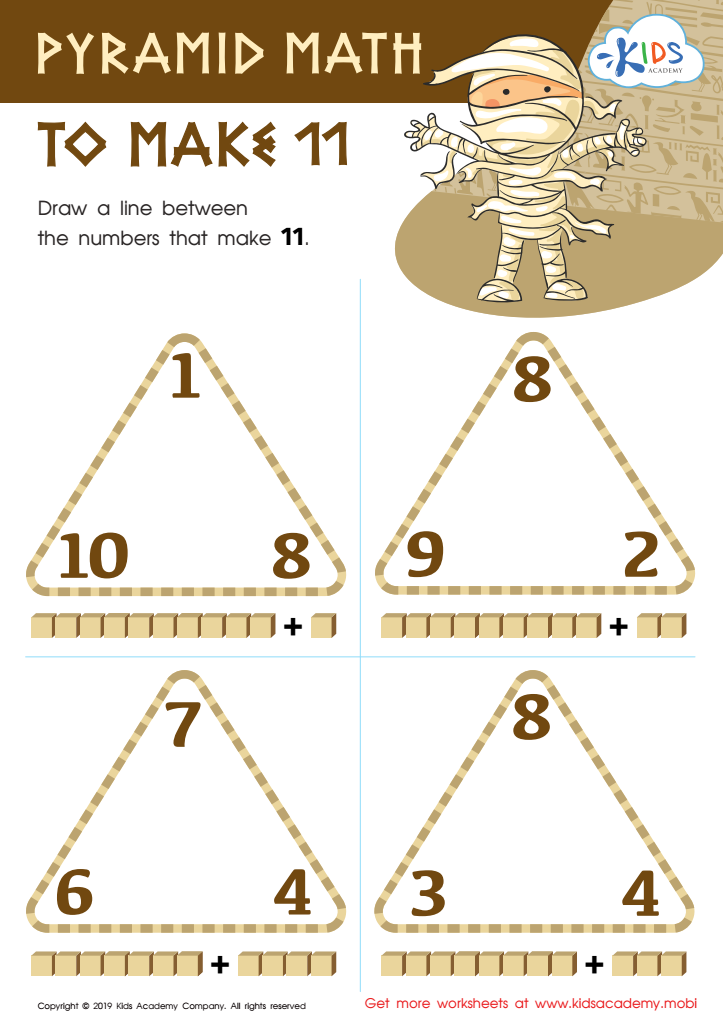
Pyramid Math to Make 11 Worksheet
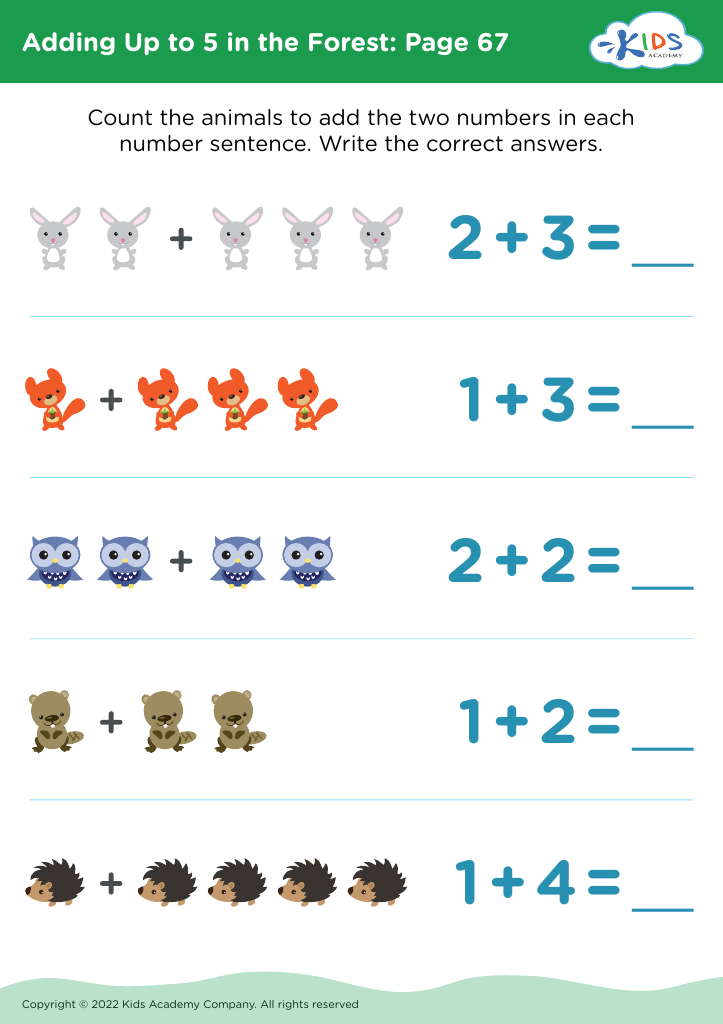
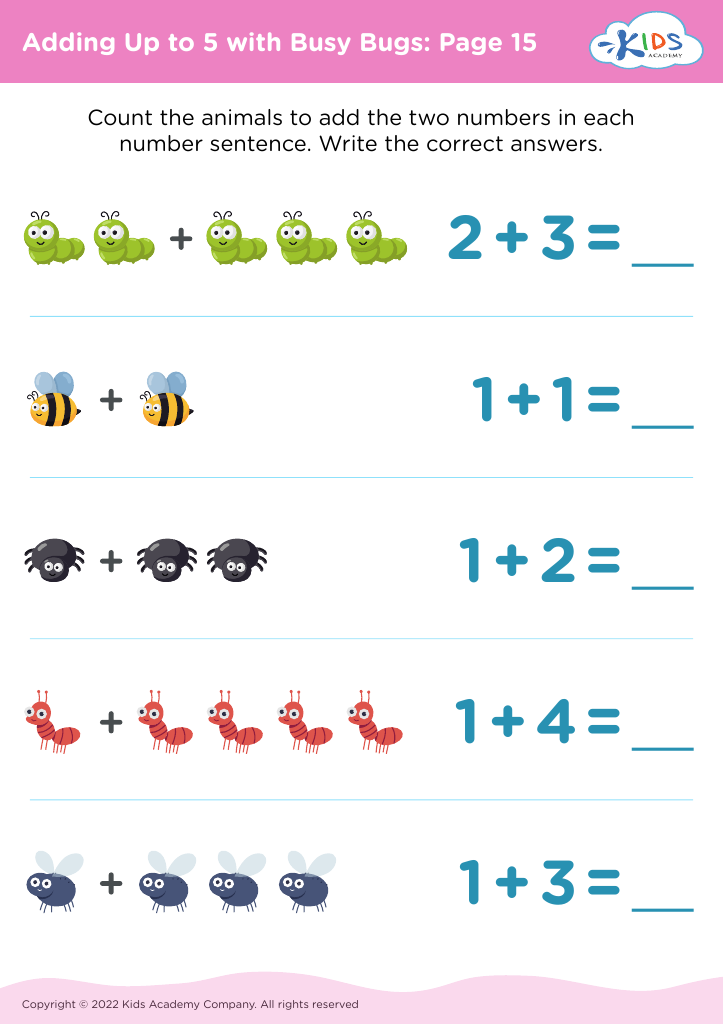








Ensuring that 5-year-olds practice addition is crucial for their cognitive and emotional development. At this age, children are just beginning to understand numbers and basic mathematical concepts. Practicing addition helps them build a strong foundation for future math skills. It enhances their number sense, which is essential for everyday tasks such as counting, measuring, and budgeting.
Moreover, engaging in addition practice fosters critical thinking and problem-solving skills. Children learn to approach challenges logically and develop resilience as they work through their mistakes. Math practice also promotes fine motor skills through activities like writing out problems or manipulating objects for counting.
Parents and teachers play a significant role in creating a positive attitude toward math. By making addition practice fun through games, songs, and interactive activities, they can help children associate math with enjoyment rather than anxiety. This foundational positive experience helps instill confidence, motivating children to explore higher-level math concepts later on.
In summary, caring about addition practice for young learners benefits their academic skills, encourages independent thinking, and promotes a lifelong appreciation for learning. Investing time in these early math skills lays the groundwork for their future education and broader life skills.








