Basic Mathematics Math Worksheets for 5-Year-Olds
4 filtered results
-
From - To
Our "Basic Mathematics Math Worksheets for 5-Year-Olds" offer fun, engaging activities that lay a strong foundation for essential math skills. Designed for young learners, our worksheets cover counting, simple addition and subtraction, patterns, shapes, and more. Each worksheet incorporates colorful graphics and creative instructions to captivate young minds while reinforcing critical thinking and problem-solving. Perfect for classroom use or at-home practice, these printable worksheets give kids the confidence they need to excel in math from an early age. Explore and enjoy a world of math learning with our expertly crafted resources!
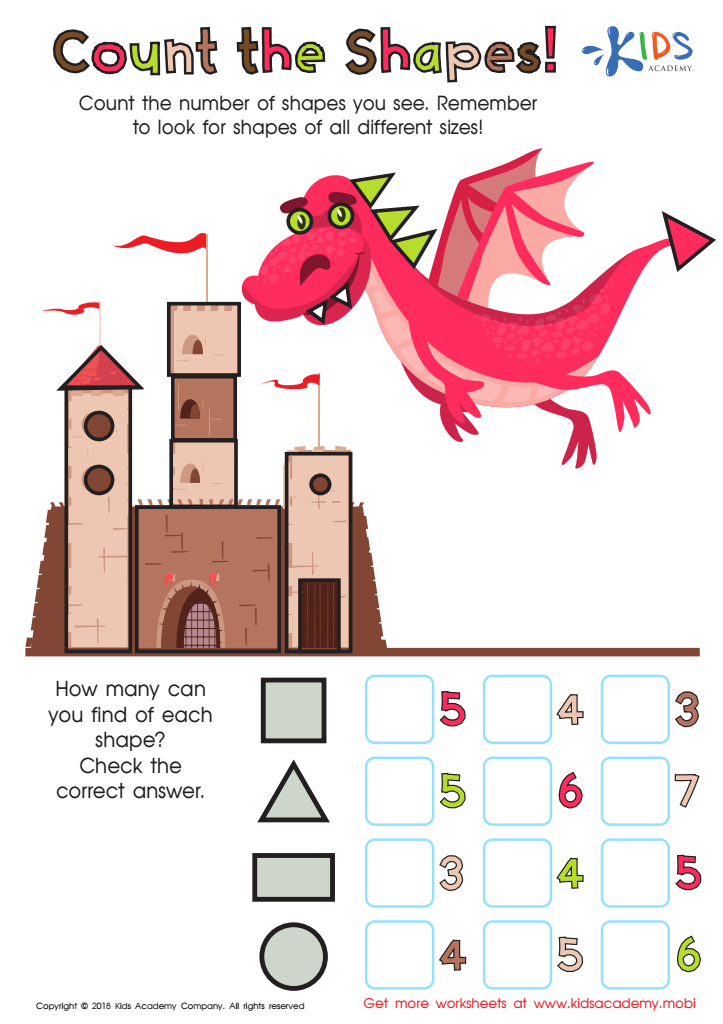
Count the Shapes Worksheet
 Assign to My Students
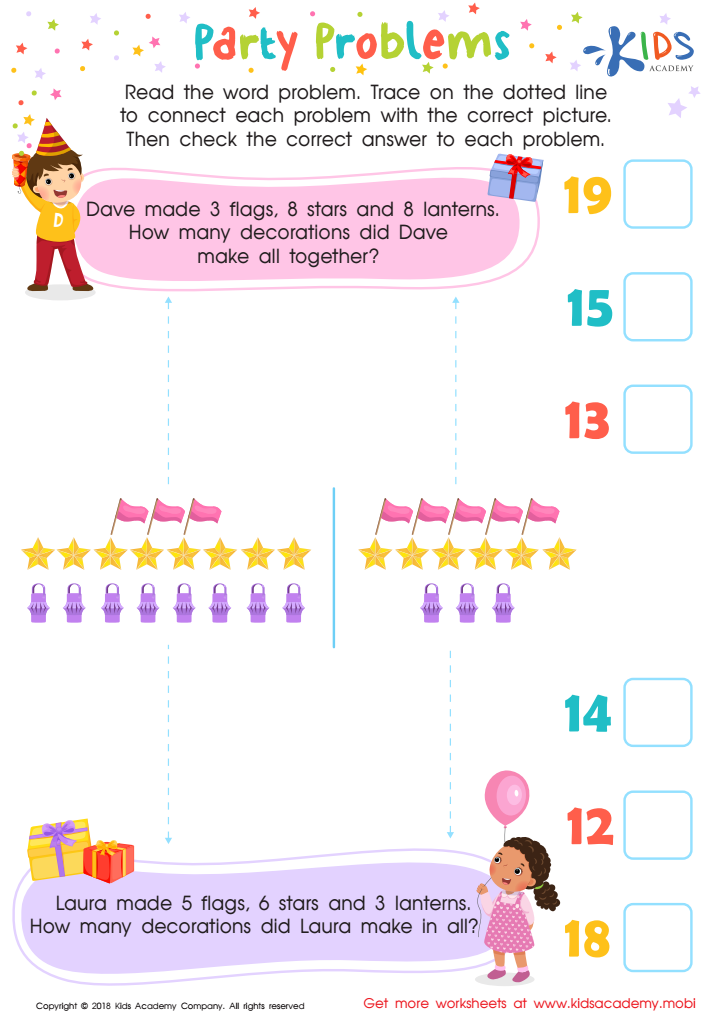
Party Problems Worksheet
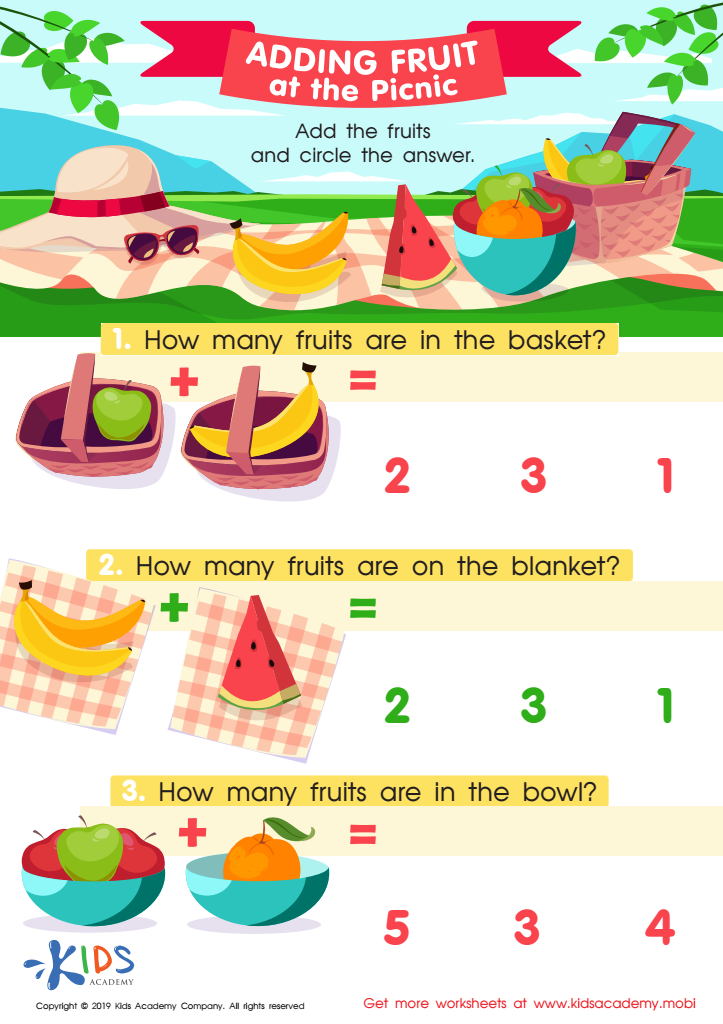
Adding Fruit at the Picnic Worksheet
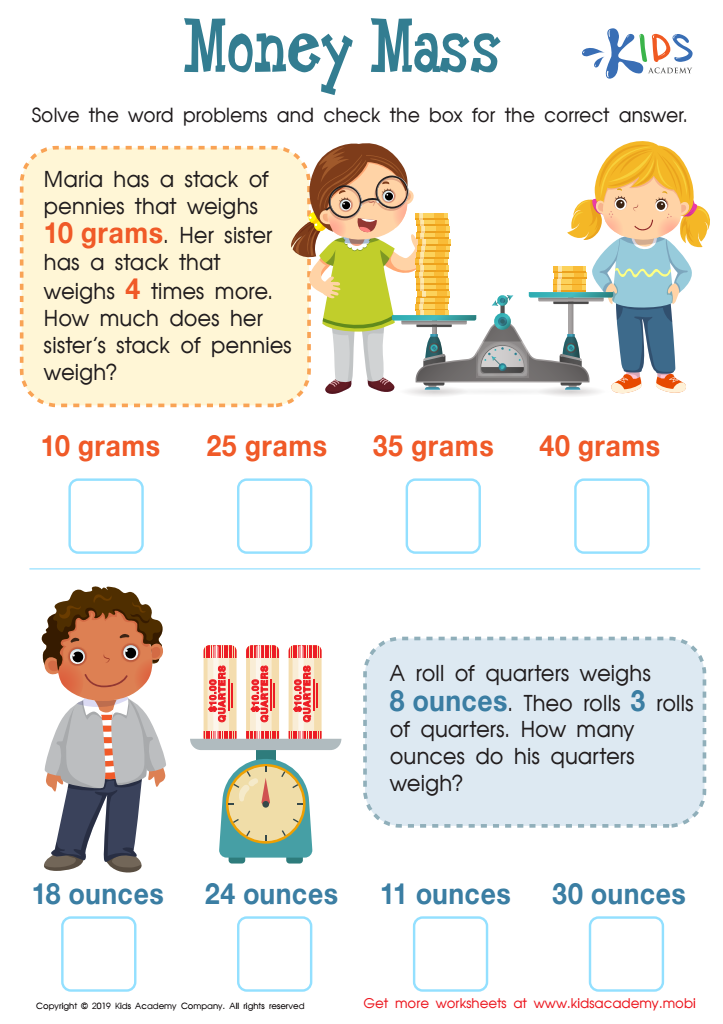
Money Mass Worksheet







Basic Mathematics is fundamental to a child's cognitive development and future academic success, making it crucial for both parents and teachers to prioritize math education for 5-year-olds. At this age, children are naturally curious and absorb information quickly, making it an optimal time to introduce foundational math concepts. By engaging young minds with numbers, shapes, and simple arithmetic, parents and teachers help develop critical thinking and problem-solving skills. Moreover, early math proficiency is strongly linked to later academic achievement, not just in math, but across subjects including reading and science.
Mathematics fosters logical reasoning, pattern recognition, and spatial awareness, abilities that are necessary for a child's day-to-day activities and future career opportunities. Early math skills also alleviate math anxiety, a common barrier to learning, by building confidence through familiarity and success in solving basic problems. Activities like counting objects, recognizing shapes, and understanding quantities are not only fun and engaging for young children but also lay the groundwork for more advanced mathematical concepts they will encounter in school.
In essence, nurturing a solid mathematical foundation for 5-year-olds prepares them for a lifetime of learning and problem-solving, equipping them with skills essential for academic and personal success. Thus, both parents and teachers play a pivotal role in fostering a positive and supportive early math learning environment.








