
Improves counting skills Math Worksheets for 5-Year-Olds
5 filtered results
Difficulty Level
Grade
Age
-
From - To
Subject
Activity
Standards
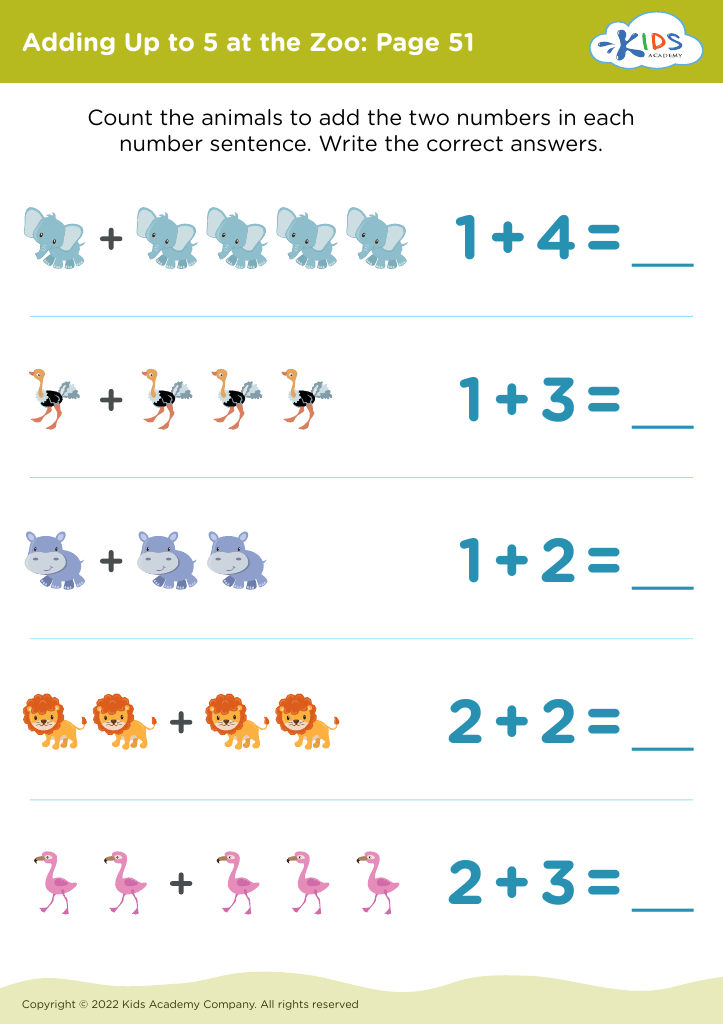
Enhance your child's counting abilities with our engaging math worksheets designed specifically for 5-year-olds! Our interactive resources are perfect for little learners, focusing on fundamental counting skills in a fun and accessible way. Through vibrant illustrations and age-appropriate activities, children will confidently practice counting objects, identifying numbers, and understanding basic quantities. Each worksheet is crafted to promote a strong mathematical foundation, instilling a love for numbers and problem-solving. Ideal for both classroom use and home practice, these worksheets encourage children to learn at their own pace while building essential skills. Start your child's math journey today with our exciting counting worksheets!
Favorites
With answer key
Interactive
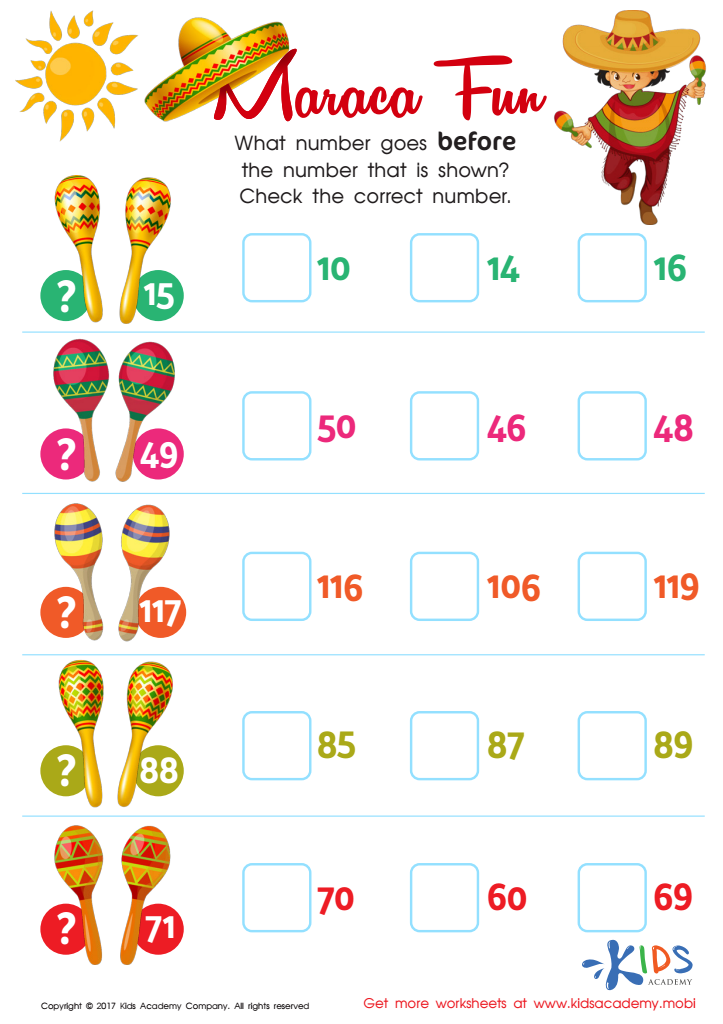
Counting: Maraca Fun Worksheet
Let your child add some Maraca fun to their math lessons by using this printable worksheet! They must figure out the numbers that come before the ones shown. Answers are provided on the other side; all your child needs to do is check the boxes with the correct numbers. Help them improve their counting and have fun along the way!
 Assign to My Students
Counting: Maraca Fun Worksheet
Worksheet
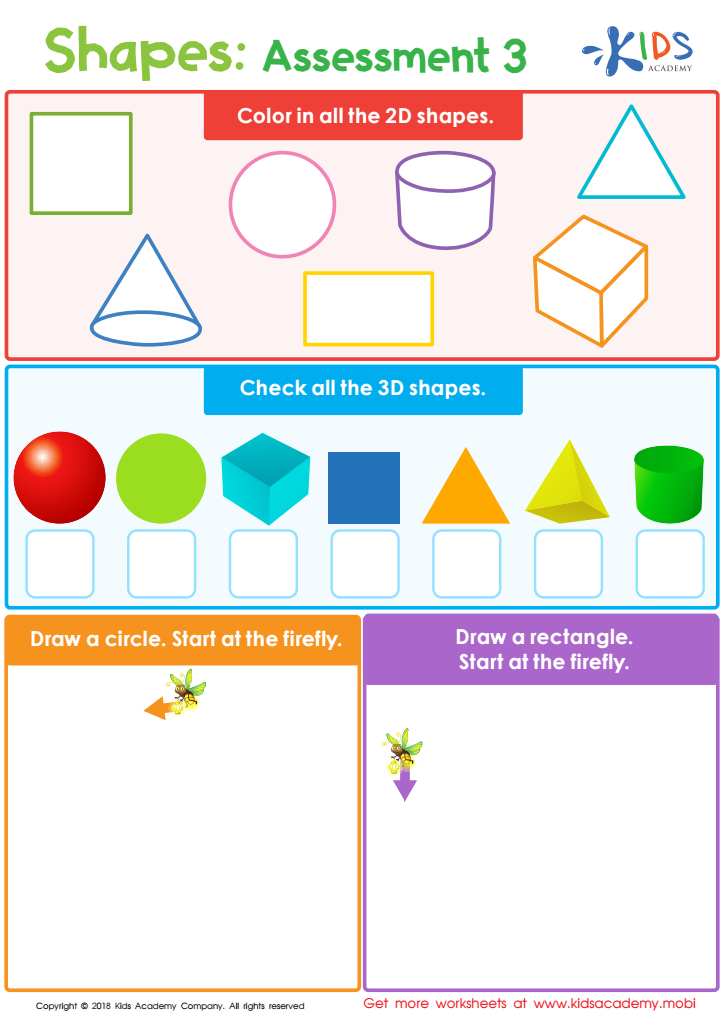
Shapes: Assessment 3 Worksheet
Shapes are everywhere! Help your students differentiate between 2D and 3D shapes. Ask them the difference between a triangle and pyramid, or a circle and a sphere. This worksheet tests their understanding of both types and is a useful assessment tool.
Shapes: Assessment 3 Worksheet
Worksheet
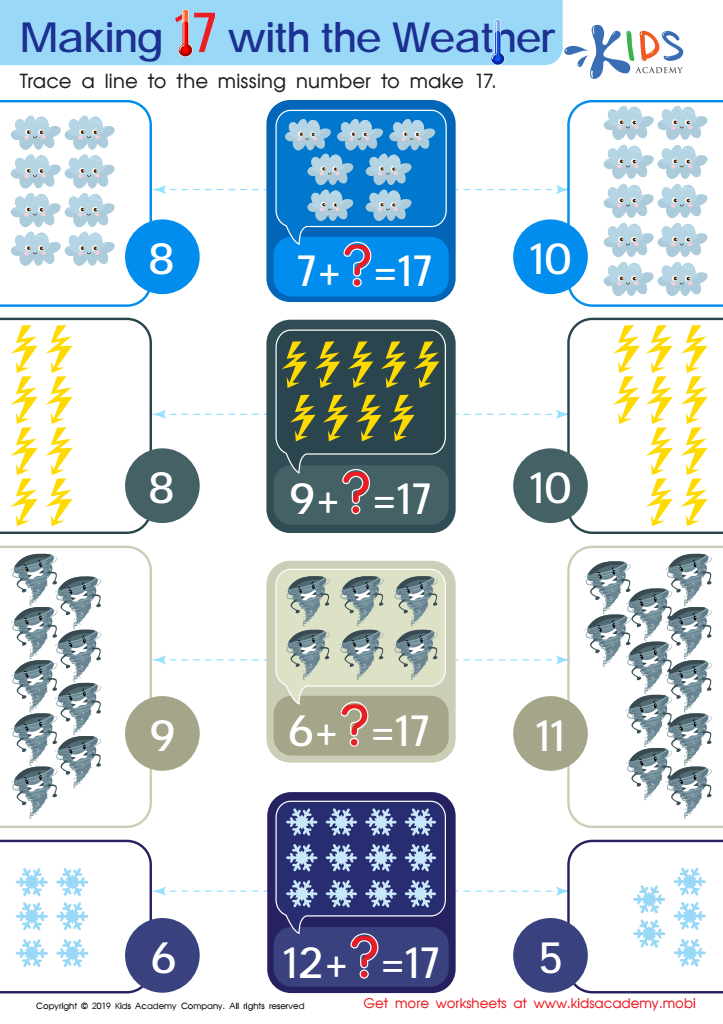
Making 17 with the Weather Worksheet
Show your kids the pictures in the worksheet and identify the weather. This exercise is to help them add simple numbers. There are 4 equations in the printout. Help them figure out the numbers to make 17, then trace a line to the missing number to complete the equation.
Making 17 with the Weather Worksheet
Worksheet
Join Kids Academy for Free
Who is primarily going to use this learning content?







Improving counting skills in 5-year-olds is crucial for their overall mathematical development and future academic success. At this age, children are at a critical stage of cognitive growth, and a solid foundation in counting serves as a stepping stone to more complex mathematical concepts. Mastery of counting helps young learners develop number sense, enabling them to understand the value of numbers and their relationships.
Greater counting skills foster confidence, allowing children to participate actively in math-related activities. This engagement can ignite a lifelong interest in mathematics. Furthermore, counting skills are connected to everyday experiences, helping children make sense of the world around them—including sorting objects, measuring ingredients in cooking, or counting toys.
Parents and teachers should also recognize the emotional and social benefits of counting games and activities, which can be fun and collaborative. Nurturing these skills can improve children's focus and patience as they engage in structured tasks. Ultimately, investing in counting skills not only equips 5-year-olds with necessary math foundations but also shapes their approach to problem-solving and critical thinking, essential skills for their academic journey and everyday life. By prioritizing this area, parents and teachers can significantly impact children’s educational milestones.








