Mathematical thinking Math Worksheets for 5-Year-Olds
4 filtered results
-
From - To
Introducing our engaging "Mathematical Thinking Math Worksheets for 5-Year-Olds"! Designed to nurture foundational math skills, these worksheets promote critical thinking, problem-solving, and number recognition in a fun and interactive way. Aligned with early learning standards, each activity encourages young learners to explore concepts such as counting, patterns, shapes, and simple operations through colorful visuals and age-appropriate challenges. Perfect for classroom use or at-home practice, our worksheets empower children to develop confidence in their mathematical abilities while fostering a love for learning. Enhance your child's educational journey and make math an enjoyable adventure with our specially curated resources!
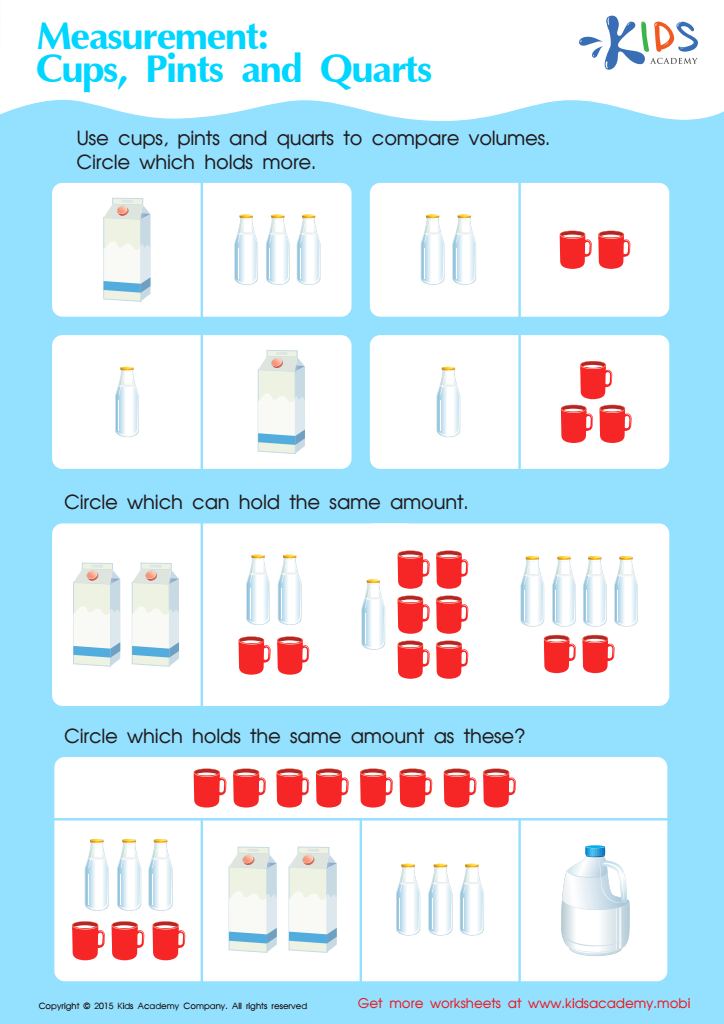
Measurement: Compare Volumes Worksheet
 Assign to My Students
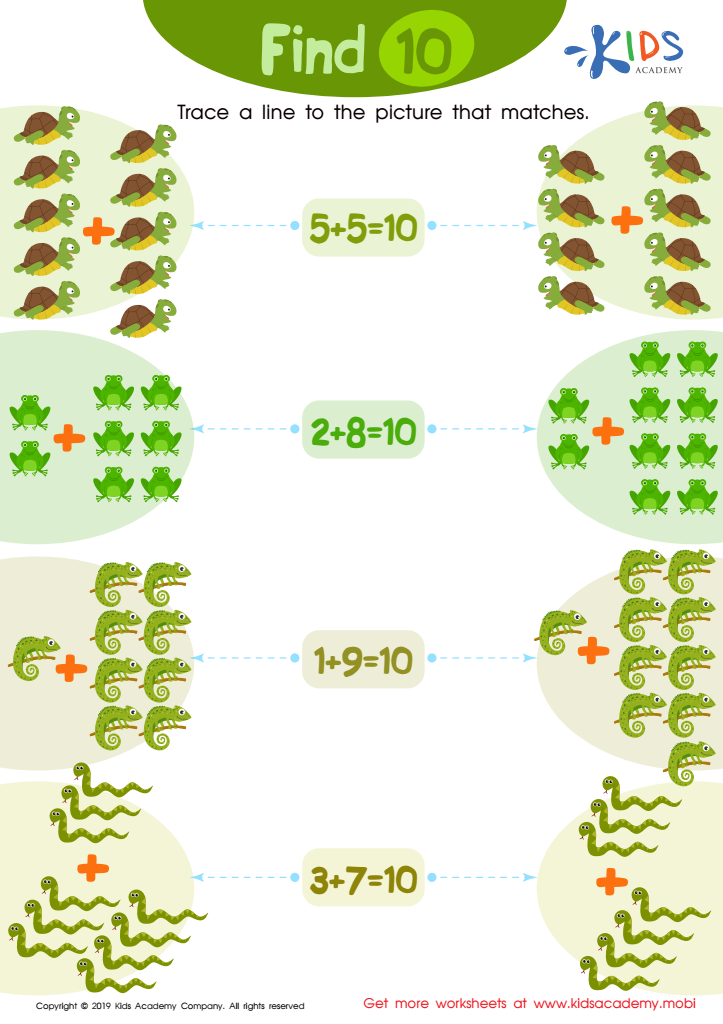
Find 10 Worksheet
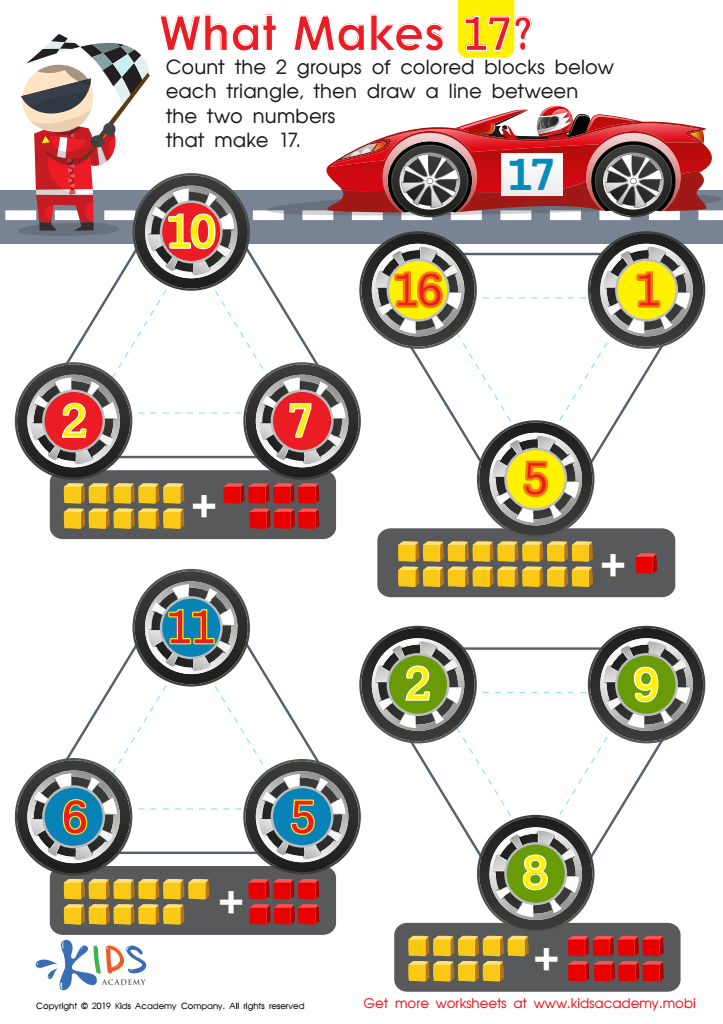
What Makes 17 Worksheet








Mathematical thinking is a foundational skill that significantly influences a child's overall cognitive development and future academic success. For 5-year-olds, fostering mathematical thinking goes beyond simple counting or basic arithmetic; it encompasses problem-solving, pattern recognition, and critical reasoning. Parents and teachers should care about cultivating these skills because early mathematical experiences form the basis for more complex concepts in later grades.
At this age, children are naturally curious and eager to explore their environment. Engaging them in mathematical thinking helps enhance their logical reasoning, boosts their confidence, and instills a love for learning. By introducing fun activities such as sorting objects, measuring ingredients for a play recipe, or navigating through shapes in games, adults can encourage children's innate mathematical abilities.
Moreover, strong mathematical thinking contributes to better problem-solving skills in general, impacting various aspects of life. Children with a solid mathematical foundation exhibit improved performance in subjects across the curriculum, not just math. Encouraging young learners to think critically can foster lifelong skills that will serve them in their future education and daily decision-making. By prioritizing mathematical thinking, parents and teachers set the stage for successful, empowered learners who are prepared for the challenges ahead.








