Mental arithmetic Math Worksheets for 5-Year-Olds
4 filtered results
-
From - To
Discover engaging mental arithmetic worksheets designed specifically for 5-year-olds at Kids Academy. Our resources focus on developing early math skills through fun and interactive exercises that promote calculation abilities in a playful way. Children will enhance their understanding of numbers, addition, and subtraction through activities that challenge their critical thinking and problem-solving skills. These worksheets are ideal for fostering a love of math from an early age, preparing young learners for future academic success. Explore our collection to provide your child with essential math practice in an enjoyable and effective format. Get started today and make learning math an exciting journey!
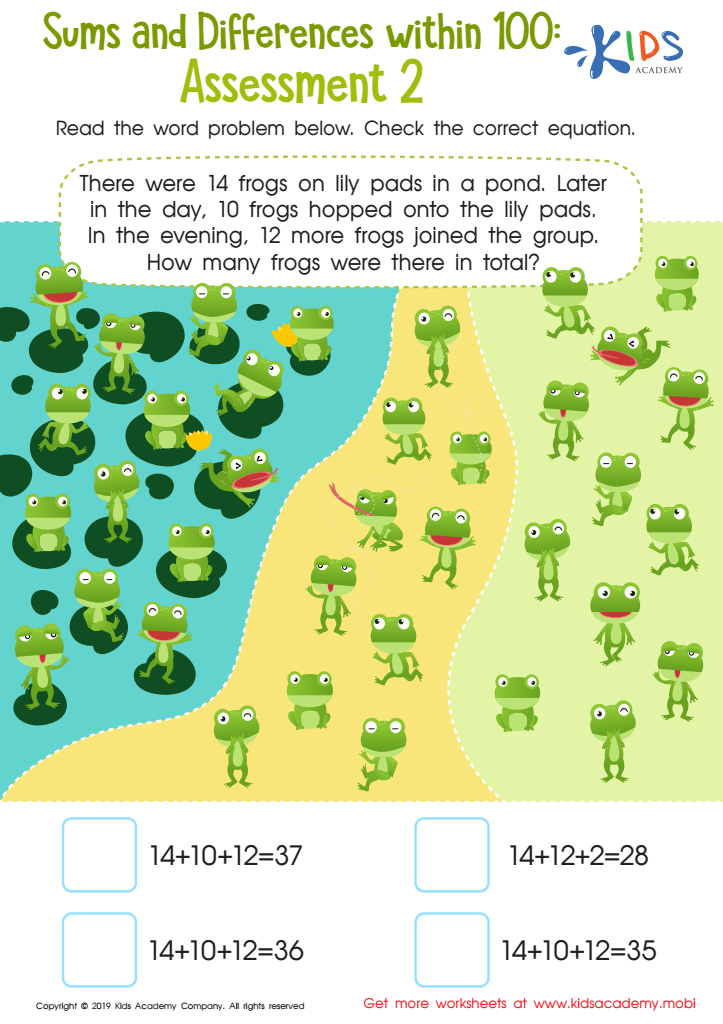
Sums and Differences Within 1 - Assessment 2 Worksheet
 Assign to My Students
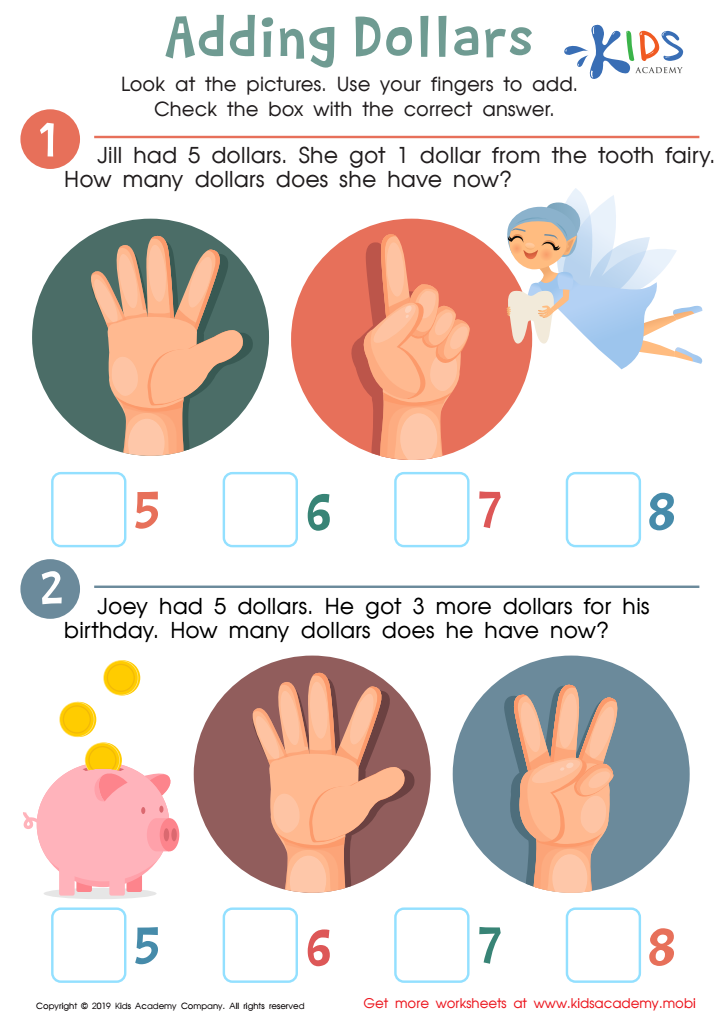
Tooth Fairy Addition Worksheet
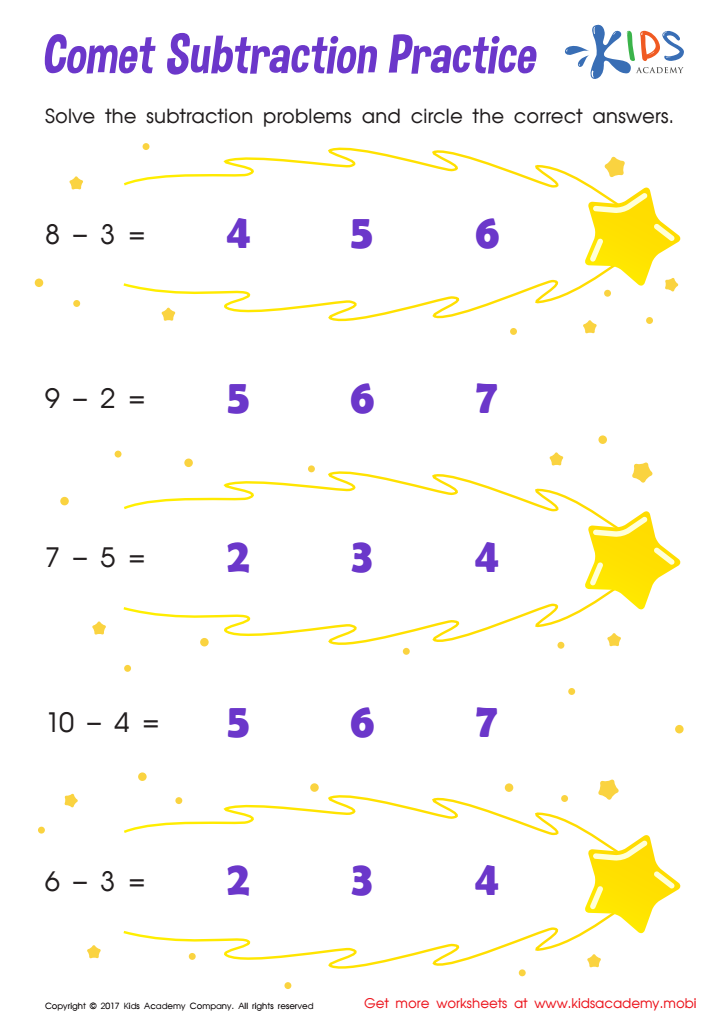
Comet Subtraction Practice Substraction Worksheet
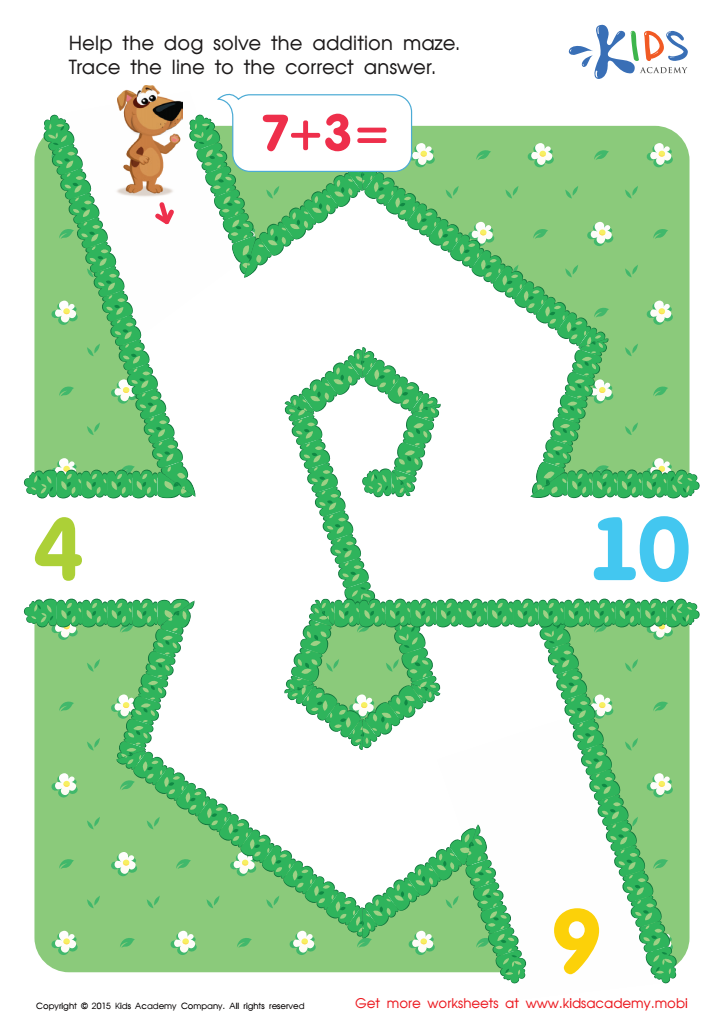
Seven Plus Three Worksheet








Mental arithmetic is a crucial skill for 5-year-olds, laying the foundation for future mathematical understanding. Engaging young learners in mental math activities not only helps them develop basic numerical skills—such as addition, subtraction, and number recognition—but also fosters critical thinking and problem-solving abilities.
At this age, children's brains are highly adaptable and primed for learning. Introducing mental arithmetic encourages cognitive growth, enhancing their ability to process information quickly and efficiently. Moreover, practicing mental math builds confidence in their abilities, reducing anxiety around math as they experience success in solving problems independently.
For parents and teachers, supporting mental arithmetic is also an opportunity to make learning enjoyable. Fun games and interactive activities can cultivate a love for numbers, transforming what might be perceived as a daunting subject into an exciting challenge. Additionally, these skills are increasingly important in everyday life, as they aid in quantity estimation, budgeting, and logical reasoning.
Ultimately, prioritizing mental arithmetic for young learners not only prepares them academically but also equips them with vital life skills, setting a positive trajectory for their educational journey. Investing time in these foundational skills pays off, as it empowers children to succeed in more complex mathematical concepts in the future.








