Money recognition Math Worksheets for 5-Year-Olds
6 filtered results
-
From - To
Enhance your child's financial literacy with our Money Recognition Math Worksheets, designed specifically for 5-year-olds. These engaging and educational printables help young learners identify and understand different coins and bills. Featuring colorful illustrations and interactive activities, our worksheets make learning about money fun and accessible. Watch as your child progresses in recognizing currency, counting coins, and making simple transactions, building a strong foundation for future math skills. Ideal for both classroom and home environments, these worksheets are a fantastic resource for parents and teachers alike. Give your child a head start in financial awareness today!
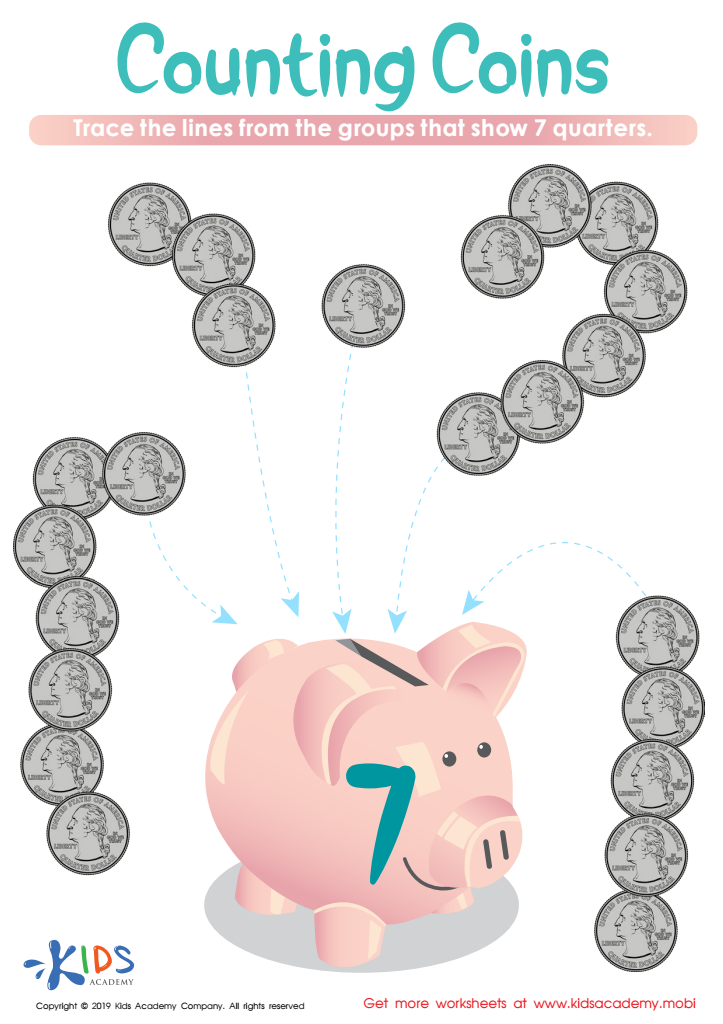
Counting Coins Worksheet
 Assign to My Students
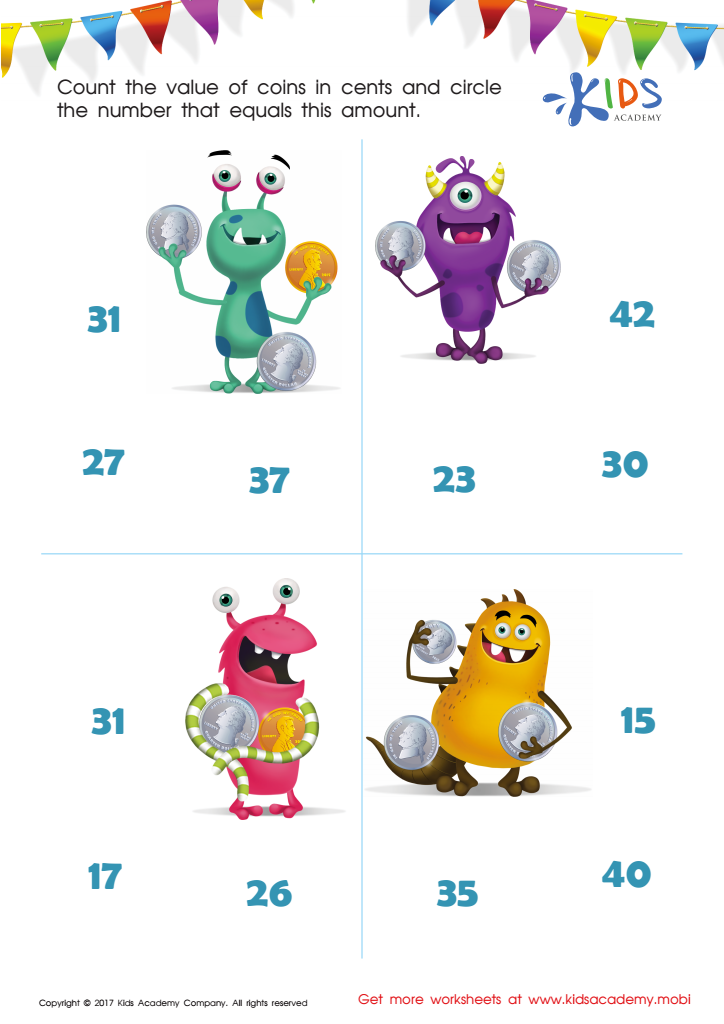
How Many Coins Money Worksheet
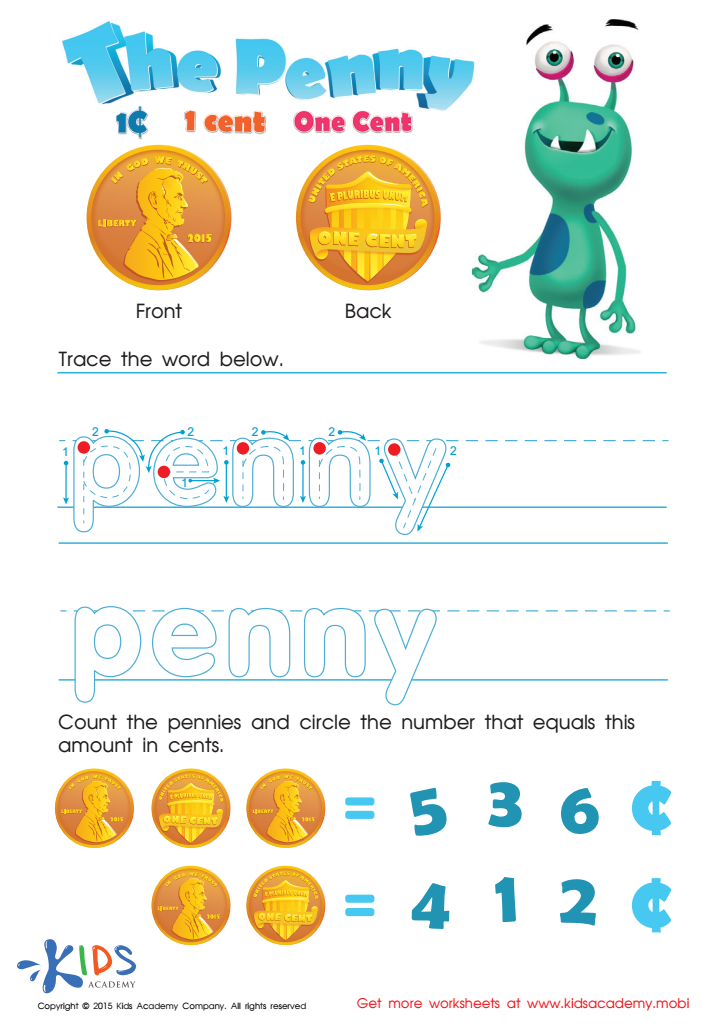
One Cent or the Penny Money Worksheet
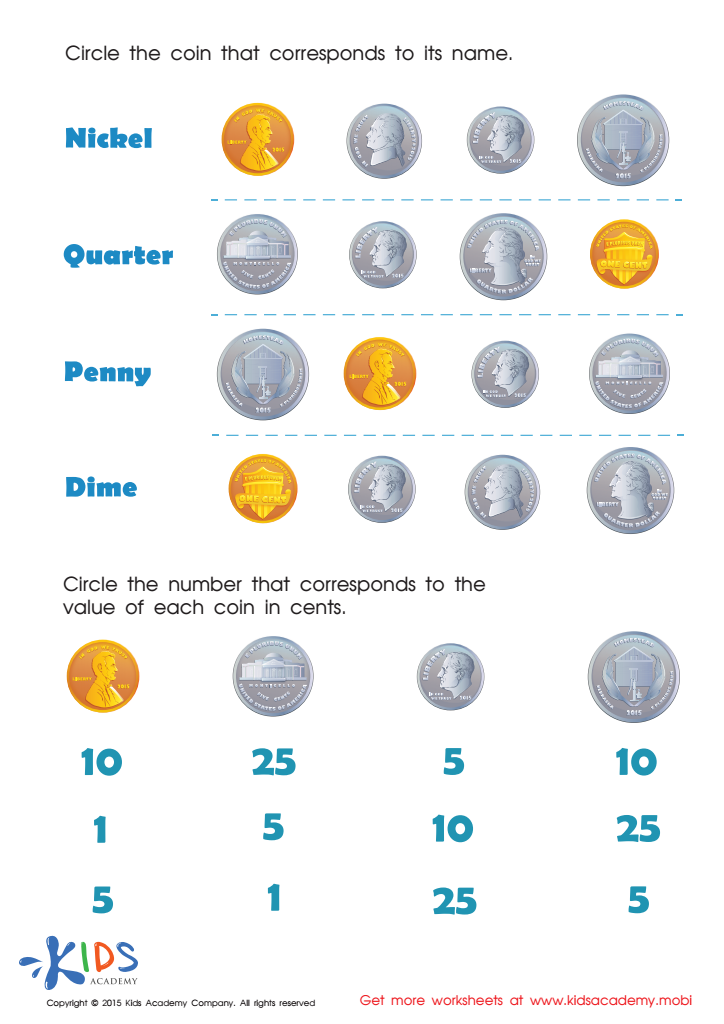
Coin Names and Values Money Worksheet
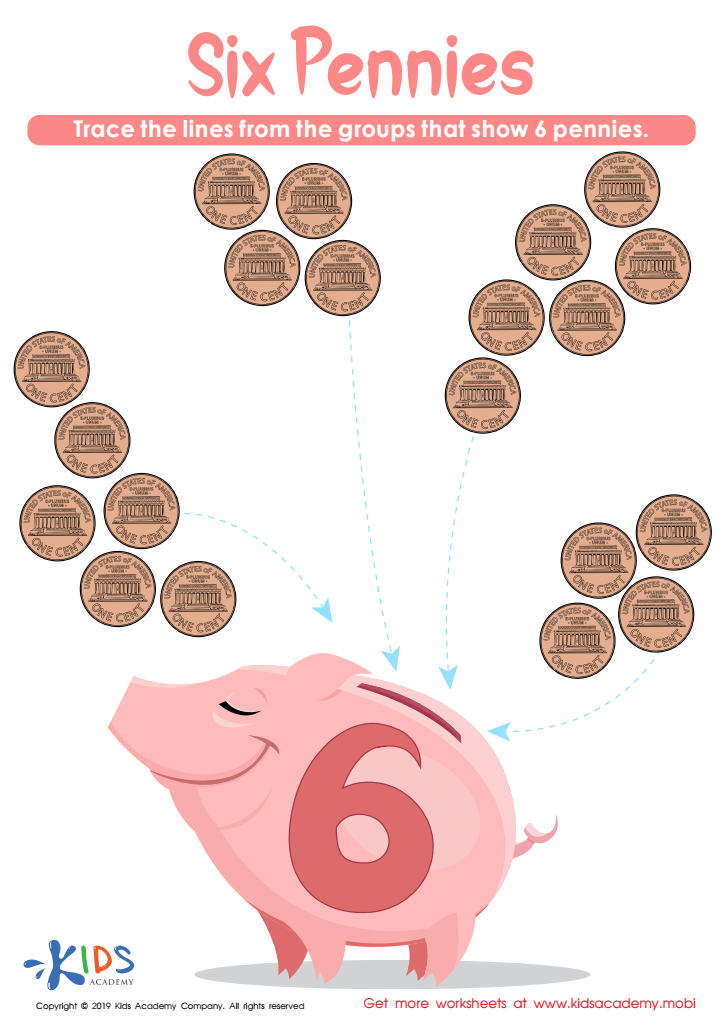
Six Pennies Worksheet
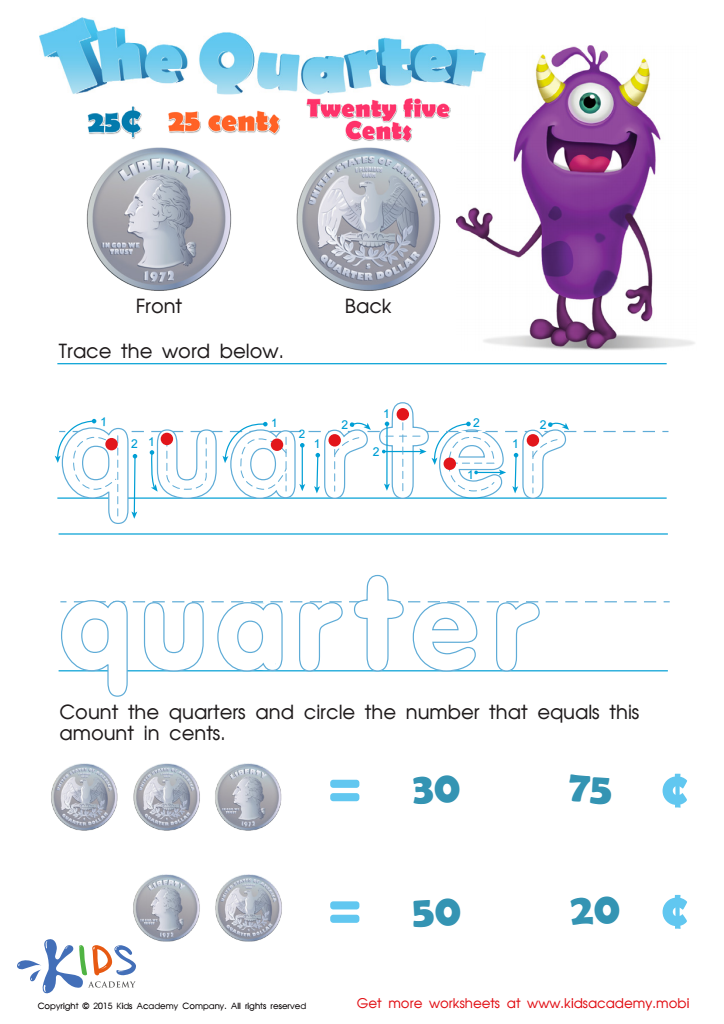
Twenty Five Cents or the Quarter Money Worksheet








Parents and teachers should pay close attention to money recognition for 5-year-olds for several compelling reasons. At this age, children are naturally curious and their brains are like sponges, soaking up new information rapidly. Introducing money recognition helps them develop important foundational math skills, including counting, addition, and subtraction in a real-world context. Understanding the value of different coins and bills fosters financial literacy at an early age, setting the stage for responsible money management in the future.
Moreover, money recognition promotes cognitive and fine motor skills as children learn to distinguish between similar-looking coins and bills, honing their observation and sorting abilities. It also provides ample opportunities for applied learning. For instance, role-play activities like buying and selling items in a pretend store can make the learning experience both exciting and practical.
Furthermore, learning about money introduces basic economic concepts such as value, exchange, and the concept of saving versus spending. By understanding these principles early, children can develop a more responsible attitude towards money. Parents and teachers who incorporate money recognition into their teaching foster a balanced educational approach, coupling academic skills with essential life skills that are crucial for personal development and future success.








