Understanding directions Math Worksheets for 5-Year-Olds
4 filtered results
-
From - To
Introducing our "Understanding Directions Math Worksheets for 5-Year-Olds!" These fun and engaging printables are designed to help young learners develop essential spatial awareness and directional skills. Through colorful and interactive activities, children will practice recognizing left, right, up, down, and more, all while enhancing their problem-solving and critical-thinking abilities. Ideal for both classroom and home use, our worksheets ensure that learning directions is both enjoyable and educational. With our expertly crafted exercises, your child will be navigating directions with confidence in no time! Boost your child's developmental milestones today with our expertly crafted math worksheets.
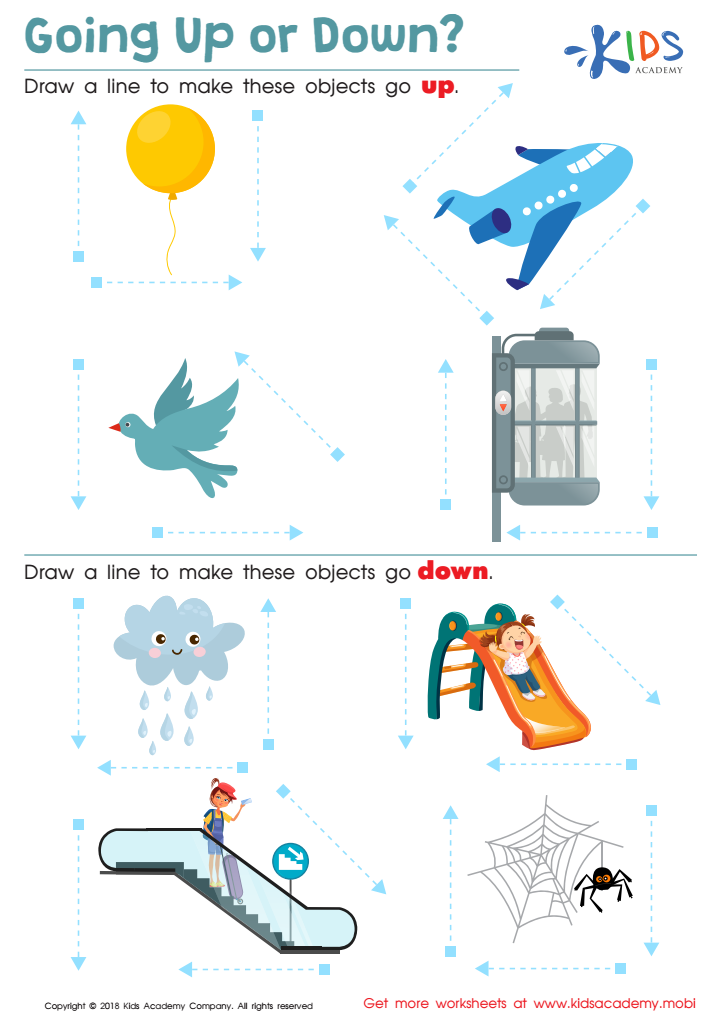
Going up or Down? Worksheet
 Assign to My Students
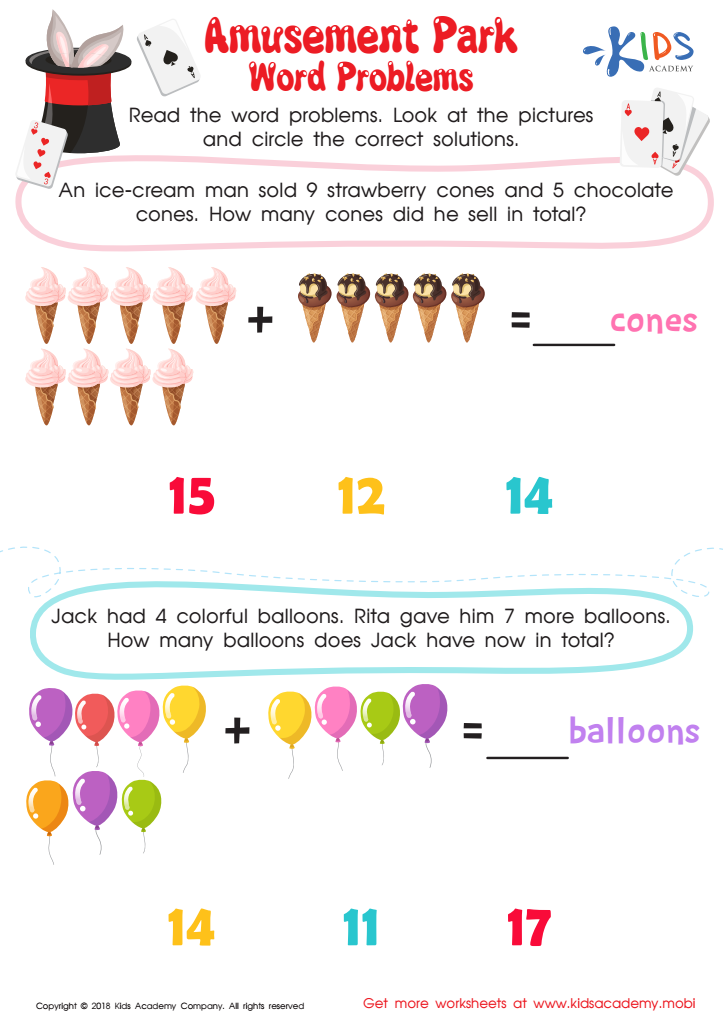
Amusement Park Word Problems Worksheet
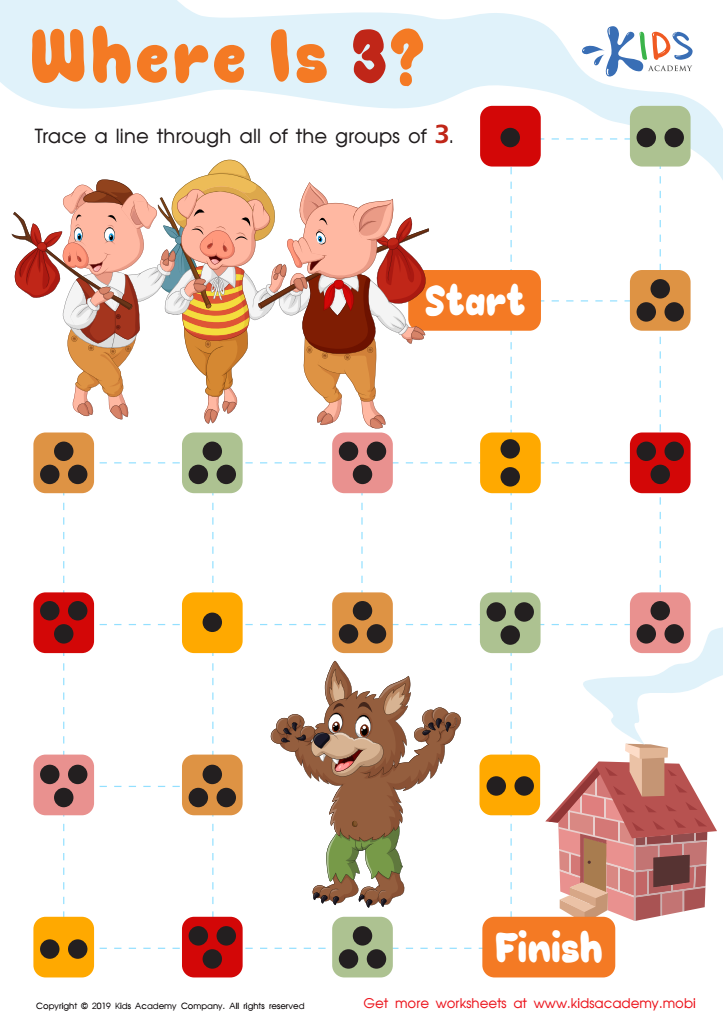
Where Is 3? Worksheet
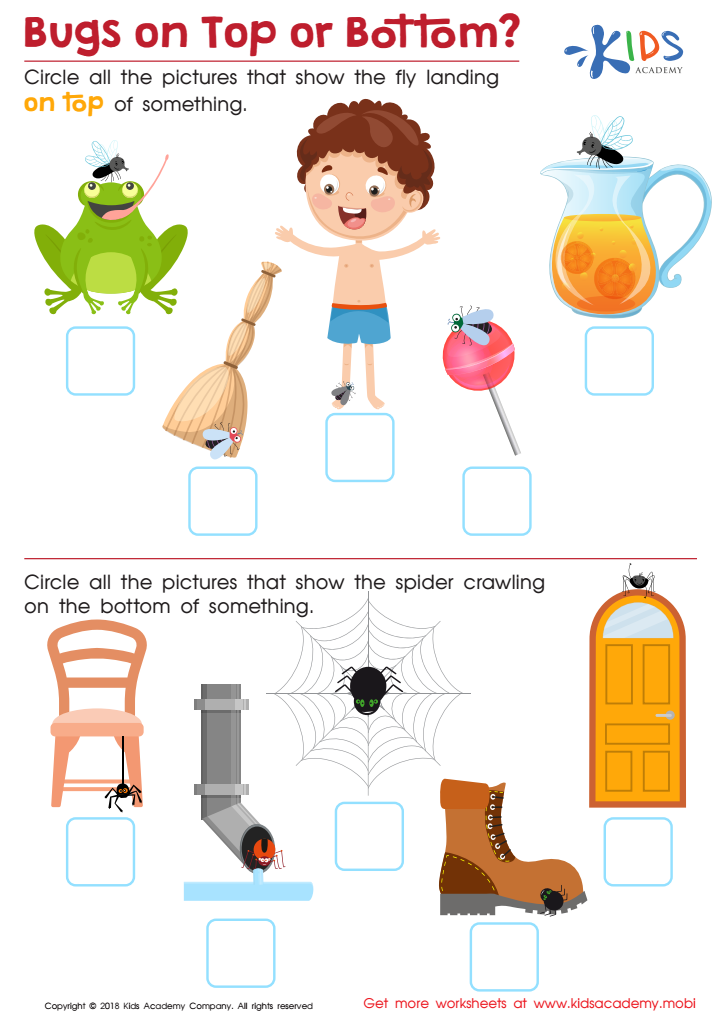
Bugs on Top or Bottom? Worksheet








Understanding directions in math at the age of five is foundational for a child’s overall development and future academic success. At this critical stage, children are developing essential cognitive skills, such as spatial awareness and logical thinking, which are imperative for understanding more complex mathematical concepts later on. When parents and teachers emphasize direction-following in math—like understanding "up vs. down" or "left vs. right"—they are essentially nurturing these skills.
Moreover, this focus helps children gain independence and the ability to follow multi-step instructions, both crucial for success in school and daily life activities. For example, placing an object above or below another one, or figuring out the shortest path to a destination, helps children integrate mathematical concepts with real-world scenarios, enhancing their problem-solving abilities.
Additionally, understanding directions aids in language development and strengthens a child’s ability to communicate effectively. Describing position and movement, even in simple terms, builds a robust vocabulary that supports reading comprehension and verbal reasoning.
In essence, dedicating attention to this aspect of early math instruction fosters a joy for learning, prepares children for higher-order math tasks, and equips them with foundational skills crucial for their holistic growth. Therefore, ensuring that math includes directional understanding is investing in the child's cognitive and academic groundwork.








