Understanding number patterns Math Worksheets for 5-Year-Olds
3 filtered results
-
From - To
Unlock your child's potential with our "Understanding Number Patterns Math Worksheets" designed specifically for 5-year-olds. These engaging worksheets from Kids Academy help young learners recognize and predict number sequences, fostering essential early math skills. Featuring colorful visuals and fun exercises, our worksheets make learning interactive and enjoyable. By exploring various patterns, including counting, sequencing, and simple additions, children build a strong math foundation that promotes critical thinking and problem-solving abilities. Perfect for parents and educators, these printable resources support classroom learning and at-home practice. Start your child's math journey with our expertly crafted worksheets today!
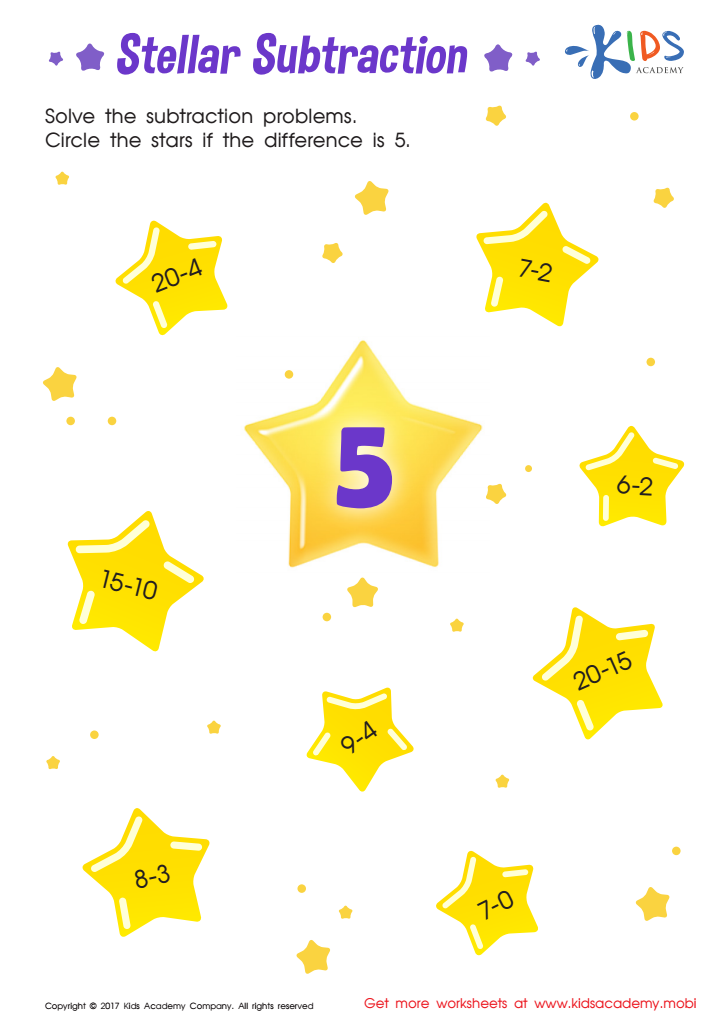
 Assign to My Students
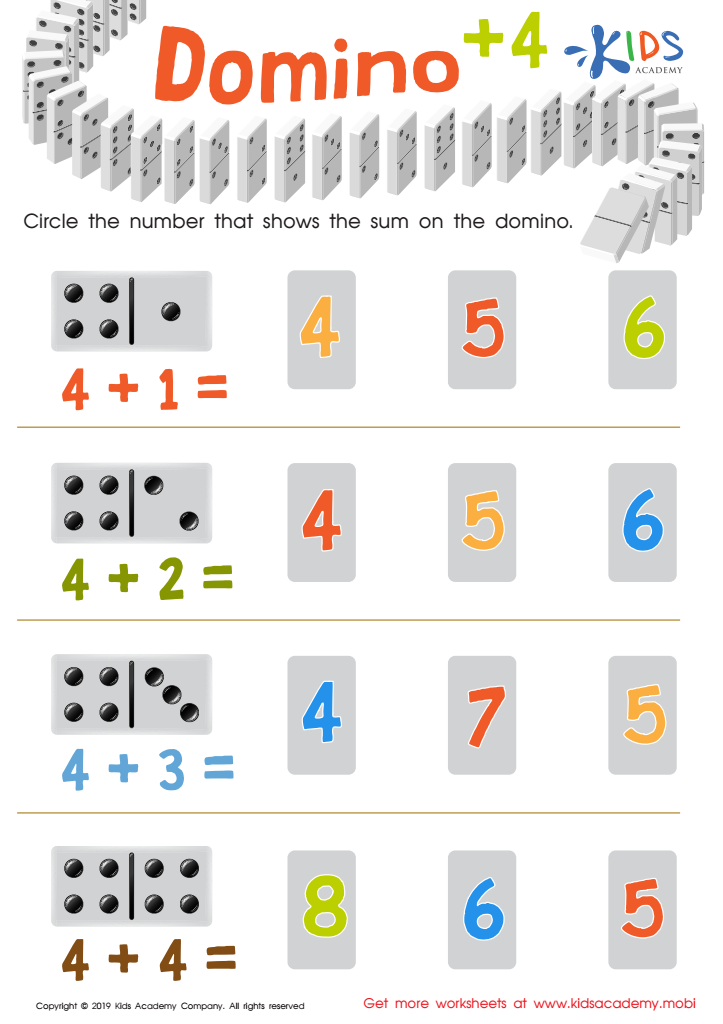
Domino +4 Worksheet
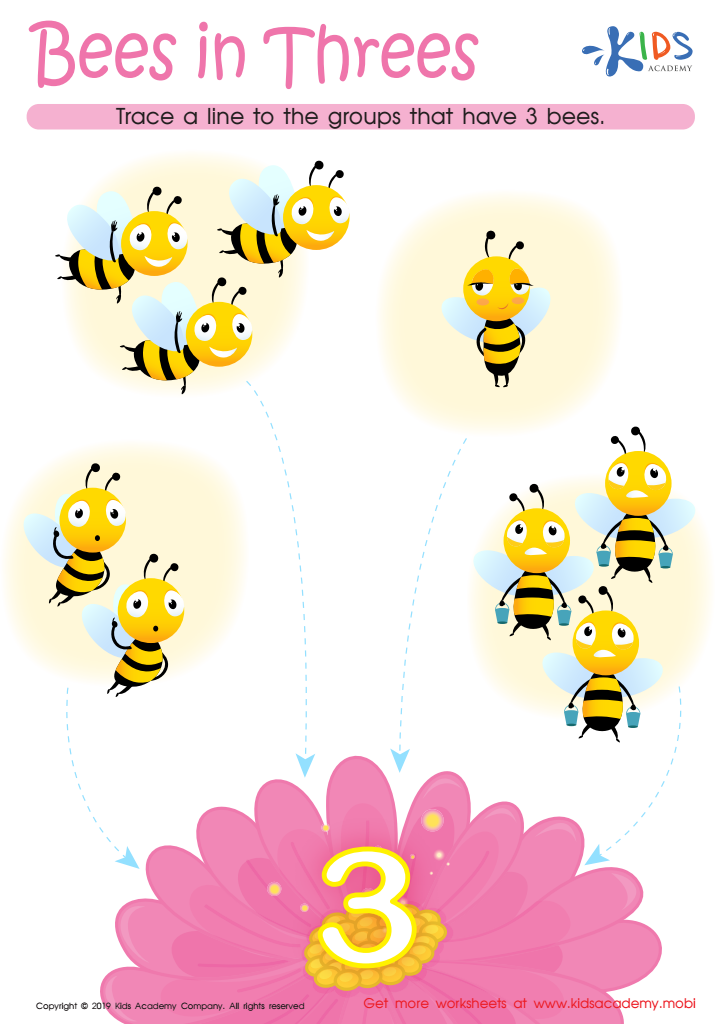
Bees in Threes Worksheet








Understanding number patterns is a critical skill for young learners that holds considerable importance for both parents and teachers to nurture. At its core, recognizing and predicting patterns helps young children develop essential mathematical thinking and problem-solving skills. Patterns form the basic building blocks of mathematics, encompassing sequencing, ordering, and understanding relationships between numbers.
For 5-year-olds, learning number patterns bolsters their cognitive development. It enhances their ability to make connections and recognize order in their environment, fostering logical thinking and analytical abilities early on. These foundational skills are crucial as they progress into more complex mathematical concepts and operations, such as addition, subtraction, multiplication, and division.
Moreover, mastering number patterns can boost a child’s confidence and enjoyment of learning math. When kids spot patterns, they experience moments of discovery that can make math enjoyable and intriguing for them. Cultivating a positive attitude toward math in the early years can lay a strong foundation for future academic success.
Understanding number patterns also extends beyond math, aiding in reading development and general problem-solving abilities. Therefore, by actively engaging children with number patterns, parents and teachers set the stage for holistic educational growth, ensuring that young learners are well-prepared for the varied intellectual challenges ahead.








