Understanding number relationships Math Worksheets for 5-Year-Olds
4 filtered results
-
From - To
Unlock your child's math potential with our "Understanding Number Relationships" worksheets tailored for 5-year-olds. These engaging and interactive activities help young learners explore essential concepts like counting, comparing numbers, and recognizing patterns. Designed to make math enjoyable, our worksheets encourage critical thinking and problem-solving skills in a fun and playful way. Whether you're at home or in the classroom, these resources foster a strong foundational understanding of number relationships, setting the stage for future mathematical success. Let your little ones dive into a world of numbers and discover the joy of math through colorful and captivating worksheets!
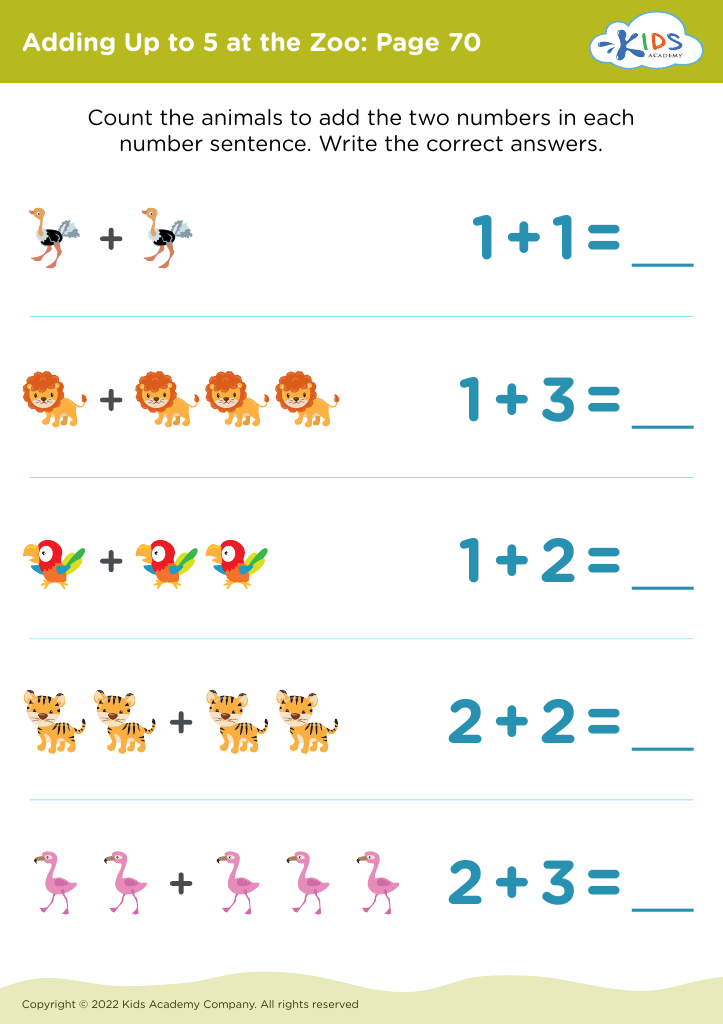
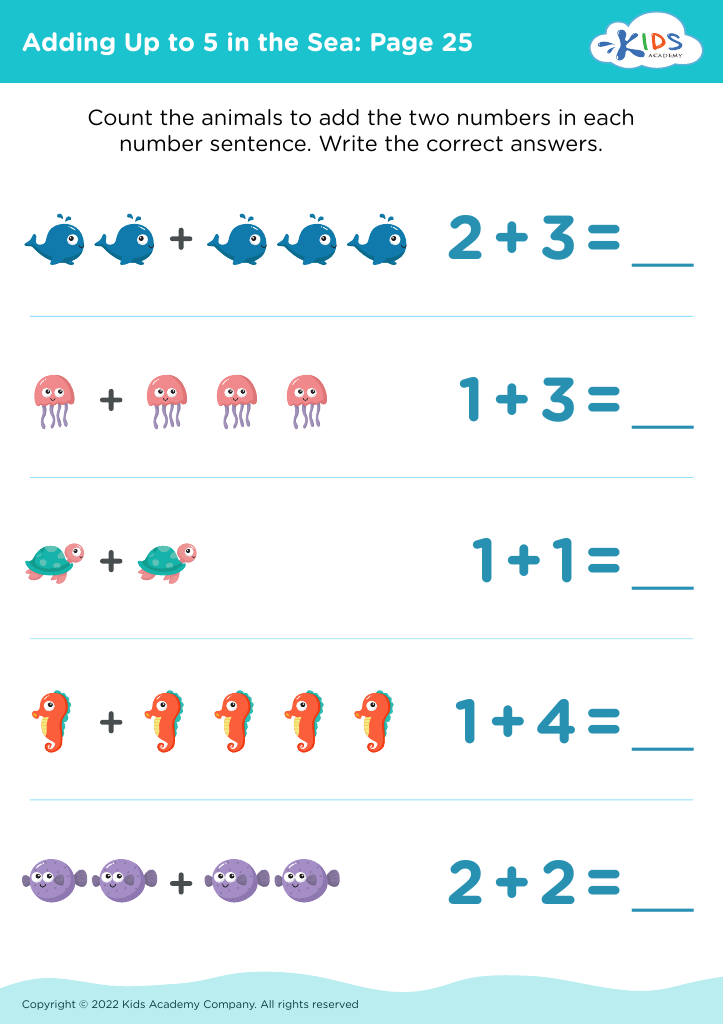
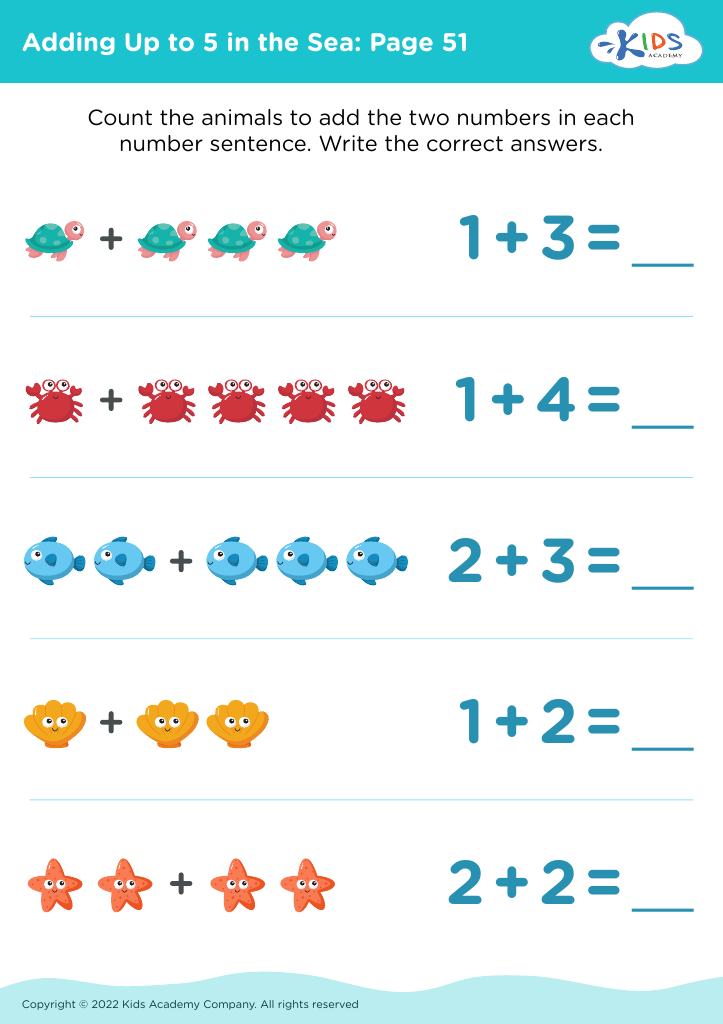
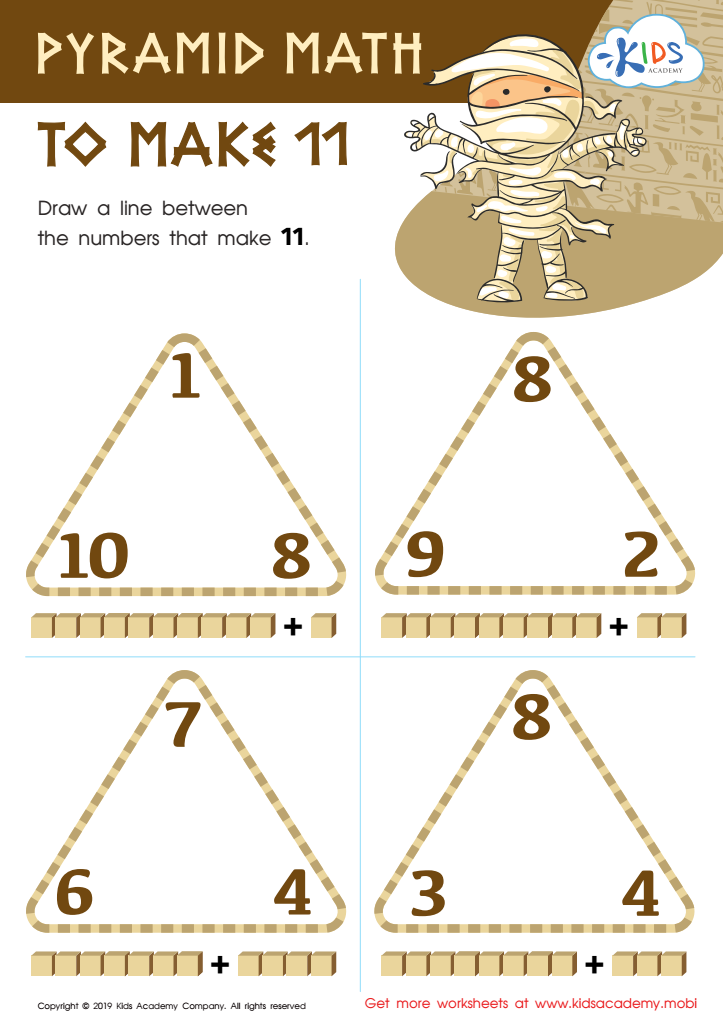
Pyramid Math to Make 11 Worksheet
 Assign to My Students







.jpg)
Understanding number relationships in early math education is crucial for 5-year-olds as it builds a strong foundation for their future mathematical skills. At this stage, children begin to grasp fundamental concepts such as quantity, number comparison, and the idea of addition and subtraction. By understanding how numbers relate to one another, children develop problem-solving skills that will be essential throughout their academic journey.
Parents and teachers should care about this because a strong grasp of number relationships promotes critical thinking and cognitive development. When children can recognize patterns and relationships between numbers, they become more confident and competent in math, reducing the likelihood of frustration in later years. Early math skills also correlate with success in other academic areas, fostering a well-rounded educational experience.
Moreover, instilling a positive attitude towards math in young children encourages lifelong learning. Engaging children in playful math activities builds their curiosity and enthusiasm for numbers, which can lead to better academic performance in school. By prioritizing the understanding of number relationships, parents and teachers not only enhance children's mathematical abilities but also nurture their social-emotional development, preparing them for future success. This foundation is essential in developing skilled, capable learners who are ready to tackle more complex concepts as they grow.








