
Understanding Quantities Math Worksheets for 5-Year-Olds
47 filtered results
Difficulty Level
Grade
Age
-
From - To
Subject
Activity
Standards
Welcome to our "Understanding Quantities Math Worksheets for 5-Year-Olds!" These engaging worksheets are designed to help young learners explore and grasp the concept of quantities through fun and interactive activities. Your child will practice counting, comparing amounts, and identifying different group sizes using vibrant visuals and relatable themes. Our user-friendly resources promote essential math skills while encouraging creativity and critical thinking. Perfect for both at-home learning and classroom activities, these worksheets make mastering the basics of math enjoyable for little ones. Start nurturing your child's math proficiency today and watch them gain confidence in their understanding of quantities!
Favorites
With answer key
Interactive
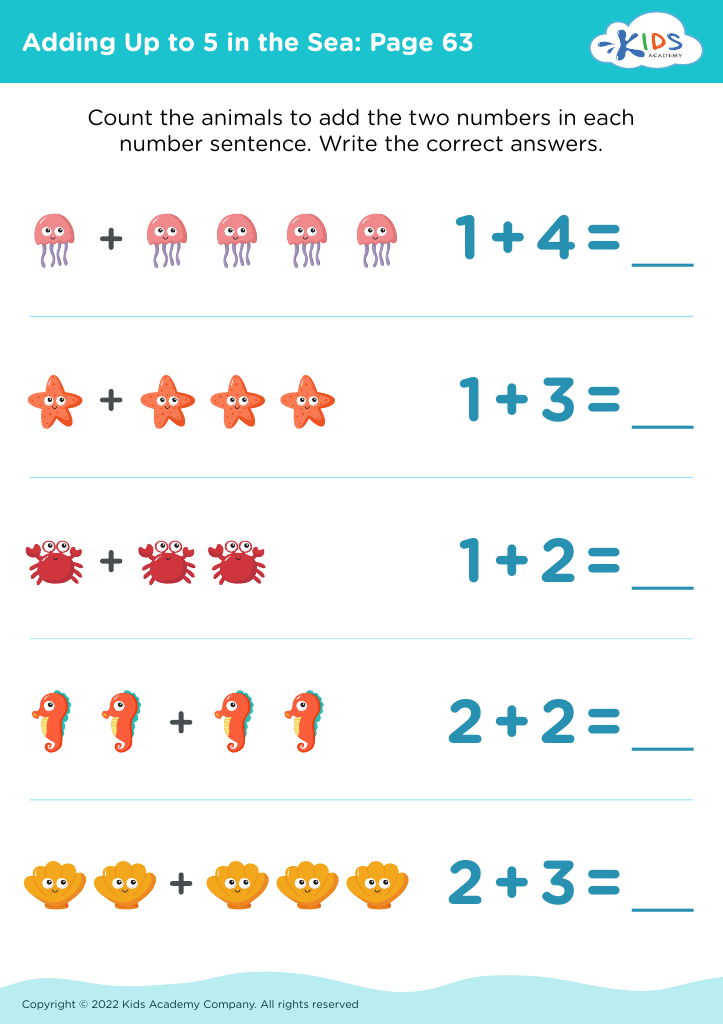
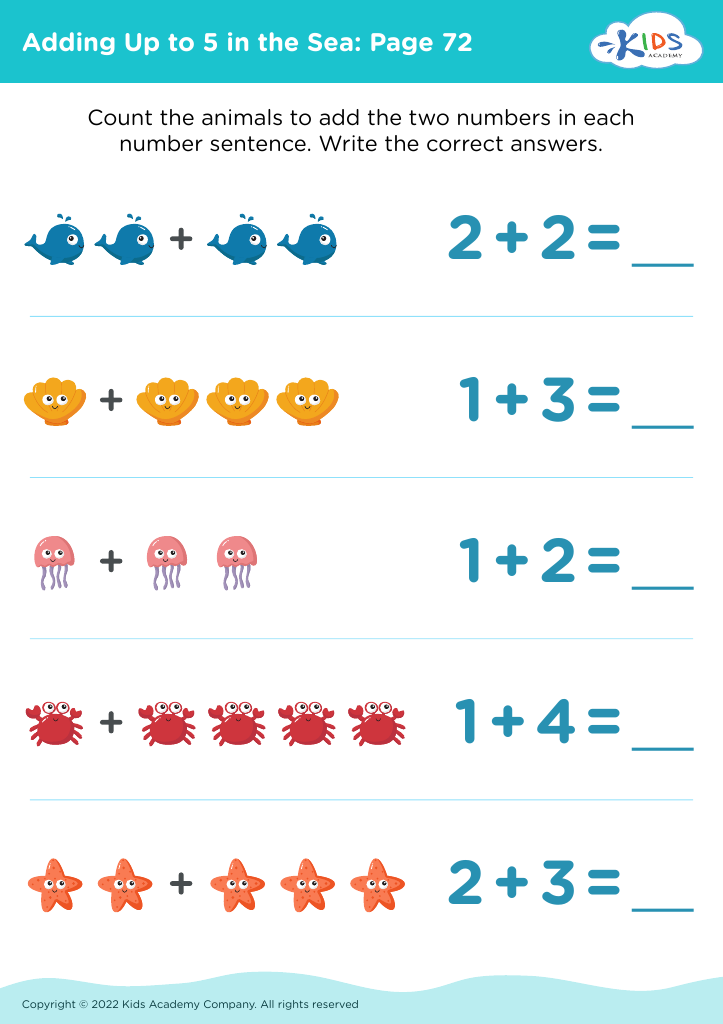
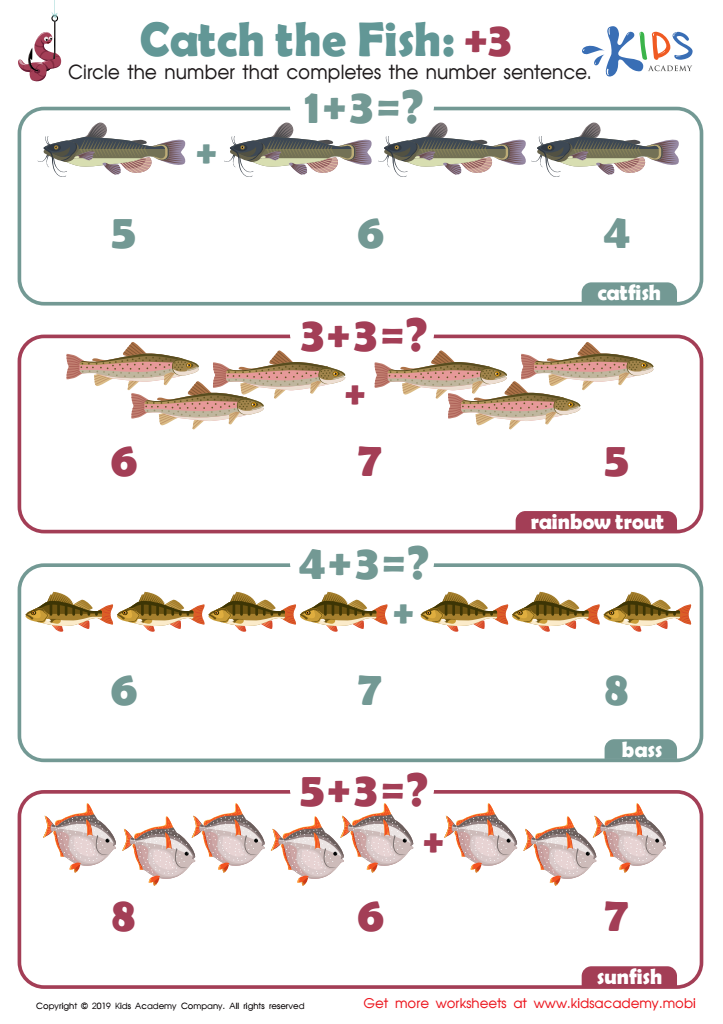
Catch the Fish: +3 Worksheet
Math may be tricky for your child, with all the numbers and calculations. This worksheet can help them brush up. Ask them to identify the objects in the picture, then count them and help them circle the right number to complete the sentence. It's a simple and effective way to improve math skills.
 Assign to My Students
Catch the Fish: +3 Worksheet
Worksheet
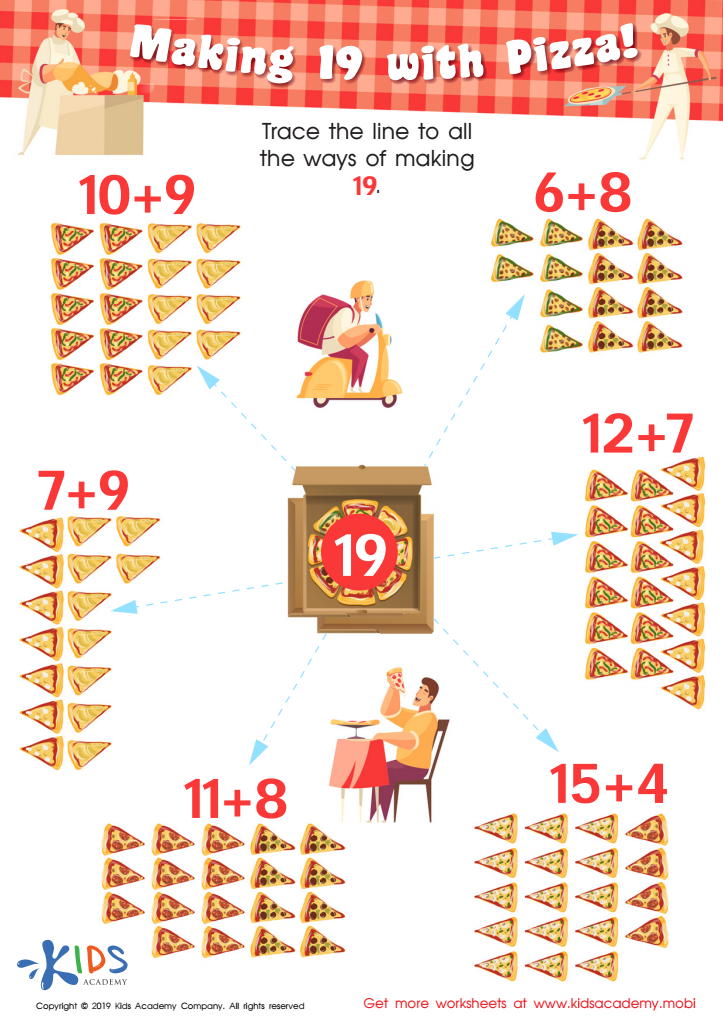
Making 19 with Pizza! Worksheet
Who loves pizza? Your kids do! Next time you need to teach them math, make it fun by combining it with something they enjoy. This worksheet uses a pizza-themed problem to help them practice solving equations. Have them trace the line to figure out how to make 19. It's a great way to make learning math fun!
Making 19 with Pizza! Worksheet
Worksheet
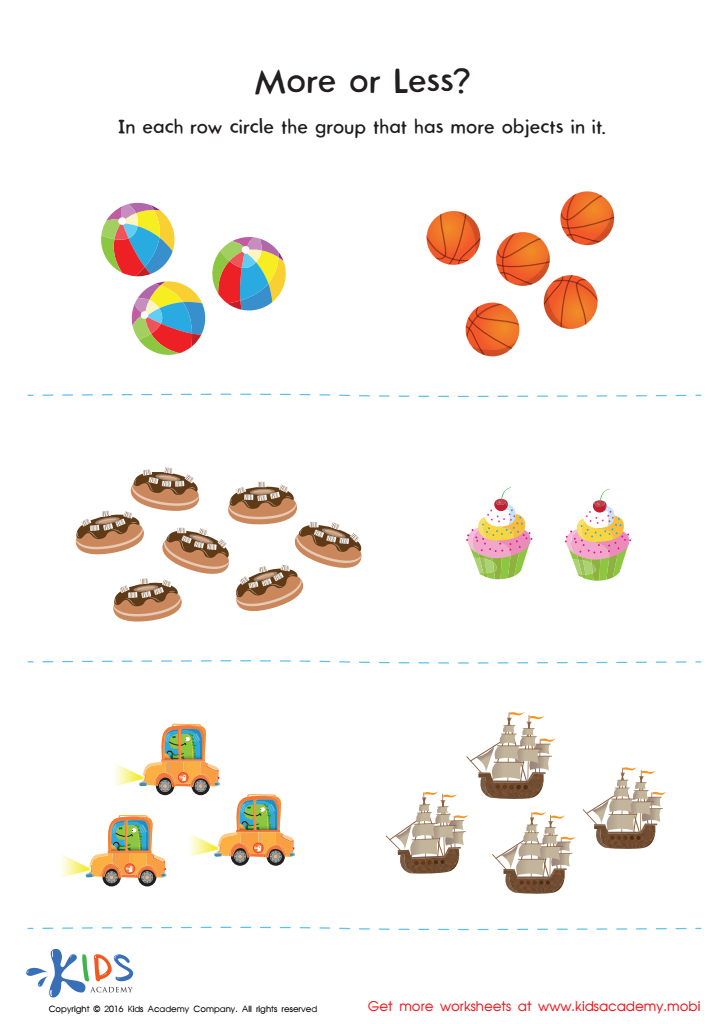
More or Less Size Worksheet
Worksheet
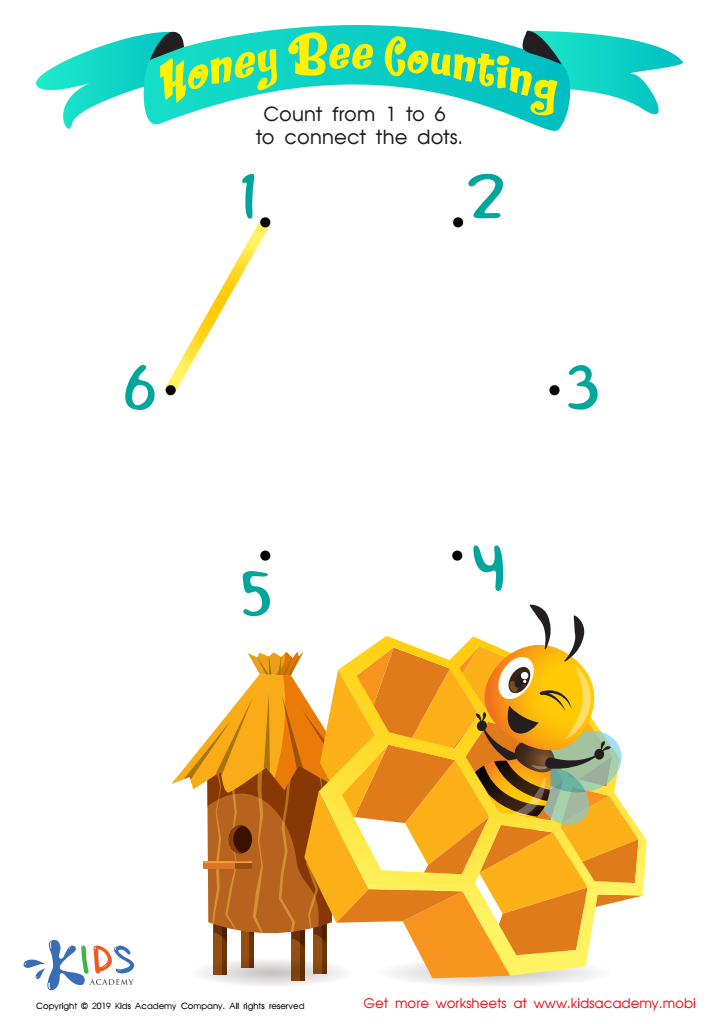
Honey Bee Counting Worksheet
Help your kids learn about honey bees while practising their counting skills! Show them the picture and ask them to point out the bee. Then, give them this worksheet and have them count up to 6, connecting the dots as they go. Numbers are provided for guidance - it's a great way to have fun and learn!
Honey Bee Counting Worksheet
Worksheet
Join Kids Academy for Free
Who is primarily going to use this learning content?


%20(1).jpg)





Understanding quantities is a foundational math skill for 5-year-olds that significantly influences a child's cognitive development and future learning. This concept is crucial as it helps children grasp basic mathematical ideas, such as counting, comparing, and measuring. By recognizing quantities, children learn to organize their thoughts, solve problems, and make sense of the world around them.
Parents and teachers should care about fostering this understanding because it lays the groundwork for more complex mathematical concepts later on, such as addition, subtraction, and patterns. Early exposure to quantities enhances a child's confidence and interest in math, reducing anxiety associated with the subject as they progress in their education.
Additionally, understanding quantities integrates with everyday experiences, making learning relevant. Facilitating activities like counting fruits during snack time or sorting toys by quantity enables young learners to see math in action, promoting both critical thinking and social interaction. Moreover, these foundational skills are often interconnected with literacy and cognitive abilities, thus supporting overall educational growth.
In sum, prioritizing comprehension of quantities equips children with the necessary tools for academic success and lifelong learning, making it essential for both parents and teachers to engage in this vital aspect of early childhood development.








