Check out this FREE Trial Lesson on Math for age 5!

A

Favorites
With answer key
Interactive
  • 5
  • Visual Learning
  • Math
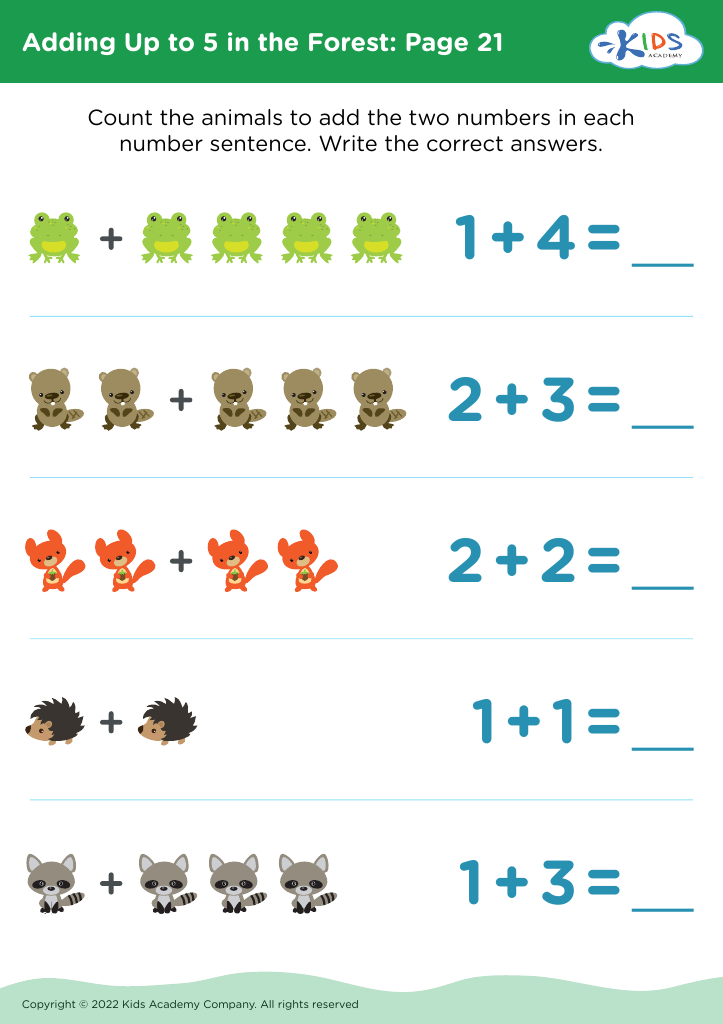
Adding Up to 5 in the Forest: Page 21
Worksheet
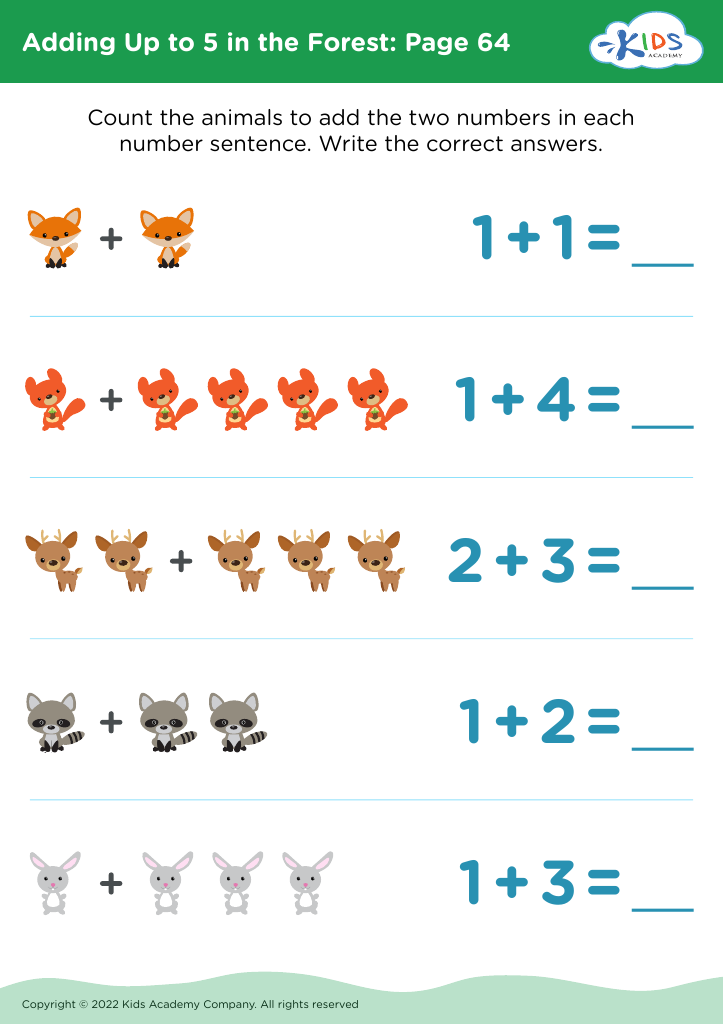
Adding Up to 5 in the Forest: Page 64
Worksheet
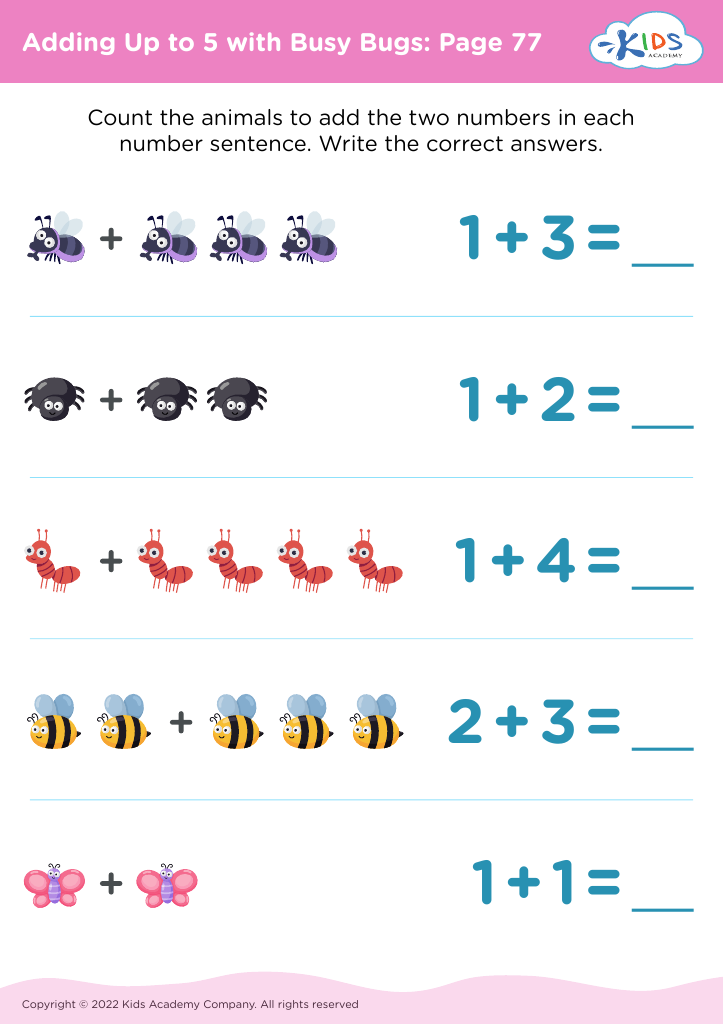
Adding Up to 5 with Busy Bugs: Page 77
Worksheet
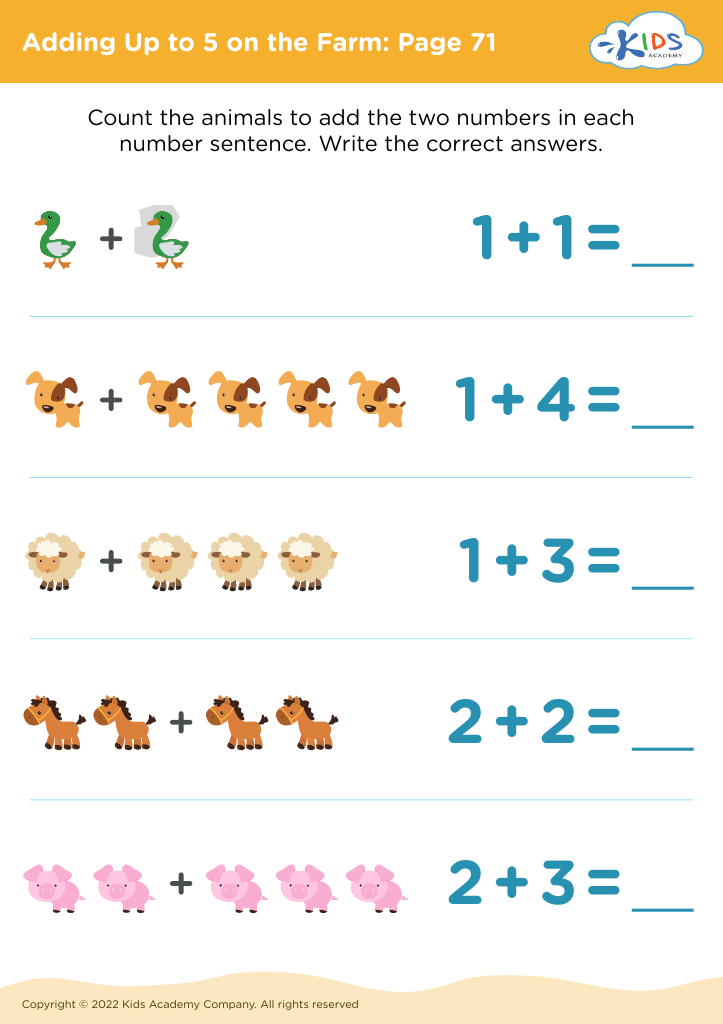
Adding Up to 5 on the Farm: Page 71
Worksheet
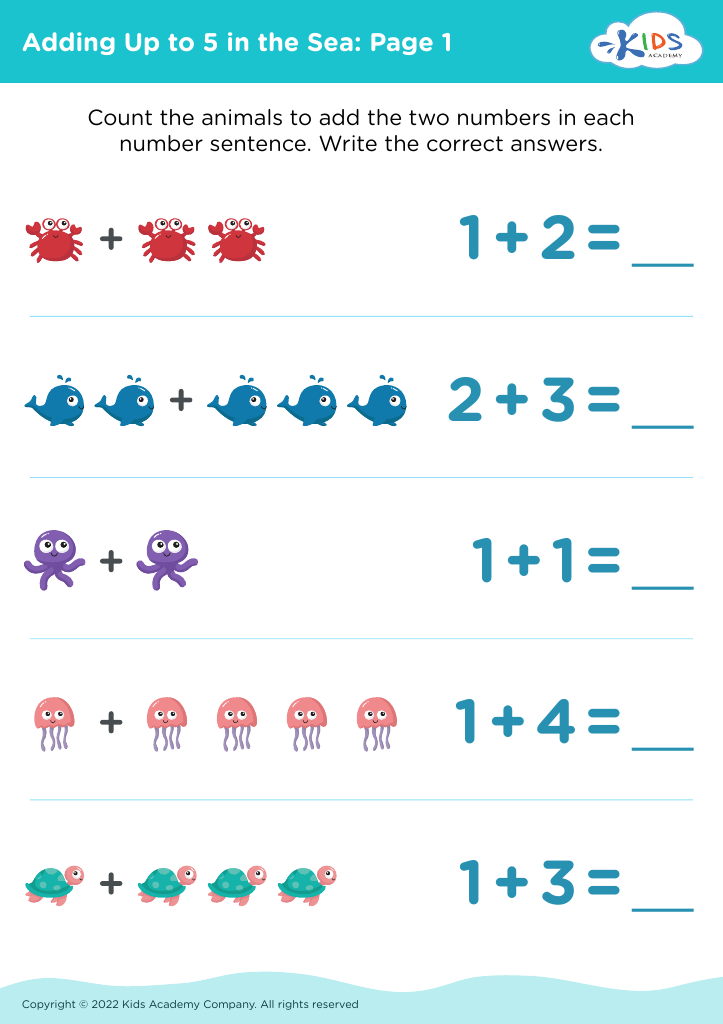
Adding Up to 5 in the Sea: Page 1

Adding Up to 5 in the Sea: Page 1

Adding Up to 5 in the Sea: Page 1
Worksheet
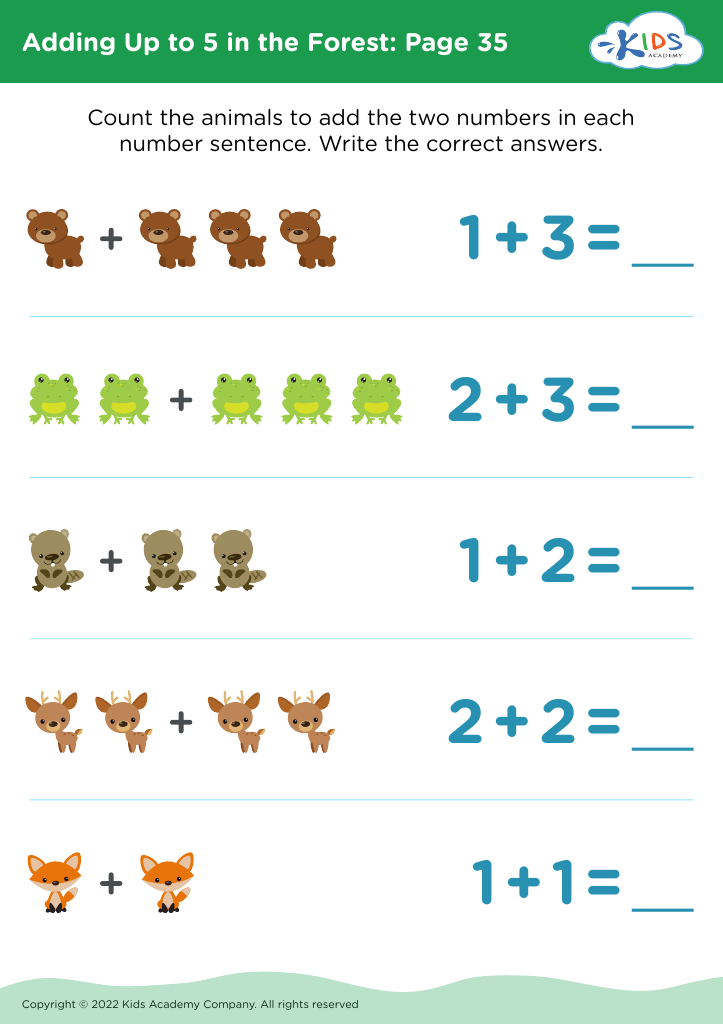
Adding Up to 5 in the Forest: Page 35
Worksheet
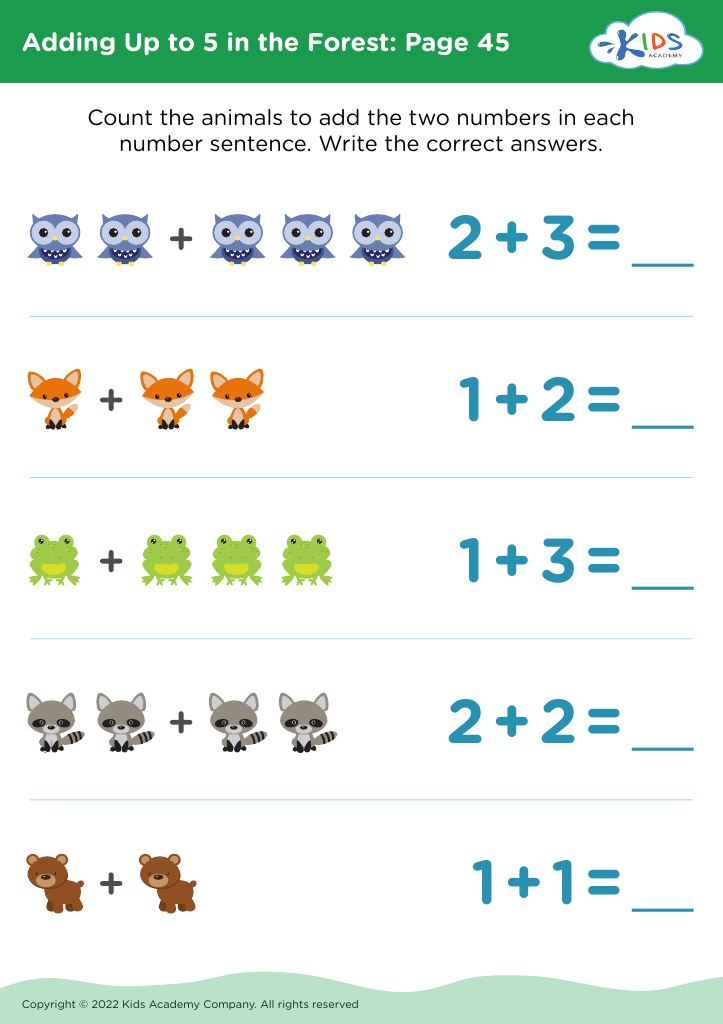
Adding Up to 5 in the Forest: Page 45
Worksheet
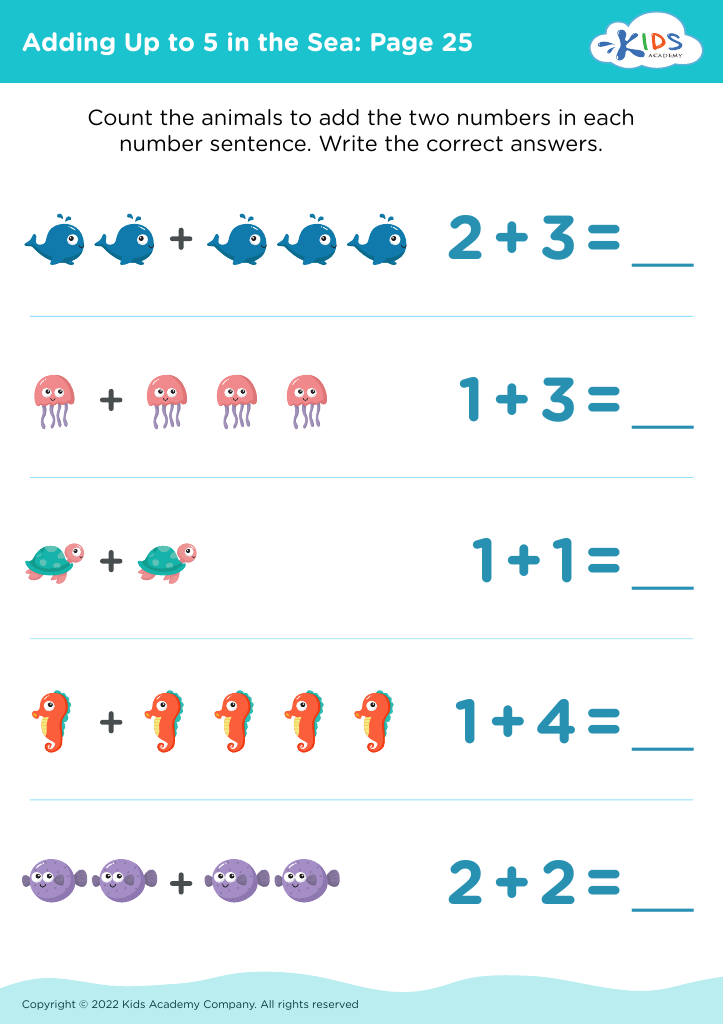
Adding Up to 5 in the Sea: Page 25
Worksheet
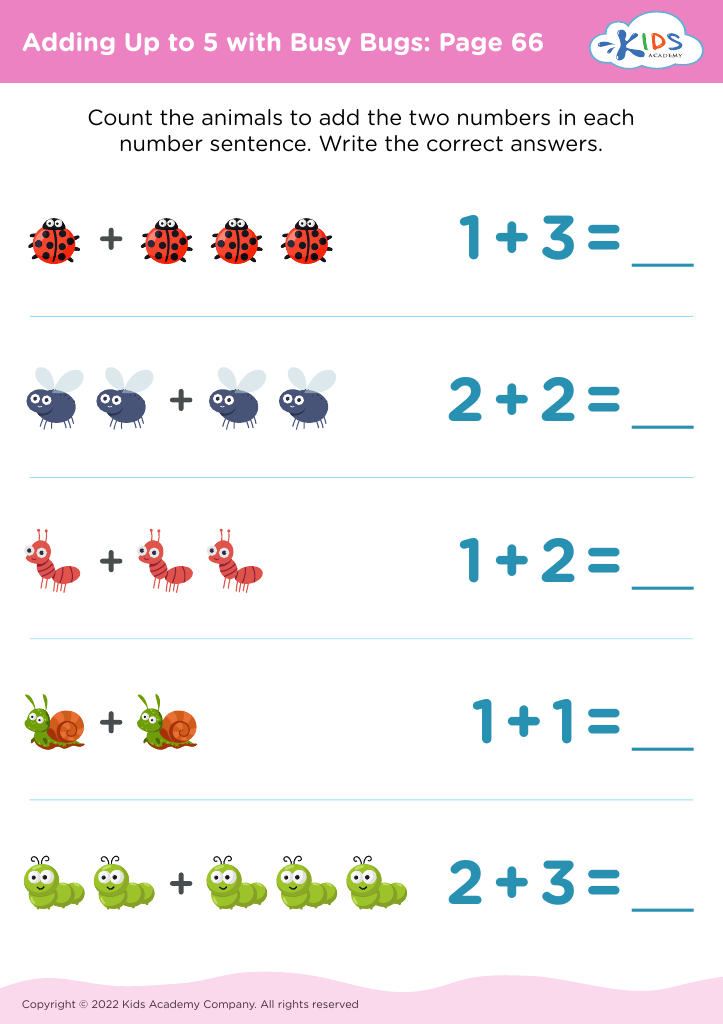
Adding Up to 5 with Busy Bugs: Page 66
Worksheet
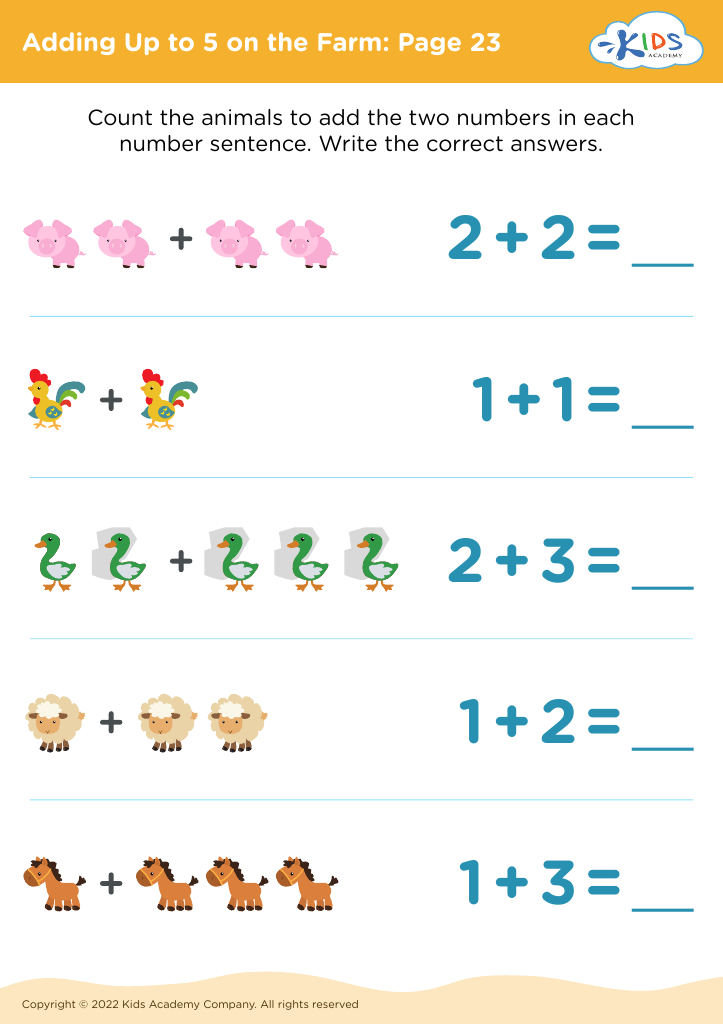
Adding Up to 5 on the Farm: Page 23
Worksheet
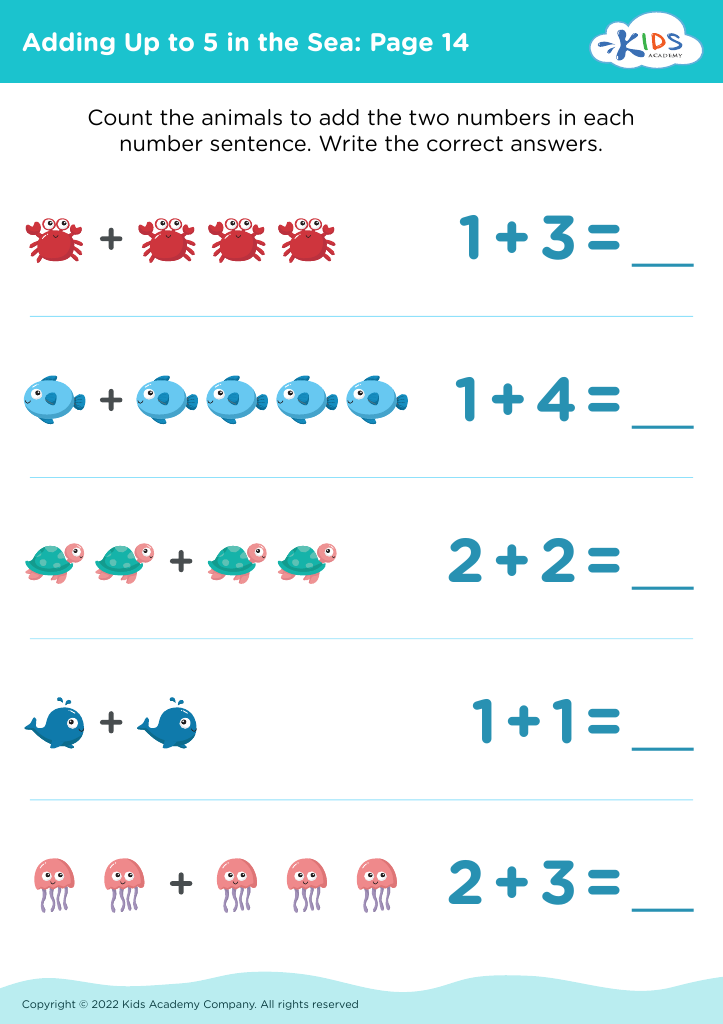
Adding Up to 5 in the Sea: Page 14
Worksheet
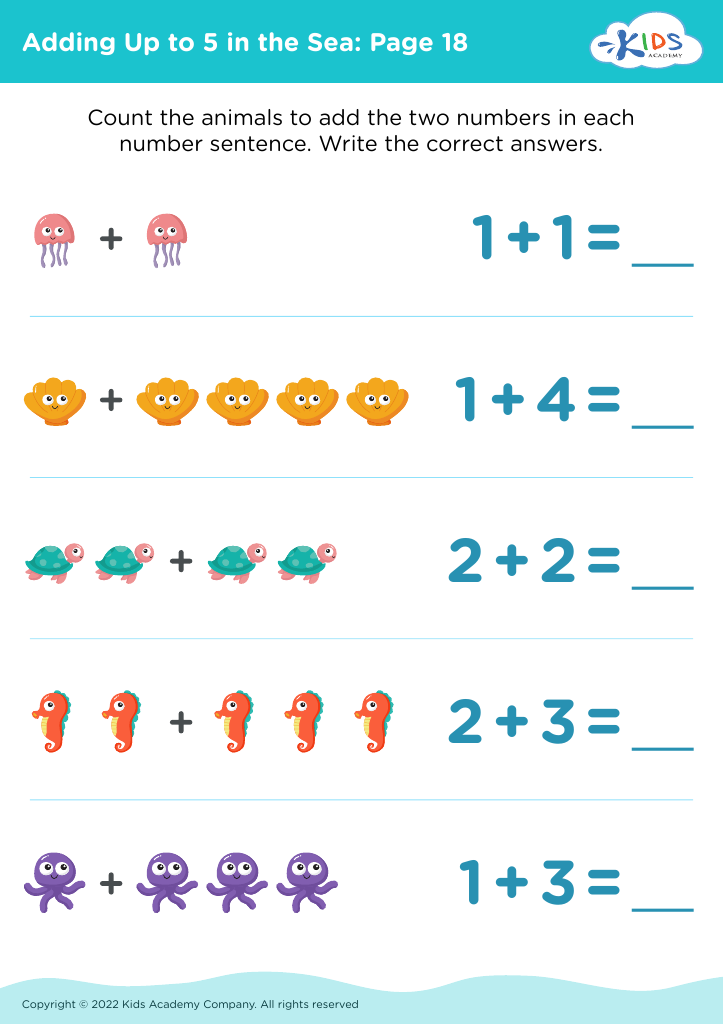
Adding Up to 5 in the Sea: Page 18
Worksheet
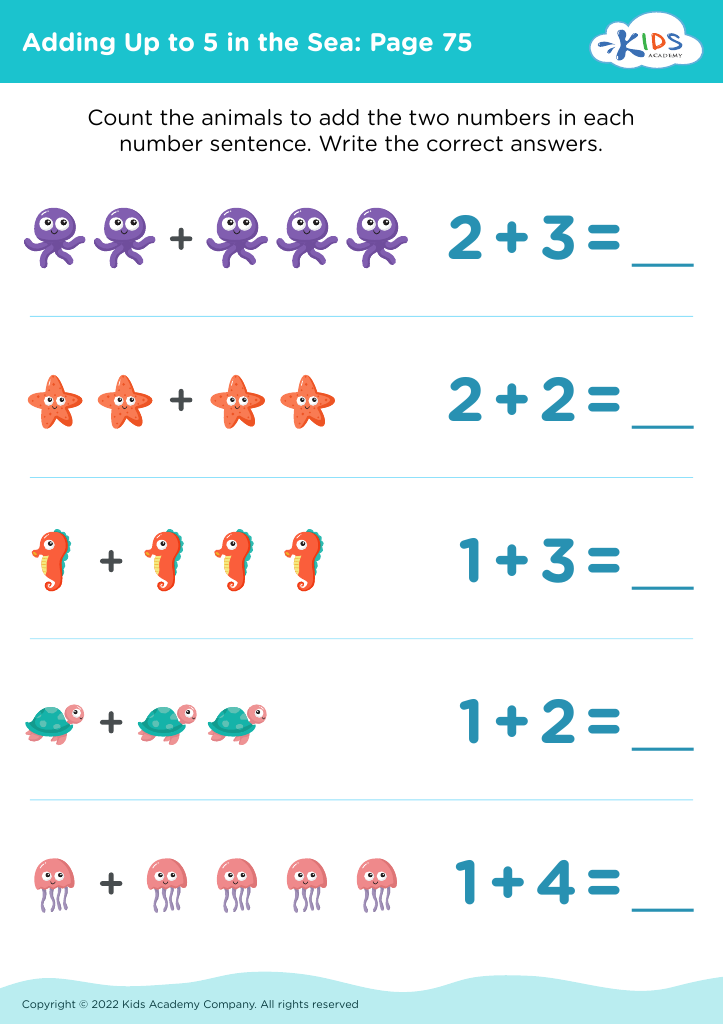
Adding Up to 5 in the Sea: Page 75
Worksheet
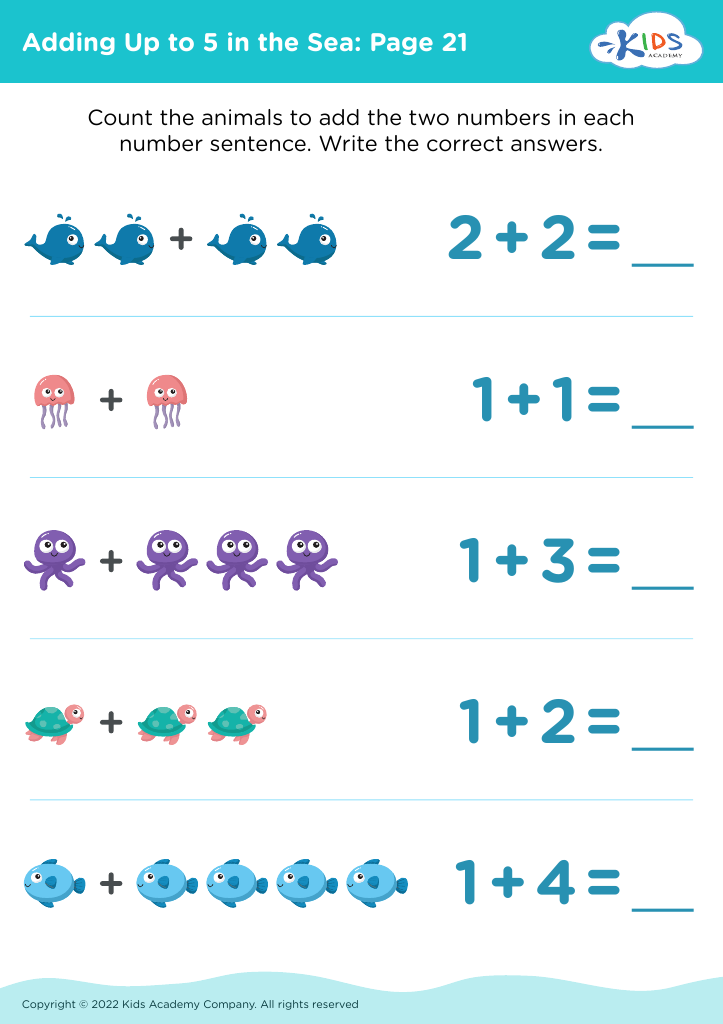
Adding Up to 5 in the Sea: Page 21
Worksheet
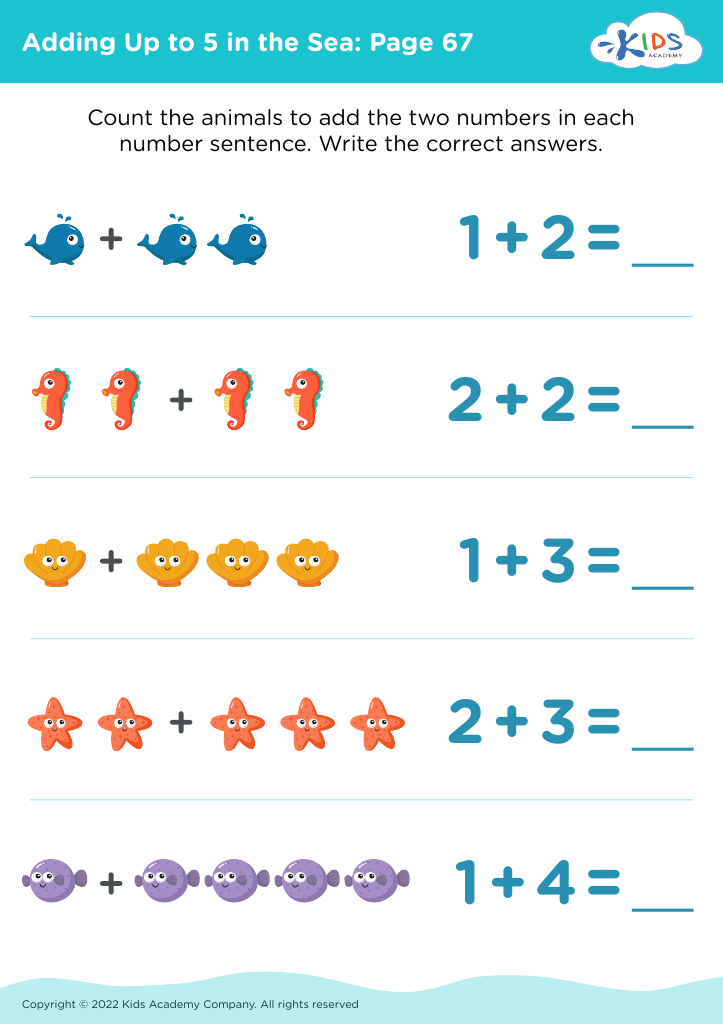
Adding Up to 5 in the Sea: Page 67
Worksheet
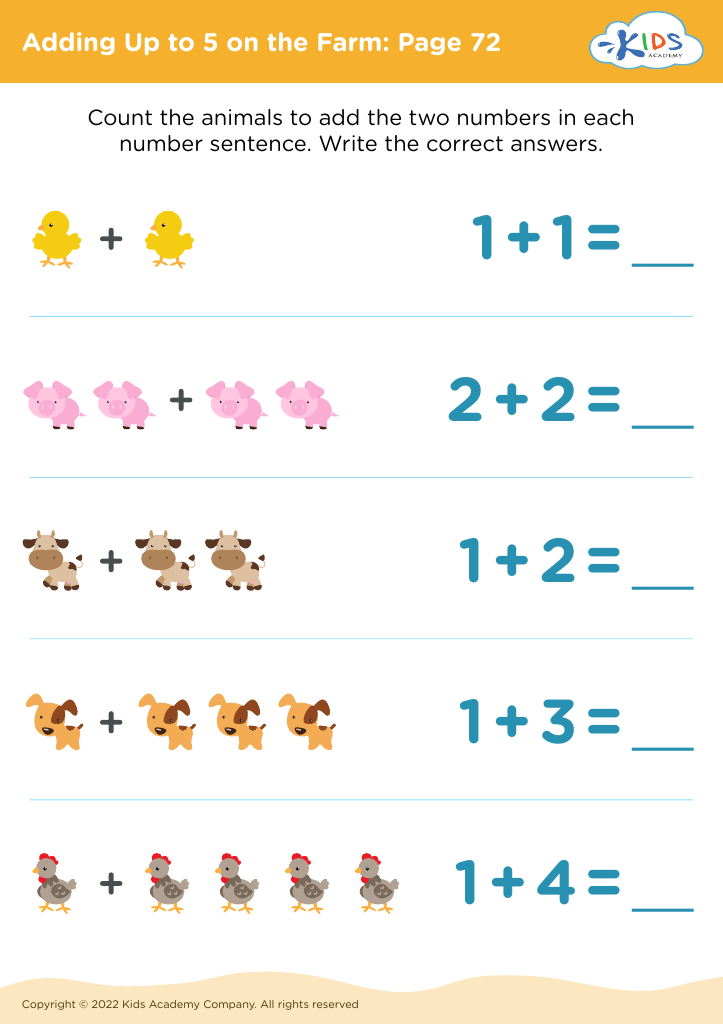
Adding Up to 5 on the Farm: Page 72
Worksheet
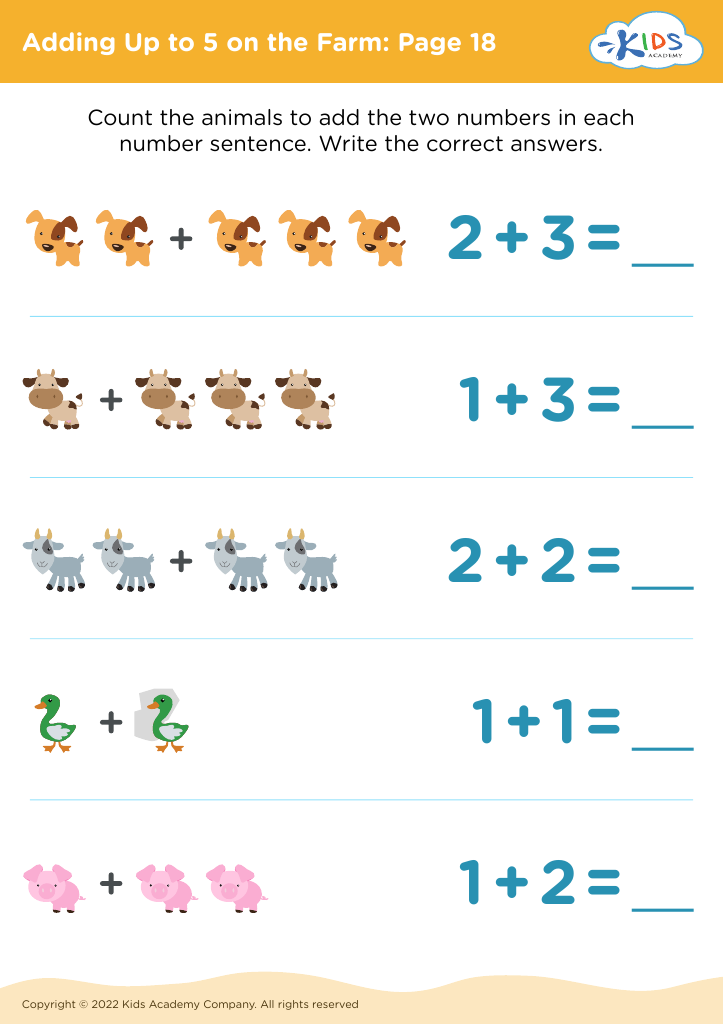
Adding Up to 5 on the Farm: Page 18
Worksheet
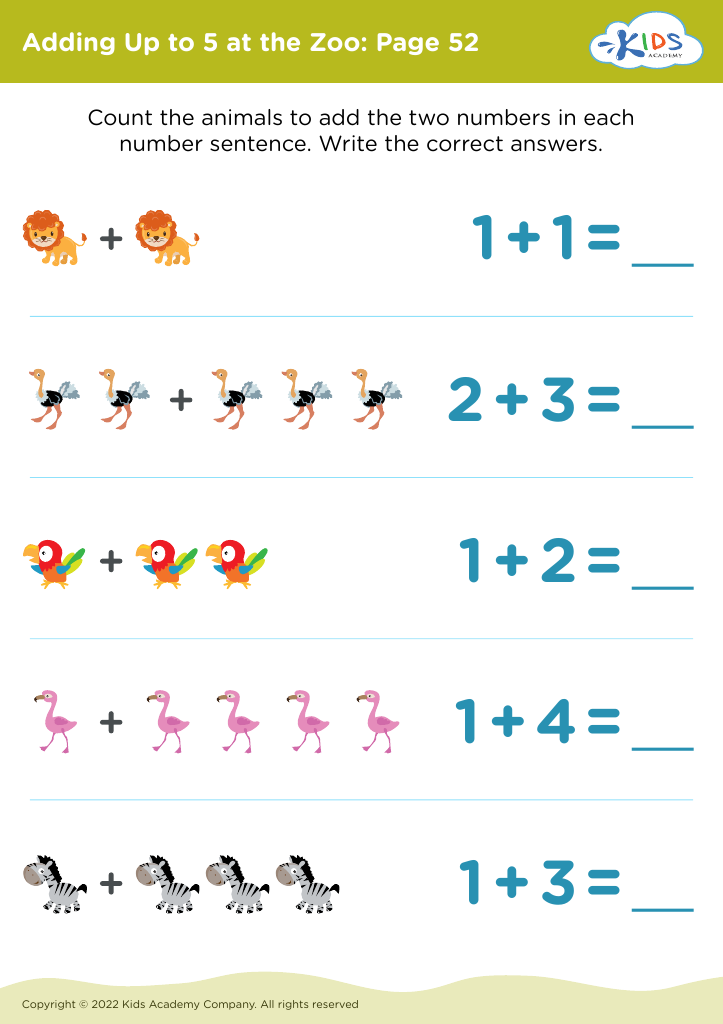
Adding Up to 5 at the Zoo: Page 52
Worksheet
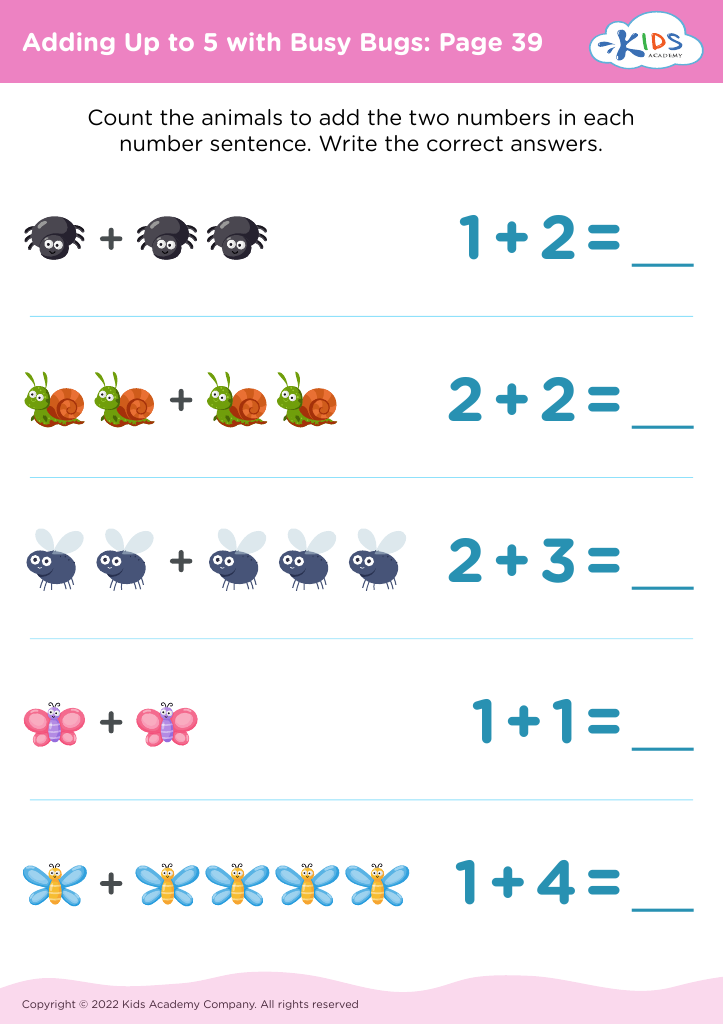
Adding Up to 5 with Busy Bugs: Page 39
Worksheet
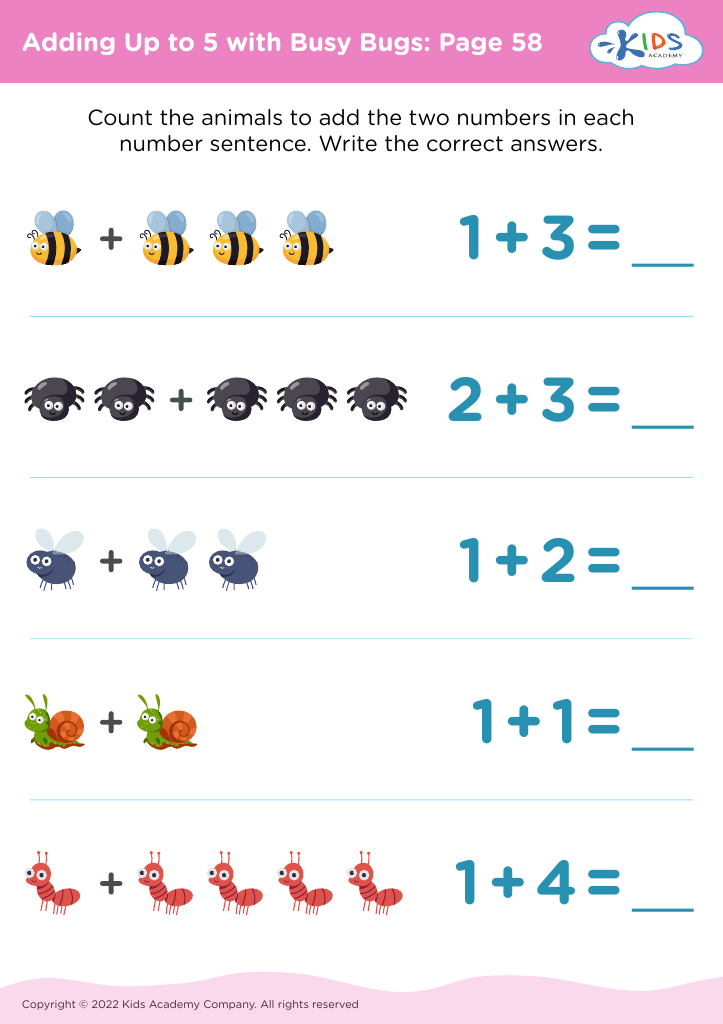
Adding Up to 5 with Busy Bugs: Page 58
Worksheet
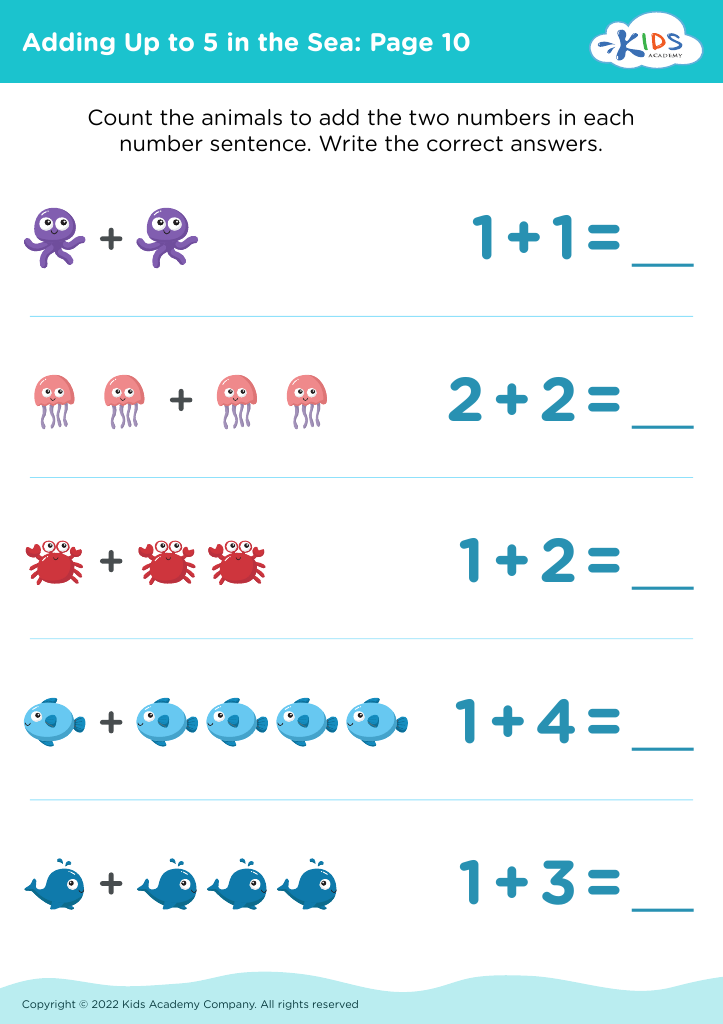
Adding Up to 5 in the Sea: Page 10
Worksheet
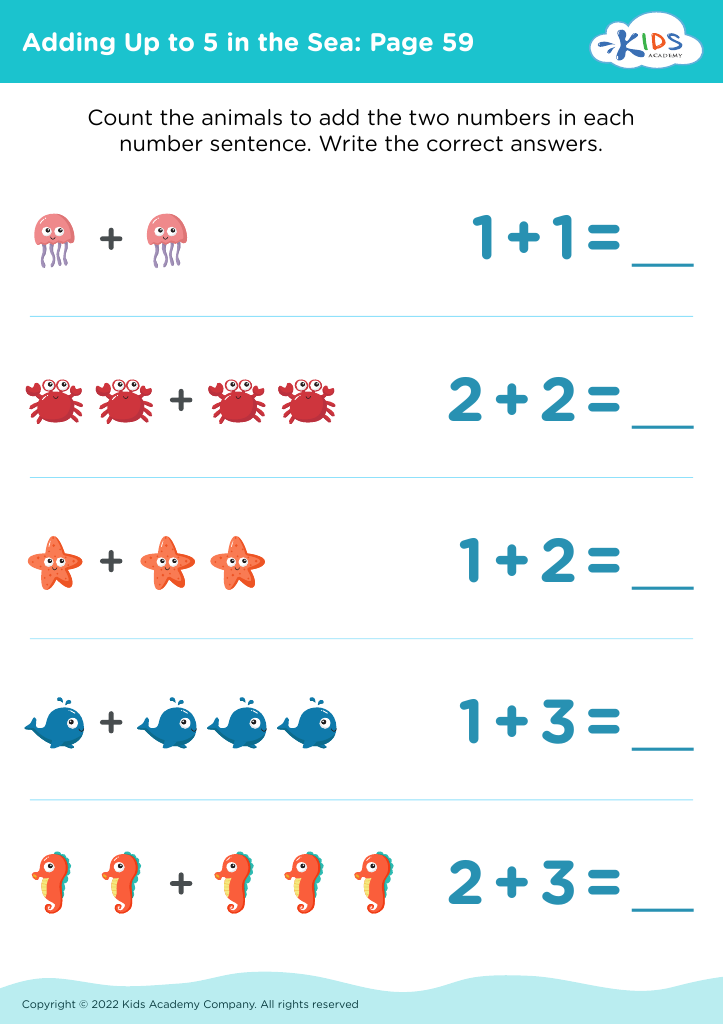
Adding Up to 5 in the Sea: Page 59
Worksheet
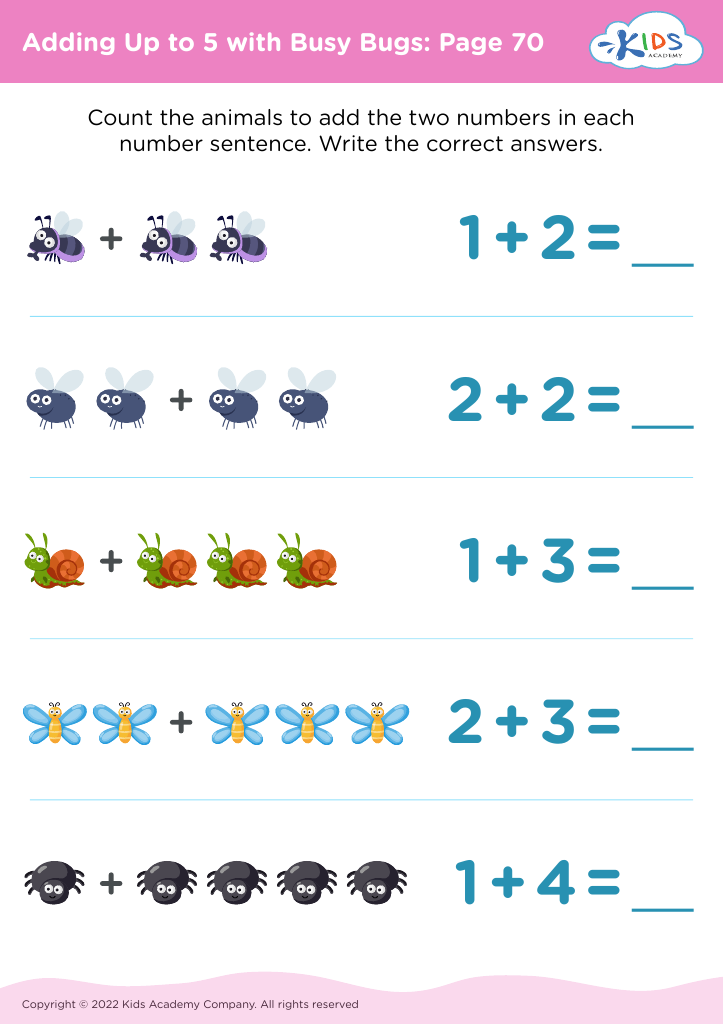
Adding Up to 5 with Busy Bugs: Page 70
Worksheet
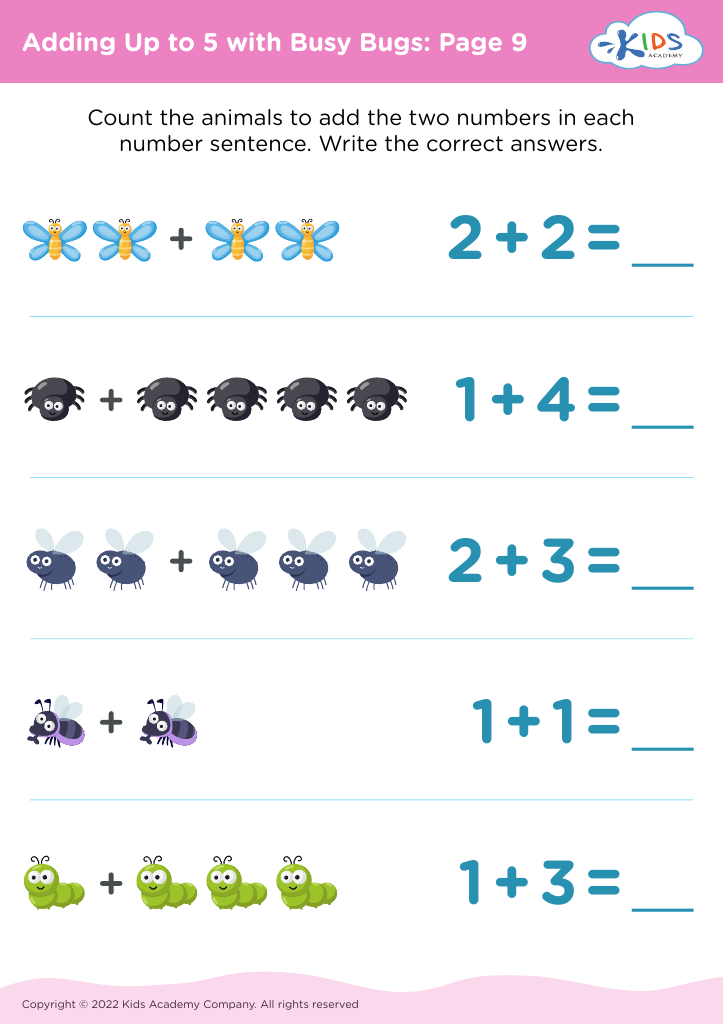
Adding Up to 5 with Busy Bugs: Page 9
Worksheet


Parents and teachers should prioritize Visual Learning Math for 5-year-olds because it aligns with the natural learning styles of young children. At this age, kids are typically concrete learners, making it essential to use visual tools and manipulatives to grasp mathematical concepts. Through visual aids such as shapes, number lines, and counting beads, children can better understand and visualize the relationships between numbers, enhancing retention and comprehension.

Engaging visuals not only keep children motivated but also help them to express their thoughts and reasoning. When kids can see and manipulate objects, they are more likely to develop a positive attitude towards math, fostering a growth mindset. Early math skills are foundational for later academic success, and visual learning can bridge gaps for those who may struggle with abstract reasoning.

Moreover, integrating visual math experiences can encourage problem-solving and critical thinking skills early on. It allows children to make connections between math and the world around them, making learning more meaningful. When parents and teachers actively support these approaches, they strengthen the child’s confidence and ability to tackle more complex math challenges in later years, setting them up for lifelong success in mathematics and related fields.