Visual-motor skills Math Worksheets for 5-Year-Olds
4 filtered results
-
From - To
Boost your child's math and motor development with our Visual-Motor Skills Math Worksheets for 5-Year-Olds! Tailored to engage young learners, these worksheets integrate essential visual and fine motor exercises with fundamental math concepts. By combining tracing, coloring, and matching activities, kids enhance hand-eye coordination while grasping counts, patterns, and shapes. Ideal for pre-K and kindergarten levels, our fun and interactive worksheets make learning an enjoyable experience. Equip your child with the foundational skills they need for future academic success with Kids Academy’s expertly-designed resources. Download today and watch your child’s skills flourish!
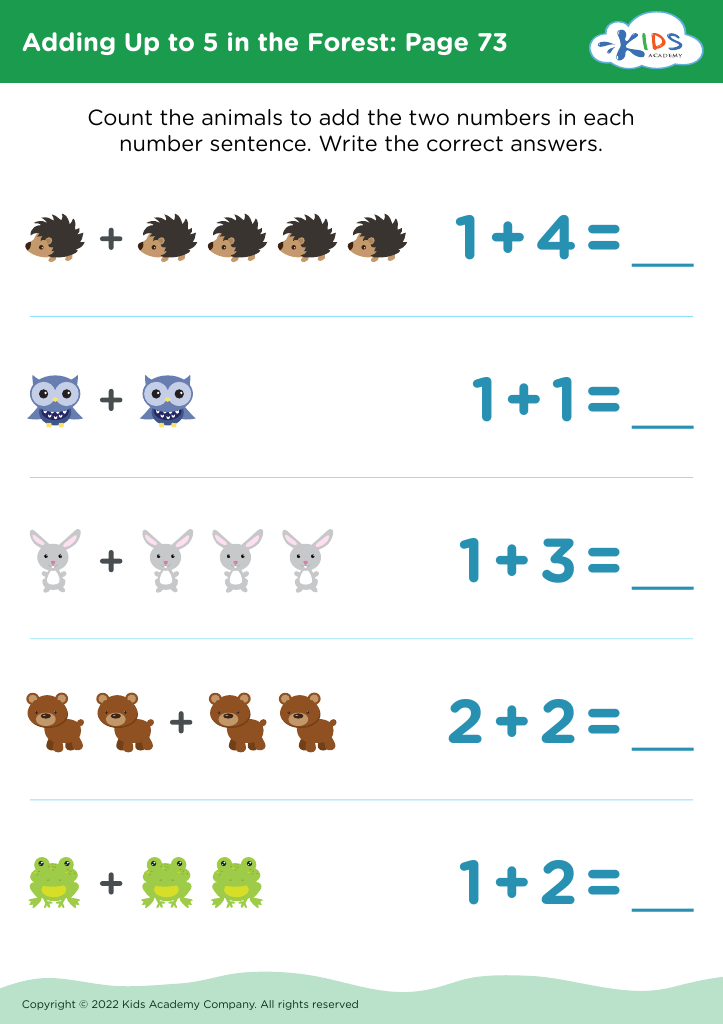
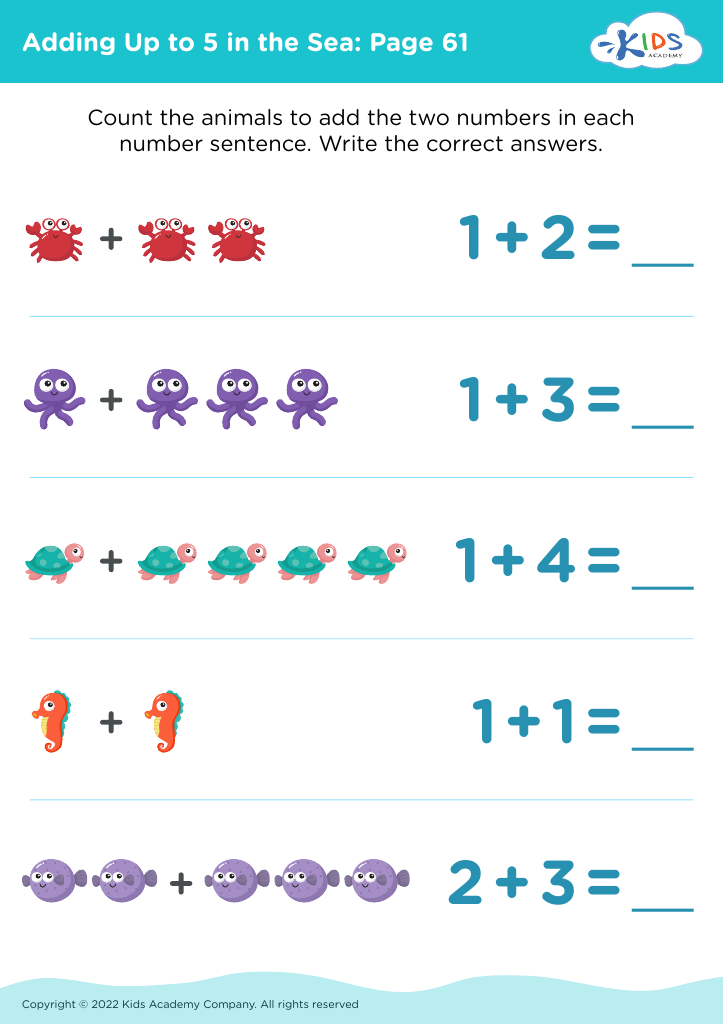
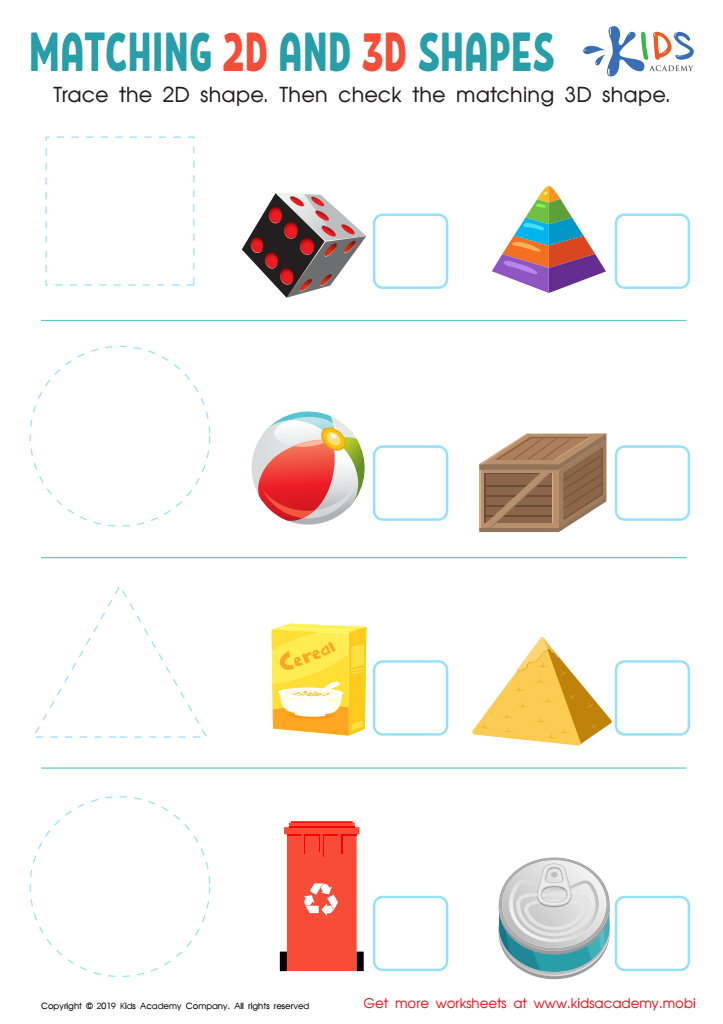
Matching 2D and 3D Shapes Worksheet
 Assign to My Students
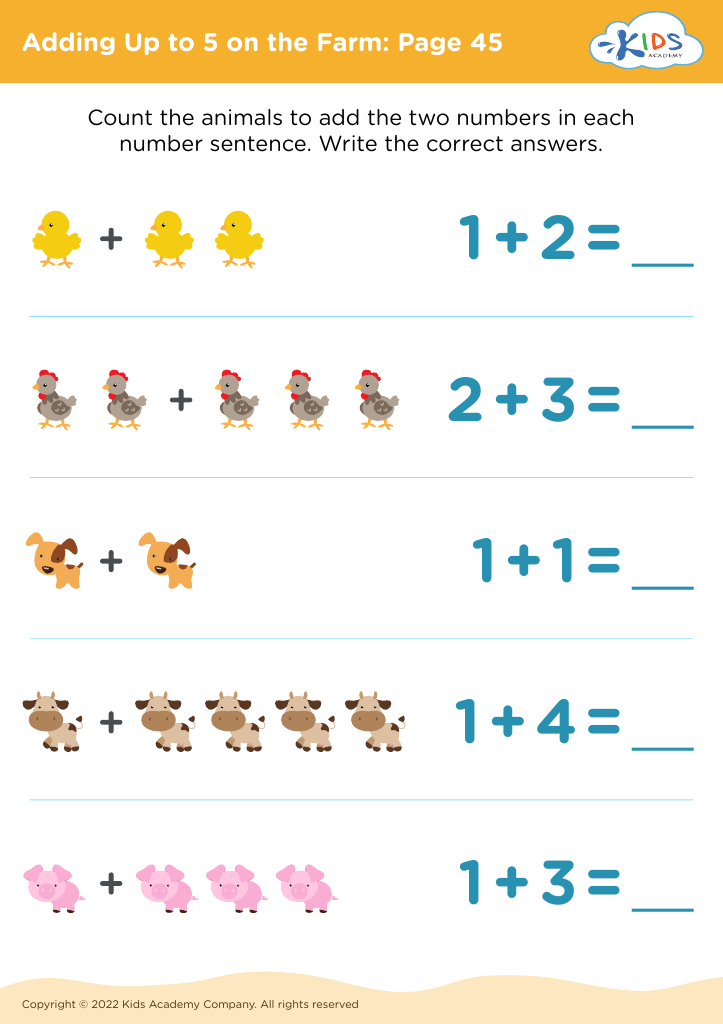







Visual-motor skills play a crucial role in early childhood development, particularly in learning math. For 5-year-olds, these skills enable the connection between visual perception and physical movement, which is essential when working with mathematical concepts like shapes, numbers, and patterns. When visual-motor skills are strong, children more easily manipulate objects, write numerals, and understand spatial relationships, all foundational for future math success.
For parents and teachers, nurturing these skills helps children build the fine motor abilities needed to hold a pencil, trace numbers, and draw geometric shapes. Visual-motor integration also influences how kids comprehend and organize images, bolstering their ability to solve puzzles and recognize patterns, critical components of early math curriculum.
Moreover, solid visual-motor skills facilitate smoother transitions to more complex mathematical tasks, such as aligning numbers in columns for addition or recognizing the differences and similarities in sets. An investment in improving these skills can also enhance a child's attention to detail and overall academic readiness, boosting confidence and reducing frustration. Hence, prioritizing visual-motor skills ensures a robust foundation for lifelong mathematical learning and a positive educational experience, promoting an enduring curiosity and enthusiasm for math.








