Basic Counting Numbers 0–10 Worksheets for 5-Year-Olds
3 filtered results
Difficulty Level
Grade
Age
-
From - To
Subject
Activity
Standards
Welcome to our engaging "Basic Counting Numbers 0–10 Worksheets" for 5-year-olds! Designed to make learning fun, these worksheets facilitate early math skills by introducing young learners to counting concepts through colorful activities. With a variety of exercises, children will practice number recognition, counting objects, and writing digits from 0 to 10. Our worksheets promote independent learning, helping kids build confidence in their numeric abilities while enhancing fine motor skills through tracing and coloring. Perfect for preschool or home schooling, these resources provide an enjoyable learning experience tailored to the developmental needs of young learners. Start your counting journey today!
Favorites
With answer key
Interactive
 Assign to My Students
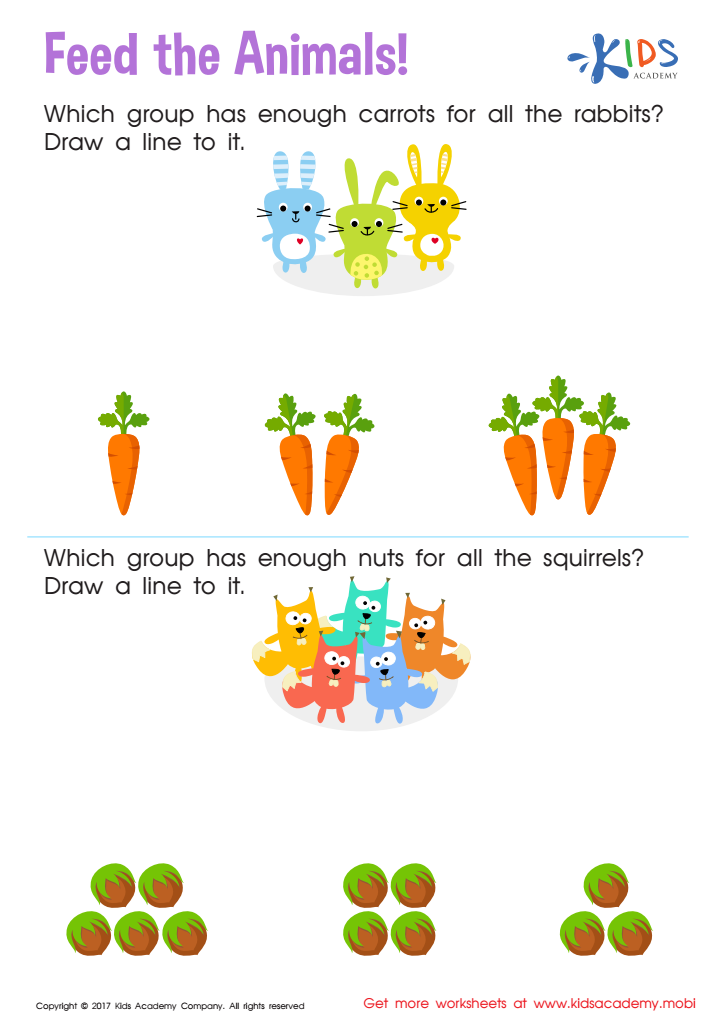
Count and Match: Feed the Animals Worksheet
Learning and growing involves more than just numbers, phonics and comparison. This Feed the Animals worksheet helps kids to exercise their reasoning skills. They must work out how many rabbits and carrots there are, and then repeat the process for the squirrels. This encourages problem solving and counting skills.
Count and Match: Feed the Animals Worksheet
Worksheet
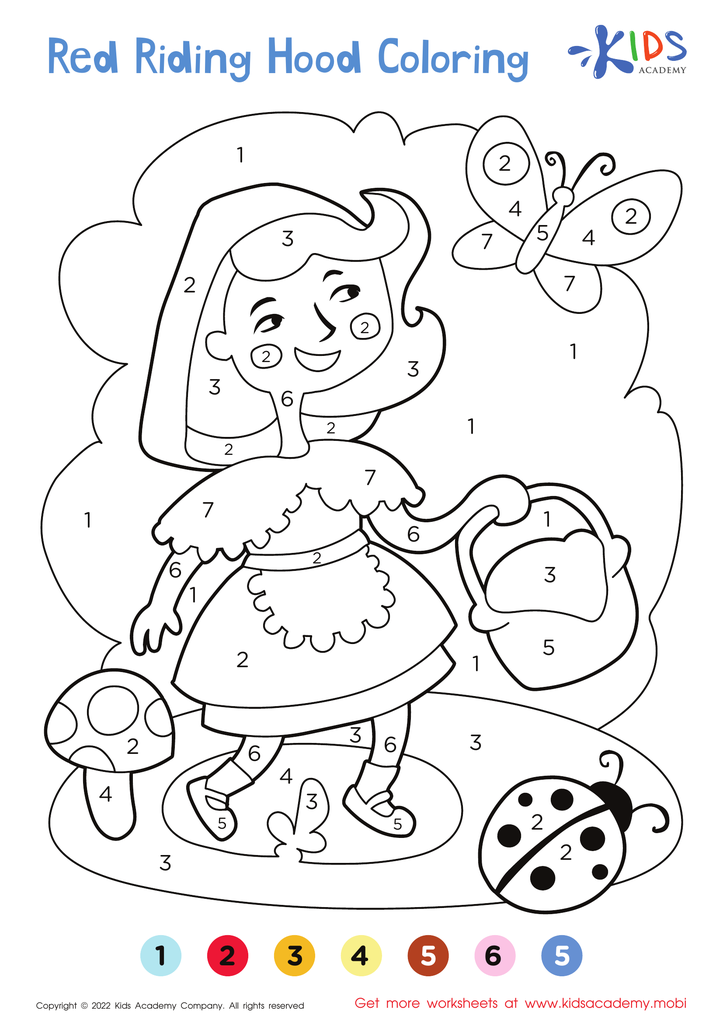
Little Red Riding Hood – Coloring by Numbers
Download this free PDF page and enjoy coloring Little Red Riding Hood. It's an easy and fun activity that everyone can do - just follow the numbers! Get your colored pencils ready and have a blast. 80 words.
Little Red Riding Hood – Coloring by Numbers
Worksheet
Join Kids Academy for Free
Who is primarily going to use this learning content?








Basic counting numbers from 0 to 10 lay the foundational stones of mathematical learning for 5-year-olds, influencing their cognitive development and problem-solving skills. Recognizing and understanding these numbers is integral to everyday experiences and future academic success. Firstly, mastering numbers builds confidence, encourages curiosity, and enhances a child's ability to engage with the world around them. Simple counting activities not only teach numerical order but also introduce concepts such as addition and subtraction in a tangible way.
Moreover, these early counting skills support essential cognitive processes like categorization and pattern recognition. When children grasp the concept of numbers, they can better comprehend quantities, making it easier for them to solve real-world problems, such as sharing or budgeting playtime. Learning numbers also enhances language skills, as children learn to associate words with quantities.
Finally, involvement from parents and teachers in counting activities fosters a supportive learning environment. Simple games, songs, and storytelling linked to numbers help reinforce counting in a fun and meaningful way, paving the way for a lifelong love of mathematics. In essence, counting is not just an academic skill; it is a crucial aspect of a child's overall development and prepares them for more complex mathematical concepts in the future.