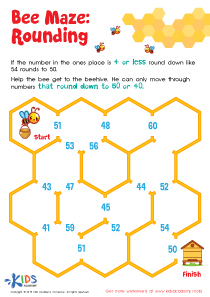
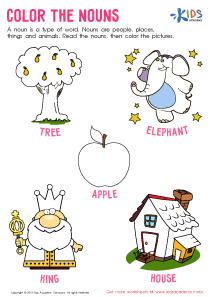
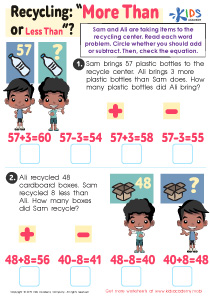
Basic Addition Numbers up to 100 Worksheets for 5-Year-Olds
3 filtered results
-
From - To
Discover our engaging "Basic Addition Numbers up to 100 Worksheets" designed specifically for 5-year-olds! These worksheets provide a fun and interactive way for young learners to develop essential math skills through addition exercises. Perfect for home or classroom use, each worksheet reinforces the concepts of number recognition and basic addition, ensuring children build a strong mathematical foundation. With colorful visuals and age-appropriate challenges, your little ones will enjoy working towards mastering addition within the range of 100. Explore our collection today and help your child gain confidence in their math abilities while having a great time learning!
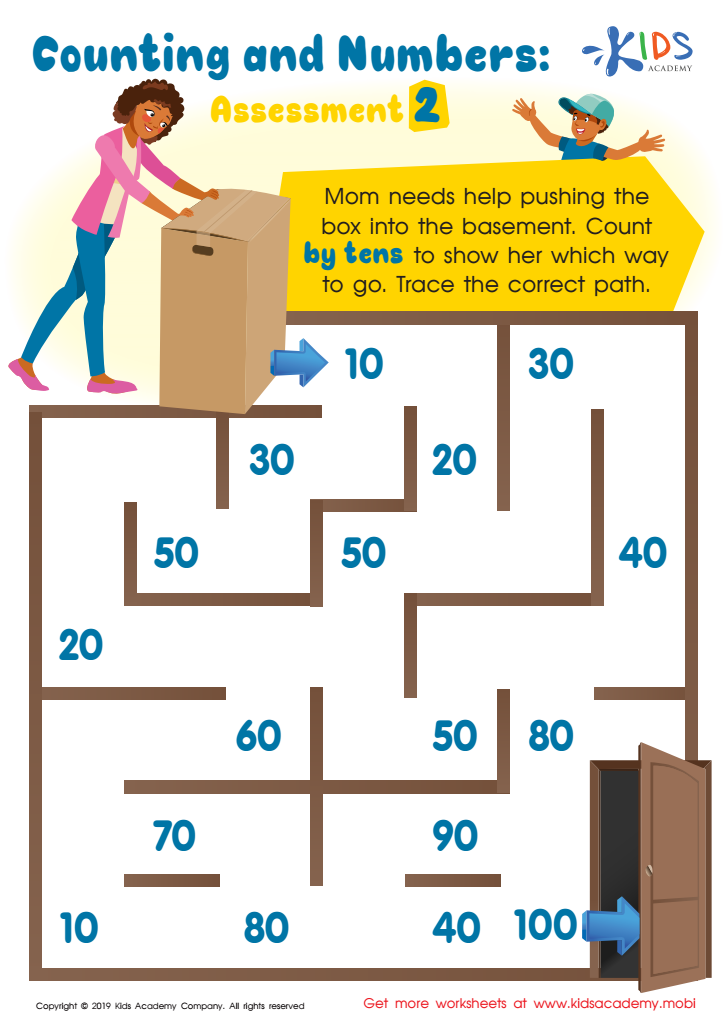
Counting and Numbers: Assessment 2 Worksheet
 Assign to My Students
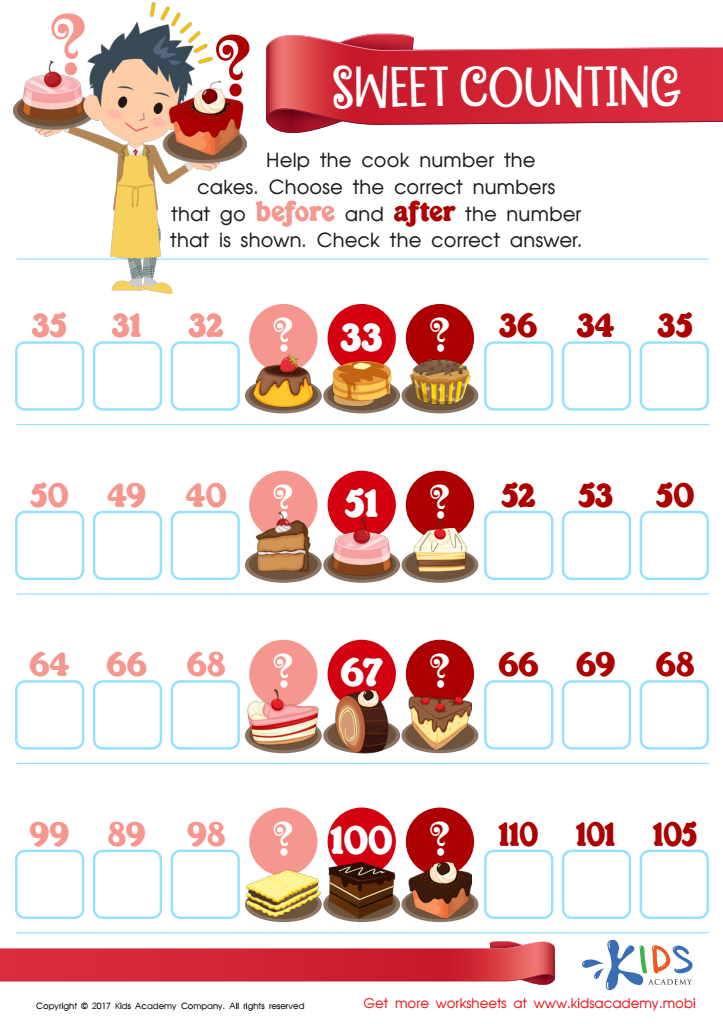
Sweet Counting - Part 1 Worksheet
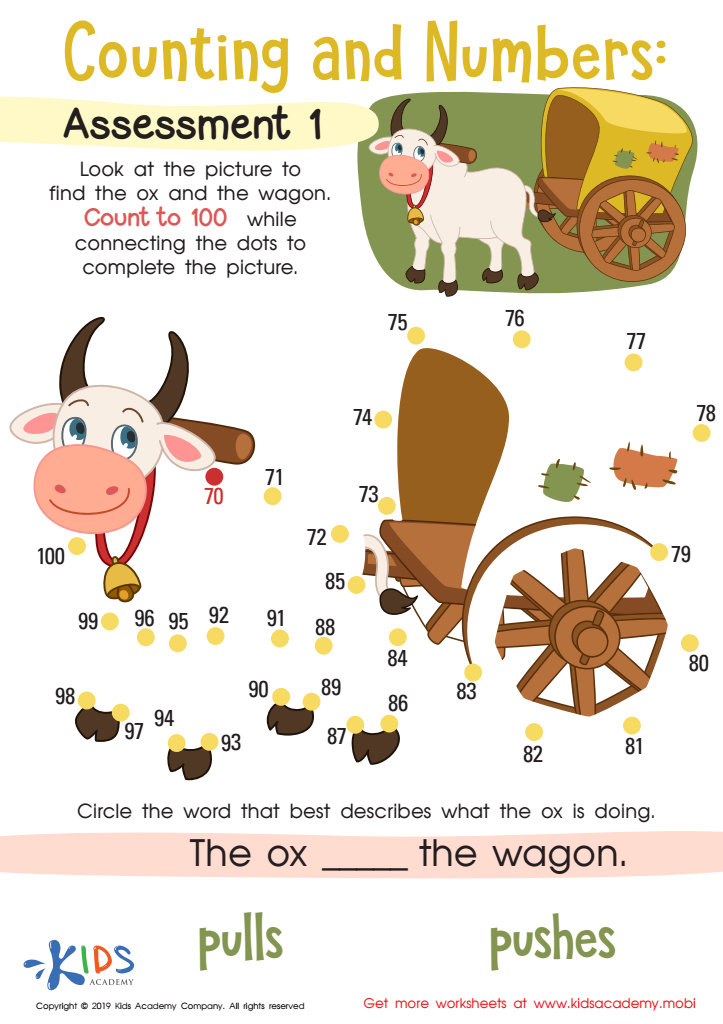
Counting and Numbers: Assessment 1 Worksheet






%20(1).jpg)
Parents and teachers should prioritize teaching basic addition numbers up to 100 for five-year-olds because this foundational skill is crucial for early mathematical understanding. At this age, children are naturally curious and eager to learn, making it an excellent time to introduce them to basic arithmetic concepts. Mastering addition helps build confidence and fosters a positive attitude towards math, which can influence their attitude in later years.
Moreover, learning addition enhances critical thinking and problem-solving skills, as children begin to recognize patterns and relationships between numbers. It sets the stage for future mathematical concepts, such as subtraction, multiplication, and division. Understanding addition also aids in daily life activities, allowing children to make sense of the world, whether they are counting toys, sharing snacks, or engaging in simple shopping scenarios with parents.
Additionally, engaging in early math activities can increase bonding moments between parents and children, promoting a supportive learning environment. It lays the groundwork for academic success and nurtures a lifelong love for learning. By focusing on basic addition, parents and teachers contribute significantly to a child's critical thinking development and overall cognitive abilities, ensuring they are well-prepared for more complex mathematical concepts in later grades.