Coloring skills Building Vocabulary Worksheets for 5-Year-Olds
3 filtered results
-
From - To
Enhance your child's vocabulary with our "Coloring Skills Building Vocabulary Worksheets for 5-Year-Olds." These fun and engaging printable worksheets are designed to boost reading comprehension and vocabulary while nurturing creativity through coloring. Perfect for young learners, each worksheet combines vocabulary-building activities with coloring exercises to help children identify new words, understand their meanings, and use them in context. Our worksheets make learning an enjoyable experience, laying a strong foundation for language development. Ideal for at-home practice or classroom use, these resources will support your child's journey towards becoming a confident reader and a coloring enthusiast.
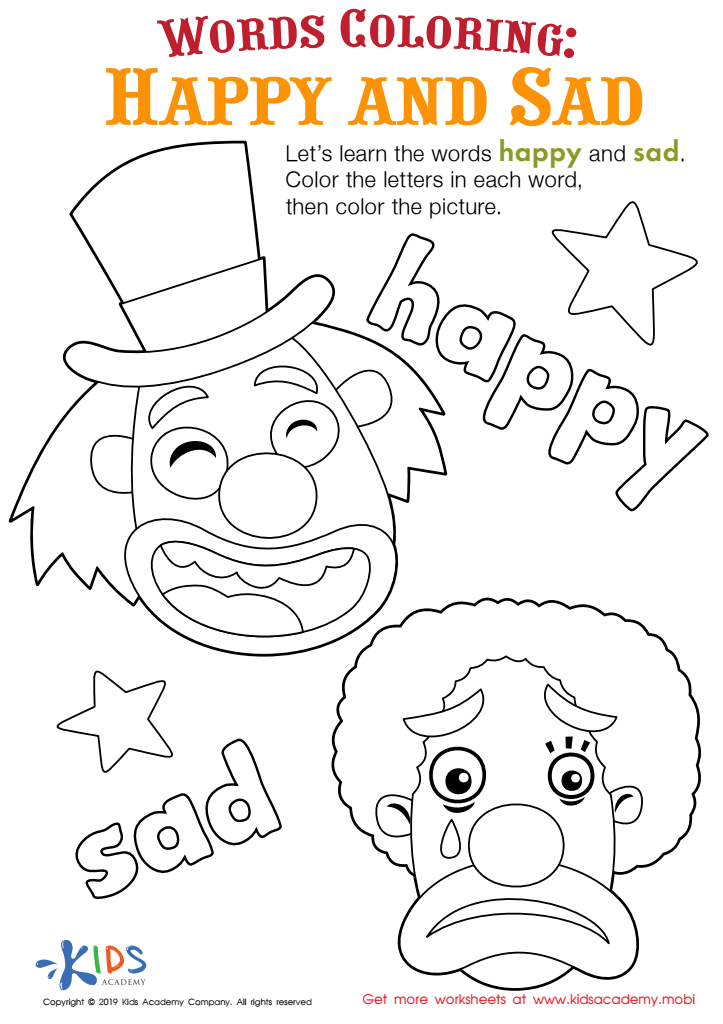
Happy and Sad Words Coloring Worksheet
 Assign to My Students











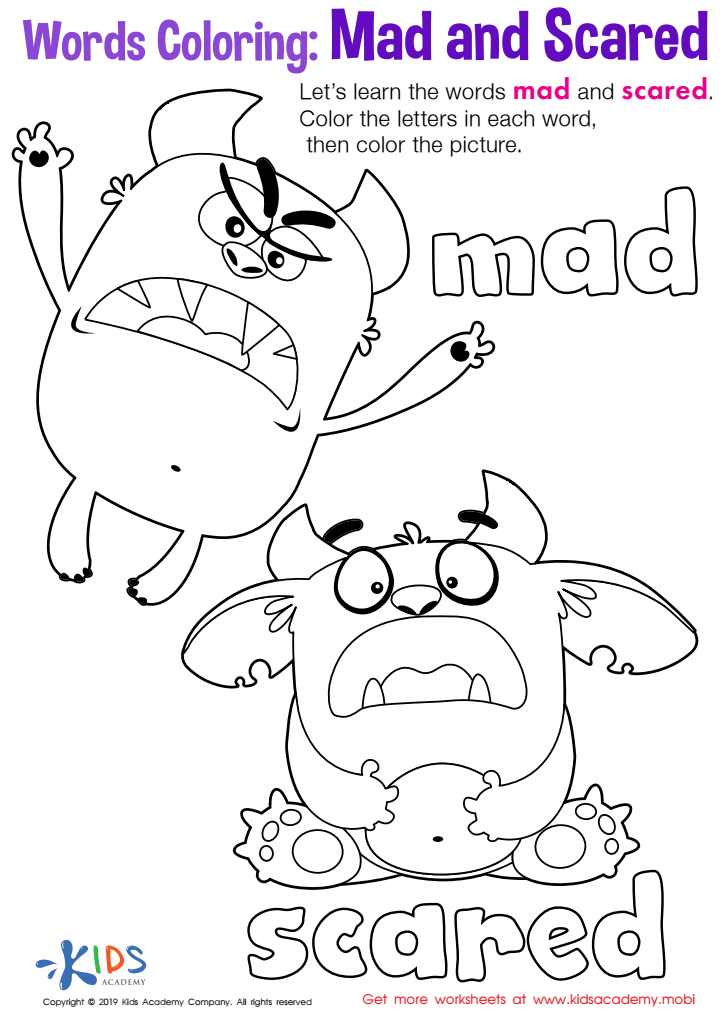
Mad and Scared Words Coloring Worksheet
Assign to My Students








Cultivating coloring skills in 5-year-old children is more than just an artistic activity—it serves as a crucial developmental tool. When parents and teachers engage children in coloring, they are simultaneously enhancing fine motor skills, which are vital for writing and other precise physical tasks. Coloring within lines improves hand-eye coordination and precision, laying a foundational skill set for academic tasks ahead.
Moreover, coloring can serve as a calming and focusing activity, which helps in managing emotional and social behavior. It fosters creativity, allowing children to express themselves and explore different ideas visually. When children choose colors and designs, they’re making decisions, improving their critical thinking and spatial understanding.
Building vocabulary through coloring involves verbally discussing images, themes, and stories related to the art. This practice increases exposure to new words and concepts, thereby enriching language acquisition. Vocabulary development during early childhood has been shown to correlate strongly with later academic success and literacy skills. By combining coloring with vocabulary-building, children learn to associate visual cues with words, aiding retention and comprehension.
Thus, integrating coloring with vocabulary exercises provides a balanced, engaging way to support essential developmental milestones. It nurtures not just artistic skills but also cognitive and linguistic growth, helping children to become well-rounded learners.








