Welcome to our "Understanding Fractions Building Vocabulary Worksheets" designed specifically for 5-year-olds! These engaging resources help young learners grasp basic fraction concepts while enhancing their vocabulary skills. Through fun activities and colorful illustrations, children will explore sharing, dividing, and relating fractions to real-life scenarios. Our worksheets encourage critical thinking and problem-solving abilities, laying a solid foundation for future math success. Perfect for both classroom and at-home learning, these worksheets make understanding fractions enjoyable and interactive. Watch your child’s confidence soar as they build essential skills in a playful environment! Download today and start your learning adventure!

Check out this FREE Trial Lesson on Building Vocabulary for age 5!

Sorting Objects into 3 Categories

Favorites
With answer key
Interactive
  • 5
  • Understanding fractions
  • Building Vocabulary
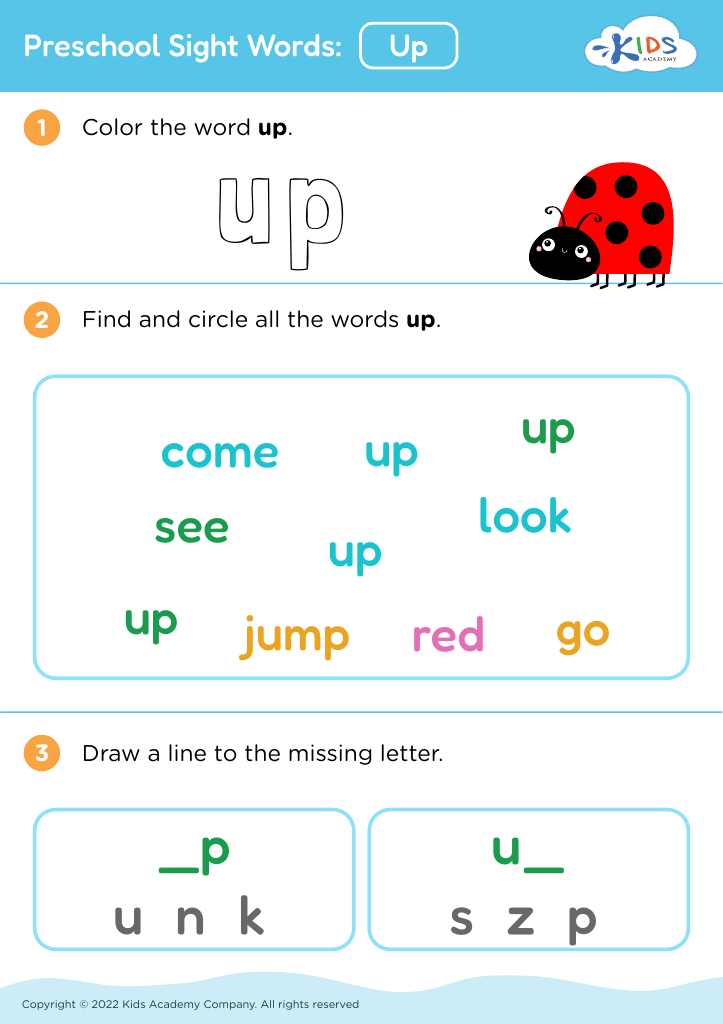
Preschool Sight Words: Up

Preschool Sight Words: Up

Preschool Sight Words: Up
Worksheet
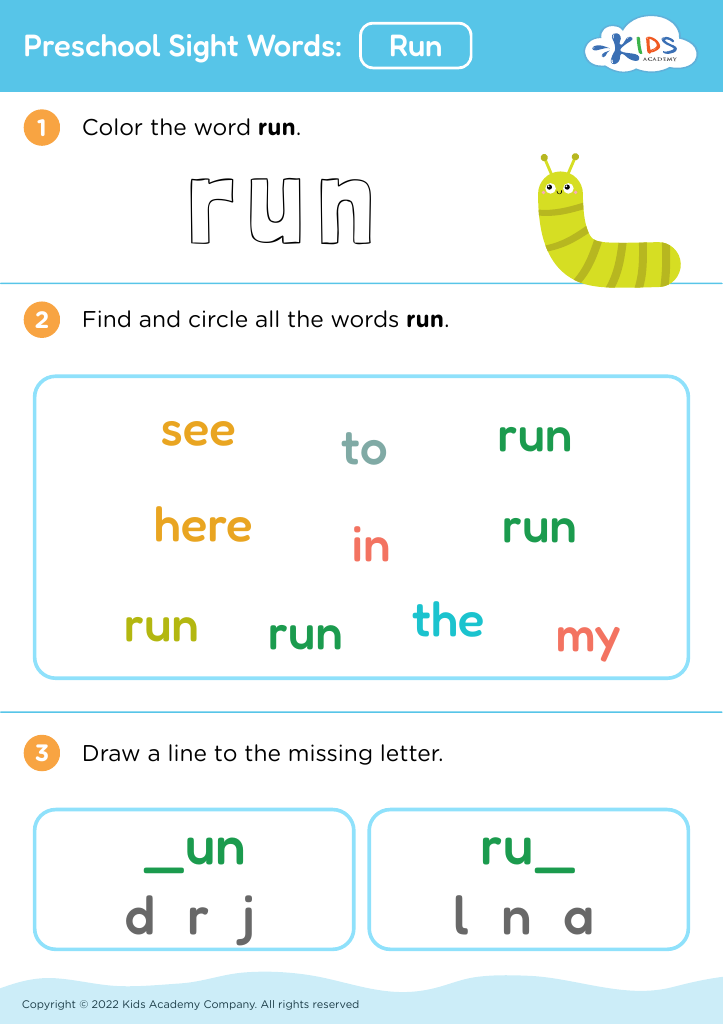
Preschool Sight Words: Run

Preschool Sight Words: Run

Preschool Sight Words: Run
Worksheet
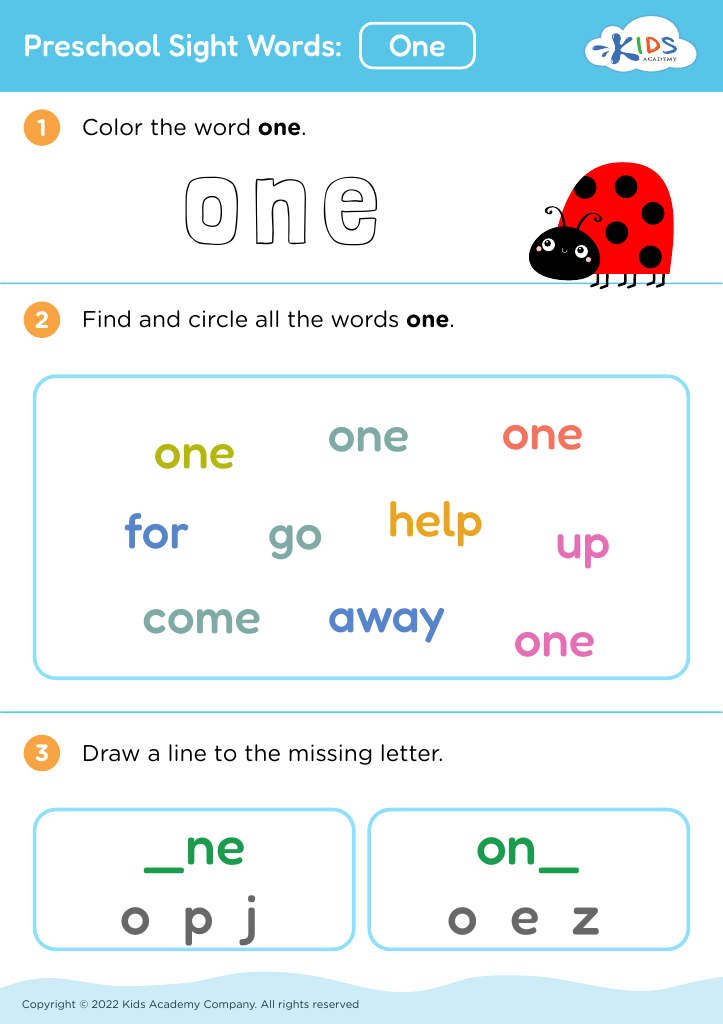
Preschool Sight Words: One

Preschool Sight Words: One

Preschool Sight Words: One
Worksheet
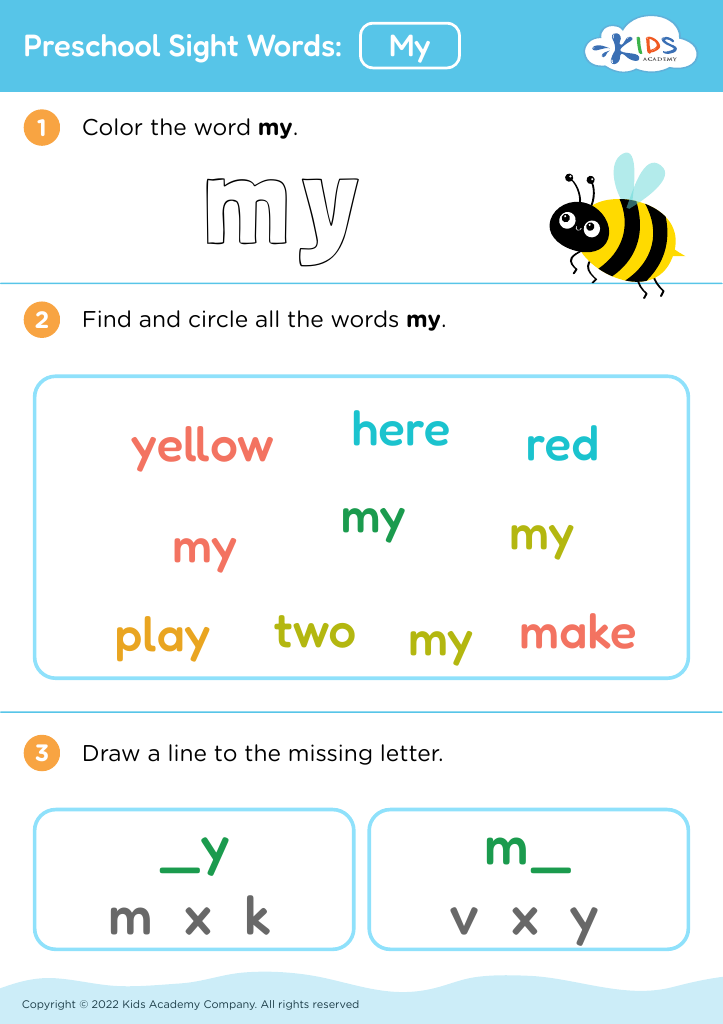
Preschool Sight Words: My

Preschool Sight Words: My

Preschool Sight Words: My
Worksheet
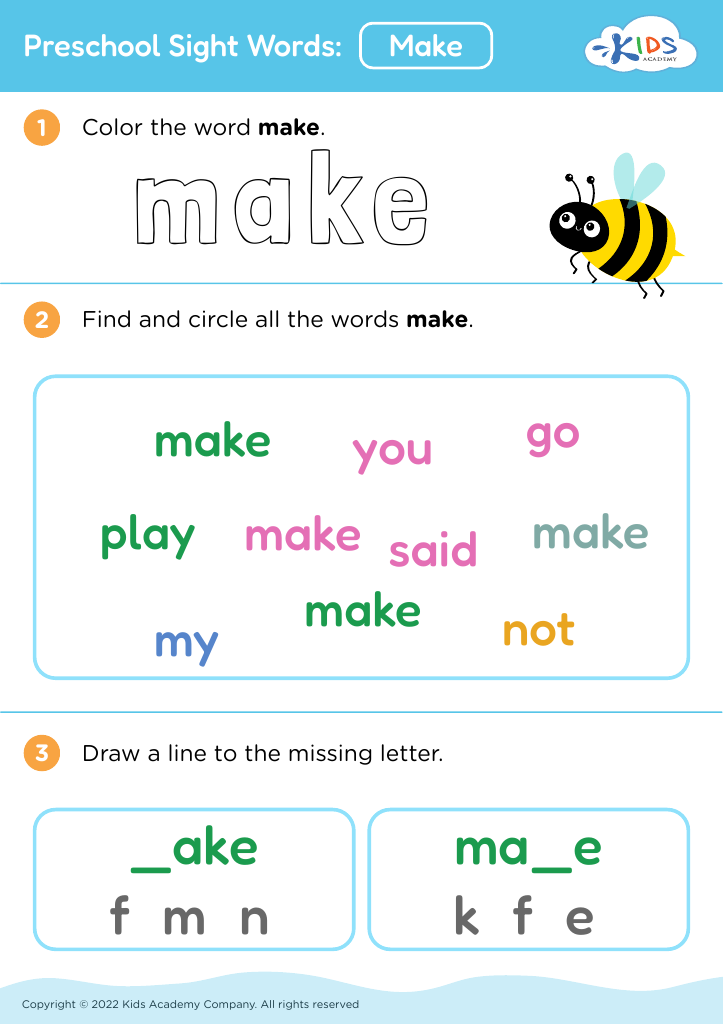
Preschool Sight Words: Make

Preschool Sight Words: Make

Preschool Sight Words: Make
Worksheet
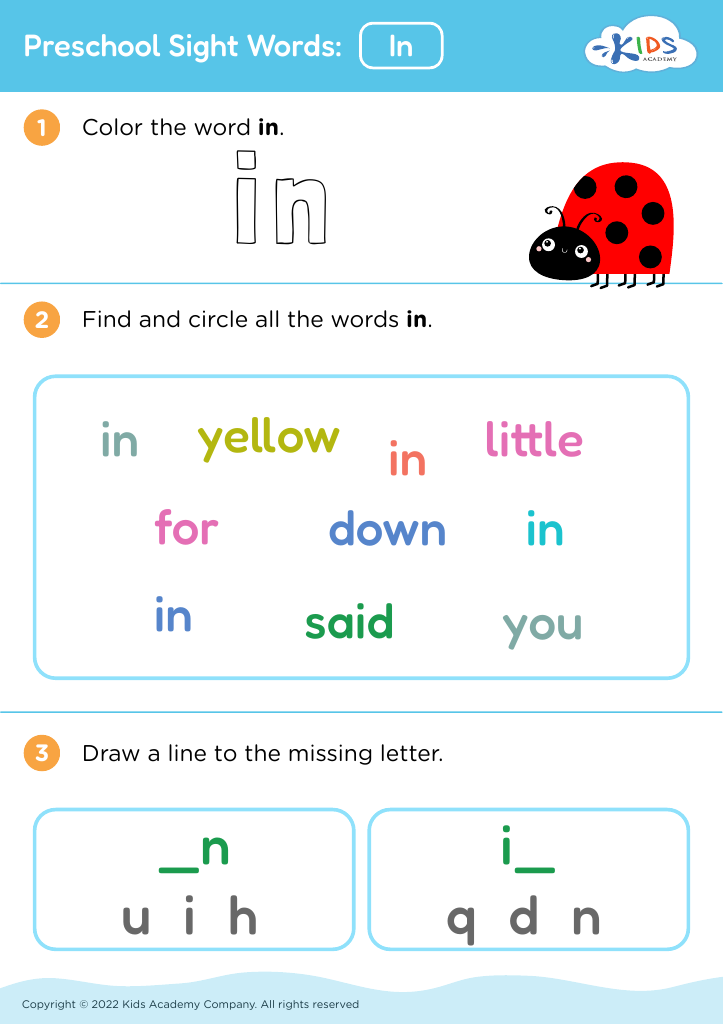
Preschool Sight Words: In

Preschool Sight Words: In

Preschool Sight Words: In
Worksheet
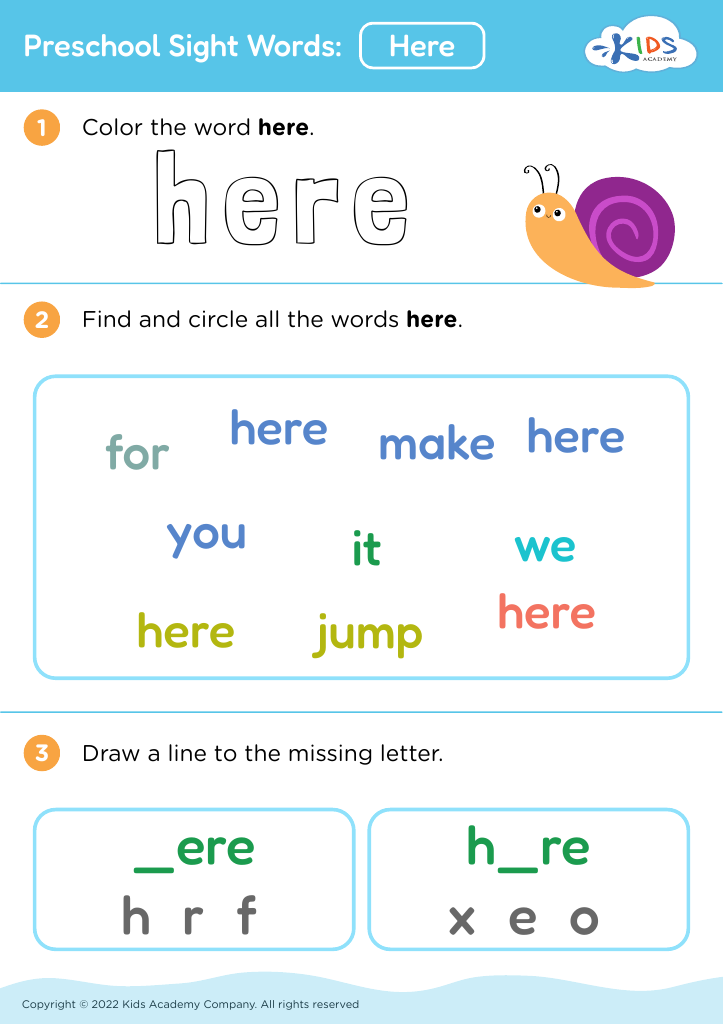
Preschool Sight Words: Here

Preschool Sight Words: Here

Preschool Sight Words: Here
Worksheet
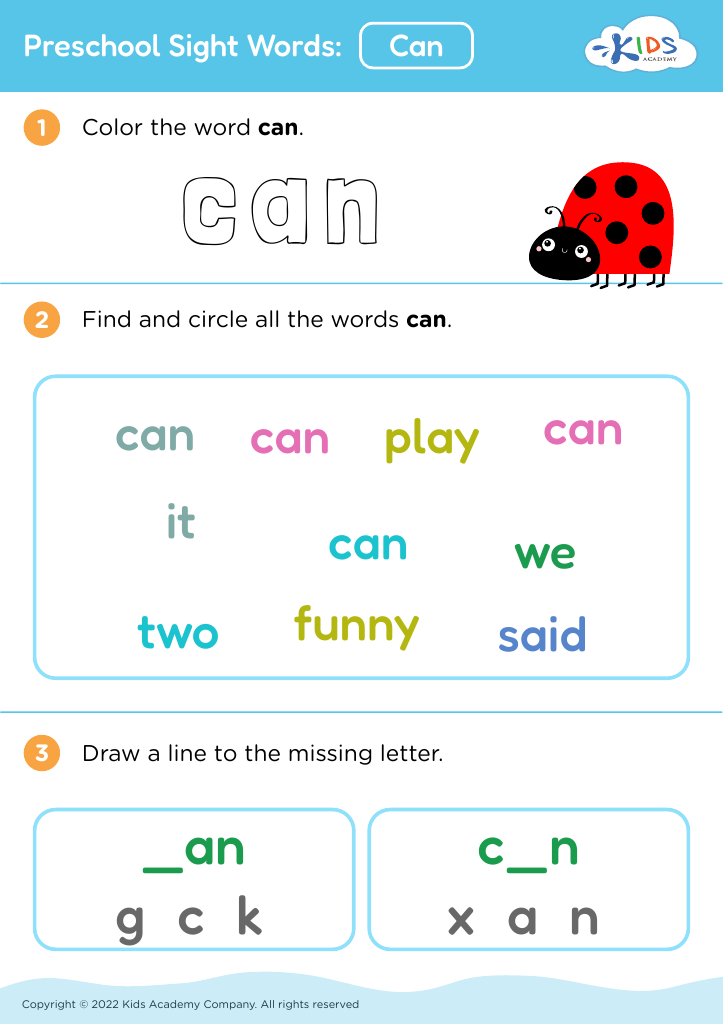
Preschool Sight Words: Can

Preschool Sight Words: Can

Preschool Sight Words: Can
Worksheet
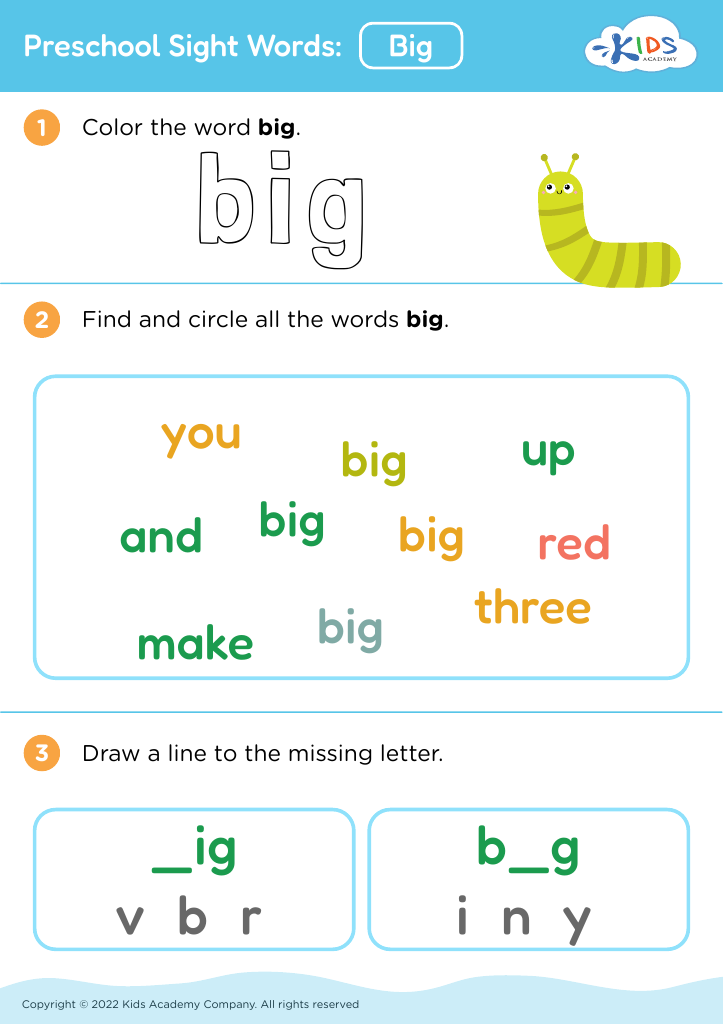
Preschool Sight Words: Big

Preschool Sight Words: Big

Preschool Sight Words: Big
Worksheet
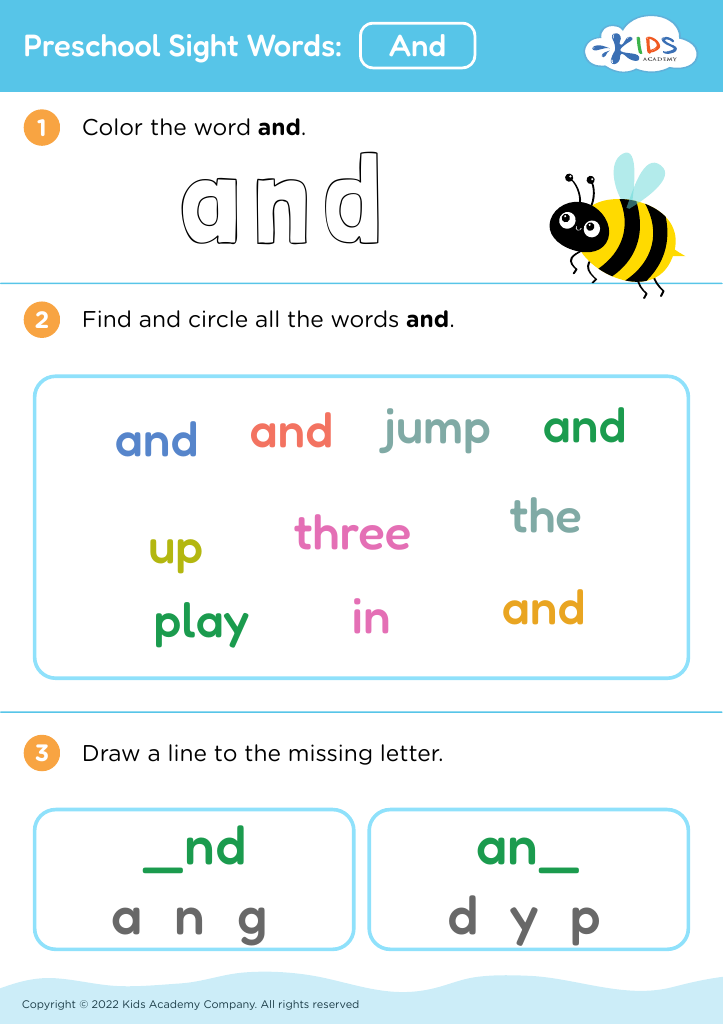
Preschool Sight Words: And

Preschool Sight Words: And

Preschool Sight Words: And
Worksheet
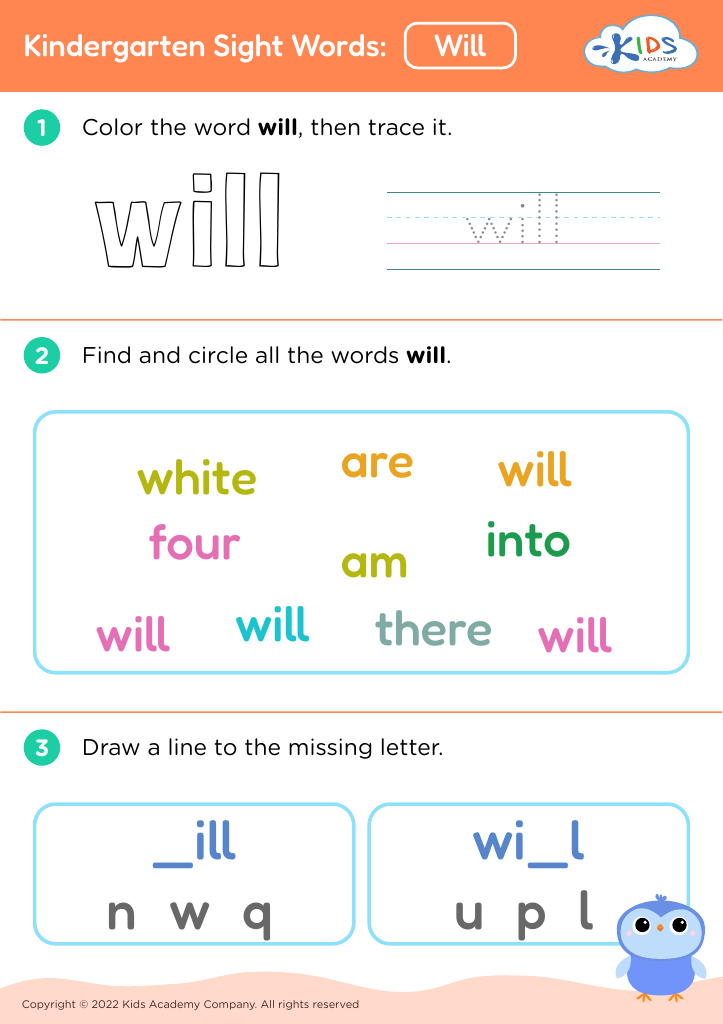
Kindergarten Sight Words: Will

Kindergarten Sight Words: Will

Kindergarten Sight Words: Will
Worksheet
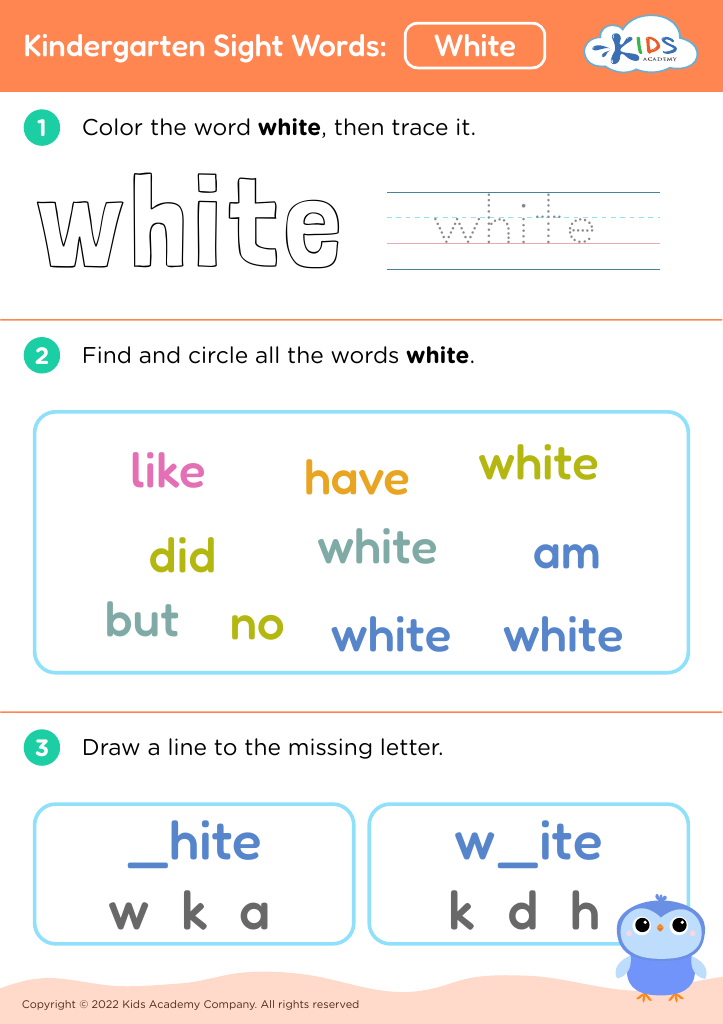
Kindergarten Sight Words: White

Kindergarten Sight Words: White

Kindergarten Sight Words: White
Worksheet
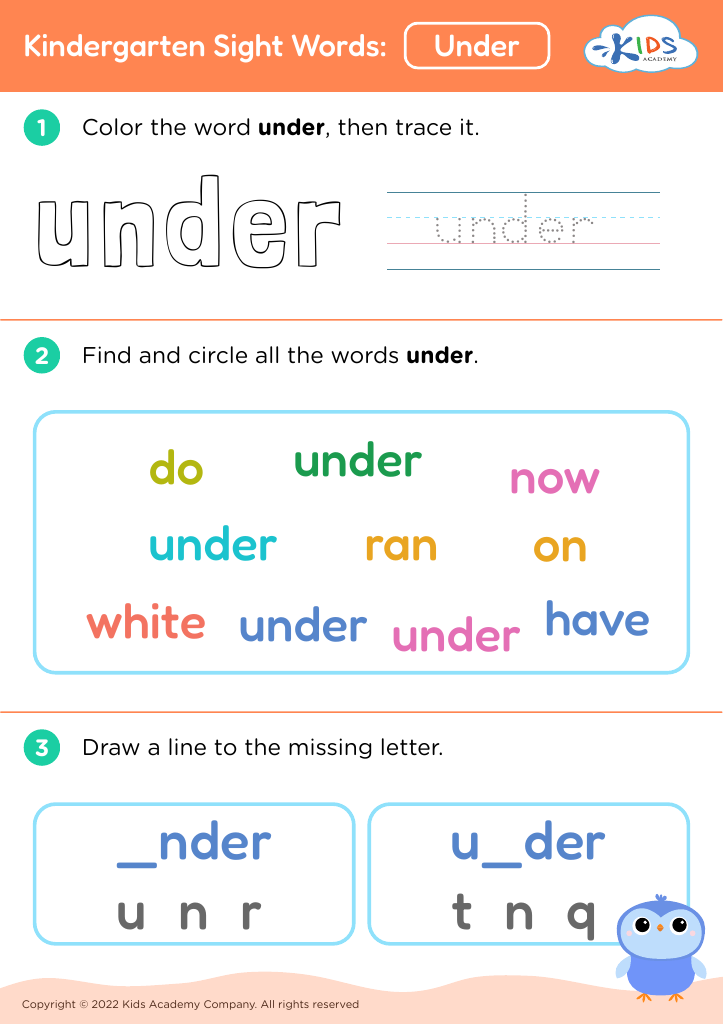
Kindergarten Sight Words: Under

Kindergarten Sight Words: Under

Kindergarten Sight Words: Under
Worksheet
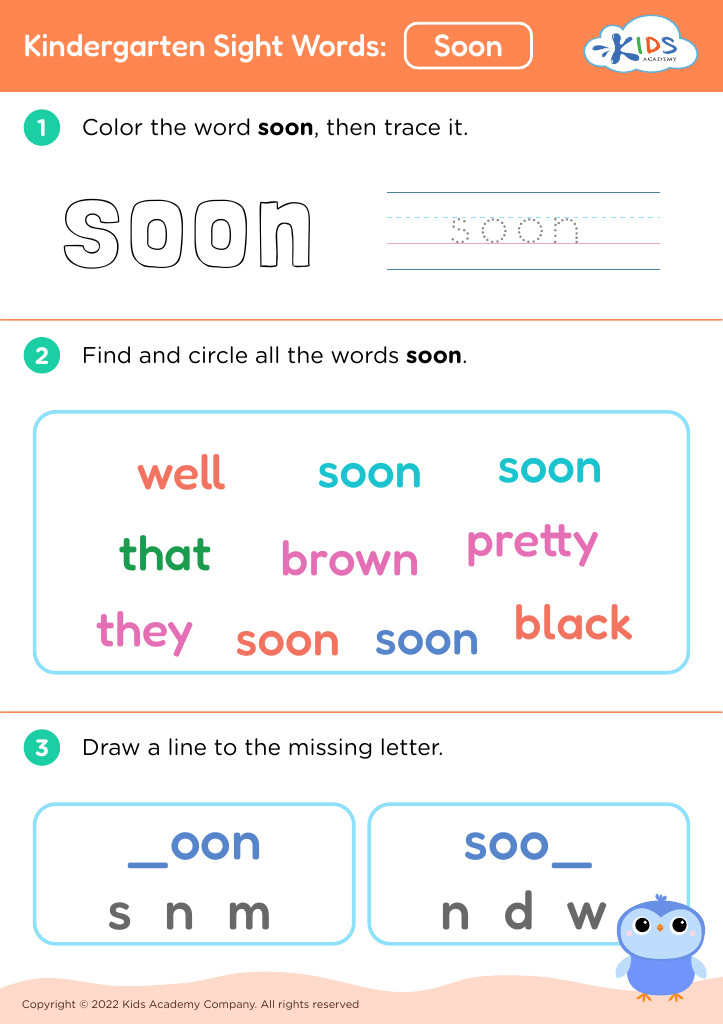
Kindergarten Sight Words: Soon

Kindergarten Sight Words: Soon

Kindergarten Sight Words: Soon
Worksheet
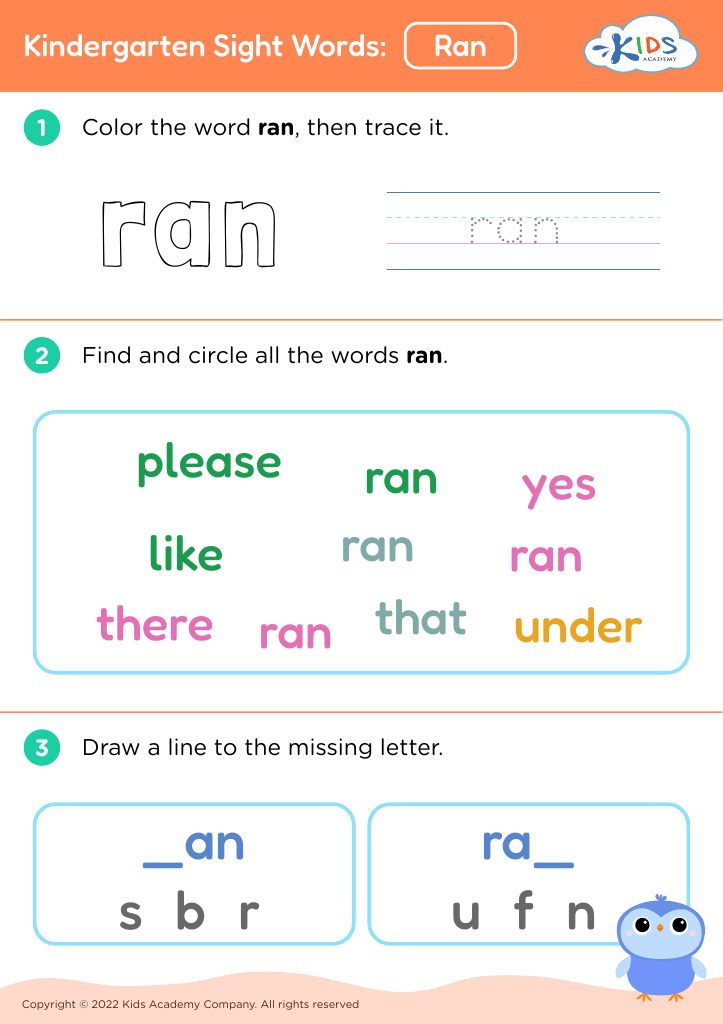
Kindergarten Sight Words: Ran

Kindergarten Sight Words: Ran

Kindergarten Sight Words: Ran
Worksheet
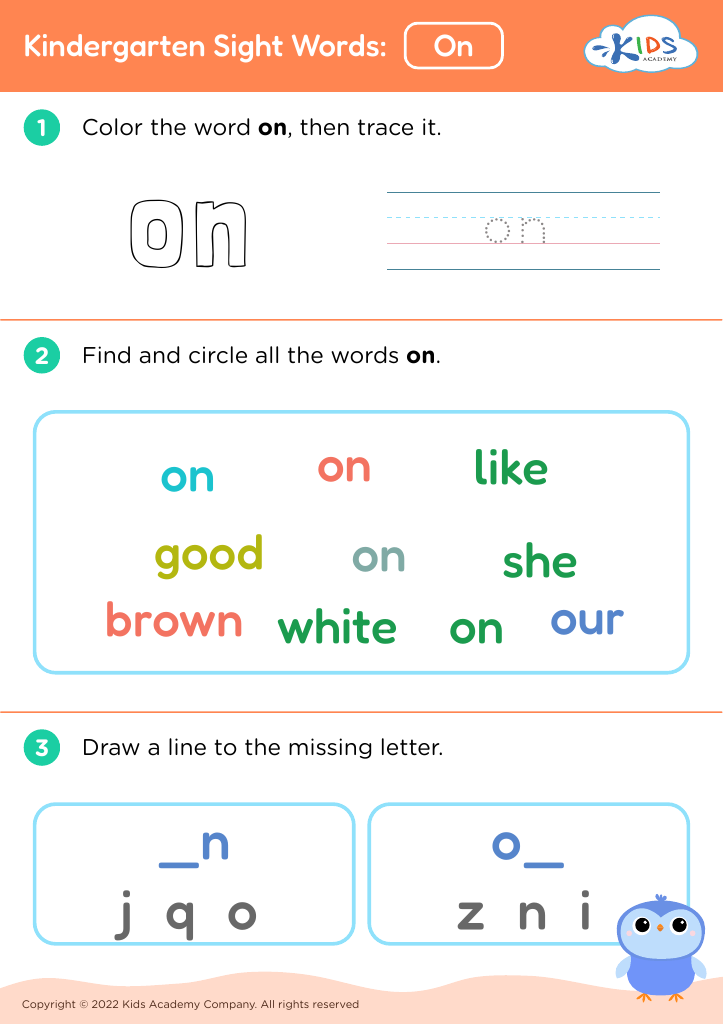
Kindergarten Sight Words: On

Kindergarten Sight Words: On

Kindergarten Sight Words: On
Worksheet
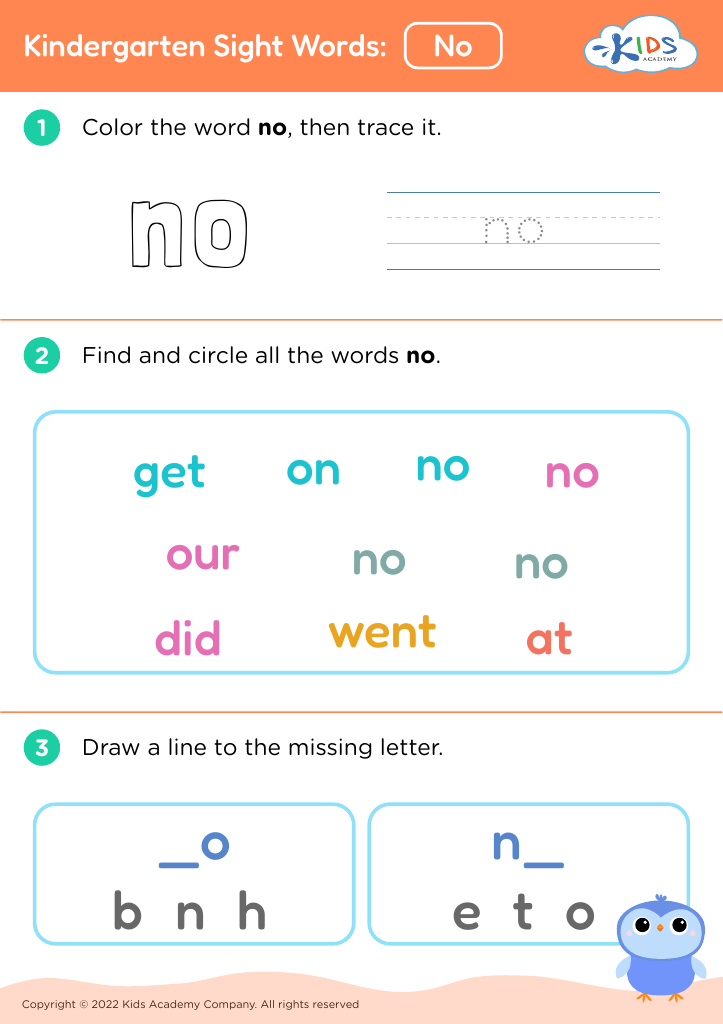
Kindergarten Sight Words: No

Kindergarten Sight Words: No

Kindergarten Sight Words: No
Worksheet
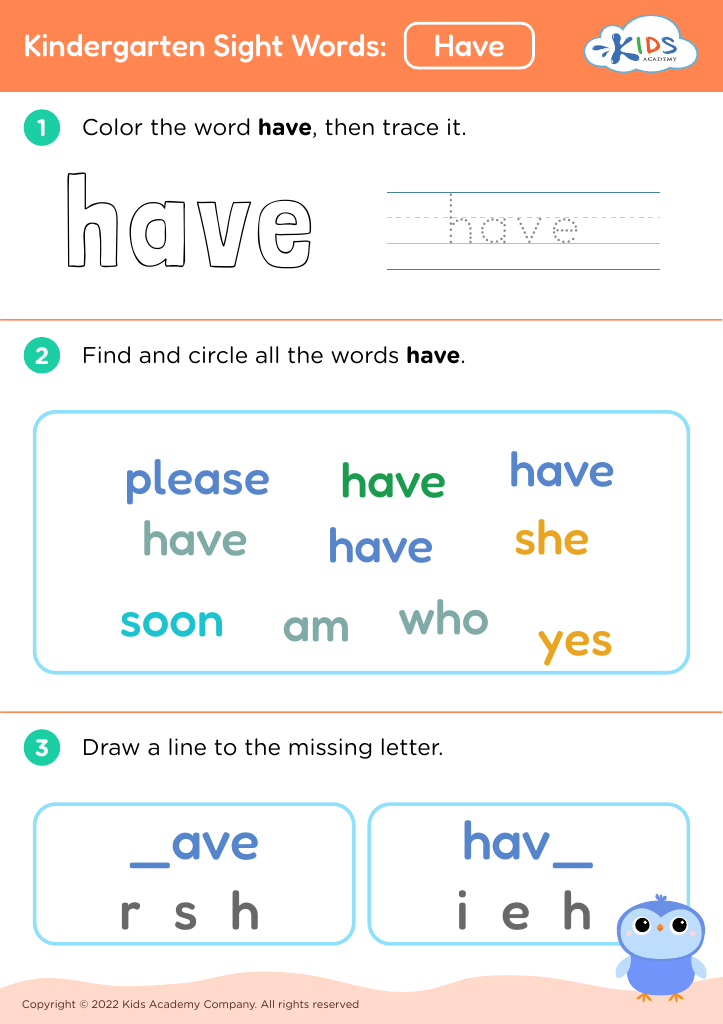
Kindergarten Sight Words: Have

Kindergarten Sight Words: Have

Kindergarten Sight Words: Have
Worksheet
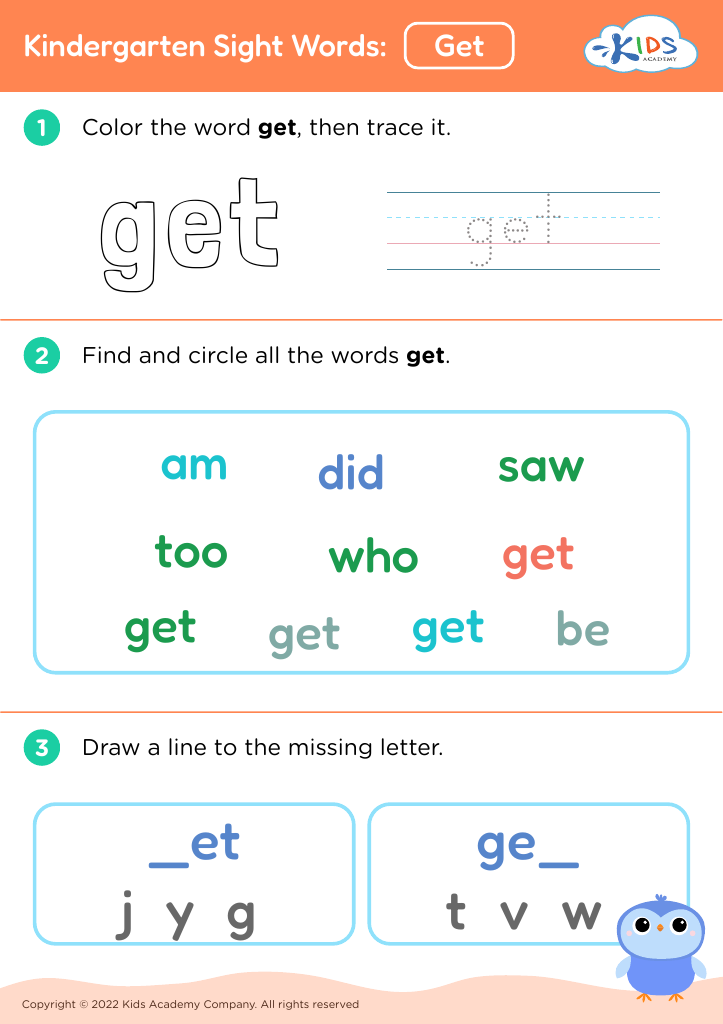
Kindergarten Sight Words: Get

Kindergarten Sight Words: Get

Kindergarten Sight Words: Get
Worksheet
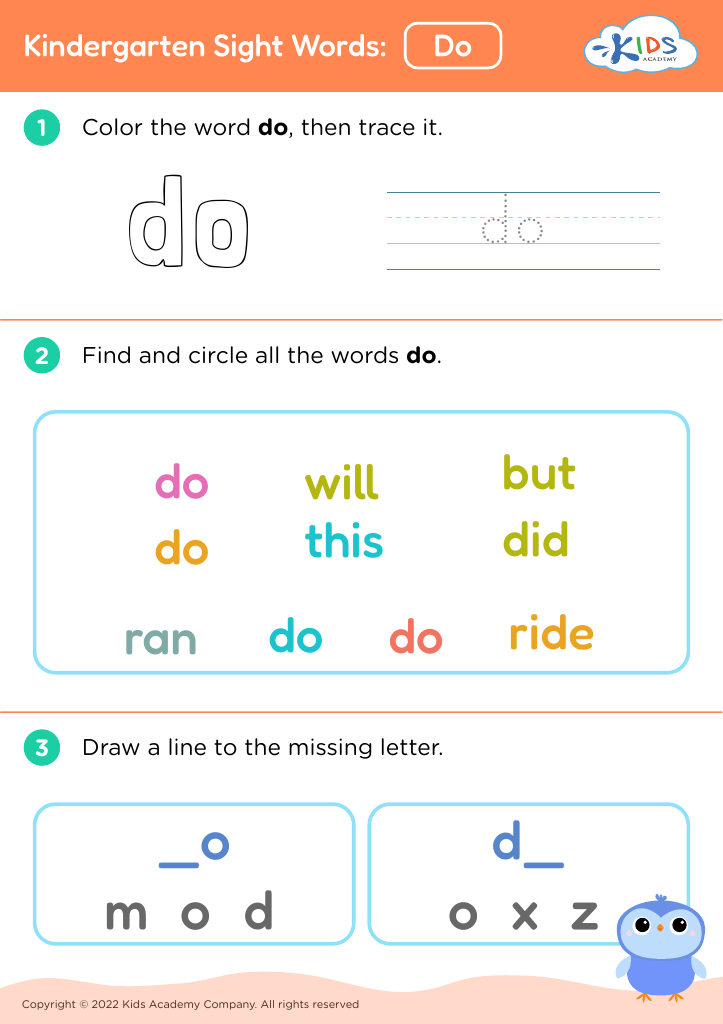
Kindergarten Sight Words: Do

Kindergarten Sight Words: Do

Kindergarten Sight Words: Do
Worksheet
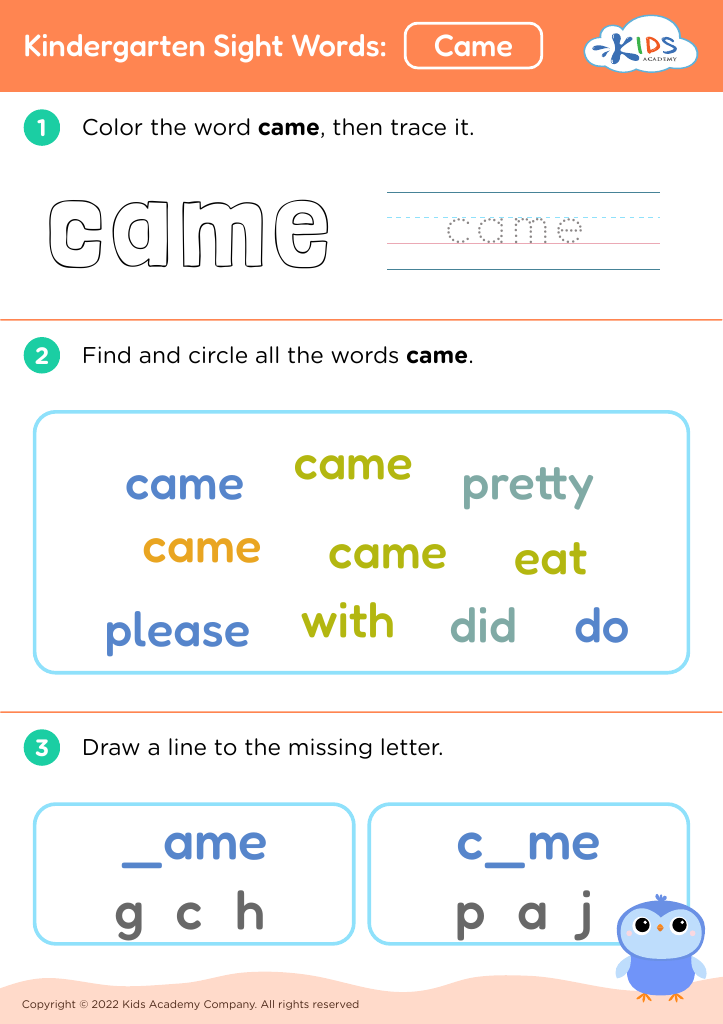
Kindergarten Sight Words: Came

Kindergarten Sight Words: Came

Kindergarten Sight Words: Came
Worksheet
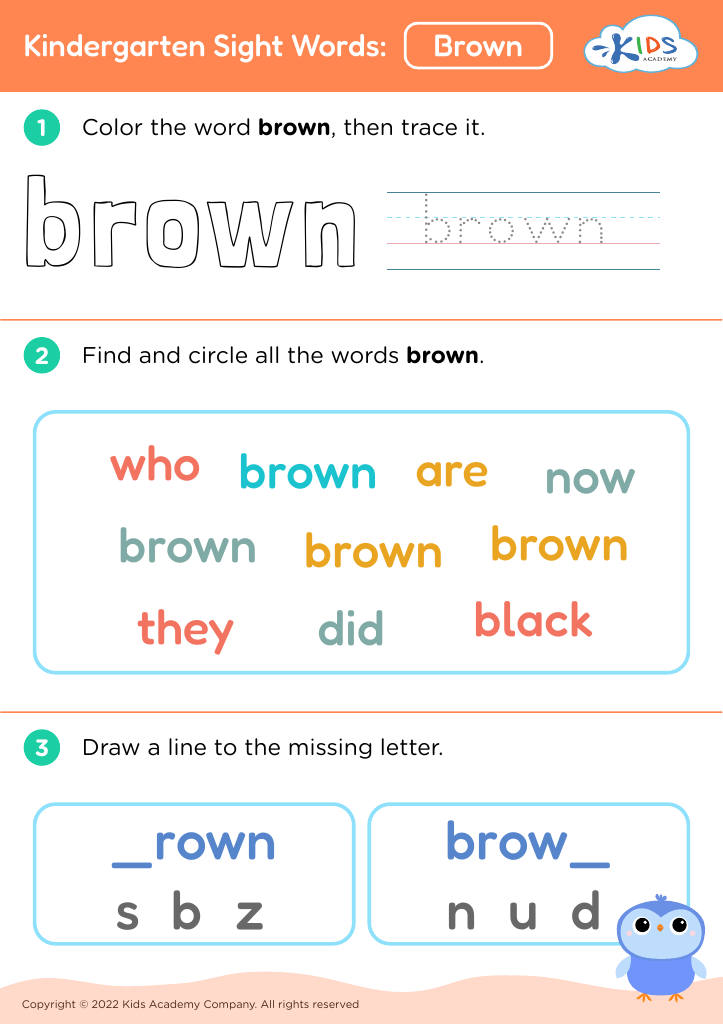
Kindergarten Sight Words: Brown

Kindergarten Sight Words: Brown

Kindergarten Sight Words: Brown
Worksheet
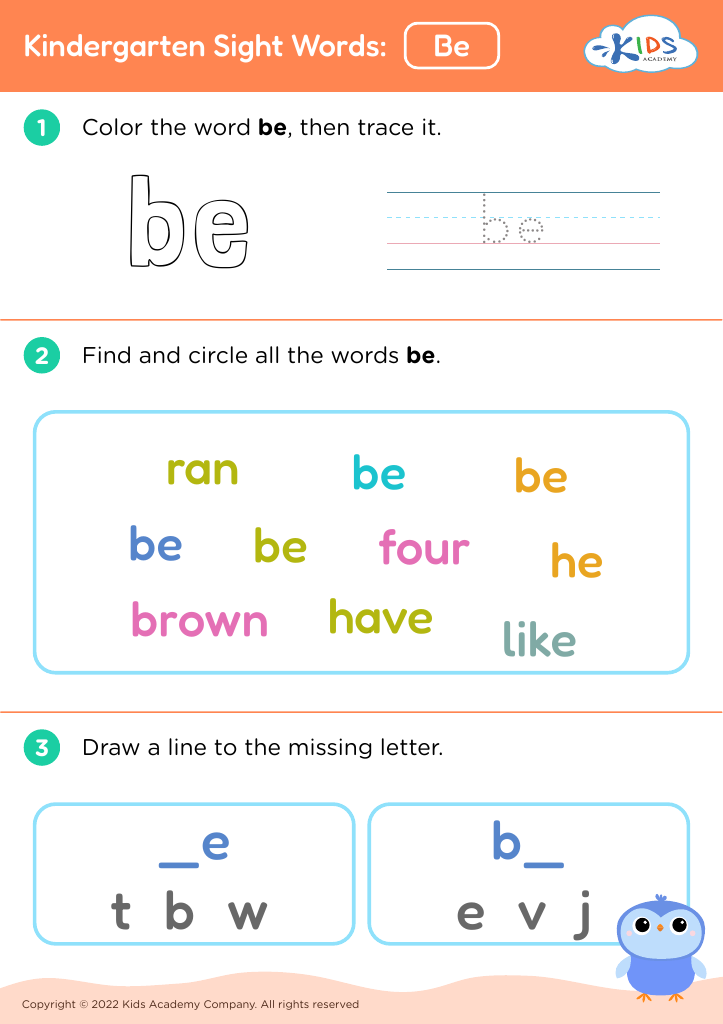
Kindergarten Sight Words: Be

Kindergarten Sight Words: Be

Kindergarten Sight Words: Be
Worksheet
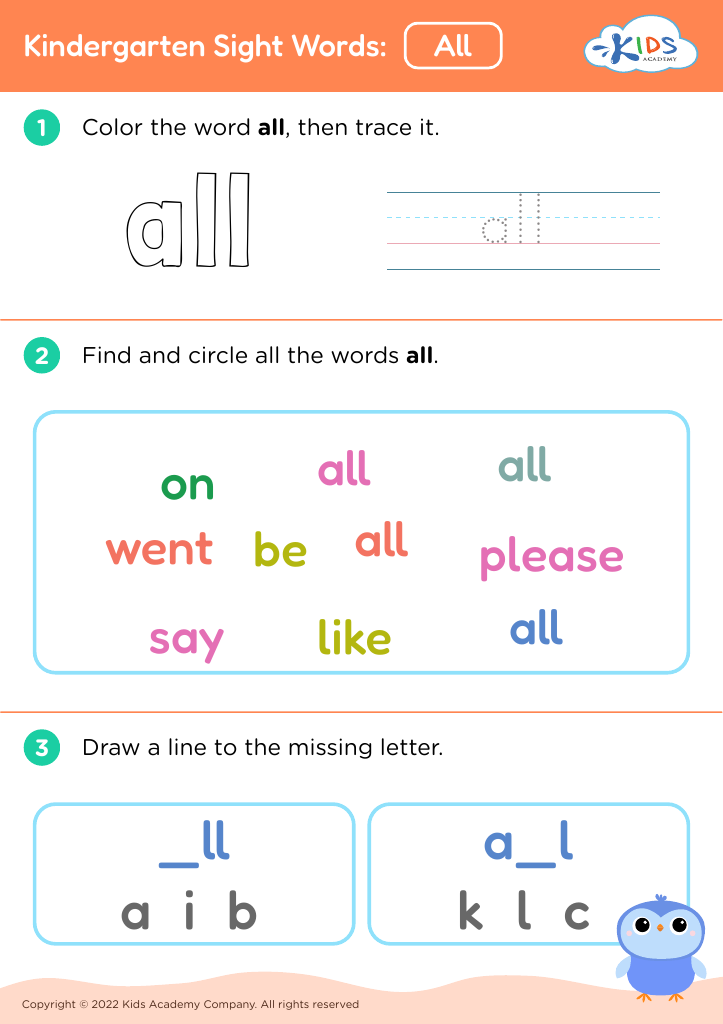
Kindergarten Sight Words: All

Kindergarten Sight Words: All

Kindergarten Sight Words: All
Worksheet


Understanding fractions and building vocabulary in young children is crucial for their overall cognitive development and future academic success. For parents and teachers of 5-year-olds, fractions provide an early exposure to mathematical concepts that are fundamental for later learning. When children grasp the idea of fractions—like halves and quarters—they begin to develop critical thinking and problem-solving skills. Understanding parts of a whole lays the groundwork for more complex math topics in subsequent years.

Additionally, building vocabulary around these concepts is equally important. A rich vocabulary allows children to communicate their understanding and engage in discussions about what they are learning. Describing fractions and using related terms—like "equal," "divide," and "share"—enhances comprehension and retention. It also connects language skills to mathematical concepts, creating a more holistic learning experience.

Furthermore, early mathematical understanding and language skills promote confidence and curiosity. When 5-year-olds engage actively with fractions and vocabulary, they are more likely to develop a positive attitude toward math, ensuring they remain motivated learners as they progress in their education. Encouraging exploration and discussion of fractions and related vocabulary not only supports academic growth but also fosters a love for learning that lasts a lifetime.