Vocabulary enhancement Animals Worksheets for 5-Year-Olds
3 filtered results
-
From - To
Enhance your child's language skills with our Vocabulary Enhancement Animals Worksheets for 5-Year-Olds! Designed to make learning fun, these worksheets feature a variety of animals, promoting both vocabulary growth and scientific curiosity. Through engaging activities like matching, coloring, and identifying animals, children learn new words and concepts effortlessly. Perfect for early learners, our worksheets support development in reading and comprehension while fostering a love for animals and nature. Give your 5-year-old a head start with our educational, enjoyable, and interactive worksheets. Visit Kids Academy to discover a world where learning about animals is both educational and fun!
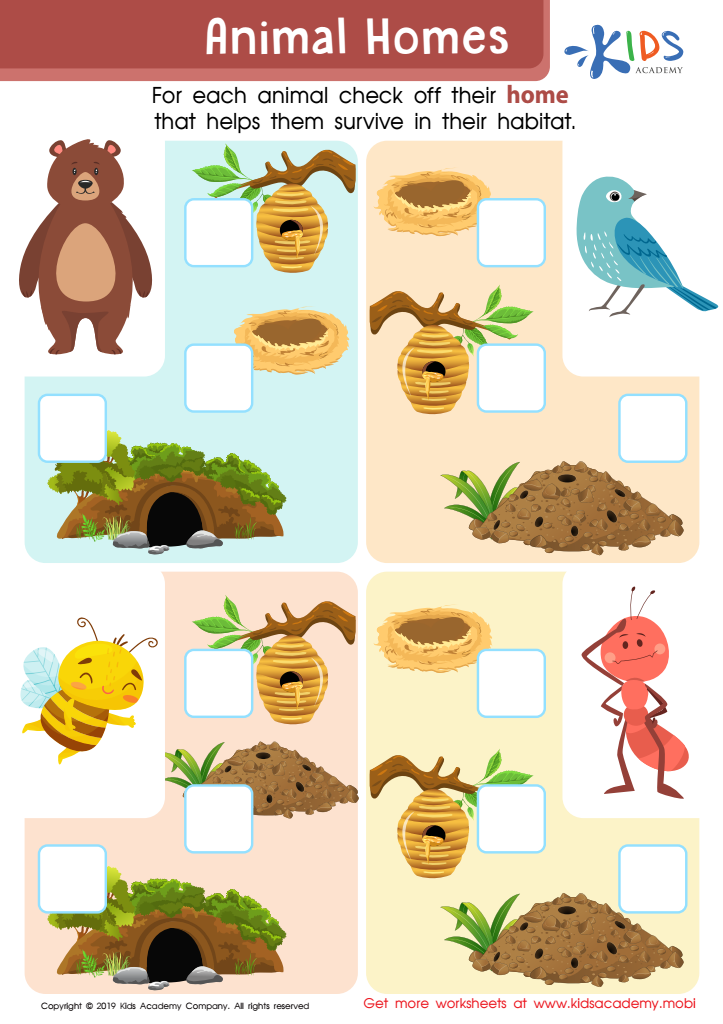
Animal Homes Worksheet
 Assign to My Students
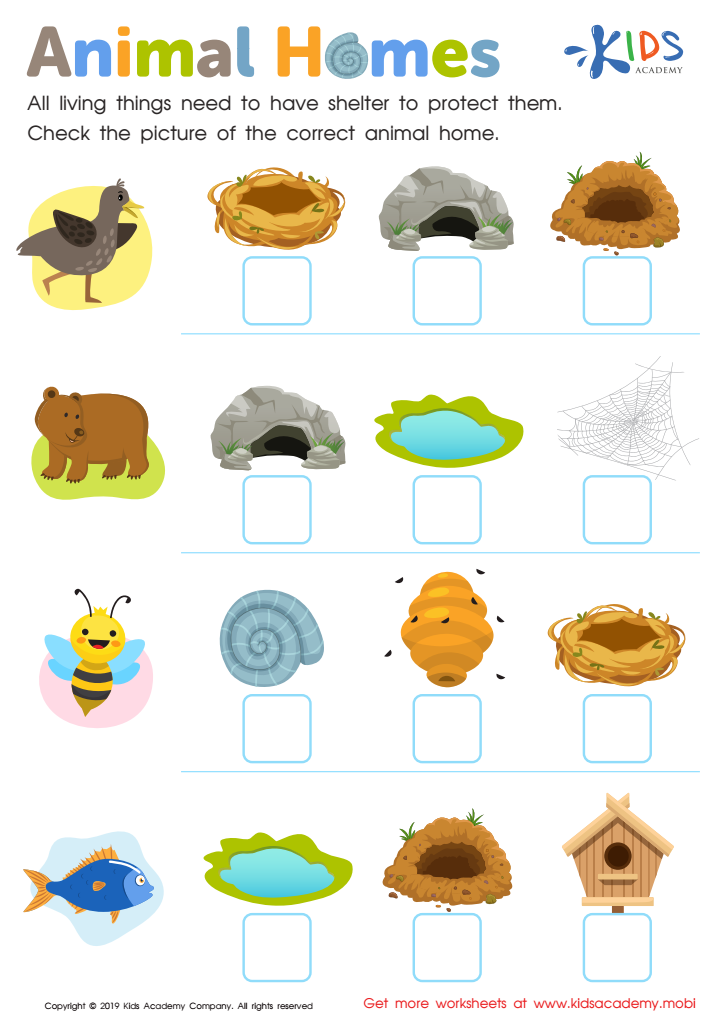
Animal Homes Worksheet
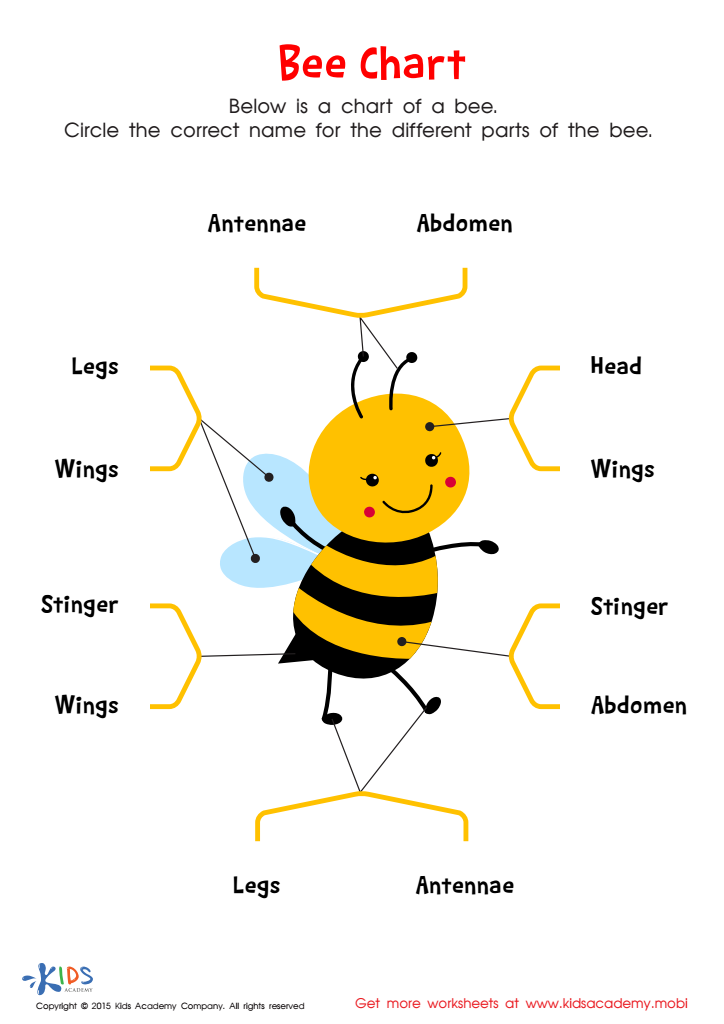








Vocabulary enhancement that focuses on animals for 5-year-olds is crucial for several reasons. First, it stimulates cognitive development, as learning the names and characteristics of various animals expands a child's understanding of the world around them. At this age, children are naturally curious and eager to learn, making it the perfect time to introduce a diverse range of animal vocabulary.
Second, discussing animals helps improve comprehension skills. When children can name animals and describe their traits—such as what they eat, where they live, and how they behave—they enhance their ability to understand and explain more complex concepts later on. This foundation serves as a building block for future learning in science and biology.
Moreover, vocabulary-building involving animals also enriches emotional and social development. Children learn empathy and compassion by understanding the lives and needs of animals, which can translate into caring behaviors towards pets and wildlife. Stories and activities revolving around animals also promote teamwork and communication skills, fostering better interaction among peers.
Lastly, making learning fun and engaging by integrating stories, songs, and interactive activities related to animals motivates children, enhancing their overall educational experience. Thus, focusing on animal-related vocabulary provides numerous developmental benefits, making it essential for parents and teachers to incorporate it into early childhood education.








