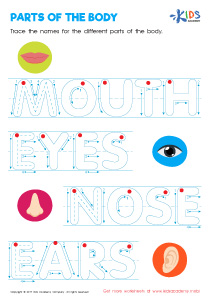
Categorization skills World Around Us Worksheets for 5-Year-Olds
3 filtered results
-
From - To
Welcome to our "Categorization Skills: World Around Us" worksheets for 5-year-olds! Designed to enhance early learning, these engaging printables help children explore the world through categorization. By sorting objects based on attributes like shape, color, and size, kids develop critical thinking and organizational skills. Each worksheet is tailored to spark curiosity and encourage hands-on discovery of their surroundings, making learning fun and interactive. Perfect for preschool and kindergarten classrooms or at home, our materials align with early educational standards. Foster your child's cognitive development and make learning about the world an exciting adventure with our thoughtfully crafted worksheets!
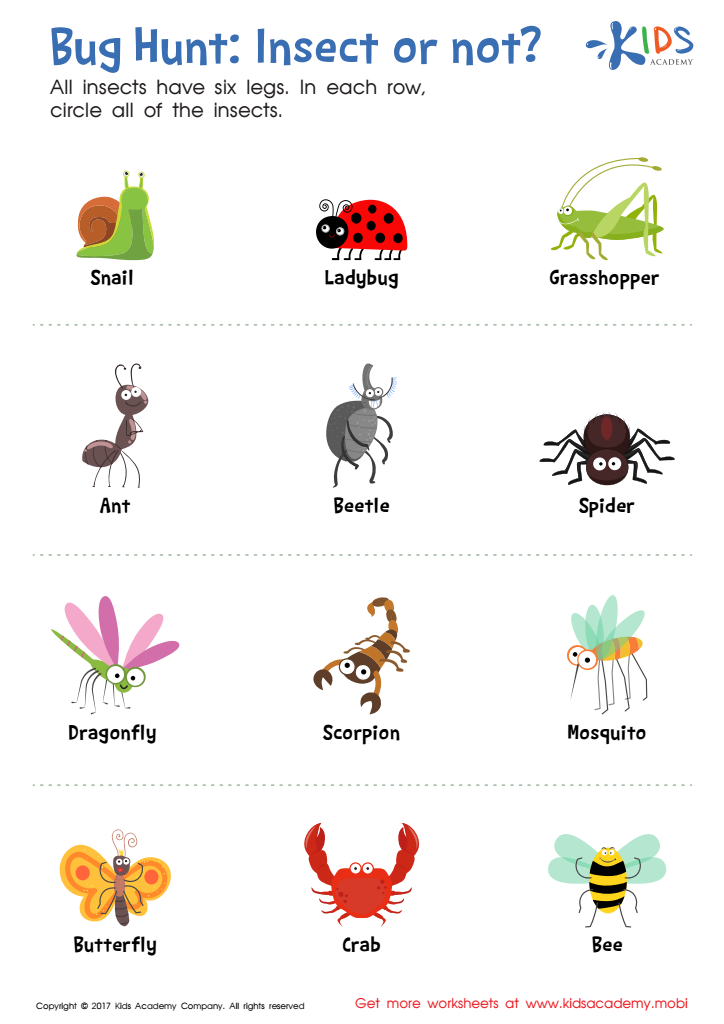
 Assign to My Students
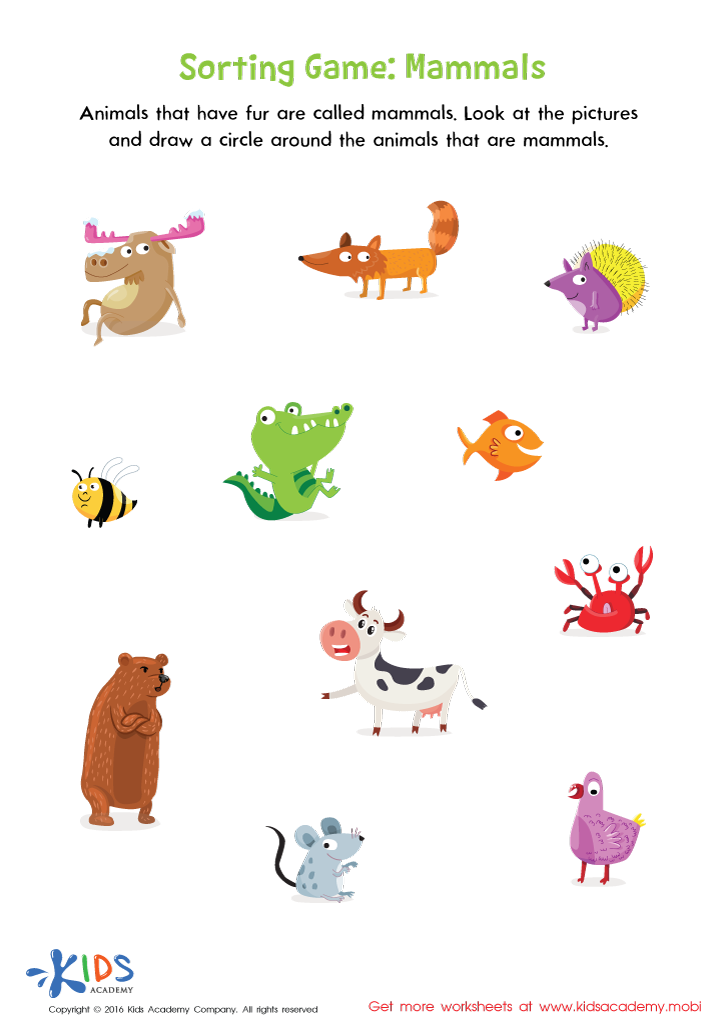
Mammals Sorting Worksheet
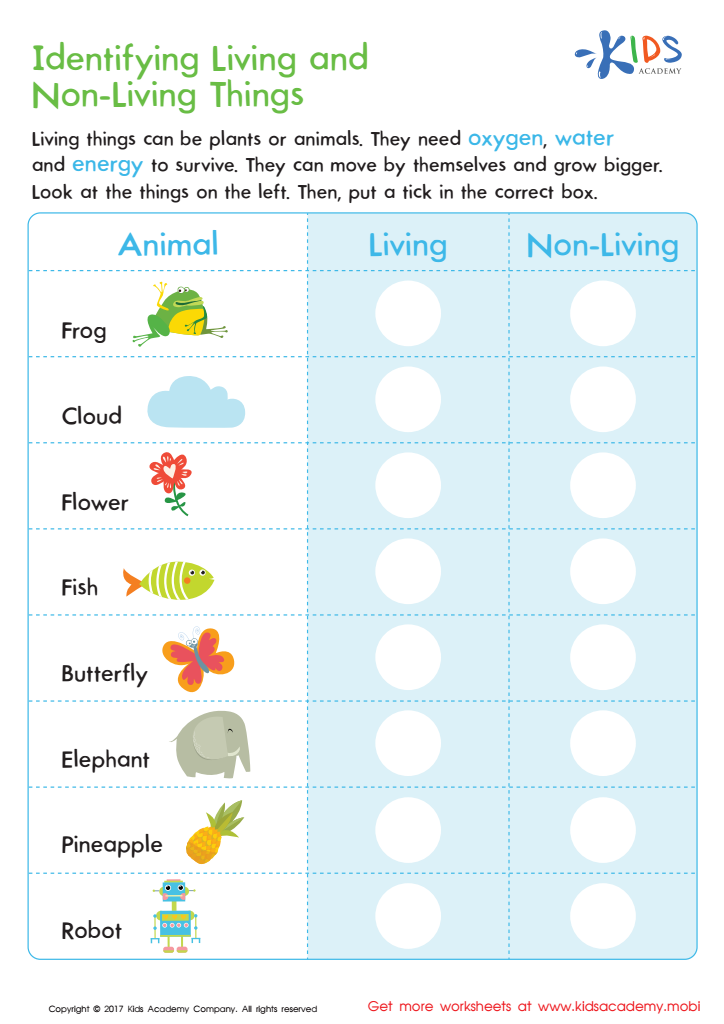
Identifying Living or Non–living Worksheet







Categorization skills are essential for 5-year-olds as they serve as foundational cognitive abilities that influence a child's understanding of the world around them. Parents and teachers should prioritize these skills because they help children organize their experiences, facilitating better learning and communication. By classifying objects, events, or ideas based on similarities and differences, children can make sense of complex information, a skill that supports critical thinking and problem-solving later in life.
Moreover, categorization enhances vocabulary development. When children learn to group items—such as animals, colors, or shapes—they are also expanding their language skills by discovering new words and concepts. Socially, these skills help children navigate interactions with peers; knowing how to categorize helps them understand relationships, such as friendships or group dynamics.
Additionally, promoting categorization in daily experiences—like sorting laundry or grouping toys—makes learning engaging and fun. It fosters curiosity about the world and encourages exploration. Any effort made by parents and teachers to nurture these skills can significantly influence a child's academic readiness and social abilities, enhancing overall development. Therefore, nurturing categorization skills is a vital component of preparing young children for future challenges both in school and beyond.