Capitalization rules Writing Worksheets for 5-Year-Olds
4 filtered results
-
From - To
Introduce your young writer to our engaging Capitalization Rules Writing Worksheets designed for 5-year-olds. These user-friendly printable sheets provide fun and interactive ways to understand the basics of capitalization. With activities focusing on capitalizing the first word in sentences, the pronoun 'I', and names, kids will enjoy learning while building strong foundational writing skills. The colorful and appealing design keeps children captivated, turning learning into a joyous experience. Perfect for parents and educators, these worksheets make teaching proper capitalization simple and effective. Download today and watch your child’s writing skills flourish!
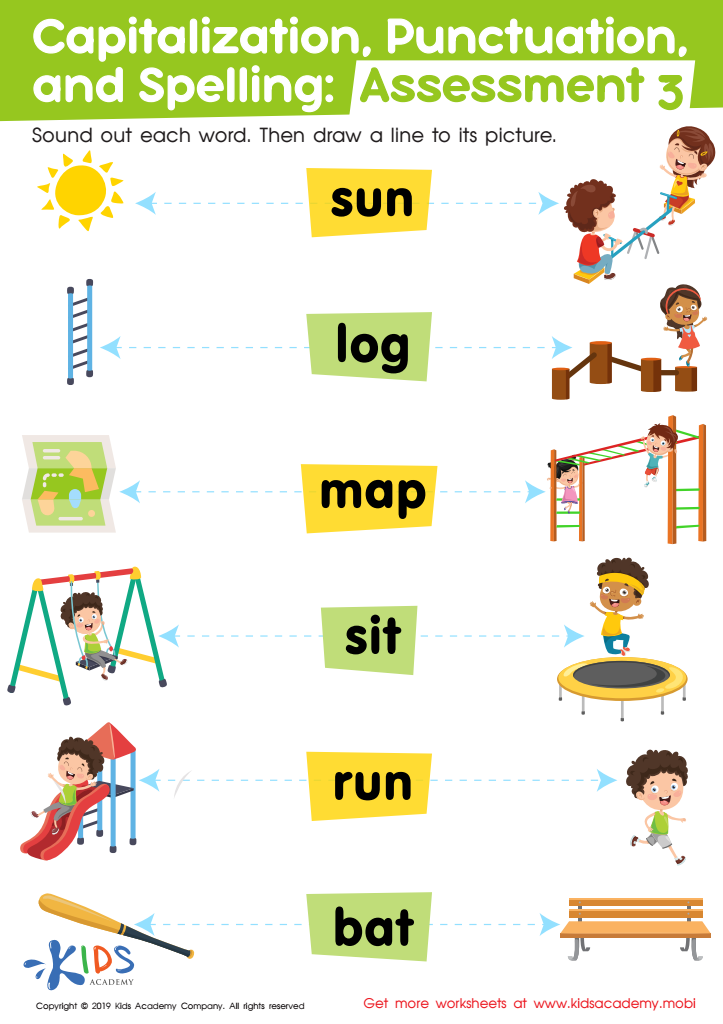
Capitalization. Punctuation. Spelling. Assessment 3 Worksheet
 Assign to My Students
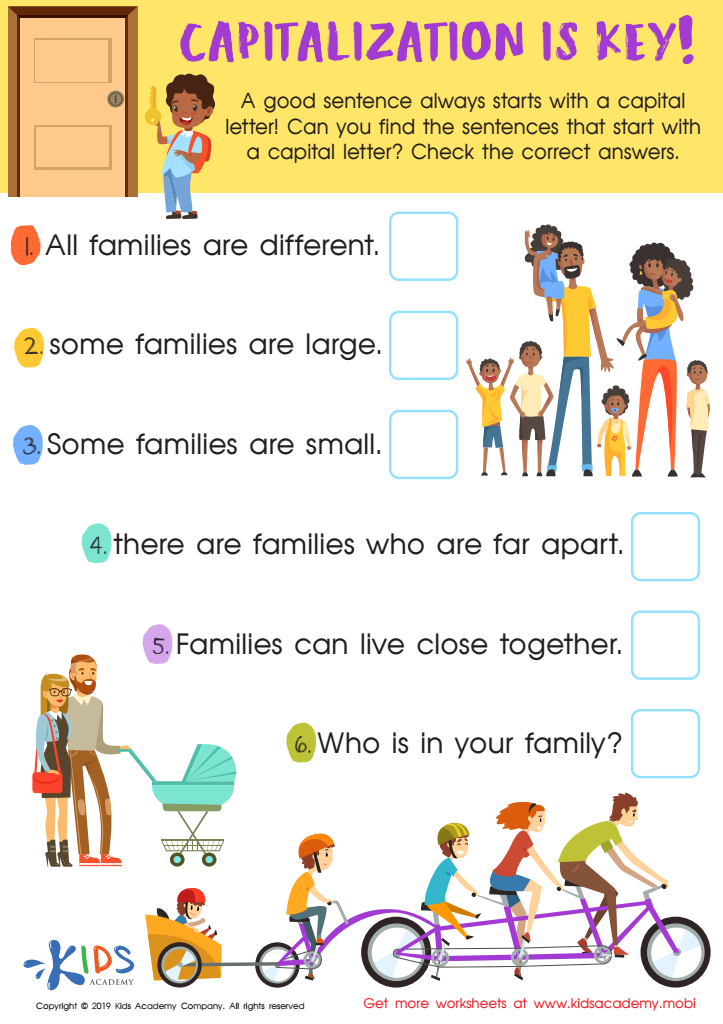
Capitalization Key Worksheet
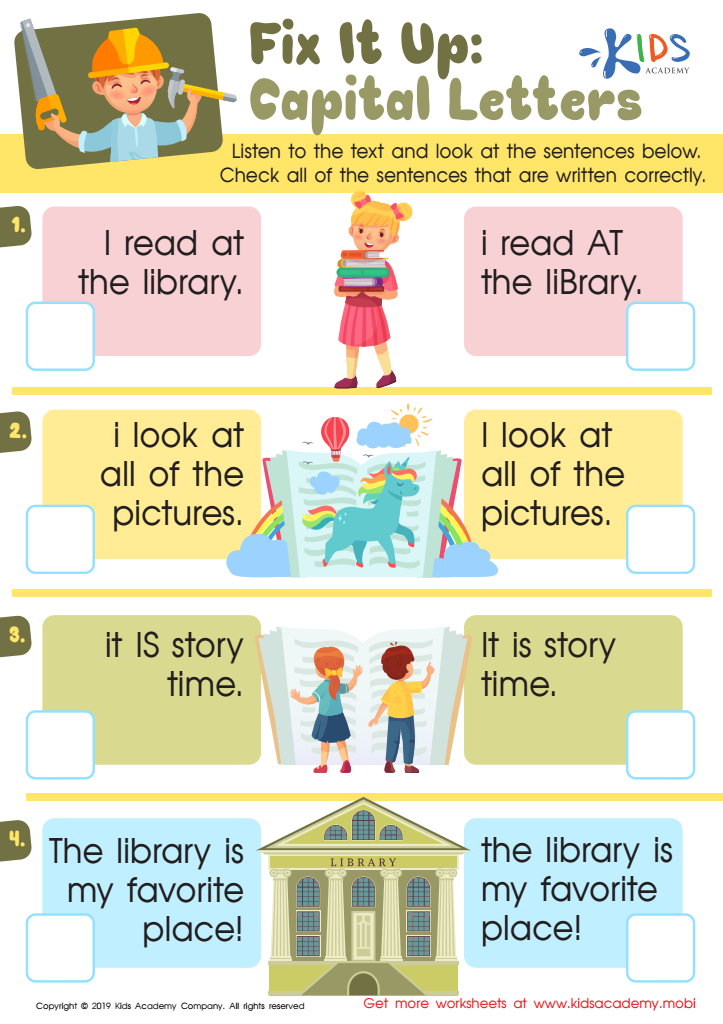
Fix Capital Letters Worksheet
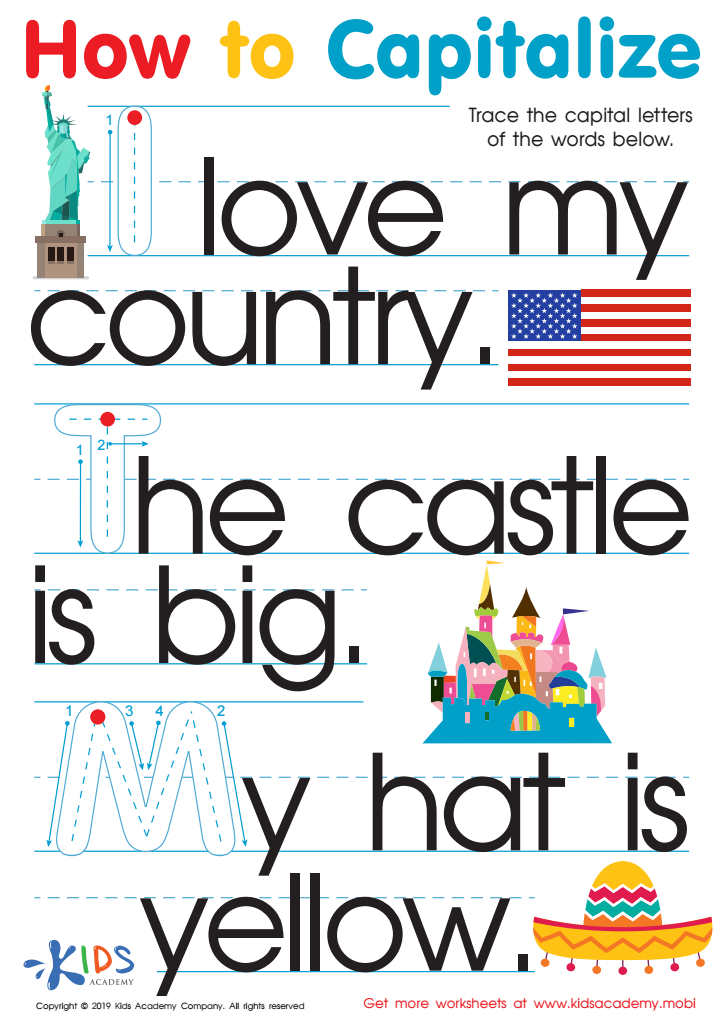
How to Capitalize Worksheet



.jpg)



Teaching capitalization rules to 5-year-olds is essential for their literacy development and effective communication. At this formative age, young children are starting to understand the basics of written language, and introducing them to capitalization rules lays a solid foundation for future writing skills.
Firstly, capitalization enhances readability. When kids learn to capitalize the first word in sentences, proper nouns, and the pronoun "I," they make their writing clear and easier to understand. For example, starting a sentence with a capital letter signals the beginning of a new thought, helping readers follow the text smoothly.
Secondly, proper capitalization models respect and attention to detail. Teaching these rules helps children recognize the importance of names and significant words. It instills a sense of respect for people, places, and things by highlighting their significance with capital letters.
Lastly, early mastery of capitalization rules boosts confidence and sets the stage for more advanced writing skills. When children know and apply these rules correctly, they feel more self-assured in their writing abilities, encouraging them to express their thoughts more freely. This early confidence can lead to greater academic success as they progress through school.
In summary, teaching capitalization to 5-year-olds is crucial because it improves readability, instills respect, and builds confidence, fostering their overall literacy development.








