Vocabulary expansion Writing Worksheets for 5-Year-Olds - Page 2
26 filtered results
-
From - To
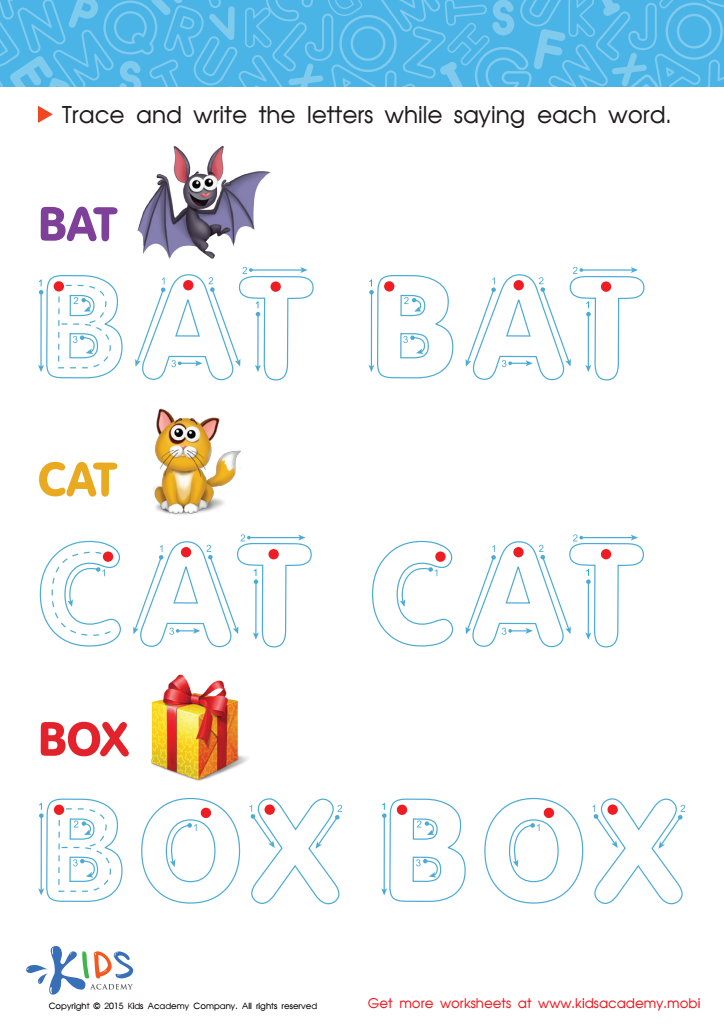
A Bat, a Cat and a Box Spelling Worksheet
 Assign to My Students
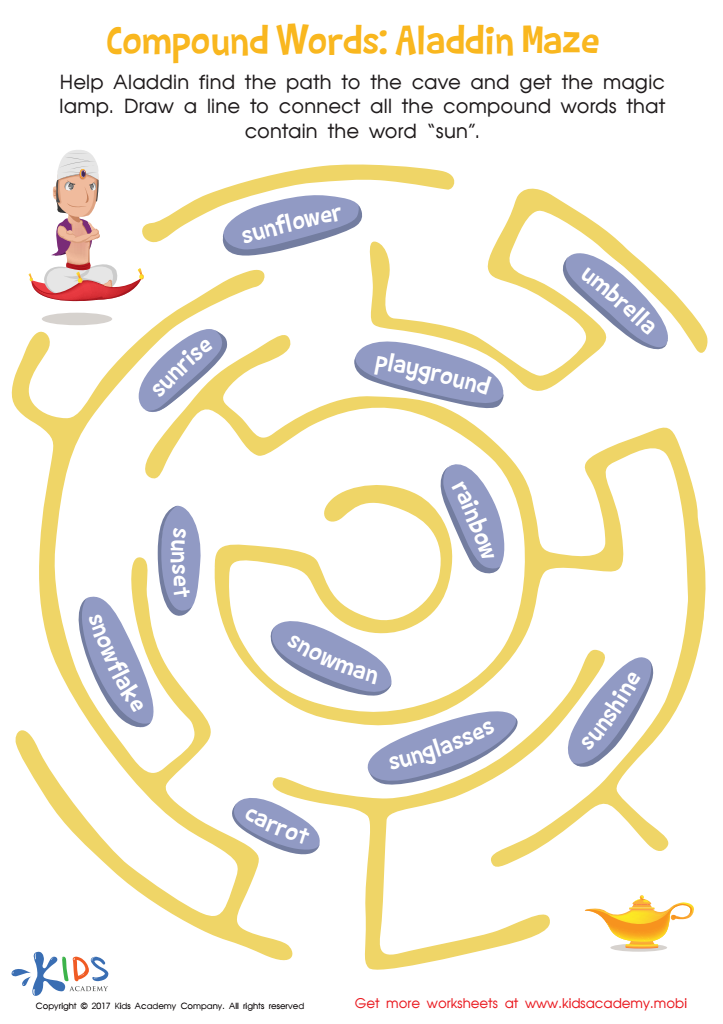
Compound Aladdin Maze Word Structure Worksheet








Vocabulary expansion is crucial for 5-year-olds as it fundamentally impacts their cognitive development, academic success, and social skills. At this age, children are like sponges, absorbing new information rapidly. A rich vocabulary enables them to express their thoughts, feelings, and needs more accurately and effectively, fostering better communication with both peers and adults. When children understand and use a variety of words, they can describe the world around them more vividly and engage more deeply in conversations.
For parents and teachers, supporting vocabulary growth is an investment in a child’s future. It lays the foundation for reading comprehension, a key predictor of later academic achievement. When children know more words, they can better understand stories and informational texts, enabling them to enjoy reading and learning.
Moreover, a strong vocabulary helps children follow instructions, participate in diverse activities, and build higher-level thinking skills, such as problem-solving and critical reasoning. Socially, children with an extensive vocabulary are often more confident and able to resolve conflicts through verbal communication, promoting healthier relationships.
By emphasizing vocabulary development through conversations, reading, and writing, parents and teachers equip children with essential tools for lifelong learning and success, fostering a love for language that can open doors to numerous opportunities.