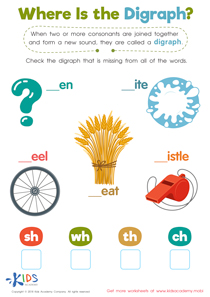
Vocabulary enhancement Beginning Consonants Worksheets for Ages 6-7
3 filtered results
-
From - To
Boost your child's vocabulary with our engaging Beginning Consonants Worksheets designed for ages 6-7! These fun and interactive worksheets help young learners identify and practice beginning consonant sounds, laying a strong foundation for reading and writing. Each activity promotes phonemic awareness and word recognition, making learning enjoyable and effective. Explore a variety of exercises, including tracing, matching, and coloring, all tailored to enhance vocabulary usage through playful themes. Perfect for reinforcing classroom learning or for at-home practice, these resources encourage children to build confidence in their language skills. Start your child's journey to literacy with our thoughtfully crafted worksheets today!
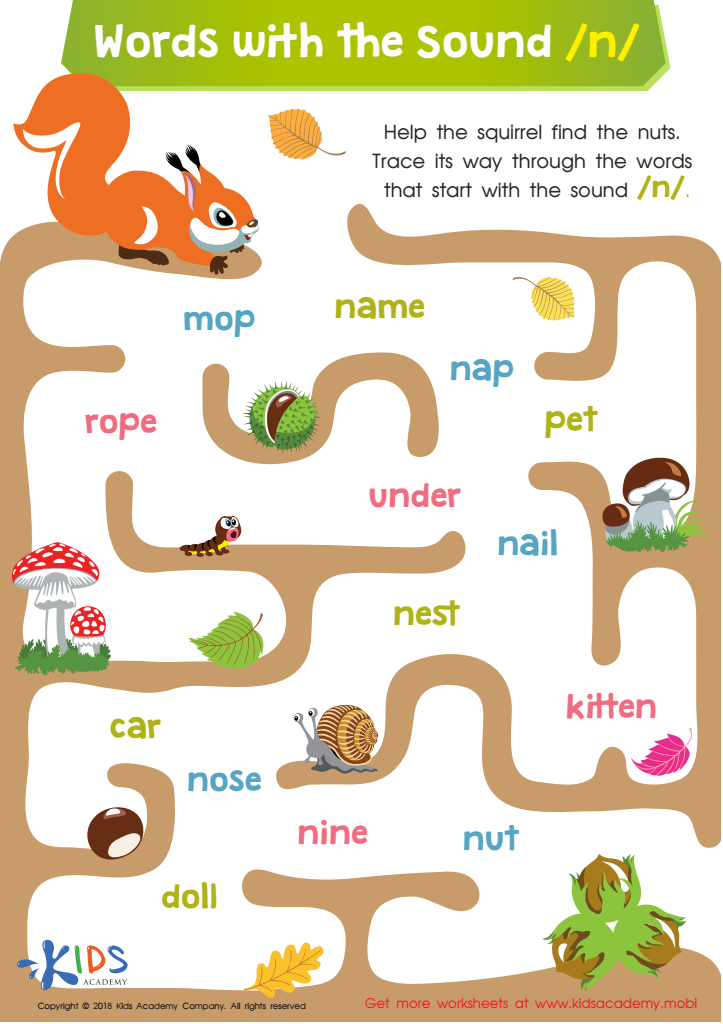
Words with Sound N Reading Worksheet
 Assign to My Students
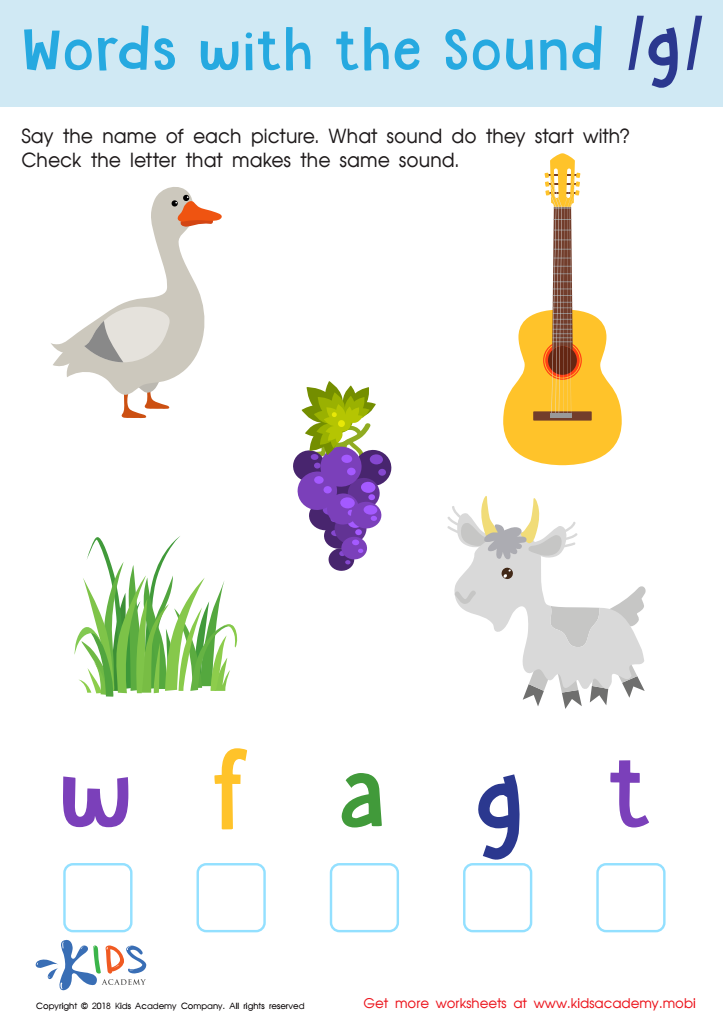
Words with sound g Reading Worksheet
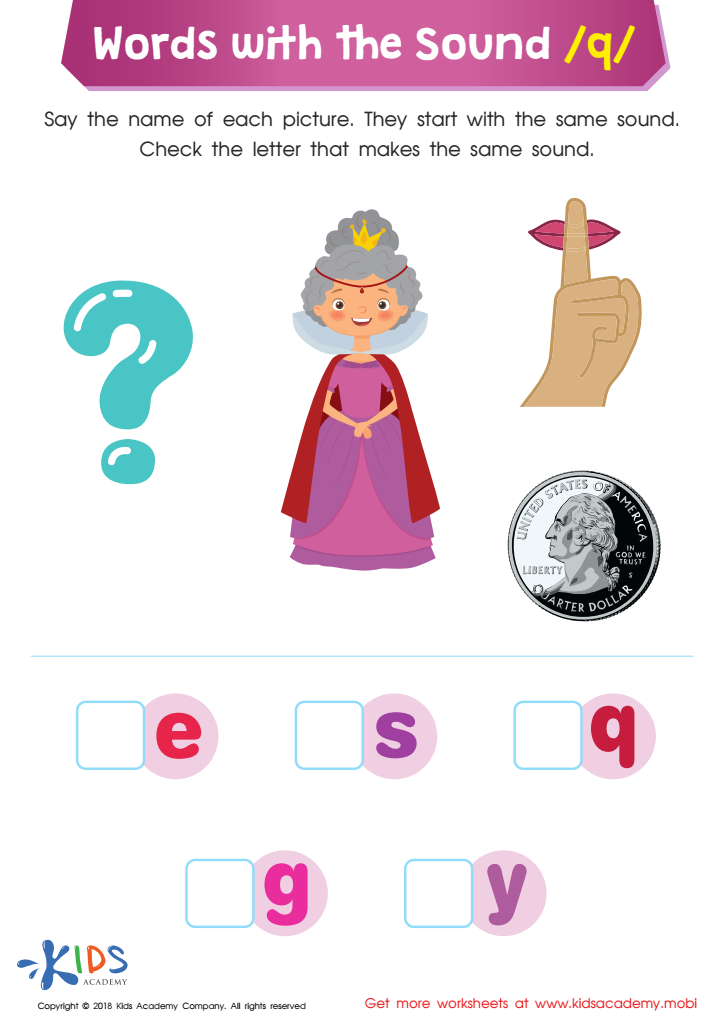
Words with Sound Q Reading Worksheet


Vocabulary enhancement, particularly focusing on beginning consonants, is crucial for children ages 6-7 as it forms the foundation for language development and reading skills. This age group is typically transitioning from learning to read to reading to learn, making strong phonemic awareness vital. Recognizing and manipulating initial sounds enables young learners to decode words more effectively and improves their spelling abilities.
Teachers and parents should care about this early literacy skill because a robust vocabulary enhances comprehension and allows children to express themselves more clearly. Mastering beginning consonants also supports children in developing confidence in their reading and writing abilities, fostering a positive attitude towards learning.
Moreover, engaging in vocabulary activities related to beginning consonants can enrich children's language experiences. Strategies like phonics games, rhyming activities, and interactive storytelling not only build these essential skills but can also nurture a love for language and literature.
Ultimately, a focus on vocabulary enhancement through beginning consonants ensures that children are well-equipped for future academic success, setting the stage for effective communication, critical thinking, and lifelong learning. By supporting this foundational skill, parents and teachers play a pivotal role in shaping children's educational outcomes.