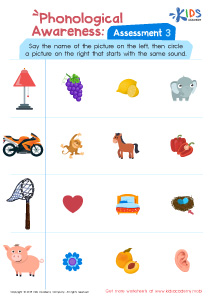
Vocabulary expansion Beginning Sounds Worksheets for Ages 6-7
5 filtered results
-
From - To
Our Vocabulary Expansion Beginning Sounds Worksheets for ages 6-7 focus on developing early reading skills and expanding your child's vocabulary. These engaging worksheets are designed to help young learners recognize beginning sounds of words, fostering phonemic awareness. Kids will practice identifying and matching initial sounds to words, enhancing their ability to decode language and build a solid vocabulary foundation. Featuring fun activities and colorful illustrations, our printable worksheets provide an interactive way for children to strengthen their literacy skills. Give your child a head start in reading with our expertly crafted resources tailored for early learners.
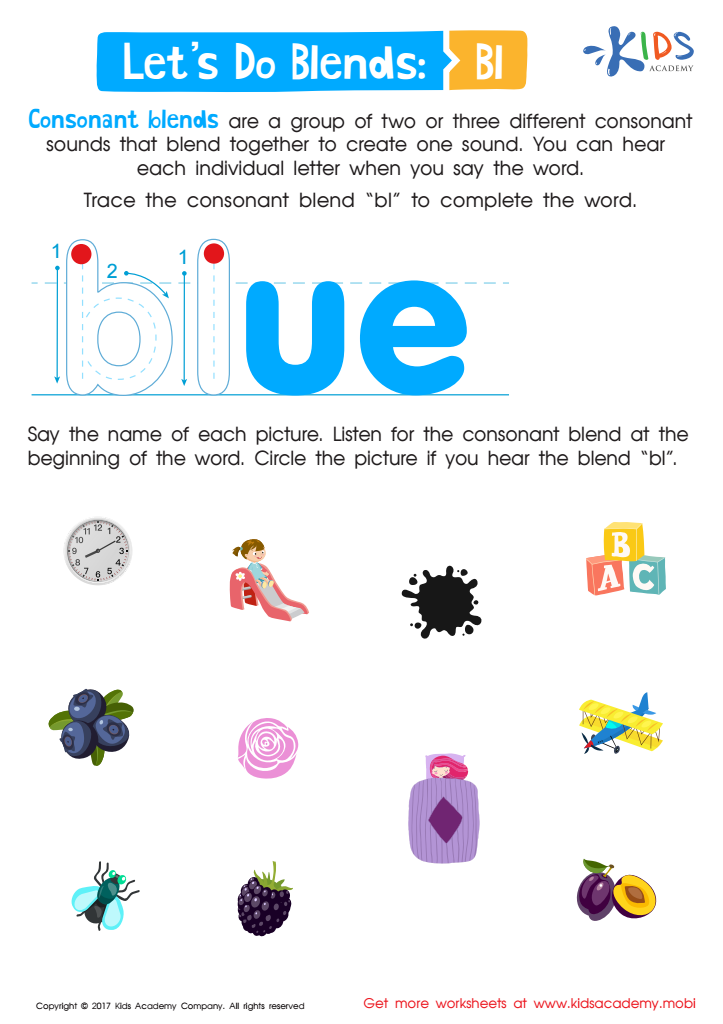
Beginning Blends: "Bl" Words Worksheet
 Assign to My Students
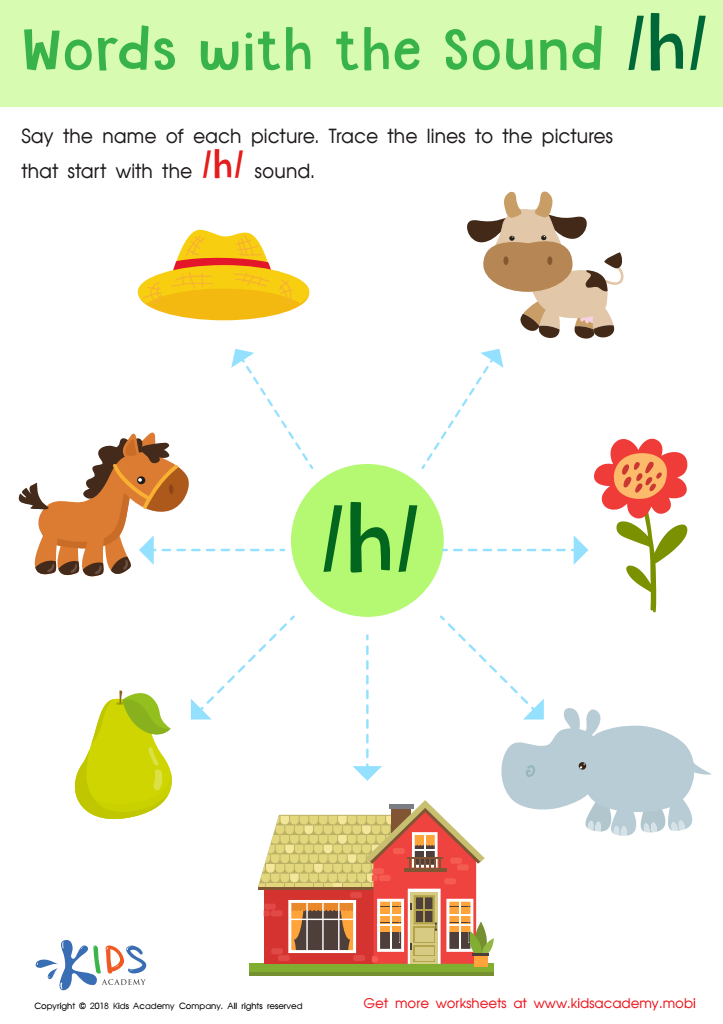
Words with sound h Reading Worksheet
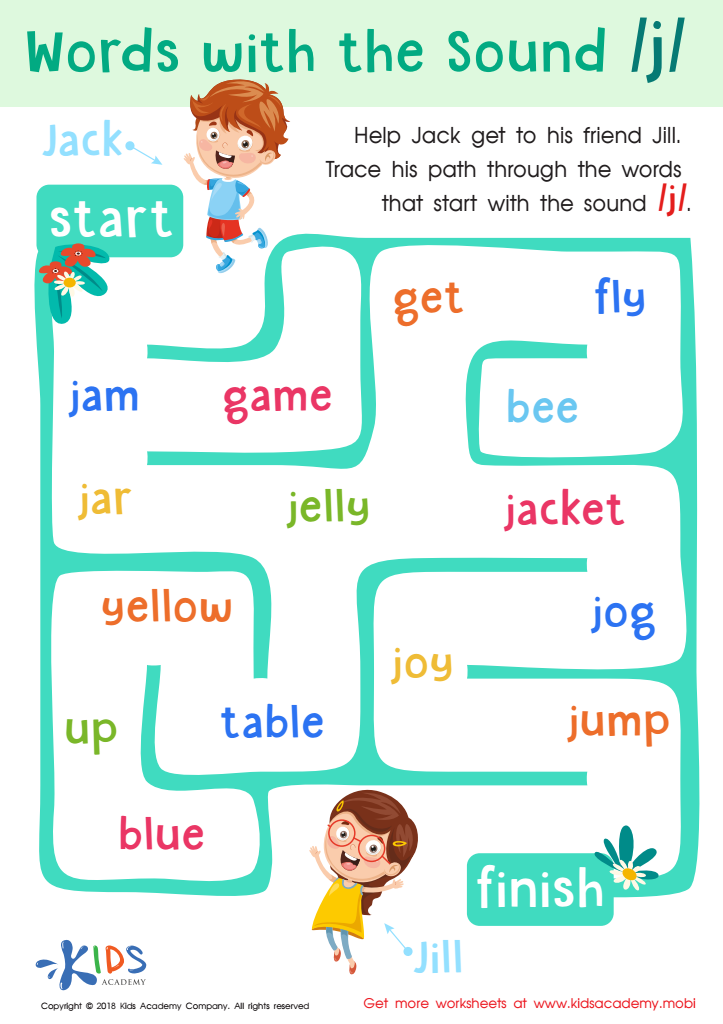
Words with sound j Reading Worksheet
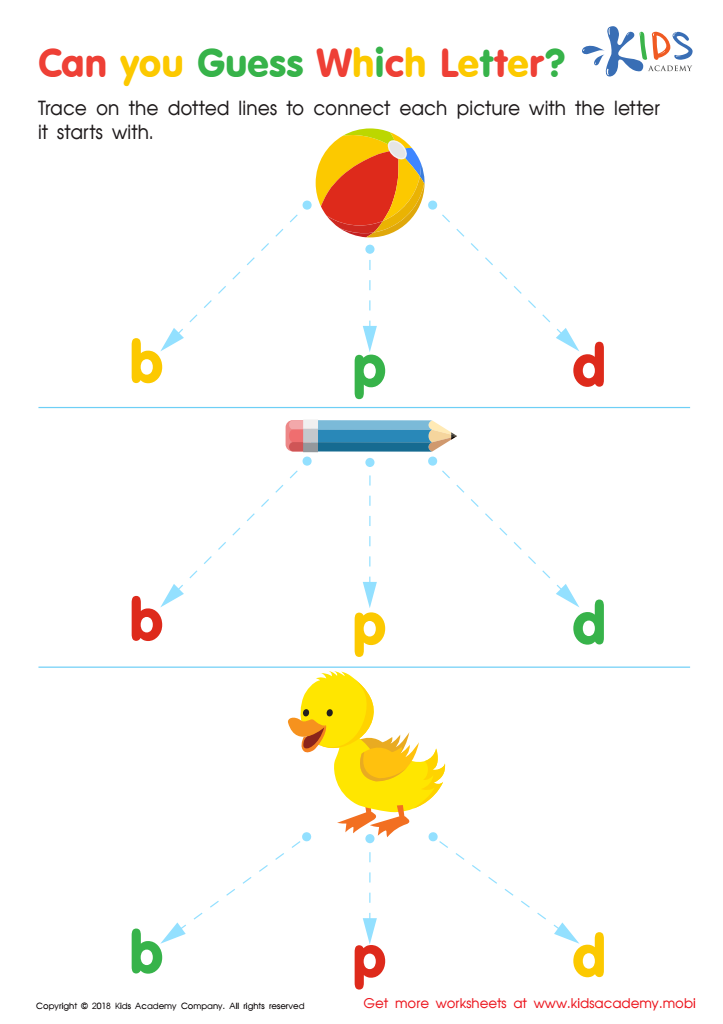
Can you Guess Which Letter? Worksheet
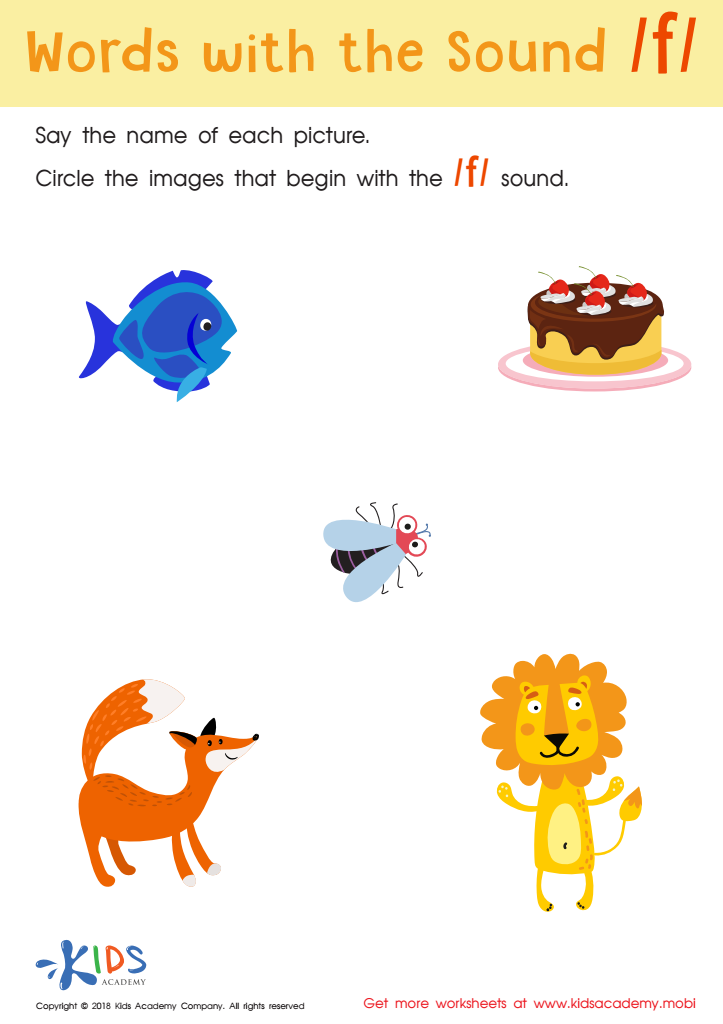
Words with sound f Reading Worksheet








Vocabulary expansion and understanding beginning sounds are foundational skills for young learners, especially for children aged 6-7. These skills directly influence their reading proficiency, comprehension abilities, and overall academic success. By focusing on vocabulary growth, parents and teachers help children build a robust word bank, which is essential for effective communication, both in spoken and written forms.
Mastering beginning sounds further strengthens phonemic awareness, allowing children to decode new words more easily and accurately. This ability is critical as they transition from learning to read to reading to learn. When a child can recognize and utilize beginning sounds, they gain confidence in their reading skills, promoting a positive association with learning.
Rich vocabulary and phonemic awareness also facilitate better listening skills and comprehension. Children can understand stories, follow instructions, and participate more actively in conversations. Additionally, these foundational skills are linked to future academic achievements, as early literacy skills are strong predictors of later success in school.
In summary, caring about vocabulary expansion and beginning sounds equips children with essential tools for literacy. For ages 6-7, this focus lays a critical foundation for lifelong learning and sets them on a path of academic and communicative proficiency.